Extra Sale 10% off

Menu
Shopping Cart
Close

Big Banner Printing: Comparison of Large-Format Options for Maximum Impact

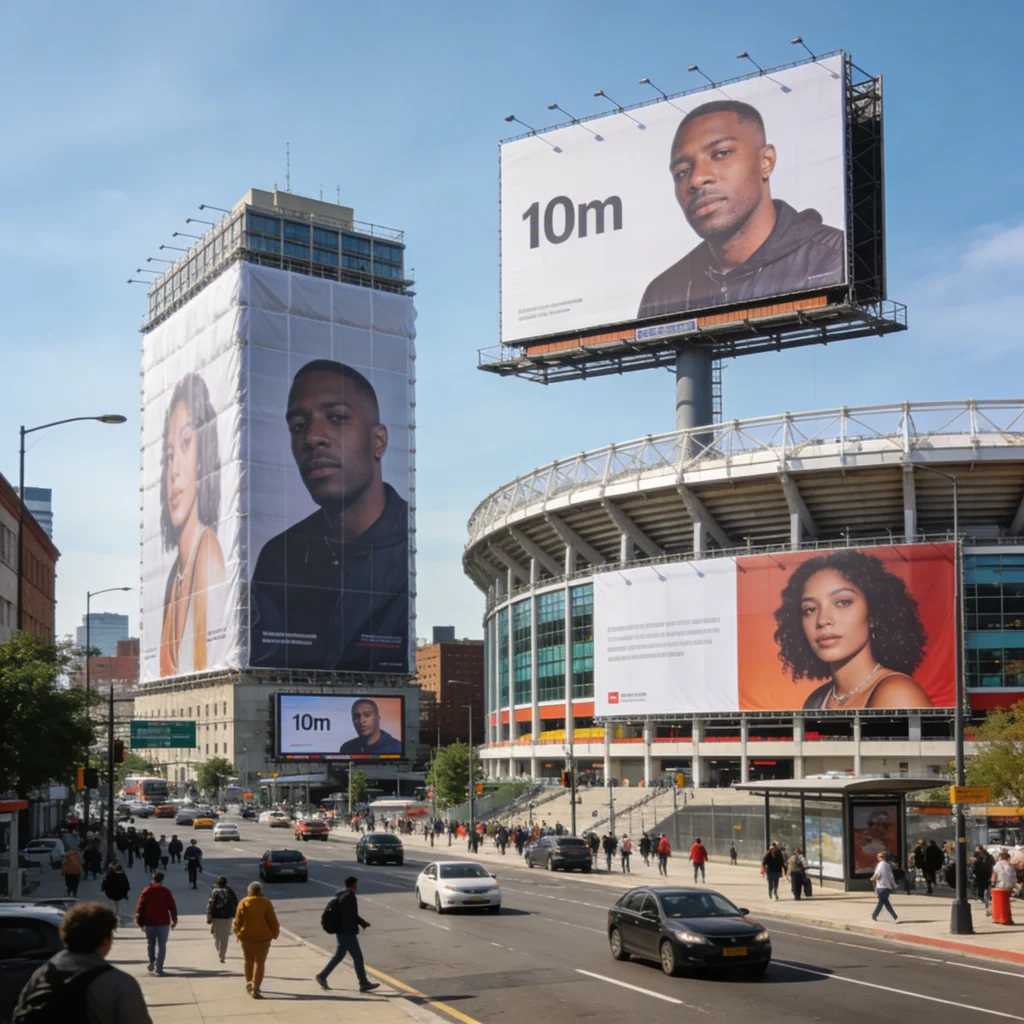
When your message needs to be seen from 50, 100 or even 300 metres away, standard banners stop working. Big banner printing uses industrial-scale machines, reinforced materials and engineered fixings to turn entire walls, scaffolds or stadium fronts into advertising surfaces that behave more like architecture than signage.

Big banner printing sits at the top end of large-format print, where sizes often exceed 10m wide and single jobs can cover 200–1,000m². Unlike everyday banner printing, these projects use heavyweight PVC, mesh or fabric, tensioning systems and structural fixings. Choosing the right combination directly affects wind load, lifespan, print clarity and installation safety.

Brands typically use big banners for building wraps, arena sponsorships, festivals and roadside billboards above 48-sheet size. Because print, hardware and access equipment can easily exceed £5,000 on one job, buyers must understand how materials, environments and providers differ. That knowledge lets you brief banner printing services precisely and avoid costly reprints or unsafe installs.

Below, we compare materials, mounting methods, design rules, costs and specialist providers so you can specify big banner printing with the same confidence as a structural contractor rather than a casual print buyer.

1
big banner printing

What Counts as Big Banner Printing and When Do You Need It?

What Counts as Big Banner Printing and When Do You Need It?

Once banners move beyond standard sizes into 10-metre-plus formats, they become tools for dominating sightlines. Building wraps, stadium skins and oversized roadside sites extend brand reach far beyond conventional posters. At this scale, every decision on placement, artwork and specification has a direct effect on visibility, legibility and campaign return.

Big banner printing usually starts where standard roll widths and everyday finishing no longer cope. Once a banner exceeds around 5m on its shortest edge, or covers more than 25–30m², you enter a category that demands industrial printers, welded seams and engineered fixings. At that scale, wind forces, building regulations and crane access become as relevant as colour profiles.

Typical Sizes and Use Cases

Most commercial big banners range from 6×3m roadside panels up to 30×20m building wraps covering scaffolding or façades. Stadium perimeter banners often run 1m high but 80–120m long. You need this category whenever your viewing distance exceeds 30–40m, you want visibility over traffic or rooftops, or you’re replacing traditional hoardings with a single continuous surface.

When Standard Banner Printing Isn’t Enough

Standard banner printing services typically handle up to 3.2m print width using lighter 440gsm PVC and simple eyelets. Once you require seamless images across 5m, 10m or 20m spans, those setups fail structurally and visually. You then move to 5m-wide printers, 510–650gsm PVC, mesh substrates and welded joins, allowing safe coverage of entire elevations without visible banding or sagging.

2
Banner Printing

Materials and Hardware Options for Big Banner Printing

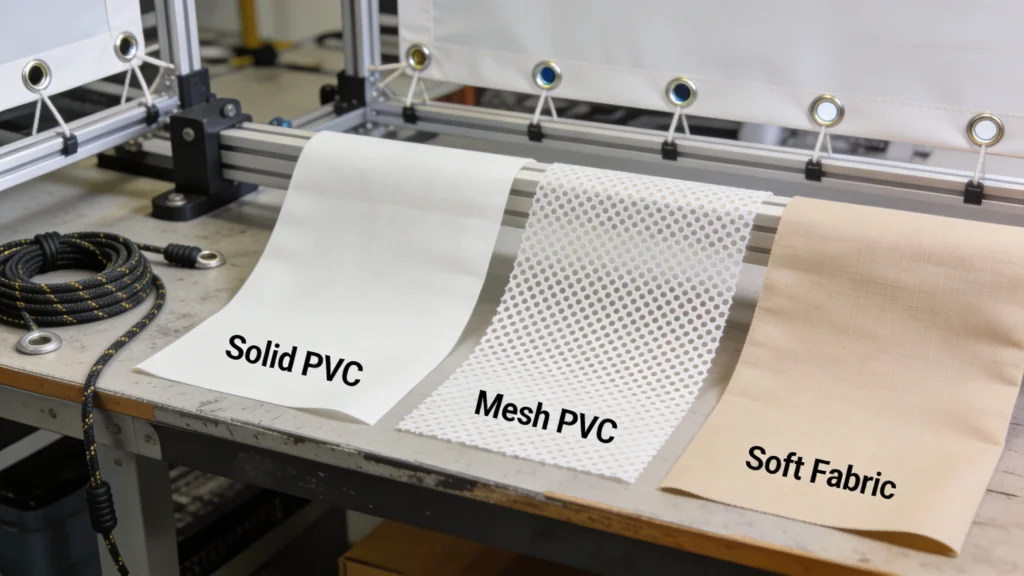
Material choice in big banner printing determines weight per square metre, wind permeability, fire performance and colour vibrancy. Typical substrates include 510–650gsm frontlit PVC, 270–370gsm mesh PVC and 210–260gsm polyester fabric. Each behaves differently when stretched across 50m² of scaffolding versus a 12m truss, so pairing the right hardware is critical for both longevity and safety.

Materials and Hardware Options for Big Banner Printing

Not every print shop is equipped for true big banner work. Providers handling 200–1,000m² jobs invest in industrial-scale printers, heavy-duty finishing tables and lifting equipment. Their expertise in specifying substrates, seams and fixings, and coordinating access teams, often makes the difference between a safe, efficient install and an expensive reprint.

Comparing Substrates and Fixings

The table below compares common materials and hardware combinations used by specialist banner printing services. Figures assume UK and EU markets, where EN13501 fire ratings and wind exposure categories often dictate specification. Weights, costs and lifespans reflect real-world averages from trade suppliers between 2023 and 2024.

Material & Hardware Weight (gsm) Typical Use Size (m) Outdoor Lifespan Approx. Cost (£/m²)
510gsm PVC + eyelets 510 up to 8×3 18–24 months £18–£24
650gsm PVC + keder rail 650 10×5 to 25×10 24–36 months £25–£32
Mesh PVC + bungee system 270–330 15×10 to 30×20 12–24 months £22–£30
Polyester fabric + frame 210–260 6×3 to 12×4 6–12 months £26–£35
Backlit PVC + lightbox 510–580 up to 10×4 24–36 months £30–£40

Heavier PVC with keder edges suits long-term installs, because tracks distribute tension evenly across the perimeter, reducing tearing compared with eyelets alone. Mesh PVC sacrifices some colour density but cuts wind loading by 30–50%, which can remove the need for additional bracing. Fabric excels indoors where lighter weight, easy folding and minimal glare outweigh absolute weather resistance.

3

Indoor vs Outdoor Big Banner Printing: Durability and Visibility

Indoor vs Outdoor Big Banner Printing: Durability and Visibility

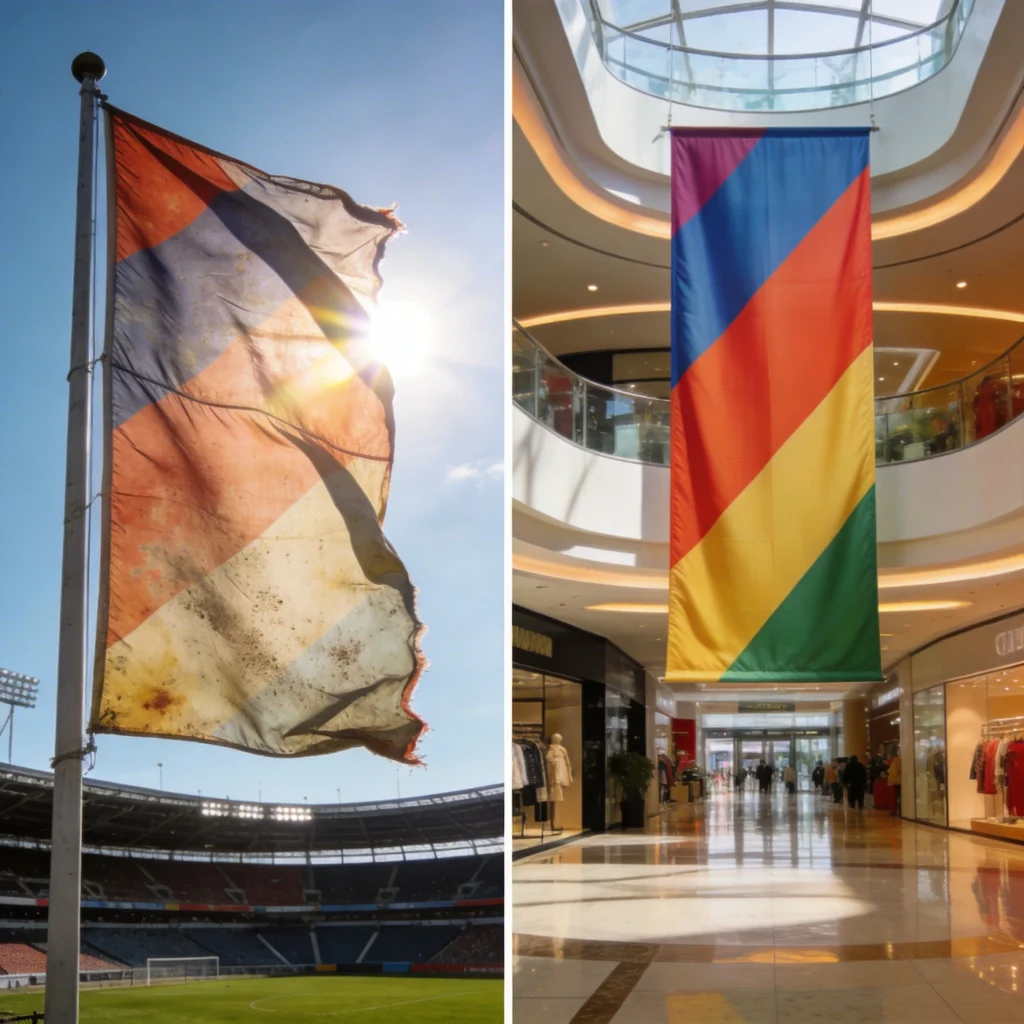
Indoor and outdoor big banners face very different challenges. Outdoor installations must survive UV exposure, wind, rain and temperature swings, so inks, coatings and mesh structures become critical. Indoors, where conditions are controlled, you can prioritise finer detail, richer blacks and softer fabrics without compromising lifespan or safety margins.

Environment changes everything in big banner printing, from ink chemistry to finishing. Outdoor banners must survive UV exposure, rain, temperature swings from -5°C to 30°C and wind gusts exceeding 60mph. Indoors, the priority shifts to colour accuracy under artificial lighting, reduced glare for photography and lightweight hardware that staff can safely install from step ladders.

Outdoor Performance and Weathering

For façades, scaffolds and roadside sites, most providers use UV-cured or solvent inks rated for 2–3 years before noticeable fading. Laminates are rarely used on very large banners because they trap wind and add weight. Instead, printers specify mesh, reinforced hems and 10–12mm eyelets every 300mm, combined with bungee cords that allow controlled movement rather than rigid, tear-inducing tension.

On exposed elevations, switching from solid PVC to 30–40% open mesh can reduce calculated wind load by nearly half. That often means existing scaffolding or fixing points are sufficient without adding steel bracing, saving thousands in temporary works while still delivering legible branding from 100–150 metres away.

Indoor Visibility and Lighting

Indoors, viewing distances are shorter, typically 10–40m in arenas or exhibition halls, so finer detail and smoother gradients matter more. Dye-sublimated fabric banners eliminate glare from spotlights and LED walls, which can otherwise wash out solid PVC. Lightboxes using backlit PVC or fabric achieve even illumination at 1,000–2,000 lux, keeping logos readable for broadcast cameras and photography.

4

Big Banner Printing Providers vs Standard Banner Printers

Not all banner printing services are equipped for genuinely large projects. Standard shops may own 1.6–3.2m eco-solvent printers and manual eyeleting machines, perfect for café barriers or 3×1m event banners. Big banner printing specialists run 5m-wide UV or latex presses, automated welding lines and in-house installation teams experienced with MEWPs, cranes and contractor paperwork.

Big Banner Printing Providers vs Standard Banner Printers

Choosing between solid PVC, mesh and fabric is more than an aesthetic decision. Solid PVC maximises colour density, mesh reduces wind load on exposed sites, and fabric offers a softer, premium look indoors. Combined with the right tensioning hardware, each material behaves differently in terms of durability, weight and installation complexity.

Equipment and Production Capabilities

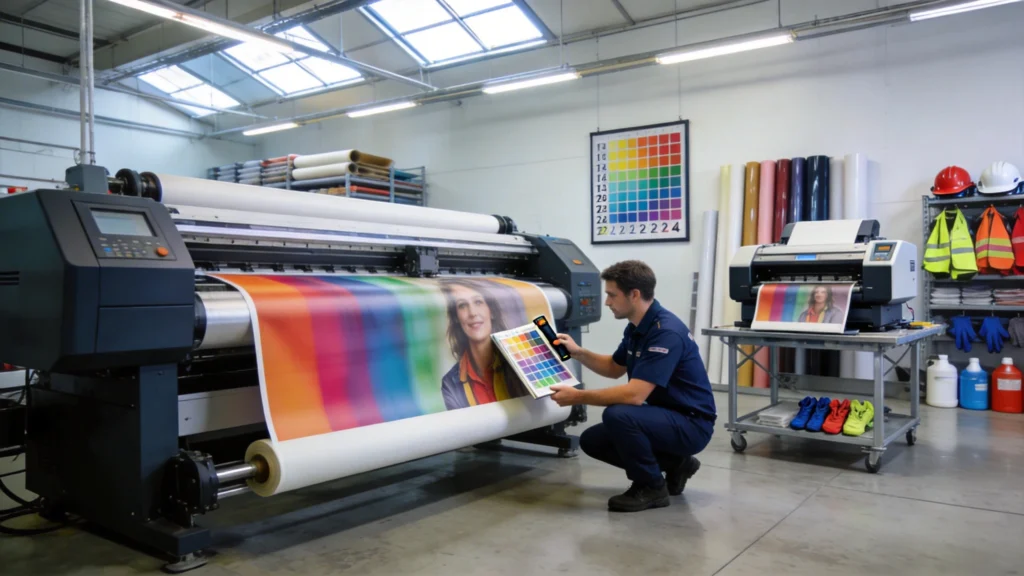
Specialist providers typically operate machines like 5m EFI VUTEk or HP Latex 1500/2700 series printers, capable of continuous 5m-wide output at 45–90m²/hour. They weld panels using hot-air or high-frequency welders to create 20–30m seamless visuals. In contrast, general printers may tile artwork into narrow strips joined with stitching or tape, risking visible banding and reduced structural integrity.

When a single banner exceeds 50m², always ask providers about maximum print width, welding methods and installation insurance. If they propose stitching or adhesive joins instead of welded seams, or cannot show evidence of £5–10 million public liability cover, they are operating outside typical big banner printing best practice.

Project Management and Site Coordination

Big banner projects behave more like construction packages than simple print jobs. Specialists conduct site surveys, calculate fixing centres, and coordinate with landlords, main contractors and local authorities. They schedule installs around road closures or scaffold handovers and provide RAMS documentation. Standard banner printing companies rarely offer this, leaving you to manage structural engineers and installers separately.

5

Design Considerations Unique to Big Banner Printing

Designing for big banner printing flips normal graphic rules. Viewers may stand 50–200m away, so a 2cm line on screen becomes a 20cm stroke in reality. At the same time, production uses 30–72dpi at final size, not 300dpi. Good designers think in metres, viewing distances and character heights rather than pixel-perfect detail that nobody will ever see from the ground.

Design Considerations Unique to Big Banner Printing

Resolution, Typography and Colour

For 10–30m viewing distances, 100–150mm capital letter height keeps headlines legible; for 50–100m, aim for 300–500mm. Artwork is usually supplied at 1:10 scale at 300dpi, which outputs at 30dpi full size. Sans-serif fonts with strong x-heights, like Helvetica Bold or Montserrat, resist optical thinning when enlarged. Colour palettes should use high-contrast combinations tested under both daylight and artificial lighting.

Layout and Content Prioritisation

Because big banners are often seen from moving vehicles, you typically have 2–3 seconds of attention. Limit designs to one key message, a dominant logo and a single call to action, such as a short URL or QR code above 40×40cm. Avoid fine white text on light backgrounds, as atmospheric haze and reflections can erase low-contrast elements at long distances.

6

Cost Comparison: Big Banner Printing vs Multiple Smaller Banners

Cost Comparison: Big Banner Printing vs Multiple Smaller Banners

Budget decisions often come down to one large-format banner versus several smaller panels. While a single 15×8m banner may cost £3,000–£4,000 installed, three or four smaller 5×3m banners might total £1,200–£1,800. However, fragmentation reduces visual impact and can increase fixing complexity. Understanding how costs scale with area, access and hardware helps you judge real value rather than headline prices.

Price Drivers and Economies of Scale

Material and print costs scale roughly linearly with area, but access, installation and traffic management are largely fixed per visit. If you already need a cherry picker or scaffold handover, adding extra square metres often adds only £10–£20/m². Conversely, multiple small banners in different positions can require extra fixings, more drilling time and additional MEWP moves, eroding perceived savings.

  • A single 15×8m mesh banner (120m²) might cost £26/m² print plus £1,200 access, totalling around £4,320.
  • Four 5×3m PVC banners (60m² total) at £22/m² plus £800 access could total about £2,120 overall.
  • Two visits for phased installs add £400–£800 in labour and MEWP hire, even if print areas remain identical.
  • One large banner usually delivers 2–3 times the visual dominance of scattered panels, improving campaign recall.
7

Installation, Safety, and Permissions for Big Banner Printing

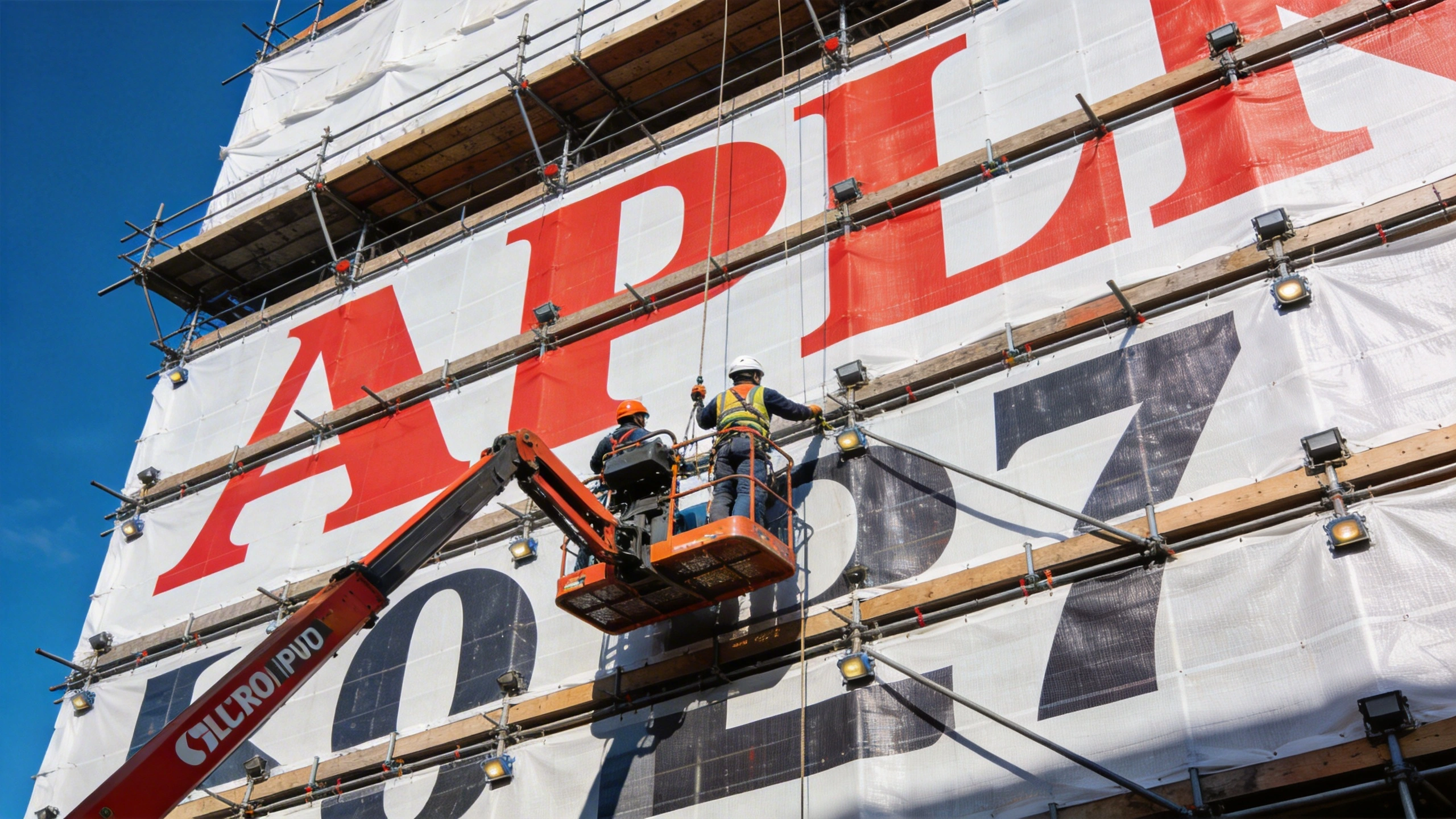
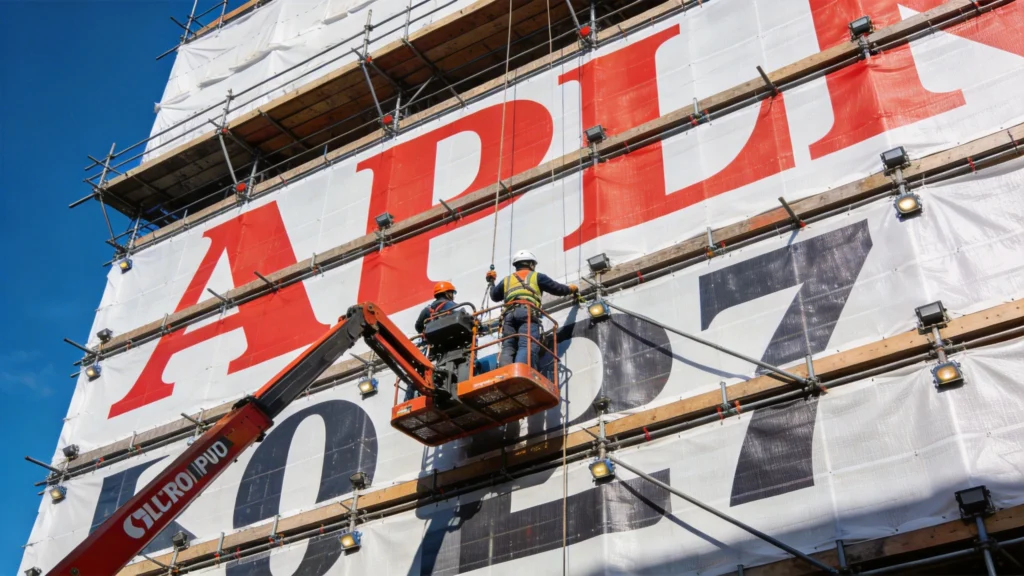
Installation is where big banner printing becomes an engineering exercise. A 20×10m mesh banner can present over 200m² of surface area, generating several kilonewtons of wind load. Fixings, substrates and support structures must be calculated, not guessed. Responsible banner printing services therefore involve structural engineers, method statements and sometimes planning consultants before production even begins.

Installation, Safety, and Permissions for Big Banner Printing

Fixings, Safety and Compliance

Large banners usually attach to scaffolding, steel frames or masonry using keder tracks, tensioning bars and rated fixings rather than simple screws. Installers work from MEWPs, cradles or scaffolds while wearing harnesses, following RAMS approved by the principal contractor. In the UK, CDM Regulations and Working at Height Regulations apply, and insurers increasingly demand documented wind-load assessments for banners above certain sizes.

  • Check whether the building lies in a conservation area, where planning consent for advertising is often mandatory.
  • Agree maximum display duration; many landlords limit temporary banners to 6–12 months per façade elevation.
  • Obtain written landlord consent, including approved fixing locations and any restrictions near cladding systems.
  • Ensure installers hold IPAF or PASMA certification, and that public liability insurance covers at least £5–10 million.

Permissions vary by jurisdiction but often treat large banners as advertising hoardings. Councils may request scaled drawings, material specifications and fixing details before granting consent. Skipping this stage risks enforcement notices or forced removal mid-campaign. Partnering with a specialist big banner provider means many of these checks are routine, reducing delays and protecting both brand and building owners from regulatory surprises.

Cart