


Extra Sale 10% off

Menu
Shopping Cart
Close

Wide Roller Banners: When You Need Extra Impact

Crowded exhibition halls and busy retail aisles punish small graphics. When every stand is fighting for attention, extra width can be the difference between a quick glance and a valuable conversation. Wide roller banners give you the visual real estate to tell a fuller story without needing a full exhibition stand build.

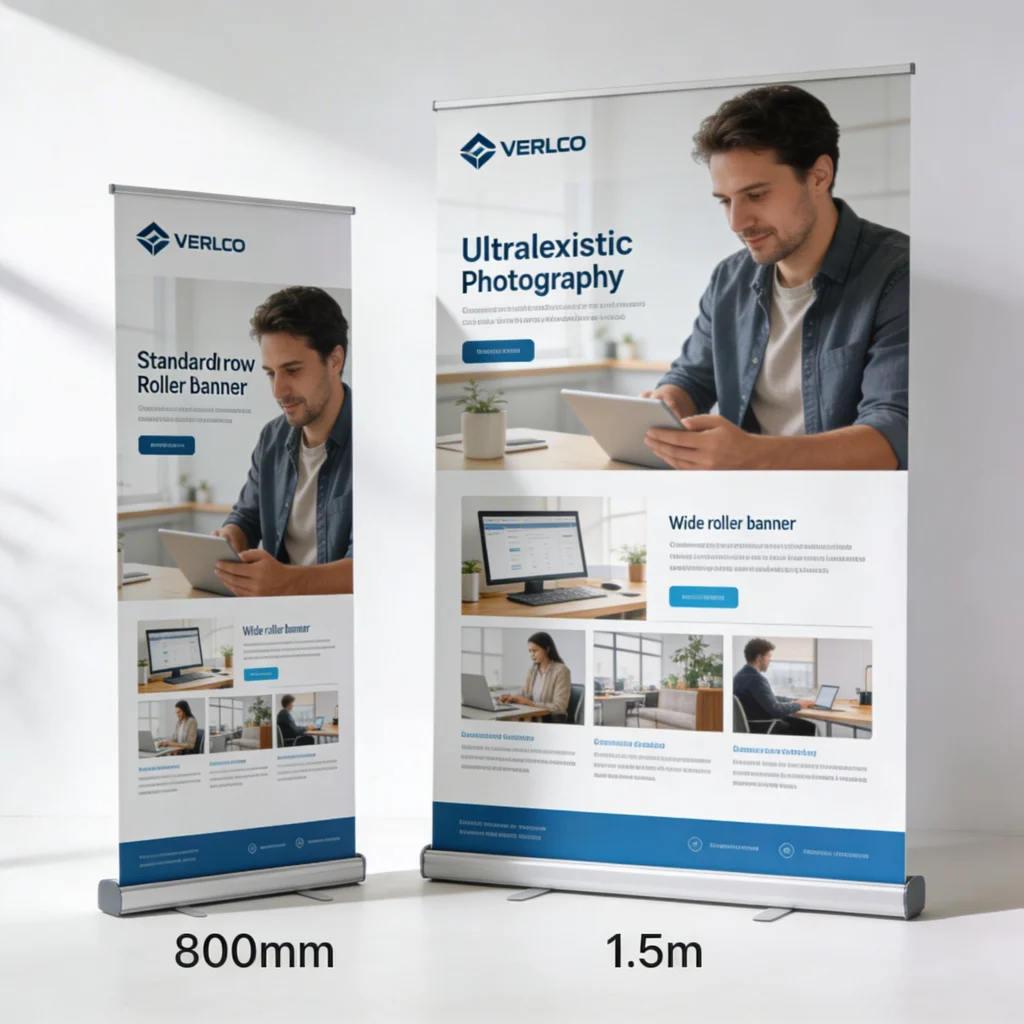
Wide roller banners increase your horizontal space from roughly 800 mm to 1,5 m or more, which dramatically changes how people read your message. Instead of squeezing headlines and imagery into a narrow column, you can spread content logically, support brand photography and keep type at legible sizes. For UK businesses, this makes them ideal for trade shows, conferences and reception backdrops.

Because they still retract into a base cassette, a wide roller banner preserves many benefits of standard roller banners UK buyers already know: quick assembly, compact storage and reusable hardware. The key difference lies in planning: you must consider weight, transport, line of sight and how the banner interacts with neighbouring displays.

Approaching a wide roller banner like an oversized poster usually leads to cluttered, low-impact layouts. Instead, you need to think in zones, design for viewing distance and set up print files that respect wide-format limitations. By understanding how width influences readability, structure and stability, you can specify a system that works hard at every event.

1
wide roller banners

What Are Wide Roller Banners and How Do They Differ from Standard Roller Banners?

What Are Wide Roller Banners and How Do They Differ from Standard Roller Banners?

Seeing a standard roller banner next to a wide version highlights how dramatically the extra width changes your options. With more horizontal space, you can avoid cramming copy into a tight column, give images room to breathe and maintain comfortable type sizes, all while keeping your core message instantly readable from a distance.

Wide roller banners are retractable display systems with a graphic typically between 1,2 m and 2 m wide, compared with standard widths of 800 mm or 850 mm. That extra 400–1 150 mm of width allows more complex layouts and stronger imagery. Mechanically, they use a similar spring-loaded cassette, but the base, poles and feet are engineered to handle greater leverage and fabric weight.

Typical Sizes and Specifications

Most UK suppliers offer wide roller banners at fixed widths such as 1,2 m, 1,5 m and 2 m, with heights around 2 m to 2,15 m. A 1,5 m wide unit at 2 m tall gives 3 m² of print area, nearly double a 0,85 m banner’s 1,7 m². Bases are usually 1–1,2 mm aluminium, with twin support feet or a wider cassette to stop torsion when people brush past in busy aisles.

How They Compare with Standard Roller Banners UK Buyers Know

Standard roller banners UK businesses commonly order weigh around 3–5 kg, while a 1,5 m wide version can reach 7–9 kg including the graphic. Storage bags grow from roughly 90 cm to 1,6 m long, affecting car boot fit and courier costs. Because the visible area is broader, design choices about focal points and reading order become more critical; otherwise, viewers’ eyes wander without landing on a clear message.

2
wide roller banner

Key Benefits of Choosing a Wide Roller Banner for UK Events

Choosing a wide roller banner is most effective when you need a backdrop rather than a standalone sign. At UK trade shows like BETT or Spring Fair, stands often span 3 m widths; a 1,5 m or 2 m banner can cover much of that span with a single, uninterrupted graphic. This creates a mini-wall effect, framing your team and products while hiding unattractive shell scheme panels.

Key Benefits of Choosing a Wide Roller Banner for UK Events

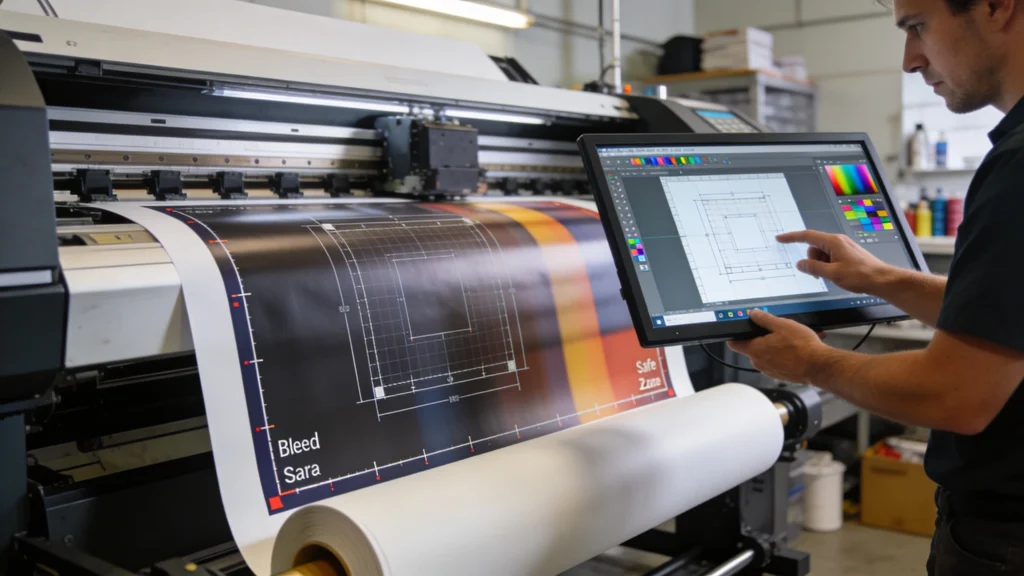
When setting up print files for wide roller banners, it’s essential to include the correct bleed, safe zones and final trim size specified by your printer. Supplying high-resolution CMYK artwork ensures sharp results, while keeping key text and logos away from the edges helps avoid accidental cropping during finishing and cassette fitting.

Where Wide Roller Banners Outperform Narrow Units

Wide formats excel as photo backdrops, seminar stage branding and reception walls because they fill camera frames and human peripheral vision more effectively. When people stand 1,5–2 m in front, a 2 m wide banner fills about 60–70° of their horizontal field, which feels immersive. For retail, placing a wide banner behind gondola ends creates a cohesive brand block that can be seen from 15–20 m along the aisle.

Branding and ROI Advantages

Although a wide roller banner may cost 40–70% more than a standard unit, it can replace two or three separate banners and still look cleaner. One continuous image avoids visible gaps and misaligned heights that dilute professionalism. Over multiple events, the ability to reuse the hardware with updated graphics reduces cost per use, especially if you design with modular content that stays relevant for at least 12–18 months.

3
Roller Banners

How to Design Effective Wide Roller Banners

How to Design Effective Wide Roller Banners

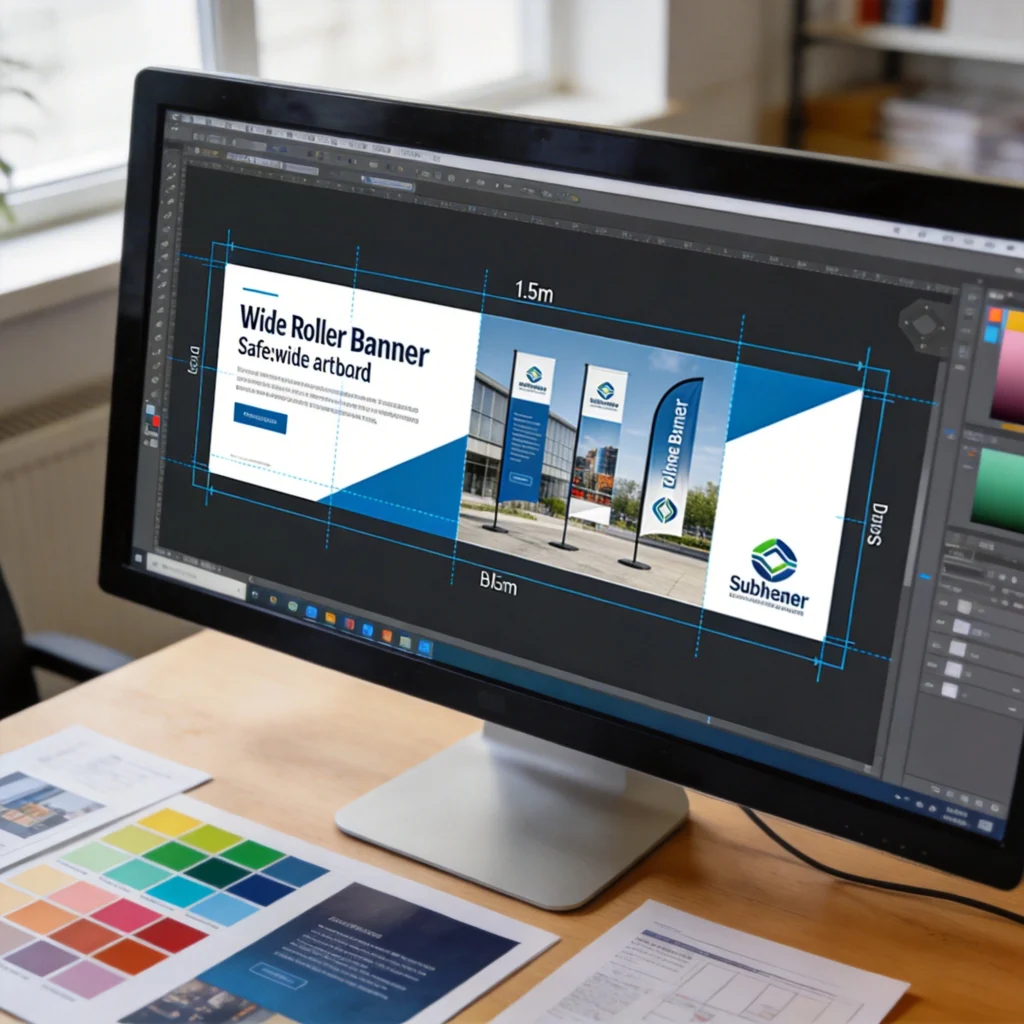
Designing for a wide roller banner starts with a clear layout grid and hierarchy. On screen, you can plan how headlines, supporting copy and imagery flow from left to right, ensuring each element has enough breathing space. This approach keeps information organised and legible, even when viewed from several metres away.

Designing a wide roller banner starts with recognising that viewers scan from left to right in roughly three eye stops. You should deliberately plan a beginning, middle and end across the width. At 1,5 m wide, text smaller than 60–70 pt quickly becomes illegible from 3–4 m away, so the extra width should increase breathing space, not tempt you to add more copy.

Structuring Content Across Extra Width

One reliable approach is to divide the banner into three vertical zones: left for hook, centre for proof and right for call to action. For example, use a bold benefit headline on the left, a strong product image or testimonial in the middle and concise contact details on the right. Keeping each zone visually distinct with subtle background shifts guides the eye without overwhelming visitors.

Using Imagery, Type and Negative Space

High-resolution photography benefits most from wide formats, but only if you respect safe areas. Avoid placing faces or logos within 50–70 mm of the edges, where curling and hardware shadows appear. Set key headlines at least 200 mm from the top to stay above crowd heads in busy aisles. Generous negative space—30–40% of the layout—helps messages read quickly from 6–8 m away.

4

Setting Up Print Files for Wide Roller Banner Printing

Correct artwork setup prevents banding, pixelation and alignment issues during roll up banner printing. Most UK printers request scale 1:1 files at 150–200 dpi for wide roller banners, balancing quality with manageable file sizes. For a 1,5 m × 2 m banner, that means a canvas of 1500 mm × 2150 mm including bleed, which easily reaches 200–300 MB when using layered PSD or AI files.

Setting Up Print Files for Wide Roller Banner Printing

At UK trade shows and conferences, wide roller banners work brilliantly as compact backdrops that still deliver impact. Their broader footprint allows you to create a panoramic brand scene behind your team, combining headline, imagery and key benefits in a single view that visitors can quickly understand while they approach your stand.

Essential Artwork Specifications

When preparing files, use CMYK colour mode with a standard profile such as FOGRA39 or ISO Coated v2, since most wide-format printers calibrate to these. Add 3–5 mm bleed on all sides and a 100 mm bottom allowance that disappears into the cassette. Keeping all critical text at least 70–100 mm above the bottom avoids it vanishing behind the rail after trimming and fitting.

  • Set document size to full print area including 3–5 mm bleed on every edge before placing images or type.
  • Use 150–200 dpi at final size; upscaling low-resolution web images will create visible softness and artefacts.
  • Convert spot colours to CMYK and supply a printed reference if exact brand hues are commercially critical.
  • Export flattened PDF/X-1a with embedded fonts; avoid crop marks that may interfere with the printer’s workflow.
  • Keep large gradients subtle and noise-free; banding becomes obvious across 1,5–2 m wide solid colour areas.
5

Transporting and Installing Wide Roller Banners Safely

Transporting a wide roller banner requires more planning than moving a standard 800 mm unit because of length and weight. A 2 m wide cassette can measure over 2,1 m in its bag, which may not fit across the back seat of smaller cars. Weight typically ranges from 7–12 kg, so lone staff members need comfortable handles, shoulder straps and, ideally, wheeled cases.

Transporting and Installing Wide Roller Banners Safely

Practical Transport Considerations

Before ordering, measure your vehicle’s boot opening and internal diagonal; many UK hatchbacks struggle with items over 1,6 m. If you ship banners to venues, check courier surcharges for parcels exceeding 1,5 m, as these can add £10–£25 per consignment. Choosing padded, semi-rigid carry cases protects the cassette from dents that could affect the roll mechanism and graphic tracking.

Assembly, Stability and Safety on Site

On site, assemble wide roller banners with two people where possible, keeping the graphic under tension but not forcing the pole. Always extend stabilising feet fully and angle the banner slightly backwards to counteract forward pull. In high-traffic areas or near doors, adding 2–4 kg sandbags over the feet significantly reduces tipping risk, especially on carpet tiles with underlay.

6

Wide Roller Banners vs Multiple Standard Roller Banners

When planning a 3 m exhibition wall, you often choose between one wide roller banner and two or three standard units. Each approach affects cost, flexibility and perceived professionalism. A single 2 m wide banner creates a seamless backdrop but leaves gaps at the sides, whereas three 0,85 m banners cover roughly 2,55 m with visible joins and potential height inconsistencies.

Wide Roller Banners vs Multiple Standard Roller Banners

Cost and Specification Comparison

The table below compares typical UK pricing and specifications in the context of roll up banner printing. Figures assume mid-range hardware and 440–510 gsm PVC or similar. Prices vary by supplier, but the relative differences help you evaluate which option suits your event schedule, storage constraints and visual priorities over a 12–24 month period.

Option Total Width Covered Approx. Cost (ex VAT) Units to Transport Visual Impact Notes
One 1,5 m wide banner 1,5 m £130–£180 1 cassette, 1 bag Strong central backdrop, some side gaps on 3 m stands.
One 2 m wide banner 2 m £170–£230 1 long cassette Dominant image area, leaves 0,5 m each side on 3 m wall.
Two 0,85 m banners 1,7 m £120–£160 2 cassettes Flexible placement, visible join line between artworks.
Three 0,85 m banners 2,55 m £180–£240 3 cassettes Nearly full 3 m coverage, more visual clutter and setup time.
Two 1 m wide banners 2 m £150–£210 2 cassettes Modular look, easier to transport than single 2 m unit.

Choosing between these options depends on how often your layout changes. If you attend varied events, multiple standard banners offer modularity: you can bring only relevant messages. For consistent stand sizes and long-running campaigns, a wide roller banner gives a cleaner, more immersive brand presence, justifying slightly higher upfront costs and more demanding transport requirements.

7

Common Mistakes to Avoid with Wide Roller Banners

Wide formats magnify design and practical mistakes because there is simply more area to get wrong. Overloading the banner with text is the most frequent problem; people treat the extra width as permission to add paragraphs, which become illegible beyond 2 m. Poor file preparation and underestimating weight also cause issues, from blurry images to staff struggling with long, heavy bags on public transport.

Common Mistakes to Avoid with Wide Roller Banners

Design and Layout Pitfalls

One major error is centring everything, leaving large, empty side areas that feel accidental rather than intentional. Another is splitting a key product or logo across the visual centre, so people’s eyes never find a resting point. Avoid placing QR codes or small contact details at extreme corners; they become hard to scan or read when people photograph the banner from a distance.

Plan your wide roller banner as a stage set, not a brochure page. Decide what should be visible in every event photo, from 3–5 m away, and design backwards from those images. This mindset keeps you focused on hero messages and prevents clutter that weakens impact and shortens the banner’s useful lifespan.

Practical and Production Errors

On the practical side, many teams forget to check venue ceiling heights and lighting positions, leading to spotlights casting harsh reflections across glossy PVC. Choosing the cheapest hardware can backfire when wider graphics lean or twist after a few uses. Always confirm whether the graphic is replaceable, as non-replaceable systems lock you into re-buying full kits whenever messaging changes.

Cart