
Extra Sale 10% off

Menu
Shopping Cart
Close

Roller Banner Sizes and Dimensions: How to Choose the Right Roller Banner Size

Pick the wrong roller banner size and you either disappear in a busy venue or waste money on graphics nobody can read. Understanding roller banner dimensions before you design avoids cramped layouts, pixelated logos and stands that simply do not fit your space or budget.

Choosing roller banner sizes is less about guessing and more about matching dimensions to viewing distance, floor space and message length. A 200 cm high, 80 cm wide roller banner works for most reception areas, while 150 cm wide systems suit exhibition backdrops and stage branding. Knowing the standard sizes helps you design confidently and price options accurately.

Roller banner dimensions also dictate how large your text and images can be without looking stretched or cramped. When you understand visible area, bleed and safe zones, you can position headlines, logos and calls to action so they remain readable from 2–5 metres away. That precision saves redesign time and prevents expensive reprints.

Finally, the right roller banner size keeps logistics simple. Stands between 80–100 cm wide pack into carry bags roughly 85–105 cm long, which fit easily in most car boots. Oversized 200 cm wide units may require vans, extra storage and higher courier costs, which matters when you are transporting ten or more displays to an event.

1
roller banner sizes

Standard Roller Banner Sizes and Typical Roller Banner Dimensions

Standard Roller Banner Sizes and Typical Roller Banner Dimensions

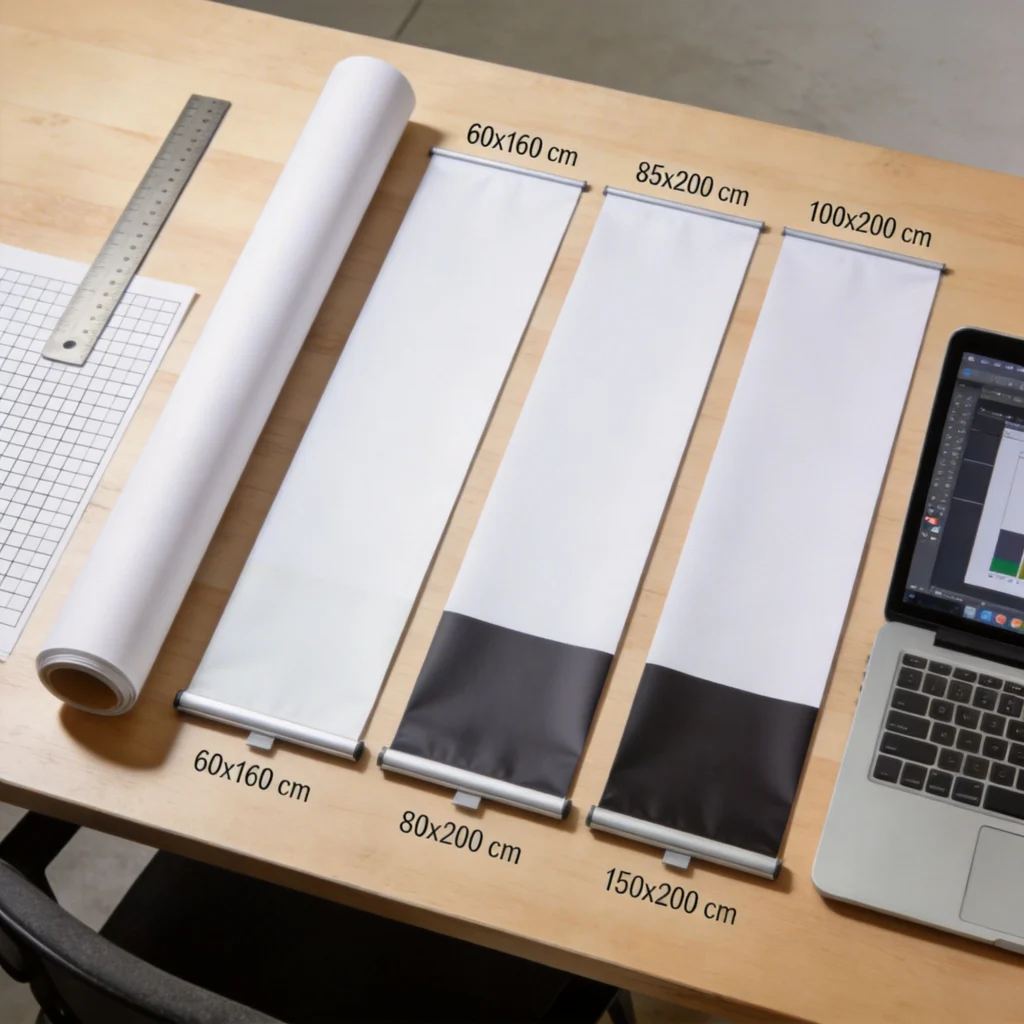
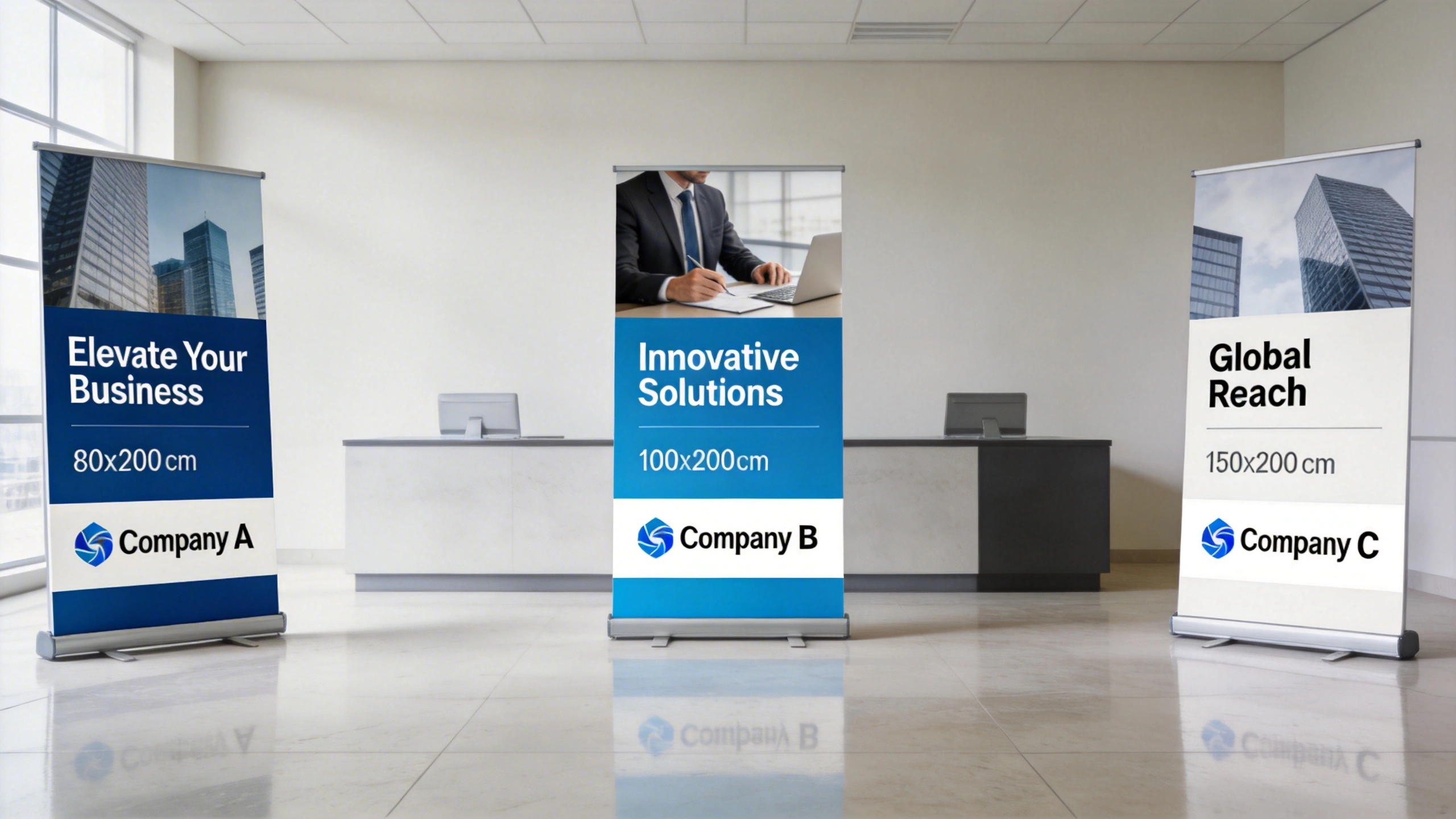
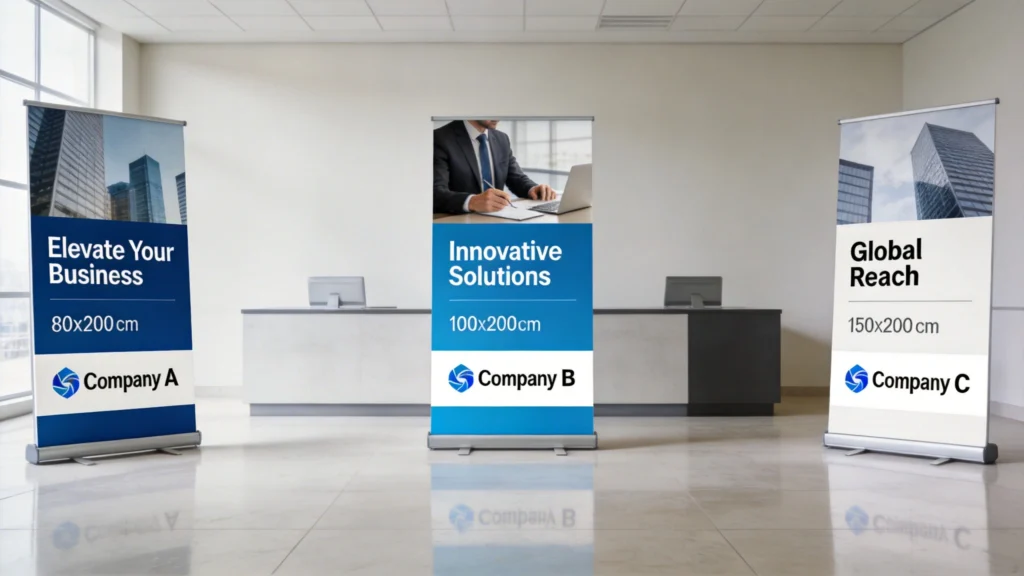
Standard roller banner sizes, such as 80 x 200 cm or 85 x 200 cm, give you reliable starting points for most projects. By comparing these typical dimensions side by side, you can quickly see which formats offer more visual impact, how much content they can hold, and how they fit within common display areas.

Most printers offer a core range of roller banner sizes because standard hardware cassettes and pre-cut graphics reduce cost and lead times. Heights are usually fixed around 200 cm, while widths vary from compact 60 cm to imposing 200 cm. Understanding these typical roller banner dimensions helps you compare quotes and choose a format that suits your content density.

Common roller banner dimensions in centimetres and millimetres

Standard economy roller banners tend to measure 200 x 80 cm (2000 x 800 mm), giving enough vertical space for a logo, headline, product image and contact details. Slim 60 cm wide versions work beside reception desks where floor space is tight, while 85 cm and 100 cm widths are popular at trade shows. Wider 150–200 cm units often use heavier hardware to prevent tipping.

Comparing standard sizes by usage and impact

Compact 60 x 200 cm banners suit directional messages or simple branding where people pass within 1–2 metres. An 85 x 200 cm stand balances portability and visibility, so many marketing teams standardise on this size for roadshows. Extra-wide 150–200 cm banners create backdrop-style coverage, often replacing pop-up walls when budgets are limited but visual presence is critical.

2
roller banner

How to Choose Roller Banner Size for Different Venues and Uses

Matching roller banner size to venue conditions prevents cluttered stands and blocked walkways. A banner that fits perfectly in a quiet foyer may overwhelm a narrow shell scheme or feel lost in a 5,000-seat conference hall. Thinking about ceiling height, viewing distance and traffic flow before ordering helps you avoid last-minute layout compromises on event day.

How to Choose Roller Banner Size for Different Venues and Uses

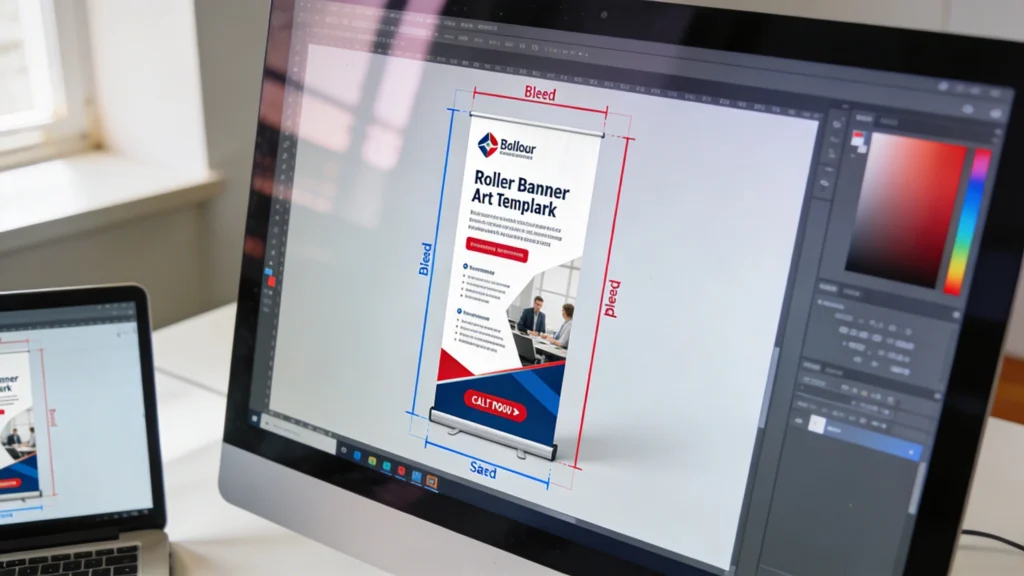
Accurate artwork setup is crucial for roller banners. Working with visible area, bleed and safe zones ensures no logos, headlines or calls to action are trimmed during production. Keeping essential elements within the safe zone while allowing backgrounds to extend into the bleed gives you a polished, print-ready layout every time.

Roller banner sizes for exhibitions, retail and reception spaces

Shell scheme exhibition booths around 2 x 3 metres usually work best with one or two 80–85 cm wide banners, leaving space for furniture. In retail aisles restricted to 90–100 cm width, a single 60–80 cm roller banner prevents obstruction while still catching shoppers from 3–4 metres. Reception areas can accommodate 100 cm wide stands, especially when placed beside sofas or brochure tables.

Think about the narrowest point of your space, not the emptiest. A 100 cm wide roller banner that fits your back wall might block access when visitors gather, especially in 2-metre-wide corridors or small meeting rooms where people naturally cluster around tables and demonstration areas.

Planning roller banner dimensions around footfall and safety

High-footfall venues like shopping centres and train stations demand slimmer roller banners positioned slightly back from main walkways. This prevents trip hazards and complies with typical 120 cm minimum clearance rules. In seminar rooms, banners placed near doors should be no wider than 80 cm so fire exits remain visible and chairs can be added without squeezing attendees.

3
roller banner dimensions

Roller Banner Dimensions vs Viewing Distance and Readability

Roller Banner Dimensions vs Viewing Distance and Readability

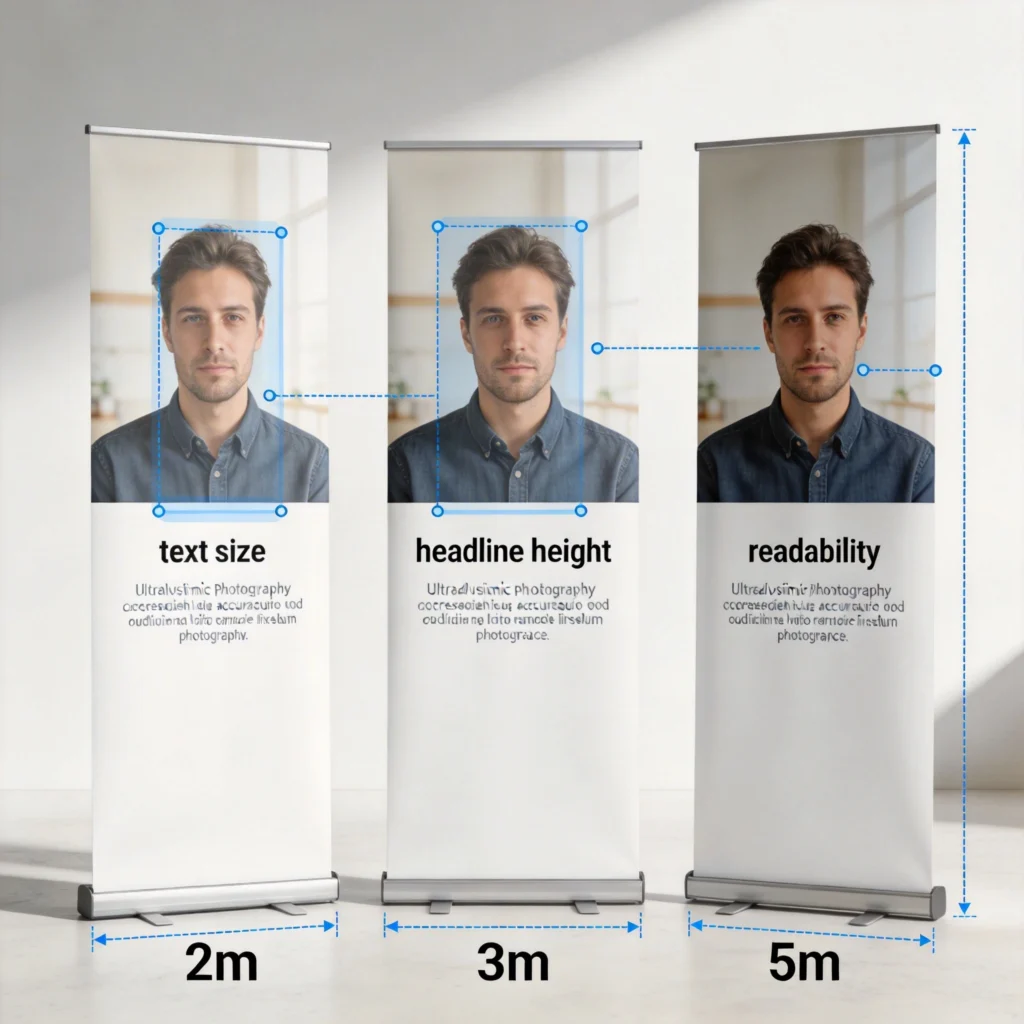
Viewing distance has a direct impact on your roller banner dimensions and typography choices. Headlines need to be large enough to read from 3–5 metres, while supporting text should remain clear at closer range. Aligning banner height and width with expected viewing distance helps you avoid cramped layouts or oversized, wasted space.

Roller banner dimensions directly influence how large your text and images must be to remain legible at real-world distances. A 200 cm tall graphic viewed from 4 metres away needs 7–10 cm high headlines, while body text below 2 cm becomes hard to read in dim conference lighting. Planning typography around distance prevents clutter and wasted content.

Relating banner height to text size and viewing distance

Designers often use a rule of thumb that 1 cm of letter height is readable from roughly 40 cm. For roller banners, this means a 7 cm headline can be read at about 3 metres, ideal for exhibition aisles. If your roller banner size is only 160 cm tall, you may need to sacrifice secondary copy so headlines and key benefits remain legible from 2–3 metres.

Using imagery and white space effectively on taller banners

Taller 200 cm banners allow generous white space above and below focal images, which improves scanning speed from a distance. Large product photos occupying 60–70% of the height work well when people are 3–5 metres away, while lifestyle imagery should avoid tiny details. Overfilling a slim 60 cm banner with multiple photos reduces impact because each element becomes visually insignificant.

4
roller banner size

Designing Artwork to Fit Roller Banner Sizes Accurately

Designing artwork correctly for your chosen roller banner size prevents issues like clipped logos, misaligned feet and visible unprinted edges. Printers usually specify exact graphic dimensions, including bleed and the hidden area that remains inside the cassette. Setting your file to the wrong size by even 5–10 mm can create white lines or cut off safety information.

Designing Artwork to Fit Roller Banner Sizes Accurately

Different venues demand different roller banner sizes. A compact 80 cm wide unit works well in tight reception areas, while wider 120–150 cm systems are better suited to exhibition stands or stage backdrops. Matching banner width to available floor space ensures your display feels integrated rather than intrusive or underwhelming.

Setting up artwork files with bleed and safe zones

Most roller banners require 3–5 mm bleed on all sides, so a visible area of 800 x 2000 mm becomes a file size of 806–810 x 2006–2010 mm. Designers should also allow 70–100 mm at the bottom for the cassette clamp, keeping text at least 50 mm above this. Safe zones of 10–20 mm from each edge prevent important elements from appearing too close to trims.

  • Ask your printer for an exact roller banner template with bleed, visible area and cassette allowance clearly labelled.
  • Set resolution to 150–200 dpi at full size; 300 dpi is rarely necessary and increases file weight.
  • Convert text to outlines and embed images so fonts or links do not change during pre-press processing.
  • Keep background colours and images extending into bleed, avoiding hard edges that highlight minor trimming shifts.
  • Place logos at least 150–200 mm from the top edge to avoid visual cropping by ceiling bulkheads or lighting rigs.
5

Custom Roller Banner Size Options and When to Go Bespoke

While standard roller banner dimensions cover most scenarios, certain environments benefit from custom sizes. Museums, galleries and brand activations often need displays that align with architectural features or specific product plinths. Bespoke roller banner size options allow you to match heights to shelving, counters or stage sets so branding integrates seamlessly rather than feeling like an afterthought.

Custom Roller Banner Size Options and When to Go Bespoke

Comparing standard and custom roller banner dimensions

Custom roller banners can be produced at heights from 150–250 cm and widths from 50–240 cm, depending on hardware systems. Taller 230–250 cm banners work well in atriums with 3–4 metre ceilings, while ultra-wide 240 cm units can replace small backdrops. However, non-standard cassettes and print runs increase costs by 20–40% compared with off-the-shelf 80–100 cm systems.

Cost and specification differences by size category

Understanding how price scales with size helps you decide whether bespoke dimensions genuinely add value. Larger banners use more material and often heavier bases, which affect shipping and manual handling. For campaigns needing ten or more units, even a £15 difference per banner quickly multiplies, so carefully weigh visual benefit against budget constraints.

Banner width Typical height Approx. graphic area (m²) Typical unit price (ex. VAT) Recommended use
60 cm 200 cm 1.20 £35–£45 Corridors, small retail displays, simple directional messaging
80 cm 200 cm 1.60 £40–£60 General exhibitions, receptions, training rooms
100 cm 200 cm 2.00 £55–£80 Conference stages, product launches, open foyers
150 cm 200 cm 3.00 £95–£140 Backdrops for interviews, photo walls, demo areas
200 cm 200 cm 4.00 £130–£190 Large exhibition backdrops, branded stage sets
Custom 120 cm 230 cm 2.76 £90–£130 High-ceiling venues, premium retail, gallery installations

When considering custom roller banner size options, ask whether the unique dimension genuinely supports a design idea or solves a spatial problem. If the same impact can be achieved by combining two 80 cm banners, standard hardware might be more flexible. Bespoke sizes make the most sense for long-term installations where the stand remains in a single, precisely measured location.

6

Common Mistakes with Roller Banner Dimensions and How to Avoid Them

Common Mistakes with Roller Banner Dimensions and How to Avoid Them

Many roller banner problems stem from misunderstanding the difference between total graphic size and visible area. Designers sometimes treat the full height as usable, forgetting the 70–100 mm that disappears inside the cassette. This leads to cut-off logos, missing web addresses and awkward compositions that appear too low once the banner is assembled.

Frequent sizing and layout errors

Another recurring issue is scaling artwork created for A4 or A3 posters directly up to roller banner dimensions. Elements that looked balanced on a small page become oversized when stretched to 200 cm high, leaving no breathing room. Conversely, some teams shrink high-resolution images to fit file size limits, causing blurry graphics when printed at full banner height.

Always design at the final roller banner size, not as a scaled-up poster. This approach forces you to consider real viewing distances, text hierarchy and safe zones, dramatically reducing the risk of unreadable copy, distorted logos or key information disappearing into the cassette mechanism.

Technical pitfalls during file export and submission

Export settings can undermine otherwise perfect layouts. Supplying a 72 dpi RGB file intended for web use means colours shift on press and fine text softens. Oversized PDFs without fonts embedded may fail during RIP processing, delaying production. Checking colour mode, resolution and embedded assets before upload avoids emergency re-exports close to print deadlines.

7

Roller Banner Size Checklists Before Sending to Print

A structured pre-print checklist helps you catch roller banner size issues before they reach production. Spending five minutes verifying dimensions, bleed and orientation can save days of reprinting and courier delays. Treat this review as the final quality gate, especially when multiple languages or regional variations share a common design template.

Roller Banner Size Checklists Before Sending to Print

Technical size and resolution checks

Begin by confirming the document size matches the printer’s specification, including bleed and cassette allowance. Measure headline heights on-screen using rulers to ensure they meet your viewing distance requirements. Then verify that raster images sit between 150–200 dpi at full size; anything significantly lower risks visible pixelation, especially on large gradient areas or product photos.

Check item Target value How to verify Why it matters
Document size e.g. 806 x 2100 mm Inspect artboard or canvas settings Prevents scaling that distorts text and logos
Bleed 3–5 mm all sides View document bleed guides Avoids white edges after trimming
Safe zone 10–20 mm inside edges Toggle layout guides Keeps key content away from trims
Resolution 150–200 dpi at size Check image properties Ensures crisp photos and icons
Colour mode CMYK profile set Inspect document colour settings Reduces colour shifts in print
Bottom allowance 70–100 mm clear Measure from bottom edge Prevents cassette from hiding text

After technical checks, perform a real-world test by viewing the PDF at 25–50% zoom on a standard monitor, simulating a 2–4 metre distance. If headlines and calls to action are not immediately clear, increase type sizes or simplify copy. Confirm that the roller banner size chosen still suits your venue and that any multiple banners align visually when placed side by side.

Cart