Menu
Shopping Cart
Close

Online Banner Printing: How to Order Banners with Confidence

Nervous about ordering banners online for the first time? When deadlines and budgets are tight, guessing your way through sizes, materials and artwork settings can feel risky. With a clear process, though, online banner printing becomes predictable, letting you focus on your event or campaign instead of worrying about costly reprints.

Online banner printing streamlines everything from choosing materials to approving proofs, but only when you understand how each step affects the final result. By learning how roller banners and vinyl banners behave in real venues, you avoid surprises like curl, glare or unreadable text. Knowing which questions to ask your printer gives you control, even if you have never ordered print before.

First-time buyers often underestimate how resolution, bleed and stand mechanisms influence both appearance and durability. A banner printed at 72 dpi might look fine on screen yet appear pixelated from two metres away. This guide explains each stage, using practical numbers, examples and checks you can apply immediately. You will finish with a repeatable workflow you can use for every future order.

Instead of treating the process as a technical mystery, you will see how simple decisions—such as choosing 440gsm PVC instead of 610gsm, or single-sided rather than double-sided—impact price and performance. Whether you need one custom roller banner for a trade stand or ten custom vinyl banners for outdoor fencing, you will know exactly how to order with confidence.

1
online banner printing

Understanding Online Banner Printing: Roller vs Vinyl Banners

Understanding Online Banner Printing: Roller vs Vinyl Banners

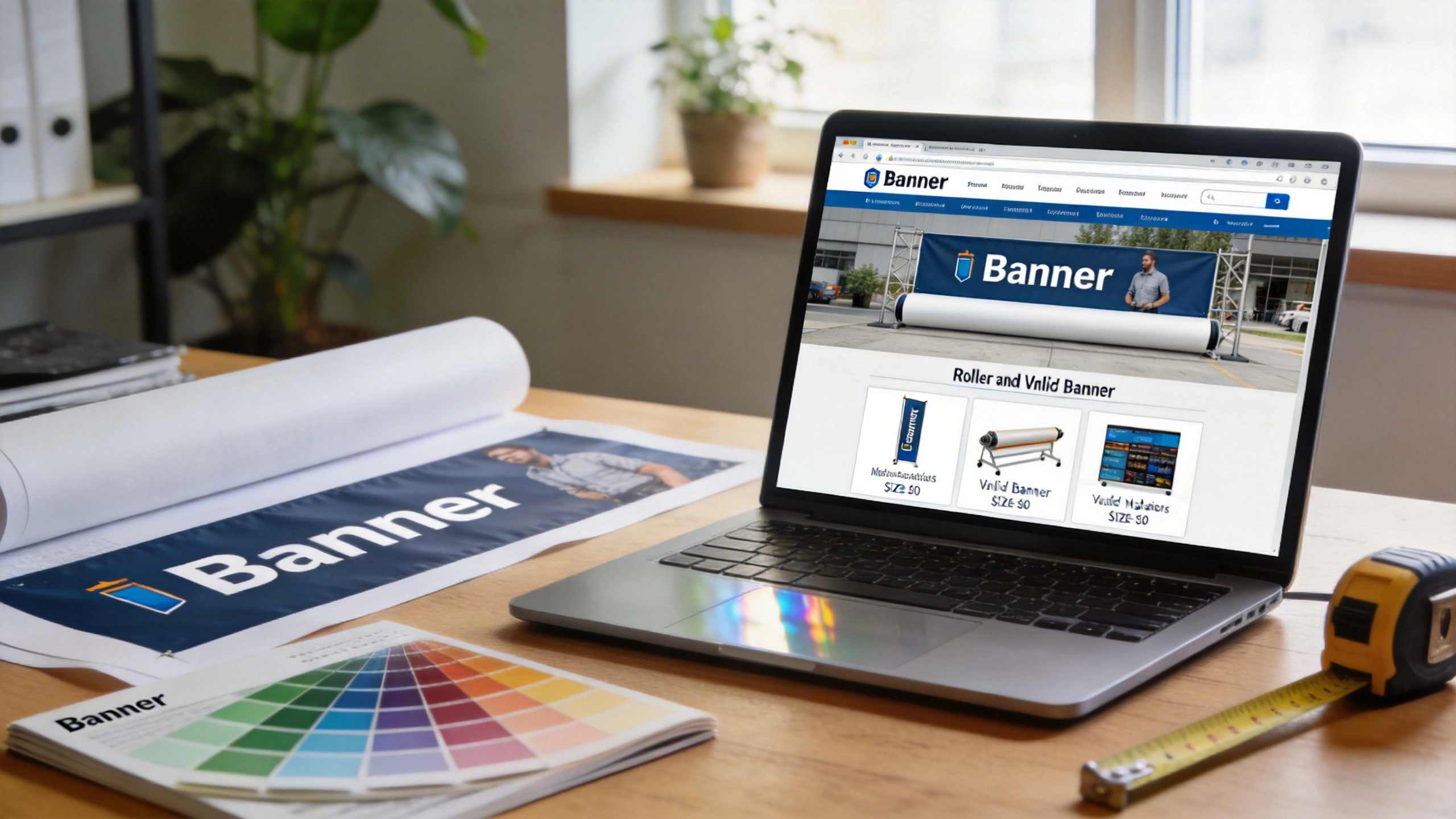
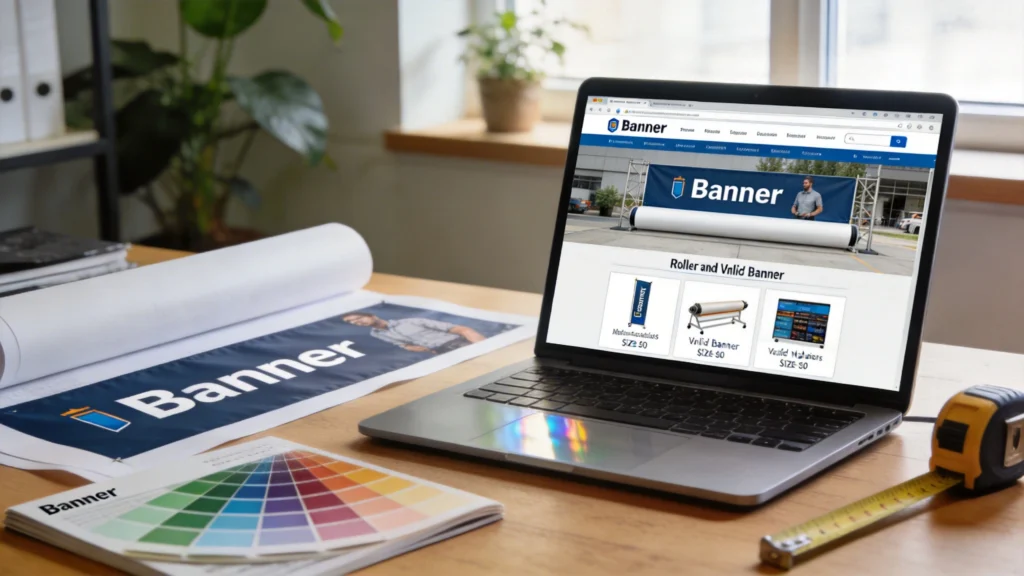
Seeing roller and vinyl banners side by side makes their differences obvious. Roller banners suit indoor events where you need quick setup and a professional, self-contained display. Vinyl banners, fixed with eyelets, excel when you need large, durable coverage on walls, railings or outdoors, especially where wind or changing weather might be an issue.

Before placing an order, it helps to understand how roller banners and vinyl banners differ mechanically and visually. Roller banners house the printed graphic inside a spring-loaded aluminium cassette, which protects it in transport and allows fast setup. Vinyl banners are flat sheets with eyelets or pole pockets, designed to be tied or fixed to structures indoors or outdoors.

Roller banners and how they work

A custom roller banner typically uses a 200–300 micron polypropylene or PVC film attached to a tensioned roller, similar to a window blind. When you pull the graphic up, support comes from a 15–20 mm aluminium pole inserted into the base. This design keeps the graphic flat, making it ideal for conference foyers, hotel receptions and shopping centres where setup must take under two minutes.

Vinyl banners and typical applications

Custom vinyl banners are printed on 440–610 gsm PVC, mesh or eco alternatives, then finished with 10–12 mm eyelets every 50–100 cm. Because they can span fences, scaffolding or railings, they suit outdoor promotions, school events and roadside campaigns. Vinyl withstands wind and rain better than roller films, especially when you choose mesh material that lets air pass through, reducing strain on fixings and structures.

2

How to Choose the Right Product in an Online Banner Printing Shop

Online banner printing sites often present dozens of options, and understanding the product filters prevents you choosing an unsuitable format. Start by matching banner type to viewing distance and environment. For example, a 200 cm high roller banner works well in exhibition halls, whereas a 3 × 1 m vinyl banner suits roadside railings where drivers view from 15–30 metres away.

How to Choose the Right Product in an Online Banner Printing Shop

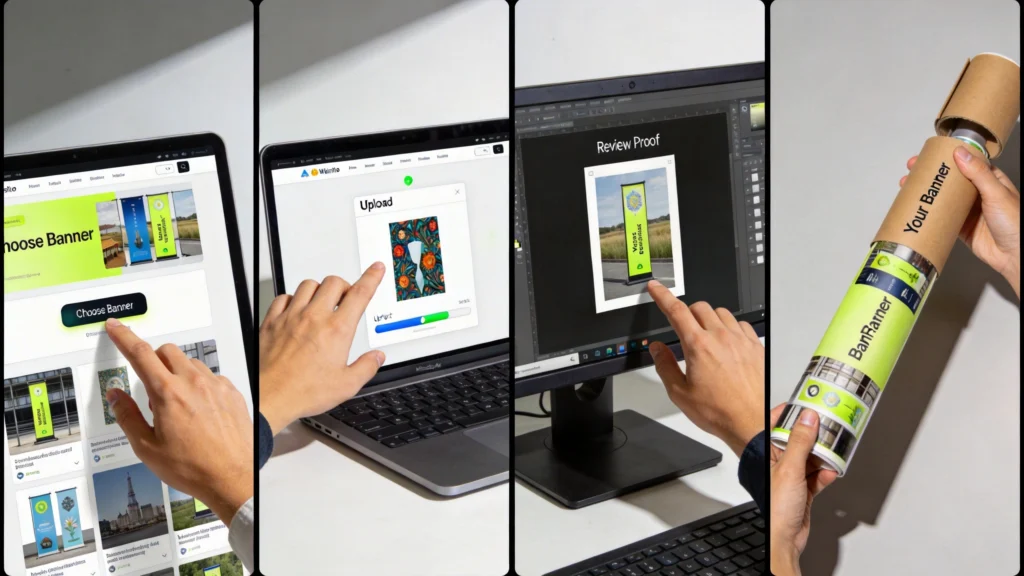
When you understand the ordering steps, the process becomes simple: choose the right banner type, enter accurate dimensions, upload your prepared artwork, then carefully review the digital proof before approving. Once you’re happy, production and shipping follow, turning your on‑screen design into a physical banner ready for your event.

Interpreting categories, specs and finishes

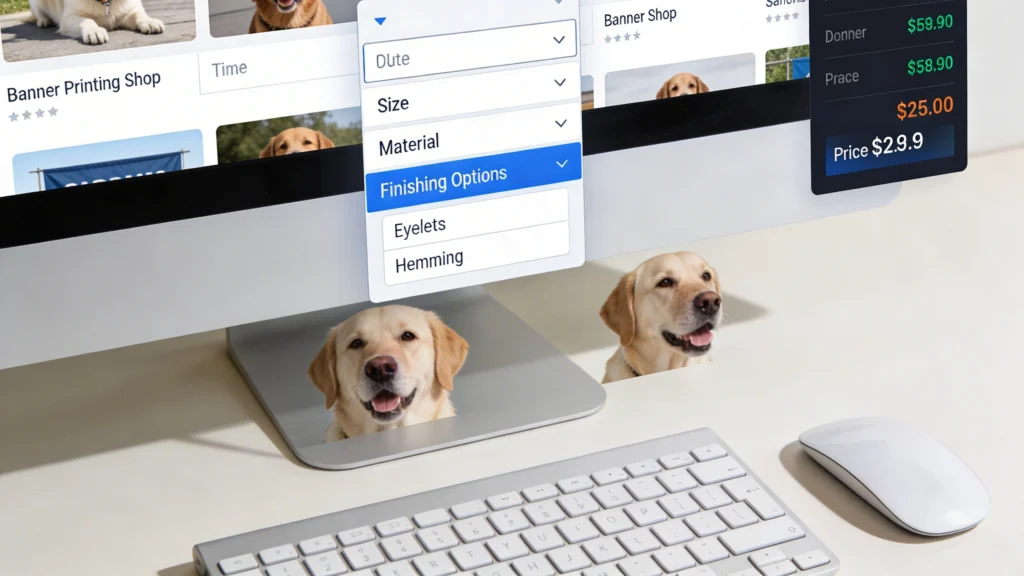
Product pages usually list width, height, material weight in gsm and stand type. A 850 mm wide roller banner balances portability and visibility, while 1000 mm or 1200 mm widths suit larger shell schemes. For vinyl, look for 440 gsm PVC for standard use and 510–610 gsm for long-term or windy sites. Eyelets, pole pockets and hemming are finishing options that determine how you can hang or tension the banner safely and neatly.

When comparing products, prioritise viewing distance, installation method and lifespan over headline price. A slightly more robust material or wider size can increase impact by 30–40%, often generating more responses than the saving from a cheaper, undersized option. Think in terms of cost per day or cost per thousand impressions, not only unit price.

Using templates and product images effectively

Most printers provide downloadable templates in PDF, AI or PSD formats with trim, bleed and safe areas clearly marked. Downloading the exact size template—such as 800 × 2000 mm for a slim custom roller banner—prevents scaling errors later. Product photos and 3D mockups also reveal how much of the design sits near the floor or at head height, guiding where to place logos, headlines and calls to action for maximum legibility.

3

Preparing Artwork Files for Online Banner Printing

Preparing Artwork Files for Online Banner Printing

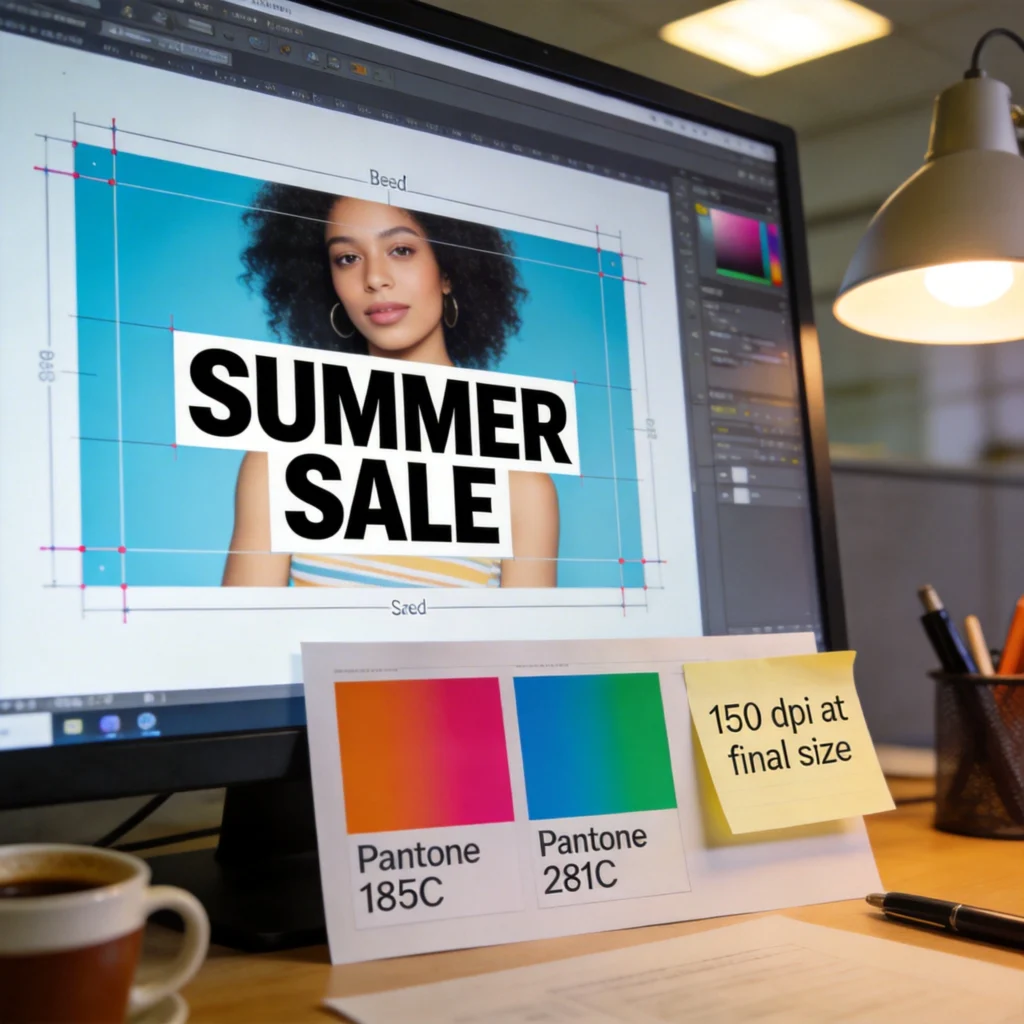
Preparing artwork correctly is crucial for sharp, predictable results. Setting your banner file to the final size, using at least 150 dpi and keeping key text within safe margins prevents unwanted cropping or blur. Adding bleed and converting colours to CMYK further reduces surprises between what you see on screen and what gets printed.

Artwork preparation is where many online banner printing problems begin, yet following a few clear rules eliminates most issues. Printers typically ask for print-ready PDFs at 150–300 dpi at final size, with 3–5 mm bleed on all sides. Using these settings ensures sharp text and smooth gradients, even on large 2 m high graphics viewed from close range.

File formats, resolution and bleed settings

Exporting artwork as a high-resolution PDF/X-1a or PDF/X-4 preserves fonts and colour profiles more reliably than JPEG or PNG. For roller banners, set your document to the full visible height plus 100 mm extra at the bottom if the template specifies panel drop. Maintain at least 150 dpi at full size; 300 dpi is safer for small text or detailed images. Always include 3–5 mm bleed so backgrounds extend beyond the trim line.

Colour, fonts and safe areas

Convert colours to CMYK using a standard profile such as FOGRA39 or Coated GRACoL, since RGB files can shift by 10–15% in saturation when converted automatically. Keep critical text at least 40–50 mm from the top and bottom edges on a custom roller banner to avoid the cassette and pole shadows. Embed or outline fonts when exporting so they do not substitute unexpectedly on the printer’s RIP software.

4

Step-by-Step: Placing Your First Online Banner Printing Order

Once your artwork is ready, the online ordering process becomes a series of predictable steps. Moving methodically through size selection, material choices and upload checks reduces the chance of mistakes. Most reputable printers show a live price update as you change options, letting you balance budget and impact in real time before committing.

Step-by-Step: Placing Your First Online Banner Printing Order

A well-designed online banner printing shop walks you through each decision step by step. As you select size, material and finishing options like eyelets or pole pockets, you can see how these choices change the price. This transparency lets you balance impact and budget without sacrificing essential durability or readability.

Ordering workflow for online banner printing

The easiest way to approach your first order is to break it into clear actions, checking each one carefully before moving forward. The sequence below mirrors how major UK printers structure their checkout, so you can keep this list beside you and tick off each stage as you go.

  • Select banner type, size and quantity, noting viewing distance and venue restrictions like ceiling height or wind exposure.
  • Choose material, stand quality and finishing, comparing gsm weights, cassette styles and eyelet spacing for installation needs.
  • Upload artwork as a print-ready PDF, confirming file size, bleed, resolution and embedded fonts match the printer’s specification.
  • Review on-screen preview or soft proof, checking text legibility, margins, logo placement and contact details at 100% zoom.
  • Confirm delivery address, turnaround speed and payment, then save confirmation email and proof reference for future reorders.
5

Proofing, Colour Accuracy and Quality Control in Online Banner Printing

Proofing is your final chance to catch errors before the printer commits ink to material. Online banner printing services usually provide either an automated preview or a manually checked PDF proof. Treat this stage as seriously as signing off a press advert, because correcting a typo after printing often means paying again and missing your deadline.

Proofing, Colour Accuracy and Quality Control in Online Banner Printing

Digital proofs and what to check

When you receive a digital proof, zoom to 100–150% and scan line by line for spelling, phone numbers, URLs and QR codes. Pay attention to elements near the cassette on a custom roller banner, ensuring nothing essential sits within the bottom 100 mm. Verify that bleed is present and that background colours or images extend beyond the trim to avoid white edges after cutting.

Managing colour expectations and consistency

Because banners are printed in CMYK on PVC or polypropylene, colours rarely match backlit RGB screens perfectly. Expect minor shifts, especially in bright blues, oranges and neons. For brand-critical work, request a printed sample strip or A3 proof, which may cost £10–£25 but saves far more on large campaigns. Keep a record of approved CMYK values so future custom vinyl banners remain visually consistent.

6

Shipping, Turnaround and Deadlines for Online Banner Printing

Delivery timing is as crucial as design quality, particularly when events have fixed dates. Most UK online banner printing companies offer standard production of two to three working days plus 24–48 hours for courier shipping. Understanding these windows helps you reverse-plan from your event date, building in buffers for artwork changes and unforeseen courier delays.

Shipping, Turnaround and Deadlines for Online Banner Printing

Typical production options and planning timelines

When checking product pages, look for clear statements such as “order by 2pm for same-day dispatch” or “3–5 working days production.” For a Saturday trade show, aim for banners to arrive by Wednesday, giving at least one spare day for reprints if couriers misroute parcels. Always factor in bank holidays, which can add 24–72 hours to both manufacturing and delivery schedules.

Service Level Production Time Delivery Time Typical UK Cost
Standard 3 working days 2 working days £8–£12 per order
Express 2 working days Next working day £12–£18 per order
Next-Day Print Same day if by 11am Next working day £18–£30 per order
Economy 5 working days 3–5 working days £5–£8 per order
Click & Collect 1–2 working days Collection only Often free

Choosing the right service level depends on how critical your deadline is and how flexible your budget feels. For flagship events or launches, upgrading to express or next-day print often costs less than 10–15% extra on a small order. That increment buys significant peace of mind, especially when flights, venue hire and staffing depend on banners arriving on time.

7

Cost-Saving Tips When Using Online Banner Printing Services

Managing costs does not mean compromising on impact; it means aligning specification with real-world use. Many first-time buyers overspecify materials or order multiple small banners when one larger piece would work better. By understanding how printers price jobs—based on material area, machine setup time and finishing—you can reduce your spend without sacrificing visibility.

Cost-Saving Tips When Using Online Banner Printing Services

Practical ways to reduce banner costs

Several small decisions can cumulatively shave 20–30% off your banner budget while maintaining professional results. The ideas below focus on quantity planning, material selection and design choices that avoid unnecessary reprints, especially when ordering both a custom roller banner and supporting custom vinyl banners for the same campaign.

  • Batch multiple designs in one order, using the same size and material to share setup costs across several banners.
  • Choose standard widths like 800 mm or 850 mm, which fit common stands and often benefit from bulk material pricing.
  • Avoid date-specific text so banners remain reusable for future events, reducing reprint frequency and long-term expenditure.
  • Use 440 gsm PVC instead of heavier grades for short campaigns under three months, balancing durability and lower material cost.
  • Proofread carefully and share PDFs with colleagues, preventing reprints caused by avoidable typos or outdated contact information.
8
custom roller banner

When to Choose Custom Roller Banners or Custom Vinyl Banners Online

When to Choose Custom Roller Banners or Custom Vinyl Banners Online

Deciding between a custom roller banner and custom vinyl banners comes down to mobility, space and weather exposure. Roller banners excel at indoor events where you set up and pack down repeatedly, such as recruitment fairs or product demos. Vinyl banners shine when you need large-scale visibility outdoors or across wide spaces like fences, railings or building facades.

Matching banner type to your marketing goal

For brand introductions or premium displays, a high-quality custom roller banner with a grey-back, anti-curl film projects a polished look in reception areas. If your objective is directional signage or price promotions spread across a forecourt, multiple 2 × 0.7 m custom vinyl banners provide broader coverage. Consider how often you will move the banner and whether staff will be available to install fixings safely.

Combining formats for maximum impact

Many campaigns benefit from using both formats in a coordinated way. Place a roller banner at the entrance to capture attention at eye level, then hang vinyl banners along approach routes or queue barriers to reinforce the message. Ordering both from the same online banner printing supplier ensures colour consistency and allows you to negotiate better pricing on combined quantities and shared artwork elements.

Cart