Extra Sale 10% off

Menu
Shopping Cart
Close

Standard Roller Banner Size Guide for UK Printing

Order deadlines, venue specs and tight budgets leave little room for guesswork. If you choose the wrong roller banner dimensions, your artwork can pixelate, vital text may be cropped, or the stand might not even fit the space you’ve booked.

Knowing the correct standard roller banner size before designing artwork saves time, reprints and stress. In the UK, suppliers of roller banner UK hardware generally work to a small set of predictable widths and heights, so understanding these lets you brief designers accurately and pick the right stand from any printer’s catalogue.

When you understand how size links to viewing distance, font point sizes and image resolution, you can avoid common mistakes like unreadable contact details or stretched logos. This guide walks through standard formats, design implications, and event-based choices, so you can approach roll up banner printing with confidence, not trial and error.

We will also cover artwork setup, including bleed and safe zones, plus whether standard or custom dimensions make more sense for your particular campaign. By the end, you will know exactly which sizes to request, how to supply press‑ready files, and how to reuse successful layouts across different roller banner systems.

1
standard roller banner size

What Is a Standard Roller Banner Size in the UK?

What Is a Standard Roller Banner Size in the UK?

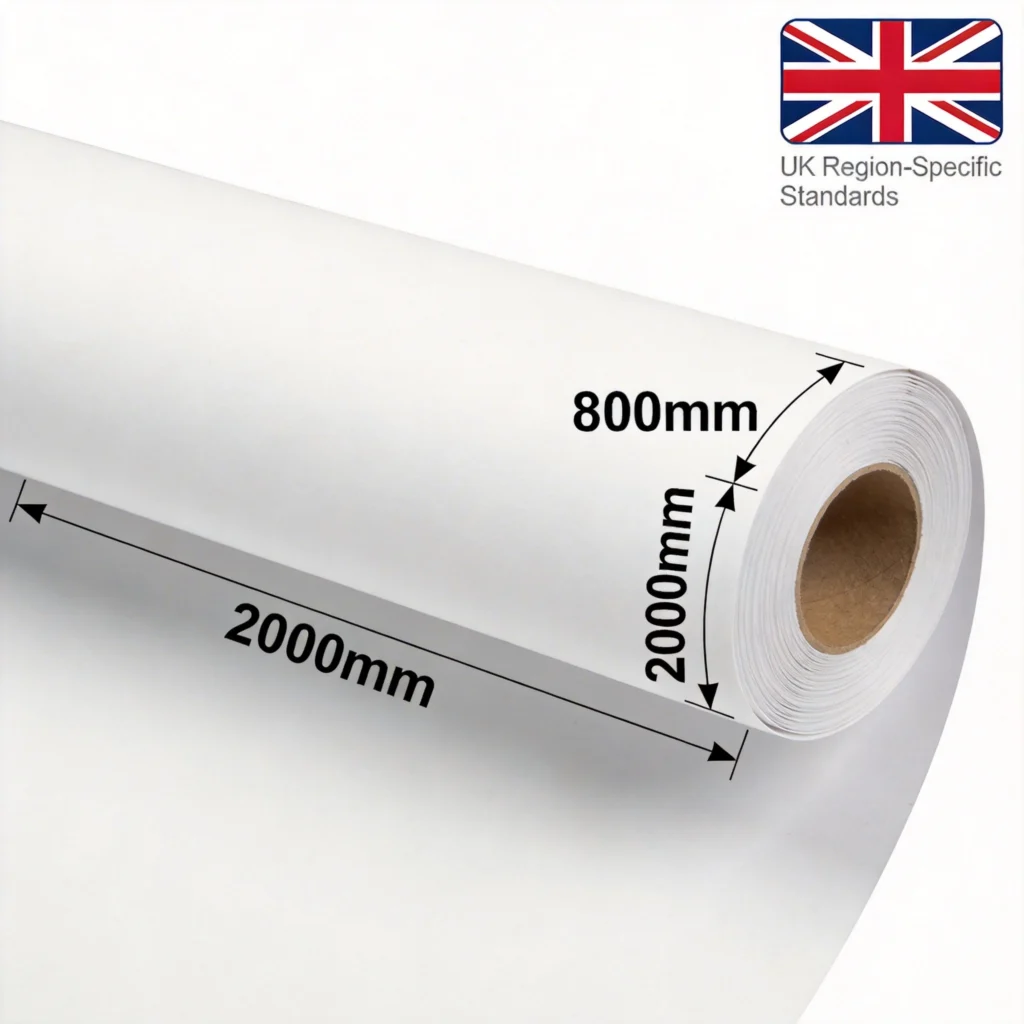
In the UK, a standard roller banner size is typically around 800mm wide by 2000mm high, though exact dimensions vary slightly between suppliers. Treat these figures as your starting canvas when briefing designers, ensuring key messages sit well within the visible area and nothing important risks disappearing into the cassette at the bottom.

Printers in the UK typically describe a standard roller banner size by its visible graphic area, measured in millimetres, rather than the cassette hardware. The most common convention is a width between 800 mm and 1000 mm, with heights from 2000 mm to 2200 mm, balancing portability with enough vertical space for headlines, imagery and calls‑to‑action.

UK sizing conventions vs international formats

While posters often follow A‑series formats, roller banners rarely match A0 or A1 exactly, because hardware manufacturers design cassettes around stable widths like 800, 850 or 1000 mm. In the UK, 800 × 2000 mm and 850 × 2150 mm dominate, whereas some European suppliers favour 850 × 2000 mm. Understanding this avoids assuming an A‑size and accidentally mis‑scaling artwork.

Visible area vs total print length

Another nuance is the difference between the visible graphic and the total printed height. A typical 800 × 2000 mm roller banner might require 2130 mm of printed material, with around 130 mm attaching inside the cassette. Designers must keep essential content within the visible 2000 mm, leaving the lower section for bleed and leader, ensuring no logos or URLs disappear into the base when assembled.

2
banner sizes

Common Standard Roller Banner Sizes and Dimensions

Most roller banner UK suppliers offer a small family of standard sizes, each suited to different budgets and display environments. Choosing among these is easier when you compare widths, heights and approximate costs side‑by‑side. The smaller widths prioritise portability and low price, while wider formats provide greater impact in busy environments such as exhibitions or shopping centres.

Common Standard Roller Banner Sizes and Dimensions

Choosing the right standard roller banner size depends heavily on where it will be used. A compact stand can work well for reception areas or small meeting rooms, while wider, taller banners are better for trade shows, conferences and stage backdrops where you need to attract attention from further away.

Key UK roller banner size comparisons

The table below outlines widely used standard roller banner sizes and their typical applications in the UK market. Dimensions are given as visible graphic areas, with approximate print prices based on mid‑range PVC or polyester film, printed full colour, single‑sided, from an online roll up banner printing supplier in 2025.

Size Label Visible Area (mm) Typical Use Approx. Price (ex VAT) Portability
Compact 600 × 1600 Counter displays, reception desks, tight retail corners £25–£35 Very light, fits small car boot easily
Standard 800 × 2000 General events, conferences, office lobbies £30–£45 Lightweight, easy one‑person setup
Premium Standard 850 × 2150 Trade shows, hotel foyers, education fairs £40–£65 Heavier base, more stable on busy floors
Wide 1000 × 2000 Shell scheme backdrops, product launches £55–£85 Bulky; better transported with trolley
XL Height 850 × 2400 High‑ceiling venues, shopping centres £65–£95 Taller mast, needs careful handling

By mapping your requirements to this table, you can quickly shortlist a suitable standard roller banner size. For example, a 600 × 1600 mm compact unit is ideal beside a till where customers stand within one metre, while a 1000 × 2000 mm banner creates a mini‑backdrop in a 3 m wide shell scheme without needing custom‑built exhibition walls or complex modular systems.

3

How Standard Roller Banner Size Affects Design and Readability

How Standard Roller Banner Size Affects Design and Readability

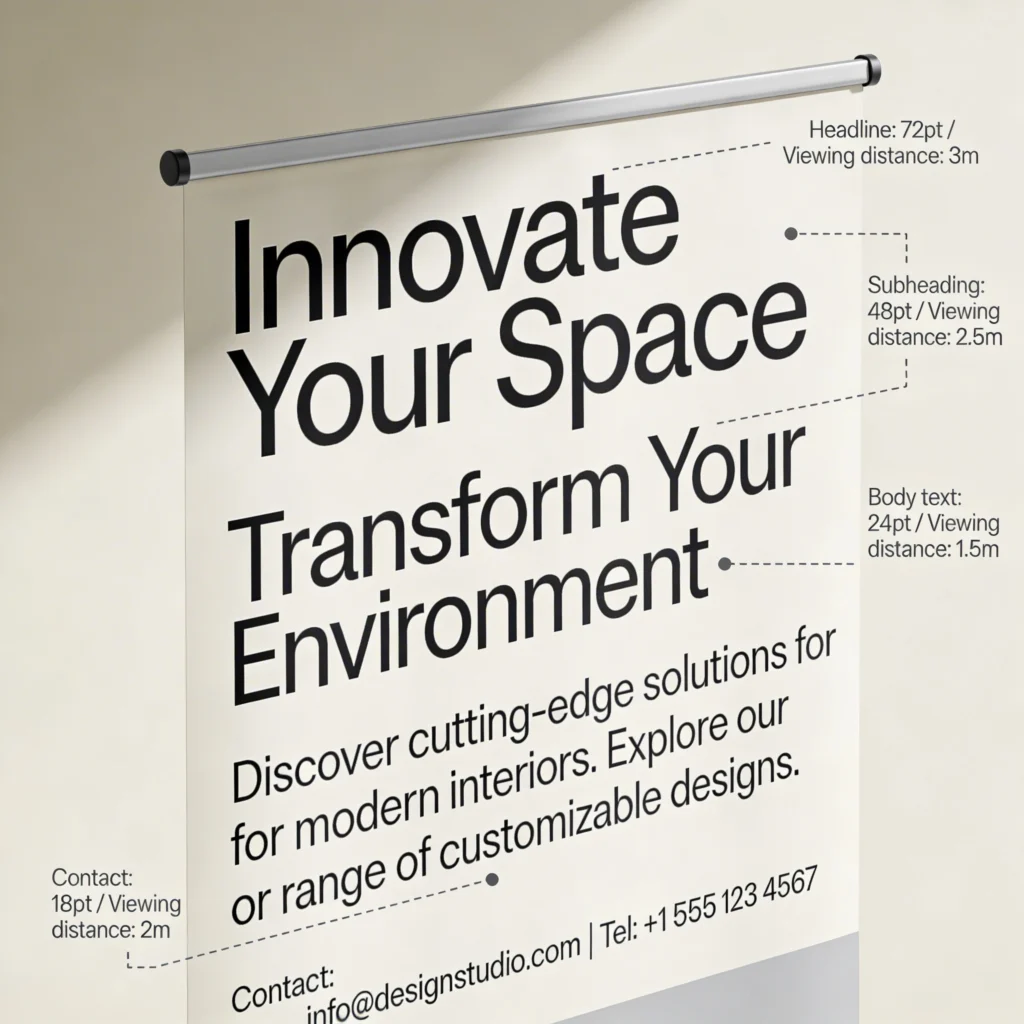
Banner size directly affects how easily people can read your content from typical viewing distances. Larger formats allow for bigger headlines and generous spacing, while smaller ones demand tighter editing and careful font choices. Planning a clear hierarchy of text sizes helps ensure your message is legible across busy venues and crowded aisles.

Banner size directly influences how people read your message at different distances. A narrow 600 mm banner viewed at one metre can use 40–60 pt body text comfortably, whereas a 1000 mm wide banner designed for three‑metre viewing needs headings around 150–200 pt. Matching font scale to viewing distance prevents wasted space or, conversely, overcrowded layouts that overwhelm visitors.

Balancing text hierarchy and white space

Larger roller banners tempt designers to fill every centimetre with text, but this reduces legibility. A useful rule is that no more than 40–50% of the visible area should contain dense copy; the rest should be imagery and white space. On an 800 × 2000 mm banner, that translates to roughly 0.6–0.8 square metres of text blocks, keeping messages scannable in under three seconds.

Image resolution and print sharpness

Because roller banners are usually viewed from one to three metres, 100–150 dpi at final size is often sufficient, unlike brochures which demand 300 dpi. For an 850 × 2150 mm banner, that means supplying images at roughly 3350 × 8480 pixels. Oversupplying resolution inflates file sizes without visible benefit, while undersupplying below 100 dpi risks fuzzy logos and pixelated product photos.

4

Choosing the Right Standard Roller Banner Size for Events

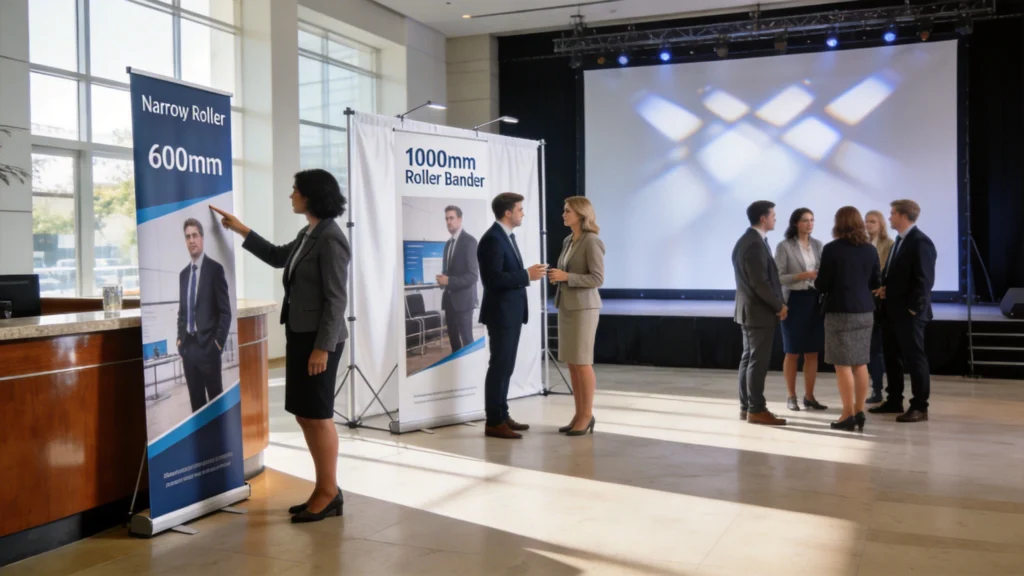
Selecting the right standard roller banner size means considering venue restrictions, audience flow and how the banner integrates with other displays. A cramped networking breakfast in a hotel bar might only allow 800 mm widths beside tables, while a 6 × 3 m exhibition stand can comfortably host multiple 1000 mm wide banners, forming a cohesive backdrop without blocking neighbouring exhibitors.

Choosing the Right Standard Roller Banner Size for Events

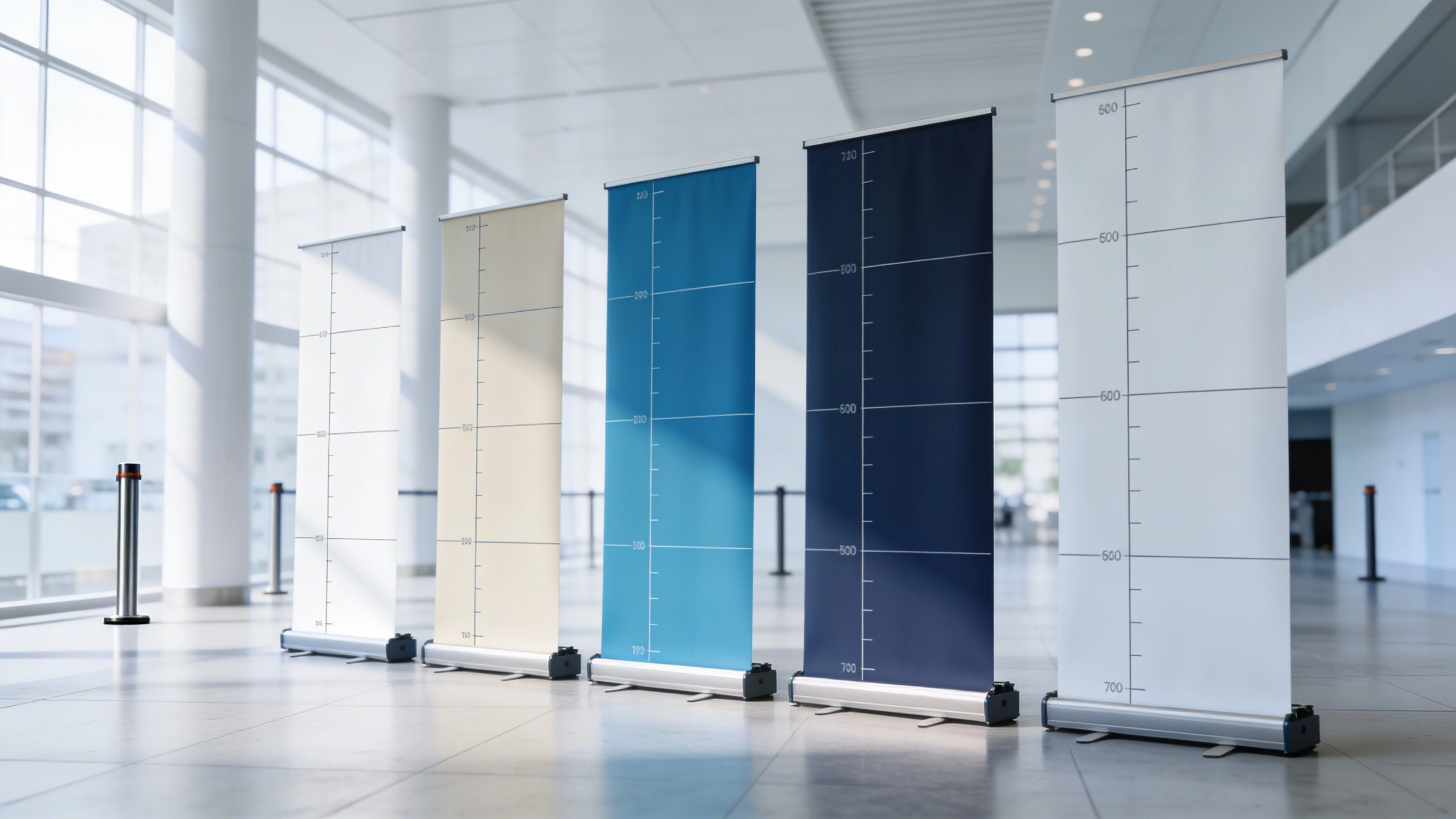
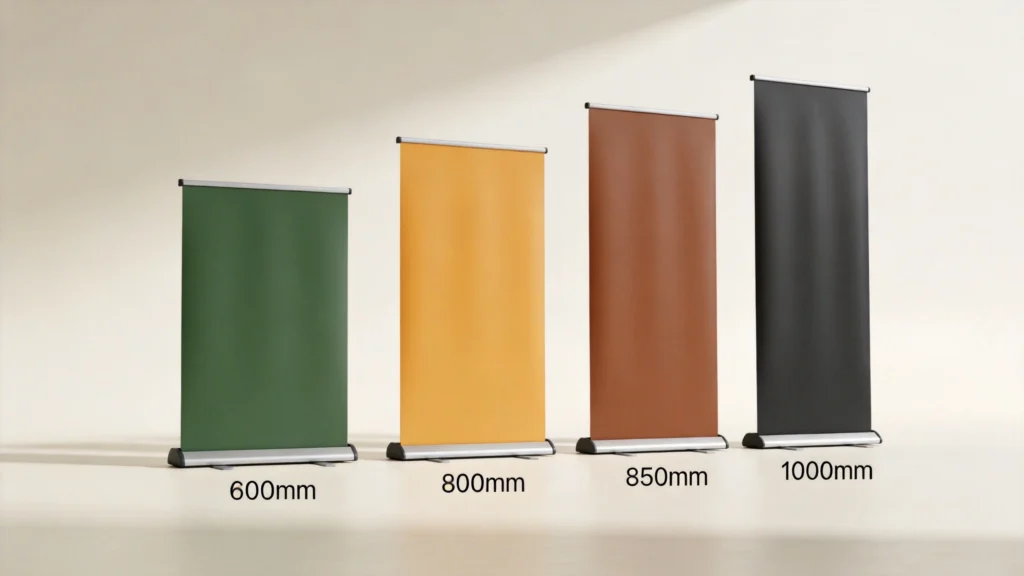
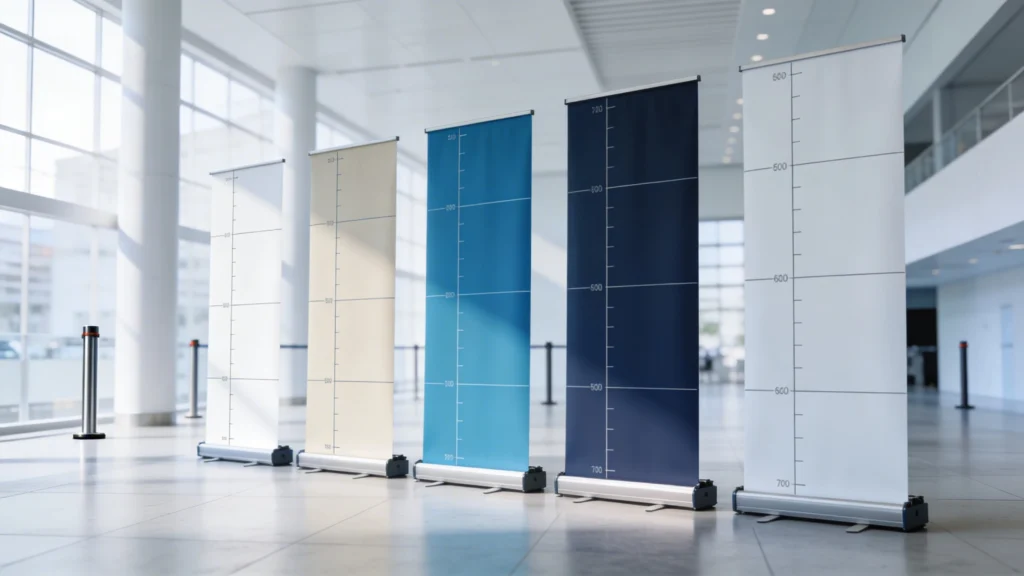
Common UK roller banner widths include 600mm, 800mm, 850mm and 1000mm, with heights usually around 2000mm or a little more. Lining these formats up side by side highlights how much extra visual impact wider stands offer, especially for bold imagery, while slimmer options are ideal when floor space or budgets are tight.

Event‑driven size selection checklist

Use the following checklist to narrow down options before you commit to roll up banner printing. Thinking through these factors early prevents last‑minute compromises, such as hiding a banner behind furniture or discovering your tallest stand clashes with low ceiling fixtures or wall‑mounted signage at the venue.

  • Measure maximum floor footprint allowed by organisers, including any 300–400 mm safety clearance from aisles or fire routes.
  • Check ceiling height and hanging signage; avoid 2400 mm banners where suspended truss lighting dips below 2500 mm.
  • Estimate viewing distance: one metre for reception desks, three to five metres for exhibition aisles or entrance lobbies.
  • Consider transport: compact sizes suit small cars, wider cassettes may require estate vehicles or wheeled cases.
  • Align with other graphics: match widths so multiple banners create a continuous visual wall without awkward gaps.
5

Standard Roller Banner Size vs Custom Sizes: Pros and Cons

Standard roller banner sizes benefit from economies of scale in both hardware manufacturing and print finishing. Cassettes, poles and padded bags are mass‑produced at fixed widths, so printers can stock them cheaply and print on pre‑cut rolls. Custom sizes disrupt this workflow, requiring manual trimming, special ordering and sometimes bespoke mechanisms, which all increase cost and extend lead times.

Standard Roller Banner Size vs Custom Sizes: Pros and Cons

When standard sizes are the smarter choice

For most marketing teams, standard formats cover 90% of use cases. They are cheaper, easier to replace and compatible with existing artwork templates. If you damage an 800 × 2000 mm banner, many printers can reprint within 24–48 hours because they hold hardware in stock. This reliability matters when exhibitions, product launches or open days cannot be rescheduled.

Where custom dimensions earn their keep

Custom sizes make sense when architecture or branding demands something unique, such as a 1200 mm extra‑wide banner spanning a podium, or a 1500 mm high unit sitting on a stage where the lower section would be obscured. However, expect surcharges of 20–40% and lead times of five to ten working days, as printers must adapt finishing equipment and sometimes source non‑standard cassettes.

6

Artwork Setup for Standard Roller Banner Size Printing

Artwork Setup for Standard Roller Banner Size Printing

Supplying artwork correctly for a standard roller banner size avoids costly reproofs and delays. Most UK printers request print‑ready PDFs in CMYK, with fonts embedded and images at sufficient resolution. For a typical 800 × 2000 mm banner, bleed of 3–5 mm on all sides and a 100–150 mm bottom extension for the cassette leader are common, so templates should reflect these extra areas.

Bleed, safe zones and file dimensions

Designers should build files at full size, plus bleed. For an 850 × 2150 mm banner with 3 mm bleed, the document becomes 856 × 2156 mm, plus any extra leader height specified by the printer. Keep crucial content—logos, calls‑to‑action, key text—at least 50–70 mm from all edges, forming a safe zone that tolerates minor trimming variance and cassette tolerances during production.

Colour profiles, file formats and preflight checks

Most roll up banner printing workflows use CMYK profiles such as FOGRA39 or FOGRA51, so convert RGB artwork before export to prevent unexpected colour shifts. Supply PDFs using PDF/X‑1a or PDF/X‑4 standards, with transparencies flattened where requested. Always run a preflight check for missing fonts, low‑resolution images and spot colours, reducing the risk of last‑minute corrections or washed‑out corporate branding.

7

Frequently Asked Questions About Standard Roller Banner Sizes

Clients often ask similar questions when ordering a roller banner UK wide for the first time. Clarifying measurement units, hardware compatibility and artwork reuse helps you plan campaigns more strategically. Understanding which elements can be standardised, and which must change between sizes, lets marketing teams create modular designs that adapt across multiple events and display systems.

Frequently Asked Questions About Standard Roller Banner Sizes

Common queries and practical answers

The points below address recurring concerns around standard roller banner size choices. They cover units, reusing artwork and mixing different stands within the same campaign. Treat them as a quick reference before speaking with your printer, so your brief contains all the technical information needed for accurate quoting and trouble‑free production.

  • Measurements are usually in millimetres; convert by multiplying centimetres by ten or inches by 25.4 for accuracy.
  • Artwork for 800 × 2000 mm can sometimes scale to 850 × 2150 mm, but check logo and text proportions carefully.
  • Hardware is not universally interchangeable; a print for one cassette rarely fits another manufacturer’s mechanism precisely.
  • Reusing designs across sizes works best with flexible background imagery and modular text blocks, not rigid frame graphics.
  • Outdoor roller banners require heavier bases and weather‑resistant media; indoor cassettes are unsuitable for exposed locations.

By addressing these questions early, you avoid surprises such as discovering that an older print cannot be retrofitted into a new cassette, or that an 800 mm design looks cramped when stretched to 1000 mm. Planning around standard sizes, and documenting which artwork versions match which hardware, turns your roller banner library into a reusable, long‑term asset.

Cart