Menu
Shopping Cart
Close

Complete Guide to Pop Up Banner Stands for UK Events

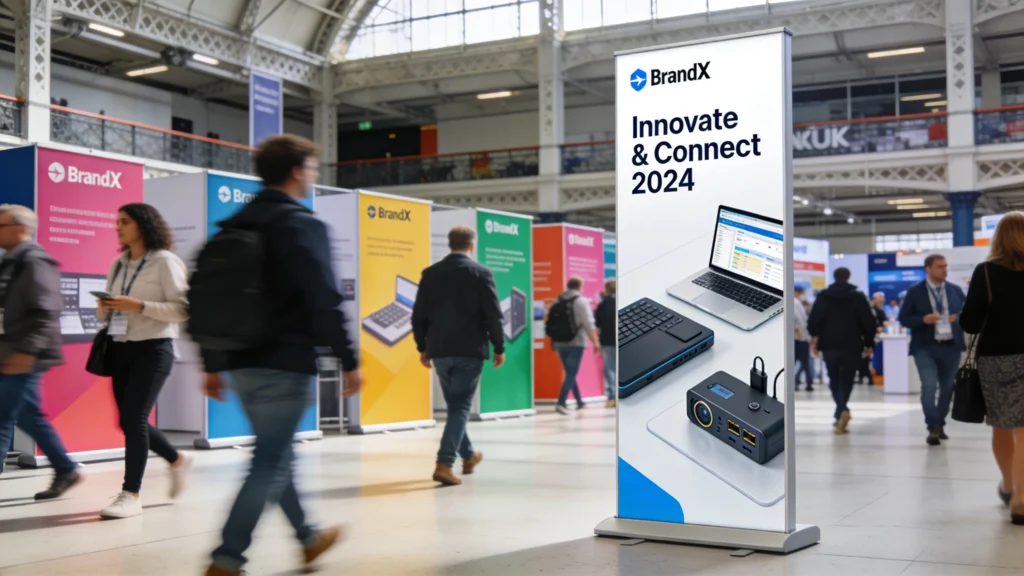
Busy UK events move fast, and you often have less than three seconds to catch someone’s eye. Pop up banner stands give you a tall, branded canvas that assembles in under a minute, so you can claim visual space even in crowded exhibition halls, hotel foyers or village halls without needing tools or a large build team.

Pop up banner stands are one of the most cost-effective ways to add height, colour and messaging to your event presence. A typical stand in the UK costs between £40 and £160, yet can be reused at dozens of trade shows, conferences and community events. When designed well, a single banner can generate hundreds of impressions per hour and guide visitors directly to your stand.

For marketers and organisers ordering pop up banners UK wide for the first time, the range of hardware, sizes and print options can feel confusing. You’ll see terms like roller banners, cassette systems, wide pop up display banners and modular frames used interchangeably. Understanding the differences helps you avoid flimsy hardware, pixelated graphics or stands that don’t comply with venue rules.

This guide walks through how pop up banner stands work, which types suit different events, and what to look for in materials, print resolution and mechanisms. You’ll also learn how to transport, store and maintain stands so they last three to five years, plus what typical UK prices and bundles look like when you’re comparing suppliers online.

1
pop up banner stands

What Are Pop Up Banner Stands and How Do They Work?

What Are Pop Up Banner Stands and How Do They Work?

Pop up banner stands work on a simple retractable mechanism: the printed graphic rolls into a base cassette and pulls up in seconds, locking onto a lightweight pole. This tool-free setup makes them ideal for small teams who need to arrive, assemble and start engaging visitors without complex installation or long build times.

Pop up banner stands are portable display systems where a printed graphic pulls out of a weighted base and locks onto a support pole. The tensioned mechanism keeps the banner flat, while the base protects the print during transport. Most pop up banners UK suppliers sell use aluminium hardware and PVC or polyester graphics, balancing durability with manageable weight for frequent travel.

Core Components and Mechanism

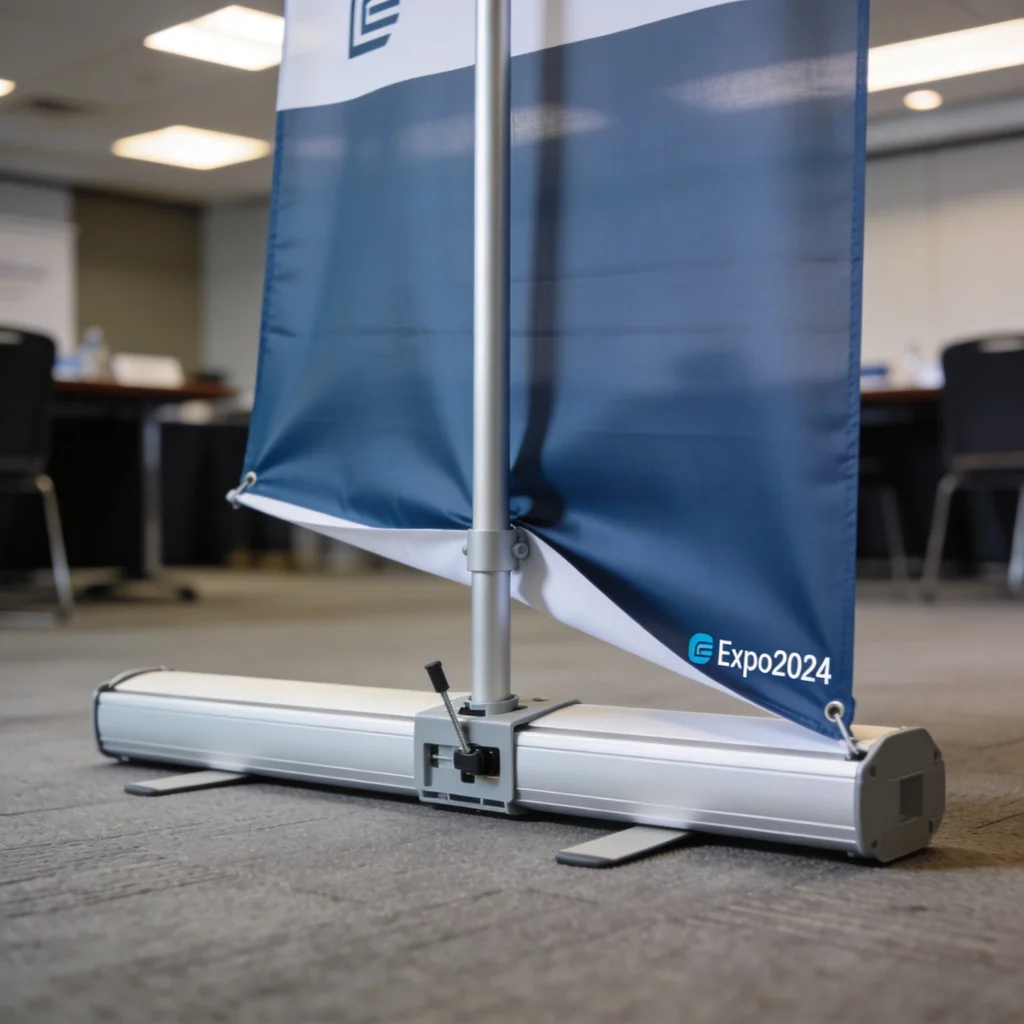
A standard pop up banner stand combines three key components: the base cassette, the telescopic or sectional pole, and the printed panel. Inside the base, a spring-loaded roller winds the graphic tightly when retracted. During setup, you extend the pole to around 2,000 mm height, pull the banner up, then hook a rail onto the pole top. The mechanism tensions the print evenly, preventing unsightly ripples.

How Pop Up Banners Differ from Other Displays

Pop up banner stands differ from larger pop up display banners, which usually use folding lattice frames and multiple panels to create backwalls. Compared with rigid foamex boards or shell-scheme graphics, roller banners assemble faster and require no tools or wall fixings. They also pack into carry bags roughly 900 mm long, fitting easily into car boots or train luggage racks for regional events.

2
pop up banner stand

Why Pop Up Banner Stands Are Essential for UK Events

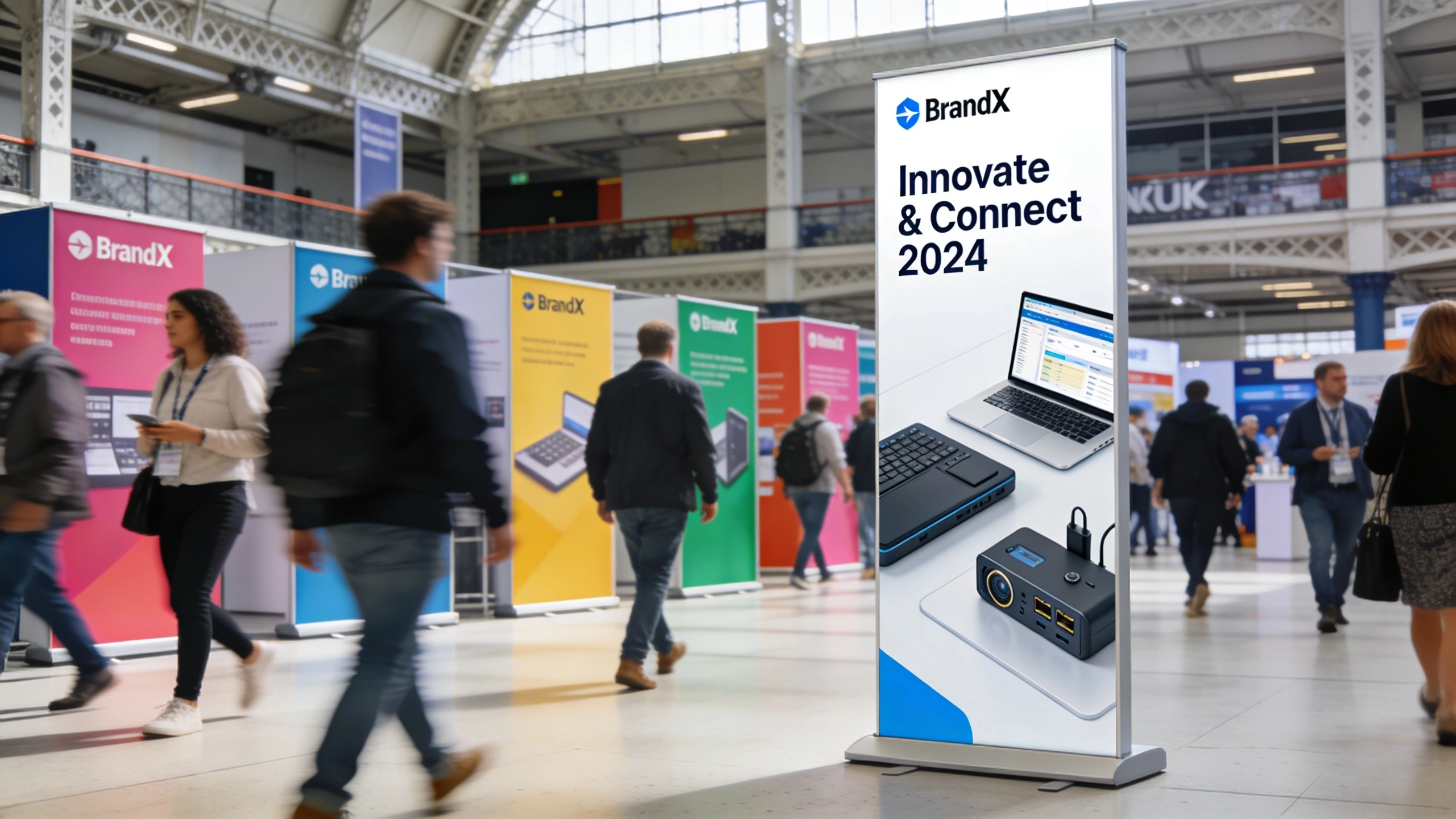
Event organisers value pop up banner stands because they create vertical branding in venues where floor space and build time are heavily restricted. At UK trade shows, shell-scheme plots often measure 3 m × 2 m, leaving little room for bulky structures. A slim 800 mm banner sits neatly at the stand edge, directing traffic, while still allowing furniture, literature racks and demo areas behind it.

Why Pop Up Banner Stands Are Essential for UK Events

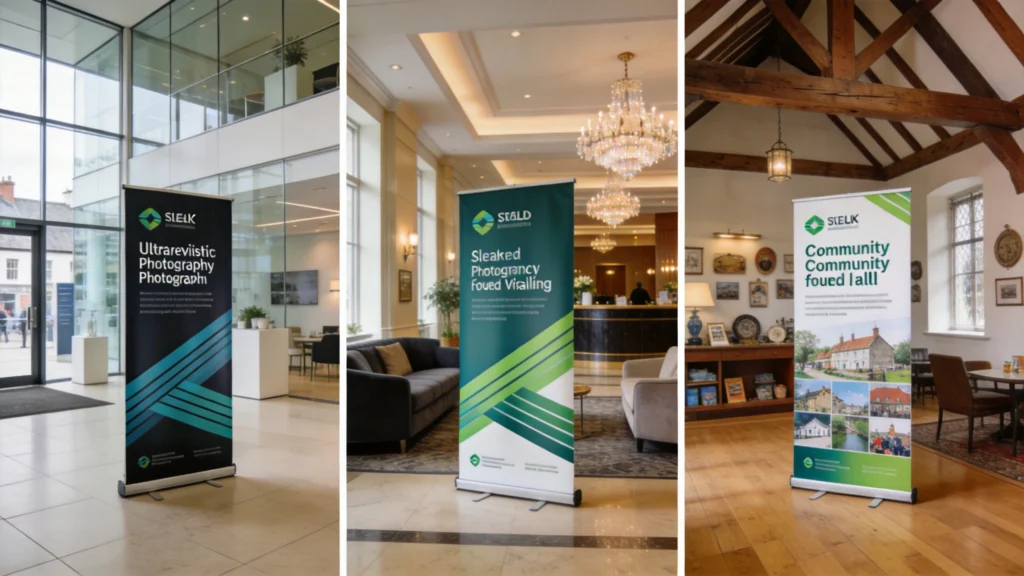
Different UK event environments call for different banner choices. A busy exhibition centre might demand bold, high-contrast graphics, while a hotel foyer suits more refined branding. In community venues or village halls, friendly imagery and clear local messaging help your pop up banner feel approachable while still looking professional.

Impact, Portability and Time Savings

Well-designed pop up display banners can lift brand recall significantly by placing logos at eye level and above crowded aisles. Because each stand weighs around 4–7 kg, a single person can carry two or three units from car park to hall. Setup typically takes under 60 seconds per stand, which is crucial when venues only allow 30–60 minutes build time before doors open.

When you calculate cost per impression, a £90 roller banner used at ten events, seen by 800 visitors each time, often outperforms magazine ads or lanyard sponsorships, while remaining flexible enough to redeploy for receptions, training days or retail promotions between major exhibitions.

Use Cases Across UK Event Types

Pop up banners UK organisers deploy cover everything from local council consultations to large exhibitions at ExCeL London or NEC Birmingham. Universities use them for open days and careers fairs, positioning stands at building entrances. Charities rely on them at fundraising nights, where quick setup avoids venue overtime charges. Even small businesses use one banner repeatedly at networking breakfasts, instantly professionalising their presence.

3
pop up display banners

Types of Pop Up Banner Stands and Pop Up Display Banners

Types of Pop Up Banner Stands and Pop Up Display Banners

There are many types of pop up banner stands, from compact roller banners to wider formats and double-sided options. Larger pop up display banners can even create a full backdrop for your stand. Choosing between them depends on how much message, imagery and impact you need within the footprint available at your event.

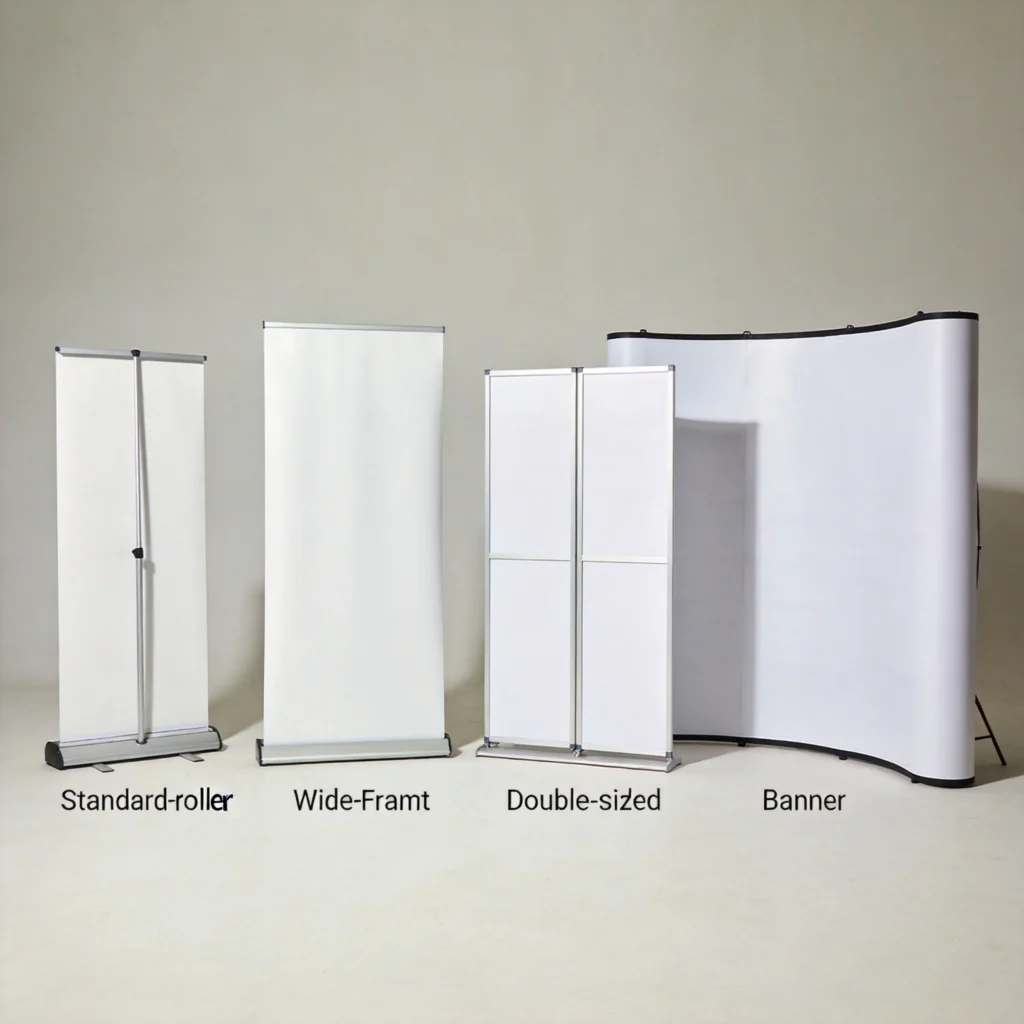
Choosing between different types of pop up banner stand hardware affects how your display functions in busy aisles or open spaces. Widths typically range from 600 mm to 1,500 mm, while heights sit around 2,000–2,200 mm. Beyond standard single-sided roller banners, you’ll find double-sided systems, extra-wide pop up display banners and modular linkable units that form seamless backwalls, corners or zig-zag layouts.

Main Banner Stand Formats

Understanding the main formats helps you match hardware to specific messaging goals or stand sizes. Single-sided roller banners suit backwall placement, while double-sided versions work better in open-plan or island stands. Wide pop up display banners, often 1,200–1,500 mm, create impactful backdrops for photo opportunities, product demos or speaker podiums without needing traditional shell-scheme panels or truss systems.

  • Standard single-sided roller banners, 800–850 mm wide, ideal for shell-scheme edges and reception areas with limited floor space.
  • Double-sided pop up banner stand systems, 800–1,000 mm wide, exposing graphics to traffic from both directions in open aisles.
  • Wide pop up display banners, 1,200–1,500 mm wide, creating compact backwalls for 2 m deep stands or portable media backdrops.
  • Linkable or modular banners with magnetic rails, allowing three or more units to form continuous 2.4–4.5 m graphic walls.
  • Premium cassette systems with interchangeable graphics, useful when campaign messages change quarterly but hardware remains constant.
4

Choosing Pop Up Banner Stands for Different Event Environments

The right pop up banner stand for a quiet hotel conference won’t always suit an outdoor festival or high-traffic exhibition. Environmental factors such as wind, floor type, lighting and venue fire regulations all influence hardware choice. Analysing expected footfall patterns and stand location before ordering helps you avoid unstable bases, glare-prone finishes or banners that block critical sightlines.

Choosing Pop Up Banner Stands for Different Event Environments

At UK trade shows and conferences, pop up banner stands act as vertical signposts that guide visitors towards your space. Strong headlines, clear calls to action and recognisable branding can turn passing footfall into engaged conversations, helping you maximise visibility and impressions without needing a large or expensive custom-built stand.

Indoor, Outdoor and Venue Constraints

Indoor events typically favour lightweight aluminium bases with slim footprints, since wind is minimal and floors are level. For outdoor shows, consider heavier bases, ground pegs or dedicated outdoor banner systems rated for 15–20 mph winds. Many UK venues enforce maximum stand heights, often 2.3–4 m, and require fire-rated materials, so always check technical manuals before committing to oversized or fabric-based systems.

Mapping footfall helps determine whether banners should face approaching aisles, flank meeting areas or sit behind counters. Positioning one banner at 45 degrees to the aisle can increase message visibility by 20–30% compared with parallel placement, particularly in busy exhibition grids where visitors scan diagonally while walking.

Placement Strategies for Different Layouts

For shell-scheme stands, placing a pop up banner stand at the open corner draws visitors into the space while leaving a clear path. On island stands, double-sided banners near product zones capture traffic from multiple directions. In narrow hotel corridors, slimmer 600 mm units prevent bottlenecks while still signposting registration desks. Always leave at least 1,200 mm clearance for wheelchair access and emergency routes.

5

Materials, Print Quality and Durability of Pop Up Banner Stands

Material and print choices largely determine how long your pop up display banners will last and how sharp they appear under exhibition lighting. Most UK printers offer PVC, polypropylene or polyester film graphics, printed at 1,440 dpi or higher. Laminates or textured finishes protect inks from scuffs and UV fading, which is crucial if banners travel frequently or sit near windows or external doors.

Materials, Print Quality and Durability of Pop Up Banner Stands

Common Graphic Substrates and Finishes

PVC banner film around 440–510 microns thick offers good rigidity and curl resistance for standard roller banners. Polypropylene provides a smoother, more eco-friendly option, though it may require lamination for robustness. Grey-back lightstop materials prevent show-through from rear lighting. Matte laminates reduce glare from halogen or LED spots, while scratch-resistant coatings extend life when banners are packed and unpacked weekly.

Hardware Quality and Lifespan

Entry-level pop up banner stand hardware often uses thinner aluminium and lighter springs, lasting one to two years with moderate use. Mid-range and premium cassettes employ thicker gauge aluminium, sturdier end caps and reinforced poles, comfortably surviving three to five years of monthly events. Investing an extra £30–£50 per unit can halve the risk of mechanism failures or leaning poles during important trade shows.

6

Transporting, Storing and Maintaining Pop Up Banner Stands

Transporting, Storing and Maintaining Pop Up Banner Stands

How you transport and store pop up banners UK wide can significantly affect their lifespan and appearance. Most stands ship with padded carry bags, but organisers often stack them in vans with other kit, risking dented bases or creased graphics. Establishing simple handling routines, such as assigning responsibility for loading and checking zips, prevents last-minute surprises when you arrive onsite to set up.

Packing, Handling and Cleaning Practices

Always retract graphics slowly, guiding the panel into the base to avoid edge fraying. Use the supplied pole bag to stop sections scratching the print during transit. When loading vehicles, place banner bags flat on top of heavier cases rather than underneath. Clean graphics with a soft microfibre cloth and diluted mild detergent, avoiding alcohol-based cleaners that can cloud laminates or strip inks.

Storage Conditions and Damage Prevention

Store pop up banner stand units upright or laid flat in a dry room between 10–25°C to prevent condensation damage. Avoid leaning heavy items against bases, which can bend end caps or warp cassettes. If a corner of the graphic lifts from the top rail, re-tape using strong double-sided banner tape rather than standard office tape, which fails quickly under tension and temperature changes.

7

Pop Up Banner Stands Costs, Bundles and Ordering Tips

Pricing for pop up banner stands in the UK varies by width, hardware grade, print material and turnaround time. Entry-level 800 mm roller banners often start around £40–£60 including print, while premium, wide-format systems can exceed £200. Understanding what’s included in bundles—such as padded bags, design checks or replacement graphics—helps you compare quotes beyond headline prices when sourcing displays.

Pop Up Banner Stands Costs, Bundles and Ordering Tips

Typical Price Ranges and Specifications

The table below compares common sizes and hardware levels so you can benchmark supplier quotes. Pay attention to print resolution, material thickness and warranty length, as these factors indicate how well the stand will perform under frequent use. Many UK printers offer discounts for ordering three or more units, which can reduce per-stand costs by 10–20% for multi-event campaigns.

Type Width × Height Approx. Price (ex VAT) Material / Resolution Typical Warranty
Budget roller banner 800 × 2,000 mm £40–£60 PVC, 440 micron, 720–1,000 dpi 3–6 months hardware
Standard roller banner 850 × 2,150 mm £70–£100 Lightstop PVC, 510 micron, 1,440 dpi 1 year hardware
Premium roller banner 1,000 × 2,150 mm £110–£160 Polyester film, laminated, 1,440 dpi 2–5 years hardware
Wide display banner 1,500 × 2,150 mm £160–£230 Grey-back PVC, laminated, 1,440 dpi 1–3 years hardware
Double-sided banner 850 × 2,000 mm £140–£200 Two PVC prints, 1,440 dpi 1–2 years hardware
Linkable modular set (3) 3 × 850 × 2,000 mm £350–£550 Lightstop PVC, 1,440 dpi 1–3 years hardware

When ordering, ask suppliers for artwork templates showing safe areas, bleed and visible zones above cassette level. Confirm whether prices include VAT, delivery and pre-flight artwork checks. If multiple teams use the same pop up display banners, consider ordering spare graphics for seasonal campaigns while hardware is available, since cassette compatibility can change when manufacturers update product ranges.

8

Real-World Examples of Pop Up Display Banners at Events

Real-World Examples of Pop Up Display Banners at Events

Seeing how organisations deploy pop up banner stands at real events helps you plan layouts that match your objectives. A tech startup at a London SaaS conference might use three linked 850 mm banners to form a 2.55 m backwall, while a charity at a local council fair could rely on a single 800 mm stand beside a trestle table to keep costs tight.

Example Layouts by Event Type

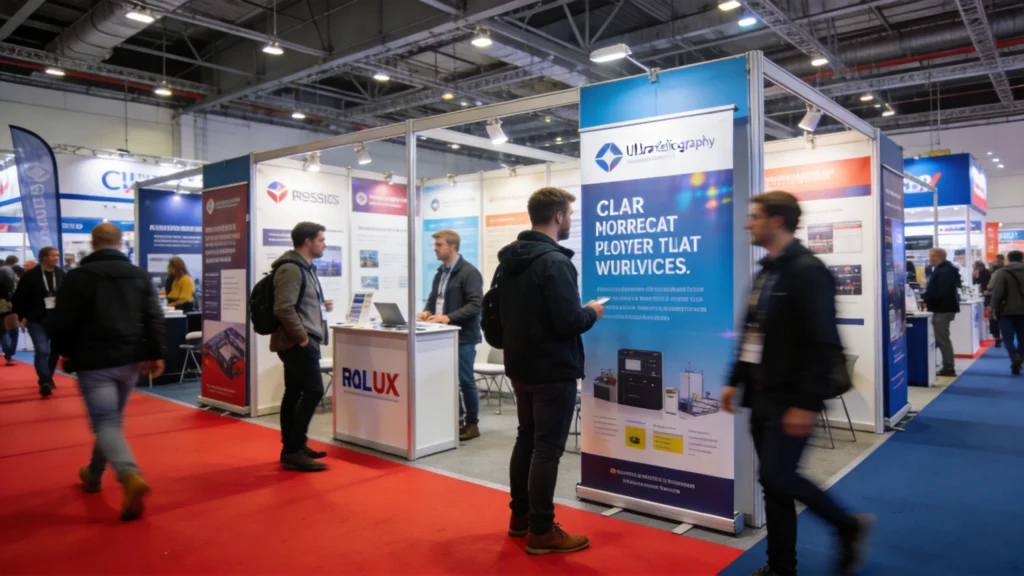
For a 3 m × 2 m shell-scheme at the NEC, two wide pop up display banners behind a counter create a clean backdrop, while a slimmer unit at the aisle edge highlights a key offer. At university careers fairs, recruiters often place one banner behind them and another near the corridor entrance, reinforcing brand recognition as students approach and queue for information.

  • Food festival traders using weather-resistant outdoor pop up banners near queue lines to display menus and allergen information clearly.
  • Professional services firms at hotel conferences positioning double-sided banners by coffee stations to capture delegates between sessions.
  • Sports clubs at community open days arranging three modular banners in a curve to frame photo opportunities with mascots.
  • Training providers using portable pop up banners UK wide for classroom courses, branding otherwise plain meeting rooms instantly.
  • Retail pop-ups in shopping centres placing slim banners at unit entrances to promote short-term offers and social media handles.

Reviewing photos from past events helps identify which banner types and placements produced the strongest engagement. After each show, record which pop up banner stand layouts increased scan rates, sign-ups or brochure pickups. Over several events, this data-driven approach lets you refine hardware choices, messaging hierarchy and positioning, turning simple banners into a consistently high-performing event marketing asset.

Cart