Menu
Shopping Cart
Close

Custom Roller Banner Printing: Complete UK Buyer’s Guide

Stopping people in their tracks at a trade show or shop entrance doesn’t need a huge budget. A well-designed custom roller banner can deliver big-brand impact for under £60, provided you understand the print specs and hardware options before you order.

Custom roller banner printing gives UK businesses a portable, affordable way to showcase offers, services and branding in seconds. A cassette base, printed panel and carry bag weigh under 5kg, so one person can transport and assemble it without tools. When you understand sizes, materials and artwork requirements, you avoid reprints and get professional results first time.

For small businesses, charities, training providers and event marketers, roller banners bridge the gap between flimsy posters and expensive exhibition stands. They roll away into a protective housing, so you can reuse them across venues for months. This guide walks through every key decision, from design and materials to online banner printing workflows and pricing.

By the end, you’ll know exactly how to brief designers, prepare print-ready files and choose specifications that match your venue, audience distance and budget. You’ll also see common mistakes real UK buyers make, like low-resolution logos or incorrect bleed, and how to avoid them before you press the order button.

1
custom roller banner

What Is a Custom Roller Banner and When Should You Use One?

What Is a Custom Roller Banner and When Should You Use One?

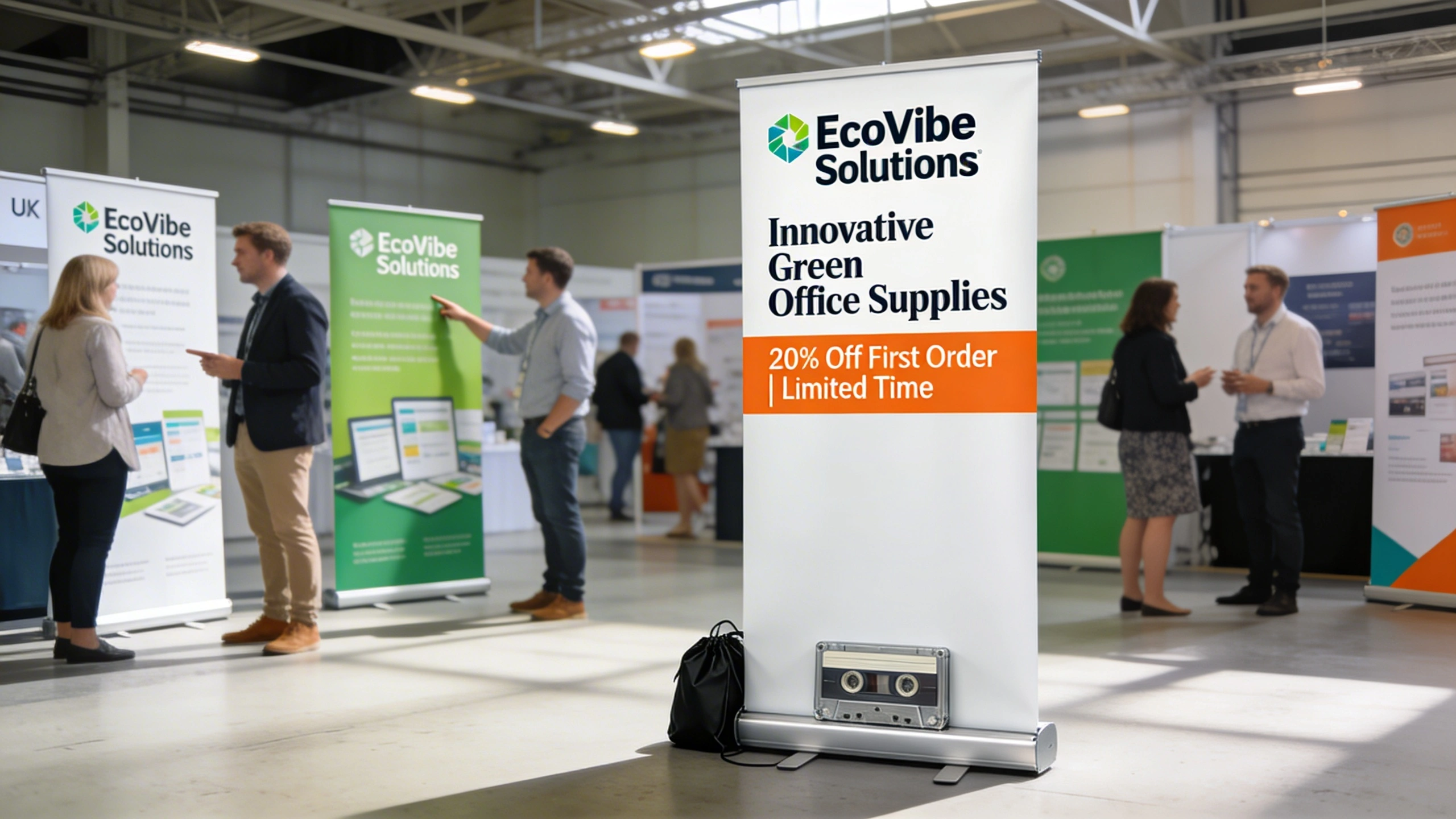
A well-placed roller banner can instantly turn a reception area, corridor or event entrance into a clear communication point. Whether you are a small business, charity or training provider, a single branded banner can introduce who you are, highlight a key service, and guide visitors without taking up much floor space.

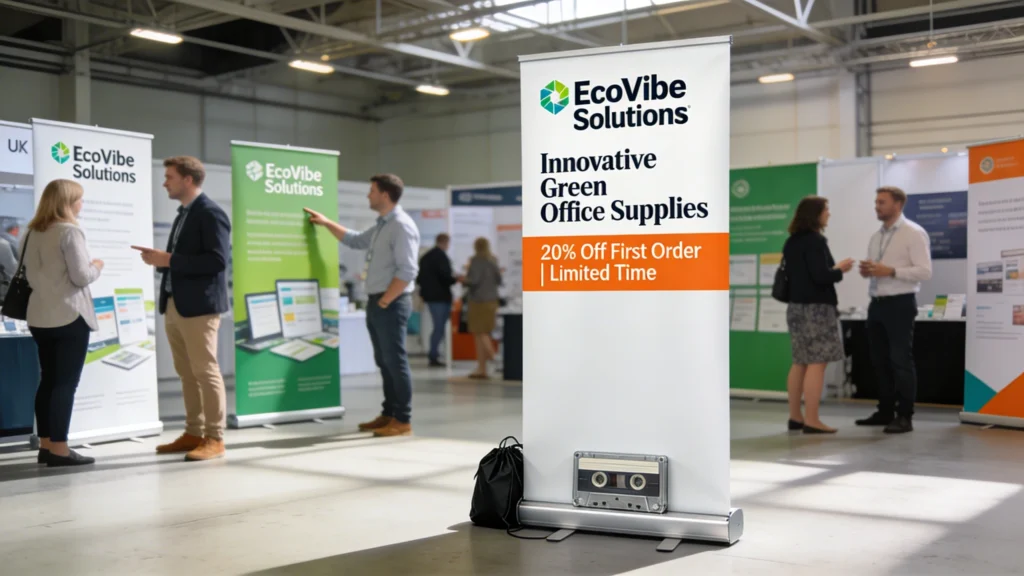
A custom roller banner is a printed graphic panel attached to a spring-loaded cassette, allowing the artwork to retract into an aluminium base for storage. Standard UK widths are 800mm, 850mm and 1000mm, with a visible height of around 2000mm. These dimensions balance visibility from 3–5 metres with easy transport in estate cars or on public transport.

Core Components and Typical Sizes

A typical unit includes the aluminium cassette, support pole, printed panel, top rail and padded carry bag. Economy bases weigh around 2.5kg, while premium wide-foot units can reach 4kg for extra stability. Many UK printers offer 800mm-wide banners as entry-level, because they fit easily beside shop counters, while 1000mm versions suit open exhibition spaces and shell schemes.

Best Use Cases for Roller Banners

Roller banners excel where you need fast setup and repeated moves, such as business expos, hotel conferences, recruitment fairs and pop-up shops. They’re also ideal for semi-permanent use in reception areas, where messages like “Welcome”, safety information or membership offers stay relevant for 6–12 months. Unlike rigid boards, they retract to protect the print when transported between venues.

2

Key Design Decisions for Effective Custom Roller Banner Printing

Design choices determine whether your custom roller banner simply fills space or actively pulls people in. Because viewers usually stand 1–4 metres away, you must prioritise large, high-contrast elements that can be read in three seconds. That means a clear hierarchy: strong headline at eye level, supporting benefits in the mid-section, and a bold call-to-action near the lower third.

Key Design Decisions for Effective Custom Roller Banner Printing

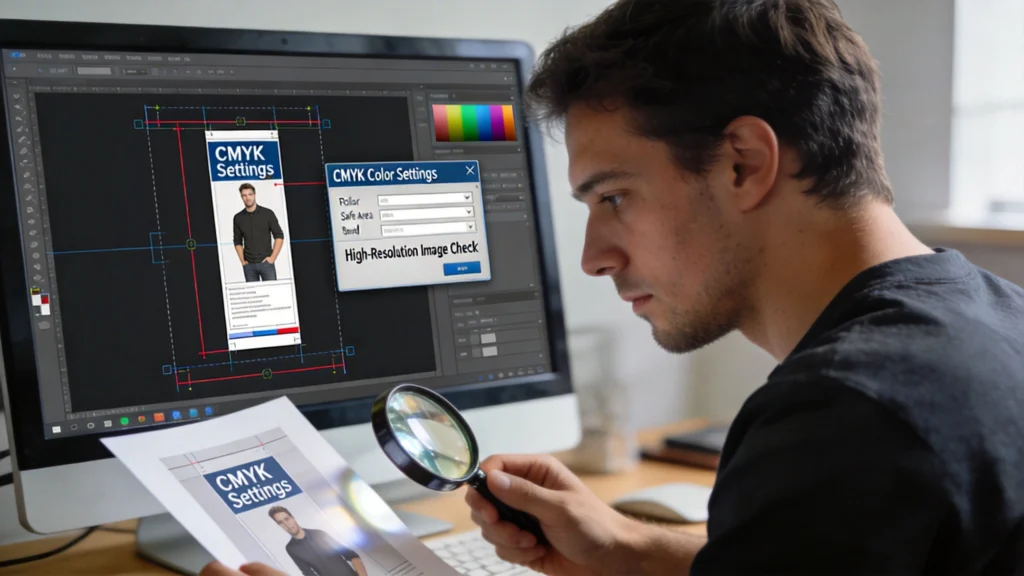
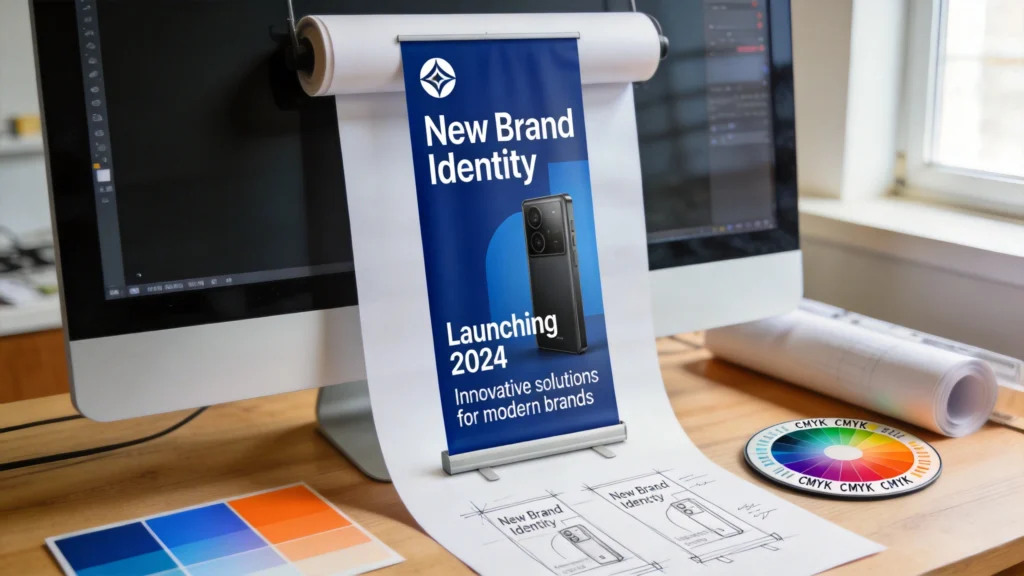
Preparing artwork correctly for roller banner printing avoids costly reprints and fuzzy results. Working in CMYK, using high-resolution images and respecting the printer’s template, bleed and safe areas ensure your design prints exactly as expected. Checking proofs and file formats before uploading to an online printer can save time and budget.

Layout, Hierarchy and Readability

Start by sketching three horizontal zones rather than filling the canvas from the bottom up. Place logos and key messages in the top 800–1000mm where they remain visible above crowds. Use a minimum font size of 60–80pt for headlines and 30–40pt for body text at 300dpi artwork size, ensuring legibility when printed at full height around 2 metres.

Branding, Colour and Calls-to-Action

Stick to two or three brand colours and one accent colour to avoid visual noise on a tall, narrow format. High-contrast combinations, like dark navy text on a pale background, remain readable under mixed venue lighting. Include a single, specific call-to-action such as “Book a free demo at stand B12” or “Scan to claim 10% off today”, supported by QR codes or short URLs.

3

Custom Roller Banner Materials, Bases and Mechanisms Explained

The materials and base mechanism you choose affect print vibrancy, curl resistance and how long your banner survives repeated events. Most UK printers offer PVC, polypropylene and grey-back light-stop films, each with different thicknesses measured in microns. Understanding these options helps you avoid issues like show-through under spotlights or edges curling after only a few uses.

Custom Roller Banner Materials, Bases and Mechanisms Explained

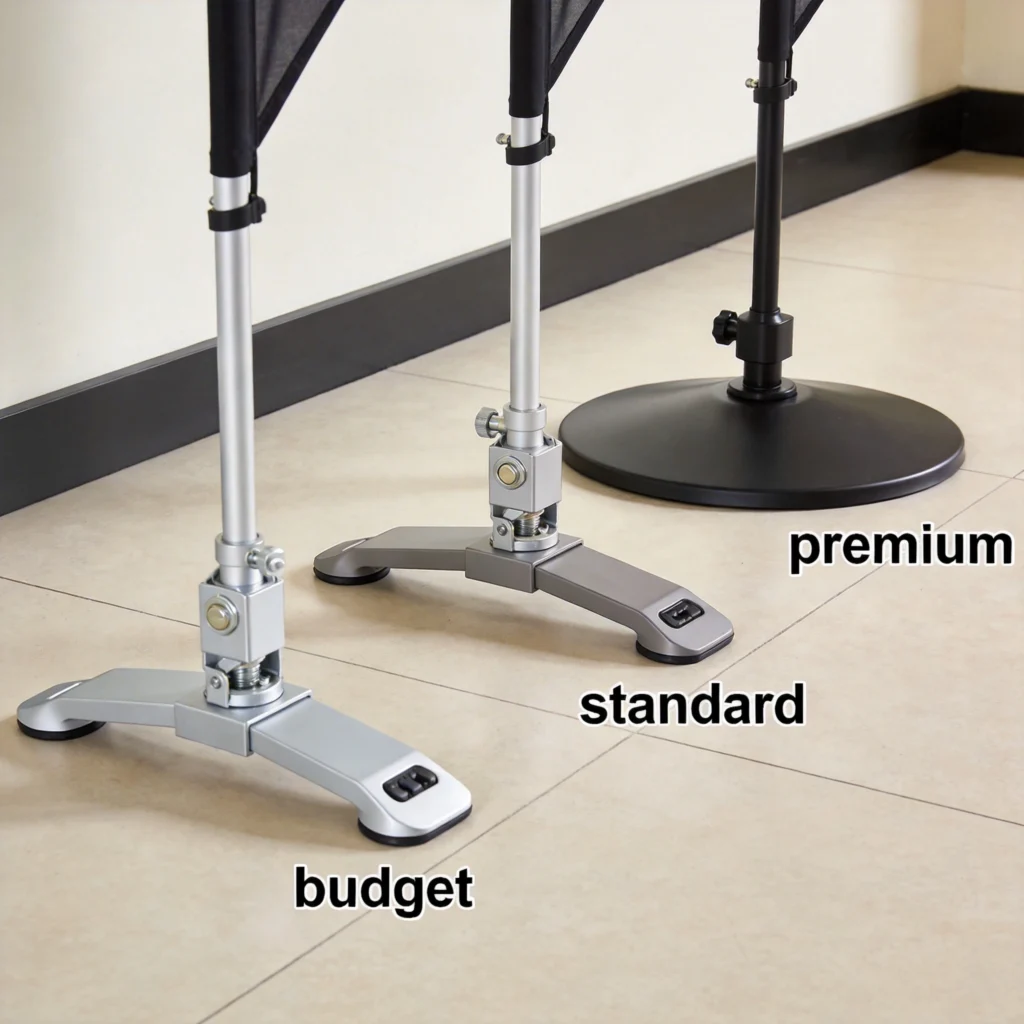
Not all roller banner systems are built the same. Budget cassettes can be ideal for short campaigns, while premium or heavy-duty bases suit regular travel and repeated use. Looking closely at the mechanism, stability feet and cassette finish helps you choose a system that matches your brand image, usage frequency and transport needs.

Comparing Common Material and Hardware Options

Different combinations of banner film and cassette are suited to different budgets and usage frequencies. The table below compares popular UK specifications so you can match your custom roller banner to your marketing plan and expected lifespan.

Specification Material / Thickness Base Type Typical Use Frequency Approx. Price (800mm x 2000mm)
Economy PVC 440–510 micron PVC Lightweight cassette 1–3 events per year £29–£39 + VAT
Premium Grey-back 200–240 micron light-stop Sturdy wide-foot Monthly exhibitions £49–£69 + VAT
Anti-curl Polypropylene 180–220 micron PP Standard cassette Quarterly campaigns £39–£55 + VAT
Double-sided Unit 2 x 200 micron films Dual-panel cassette Central aisle displays £99–£139 + VAT
Outdoor Roller Weather-resistant PVC Weighted or pegged base Seasonal outdoor events £129–£179 + VAT
Desktop Mini Synthetic paper Mini cassette Permanent countertop use £12–£20 + VAT

Grey-back light-stop films prevent strong backlighting from revealing support poles or objects behind the banner, which is common in glass-fronted foyers. Anti-curl polypropylene resists edge warping when stored in warm cars or under venue spotlights. Double-sided units cost more but replace two separate stands in central aisles, saving floor space where every 0.5 metre matters.

4

How to Prepare Artwork Files for Custom Roller Banner Printing

Print-ready artwork saves days of back-and-forth with your online banner printing provider and prevents soft, pixelated results. Because roller banners are tall formats, images and logos must be genuinely high resolution, not simply scaled up. Working at 25% scale with 300dpi, or full size at 150dpi, usually gives enough detail for sharp text and photography.

How to Prepare Artwork Files for Custom Roller Banner Printing

Design decisions make the difference between a roller banner that gets ignored and one that stops people in their tracks. Clear hierarchy, large readable type, strong branding and a single focused message all matter. Planning viewing distance, eye-level focal points and simple calls-to-action ensures your printed banner works hard in busy environments.

File Formats, Bleed and Colour Profiles

Most UK printers accept PDF, high-resolution JPEG and TIFF files; PDF/X-1a is often preferred for reliability. Add 3–5mm bleed on all sides, plus 100mm extra at the bottom for the cassette “pull-up” area that disappears inside the base. Design in CMYK colour mode using profiles like FOGRA39 or Coated FOGRA51, because RGB colours can shift when converted for four-colour printing.

Resolution, Safe Areas and Proofing

Set raster images to at least 150dpi at full banner size; that equates to 300dpi when working at 50% scale. Keep key text and logos at least 50mm from the edges to avoid trimming variation of 1–2mm. Always request a low-resolution PDF proof from your printer and zoom to 200–300% on-screen to check for jagged logos, spelling errors and colour banding.

5

Ordering a Custom Roller Banner Online: Step-by-Step Process

Online banner printing platforms let you configure, upload and pay for your custom roller banner in under 15 minutes, but rushing leads to specification mistakes. Treat the process like booking a flight: double-check the size, material and delivery date before confirming payment. Many UK sites offer live price updates, so you can see how each option affects your budget instantly.

Ordering a Custom Roller Banner Online: Step-by-Step Process

From Product Selection to Delivery

Most printers follow a similar order flow, even if their interfaces look different. Understanding the typical steps helps you gather everything you need before starting, including artwork files, VAT number and event deadlines.

  • Choose banner size, material and base type, checking visible graphic area against your existing artwork template carefully.
  • Upload PDF or JPEG files within specified size limits, usually 50–200MB, and confirm orientation and bleed settings.
  • Select turnaround speed such as 3–5 working days or next-day dispatch, noting cut-off times like 11am for same-day printing.
  • Review on-screen proofs or emailed PDFs, approving only after internal sign-off to avoid costly last-minute artwork changes.
  • Enter delivery address, choose timed services if needed, then pay by card or invoice, keeping confirmation emails for tracking.
6

Pricing Factors: What Affects the Cost of a Custom Roller Banner?

Pricing Factors: What Affects the Cost of a Custom Roller Banner?

Pricing for custom roller banner printing in the UK typically ranges from £25 to £150 per unit, depending on specification and quantity. The base hardware, print material, size and turnaround speed all contribute to the final figure. Understanding these levers lets you downgrade non-essential features, such as premium padded bags, while protecting critical items like light-stop film.

Cost Drivers and Typical UK Price Ranges

For a single 800mm-wide banner, economy PVC with a lightweight base might cost £29–£39, whereas a premium grey-back film with a robust cassette could reach £69. Ordering three or more units often triggers discounts of 10–20%, because printers gang artwork on larger sheets. Next-day production can add £10–£20 per banner, reflecting overtime and dedicated press time.

Balancing Budget with Long-Term Value

If you attend only one event per year, an economy cassette may be perfectly adequate, even if it lasts just three seasons. However, agencies and exhibitors using banners monthly usually save money with premium hardware that survives 30–40 setups. Consider whether messages will change frequently; if so, choose replaceable cassette systems where you can reprint panels without replacing the entire base.

7

Maximising the Lifespan of Your Custom Roller Banner

A well-cared-for custom roller banner can last two to three years of regular use, whereas a neglected one may look tired after a single season. Most failures come from mechanical stress rather than print fading: bent poles, damaged end caps and creased graphics. Simple handling routines significantly reduce these risks and protect your investment over dozens of events.

Maximising the Lifespan of Your Custom Roller Banner

Storage, Transport and Handling Practices

Always retract the banner slowly while guiding the top rail to prevent the spring snapping the panel into the cassette. Store units upright in their padded bags, away from radiators or damp floors, because heat can warp PVC and moisture encourages mould. When transporting multiple stands, separate them with cardboard or bubble wrap so metal feet don’t dent neighbouring cassettes.

Setup, Environment and Cleaning

During setup, extend the graphic only as far as the support pole height; overextending strains the spring mechanism and adhesives. Avoid placing banners near frequently opened doors where wind gusts can topple them, especially lighter economy bases under 3kg. Clean marks with a soft, slightly damp microfibre cloth, avoiding solvents that can fog protective laminates or lift printed inks.

8

Common Mistakes to Avoid with Custom Roller Banner Printing

Common Mistakes to Avoid with Custom Roller Banner Printing

Many disappointing roller banners trace back to avoidable pre-press and design errors rather than poor printing. Low-resolution logos stretched from website files, missing bleed and text placed too close to the bottom cassette area are frequent culprits. Addressing these early, when you still have access to original artwork files, prevents last-minute compromises and rushed reprints.

Design, Sizing and Ordering Pitfalls

Using images pulled from social media, often under 1200px wide, leads to blurry results on a 2000mm-high banner. Designers sometimes forget the non-visible bottom 80–100mm that disappears into the cassette, causing contact details to sit half-hidden. Ordering the wrong width, such as 1000mm instead of 800mm, can create fire safety issues when stands encroach on escape routes.

Proofing and Communication with Printers

Skipping printed or digital proofs because “it’s only a banner” risks spelling errors being enlarged to 2-metre height, undermining professionalism. Always confirm trim size, bleed and visible area in writing with your printer, ideally referencing their downloadable templates. When in doubt, ask for a pre-flight check; many online banner printing providers include this service, flagging font, colour and resolution problems before production.

Cart