
Imagine your product is on the shelf, surrounded by competitors. You have one last shot to grab a customer’s attention before they make their choice. This is where point of sale materials (POSM) come in. They are your brand’s silent salespeople, working tirelessly in the retail aisle to get your products into the shopping basket.
Understanding the Power of Point of Sale Materials
So, what exactly are point of sale materials? They’re the physical marketing tools you see in a shop, all designed to engage customers and drive sales at the most critical moment. Think of them as the final, crucial link between a big advertising campaign and a customer actually opening their wallet. A TV ad might build brand awareness, but it's the eye-catching shelf wobbler or the well-stocked counter display that seals the deal.
These materials are all about interrupting a shopper's routine. In a busy store, they cut through the noise, drawing focus to a specific product, a special offer, or a brand message. In a crowded marketplace where dozens of brands are vying for the same eyeballs, that interruption is everything.
Why Do POS Materials Work So Well?
The real power of POS materials is their timing. They influence buying decisions right there, in the aisle. It's a well-known fact that a huge number of purchasing decisions are made on the spot, inside the store. This is the moment POSM is built for.
Here’s how they deliver results:
- Introduce New Products: A vibrant floor graphic or a bold end-of-aisle display is a fantastic way to announce a new arrival, making it impossible to miss.
- Highlight Promotions: Nothing screams "Buy One, Get One Free" clearer than a bright shelf talker or a strategically placed hanging banner.
- Increase Average Spend: Those tempting little items in a counter display at the checkout? They are masters of the impulse buy, easily boosting the final value of a transaction.
- Reinforce Brand Identity: High-quality, consistent POS materials don’t just sell products; they build brand recall and create a professional, cohesive feel in-store.
The magic of point of sale materials is their immediacy. They don’t just plant a seed for a future purchase; they demand action right now, turning a casual browser into a buyer.
The numbers back this up. The European Point of Sale Materials (PoSM) market was valued at around USD 10.35 billion and is expected to climb to nearly USD 16.54 billion, proving just how vital it remains in modern retail strategy.
To get a sense of just how versatile these materials are, let's look at their core jobs.
Key Functions of Point of Sale Materials
POS materials wear many hats, from grabbing attention to closing the sale. This table breaks down their primary roles in a retail environment.
| Function | Description | Example |
|---|---|---|
| Attract Attention | Cuts through visual clutter to draw a customer’s eye towards a specific product or area. | A brightly coloured floor graphic leading to a promotional aisle. |
| Inform & Educate | Provides key information like price, benefits, or ingredients at a glance. | A shelf talker detailing the "organic" and "gluten-free" aspects of a food product. |
| Drive Impulse Buys | Encourages unplanned purchases by presenting enticing offers or products at key locations. | A counter display unit filled with chocolate bars next to the till. |
| Announce Promotions | Clearly communicates special offers, discounts, or multi-buy deals to shoppers. | A hanging dangler advertising "2 for £5" on a popular drink. |
| Reinforce Branding | Builds brand recognition and trust through consistent use of logos, colours, and messaging. | A custom-printed stand system featuring a well-known brand’s distinctive style. |
As you can see, POS materials are far more than just decoration; they are a fundamental part of a successful retail marketing strategy.
Of course, a brilliant design is only half the battle. Once your materials are printed, their success hinges on efficient promotional material fulfillment to get them to the right stores, on time, and in perfect condition. Without a solid logistics plan, even the most creative campaign can fall flat before it even begins.
Exploring the Essential Types of POS Materials
Diving into the world of point-of-sale materials can feel a bit overwhelming at first, but it's simpler than it looks. Each piece has a specific, powerful job to do. Think of them less as individual bits of print and more as a coordinated toolkit, designed to guide, persuade, and ultimately convert shoppers right on the shop floor.
The goal is always the same: influence decisions, encourage a bigger spend, and build your brand's presence at the most critical moment.
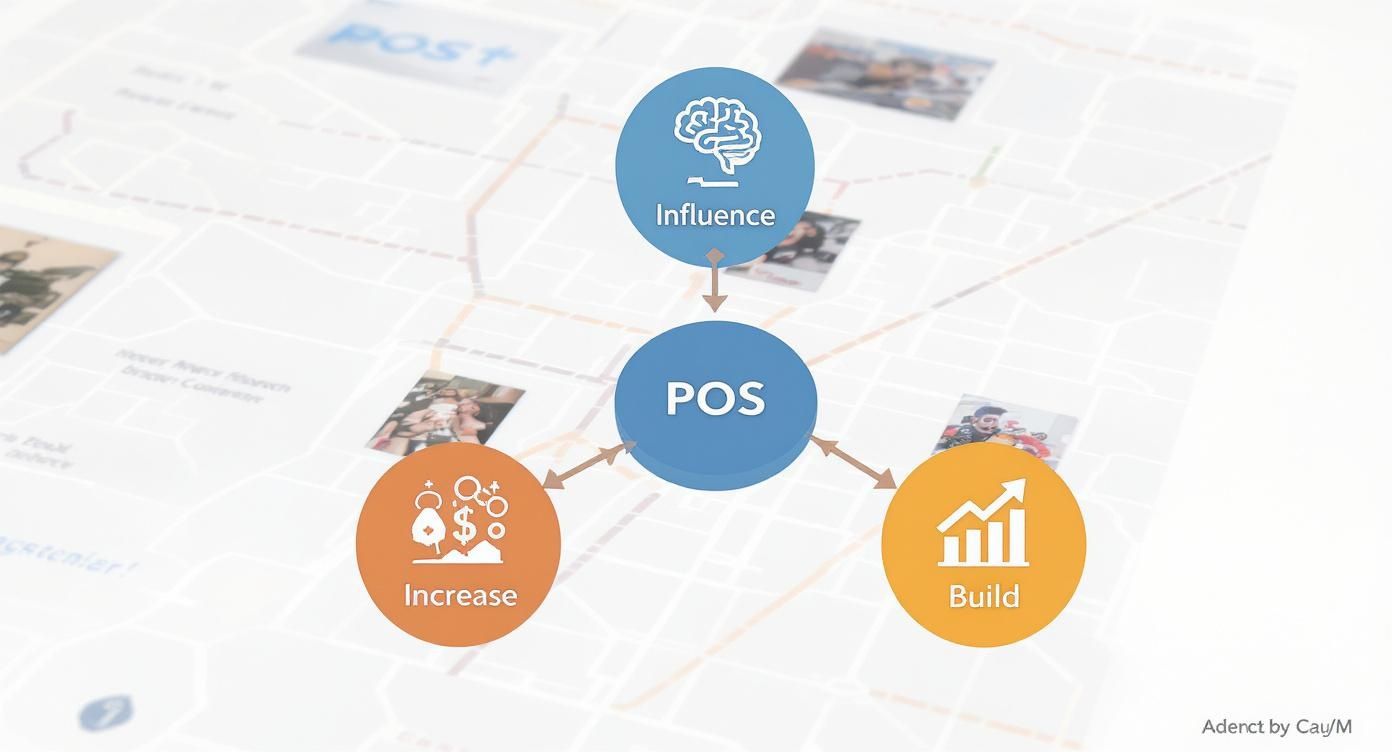
As you can see, great POS isn't just about making a one-off sale. It’s about leaving a lasting impression that also delivers an immediate commercial punch. Let's break down the most common types and see how they get the job done.
The Attention-Grabbers: Posters and Banners
Posters are the undisputed workhorses of in-store advertising. They’re versatile, cost-effective, and absolutely brilliant for hammering home a single, bold message. Whether you're announcing a seasonal sale, launching a new product line, or just reinforcing what your brand is all about, a well-placed poster can turn a blank wall into a serious marketing asset.
Banners take that same idea and crank up the volume. They’re perfect for high-impact announcements that need to be seen from across the store. Picture a huge banner hanging above an aisle or a vibrant one filling the shop window—their sheer size commands attention and signals that something important is happening.
For the ultimate blend of portability and impact, many retailers rely on roller banners. These self-standing displays are incredibly handy for temporary promotions or special events within your store, letting you create a professional promotional display in seconds.
The Shelf-Level Influencers
While big banners shout from a distance, some of the most effective point-of-sale materials do their best work up close—right at the shelf edge. This is the crunch time, where the final decision to buy is made.
-
Shelf Talkers: These are small but mighty signs that clip directly onto the shelf. They're perfect for flagging a product's key feature ("Award-Winning!"), a special offer, or a unique selling point like "Locally Sourced." They add that extra layer of information that helps a product pop.
-
Wobblers and Danglers: Just like the name suggests, wobblers are designed to move. Attached to a flexible plastic arm, they literally "wobble" as people walk past, using motion to catch the eye. Danglers hang down from shelves or ceilings to create a similar effect. That tiny bit of movement is surprisingly good at breaking a shopper's gaze as they scan a crowded shelf.
These little touches are the details that can tip the scales when a customer is weighing up two similar products. They give that final, persuasive nudge toward your item.
The Impulse-Drivers: Counter and Floor Displays
Some of the most profitable sales are the ones customers never intended to make. This is where displays designed to trigger impulse buys come into their own, placed strategically where shoppers are most likely to act.
Counter Display Units (CDUs) are small, branded containers set up right next to the till. They are usually filled with low-cost, high-margin items like sweets, batteries, or gift cards. As customers wait to pay, their eyes naturally wander, making these displays incredibly effective at bumping up the average transaction value.
Floor Graphics are another fantastic tool, turning empty floor space into a directional sign or a promotional hotspot. These tough, anti-slip decals can:
- Lead customers through the store towards a specific offer.
- Create a "stop and look" moment in a busy area.
- Announce a sale in an unexpected and memorable way.
Because they’re not as common as wall posters, floor graphics have a novelty factor that makes them great at grabbing attention. They literally create a path to purchase that feels both helpful and exciting.
The Brand-Builders: Stand Systems
When you're running a larger campaign or want to create a dedicated "shop-within-a-shop," stand systems and end-cap displays are the way to go. These aren’t just signs; they're complete branded environments. An end-cap display, positioned at the end of an aisle, gives a product its own stage, free from the visual clutter of its competitors.
These bigger setups allow for much more creative branding and storytelling. You can showcase an entire product range, tell your brand's story, or even create an interactive experience. They signal to shoppers that this product is a star item, giving it a premium feel and encouraging them to engage. While these types of point-of-sale materials are a bigger investment, they often deliver the biggest rewards in brand building and sales uplift.
To help you decide which tool is right for the job, here’s a quick comparison of the most common types of POS materials and where they shine.
Comparison of Common POS Material Types
| Material Type | Primary Use Case | Best Location | Impact Level |
|---|---|---|---|
| Posters & Banners | Broad announcements, sales, brand messaging | Walls, windows, entrances, high-traffic areas | High (Visibility) |
| Shelf Talkers | Highlighting features, prices, or USPs | Directly on the shelf edge, next to product | Medium (Targeted) |
| Wobblers/Danglers | Grabbing attention on a crowded shelf | Attached to shelves, hanging from ceilings | Medium (Disruptive) |
| Counter Displays | Driving last-minute impulse purchases | Tills, checkout counters, service desks | High (Conversion) |
| Floor Graphics | Guiding customers, creating surprise promotions | Aisles, entrances, checkout queues | High (Engagement) |
| Stand Systems | Product launches, creating a 'brand zone' | End of aisles (end-caps), open floor space | Very High (Immersion) |
Each of these materials plays a crucial role in the in-store customer journey. The key is to choose the right combination to guide your customers from the front door all the way to the checkout.
Designing and Placing Your Materials for Maximum Impact
Getting your point of sale materials beautifully printed is only half the job. A fantastic poster tucked away behind a pillar or a witty shelf talker placed where nobody can see it is a wasted opportunity. Real success comes from the knockout combination of brilliant design and smart placement, turning your printed materials into active, persuasive sales tools.
Think of it this way: your design is the what—the powerful message. Your placement is the where and when—the exact moment it crosses a customer's path. You have to nail both to turn a passing glance into a definite sale.
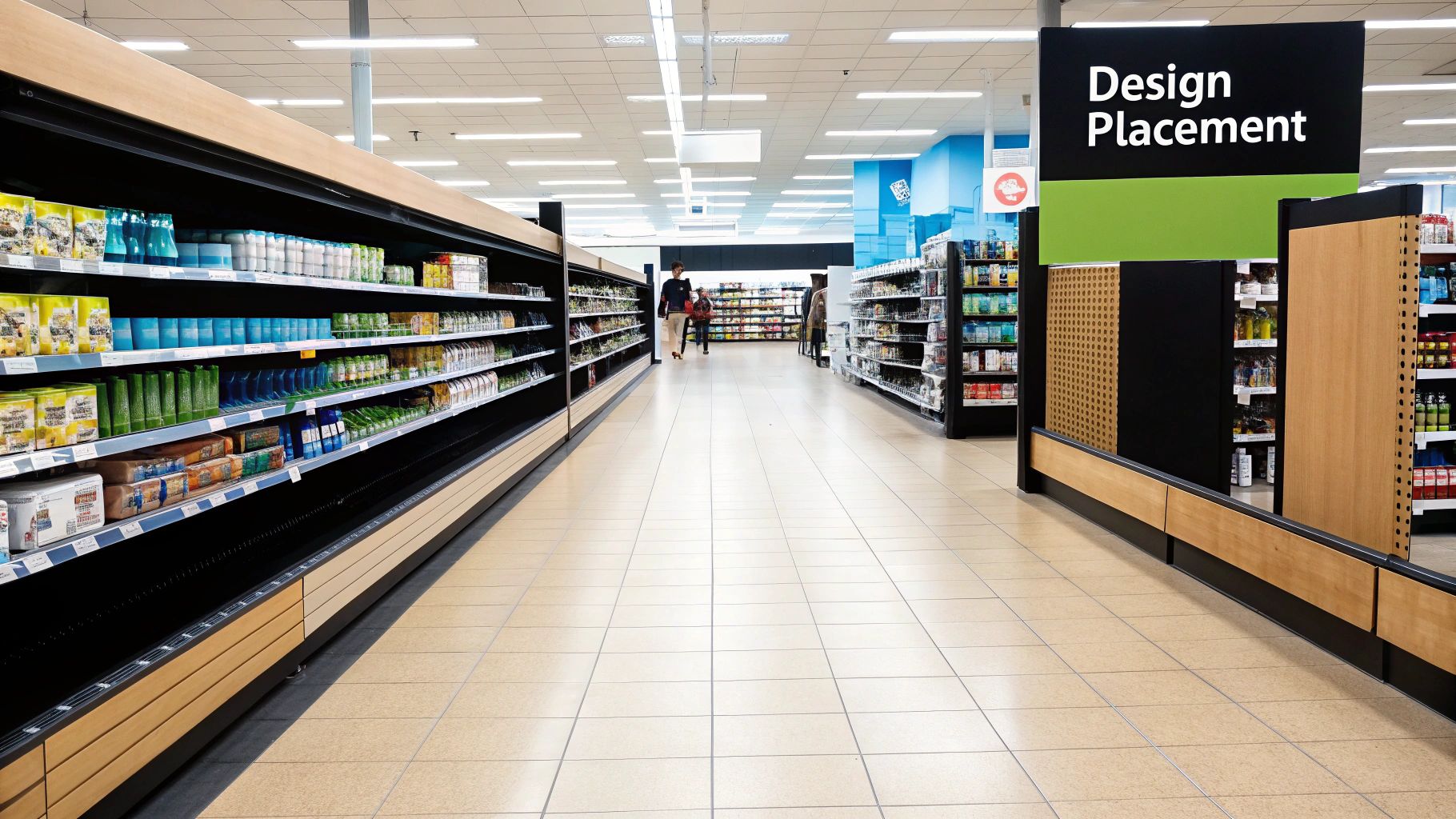
This is your practical playbook for getting both right, ensuring every pound you invest in printing delivers results on the shop floor.
Core Principles of Effective POS Design
In the organised chaos of a retail store, your design has just seconds to do its job. Simplicity, clarity, and a strong visual hierarchy are your best friends here. Forget trying to cram in every last detail; your goal is to land one clear message, instantly.
Here are the key design elements to get right:
- Strong Visual Hierarchy: Use size, colour, and bold fonts to tell the customer's eye where to look first. The most important thing—whether it's "50% Off," "New Flavour," or your product name—needs to be the first thing they see.
- Bold, Legible Typography: Pick fonts that are a breeze to read from a distance. Steer clear of fussy, decorative, or overly thin typefaces that just blend into the background noise of a busy aisle.
- High-Contrast Colours: Your design has to pop. Stick with your brand colours, of course, but make sure they stand out against the shelves, products, and lighting in the store.
- Concise, Action-Oriented Copy: Keep your text short and punchy. Use powerful, active words that get straight to the point. Phrases like "Try Me Today," "Grab Yours Now," or "Limited Time Offer" create a sense of urgency and nudge people to act.
- A Clear Call to Action (CTA): What do you actually want the shopper to do? It should be completely obvious. Whether it's "Scan to Win" or a simple "Buy 2 for £5," the CTA is the final instruction that gets the job done.
These rules are even more vital for bigger formats like roller banners and display stands. Getting the visual balance right is everything, which is why checking out a guide on how to design a banner can give you some great pointers for creating layouts that really work at a larger scale.
Strategic Placement for Maximum Visibility
Once your design is sorted, it’s time to think like a retail strategist. Where you put your point of sale materials dictates who sees them and what they think. The aim is to weave your message into the shopper's natural journey through the store.
The best placement feels like a helpful discovery for the customer, not an aggressive interruption. It's about being in the right place at exactly the right time to answer a question or present an irresistible offer.
Your first step is to find the key "hot spots" in the shop to make sure your campaign gets seen.
Finding Your Hot Spots
Every store has high-traffic areas where you'll get the most eyeballs. Your placement plan should revolve around these locations.
- Entrances and Decompression Zones: The area just inside the door is where shoppers switch from "outside mode" to "shopping mode." Big posters or roller banners here are perfect for announcing major, store-wide promotions.
- End-Caps: The ends of the aisles are prime real estate. They’re highly visible from several directions and are the ideal spot for launching new products or setting up larger display stands.
- The "Path to Purchase": Think about the typical route a customer takes to find a product like yours. Use floor graphics or danglers along this path to lead them straight to your shelf.
- The Checkout Area: This is the ultimate impulse-buy zone. Counter display units placed right next to the till are incredibly effective for snapping up those last-minute, unplanned purchases.
Finally, always think about sightlines. The sweet spot is generally at adult eye level, which is about 1.5 metres from the floor. Anything placed too high or too low will simply be missed. By mixing a clear, compelling design with thoughtful, strategic placement, your POS materials will work so much harder for you—grabbing attention and, most importantly, driving sales.
Choosing the Right Materials and Finishes
The look and feel of your point of sale materials can say more about your brand than the words on them. Think about it: a flimsy, washed-out poster subconsciously hints at a low-value product, whereas a display made from sturdy, vibrant materials can instantly boost how customers see you. Choosing the right material and finish isn't just a technical box-ticking exercise; it’s a crucial part of your brand storytelling.
This section will cut through the jargon and walk you through the best options for your goals and budget. Making a smart choice here ensures your investment looks professional, lasts as long as you need it to, and genuinely reflects the quality you stand for.
Common Materials for Point of Sale Printing
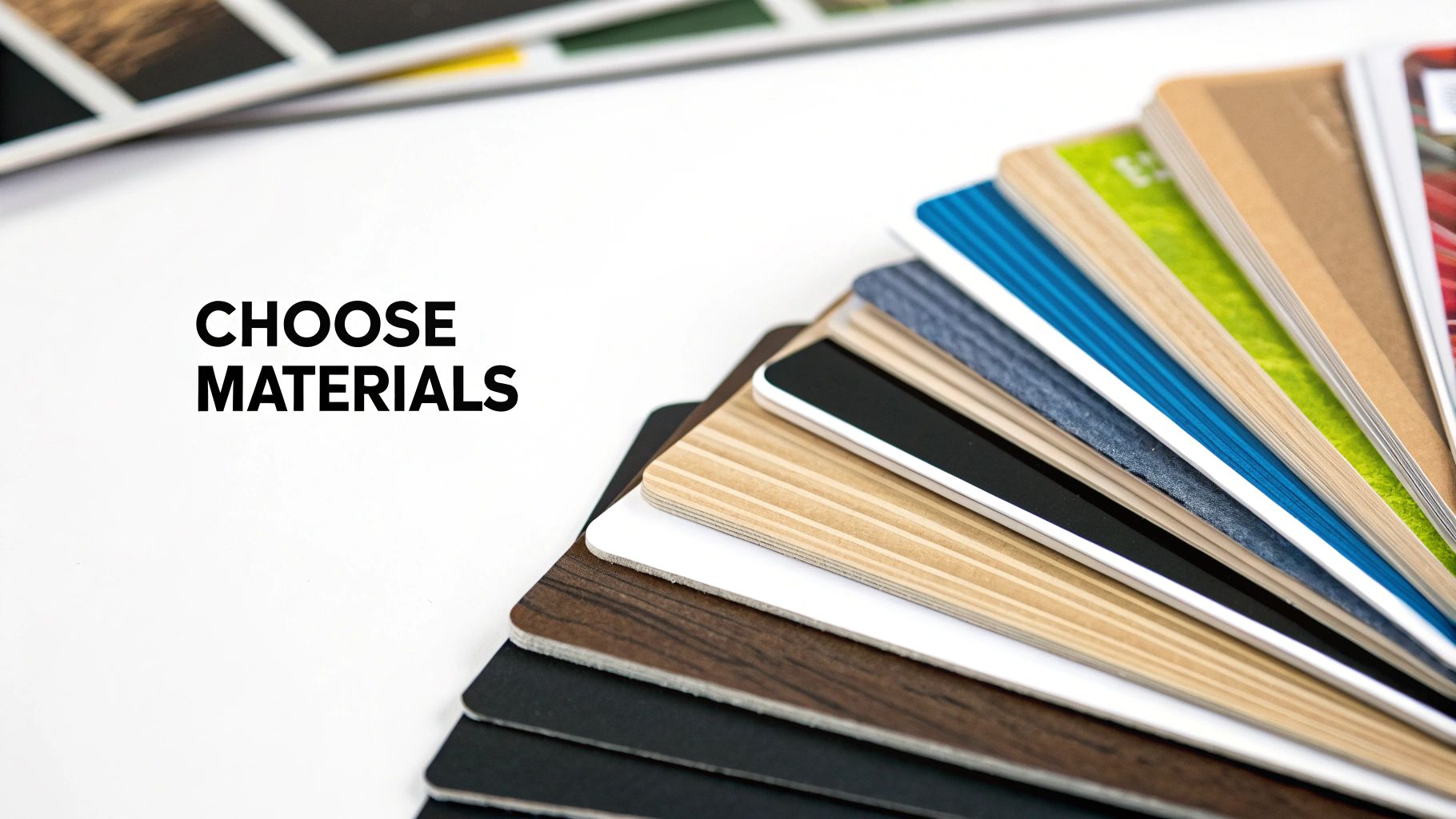
What material you pick really comes down to three things: what you're using it for, where it's going, and how long you need it to last. Each substrate has its own strengths, whether you’re planning a quick one-day promotion or installing a permanent fixture in-store.
Here are the most popular choices we see every day:
-
Paper and Card: Cost-effective and lightweight, paper is a no-brainer for short-term indoor items like posters and flyers. When you need a bit more backbone, thicker cardstock is perfect for shelf talkers, wobblers, and small counter signs that need to stand up straight.
-
Corrugated Cardboard: This is the workhorse for larger, free-standing displays like dump bins or life-sized standees. It strikes that perfect balance between being strong enough to hold products and light enough to be easily assembled and shifted around the shop floor.
-
Vinyl: When it comes to durability, vinyl is the undisputed champion. It’s flexible, waterproof, and tough to tear, making it brilliant for indoor and outdoor banners that have to brave the British weather. For indoor-only use, you might consider something like a lightweight vinyl banner with a matte finish to cut down on glare from harsh shop lighting.
-
Rigid Plastics (Foamex & Correx): For signage that needs to be properly tough and stick around for a while, rigid materials are the way to go. Foamex, which is a brand of rigid PVC foam board, is smooth and dense, giving you a fantastic surface for high-quality printed boards. Correx is its lighter, corrugated plastic cousin—a great waterproof choice often used for temporary outdoor signs.
Selecting the Perfect Finish for Your Project
A finish is that final flourish that can completely change the game for your printed materials. It's a protective layer added after printing that not only makes your design look better but also shields the ink from scuffs, moisture, and fading.
You can think of it like the clear coat on a car—it’s there to protect the paintwork and make the colour truly pop.
The finish you choose directly impacts how customers perceive your brand through touch and sight. A high-gloss finish feels sleek and modern, while a soft-touch matt lamination communicates luxury and sophistication.
Let's break down the most popular options and what they really bring to the table.
Comparing Popular Print Finishes
The right finish can make your colours sing, kill annoying glare, or even add a unique feel that makes people want to touch it. Your choice should always tie back to your brand's personality and the environment where your POS will live.
| Finish Type | Appearance | Feel | Best For |
|---|---|---|---|
| Gloss Lamination | High-shine, vibrant | Smooth, shiny | Making colours look rich and deep. It’s great for grabbing attention but can create glare under bright lights. |
| Matt Lamination | Non-reflective, muted | Soft, velvety | Creating a sophisticated, premium look. It’s excellent for text-heavy designs as it reduces glare and is easier to read. |
| Silk Lamination | Low-sheen, subtle | Smooth, silky | A perfect middle ground. It offers a gentle sheen without the intense reflection of gloss, adding a touch of class and durability. |
| Spot UV Varnish | Targeted gloss effect | Contrasting textures | Highlighting specific parts of your design, like a logo or headline, by applying a gloss finish to some areas while the rest stays matt. |
By carefully pairing the right material with the perfect finish, your point of sale materials won't just look fantastic—they'll be perfectly suited for the job at hand. It’s a strategic choice that ensures your campaign makes the biggest impact and shows off your brand in the best possible light.
Measuring Success and Calculating Your ROI
Creating eye-catching **point of sale materials** is one thing, but proving they actually made a difference? That’s the real game-changer. When you can measure your campaign’s success, you move beyond just “making things look good” and start demonstrating real value. Calculating the return on investment (ROI) for your POS campaign turns a marketing cost into a proven driver of revenue.
Don't worry, you don't need a team of data scientists for this. It’s all about connecting your efforts on the shop floor to tangible business results. Get this right, and you’ll find it much easier to justify budgets, fine-tune your next campaign, and truly understand what makes your customers tick.
Key Performance Indicators for POS Campaigns
Before you can measure success, you have to define what it looks like. Let’s ditch the vague goals and get specific with Key Performance Indicators (KPIs) that directly show how your point of sale materials are performing.
Here are the most important numbers to keep an eye on:
- Sales Lift: This is the big one. It's the most direct measure of success. Simply compare sales of the promoted product during the campaign to a similar period without the POS materials. Seeing a 15% increase in sales for that item is a clear win you can take to the bank.
- Foot Traffic: Did those new window posters actually bring more people through the door? Use door counters or even a simple manual tally in smaller shops to see if you're getting a noticeable increase in visitors.
- Customer Engagement: Modern POS often has an interactive twist. If your display includes a QR code or a competition, track the number of scans or entries. This gives you a hard number on how many people stopped and physically engaged with your display.
- Average Transaction Value (ATV): Are those counter displays doing their job? If your average spend per customer goes up during the campaign, it’s a great sign that you're successfully tempting people into those last-minute impulse buys at the till.
Proving ROI is about telling a story with data. It’s not just about saying "the posters looked great," but showing that "the posters drove a 20% sales uplift in the first week." That’s a language every business leader understands.
Practical Tactics for Measuring Effectiveness
Once you know what you’re measuring, you need some simple tactics to gather the data. These methods don't have to be complicated to be effective. The goal is just to isolate the impact of your point of sale materials as best you can.
Run an A/B Test
The A/B test is one of the most powerful tools in your measurement toolkit. If you have more than one shop, it's the perfect strategy.
- Select Two Similar Stores: Pick two locations with similar customer profiles and sales figures. Store A becomes your 'control' (no new POS), while Store B is your 'test' store (with all the new POS).
- Launch the Campaign: Roll out your shiny new shelf talkers, wobblers, or display stands in Store B only. Keep everything as normal in Store A.
- Measure and Compare: After a set time—let's say two weeks—compare the sales of the promoted product in Store B against the sales in Store A. The difference gives you a very clear picture of your POS campaign's direct impact.
Use Trackable Digital Links
You can cleverly bridge the gap between your physical displays and your digital marketing by building trackable tech right into your designs.
- Unique QR Codes: Put a unique QR code on a roller banner that links to a special offer or landing page. Using simple web analytics, you can see exactly how many people scanned it.
- Short URLs or Promo Codes: Use a custom short link (from a service like Bitly) or a unique discount code like "SHOW20" on your print materials. This makes it incredibly easy to track how many people redeemed the offer and directly attribute those sales to that specific piece of POS.
By putting these straightforward measurement tactics into play, you’ll gather clear, compelling evidence of your campaign's performance. This data-driven approach allows you to demonstrate the financial value of your point of sale materials, making it much easier to get the green light for even bigger and better campaigns down the road.
The Future of POS and Embracing Sustainability
The retail world never stands still, and point of sale materials are changing right along with it. While a well-designed printed display is as powerful as ever, the future is all about creating smarter, more interactive, and genuinely responsible experiences that connect with modern shoppers.
One of the biggest shifts is the smart use of digital tech. Something as simple as a QR code on a poster can instantly bridge the gap between your physical shop and your online world. A quick scan can take a customer to a product demo, a landing page with a special offer, or even launch an augmented reality (AR) tool that lets them see a sofa in their own living room. Suddenly, a static display becomes a live, engaging, and measurable marketing tool.
Making an Eco-Conscious Choice
Running parallel to this digital evolution is a massive and growing demand for sustainability. Today’s customers are more clued-up than ever about their environmental impact, and they’re actively choosing to support brands that share their values. Choosing sustainable point of sale materials isn't just a nice-to-have anymore; it’s a smart business move that can seriously boost your brand's reputation.
A recent study found that 73% of global consumers would probably or definitely change their habits to reduce their environmental impact. When your in-store marketing reflects this, it shows customers you're on the same page.
Going green doesn't mean compromising on quality or impact. In fact, many eco-friendly materials have a premium look and feel that can make your displays stand out from the crowd. Using them sends a clear signal about your company's commitment to social responsibility, and that’s a message that resonates deeply with a huge part of the market.
Your Guide to Sustainable Materials
Making the switch to greener options has never been easier, thanks to a fantastic range of high-quality, eco-friendly substrates. Here are some of the most popular and effective choices for your next campaign:
-
Recycled Paper and Card: A classic for a reason. This is an excellent choice for posters, shelf talkers, and flyers. Using stocks made from post-consumer waste reduces the need for new pulp and helps conserve our natural resources.
-
FSC-Certified Boards: When you see the Forest Stewardship Council (FSC) logo, you know the material comes from responsibly managed forests. It’s a guarantee that your print is sourced in a way that’s good for the environment and the community.
-
PVC-Free Alternatives: Traditional vinyl banners often contain PVC, a plastic that’s notoriously difficult to recycle. Modern PVC-free options give you the same fantastic durability and print vibrancy without the environmental headache, making them a superb choice for both indoor and outdoor displays.
By embracing these sustainable practices, your point of sale materials can do so much more than just drive sales. They can build genuine brand loyalty and tell a powerful story about what your business truly stands for.
Your POS Printing Questions Answered
Getting the technical side of a print order right can feel a bit daunting, but it’s the final step in making sure your point of sale materials look as good in real life as they do on your screen. Here are some straightforward answers to the questions we hear most often about artwork and materials.
Nailing these details is what separates an amateur-looking display from a truly professional one.
What on Earth Is ‘Bleed’ and Why Do I Need It?
Think of bleed as a small safety net for your design. It's an extra 3mm of your background colour or image that extends past the final cut line of your printed item. No matter how precise our cutting machines are, tiny shifts can happen. Without that bleed, you could end up with a frustratingly thin white line along the edge of your finished print.
By adding a proper bleed area to your artwork, you guarantee your design covers the entire surface, right to the very edge. It’s a simple trick that gives your posters, banners, and shelf talkers a clean, premium finish.
Supplying artwork with the correct bleed is the single most important technical step to avoid disappointing print results and ensure a professional, edge-to-edge design.
What’s the Best File Format for My Designs?
For print, the undisputed champion is a high-resolution, print-ready PDF. This format is specifically designed to lock all the elements of your artwork in place, so nothing shifts, changes, or goes missing when we open it on our end.
A truly print-ready PDF needs three things:
- All your fonts must be embedded or, even better, converted to outlines.
- Every image needs to be at least 300 DPI (dots per inch) to avoid looking pixelated.
- The colour mode must be set to CMYK (the four inks used in printing), not RGB (for screens).
Getting this right ensures what you see on your screen is exactly what comes off the press.
How Do I Choose the Right Material for Outdoors?
When you’re putting point of sale materials outside, durability is everything. You need something that can stand up to the British weather—rain, wind, and sun—without fading, tearing, or turning into a soggy mess.
Your best bets are materials built for the job:
- PVC Vinyl: This is the industry go-to for outdoor banners. It’s completely waterproof, tough as old boots, and we print it with UV-resistant inks to stop the sun from fading your message.
- Correx: You’ll recognise this lightweight, corrugated plastic. It's waterproof, surprisingly sturdy, and cost-effective, which makes it perfect for temporary signs for events or promotions.
- Dibond: This is an aluminium composite material. It’s incredibly strong, rigid, and weatherproof, making it the ideal choice for long-term outdoor signs that need to last for years.
Ready to create point of sale materials that stop customers in their tracks? At Banner Printing Ltd, we specialise in fast, high-quality printing for all your retail and promotional needs. Explore our full range of POS solutions and get your project started today.


