
Choosing the right plastic for signs really boils down to what you need the sign to do. But for most jobs, you’ll find yourself reaching for one of three workhorses: PVC foam boards (like Foamex) for all-round indoor use, corrugated plastic (like Correx) for cheap and cheerful temporary signs, and acrylic (like Perspex) when you need a premium, long-lasting finish.
The final decision always comes down to four things: where it’s going (inside or out), how long it needs to last, the print quality you're after, and of course, the budget.
An Expert Guide to Selecting Signage Plastics
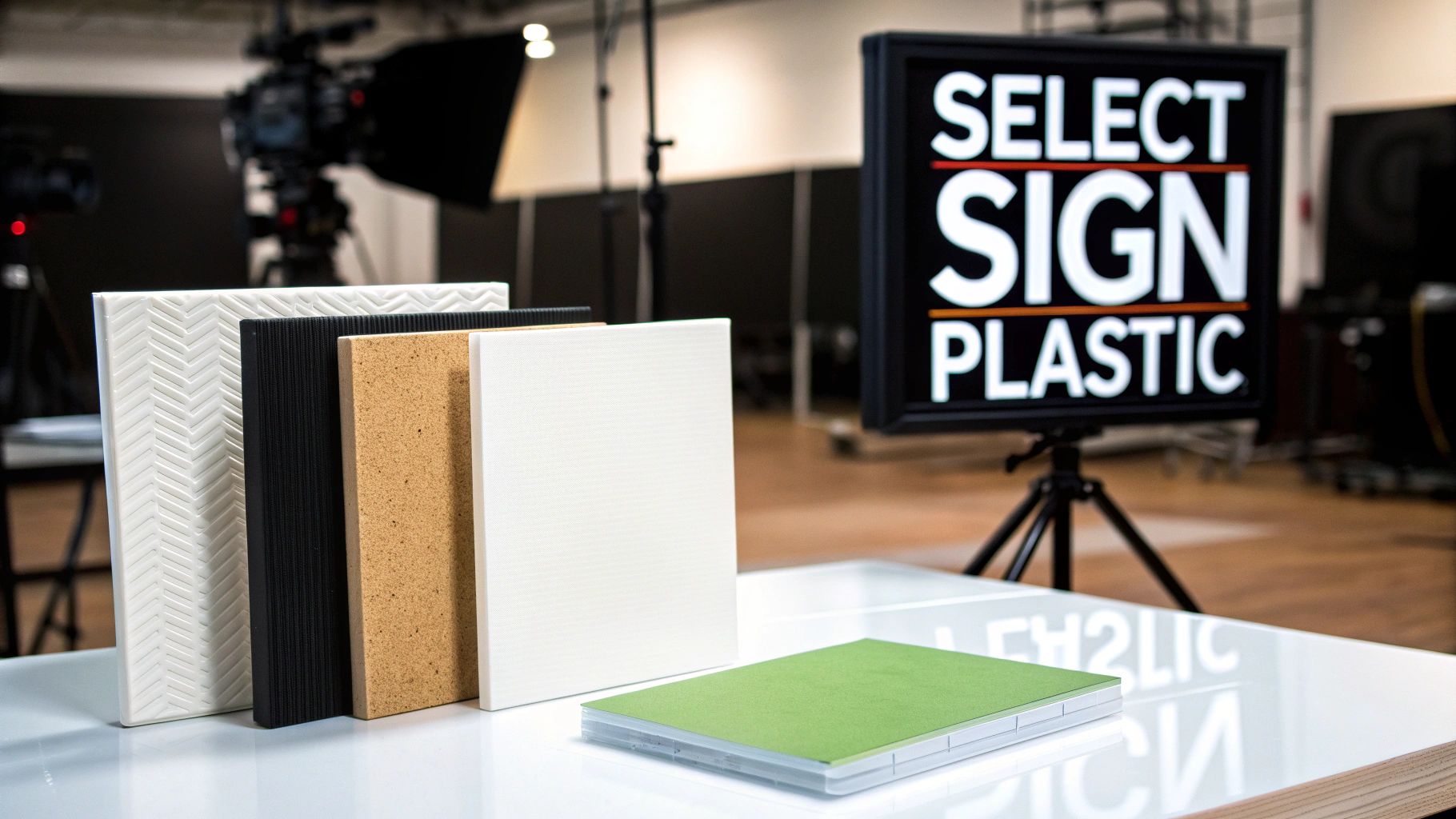
Trying to pick the perfect signage material can feel a bit overwhelming, but it gets a lot simpler once you understand the strengths and weaknesses of each plastic. There's no single "best" material—the right choice is the one that perfectly fits the job, the look you want, and what you’re willing to spend.
Think about it this way: a lightweight, easy-to-print PVC foam board is brilliant for point-of-sale displays inside a shop. But that same board wouldn't stand a chance against the harsh UK weather if you used it for permanent outdoor signage. For that, you’d need something much tougher, like acrylic or an aluminium composite panel.
Understanding the Key Players
To make a smart call, it helps to get a quick feel for the most popular options on the market. Each one strikes a different balance between cost, looks, and toughness.
- PVC Foam Board (Foamex): A lightweight but stiff sheet with a smooth, matt surface that’s perfect for high-resolution printing. It's the go-to for indoor stuff like exhibition panels and retail displays.
- Corrugated Plastic (Correx): This is the super lightweight, fluted plastic you see everywhere—think estate agent signs. It's incredibly cost-effective and ideal for short-term outdoor campaigns.
- Acrylic (Perspex): A premium, rigid plastic with a glossy, glass-like finish. It looks fantastic, stands up to the weather brilliantly, and is perfect for high-end shop fronts and permanent outdoor signs.
Here’s the bottom line: choosing your material is a strategic move. Using Correx for a permanent storefront sign is just throwing money away, but spending a fortune on premium acrylic for a one-day event sign makes no sense either.
Getting to grips with different plastic films is also a great way to expand your offering. You can learn how to grow your signage business with vinyl, another versatile and popular choice.
This table gives you a quick snapshot to help you compare the main contenders before we dive deeper later in this guide.
Quick Comparison of Popular Signage Plastics
| Material Type | Primary Use Case | Durability Rating | Relative Cost |
|---|---|---|---|
| PVC Foam (Foamex) | Indoor retail, exhibitions | Medium | Low-Mid |
| Corrugated Plastic (Correx) | Temporary outdoor, events | Low | Low |
| Acrylic (Perspex) | Permanent outdoor, high-end indoor | High | High |
This at-a-glance summary should give you a solid starting point for figuring out which material best fits your project's demands.
Getting to Grips with the UK Signage Market
Picking the right plastic for your signs in the UK isn't just about what looks good. You need a bit of inside knowledge on the local market, where costs, availability, and even what’s allowed are constantly shifting. The print and plastics industries here are closely linked, and they’re both being pushed to innovate by customer demands and new green rules.
Knowing this landscape is key. The materials you can get, how quickly you can get them, and what you’ll pay are all tied to a seriously powerful UK manufacturing sector. This isn’t just about churning out banners and shop displays; it’s about adapting to what people—and the government—expect.
The Powerhouse Behind UK Signage
The sheer scale of plastics manufacturing in the UK is what keeps the signage industry ticking. There’s a massive, ongoing demand for sign materials that are tough, customisable, and can handle a bit of British weather. It’s a huge part of the national economy and ensures that whether you need a quick point-of-sale display or a huge outdoor banner, the supply chain is there to deliver.
To put it in perspective, the UK’s plastic product manufacturing sector is set to hit a market size of £421.4 billion in 2025, with over 96,000 businesses involved. It's been growing at a rate of 3.7% each year for the last five years, which tells you all you need to know about the demand for these materials. This growth is also fuelled by better printing tech, like advanced UV and latex inks that make graphics look incredible on all sorts of plastic. For a deeper dive into the numbers, check out IBISWorld's comprehensive market report.
The Green Shift: How Regulations Are Changing the Game
It’s not just about the money, though. New rules are forcing a major rethink of what materials we use. The push for a circular economy has put the environmental footprint of plastics under the microscope, and frankly, it’s about time. Manufacturers and printers are now expected to offer sustainable options—it’s no longer a 'nice to have', it's a must.
Key regulations are speeding things up. The Plastic and Packaging Waste Regulation (PPWR), for example, will require all packaging to be recyclable by 2030. Since many signage materials fall into a similar category, this has lit a fire under the industry to develop PVC-free boards and recyclable polyester alternatives for banners and displays.
This regulatory shift means that sustainability is no longer an optional extra but a core consideration. Businesses that prioritise eco-friendly plastic for signs are not only meeting their compliance obligations but also aligning with the values of a growing base of environmentally-conscious customers.
This isn't just talk. We're seeing huge investments in the UK's recycling infrastructure, like Veolia's $77.4 million push into plastics recycling. With the UK plastics market forecast to grow to $15,304 million by 2035, the spotlight on recyclable and PVC-free materials will only get brighter.
So, what does this mean for you? When you’re choosing a plastic for your sign, its end-of-life credentials are now just as important as how durable it is or how well it prints. It's about making sure your brand looks good today and does the right thing for tomorrow.
A Detailed Comparison of Signage Plastics
Choosing the right plastic for your signs isn’t just about picking the cheapest or prettiest option. It’s about understanding how different materials behave in the real world. This breakdown gets into the nitty-gritty of the most common plastics, helping you match the material to your project’s goals, budget, and environment.
We’ll look at the big players—PVC foam, corrugated plastic, acrylic, polycarbonate, and PETG—and weigh them up based on what really matters: rigidity, weather resistance, visual finish, and how well they take print. Getting this right is the difference between a sign that just looks professional and one that delivers genuine, long-term value.
PVC Foam Board (Foamex) The Versatile Indoor Staple
PVC foam board, which you’ll almost always hear called Foamex in the UK, is a fantastic all-rounder for indoor use. It’s a lightweight but surprisingly rigid sheet made from expanded polyvinyl chloride, giving it a smooth, non-porous surface that’s perfect for high-resolution, direct-to-board printing.
Its versatility is its biggest strength. It’s a dream to cut and fabricate into custom shapes, which is why you see it used for everything from point-of-sale displays and exhibition panels to office branding. It delivers a clean, professional matt finish without the hefty price tag of more premium materials. The catch? It doesn't love the outdoors. While it’ll hold up for very short-term use outside, long-term exposure to sunlight and rain will make it brittle and cause discolouration.
Corrugated Plastic (Correx) The Temporary Outdoor Champion
When you need cheap, effective, and temporary outdoor signs, Correx is king. It’s essentially a plastic version of corrugated cardboard, made from polypropylene with a twin-wall, fluted structure. This design makes it incredibly light but sturdy enough for its intended purpose.
Correx is waterproof and shrugs off most chemicals, making it the obvious choice for short stints outdoors. There’s a reason it’s the go-to for estate agent signs, festival wayfinding, and construction site notices—it just works. Its main weakness is its look and lifespan; the fluted lines can sometimes show through the print, and it’s certainly not built for permanent installations.
The core difference between Foamex and Correx comes down to application and finish. Foamex gives you a smooth, solid finish for high-quality indoor graphics. Correx provides a functional, weatherproof solution for temporary outdoor messages where budget is the top priority.
If you're weighing up different materials for outdoor use, it's also worth knowing how plastics stack up against other options. You can dive deeper in our guide comparing mesh vs PVC banners for UK conditions.
Acrylic (Perspex) The Premium and Polished Performer
For that high-end, polished finish, nothing beats acrylic, or as it’s better known, Perspex. It’s a rigid thermoplastic with brilliant optical clarity, often used as a safer, shatter-resistant alternative to glass. Its glossy surface just screams quality and professionalism.
Acrylic is also a powerhouse when it comes to weather and UV resistance. Colours stay bright and the material won’t yellow or weaken, even after years in the sun. This makes it perfect for permanent architectural signs, upmarket retail shopfronts, and illuminated lightboxes. The downsides? It costs more, and it’s more brittle than polycarbonate—a hard knock can cause it to crack or chip.
This flowchart can help you decide which material path to follow based on your project's primary requirements for permanence and eco-friendliness.
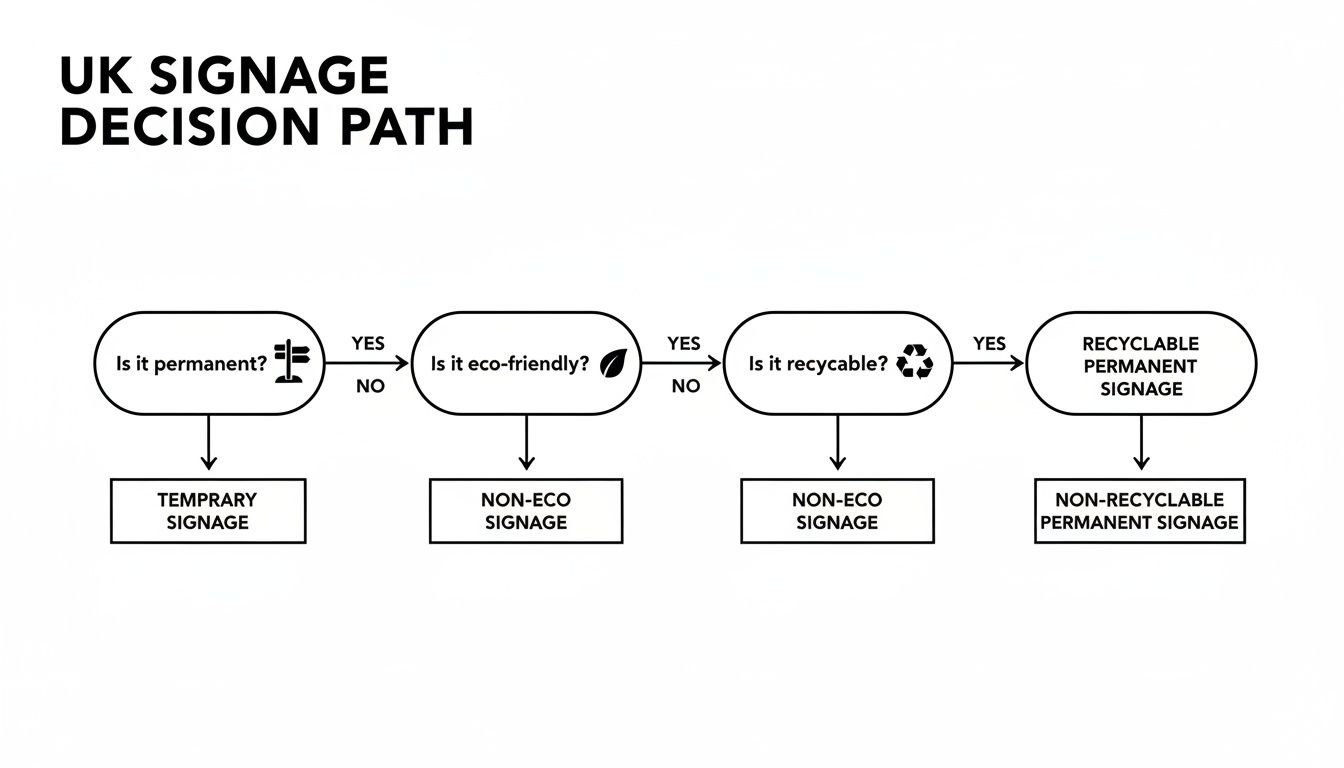
As you can see, the first question is usually about lifespan. Once you know how long the sign needs to last, you can start factoring in other things like environmental impact.
Polycarbonate The Unbeatable Impact Resister
If your sign is likely to take a beating, whether from the public or the environment, then polycarbonate is your answer. This stuff is virtually unbreakable—around 250 times stronger than glass and significantly tougher than acrylic. Its main selling point is pure, brute-force durability.
This incredible strength makes it the ideal choice for signs in busy public spaces like bus shelters, or for protective screens and industrial safety signs where failure isn't an option. It has the same excellent weather resistance as acrylic but comes with a higher price tag and is more prone to scratching if it isn't coated. The trade-off is straightforward: you swap a little of acrylic’s pristine finish for unparalleled toughness.
PETG The Eco-Conscious All-Rounder
PETG (Polyethylene Terephthalate Glycol) is quickly becoming a popular, more eco-friendly alternative to both PVC and polycarbonate. It hits a sweet spot, offering great clarity and impact strength (though not quite as tough as polycarbonate) while being easy to work with and print on.
One of the biggest draws of PETG is that it’s 100% recyclable, which aligns perfectly with the growing demand for sustainable signage. You’ll often find it used for retail displays, machine guards, and glazing. While it can’t match acrylic’s UV resistance for long-term outdoor jobs, it offers a fantastic balance of performance, cost, and green credentials for a huge range of indoor and medium-term outdoor projects.
To make sense of all these trade-offs, here’s a straightforward table breaking down how each plastic performs.
In-Depth Material Properties and Performance
This table offers a detailed snapshot of each plastic, comparing the technical specs that matter most when making your decision.
| Material | Key Property | Weather and UV Resistance | Best Printing Method | Typical Thicknesses | Common Finishing Options |
|---|---|---|---|---|---|
| PVC Foam (Foamex) | Smooth, matt finish | Low (best for indoors) | Direct UV Flatbed | 1mm, 3mm, 5mm, 10mm | Cut to shape, drilling |
| Corrugated Plastic (Correx) | Lightweight and low-cost | Medium (short-term outdoor) | Direct UV Flatbed | 4mm, 6mm, 8mm | Eyelets, cut to shape |
| Acrylic (Perspex) | High-gloss, glass-like clarity | High (excellent outdoors) | Direct UV or Vinyl Application | 3mm, 5mm, 10mm | Polished edges, stand-offs |
| Polycarbonate | Extreme impact resistance | High (excellent outdoors) | Direct UV Flatbed | 2mm, 3mm, 5mm | Bending, drilling, anti-scratch coating |
| PETG | Recyclable and impact-resistant | Medium (good for indoors) | Direct UV Flatbed | 1mm, 2mm, 3mm, 5mm | Bending, cut to shape, drilling |
Ultimately, choosing the right plastic for signs is a strategic move. By weighing the specific demands of your project against the unique strengths and weaknesses of each material, you can ensure your final product is not only visually effective but also perfectly suited to its environment and purpose.
Matching the Right Plastic to Your Use Case
Knowing the technical specs of different plastics is one thing. Knowing exactly which one to pick for a specific job is where the real expertise comes in. It's simple: the best plastic for signs is always the one that fits its environment, purpose, and your budget like a glove. A material that’s perfect in one scenario might be a complete disaster in another.
This guide is all about connecting the dots between material properties and their real-world jobs. We’ll look at common situations—from busy shop floors to exposed building sites—so you can get a feel for choosing the right plastic every time. The goal is to make sure your signs don’t just look good, but work hard and give you the best value for your money.
Retail and Point-of-Sale Displays
Inside a shop, signs need to grab attention, be easy to swap out, and be safe for public spaces. The aim is to pull customers in and boost sales, without overspending on materials that are just too much for the job.
For short-term promotions, till-toppers, and seasonal branding, lightweight PVC foam board (Foamex) is the hands-down winner. Its smooth, matt finish is a brilliant canvas for crisp, high-resolution graphics that look sharp even up close. It’s also a breeze to cut into custom shapes, opening the door for creative designs you can stick up almost anywhere with basic fixings.
But when you need something more permanent—think a premium brand logo behind the reception desk or a set of hard-wearing menu boards—acrylic (Perspex) is in a different league. Its polished, glass-like finish communicates a quality and sophistication that PVC foam just can't touch. These materials are staples in the UK's massive £23 billion print and packaging industry, used for everything from POS displays to high-end custom acrylic displays.
Outdoor and Building Signage
Outdoor signs take a constant battering from the classic British weather—rain, wind, and whatever sun we get. Durability isn't just a nice-to-have; it's essential. But the right choice of material really depends on how long you need that sign to last.
For short-term gigs like estate agent boards, festival wayfinding signs, or temporary event notices, corrugated plastic (Correx) is the obvious, cost-effective choice. It’s waterproof, ridiculously light, and cheap enough to produce in bulk and not worry about after the campaign ends. It has one job: get a message across for a limited time, and it does it perfectly.
Choosing Correx for a permanent shop front is a false economy; it will degrade and look unprofessional within months. Conversely, using premium aluminium composite for a weekend event is an unnecessary expense. The use case dictates the material.
For signs that need to last for years—like permanent building signs or business park directories—you need to step up to a more robust material. Aluminium composite panels (ACP), often known by the brand name Dibond, are a fantastic solution. They're built with a plastic core sandwiched between two thin aluminium sheets, giving you the stiffness and weather-resistance of metal without the heavy weight or high price tag. For other tough, long-term applications, you might also look into options like our premium outdoor vinyl banners which are weatherproof and UV resistant.
Construction Sites and Trade Shows
Both building sites and exhibition halls are demanding environments that require signs to be tough, portable, and fit for purpose.
On a construction site, you need durable, semi-permanent signs for health and safety notices, site plans, and branding on hoardings. Correx works well for quick warnings, but for longer-term projects, a thicker PVC foam board or even ACP will better withstand the inevitable knocks and scrapes.
Trade show graphics are a different beast entirely. Here, the priorities are a lightweight build for easy transport and a flawless print finish that makes people stop and look. PVC foam board is again a firm favourite for fitting out shell schemes and booth walls. For roll-up displays and pop-up stands, the go-to materials are flexible plastics like polyester or PVC films, which are designed to be rolled up and down again and again without getting damaged. It's all about finding that sweet spot between portability and professional impact.
Sustainability and Environmental Considerations
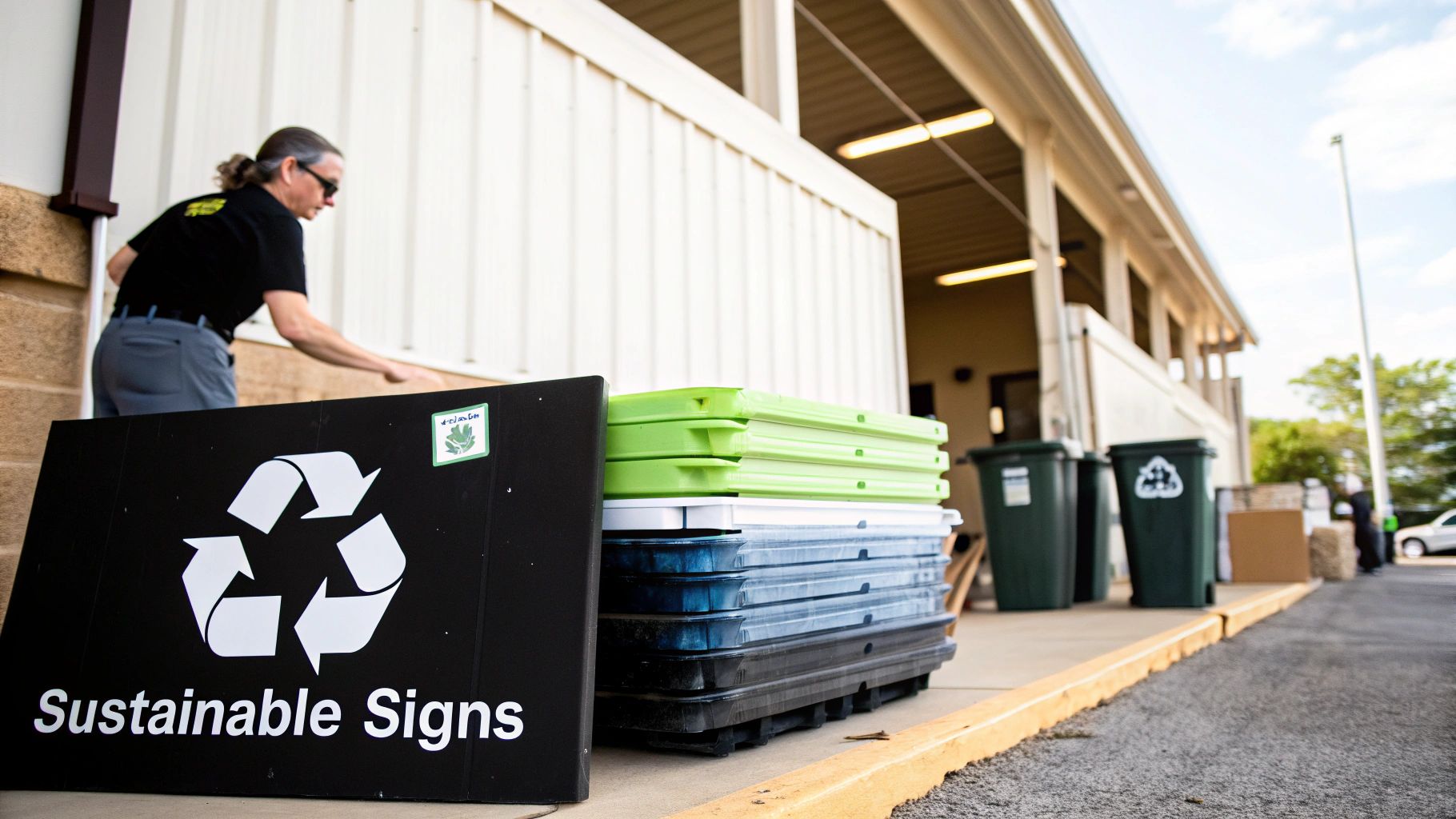
Choosing the right plastic for signs isn’t just about performance and price anymore. The environmental impact of your choice is a massive part of the decision, and rightly so. Across the UK, both businesses and customers are demanding more sustainable options, pushing the signage industry to get serious about greener materials.
This shift means facing up to the problems with some traditional materials, especially PVC. It’s been a workhorse for years, but PVC is notoriously tricky to recycle, and its production process comes with its own environmental baggage. The result? A huge and growing demand for PVC-free alternatives and plastics designed to be part of a circular economy.
Rise of Eco-Friendly Signage Plastics
The good news is that the market is responding. We’re seeing a fantastic range of sustainable options emerge, with materials like polypropylene (the stuff used in Correx) and PETG leading the charge. They’re becoming popular not just because they perform well, but because they are widely recyclable within UK waste streams. This makes them a smart, responsible choice for any business looking to shrink its environmental footprint.
These eco-friendlier plastics don’t compromise on quality, offering brilliant print results and solid durability for a huge range of jobs. The trick is to look for materials with clear recycling codes and get to grips with their end-of-life options before you buy. It’s a bit like choosing weatherproof table covers; making the right material choice upfront can have a big impact on your event's sustainability.
The most sustainable sign is one that balances longevity with recyclability. Choosing a durable, recyclable plastic for a long-term sign is often a greener choice than using a less durable but compostable material that needs frequent replacement.
This isn't just a niche concern; it's backed by major market trends. Projections show the demand for plastic packaging materials—a category that includes signage—is expected to hit 2,411 thousand tonnes by 2025. While the UK is hitting many of its recycling targets, big initiatives like the UK Plastics Pact are vital for driving the industry towards true circularity. You can dig into the full details in the PlasticFlow 2025 report from WRAP.
Making a Sustainable Choice
So, what can you do to make a greener choice for your signage? It all starts with asking the right questions and prioritising materials that are genuinely designed for recycling.
- Ask Your Supplier: Don’t be shy. Ask about the recycled content in their plastic sheets and whether they offer PVC-free options like polypropylene or PETG.
- Plan for End-of-Life: Before you even place an order, think about what will happen to the sign when you’re done with it. Go for materials accepted by your local recycling facilities.
- Look for Take-Back Schemes: Some of the most forward-thinking suppliers now offer schemes to take back old signs for proper recycling. This closes the loop and ensures those materials get a second life.
By consciously choosing recyclable plastics and talking to your suppliers about their environmental policies, you can ensure your signage doesn't just look great—it reflects modern, sustainable values and makes a genuinely positive statement for your brand.
Your Plastic Sign Questions, Answered
Even after reading a guide, you'll always have a few practical questions when you get down to the nitty-gritty of choosing your sign. Here are some of the most common queries we get, with clear, no-nonsense answers to help you finalise your decision.
We'll cover everything from standing up to the lovely British weather to the details of printing and recycling. This is the last bit of clarity you need to pick your material with complete confidence.
What Is the Most Durable Plastic for Outdoor Signs in the UK Climate?
When you need a sign that will last for years outdoors and brave the UK’s signature blend of rain, wind, and unpredictable temperatures, your best bets are aluminium composite panels (ACP) and high-grade polycarbonate. These materials are built for the job.
ACP, which you might know as Dibond, features a solid plastic core sandwiched between two thin aluminium sheets. This structure is incredibly stable, stopping it from warping in the heat or cracking in the cold. It’s a rock-solid choice for permanent signage.
Polycarbonate, on the other hand, is the heavyweight champion of impact resistance. It’s practically indestructible, making it perfect for signs in busy areas or places where they might get knocked about. Both materials have brilliant UV resistance, so your graphics stay bold and bright for years, unlike something like corrugated plastic which is strictly for short-term campaigns.
How Does Thickness Affect the Price and Performance of a Sign?
The thickness of a plastic sign has a direct impact on its rigidity, how good it feels, and its price tag. A thicker board is naturally stronger and less likely to bend, which is vital for larger signs that need to stay perfectly flat without sagging.
Take a 5mm PVC foam board—it feels far more premium and sturdy than a standard 3mm sheet. That extra stiffness makes it a much better fit for high-end retail displays or large wall-mounted signs where you want a flawless, professional look. Yes, the thicker material costs a bit more, but you’re paying for a longer lifespan and a much better first impression. Don't forget, a heavier sign might also need beefier fixings to keep it secure.
Can All Types of Plastic Signs Be Recycled in the UK?
This is a big one. Unfortunately, you can't just toss all plastic signs into your standard kerbside recycling bin. Whether a sign can be recycled depends entirely on the plastic it's made from.
Here’s a quick rundown:
- Widely Recyclable: Polypropylene (PP)—the stuff Correx boards are made of—and PETG are generally recyclable. They have recycling codes (5 for PP, 1 for PET) that most facilities accept.
- Difficult to Recycle: PVC is one of the toughest plastics to recycle. While specialist places exist, it's not welcome in most mainstream recycling programmes.
- Check Locally: For acrylic and polycarbonate, it really depends on your local council. Your best bet is to check with them or find a specialist waste management company.
If you want to make a sustainable choice, stick with materials like polypropylene or PETG for temporary signs. Even better, ask your print supplier if they offer a take-back scheme. It's the most reliable way to make sure your old signs are processed correctly.
What Is the Best Way to Print Graphics on Plastic Signs?
For almost all rigid plastic signs, the go-to method is direct-to-substrate UV printing. This involves a flatbed printer applying ink straight onto the plastic sheet. The ink is then instantly cured with ultraviolet light, which locks in the colour and creates a tough, scratch-resistant, and fade-resistant finish.
This direct printing process gives you incredibly sharp, vibrant graphics and is much quicker than the old-school method of printing on vinyl and sticking it to the board. While vinyl overlays still have their uses, especially for updating old signs, direct UV printing gives a cleaner, more professional, and longer-lasting result for any new project. It’s the industry standard for a reason.
Ready to create signage that stands out? Banner Printing Ltd offers a wide range of custom-printed plastic signs, from durable outdoor panels to vibrant indoor displays. With fast, free UK delivery and expert support, we make it easy to bring your vision to life. Explore our options and upload your artwork today at https://bannerprintingltd.co.uk.


One Comment
[…] start makes a huge difference. Exploring durable and easy-to-clean options like different types of plastic for signs can be a great alternative for some applications, making future changeovers much […]