A low banner print rate can look like a smart saving until the banner arrives too late, curls at the edges or is not built for the weather outside your premises. For UK businesses and event organisers, the useful figure is not simply the headline price. It is the cost of a banner that looks sharp, fits the location and keeps working for as long as you need it.
Whether you are promoting a weekend offer, covering building-site fencing or preparing for an exhibition, understanding what sits behind a banner price helps you order with confidence and avoid last-minute compromises.
What does banner print rate actually mean?
Banner print rate usually refers to the cost charged for printing a banner, often calculated by size, material or quantity. Some quotes show a price per banner, while others work from a square-metre rate. Both can be useful, but neither tells the full story without checking the specification.
A 1m x 3m banner and a 3m x 1m banner have the same print area, for example, but their finishing requirements and how they will be displayed may differ. A narrow, long banner may need more reinforced eyelets to stay secure in wind. A banner for a trade stand may need a cleaner, more presentation-led finish than one used temporarily behind a work area.
The right question is not simply, “What is the cheapest rate?” It is, “What is included, and will this banner do the job properly?”
The main factors behind a banner print rate
Banner size and print coverage
Size is the most obvious factor. More material and more ink generally mean a higher overall price. However, larger banners often offer better value per square metre than several small banners, particularly when you need one strong message visible from a distance.
Before ordering, measure the available space rather than estimating. Include room for fixings, rails, fences or frames. A banner that is even slightly too large can be difficult to tension, while one that is too small may lose impact from the pavement, car park or exhibition aisle.
Full-colour printing does not always mean a dramatically higher cost than a simple design, but artwork still affects the finished result. Large photographs, gradients and solid blocks of colour should be supplied at a suitable resolution so they reproduce cleanly at the final size.
Material choice: vinyl or mesh
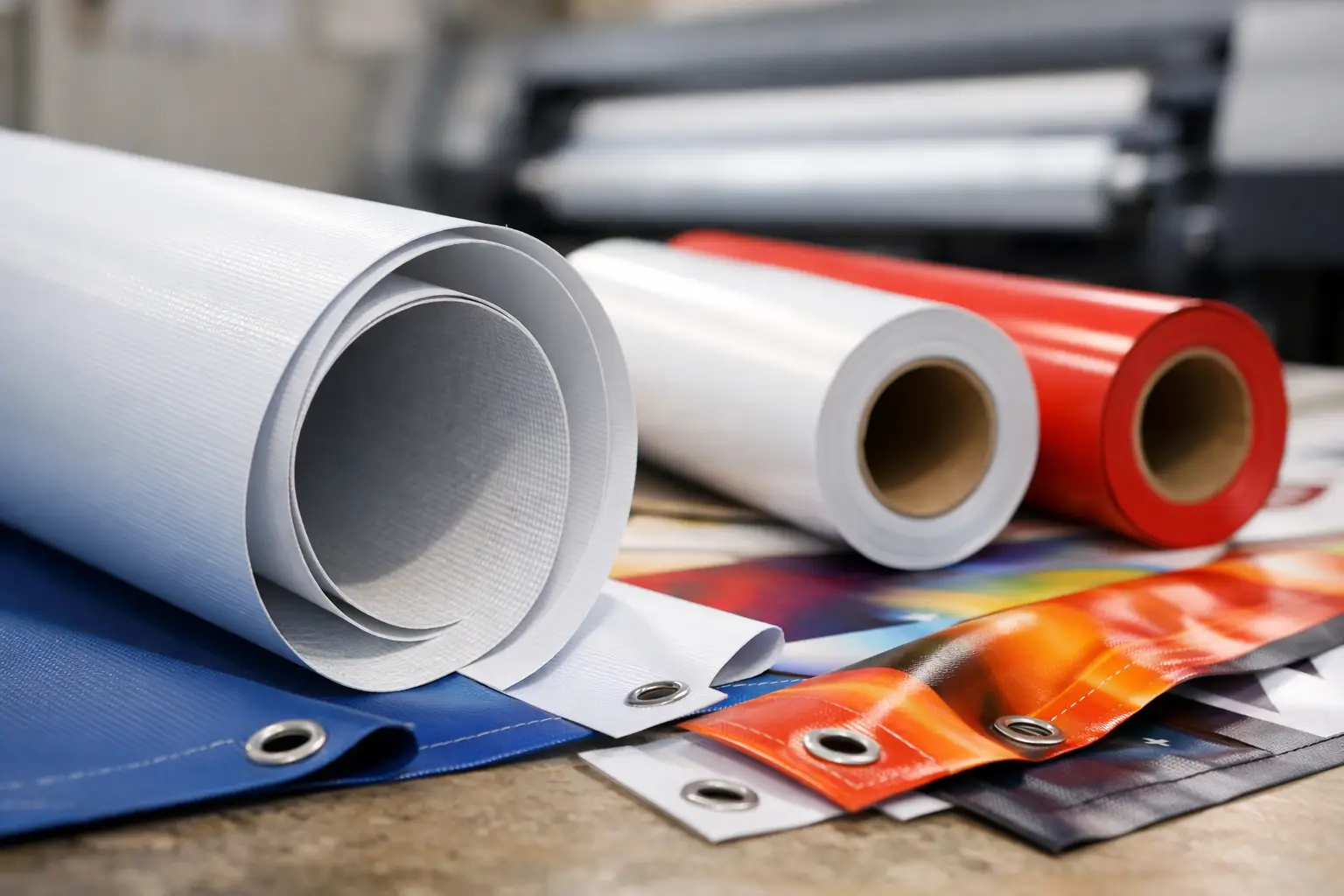
Material has a direct effect on the price and, more importantly, on performance. Standard PVC vinyl is a practical all-round choice for many promotions, shopfronts, events and indoor displays. It provides a solid surface for bold colours, clear text and detailed graphics.
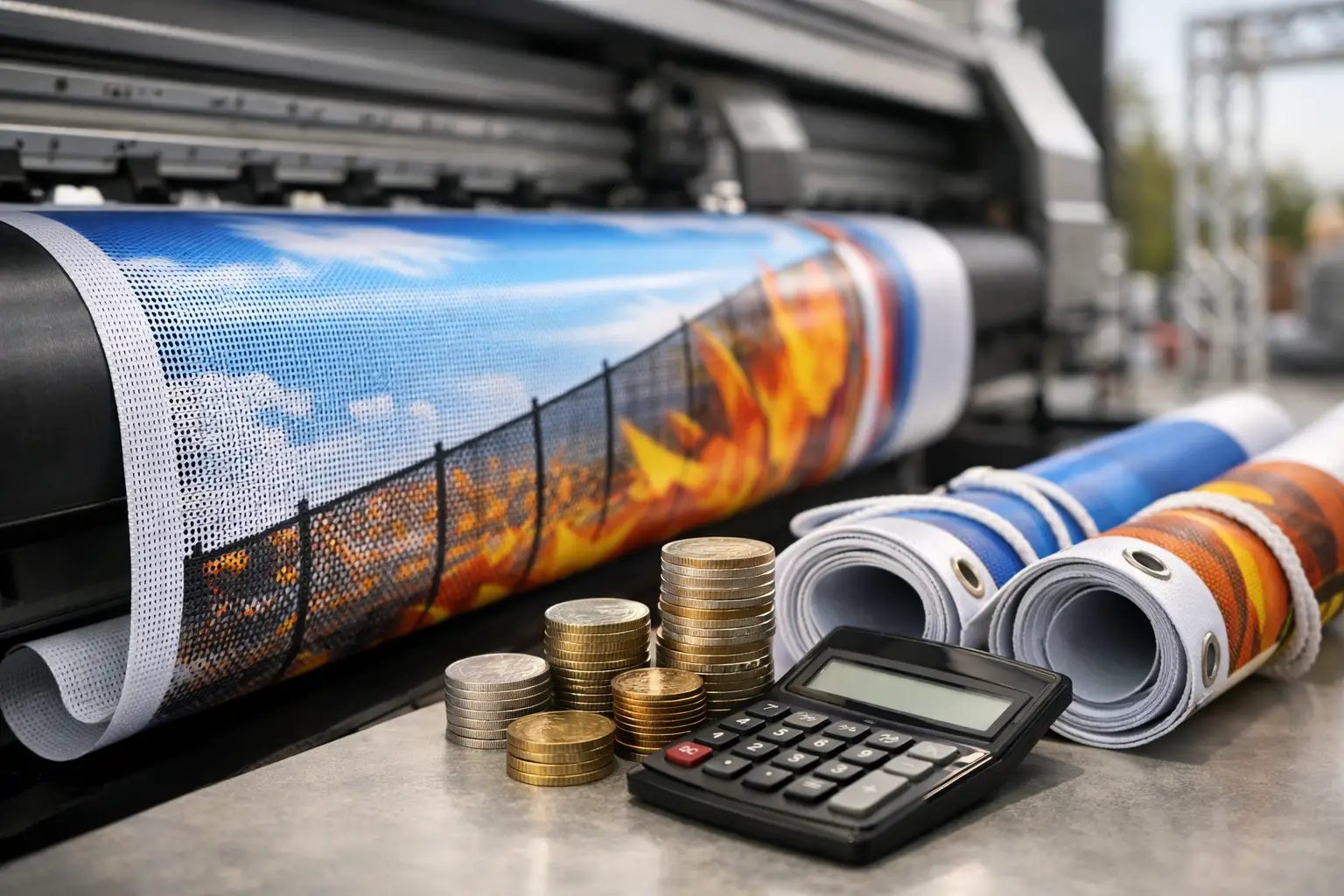
Mesh banner material has tiny perforations that let air pass through. It is often the better option for exposed fencing, scaffolding and windy outdoor locations. Because it handles wind differently, mesh can reduce strain on fixings and fencing. The trade-off is that fine artwork can appear less solid when viewed close up, so designs should use confident text, strong contrast and uncomplicated graphics.
For a short indoor campaign, paying extra for heavy-duty outdoor performance may not be necessary. For a banner expected to stay outside through rain, wind and sun, it is usually a false economy to choose a material that is not fit for the conditions.
Finishing and fixings
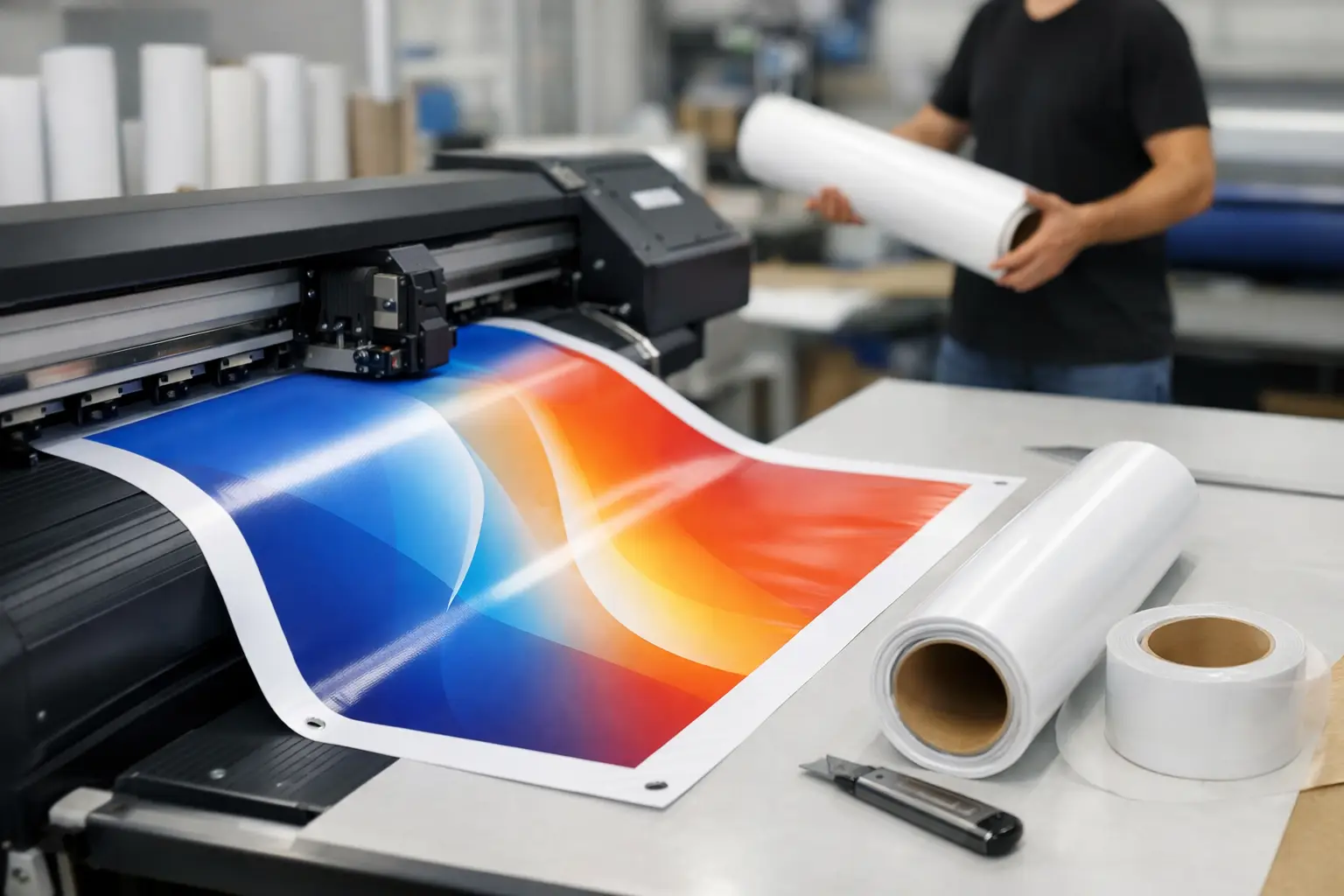
The printed sheet is only part of the product. Hemmed edges, metal eyelets, pole pockets and reinforced corners all add to the finished banner cost, but they are what make installation straightforward and help the banner last.
Eyelets are a common choice for banners attached to fencing, railings or walls. Their spacing matters. Too few can leave the material flapping; too many may be unnecessary for a small indoor banner. Pole pockets suit banners that need to slide onto a rail or be suspended from a frame. If you are replacing an existing sign, check the fixing arrangement before finalising your order.
A cheap quote without clear finishing details can create extra work on site. Always match the finish to the way the banner will be installed, not just the way it looks on screen.
Quantity and repeat orders
Ordering several identical banners can reduce the cost per unit because setup time is shared across the run. This can work well for estate agents, multi-site retailers, trade teams, schools and event organisers who need the same campaign message in more than one place.
That said, quantity is only valuable when every banner has a use. If each location needs different opening times, contact details or directions, variable artwork may be more useful than one generic design. The unit rate may be slightly higher, but the message will be more relevant to the people seeing it.
For repeat promotions, keep approved artwork and dimensions on file. Consistent sizing and branding make reordering quicker, reduce artwork errors and help maintain a professional look across sites.
Why artwork can affect the final cost
A print-ready file keeps your order moving. If artwork needs resizing, rebuilding, correcting or checking for missing fonts and low-resolution images, extra design time may be required before production begins.
For large-format print, the artwork does not need to be created at the banner’s full physical size. It does need to be proportionate and high enough in resolution for the viewing distance. A simple rule helps: the closer people will stand to the banner, the more detail they can see. Exhibition backdrops and retail displays benefit from sharper image files than a banner viewed from across a road.
Keep vital wording away from the edge. Phone numbers, web addresses, prices and calls to action should sit safely inside the design area so hems and eyelets do not interfere with them. Use strong colour contrast too. Pale text on a busy photograph may look stylish on a laptop but disappear outdoors in daylight.
If there is any doubt, getting the artwork checked before print is far cheaper than replacing a banner with an incorrect date, unreadable contact number or logo that has printed soft.
Fast turnaround and the real cost of urgency
Fast turnaround is often essential. A new shop opening, a trade event, a charity fundraiser or an unexpected site requirement cannot always wait for a long production window. UK-based production and clear artwork can make a 24-48 hour turnaround achievable for many standard banner orders.
Urgent print may carry a different rate where production schedules, finishing and dispatch need to be prioritised. That does not mean every fast order is expensive. It means timing should be discussed at the point of order, with the delivery date treated as part of the specification.
Give yourself the best chance of a smooth fast order by confirming the finished size, material, artwork and delivery address early. A delay caused by unanswered artwork queries can matter more than the actual print time.
How to compare banner print rates properly
When comparing suppliers, line up like for like. A price is meaningful only when the banner dimensions, material, print quality, finishing, turnaround and delivery method are comparable.
Check whether VAT and delivery are shown clearly. Confirm whether hems and eyelets are included, whether artwork is reviewed, and whether the stated turnaround means dispatch or actual arrival. If your banner is for an outdoor location, ask about weatherproof and UV-resistant suitability rather than assuming all printed banners perform the same way.
Also consider the cost of failure. A delayed banner for an exhibition, or a weak banner that tears after one wet weekend, can cost more in lost promotion and replacement printing than a modest difference in the original quote.
Choosing the right specification for the job
For a one-day indoor event, prioritise clear branding, the right finished size and easy installation. For a shopfront promotion, choose a visible layout that can be read quickly by passing customers. For building sites and perimeter fencing, material strength, airflow and secure finishing should lead the decision.
If your campaign includes roller banners, posters, flyers or stickers as well, keep the core message and colours consistent. A banner attracts attention from a distance; supporting print gives people the detail once they are close. Planning them together can make the whole campaign work harder without overcomplicating the order.
The best banner print rate is the one that delivers a professional banner on time, in the right material and ready to install. Start with where it will be used, how long it needs to last and what people need to notice first. The right specification will usually make the buying decision clear.