
A shopfront banner has seconds to do its job. Drivers need to read it at a glance, people walking past need to understand the offer, and the finished display must fit the building rather than look squeezed into it. The answer to “what size banner for shopfront” depends on your available space, viewing distance and message, but a few practical rules make the decision straightforward.
For most businesses, the best banner is not simply the biggest one you can order. It is the one that fills a clear, visible area, keeps the main wording readable and can be fitted securely without hiding windows, access points or existing permanent signage.
What size banner for shopfronts works best?
Start by measuring the exact area where the banner will sit, then reduce those measurements slightly to create a tidy border. A banner that ends 50 to 100mm inside the edges of a wall, fascia or railing usually looks more deliberate than one pushed right to every boundary.
For a typical independent shop, salon, café or takeaway, a horizontal banner measuring 2m x 1m is often an effective starting point. It is large enough for a business name, a short offer and contact details, while remaining manageable to install. Where there is a wider blank wall or a long run of fencing, 3m x 1m gives stronger street presence without becoming difficult to read.
A narrow frontage may suit 1.5m x 0.75m or 2m x 0.5m, particularly above a window or along a railing. If the only usable space is beside a doorway, a vertical banner such as 0.8m x 2m can work well. Keep the design simple in these formats. A logo, service and phone number will generally outperform a crowded list of products.
There is no universal standard shopfront size because buildings, landlords and local planning conditions differ. Use the available space as your guide, but design for the person viewing it from the pavement or road.
Measure the location before choosing the format
Do not estimate from a photo or measure only the width. Check the height, usable fixing points and anything that could obscure the banner, such as drainpipes, exterior lights, shutters, hanging baskets or delivery signage. A quick tape-measure check prevents expensive compromises once your print arrives.
Measure the finished display area in millimetres for the most accurate artwork setup. For example, a wall space measuring 3,200mm wide by 1,150mm high does not automatically require a 3.2m x 1.15m banner. A 3m x 1m format may leave clean margins and make installation easier.
Also consider where people stand when they see it. A banner above a busy high street needs larger lettering than one viewed from a small forecourt. If customers mainly approach on foot, a more detailed message can be viable. If they are passing in cars, use fewer words at a larger scale.
Allow room for eyelets and fixings
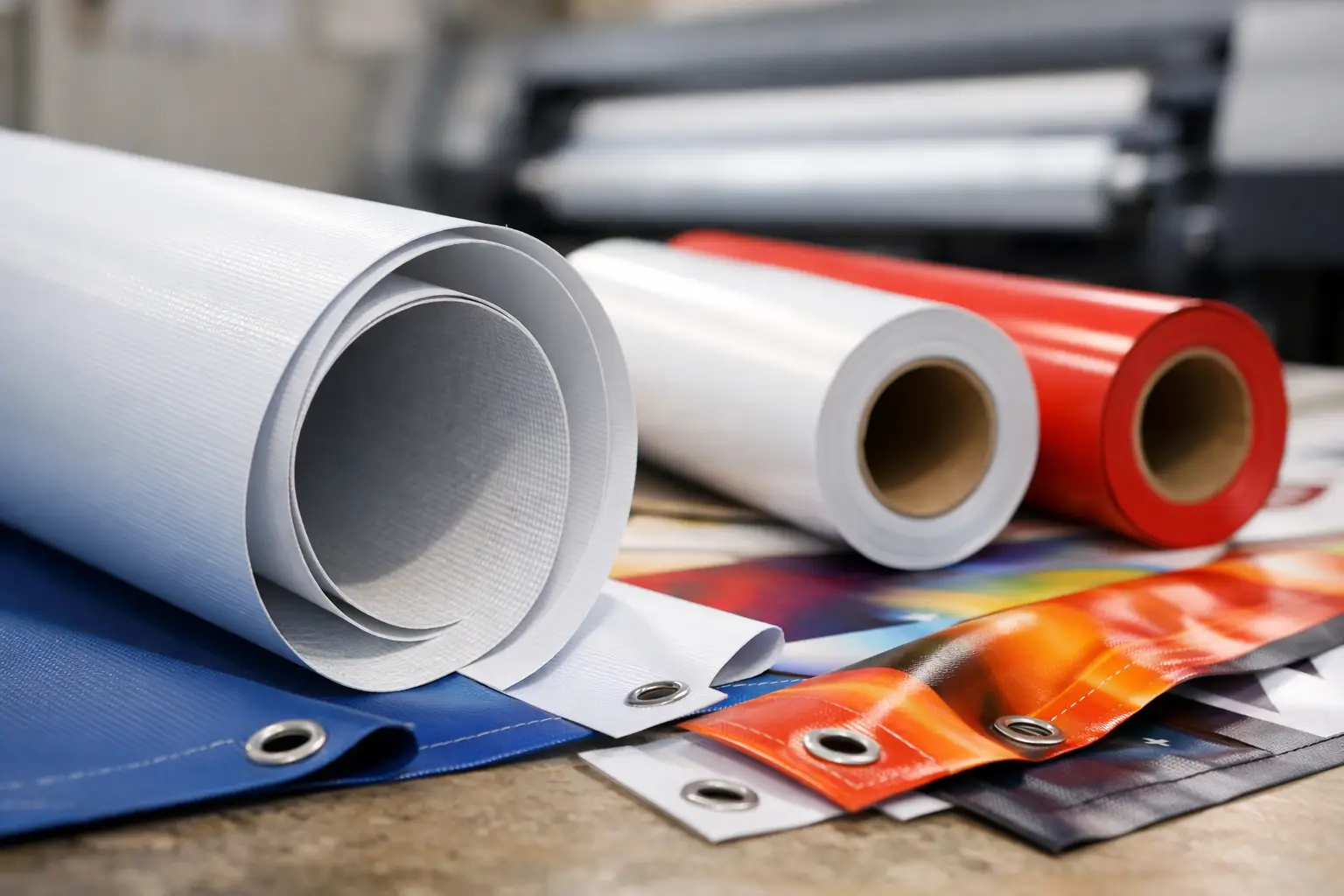
Vinyl banners are commonly fitted using eyelets, cable ties, bungee cords or screws with washers. Your banner needs a little clearance around its edges so the fixings can be tensioned safely. It should sit flat enough to look professional, but not be stretched so tightly that wind puts unnecessary strain on the material or eyelets.
If you are fixing to railings, measure the open panel rather than the full width of the rail. For a wall-mounted banner, confirm that the surface is sound and that there is suitable space for each fixing. These details matter as much as the printed dimensions, especially for outdoor shopfronts exposed to wind and rain.
Match the banner size to the viewing distance
The further away a customer is, the larger the key text needs to be. This is where many shopfront banners lose impact. The banner itself may be a good size, but the logo, price or call to action is too small to be useful.
As a practical guide, aim for main lettering around 25mm high for every metre of intended viewing distance. A banner read from 10 metres away therefore needs a headline roughly 250mm high. This is a guide rather than a fixed rule, as bold typefaces and high-contrast colours are easier to read than fine or decorative fonts.
A roadside banner should normally carry one primary message: “Now Open”, “Sale”, “Fresh Food Daily” or the service you want to be known for. Put that message first, make it large, then add supporting information only if there is sufficient space. A phone number, web address or social handle can be useful, but they should not compete with the reason someone should stop.
Choose a shape that suits the frontage
Horizontal banners are the usual choice for shopfronts because most fascia areas and exterior walls are wider than they are tall. They allow a logo and headline to sit naturally across the display and are easy to scan from left to right.
Square and near-square banners can be effective in window displays, at market stalls or on solid wall panels. A 1m x 1m or 1.5m x 1.5m banner is useful when you need a clear promotion in a compact area. They are also a sensible option where a long horizontal banner would cover too much glass or interfere with the building’s permanent identity.
Vertical banners suit tight spaces, entrances and posts. They create impact but offer less room for text, so keep them focused. If you need a more polished, moveable option for just inside the doorway, a roller banner may be better than attaching vinyl to the building.
Pick the right material for the site
Size and material work together. A small banner in a sheltered doorway has different demands from a large promotion mounted on open fencing.
Standard PVC vinyl is a strong all-round choice for most shopfront campaigns. It is weatherproof, UV-resistant and gives colours a bold, clean finish. It suits temporary sales, launches, seasonal offers and regular retail promotions where a sharp printed result matters.
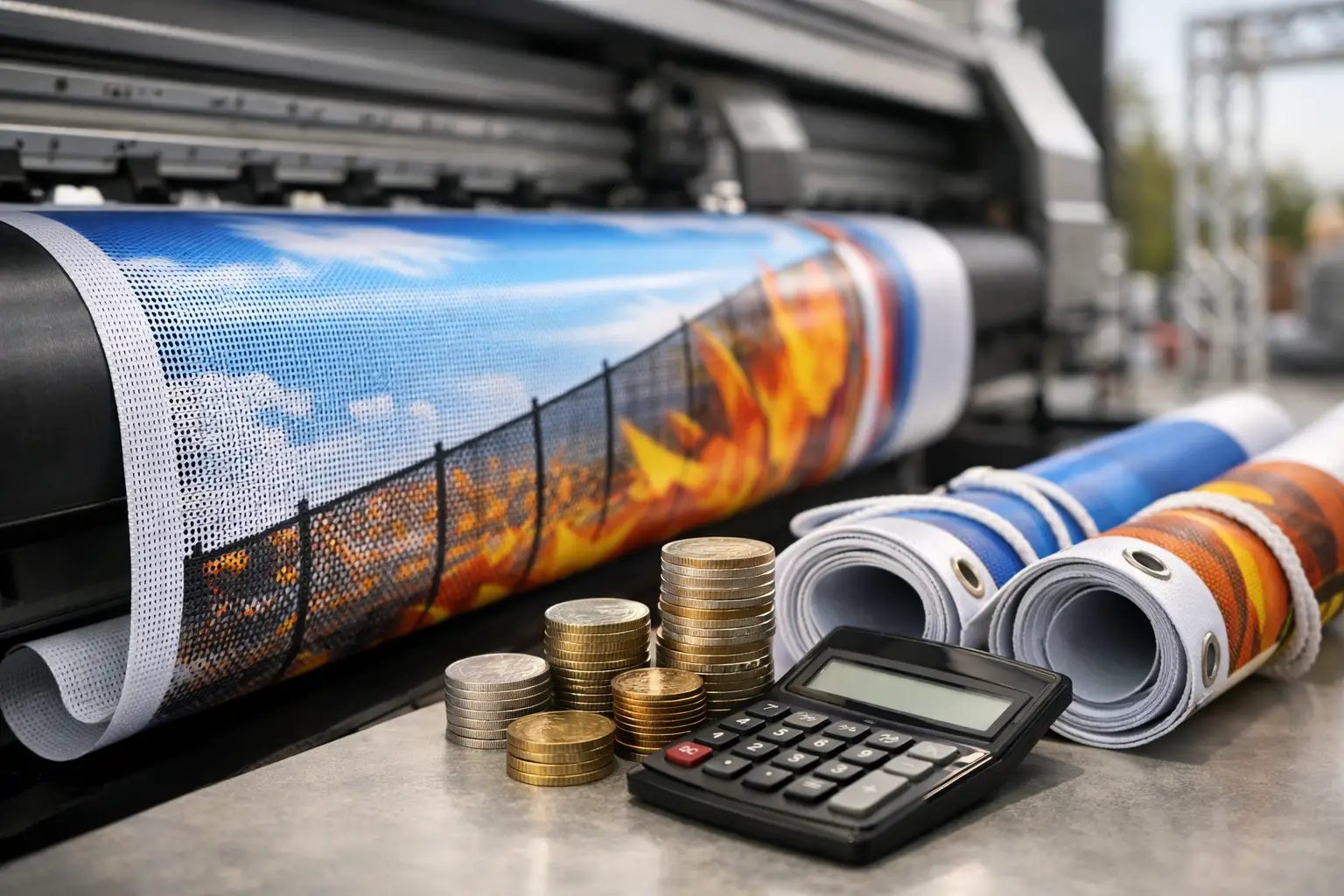
For windier locations, mesh banner material can be the safer option. Its small perforations allow some air to pass through, reducing wind pressure while keeping the graphic visible from a distance. The print will appear slightly less solid up close than standard vinyl, but the trade-off is worthwhile on exposed railings, scaffolding or large exterior spans.
If your display is under cover or inside a window, you can prioritise the finish and message over weather resistance. Even then, avoid making the banner too large for the space. A well-proportioned print with a clear offer feels more credible than a huge display that blocks natural light and makes the frontage look untidy.
Keep the artwork simple at larger sizes
A bigger banner does not mean you need more content. In fact, large shopfront banners are most effective when they use the extra space to make a small number of elements impossible to miss. Use your logo, a concise headline, one supporting line and a clear action such as “Visit Today” or “Call for a Quote”.
Avoid stretching a low-resolution image to fill a wide banner. It may look acceptable on a phone screen but print soft or pixelated at full size. Supply artwork at the correct dimensions where possible, and make sure photographs, logos and text are suitable for large-format printing. If you are unsure, having artwork checked before production is far quicker than discovering a problem after fitting day.
Colour contrast is equally important. Dark lettering on a pale background, or pale lettering on a dark background, will usually read best outdoors. Fine script, pale colours on white and densely packed information can disappear at street level, regardless of the banner’s physical size.
Common shopfront banner sizes at a glance
These sizes are proven starting points, not restrictions:
- 1.5m x 0.75m for compact windows, railings or short promotional messages.
- 2m x 1m for most small retail frontages and local service businesses.
- 3m x 1m for wider walls, forecourts and high-visibility sales messages.
- 4m x 1m or 4m x 1.5m for long facias, large exterior walls and prominent roadside locations.
- 0.8m x 2m for narrow vertical spaces beside entrances or on posts.
Banner Printing UK produces custom sizes, so you are not limited to a standard format when your shopfront has an awkward or unusual space. Ordering to the measured area can give you a cleaner result and reduce unnecessary trimming or folding during installation.
Before you order, stand across the road from the frontage and imagine the finished banner in place. Can someone understand the main message without slowing down? Is there enough clear space around it? Will the chosen material cope with the weather at that location? A banner that answers those three questions well will work harder for your business from the moment it goes up.