
A busy exhibition hall gives you only a few seconds to be noticed. Before a visitor has read your leaflet or spoken to your team, they have already made a judgement about your stand. The best exhibition display products make that first impression work harder: they show what you do, look professional under venue lighting and remain practical to transport, assemble and reuse.
For most UK businesses, the right choice is not the largest or most expensive display. It is the one that fits the event, your available floor space, the message you need to communicate and the time you have to prepare. A compact roller banner can outperform a complex stand if its headline is clear, its print is sharp and it is positioned where people will actually see it.
Start with the job your display needs to do
Exhibition products are often bought in a rush, especially when a booking is confirmed late or an old display is no longer fit for purpose. That is understandable, but start with the outcome rather than the product name. Are you trying to stop passing visitors, explain a service, demonstrate a product or create a branded area for meetings and photographs?
A simple message-led display suits a busy trade counter, local business expo or networking event. A larger visual set-up makes more sense when your stand is competing with established brands in a crowded hall. If you attend several events each year, portability and the ability to refresh individual graphics should carry more weight than a one-off visual flourish.
Also consider the venue. Carpeted exhibition halls, shopping centres, outdoor shows and conference spaces all present different challenges. Indoor displays need clear graphics and a stable footprint. Outdoor displays need weatherproof materials, secure fixing and enough visual weight to be readable from a distance.
Roller banners: the dependable exhibition essential
Roller banners are among the best exhibition display products because they solve the practical problems that affect most exhibitors. They are portable, quick to put up and easy to carry between events. For a small business attending a first trade show, one or two well-designed roller banners can create an immediate branded presence without taking over the stand budget.
They work particularly well for headline messages: a key service, a limited offer, a strong customer benefit or a clear call to action. Keep the main message in the upper half, where it remains visible above tables, chairs and visitors. Supporting information can sit lower down, but a banner should not become a brochure on a stand.
Standard roller banners are a sensible option for regular indoor use and tight deadlines. Premium hardware is worth considering if the display will travel frequently or represent your business at higher-profile events. The print needs to be just as considered as the mechanism. High-resolution artwork, strong contrast and brand colours that reproduce accurately matter more than decorative effects.
One roller banner can work beside a table or reception point. Two or three can frame a stand, separate product areas or create a clear visual backdrop. The trade-off is space: a small stand crowded with too many upright displays can feel difficult to enter. Leave room for visitors and conversations.
Make roller banner artwork readable at a glance
Visitors should understand the essentials from several metres away. Use one main headline, a short supporting line and a recognisable logo. Product photos are useful where they show scale, finish or application, but only if they are crisp enough for large-format print.
Contact details are still valuable, though they should not be the focal point. A web address, phone number or QR code can sit towards the bottom, ready for interested visitors. If the QR code leads to a quotation form, catalogue or event-specific offer, test it at the final printed size before approving artwork.
Backdrops create a stronger branded space
A printed backdrop does more than fill the wall behind your stand. It gives your team a consistent setting for meetings, product demonstrations, photographs and social content. This is particularly useful for recruitment fairs, press events, hospitality showcases and exhibitions where the stand needs to look active throughout the day.
Backdrops are a strong choice when visitors will be photographed or when several staff members need to work in front of a shared brand message. They can carry a larger logo, repeat a visual pattern or feature a focused campaign design without forcing every detail onto a narrow banner.
Size is the key decision. Measure the available wall or stand width, then allow for furniture and access routes. A backdrop that is too small can look lost behind a table, while one that is too large may be difficult to fit or may cover venue features you need to keep clear. Check the organiser’s stand plan before ordering, especially where shell-scheme walls and height restrictions apply.
For repeat use, avoid printing dates, venue names or event-specific claims into the main backdrop. Put those details on a separate roller banner or poster instead. This keeps the backdrop useful for future events and lowers the cost of updating your display.
Printed banners for flexible, large-scale visibility
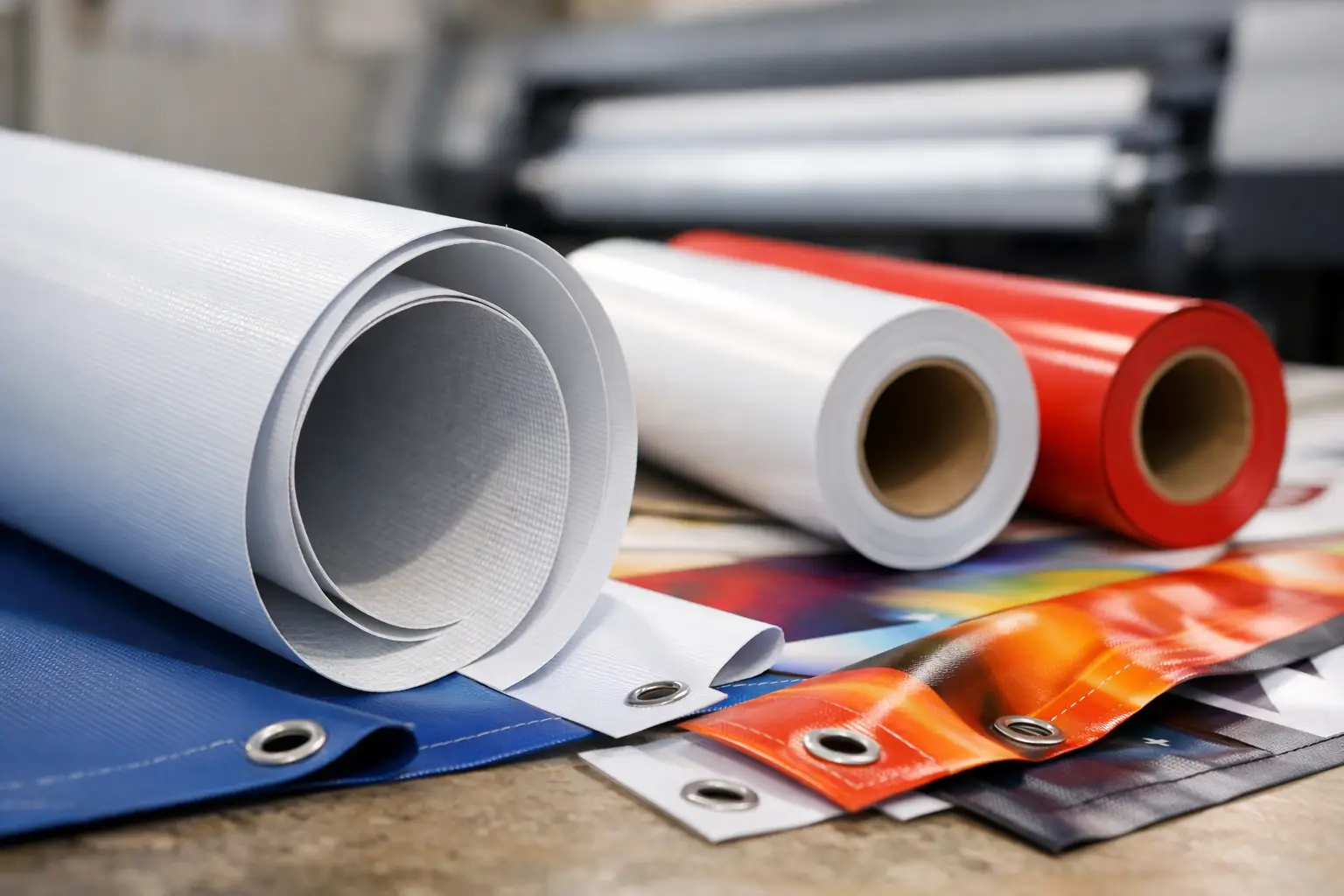
Vinyl banners are an efficient way to add high-impact branding where a traditional exhibition stand is not required. They suit indoor halls with large blank walls, sports events, school fairs, community days and trade displays where you can fix graphics to railings or temporary structures.
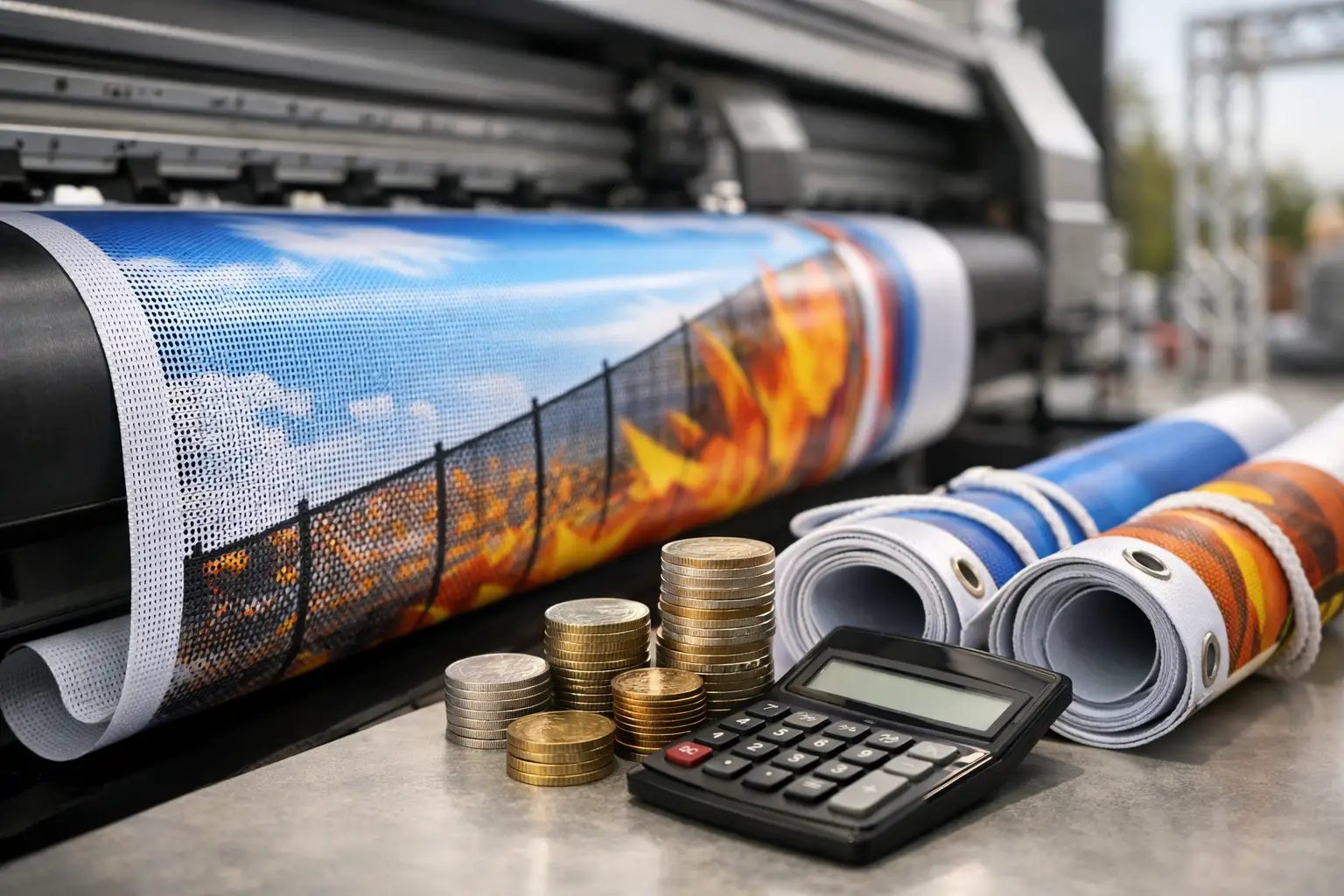
For outdoor exhibitions, choose a weatherproof, UV-resistant printed banner and plan the fixing method before the event. Mesh banners are often the better option for fencing and exposed locations because the material allows wind to pass through. Standard vinyl gives a more solid printed appearance, making it ideal where wind is less of a concern.
Do not treat a banner as an afterthought. It needs eyelets or finishing suited to the way it will be secured, and it should be tensioned evenly to avoid creases. If it will be attached to temporary fencing, allow enough space around the edges for fixings and avoid placing essential text too close to the border.
Posters and table displays support the main message
Posters are useful when you need a lower-cost, event-specific display to sit within a larger exhibition set-up. They can announce a demonstration time, highlight a show-only promotion, list price points or point visitors towards a particular product. Because they are easy to replace, posters are ideal for information that changes frequently.
At smaller events, a professionally printed poster displayed behind a counter can be more effective than trying to build a full stand. The same applies to pop-up retail promotions, charity events and local markets. The visual standard still counts. A curled home-printed sheet can undermine an otherwise polished display, while a well-produced poster reinforces confidence in your business.
Table coverings, flyers, business cards and stickers should support the display rather than compete with it. Your stand needs one visual hierarchy: attract attention from afar, give people a reason to stop, then provide take-away information once the conversation begins. When every surface carries a different message, visitors do not know where to look.
Choose materials and sizes for real-world use
The best display product on screen can become the wrong product once it reaches the venue. Think through loading, parking, lifts, stairs, set-up time and storage after the show. A display that takes two people and a long assembly window may not suit a small team travelling in a car.
For frequent exhibitors, portable products with protective carry cases offer better long-term value. They reduce the chance of damaged print during transport and make it easier for any member of staff to set up the stand consistently. If the event is a one-day local show, speed and simple handling may matter more than elaborate hardware.
Print finish matters too. Exhibition lighting can expose poor colour reproduction, pixelated images and thin materials. Supply artwork at the recommended scale and resolution, use CMYK-ready files where possible and make sure logos are supplied as high-quality vector files. If you are not confident with the artwork, ask for a check before production. Correcting a file before printing is far easier than trying to solve a problem on the exhibition floor.
Build a display set-up that can grow
You do not need to buy every product before your first event. A practical starting point is a branded backdrop or a pair of roller banners, supported by business cards and flyers. From there, add posters for event offers, larger banners for outdoor promotions or extra display units as your stand space grows.
Keeping core colours, typefaces and imagery consistent across each product is what makes a modest set-up feel established. Use the same logo treatment and central message, even when individual displays serve different jobs. Banner Printing UK produces a focused range of exhibition and promotional print to help businesses move from artwork approval to event-ready materials without unnecessary delays.
Give yourself enough time to inspect every item before the event. Set the display up once at your premises, check that the graphics face the right way, pack the correct fixings and photograph the finished layout for the team. A reliable display is not just well printed – it is ready to perform when the doors open.