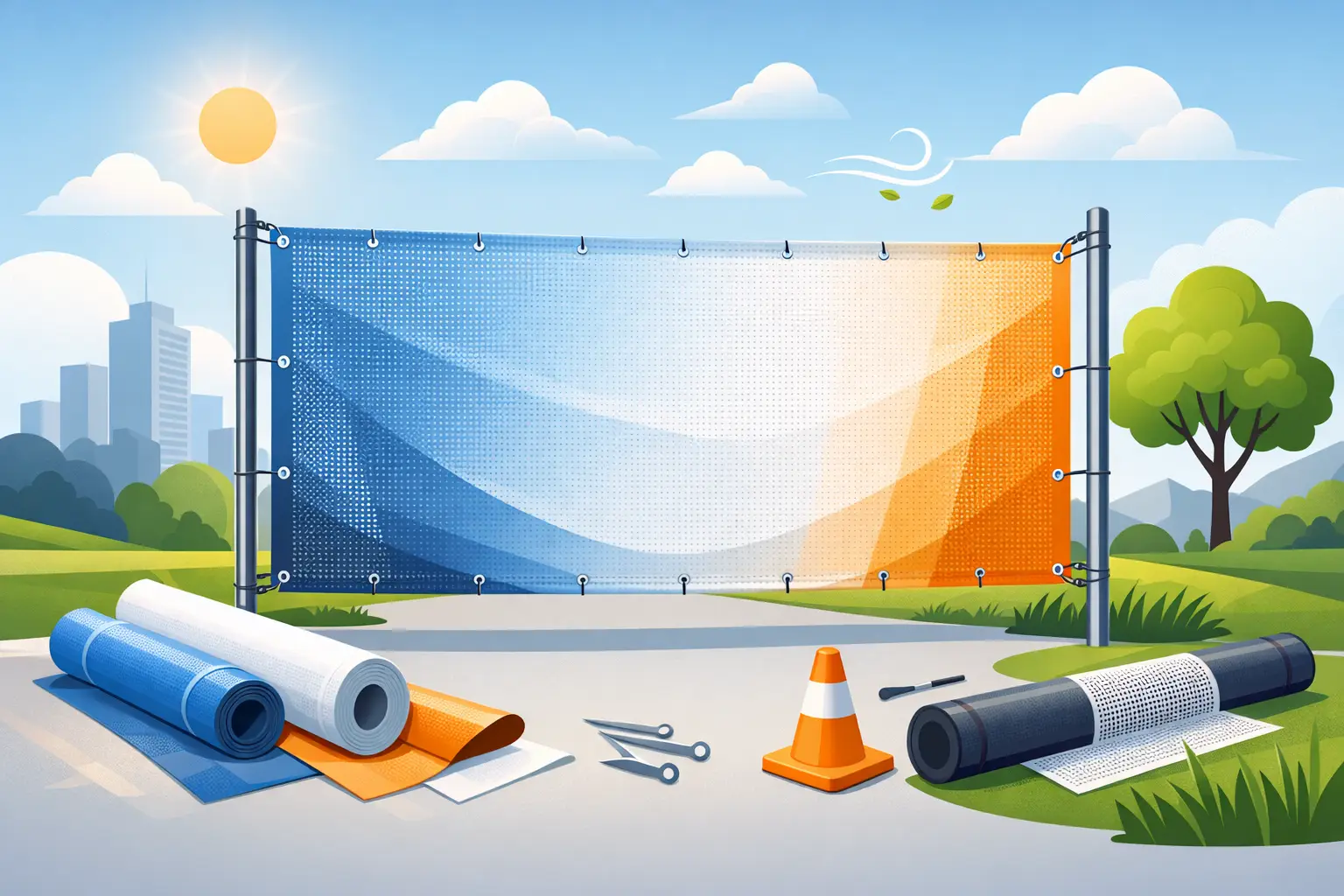
A solid banner can become a sail in strong wind. That is exactly why knowing how to choose mesh banners matters when you are promoting a building project, dressing a festival fence or advertising outside a busy retail site. The right mesh banner stays visible, lets wind pass through and keeps your branding working when the weather is less than helpful.
Mesh is not the answer for every display. If your banner will sit indoors, on a calm wall or behind a shop window, standard PVC vinyl often gives you stronger colour and finer image detail. But for exposed UK locations, mesh offers a practical balance of visibility, durability and reduced wind loading.
Start with where the banner will be installed
Location should drive the decision before size, artwork or price. A banner fitted to Heras fencing around a construction site faces very different conditions from one installed on railings outside a school fete. Think about wind exposure, the surface you are fixing to, viewing distance and how long the banner needs to remain in place.
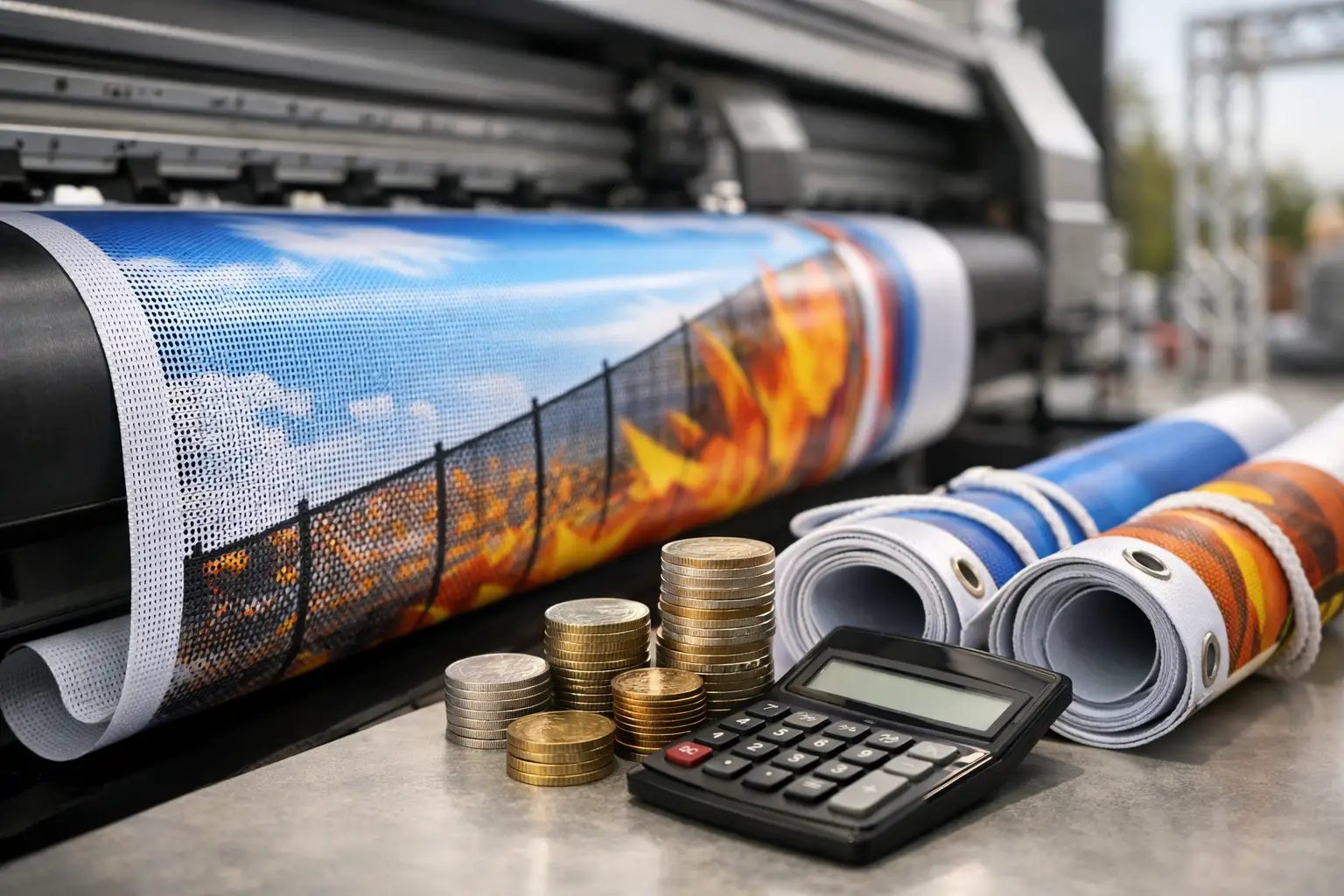
Mesh banners are made with tiny perforations that allow air to pass through the material. This reduces the pressure placed on eyelets, cable ties, fencing and frames. They are a dependable choice for scaffolding, perimeter fencing, sports grounds, roadside promotions and outdoor events where gusts are likely.
A sheltered courtyard may still suit mesh, particularly if the banner is large. The bigger the printed area, the more force the wind can put on it. For a small, short-term sign in a protected position, vinyl can be the better option. It gives a more solid printed finish and is usually preferable where photographic detail is the priority.
How to choose mesh banners by size and viewing distance
A banner only earns its space if people can read it. Before choosing dimensions, establish where your audience will stand, walk or drive past. A message viewed from across a car park needs larger text than one read from a pavement a few metres away.
Keep the main message short. Your business name, a key service, event date, offer or contact detail should be clear at a glance. Trying to fit every product, social media handle and paragraph of company information onto one banner weakens the result, however good the print quality is.
For fencing, a series of smaller matching mesh banners can be more effective than one oversized design. It gives you flexibility around gates, corners and uneven runs, while repeating the message along the route. For a site entrance, one larger banner can create a stronger focal point.
Measure the usable fixing area rather than estimating from the overall fence or wall size. Allow room around the edges for eyelets and tensioning. If a banner is too large for its location, it may crease, sag or require awkward folds that hide important content.
Choose the orientation to suit the space
Landscape mesh banners work well along fencing, scaffolding and long roadside boundaries. Portrait formats are useful for narrow gates, lamp-post frames or areas between structural supports. The best orientation follows the physical space first, then allows the artwork to be designed around it.
Avoid shrinking a landscape design into a portrait shape simply because it already exists. A quick artwork adjustment before print is far better than a banner that feels cramped or leaves the main message unreadable.
Check the material and finish, not just the headline price
Not all outdoor banners are specified equally. A commercial mesh banner should be printed on material suited to regular outdoor use, with UV-resistant inks that help the design remain clear in daylight. Weatherproof performance matters when your promotion may be exposed to rain, sun and changing temperatures for weeks or months.
Ask how the banner will be finished. Eyelets are the metal-reinforced holes used for fixing, and their placement has a direct effect on how securely the banner can be installed. Standard edge eyelets are suitable for many applications, but large banners or exposed sites may benefit from closer spacing and additional fixing points.
Hems also add strength around the perimeter. They help the banner cope with repeated tension and movement, especially where it will be secured to temporary fencing. A banner that is printed well but poorly finished can fail at the edges long before the graphic itself has done its job.
Do not assume mesh needs to be stretched as tightly as possible. It should be firm enough to look professional without being pulled so hard that the eyelets or fence are under unnecessary strain. Use suitable cable ties or bungee fixings, distribute the tension around the edge and inspect the installation after severe weather.
Design artwork for a perforated surface
Mesh banners print in full colour, but the perforated surface changes how the design appears compared with solid vinyl. From normal viewing distance, the holes are far less noticeable than they seem close up. Still, artwork needs to be built with this material in mind.
Use bold typefaces, strong contrast and generous spacing. Fine text, hairline rules and pale lettering on a light background are more likely to lose impact outdoors. Black, white and high-contrast brand colours tend to perform well, while a busy background can compete with the message.
If you are using a logo, supply the highest-quality file available. Vector artwork is ideal because it can scale cleanly to large sizes. High-resolution PDF, EPS, AI or SVG files are often suitable, while a small image copied from a website may look soft once enlarged. A professional print partner can flag obvious artwork issues, but starting with the best file avoids delays when the deadline is tight.
Keep critical text and logos safely away from the edge. Eyelets, hems and fixing points should not run through a phone number, postcode or key part of your logo. Build a clear margin into the design so the finished banner looks intentional, not squeezed into place.
Prioritise one clear action
Outdoor viewers usually have seconds, not minutes. Decide what you want them to do: visit your premises, call for a quote, book tickets, scan a QR code or remember your name. Lead with that action rather than treating the banner as a full company brochure.
QR codes can work well, but only when they are large enough to scan and placed where people can safely stop. A code aimed at passing traffic is unlikely to deliver useful results. For roadside banners, a simple web address or memorable phone number may be more practical.
Match the fixing method to the site
A good mesh banner is only as reliable as the installation. Temporary fencing is commonly secured with cable ties through eyelets, using enough ties to spread the load. For windy or long-term positions, bungee cords can offer useful give and reduce strain during gusts.
On scaffolding, make sure the banner is fixed to a secure structure and does not obstruct access, safety signage or required visibility. On public-facing sites, check permissions with the property owner or local authority where necessary. Construction sites may also have specific health and safety requirements that affect placement.
Never leave a loose edge flapping. Aside from looking untidy, constant movement can wear the material and fixings. If the banner needs to cover a long fence line, plan the joins and overlaps carefully so the message remains aligned.
Plan around turnaround and event dates
When an opening date, promotion or site launch is fixed, print timing becomes part of the buying decision. Leave enough time for artwork approval, production, dispatch and installation. Ordering early gives more room to refine the design, but fast UK production is valuable when plans change or a new opportunity appears.
Check your final artwork, dimensions, quantity and delivery details before placing the order. A typo in a phone number or an incorrect fence measurement can cost more time than the banner itself. For urgent campaigns, clear files and decisive approval are the fastest route from design to delivery.
Banner Printing UK produces custom mesh banners for businesses and organisers who need professional outdoor signage without unnecessary delay. With the right size, clear artwork and secure finishing, a mesh banner can keep your message visible through the weather and through the busiest part of your campaign.
Choose for the conditions, not just the design on screen. A banner that fits its site properly will look better on day one, stay secure for longer and give every passing customer a clearer reason to notice you.