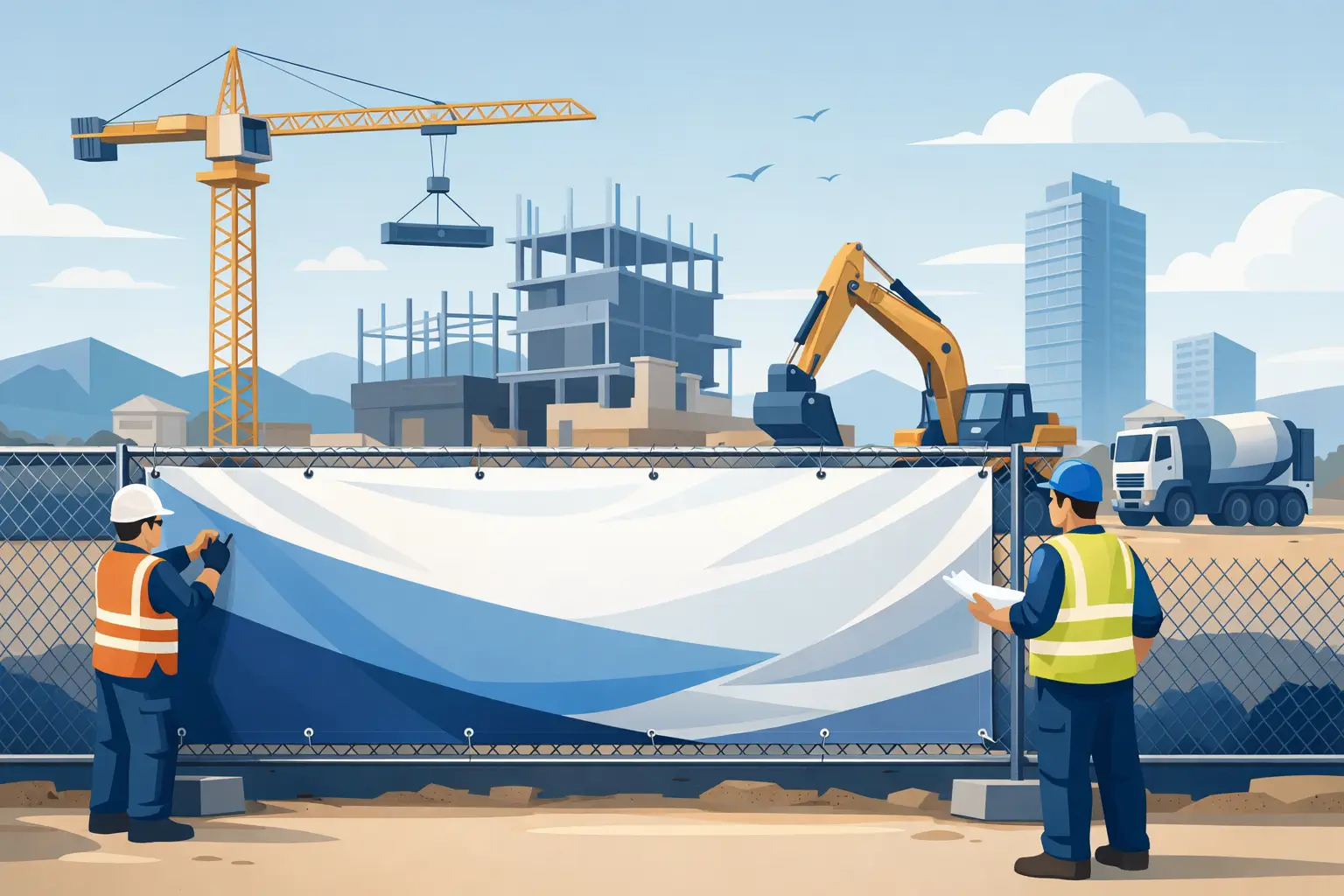
A building site can change by the day, but the perimeter is visible from the moment ground is broken. Construction site banner printing turns temporary fencing, hoarding and scaffolding into clear, hard-working signage – whether you need to display your company name, promote available plots, direct deliveries or present a professional face to the public.
For contractors, developers and trades, the right banner is not simply about adding a logo. It needs to remain readable in poor weather, suit the fixing location and arrive in time for a site launch, inspection or handover. A rushed sign that flaps, fades or cannot be read from the pavement does not do the job.
What should a construction site banner achieve?
A good site banner has one main purpose: it gives people the information they need at a glance. That could be a developer’s branding, a project name, a contact number, directional instructions or a simple message such as “Site Entrance”. Trying to fit every service, accreditation and phone number onto one banner usually weakens the result.
Think about who will see it and from where. Pedestrians may have a few seconds beside a fence, while drivers may only have a brief view from the road. Large lettering, high contrast and a short message will outperform a crowded layout every time. If the banner is intended to win enquiries, make the telephone number or web address prominent enough to be useful.
There is also an operational role. Clearly branded hoarding helps distinguish an active work area from neighbouring premises. Directional banners can reduce confusion for visitors, delivery drivers and subcontractors. They should support your wider site signage, not replace legally required health and safety notices or traffic management signs.
Choosing materials for construction site banner printing
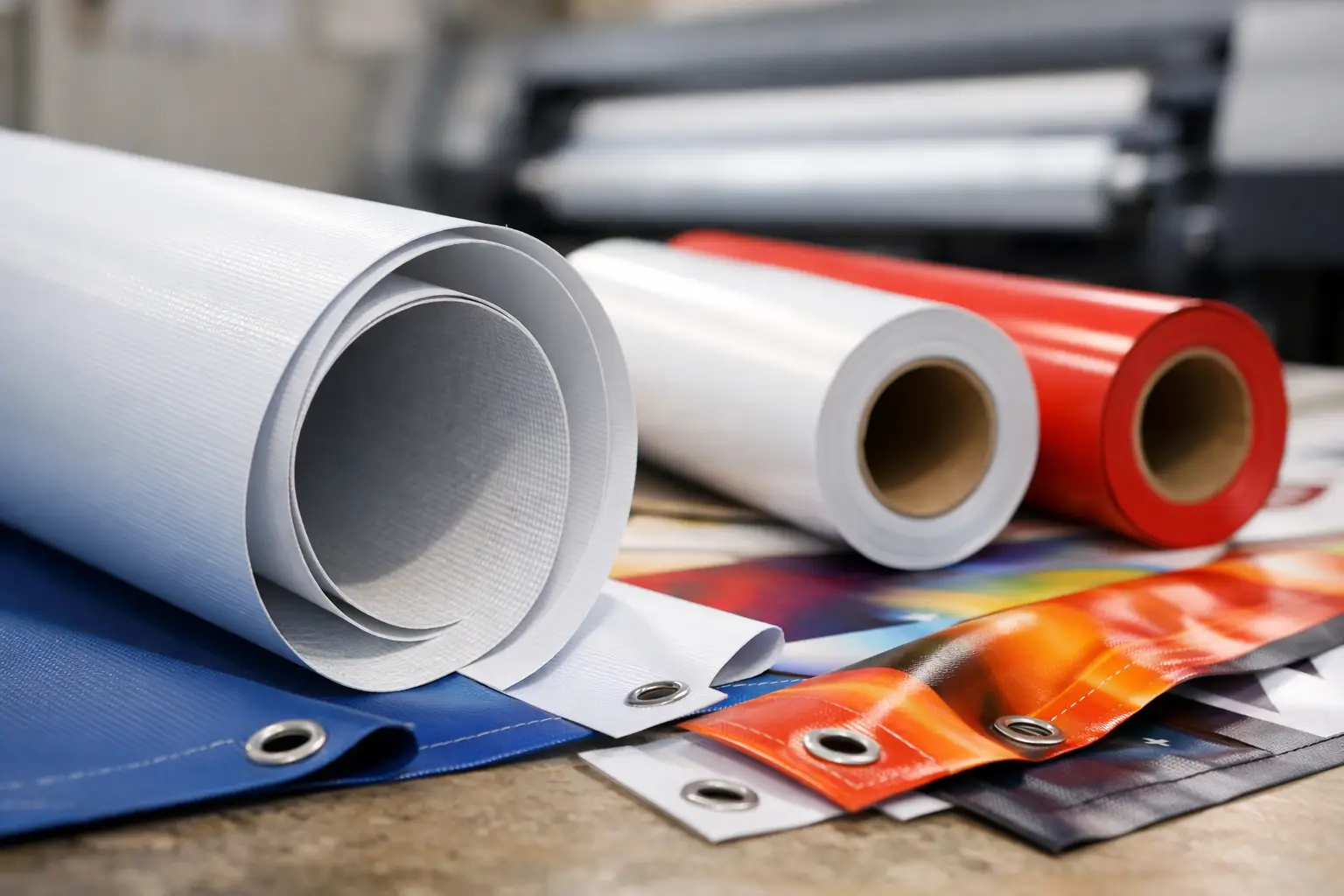
The material should be chosen for the exposure and fixing method, rather than appearance alone. For most sites, the decision comes down to standard PVC vinyl or mesh banner material.
PVC vinyl for solid, high-impact graphics
PVC vinyl banners provide a clean, solid background that makes colours, logos and photography look strong. They are a reliable option for hoarding, walls, gates and other sheltered or reasonably protected locations. If you want a polished developer board, a project launch banner or prominent company branding, vinyl gives a sharp, professional finish.
The trade-off is wind. A solid banner catches more air than a perforated one, so it must be fixed securely. On an exposed fence line, a large vinyl banner can put unnecessary strain on the fence, eyelets and ties. Smaller panels may be the better choice where wind is a concern.
Mesh banners for exposed fencing and scaffolding
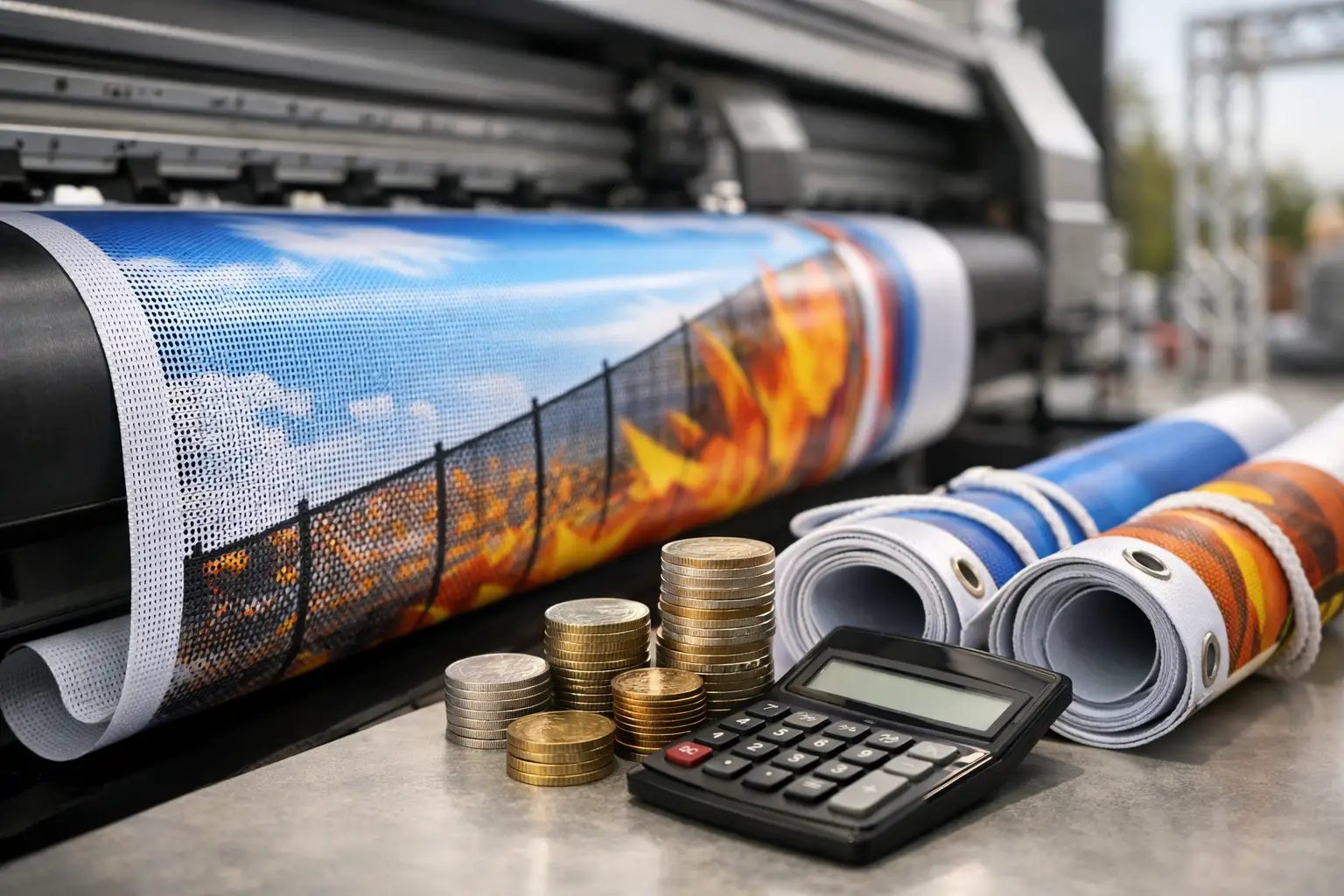
Mesh banners have tiny perforations that allow wind to pass through. This makes them particularly useful on Heras fencing, scaffold wraps and long runs of perimeter fencing where wind loading matters. From a normal viewing distance, the print remains clear, but the material is less likely to act like a sail.
Mesh is the practical choice for many outdoor construction applications. It may not produce quite the same solid block of colour as vinyl at close range, but its performance in exposed conditions often makes that a worthwhile compromise. For sites with frequent wind or temporary fencing, prioritise secure installation over a marginally denser print finish.
Finishing matters as much as the print
A banner is only as dependable as its edges and fixings. Reinforced hems help provide strength around the perimeter, while metal eyelets give fixing points for cable ties, bungee cords or rope. Ask for eyelets at sensible intervals, particularly on larger banners, so the load is distributed rather than concentrated in a few places.
Cable ties offer a quick, neat fixing for short-term displays, but inspect them regularly and replace any that become brittle or loose. Bungee cords can provide a little flex in windy conditions, which may reduce stress on the banner and fence. Do not pull the material drum-tight: a small amount of controlled movement is better than excessive strain.
Design site banners for distance, not for a screen
Artwork that looks detailed on a laptop can become unreadable when printed at several metres wide. Start with the essential message, then build the design around it. Your logo should be clear, but it does not always need to be the biggest element. If the aim is to generate calls, the contact detail and offer may deserve more space.
Use bold typefaces and keep contrast high. Dark text on a pale background, or pale text on a dark background, is normally easier to read than similar tones placed together. Avoid thin lettering, intricate scripts and large areas of low-contrast text. A site banner is not a brochure.
A useful rule is to make the key message readable from the furthest realistic viewing point. Stand across the road from the proposed location if possible and consider what can genuinely be seen. A large banner mounted high on scaffolding needs bigger lettering than one fixed beside a pedestrian gate.
Photographs can work well for completed developments, architectural visuals or recruitment campaigns, but they need to be high resolution. Blurry images become more obvious at large format. Supply original artwork where possible, rather than screenshots, images copied from social media or small files lifted from a website.
Set up artwork correctly before ordering
For the best result, create artwork at the final banner proportions and use high-resolution images. Vector logos, such as PDF, AI, EPS or SVG files, are ideal because they can scale without losing definition. If you are supplying a print-ready PDF, include a safe margin so important text and logos are not placed too close to the edge or eyelets.
Check phone numbers, postcodes and email addresses character by character before approval. Construction sites often have firm deadlines, and a banner with one incorrect digit is expensive to replace even when the print itself is flawless. If you are unsure about file quality, use a design check or ask for artwork refinement before production begins.
Match banner size to the space available
Measure the usable area, not just the overall fence length. Allow for posts, gates, uneven ground, overlaps and areas where a banner could obstruct access or site notices. On long hoarding runs, repeated banner panels can create a stronger, more consistent look than one oversized print stretched across multiple sections.
Common banner sizes can work well for straightforward fence panels, but custom dimensions are often better for unusual hoarding, gantries or scaffold elevations. A banner that fits the space properly looks intentional and is easier to fix safely. It also avoids folded corners, blocked text and eyelets positioned where they cannot be used.
If several firms are working on the same scheme, agree a basic visual hierarchy before ordering. The principal contractor’s identity, project information and mandatory notices need room. Supplier or subcontractor branding can then be placed in an agreed area, keeping the perimeter professional rather than visually chaotic.
Plan production and delivery around the programme
Site deadlines have a habit of moving forward. The marketing suite opens earlier than planned, the client visit is confirmed at short notice, or a fence line is installed later than expected. Ordering early gives more time for artwork checks, but fast UK production is valuable when the programme changes.
Before placing an order, confirm the final size, material, quantity, finishing and delivery address. A secure office or site contact is particularly important, as printed banners need to be received, checked and installed before they are needed. For urgent work, send complete artwork and clear instructions from the outset to avoid delays caused by avoidable revisions.
Banner Printing UK produces custom banners in the UK for fast dispatch, with practical support for businesses that need professional print without a drawn-out ordering process. Whether the job is one urgent gate banner or a coordinated run for a full development, consistency in colour, sizing and finishing helps the site look organised from day one.
Keep banners working throughout the build
A construction banner should be checked as part of regular site housekeeping. Look for loose ties, torn eyelets, damaged corners and faded or obscured messaging. Mud splashes, plant equipment and changing access routes can all affect how well a banner performs.
It is also worth reviewing the message at key project stages. A banner promoting new homes may need to change when units are sold. Contractor branding may give way to handover information, leasing details or a final completion message. Replacing outdated signage keeps the perimeter useful and shows that the project is being managed with care.
The best construction site banner is the one that remains clear, secure and on-brand while the rest of the site changes around it. Choose the material for the conditions, keep the message focused and give your artwork the same attention you give the build.