

Walk into any exhibition hall in the UK, and you'll see them everywhere. Portable display stands are the workhorses of the trade show circuit, the secret weapon that smart businesses use to make a massive impact without the massive cost. They’re the perfect blend of convenience, professional polish, and a healthy return on your marketing spend.
Why Portable Stands Are Your Best Bet for Exhibitions
Trade shows are a game of seconds. You’ve got a tiny window to grab someone’s attention as they walk the aisles, and your stand is doing most of the talking. A portable display isn’t just a background; it’s a powerful tool designed to solve the real-world headaches exhibitors face, from impossible setup times to the pressure of standing out in a crowd.
Think of it like this: a custom-built stand is a bit like a bespoke suit. It’s expensive, impressive, but stuck in one place. A portable stand is more like a high-end, perfectly fitted travel suit—it looks sharp, it's easy to pack, and it’s ready to impress wherever you go. That’s the magic of it.
Built for Speed and Convenience
The modern exhibition world moves fast. One minute you're unloading a van, the next you're greeting potential clients. Portable stands are designed for this pace. They go up quickly, come down just as fast, and don’t require a team of specialists to figure them out. That’s a huge relief when the clock is ticking.
This practicality goes beyond just saving time. Because they're lightweight and pack down small, getting them to the venue is a breeze. You’ll save a bundle on transport costs and won't need to hire a dedicated crew just for the build. Even a small team can roll in and have a professional-looking booth ready to go in no time.
This efficiency is what keeps the UK exhibition industry humming. With events often lasting just a few days, portability isn't just a nice-to-have; it’s essential. The whole industry, which contributes over £4 billion to the UK’s GDP, relies on this quick-turnaround model. The average exhibition only lasts 4.6 days, so being able to get in and out fast is everything. You can read more about the latest UK exhibition industry statistics for the full picture.
Getting the Most Bang for Your Buck
Every penny in your marketing budget has to work hard, and this is where portable stands really deliver. A single, quality stand is a long-term asset. You can use it again and again, from huge national trade shows to small local business fairs.
By investing in a system you can reuse, you break free from the cycle of one-off expenses that come with custom builds. You’re getting a sustainable marketing tool that pays for itself over and over again.
This means your initial investment keeps delivering value. When you want to update your message for a new season or a different event, you just get new graphics printed. The hardware stays the same. It’s a smart, cost-effective way for any business to maintain a polished, professional look at every single event.
Finding the Right Portable Display Stand for Your Brand
Choosing the right portable display stand isn't just about picking something from a catalogue. It's about finding a true storytelling partner for your brand. This one decision dictates how people see you from across a busy exhibition hall, shaping their first impression long before you even shake hands. To get it right, you need to understand the unique personality and purpose behind each type of stand.
This little decision tree cuts through the noise, showing the main reasons businesses like yours go for portable displays. It all comes down to versatility, speed, and getting a great return on your investment.
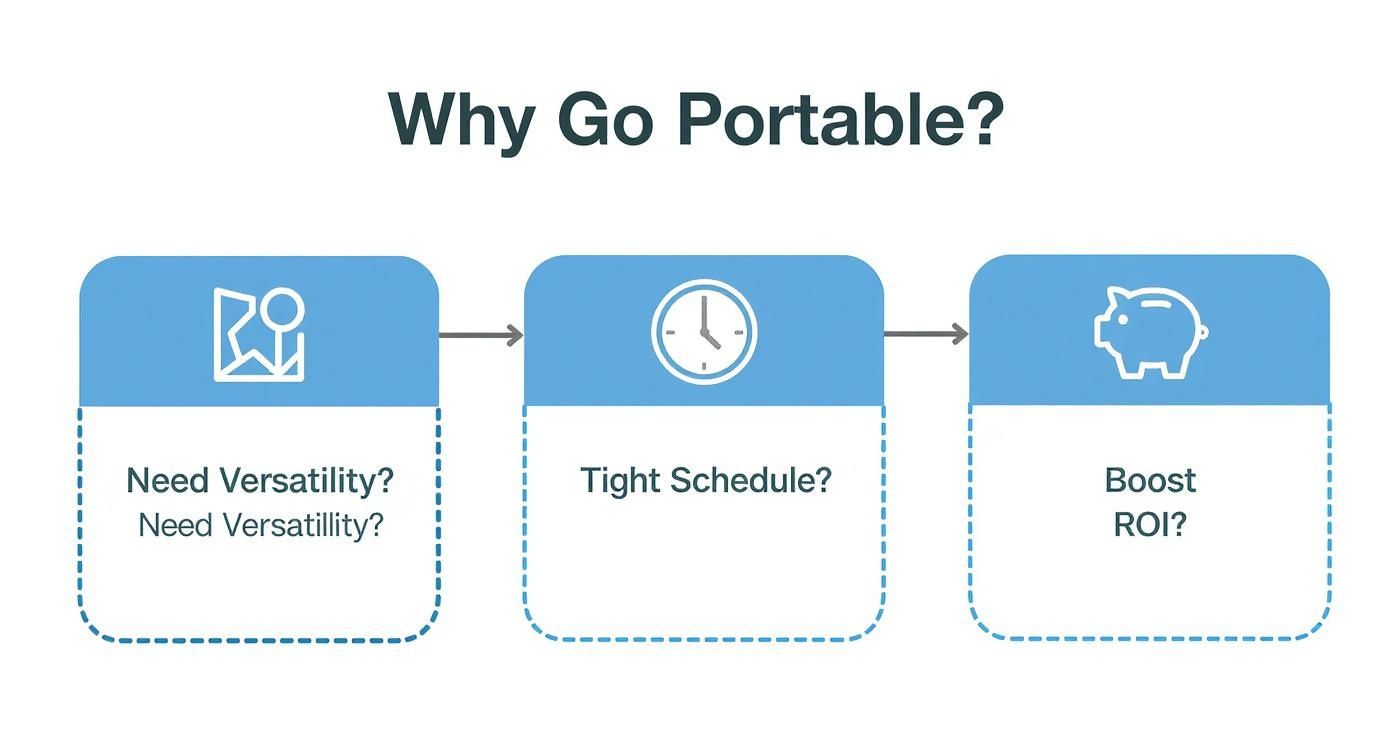
The takeaway here is that 'portability' isn't a single feature. It's a powerful solution that helps you handle the real-world pressures of exhibiting, whether that's a last-minute booking or a budget that needs to work harder.
To help you get a feel for what’s out there, here’s a quick rundown of the most popular options.
Portable Display Stand Comparison
This table gives you a snapshot of how each stand type stacks up, making it easier to see which one aligns with your goals for your next event.
| Stand Type | Best For | Portability | Setup Time | Visual Impact |
|---|---|---|---|---|
| Roller Banner | Quick branding, small spaces, tight budgets | Excellent | Under 1 minute | Good |
| Pop-Up Display | Creating a defined booth, professional backwalls | Good | 5-10 minutes | Very Good |
| Tension Fabric | A premium, modern, seamless look | Excellent | 10-15 minutes | Excellent |
| Modular System | Frequent exhibitors needing maximum flexibility | Varies | 30+ minutes | High/Custom |
Each of these has its place, and the best choice really depends on the job you need it to do. Let's dig into the details.
The Quick and Classic Roller Banner
Think of the roller banner as the essential business card of the exhibition world. It’s compact, incredibly quick to assemble, and gets your message across instantly. You just pull the graphic up from the base, hook it onto the pole, and you're done. The whole thing takes less than a minute.
Their real strength is in that simplicity and portability. Roller banners are perfect for:
- Squeezing into small booth spaces where every inch counts.
- Adding extra branding or shouting about a specific offer.
- Using at smaller conferences, networking events, or even in your own office reception.
While one roller banner might not own a huge space, lining up a few can create a really effective and affordable visual wall. They are the ultimate grab-and-go solution for any business needing to be nimble.
The Impactful Pop-Up Display
If a roller banner is your business card, a pop-up display is the full-colour brochure. These stands use a clever concertina-style frame that literally "pops up" into a large, sturdy structure. You then hang your printed graphic panels onto it—usually with magnets—to create a massive, seamless backdrop.
This is a serious step up in visual impact. The huge surface area gives you a proper canvas for big, bold designs, turning a bland shell scheme into an immersive brand space. They’re ideal for exhibitors who want to project a strong, professional presence and carve out their own territory on the show floor. Although heavier than a roller banner, they cleverly pack down into a single wheeled case that often doubles up as a branded counter.
A pop-up display doesn't just decorate your space; it claims it. It tells visitors you’re a serious, established player, giving you a credible and professional backdrop for those all-important conversations.
The Sleek and Modern Tension Fabric System
Tension fabric systems are the next evolution in portable displays. They’re built from a lightweight tubular aluminium frame that clicks together, a bit like a modern tent pole system. Once the frame is up, you simply pull a large, custom-printed fabric "sock" over it and zip it shut. The tension pulls the fabric perfectly taut, creating a flawless, vibrant finish.
The result is a seriously premium, seamless look that gets rid of the visible panel lines you can sometimes see on older pop-up displays. Because we use a special dye-sublimation process to print on the fabric, the colours are incredibly rich, deep, and guaranteed to catch the eye.
Key advantages of tension fabric displays include:
- A flawless, high-end appearance with no creases or visible joins.
- Extremely lightweight frames that are a doddle to transport and assemble.
- Machine-washable graphics, making them durable and ridiculously easy to look after.
These are a fantastic choice for any brand wanting to project a modern, polished, and sophisticated image. If you’re looking to create a truly impressive backdrop, our guide to backdrop banner stands dives even deeper into how to make these powerful visual walls work for you.
The Adaptable Modular Stand
Finally, we come to modular systems. Think of these as the LEGO of the exhibition world. A modular stand is a kit of interconnecting frames, panels, and accessories that you can reconfigure into countless different layouts. For one show, it could be a simple 10-foot back wall. For the next, you could reassemble it into a U-shaped booth complete with integrated product shelves and a welcome counter.
This incredible versatility is what they’re all about. Modular stands are a smart investment for the frequent exhibitor who attends different shows with different stand sizes. While they do have a higher initial cost and take a bit more planning to set up, their long-term value is second to none for businesses that need to adapt. You’re not just buying one stand; you’re buying a flexible kit of parts that can grow and change right alongside your marketing strategy.
How Materials and Finishes Shape Your Stand's Impact
A brilliant design is only half the story. What really brings that design to life, turning a concept on a screen into a tangible, professional presence in a bustling exhibition hall, are the materials and finishes you choose.
Think of it like this: the best recipe in the world will fall flat if you use subpar ingredients. The exact same principle applies to your portable display stand.
The quality of the materials directly shapes how visitors perceive your brand. A crisp, vibrant graphic on taut fabric whispers quality and attention to detail. On the other hand, a flimsy frame or a scuffed-up vinyl panel can send the complete opposite message, undermining your credibility before you’ve even said a word.
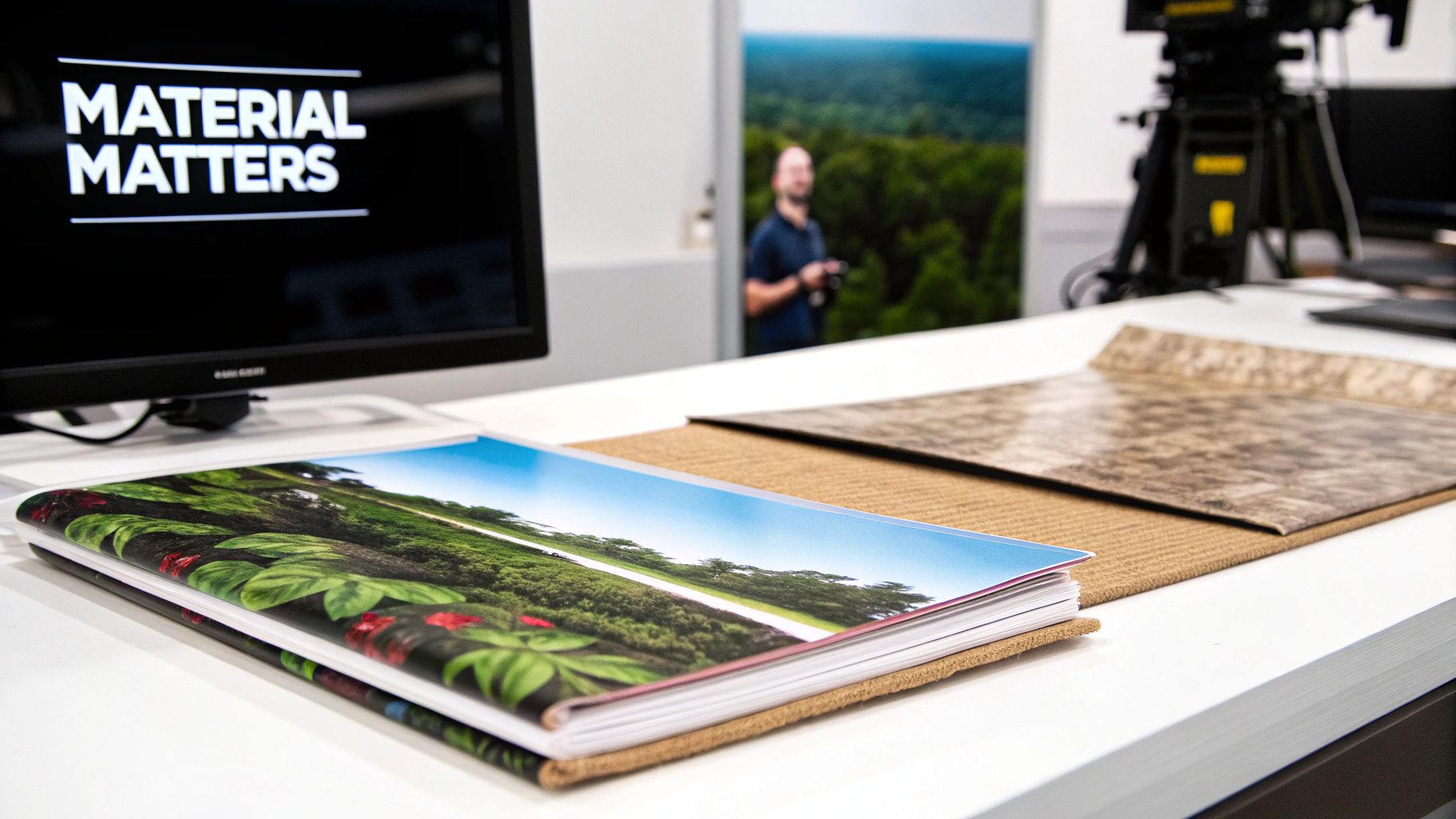
This is about looking past the initial price tag to see how the right choices in hardware and graphics build long-term value and durability.
The Foundation A Sturdy Frame
The skeleton of any decent portable display is its frame, and in this world, aluminium is king.
It hits that perfect sweet spot between strength and low weight, making it ideal for systems that need to be put up, taken down, and carted around repeatedly. A well-engineered aluminium frame provides the rigidity needed to keep your graphics perfectly tensioned and your stand stable, even with people brushing past all day.
Cheaper alternatives might use lower-grade metals or plastic parts that can bend, warp, or snap under the stress of regular use. Investing in a robust frame is non-negotiable; it’s the foundation that makes sure your entire display holds up and looks professional from the start of the show to the very end.
Choosing Your Graphic Canvas
The graphic panel is where your brand's message lives, so the material it’s printed on is absolutely crucial. For most portable display stands for exhibitions, you’re looking at two main contenders: vinyl and fabric. Each has its own strengths.
-
PVC Vinyl: This is a classic choice, and for good reason. It's known for its durability and really sharp print quality. It’s a proper workhorse material that’s easy to wipe clean and holds colour incredibly well, making it a fantastic, reliable option for pop-up displays and roller banners.
-
Polyester Fabric: Often used with tension fabric systems, this material gives you a premium, seamless finish that just looks a class above. We print on it using a process called dye-sublimation, where ink is turned into a gas and infused directly into the fibres. The result? Incredibly vibrant, deep colours that won't crack, fade, or peel. A huge bonus is that the fabric is naturally anti-glare, which is a lifesaver under harsh exhibition hall lighting.
Your choice of graphic material really sets the tone for your entire display. Dye-sublimated fabric offers a modern, high-end feel, while high-quality vinyl provides a crisp, reliable and cost-effective finish.
The Finishing Touches That Matter
The final layer of protection and polish comes from the finish applied to your graphics. These laminates aren't just for show; they play a vital role in protecting your investment and ensuring your stand looks its best under pressure. Think of it as the clear coat on a car—it’s there to protect the paint and keep it looking new.
Here are the key finishes you need to know about:
-
Anti-Scuff Laminate: Honestly, this is essential for high-traffic areas. It adds a tough, protective layer that resists the scratches and scuffs that will inevitably happen during transport and setup. It's a small detail that can drastically extend the life of your graphics.
-
Matte Finish: Under the bright, often unforgiving lights of an exhibition centre, a matte or satin finish is your best friend. It kills glare and reflections, ensuring your message is clear and easy to read from every angle. No squinting required.
-
Gloss Finish: While it can be reflective, a gloss finish can make certain colours pop with extra vibrancy and punch. It can be very effective for specific designs, but you need to use it thoughtfully to avoid creating a distracting mirror effect for your visitors.
Ultimately, the materials you pick are a direct reflection of your brand's standards. By opting for a sturdy aluminium frame, the right graphic material for your design, and a protective finish, you're not just buying a stand—you're investing in a durable, professional marketing tool that will represent you well at every single event.
Making Setup and Transport Stress-Free
Let’s be honest: the real test of a ‘portable’ display isn't how it looks on a website, but how you feel at 7 a.m. on the exhibition floor with the clock ticking. A stunning design is useless if it’s a nightmare to put together. This is where practicality wins, turning a potentially chaotic setup into a smooth, confident process that frees you up to focus on what actually matters—talking to people.
The life of your stand doesn’t begin when the show opens; it starts the moment it leaves our print shop. Thinking through the entire journey—from setup and teardown to transport and storage—is the secret to making every event less stressful and more successful.
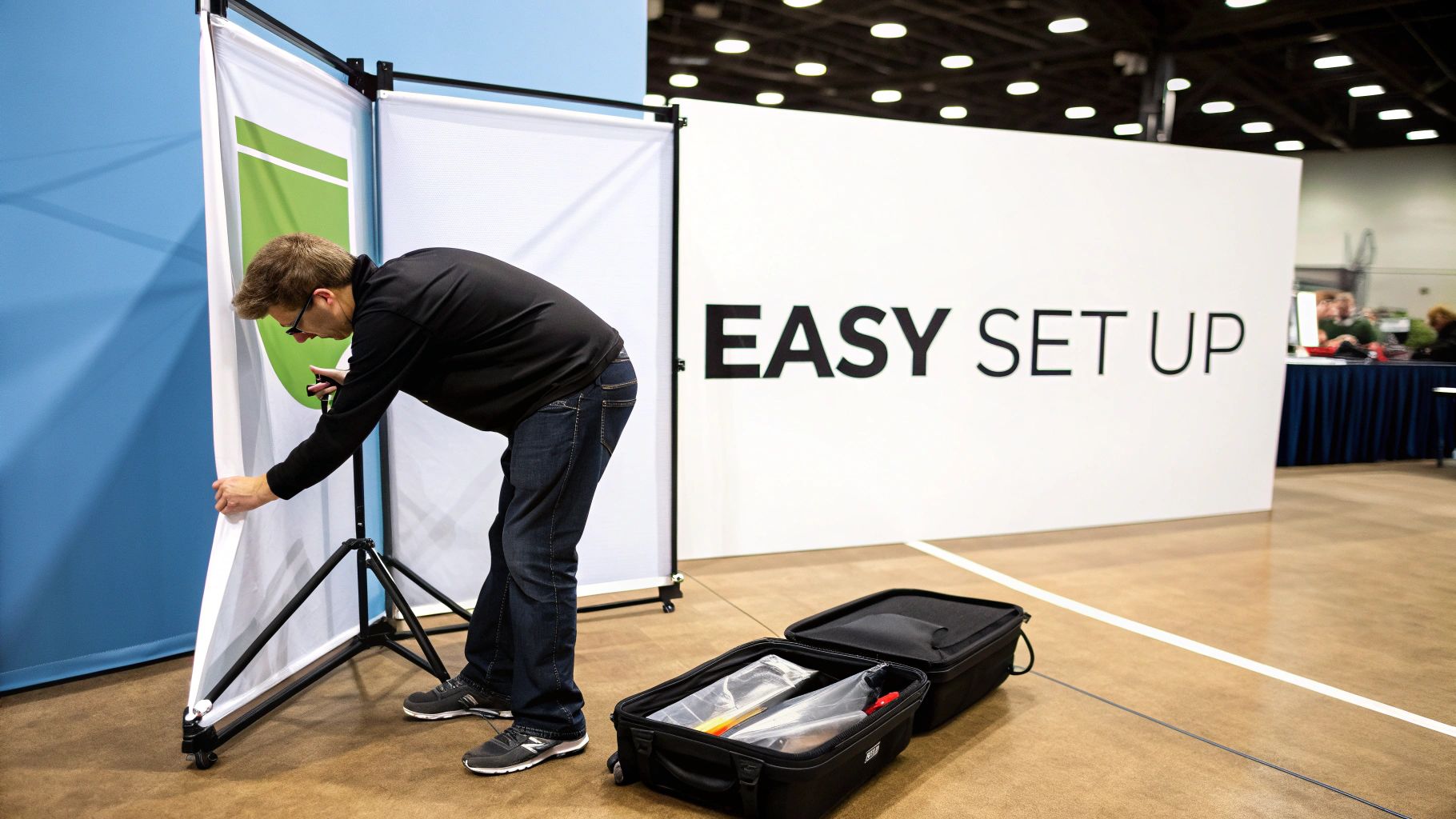
This is especially true in the fast-paced UK exhibition world. According to the latest 2025 exhibition industry statistics, the average UK trade show is only open for 2.1 days. That’s an incredibly tight window to make an impression. The efficiency of portable display stands for exhibitions gives you a serious edge, letting you get set up and taken down in record time, minimising wasted hours and costly stress.
Your Step-by-Step Guide to a Flawless Setup
Setting up your stand should be intuitive, not a puzzle. While every system is a little different, following a few simple best practices will save you time and a whole lot of frustration.
-
Do a Trial Run: Always, always assemble your stand at the office before you go. It's your chance to get familiar with how it all clicks together and spot any issues when you’re not under pressure.
-
Organise Your Components: Keep everything neatly labelled and organised in its case. This simple habit stops that frantic last-minute hunt for ‘that one specific pole’ when you’re meant to be greeting visitors.
-
Start with the Frame: For pop-up or fabric systems, always build the frame first on a clean, flat bit of floor. Double-check that every connection is locked in place before you even touch the graphics.
-
Handle Graphics with Care: Gently unroll your graphics to avoid any creases or damage. When you’re attaching them, start from the top and work your way down, making sure the alignment is perfect and the tension is even all the way across.
This simple routine can transform setup from a daunting task into a predictable, manageable part of your day.
Choosing the Right Protection for Transport
How you get your stand to the venue is just as important as how you build it. The right case doesn't just make it easier to move; it protects your investment from the inevitable knocks and scrapes of travel.
You’ve got two main options:
-
Soft Padded Bags: These are brilliant for smaller systems like roller banners. They’re lightweight, easy to carry, and offer plenty of protection from scratches. Perfect for local shows where you’re driving yourself. If you need something incredibly easy to carry, check out our guide on lightweight roller banners for any event.
-
Hard-Shell Wheeled Cases: For bigger pop-up displays or modular kits, a hard case is a must. These tough containers can take a real beating and usually have wheels, which are a lifesaver when you’re navigating a massive exhibition hall. Many even convert into a branded counter, giving you a functional podium without any extra luggage.
Think about how you travel. If you’re flying or using couriers often, a hard-shell case is non-negotiable. For local trips in the company car, a padded bag will do the job just fine.
Keeping Your Display in Pristine Condition
A little bit of care after each show ensures your stand looks just as sharp at its tenth event as it did at its first.
For the graphics, a quick wipe with a soft microfibre cloth will get rid of any dust or fingerprints. Most of our fabric graphics can even be machine washed on a cool, gentle cycle (but always check the care label first!). For vinyl panels, a little bit of mild, soapy water does the trick.
When it's time to pack away, gently roll your graphics—never fold them, as this can leave permanent creases. Put everything back in its proper place in the case, and you’ll be ready to go for the next one.
Right, let's talk brass tacks. Budgeting for your exhibition stand isn't just about the price tag you see online. To make a truly smart investment, you need to look at the bigger picture—the total cost of ownership over the life of your stand.
A cheaper stand might seem like a win today, but if it's falling apart after one or two shows, you haven't really saved anything, have you? That’s where the real value comes into play. A durable stand that lets you easily swap out graphics isn't just a purchase; it's a long-term marketing asset.
Thinking about this from the get-go means you can plan with confidence and avoid those nasty, hidden costs that always seem to pop up at the worst possible moment. It's about making a strategic choice that keeps paying you back.
Understanding the Price Tiers
So, what does your money actually get you? The cost of portable display stands varies a lot, but what you pay is usually a reflection of the materials, the cleverness of the engineering, and the overall 'wow' factor.
-
Entry-Level (Budget-Friendly): This is the home of the classic roller banner and your basic pop-up displays. They’re absolutely perfect for startups, businesses keeping a close eye on the marketing budget, or for one-off events. You get a functional display that looks professional and gets the job done without breaking the bank.
-
Mid-Range (The Workhorse): Here you’ll find the more premium roller banners with heavier, sturdier bases, better quality pop-up systems, and some of the entry-level tension fabric displays. These stands offer a noticeable step up in durability and finish. They're a solid investment for companies that exhibit a few times a year and need something reliable.
-
Premium (The Main Event): In this league, you’re looking at high-end tension fabric systems and seriously versatile modular stands. You’re paying for top-notch lightweight materials, incredible print quality, and the freedom to reconfigure your setup for different events. These are built for the frequent exhibitor who needs a knockout solution that’s both dependable and adaptable.
Looking Beyond the Initial Purchase Price
A savvy budget goes way beyond the hardware. A few other costs can creep in, so it’s always best to have them on your radar from the start. No one likes surprises.
Keep these potential expenses in mind:
-
Replacement Graphics: One of the best things about these systems is that you can breathe new life into them just by updating the message. Planning to get new graphic panels printed every year or so is a great way to keep your branding fresh and your stand looking current.
-
Delivery Fees: We offer free UK delivery here at Banner Printing Ltd, but it’s something you should always double-check with any supplier. Unexpected shipping costs, especially for the bigger kits, can add a chunky amount to the final invoice.
-
Accessories: Will you need spotlights to make your graphics sing? What about a branded counter to welcome visitors, or some literature racks for your brochures? These little extras can really elevate your space, but they do add to the total cost.
-
Repairs and Maintenance: A quality stand is built to last, but accidents happen in a busy exhibition hall. It’s always sensible to keep a small contingency fund for any scuffs, dings, or mishaps that might occur.
The real goal isn’t just to buy a stand; it’s to invest in a marketing tool that works as hard as you do. Understanding the total cost of ownership is the key to getting the best possible return on that investment, show after show.
And the numbers back this up. Recent industry data shows just how important affordability is for UK businesses. A survey found that 43% of exhibitors spend between £500 and £2,000 on their displays each year, pointing to a clear demand for cost-effective solutions. You can dig into how UK companies are approaching their trade show presence and related findings. This trend just confirms that well-made, portable stands are the go-to choice for businesses wanting to make a big impression without needing a massive budget.
Getting Your Artwork Ready for a Perfect Print
Your vision for a stunning display stand is almost there. The final hurdle? Getting the artwork spot-on. This is the single most important step in turning a great design on your screen into a professional graphic that actually stops people in their tracks.
Let’s be honest, print terminology can feel like a foreign language. But don’t worry. Think of this as a simple pre-flight checklist for your design, making sure it’s ready for a perfect take-off at the printers. Getting these details right from the start is what separates a smooth, easy process from a last-minute panic and costly reprints.
This isn't about becoming a print expert overnight. It's about nailing a few key details that make all the difference.
The Core Three Technical Checks
Before you even think about hitting 'send', a quick look at three specific settings will save you a world of trouble. These are, by far, the most common culprits behind a print looking different from what you expected.
-
Resolution (Dots Per Inch): For something as large as a display stand, your images need to be sharp. We recommend a resolution of at least 150 DPI (dots per inch) when measured at the final print size. This is the magic number that ensures your images look crisp and clear, not blurry or pixelated from a distance.
-
Colour Mode (CMYK): Your computer screen creates colour using RGB (Red, Green, Blue) light. Professional printers, however, use CMYK (Cyan, Magenta, Yellow, Black) ink. If your file is in RGB, the colours will shift during printing. Converting your artwork to CMYK first ensures what you print is vibrant, rich, and matches what you see.
-
Bleed Area: Imagine a small safety margin running around the very edge of your design—that's the bleed. It allows us to trim the graphic to its final size without leaving any accidental, unprofessional-looking white slivers along the edges. Our templates will show you exactly where this is.
Think of these three checks as the technical foundation of your design. Getting them right is like ensuring your building has solid footings—it guarantees the final structure will be strong, stable, and look exactly as planned.
Using Templates and Proofs for Peace of Mind
We want to make this process as painless as possible. That’s why we provide downloadable templates for all our portable display stands for exhibitions. These are already perfectly sized and have clear guidelines showing you the bleed, the final trim line, and the 'safe zone' where you should keep your most important text and logos.
Once your artwork is uploaded, our in-house team does a free pre-flight check to spot any potential gremlins before anything goes to print. We’ll then send you a digital proof to approve. This is your final chance to give it the once-over and confirm you’re happy.
Our guide on uploading artwork for custom banners walks you through the entire process in more detail. By following these steps and using the tools we provide, you can order with total confidence, knowing your stand will arrive looking incredible and ready to impress.
Common Questions About Portable Display Stands
When you're gearing up for a trade show and investing in new hardware, a few questions always seem to pop up. Getting straight answers helps you buy with confidence, so you know your stand will do exactly what you need it to on the day.
We’ve already walked through the different types of stands, their materials, and what it takes to set them up. But let's be honest, it's the practical, on-the-floor worries that really matter. Think of this as your final pre-flight check.
How Much Weight Can My Stand Actually Hold?
This is a big one, especially if you’re planning on showing off actual products. The answer really comes down to the kind of stand you've chosen.
-
Roller Banners & Fabric Displays: These are purely for graphics. They’re built to look good, not to hold anything up. You should never, ever try to hang or lean products on them.
-
Pop-Up Systems: The frame itself is quite sturdy, but the magnetic bars holding your graphic panels simply aren't designed for shelving. The one exception is often the transport case, which cleverly converts into a counter. That can usually take the weight of a laptop or a few light product samples without any trouble.
-
Modular Systems: Now we're talking. This is where you get real load-bearing strength. Modular stands can be built with integrated shelving designed from the ground up to hold products. Just be sure to check the manufacturer’s specified weight limit for each shelf.
If you’re ever in doubt, play it safe. If displaying products is a core part of your plan, a modular system is the only truly professional and secure choice. The last thing you want is a stand collapsing mid-event.
How Often Should I Update My Graphics?
There's no single magic number here, but a solid rule of thumb is to refresh your graphics every 12-18 months. You should also do it any time your branding or message takes a significant turn. An old logo or an outdated promotion on your stand can make your whole brand feel a bit behind the times.
Think about swapping out your visuals when you're preparing for:
- A major new product launch.
- A complete brand refresh.
- An event where you’re trying to connect with a totally new audience.
This is one of the biggest advantages of portable display stands for exhibitions. The hardware is a long-term investment, but the graphics can be changed out to keep you looking fresh and relevant. It’s an incredibly cost-effective way to make sure your stand always looks sharp.
Ready to make a lasting impression at your next event? Explore our full range of durable and vibrant portable display stands. At Banner Printing Ltd, we combine high-quality printing with fast, reliable service to bring your vision to life. https://bannerprintingltd.co.uk


One Comment
[…] stability and ease of use are just as important. In fact, many photographers find that our guide on portable display stands for exhibitions offers helpful advice on selecting reliable hardware for any on-location job. Ultimately, choosing […]