
In the competitive UK retail landscape, your shop window isn't just glass—it's your 24/7 salesperson, brand ambassador, and first impression. A compelling display can be the crucial difference between a passer-by and a paying customer. Yet, many small and medium-sized businesses struggle to move beyond generic seasonal arrangements or cluttered product dumps. This guide is designed to change that.
We've curated a comprehensive list of 10 actionable and creative retail window display ideas that go beyond the obvious. Forget vague advice; this is your practical blueprint for turning your storefront into a customer-attracting magnet. Each concept is packed with tips tailored for UK retailers, from selecting the right printed materials like window vinyl and backdrops to quick DIY steps and strategic calls-to-action. Before delving into the creative elements, remember that a truly valuable window display hinges on its visibility. To fully appreciate your asset, consider the fundamental benefits of maintaining pristine window clarity to ensure your efforts shine through.
This article provides clear, structured insights for every budget and objective. You will learn how to:
- Build immersive 3D pop-up displays that create depth and intrigue.
- Leverage colour psychology to evoke specific customer emotions.
- Tell compelling stories that connect with your audience on a deeper level.
- Create interactive experiences with AR and engaging photo opportunities.
Whether you're planning a major seasonal campaign or working with a shoestring budget, these insights will help you create a window that not only stops traffic but actively drives it through your door.
1. 3D Pop-Up Display Systems
Transform your flat window space into a dynamic, multi-dimensional scene with a 3D pop-up display system. These self-supporting structures use tensioned fabric graphics on a collapsible frame, creating an instant backdrop or sculptural element that commands attention. Unlike simple posters or vinyl, they offer physical depth, making your window a more immersive and engaging experience for passers-by.
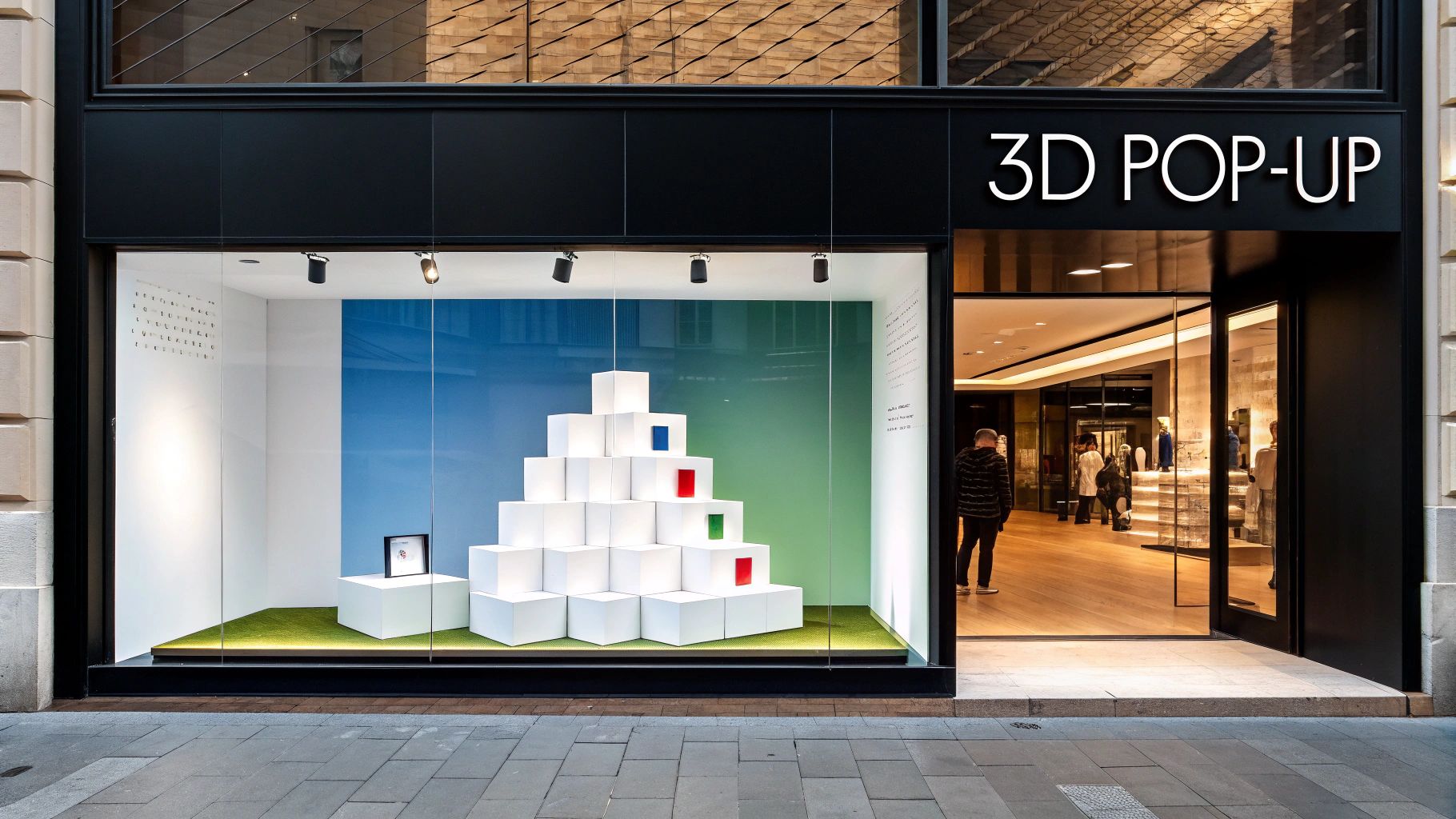
This approach is highly effective for retailers who frequently update their displays for seasonal campaigns, new product launches, or special promotions. The modular nature means they are easy to assemble, disassemble, and store, offering a high-impact yet practical solution. For example, a fashion boutique can use a geometric pop-up to frame its latest collection, while an electronics store could design a tech-inspired structure that reflects its innovative products.
Why This Idea Works
3D pop-up systems are powerful retail window display ideas because they physically break the two-dimensional plane of the glass. This inherent depth draws the eye more effectively than flat graphics, encouraging pedestrians to stop and look closer. They provide a professional, high-end feel often associated with luxury brands like Prada or Apple, yet are accessible and affordable for small and medium businesses.
Quick Implementation Tips
- Maximise Graphic Impact: Use bold, high-contrast graphics and minimal text on the fabric. The design must be clear and legible from across the street.
- Integrate Lighting: Weave subtle LED strip lights around the frame or use a small spotlight to cast shadows. This dramatically enhances the 3D effect, especially at night.
- Consider All Angles: Plan your design to ensure it looks compelling not just from straight on, but also from the sides as people walk past.
- Brand Cohesion: Ensure the colours, fonts, and imagery on the pop-up perfectly align with your brand’s identity and the products on display.
These versatile systems are perfect for creating a memorable visual statement. For businesses looking for a fast and reliable solution, you can discover more about how pop-up banner systems can be custom-printed and delivered quickly.
2. Colour Psychology Window Campaigns
Leverage the powerful, subconscious influence of colour to shape customer perceptions and drive action with a window campaign rooted in colour psychology. This strategic approach goes beyond aesthetics, using specific hues to evoke emotions, create urgency, and communicate brand values. Different colours trigger distinct psychological responses: red signals excitement or sales, blue builds trust and serenity, while green suggests health and sustainability.
This method is incredibly effective for aligning your window display with a specific business goal. For example, a luxury jeweller can use deep purples and golds to convey premium quality, while an organic food shop might use a palette of greens and earth tones to reinforce its natural ethos. By building your entire window concept around a carefully chosen colour palette, you create an immersive and emotionally resonant experience that can significantly boost engagement and brand recall.
Why This Idea Works
Colour psychology is one of the most effective retail window display ideas because it communicates directly with the emotional centres of the brain, often bypassing rational thought. A well-executed colour scheme can instantly tell a story about your brand and products before a customer even reads a sign. It’s a technique used by global giants like Coca-Cola (red for energy) and Tiffany & Co. (blue for luxury and trust) to build iconic brand identities, but it is just as accessible and impactful for small businesses.
Quick Implementation Tips
- Apply the 60-30-10 Rule: Structure your palette for visual balance. Use a dominant colour for 60% of the display, a secondary colour for 30%, and a final accent colour for the remaining 10% to create pops of interest.
- Consider Lighting Effects: Test your chosen colours under different lighting conditions. Daylight, evening streetlights, and your internal spotlights can all dramatically alter how a colour is perceived.
- Match Colours to Goals: Use reds and oranges for urgent sale campaigns, blues and silvers for high-tech products, and yellows to create a cheerful, attention-grabbing display.
- Ensure Colour Accuracy: Work with your printing partner to ensure the colours on your vinyl backdrops, posters, and banners are perfectly matched to your design. This maintains a professional and cohesive look.
A strong understanding of colour is fundamental to creating visuals that convert. To get the best results, learn more about how to design a banner with colour theory in mind.
3. Interactive and Augmented Reality (AR) Displays
Bridge the gap between your physical storefront and the digital world by incorporating interactive and augmented reality (AR) displays. This forward-thinking approach transforms a passive viewing experience into an active one, inviting customers to engage directly with your brand using their smartphones. By scanning a QR code or interacting with a motion-activated screen, passers-by can visualise products in their own space, access exclusive content, or "try on" items virtually.
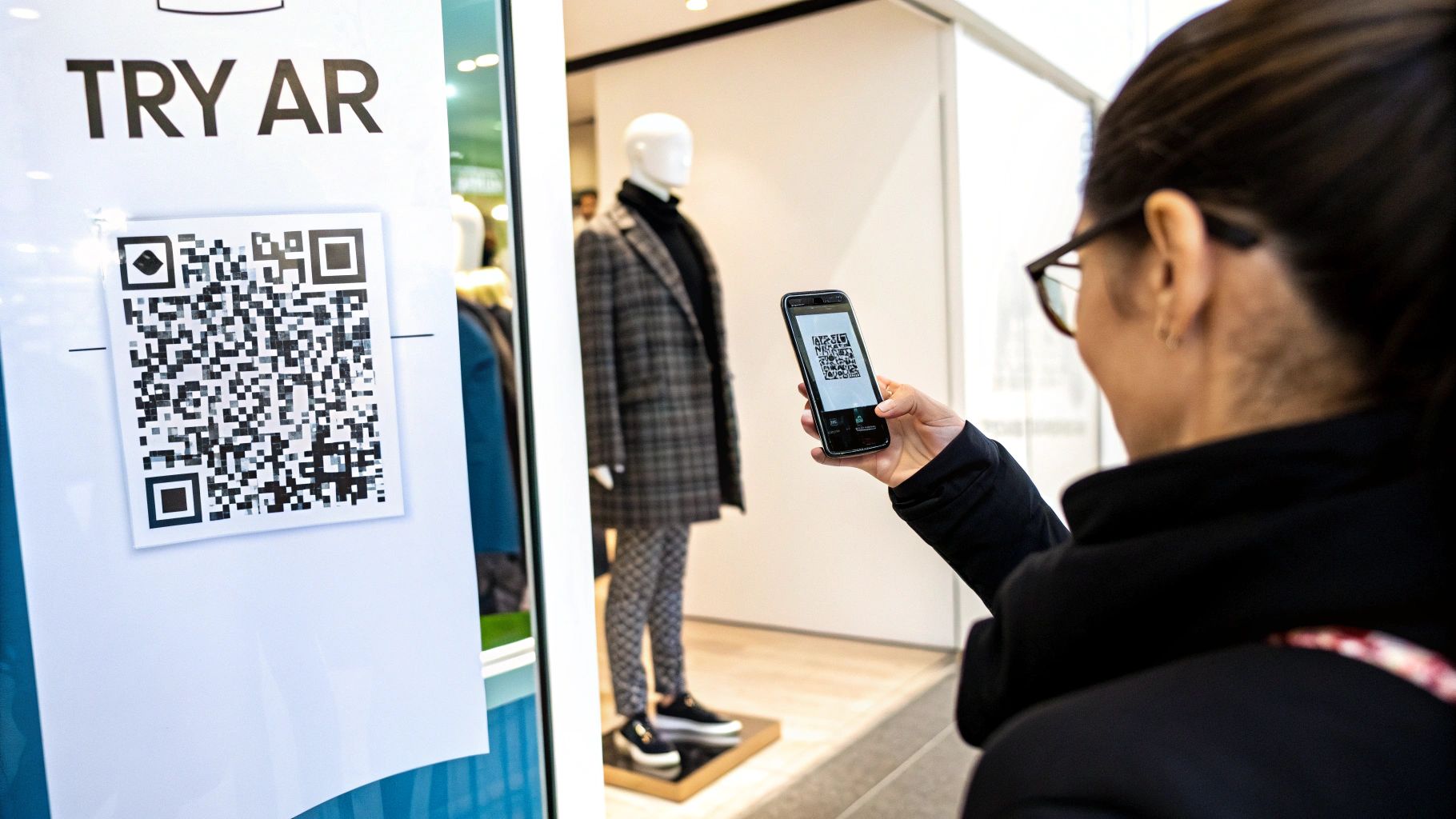
This method is exceptionally powerful for retailers targeting tech-savvy audiences and younger demographics. For instance, an electronics store can use AR to let customers see how a new television would look on their wall, while a beauty brand like Sephora could offer a virtual makeup try-on. This creates a memorable, personalised experience that captures attention and drives modern consumer interest long after they have walked past your window.
Why This Idea Works
Interactive and AR displays are compelling retail window display ideas because they offer a sense of novelty and utility that static displays cannot match. They gamify the shopping experience, creating a fun, shareable moment that generates organic buzz. This technology provides a taste of the in-store experience 24/7, allowing potential customers to explore products even when your shop is closed, effectively turning your window into an around-the-clock sales tool.
Quick Implementation Tips
- Clear Call-to-Action: Use a large, high-contrast QR code printed on a window vinyl or sign. Accompany it with simple instructions like "Scan to See in Your Home."
- Optimise for Mobile: Ensure the digital experience loads in under three seconds on a standard mobile connection to prevent user drop-off.
- Combine Physical and Digital: Use physical banners or backdrops to frame the interactive element. This creates a cohesive display and draws attention to the AR trigger point.
- Track Engagement: Utilise analytics to measure how many people scan the code and interact with the content, providing valuable data to justify the investment.
These high-tech displays can elevate your brand and offer a unique customer journey. The principles of creating engaging, interactive experiences are also vital in other marketing contexts; you can explore similar strategies with these innovative trade show booth ideas.
4. Minimalist and Negative Space Displays
Embrace the power of "less is more" by using minimalist design and negative space to create a sophisticated, high-impact window. This approach involves deliberately leaving large areas of the display empty to draw the eye directly to a single hero product or a very small, curated group of items. Instead of overwhelming passers-by with clutter, it creates a sense of calm, confidence, and luxury.
This technique is exceptionally powerful for brands that want to convey a premium, high-quality image. Think of an Apple Store window featuring a single new iPhone, or a high-end jeweller showcasing one necklace against a plain, elegant backdrop. The strategic emptiness acts as a frame, telling the customer that the product on display is so special it needs no other distractions.
Why This Idea Works
Minimalist and negative space displays are powerful retail window display ideas because they cut through the visual noise of a busy high street. The human eye is naturally drawn to simplicity in a complex environment, making these windows stand out. This approach communicates exclusivity and purpose, suggesting that the featured products are carefully chosen and of superior quality. It encourages a more considered, longer look from potential customers.
Quick Implementation Tips
- Select a Hero Product: Choose your most compelling, visually interesting, or newest item. This product must be strong enough to command the entire space on its own.
- Use a Neutral Palette: Stick to high-quality backgrounds in monochrome shades like white, charcoal grey, or black. This ensures the product’s colours and details pop.
- Master the Lighting: Use a single, focused spotlight to illuminate the hero product, creating dramatic shadows and highlighting its form. The lighting is as important as the product itself.
- Consider Interactive Elements: For a modern twist, you could integrate a subtle AR trigger. To grasp the full potential of this, it's beneficial to understand the current trends in augmented reality industries which can add a layer of digital discovery to a physically minimalist display.
5. Seasonal and Holiday-Themed Window Displays
Capitalise on heightened consumer spending and emotional engagement by rotating your window displays to reflect seasonal changes, holidays, and cultural events. These timely displays create a sense of relevance and urgency, aligning your storefront with the festive atmosphere and specific shopping patterns of the calendar year, from Christmas and Easter to summer holidays and Back-to-School season.
This classic strategy, popularised by iconic department stores like Harrods and John Lewis, remains one of the most effective retail window display ideas for driving foot traffic. A romantic Valentine's Day theme in February can showcase gift items, while a vibrant beach scene in July can promote summer clothing and accessories. It connects your brand to the shared experiences of your community, making your shop a relevant and timely destination.
Why This Idea Works
Seasonal and holiday themes tap directly into the consumer's mindset, creating an immediate emotional connection. Shoppers are already thinking about these events, and a well-executed display validates their feelings and positions your products as the perfect solution. This strategy generates a "fear of missing out" by linking promotions to a specific, limited time, encouraging immediate visits and purchases before the season changes.
Quick Implementation Tips
- Plan Ahead: Design and order materials for seasonal displays at least 2-3 months in advance to secure better pricing and avoid last-minute stress.
- Use Versatile Graphics: Employ removable window vinyl and freestanding displays like roller banners that can be easily updated. This allows for quick, cost-effective changes from one holiday to the next.
- Synchronise Marketing: Launch your new window display at the same time as your social media and email campaigns. A cohesive message across all channels amplifies impact.
- Balance Trend and Tradition: Incorporate classic seasonal symbols (e.g., snowflakes for winter) with modern design trends to ensure your display feels both familiar and fresh.
6. Storytelling and Narrative-Driven Displays
Move beyond simply showcasing products and start telling a story. Narrative-driven displays use a sequence of visual elements to communicate a brand story, a product's journey, or a lifestyle aspiration. This approach transforms your window from a simple catalogue of goods into an immersive experience that forges a powerful emotional connection with customers.
This method is incredibly effective for brands with a strong ethos or unique origin. For instance, an outdoor brand like Patagonia could display the journey of recycled materials into a finished jacket, while a local coffee roaster might show the "farm-to-cup" process with authentic props and imagery. By positioning products within a compelling context, you give them meaning beyond their function, making them far more desirable.
Why This Idea Works
Storytelling is one of the most fundamental forms of human communication. By building a narrative, you tap into a customer's curiosity and emotions, making your brand more memorable and relatable. These retail window display ideas are powerful because they don't just sell an item; they sell a belief, a heritage, or a lifestyle. This deepens brand engagement and fosters loyalty in a way that a simple product arrangement cannot.
Quick Implementation Tips
- Define Your Core Story: Before you start, identify the single most compelling narrative about your brand. Is it your heritage, sustainability, craftsmanship, or the lifestyle you enable?
- Create a Visual Arc: Arrange your props, products, and graphics in a logical sequence (e.g., left to right) that guides the viewer through the story’s beginning, middle, and end.
- Use Supporting Signage: Small, well-placed text panels or vinyl lettering can provide crucial context, explaining key stages of the narrative without cluttering the display.
- Update Seasonally: Treat your narrative like a series. Introduce new "chapters" or seasonal stories to keep your window display fresh and encourage repeat visits from passers-by.
To create an immersive backdrop for your narrative, high-quality printed materials are essential. You can bring your brand's story to life with custom large format printing for vibrant lifestyle scenes and informational graphics.
7. High-Impact Product Feature Displays
Move beyond clutter and make your hero product the undeniable star of the show. High-impact feature displays isolate and dramatically showcase a single product or a small, curated range using strategic lighting, elevation, and minimalist backdrops. This technique makes the featured item appear dominant, exclusive, and highly desirable by removing all distractions.
This approach is exceptionally effective for new product launches, premium goods, or items with intricate design features that deserve a closer look. For instance, a tech store can elevate a new smartphone on a sleek pedestal under a single spotlight, while a cosmetics brand might use an oversized print of a lipstick tube next to the actual product to emphasise its luxurious packaging and colour. It focuses the customer's entire attention on one key message: this product is special.
Why This Idea Works
In a world of sensory overload, simplicity cuts through the noise. High-impact product feature displays are powerful retail window display ideas because they create a sense of value and prestige. By giving a product its own stage, you communicate its importance and quality without saying a word. This method, often employed by luxury brands like Apple and high-end jewellers, triggers curiosity and encourages passers-by to stop and appreciate the craftsmanship and detail of the item on display.
Quick Implementation Tips
- Embrace Negative Space: Don't be afraid of empty areas. Surround your product with plenty of open space to make it the clear focal point.
- Use Dramatic Lighting: A single, well-aimed spotlight can create powerful shadows and highlights, drawing the eye directly to your product. This is especially effective at night.
- Play with Scale: Place the physical product in front of a large-format, high-resolution printed backdrop showing a magnified detail. This contrast in scale is visually arresting.
- Choose a Minimalist Background: Use a solid, neutral-coloured background or a simple texture. This ensures the product's colours and form stand out sharply.
8. Sustainable and Eco-Friendly Display Messaging
Turn your brand's environmental commitment into a powerful visual statement with a sustainable and eco-friendly display. This approach moves beyond simply selling a product and instead communicates your values, resonating deeply with the growing number of environmentally conscious consumers. By showcasing responsible sourcing, recycled materials, and ethical production, your window display becomes a testament to your brand’s integrity.
This strategy is highly effective for any business with a genuine green initiative. A fashion retailer can highlight organic cotton sourcing, a café can promote its plastic-free packaging and locally sourced ingredients, and an outdoor gear shop can showcase products made from recycled materials. The key is to transform your sustainability efforts from a bullet point on a webpage into a central, tangible part of your brand story that customers can see and connect with instantly.
Why This Idea Works
Sustainable retail window display ideas work because they build trust and appeal to consumer values, not just their wallets. In a crowded market, demonstrating authentic social and environmental responsibility can be a major competitive differentiator. This approach attracts a loyal customer base that wants to support businesses that align with their own principles. It proves your brand is not just about profit but also about purpose, creating a much stronger emotional connection.
Quick Implementation Tips
- Be Authentic and Transparent: Ensure all sustainability claims are genuine and verifiable. Use recognised certifications like Fair Trade, B Corp, or FSC logos in your signage.
- Tell the Story: Don’t just state you are "eco-friendly". Use concise text on window vinyl or a small display card to explain how a product is sustainable, such as "Made from 10+ recycled bottles".
- Use Natural Materials: Incorporate elements like reclaimed wood, living plants, cork, or recycled cardboard into the physical display to visually reinforce your eco-message.
- Walk the Talk: Use environmentally friendly materials for your display graphics. Practise what you preach by choosing PVC-free banners and recyclable print media, which demonstrates a thorough commitment to your message.
9. Customer Experience and Photo Opportunity Displays
Turn your window display from a passive viewing area into an active marketing channel with a photo opportunity display. This strategy focuses on creating an interactive, visually stunning scene specifically designed to encourage customer participation, selfies, and social media sharing. By incorporating props, flattering lighting, and striking backdrops, you transform your window into a destination that generates organic, user-generated content for your brand.
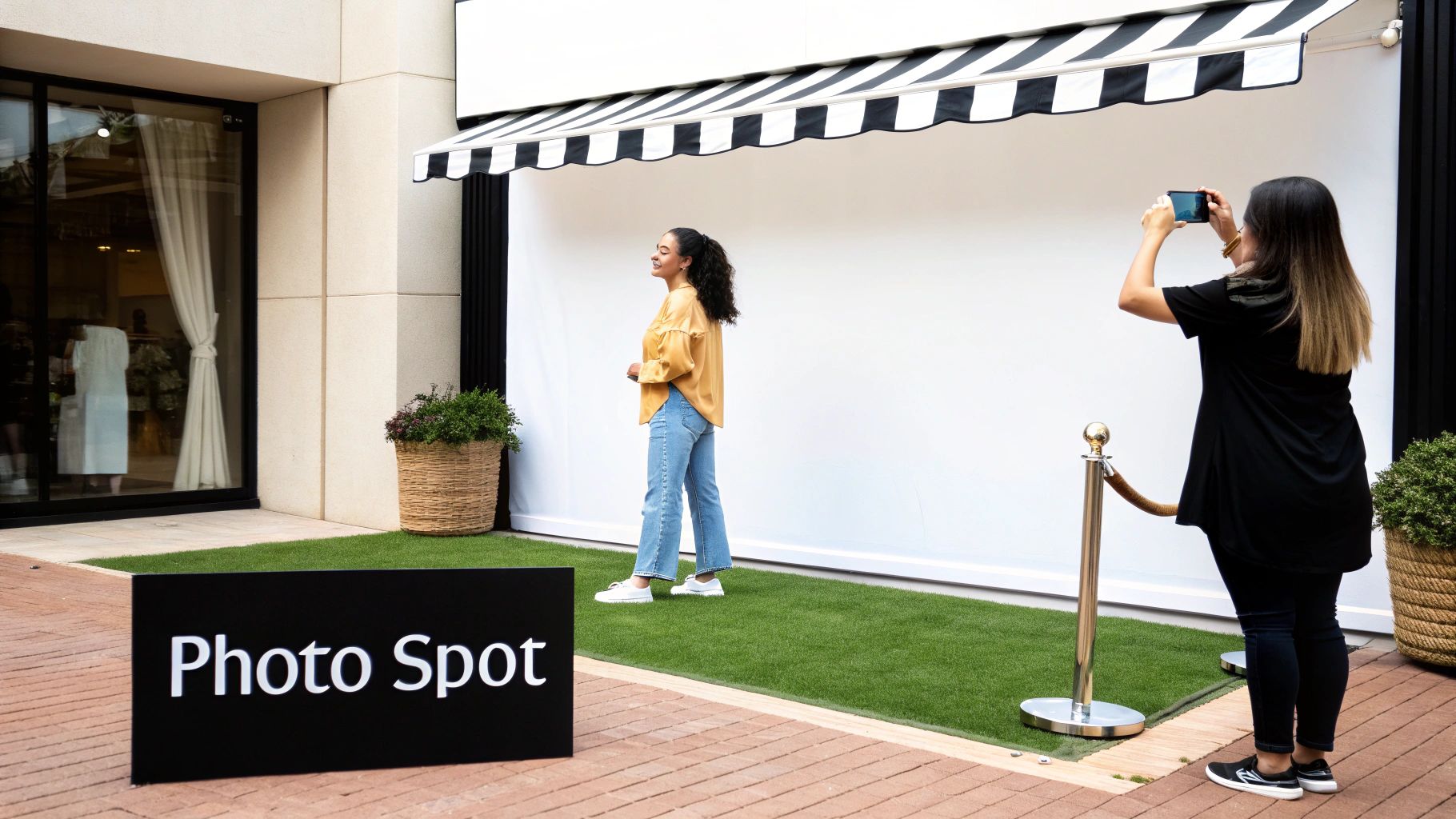
This approach is exceptionally effective for brands targeting Millennial and Gen Z audiences who value experiences and digital self-expression. A fashion boutique could create a branded photo wall with a bold, colourful background, while a cosmetics brand might feature oversized mirrors framed by its latest products. The goal is to create a space so visually appealing that passers-by feel compelled to capture the moment and share it, amplifying your marketing reach far beyond the high street.
Why This Idea Works
Photo opportunity displays are powerful retail window display ideas because they leverage the power of social proof and word-of-mouth marketing in the digital age. Every photo shared becomes a personal endorsement, complete with your branding and location tagged. This creates an authentic connection with potential new customers and builds a community around your brand. It moves beyond simply showing products; it invites customers to become part of your brand's story.
Quick Implementation Tips
- Design for the Camera: Plan the display with smartphone camera height and angles in mind. Ensure key branding elements are positioned to be clearly visible in a typical selfie or portrait shot.
- Use Flattering Lighting: Install soft, even lighting to eliminate harsh shadows on people’s faces. Ring lights or diffused LED panels are excellent options to make everyone look their best.
- Include a Clear Call-to-Action: Use a small, stylish vinyl sign to display a unique hashtag (e.g., #YourBrandWindow) and your social media handles, encouraging customers to tag you.
- Create a High-Quality Backdrop: The background is crucial for creating a professional and shareable image. You can create vibrant, custom-printed backdrops that photograph beautifully to set the perfect scene.
10. Data-Driven Personalised and A/B Test Displays
Move beyond guesswork and apply a scientific approach to your window by using customer data and A/B testing to optimise your displays. This method involves creating two or more variations of a window design and measuring which one generates the highest engagement, footfall, or sales. By analysing real-world performance, you can continuously refine your displays based on what truly resonates with your specific audience.
This strategy empowers retailers to make informed decisions backed by evidence, not just intuition. For instance, a fashion retailer could test a bold, colourful backdrop against a minimalist monochrome one to see which attracts more attention for a new collection. Similarly, a tech store could use foot traffic heatmaps to determine the most effective placement for a flagship product within the window space.
Why This Idea Works
Data-driven retail window display ideas remove subjectivity and focus on measurable results, a methodology popularised by major retailers like Tesco and Amazon. This approach allows even small businesses to understand customer behaviour and directly link their visual merchandising efforts to business goals like increased store traffic or specific product sales. It turns your window into a powerful tool for customer research and conversion optimisation.
Quick Implementation Tips
- Isolate Variables: Start by changing only one element at a time, such as the headline on a window vinyl, the background colour, or the main product featured. This ensures you know exactly what caused the change in performance.
- Allow Sufficient Time: Run each test for a minimum of two to four weeks to gather enough data and account for daily or weekly fluctuations in foot traffic and customer behaviour.
- Track Key Metrics: Use simple tools like footfall counters or ask staff to track enquiries about window items to measure which display variation is more effective at driving engagement.
- Document Everything: Keep a clear record of each test, including the variable changed, the duration, and the results. This builds a valuable knowledge base for future display planning.
This methodical approach ensures your window displays are not just creative but are also high-performing marketing assets. To execute rapid A/B tests with different graphics, you can get high-quality PVC banners printed and delivered within 24-48 hours, enabling a fast and efficient testing cycle.
Retail Window Display Ideas — 10-Item Comparison
| Item | Implementation Complexity (🔄) | Resource Requirements (⚡) | Expected Outcomes (⭐ / 📊) | Ideal Use Cases (💡) | Key Advantages (📊) |
|---|---|---|---|---|---|
| 3D Pop-Up Display Systems | 🔄 Moderate — modular assembly, some training | ⚡ Medium — aluminium frames, fabric panels, storage | ⭐ High visual impact; 📊 increased attention and repeat campaigns | 💡 Seasonal rotations, multi-location rollouts, premium retail | 📊 Strong curb appeal; reusable and portable |
| Colour Psychology Window Campaigns | 🔄 Low–Moderate — design-led, testing needed | ⚡ Low — print materials, color-accurate production | ⭐ Consistent brand recall; 📊 measurable uplift in engagement | 💡 Sale events, brand positioning, cross-category campaigns | 📊 Cost-effective; aligns emotion with purchase drivers |
| Interactive and Augmented Reality (AR) Displays | 🔄 High — tech integration and maintenance | ⚡ High — sensors, screens, app/AR development | ⭐ Very high memorability; 📊 strong social sharing and data capture | 💡 Tech launches, youth-focused retail, experiential events | 📊 Differentiation and rich engagement metrics |
| Minimalist and Negative Space Displays | 🔄 Low — precise styling and lighting | ⚡ Low — neutral backdrops, premium finishes | ⭐ High perceived quality; 📊 focused product attention | 💡 Luxury goods, flagship stores, hero product showcases | 📊 Timeless elegance; low production complexity |
| Seasonal and Holiday-Themed Displays | 🔄 Moderate — frequent changeovers, calendar planning | ⚡ Medium — themed prints, props, fast production | ⭐ High seasonal relevance; 📊 peak-period traffic uplift | 💡 Holiday campaigns, promotional windows, event tie-ins | 📊 Drives urgency and social content during peaks |
| Storytelling and Narrative-Driven Displays | 🔄 Moderate–High — multi-panel sequencing and copy | ⚡ Medium — large-format imagery, staged props | ⭐ High emotional engagement; 📊 improved brand loyalty | 💡 Heritage brands, product origin stories, lifestyle positioning | 📊 Deepens customer connection and justifies premium pricing |
| High-Impact Product Feature Displays | 🔄 Moderate — precision lighting and scale work | ⚡ Medium — large-format prints, rigging, pro photography | ⭐ Very high product-focused persuasion; 📊 increased consideration | 💡 New product launches, premium design-led items | 📊 Dramatic focus on product detail and craftsmanship |
| Sustainable and Eco-Friendly Display Messaging | 🔄 Low–Moderate — authenticity and verification needed | ⚡ Low–Medium — eco materials, certification assets | ⭐ High value with eco-conscious segments; 📊 PR and loyalty gains | 💡 Brands with verified sustainability programs | 📊 Differentiates on values; attracts ethical consumers |
| Customer Experience & Photo Opportunity Displays | 🔄 Moderate — experiential design and maintenance | ⚡ Medium — props, backdrops, lighting, signage | ⭐ High shareability; 📊 extensive organic social reach | 💡 Millennial/Gen Z targeting, lifestyle and beauty brands | 📊 Generates user content and broad organic reach |
| Data-Driven Personalised & A/B Test Displays | 🔄 High — analytics setup and iterative testing | ⚡ High — tracking tech, rapid print variations | ⭐ Optimised performance; 📊 measurable ROI improvements | 💡 Large retailers, regional rollouts, conversion-focused campaigns | 📊 Reduces guesswork; improves ROI through evidence-based changes |
Your Next Steps to a Traffic-Stopping Window Display
You've explored ten powerful strategies, moving far beyond simple product arrangements to discover how your shop window can become a dynamic, traffic-driving asset. From the immersive depth of 3D Pop-Up Systems and the emotional pull of Colour Psychology to the futuristic engagement of Augmented Reality, the potential for creativity is boundless. We've seen how mastering minimalism can shout louder than a cluttered scene and how a compelling narrative can turn a passerby into a loyal customer.
The journey from a blank pane of glass to a captivating installation is one of strategy, not just artistry. The most resonant retail window display ideas are those that are not only visually striking but also deeply aligned with your brand's core identity and your customers' desires. Whether you are championing sustainability, creating a must-share photo opportunity, or using data to A/B test your messaging, each concept serves a distinct purpose: to connect, engage, and convert.
Synthesising Inspiration into Action
The key takeaway is this: your window is your most valuable, cost-effective advertising space. It’s the handshake before the hello, the cover that sells the book. To truly capitalise on this, you must transition from passive inspiration to active implementation. Don't feel overwhelmed by the variety of options; instead, see it as a versatile toolkit waiting to be used.
Here are your actionable next steps to bring these ideas to life:
- Select and Simplify: Choose just one idea from this list that excites you and aligns with your immediate business goals. Are you launching a new hero product? A High-Impact Feature Display is your starting point. Is community engagement a priority? Focus on creating a Customer Experience and Photo Opportunity.
- Plan Your Core Message: Before thinking about props or colours, define what you want your window to say. Is it "New Spring Collection Inside," "Sustainable Gifts Here," or "Discover the Story Behind Our Craft"? A clear message simplifies every subsequent decision.
- Measure and Map: Take precise measurements of your window space, including height, width, and depth. Sketch a simple layout, noting where key elements like a printed backdrop, vinyl lettering, or a central prop will be positioned. This avoids costly mistakes and ensures a professional finish.
- Source High-Quality Materials: Your concept's success hinges on the quality of its execution. Professional, vibrant, and durable printed materials are non-negotiable. Faded graphics, peeling vinyl, or flimsy backdrops can undermine even the most brilliant idea. Partnering with a reliable printer is essential for a polished, impactful result.
The Lasting Impact of a Great Window Display
Mastering the art of the window display does more than just increase footfall. It builds brand perception, establishes your shop as a landmark on the high street, and creates a memorable experience that customers will talk about and share online. It’s a direct reflection of the quality, creativity, and care you put into every aspect of your business. By consistently refreshing your display with fresh and engaging concepts, you signal to the world that your brand is dynamic, relevant, and always has something new to offer. This is how you transform a simple storefront into a destination.
Your next great window display is not a distant dream; it's a project waiting to begin. Start small, be bold, and watch as your window begins to work as the powerful marketing tool it was always meant to be.
Ready to turn your vision into a vibrant reality? For high-quality, fast-turnaround printed materials like vinyl decals, backdrops, and banners that bring these retail window display ideas to life, look no further than Banner Printing Ltd. With free UK delivery and a commitment to exceptional quality, we are the trusted partner for retailers aiming to make a powerful first impression.


