
In the notoriously unpredictable UK weather, a weatherproof table cover isn't just a bit of fabric – it's a vital piece of kit. Think of it as insurance for your outdoor setup, protecting everything from pub garden tables to crucial event stock. It keeps your assets safe from damage and ensures you're always ready for business, rain or shine.
Why Investing in Weatherproof Covers Makes Business Sense
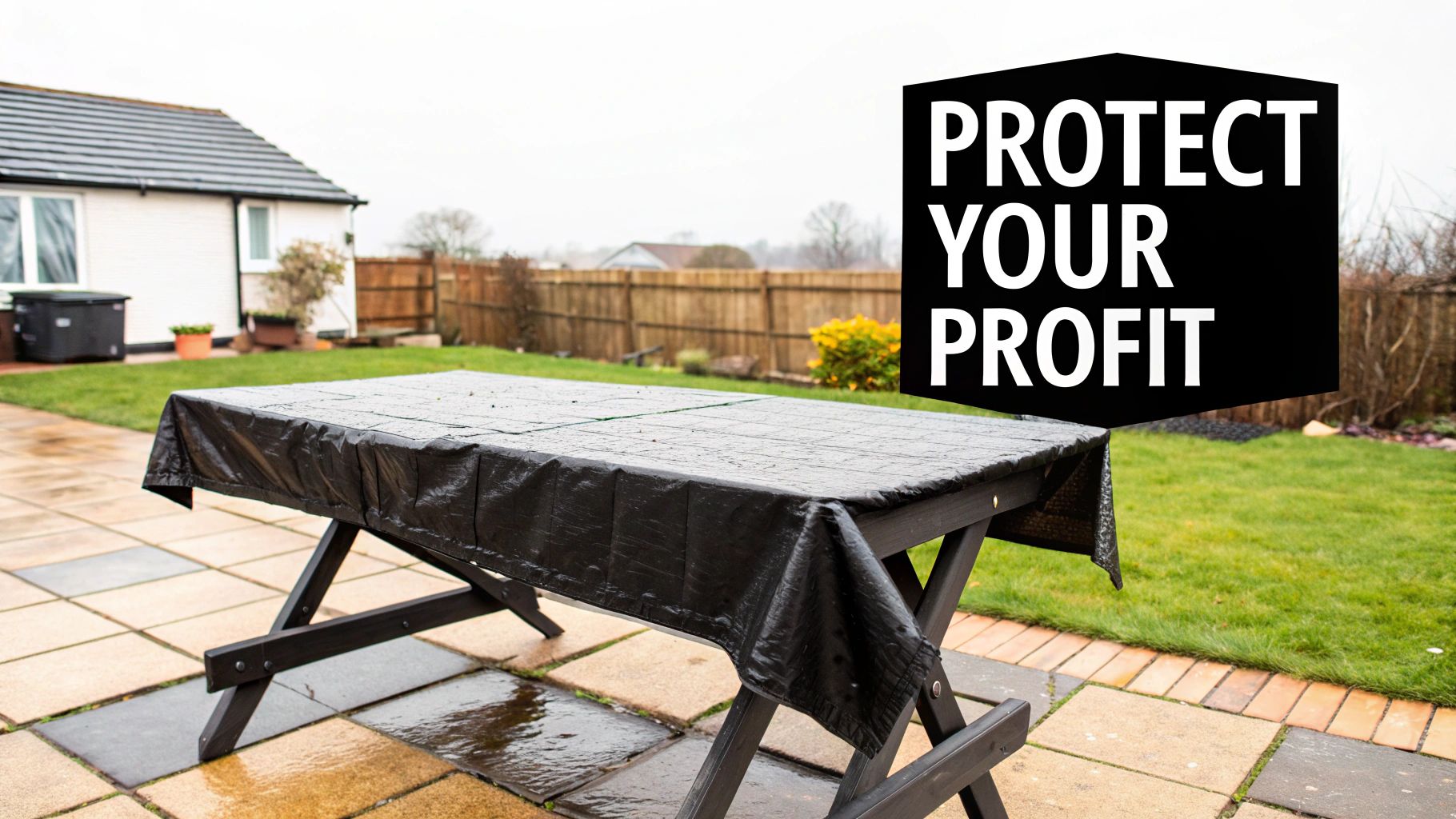
Leaving your outdoor tables to face the British elements unprotected is a risky game. A relentless cycle of rain, sun, and changing temperatures will quickly wear down your furniture, leading to expensive repairs or even total replacement. A top-notch weatherproof table cover is your first line of defence, and it pays for itself in more ways than one.
First off, it massively extends the life of your tables. Dampness makes wood rot and warp, while metal parts start to rust and lose their strength. At the other end of the scale, the sun's UV rays will bleach surfaces and can turn plastics brittle and weak. A solid cover simply stops this from happening.
Maintaining Professionalism and Readiness
A clean, dry, and inviting outdoor space says a lot about your business. The last thing you want is for staff to be frantically wiping down soggy, mucky tables after a sudden downpour just as customers are arriving. For pubs, cafés, and event venues, being instantly ready is non-negotiable. First impressions are everything.
A weatherproof table cover ensures your outdoor space is always guest-ready, eliminating operational delays and projecting a consistently professional image, no matter the weather.
This isn’t just a hunch; it’s backed by market trends. The UK outdoor furniture market was valued at around USD 6.08 billion and is set to grow even more. This boom is all about finding durable solutions that can handle our climate, making protective covers a fundamental part of the picture. If you want to dig deeper, you can explore more data about the outdoor furniture market to see the trend for yourself.
Protecting Against More Than Just Rain
It’s not just about keeping the rain off. A good cover provides a shield against all sorts of everyday annoyances that can spoil your setup.
- Dirt and Debris: Keeps falling leaves, pollen, and general grime from building up, saving you constant cleaning.
- Animal Mess: Bird droppings are not only ugly but also acidic, which can damage table finishes if left for too long.
- Scratches and Scuffs: When moving tables for storage or transport, a cover prevents those accidental knocks and scrapes that ruin the look.
At the end of the day, buying robust weatherproof table covers is a smart, proactive business move. It’s a small upfront cost that saves you from much bigger headaches and expenses down the line. It keeps you efficient and helps maintain that professional finish your customers expect. It’s not just about keeping things dry—it’s about protecting your investment and keeping business ticking over smoothly.
Decoding the Materials Behind True Weatherproofing
What really separates a proper weatherproof table cover from a simple dust sheet? It all comes down to the material. Think of it like picking a coat for a stormy day; some are heavy-duty, impermeable rain slickers, while others are more like lightweight, technical jackets. Getting your head around the differences is the key to making a smart investment.
The material you choose has a huge impact on how well your cover holds up against rain, sun, and general wear and tear. It dictates its lifespan, how flexible it is in the cold, and ultimately, whether it's good value for money. Let’s break down the most common options to see what’s the right fit for your business.
The Heavy-Duty Champion: PVC
Polyvinyl chloride, or PVC as it's more commonly known, is the undisputed workhorse of weatherproof materials. If you need absolute, no-compromise protection, PVC is your go-to. It’s inherently waterproof—not just water-resistant—forming a solid barrier that moisture simply can’t get through.
This makes it the perfect choice for long-term outdoor storage or for covering tables in places that see the worst of the British weather. The sheer thickness and durability of PVC also give it fantastic resistance to rips and scuffs, which is a massive plus for busy spots like pub gardens or construction sites. It's the same tough stuff we trust for outdoor banners, and for good reason. You can learn more about its resilience by checking out our comparison of mesh versus PVC banners for outdoor use.
But all that toughness has its trade-offs. PVC can be heavier and less flexible than other options, especially in cold weather when it can get quite stiff.
The Versatile Contender: Coated Polyester
For a more balanced, all-round approach, look no further than coated polyester. It starts with a strong but lightweight polyester fabric, which is then treated with a waterproof coating like polyurethane (PU) or even a thin layer of PVC. The result? A material that’s highly water-resistant but much more flexible and manageable than solid PVC.
This flexibility makes coated polyester covers far easier to handle, fold up, and store away. They also tend to be better at resisting UV radiation, which helps stop the colour fading and the fabric from going brittle after months in the sun.
A huge advantage of coated polyester is its breathability. Good quality versions often include vents or are made from fabric that allows trapped moisture to escape. This helps prevent the build-up of mould and mildew underneath—a classic problem with totally non-breathable materials.
The Modern Alternative: PVC-Free Options
As more businesses look for greener solutions, PVC-free materials are really coming into their own. These alternatives, often made from polyethylene (PE) or polypropylene, are designed to give you solid weather protection without the environmental headaches that can come with PVC.
They're typically lightweight, recyclable, and perform well across a range of temperatures. While they might not quite match the ruggedness of heavy-duty PVC, modern versions are a durable and reliable choice for all sorts of uses, from market stalls to outdoor café seating.
A Quick Guide to Weatherproof Cover Materials
Choosing the right material isn't just about picking one from a list; it’s about matching its properties to what you’ll be doing with it. When looking at table covers, you can even draw inspiration from how other items, like waterproof chair covers, are designed for protection. It’s clear that UK buyers are getting savvier, with projections showing a rising demand for covers offering robust UV and wind protection alongside waterproofing between 2018 and 2031.
To make your decision a bit easier, here’s a quick comparison of the main players.
| Material | Waterproof Level | Durability | Best For | Considerations |
|---|---|---|---|---|
| PVC | Fully Waterproof | Very High | Long-term storage, harsh weather, high-traffic areas. | Can be heavy and get stiff in the cold. |
| Coated Polyester | Highly Water-Resistant | High | Daily use, events, areas with mixed sun and rain. | The quality of the coating is everything. |
| PVC-Free (PE) | Waterproof | Good | Eco-conscious businesses, general use, temporary events. | Might not be as abrasion-resistant as PVC. |
At the end of the day, the best material is the one that fits your day-to-day needs and your budget. By understanding these core differences, you can choose a weatherproof table cover that will keep doing its job, season after season.
How a Perfect Fit and Smart Construction Beat the Elements
Even the best fabric in the world won't do you much good if the cover is poorly made or doesn't fit properly. A top-notch weatherproof table cover is far more than just a sheet of material; its real strength is in the details of how it's built and how snugly it wraps around your table. Think of it like a good-quality tent—the most waterproof fabric won't keep you dry in a downpour if the seams leak or the zips fail.
It’s this smart construction that makes the difference between a cover that lasts for years and a flimsy one that gives up the ghost after one windy winter. The hidden features are what provide the real-world grit needed to stand up to the unpredictable UK climate.
This concept map breaks down the core material choices that are the foundation of any durable cover.
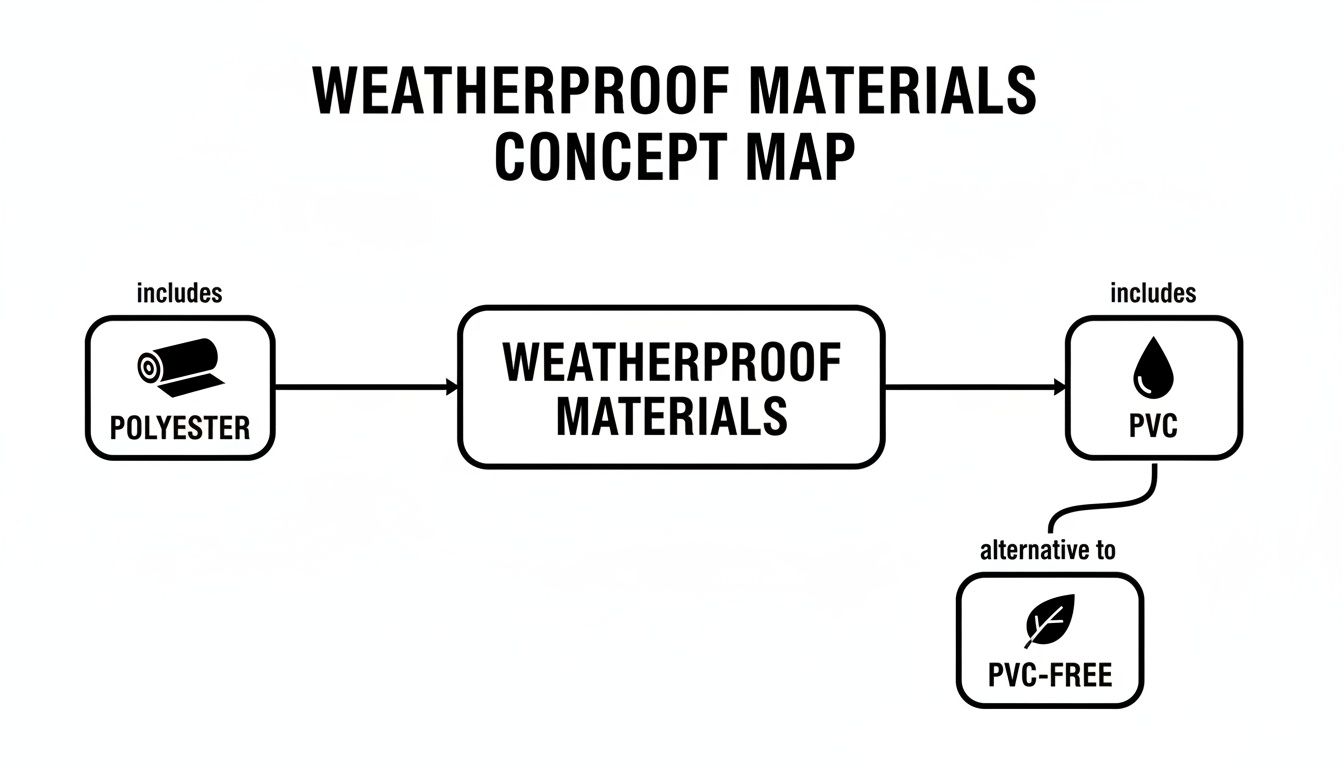
As you can see, each option provides a different route to weatherproofing, from the sheer toughness of PVC to the balanced performance of Polyester and the greener credentials of PVC-Free alternatives.
The Importance of a Perfect Fit
A badly fitting cover is an absolute liability. If it's too tight, you're putting constant strain on the seams and corners, which is a fast track to rips and tears. If it’s too loose, it turns into a sail, flapping wildly in the wind and eventually flying off, leaving your table completely exposed.
Worse still, a loose cover allows rainwater to collect in saggy pools. This standing water not only adds a surprising amount of weight, stressing the fabric, but it can also slowly work its way through the material over time, defeating the whole purpose of having a cover in the first place.
Key Takeaway: A snug, precise fit is non-negotiable. It stops the wind from getting underneath, prevents water from pooling, and reduces stress on the stitching and material, all of which directly extends the cover's lifespan.
Getting this right starts with one simple thing: measuring properly. Don't guess.
- For rectangular or square tables: Measure the length, width, and height.
- For round tables: Measure the diameter and the height.
A good rule of thumb is to add a couple of centimetres to your measurements. This gives you just enough wiggle room to get the cover on and off easily, but not so much that it becomes baggy.
Construction Details That Matter
Beyond the fit, it’s the manufacturing quality that really guarantees performance. These are the specific details you should be looking for, as they are dead giveaways of a product that's built to last.
Double-Stitched Seams
This is a big one. Single stitching is just a weak point waiting to happen. Double-stitched seams, especially when done with rot-proof thread, give you that crucial reinforcement where it's needed most. This stops water from getting in and prevents the seam from splitting when it's under pressure from wind or heavy rain.
Reinforced Corners
Table corners take a real beating. They endure the most friction and tension, day in and day out. Covers with reinforced corners—usually featuring extra fabric layers or tough webbing—are far less likely to tear when you're pulling them on or when they're being thrashed about by the wind.
Secure Fastening Systems
The fastening system is your main line of defence against the wind. A simple elasticated hem might be okay in a sheltered spot, but it’s often not enough for more exposed locations. Look for something more robust:
- Drawstrings: Let you cinch the hem tight around the base of the table for a secure fit.
- Buckle Straps: Often the best choice. Straps that click together around the table legs will lock the cover down, keeping it firmly in place even in a proper gale.
- Eyelets: These are great for using your own bungee cords or rope, giving you a flexible and powerful way to anchor the cover down. It’s the same principle used for securing a custom-fit scaffold wrap, where you simply can't afford for it to come loose.
By paying attention to these construction details—a perfect fit, strong seams, and a reliable way to fasten it—you can be sure your weatherproof cover will actually do its job. Together, these features create a proper shield, keeping your outdoor assets safe and ready to go, no matter what the weather decides to throw at them.
Turning Your Covers Into Powerful Branding Tools
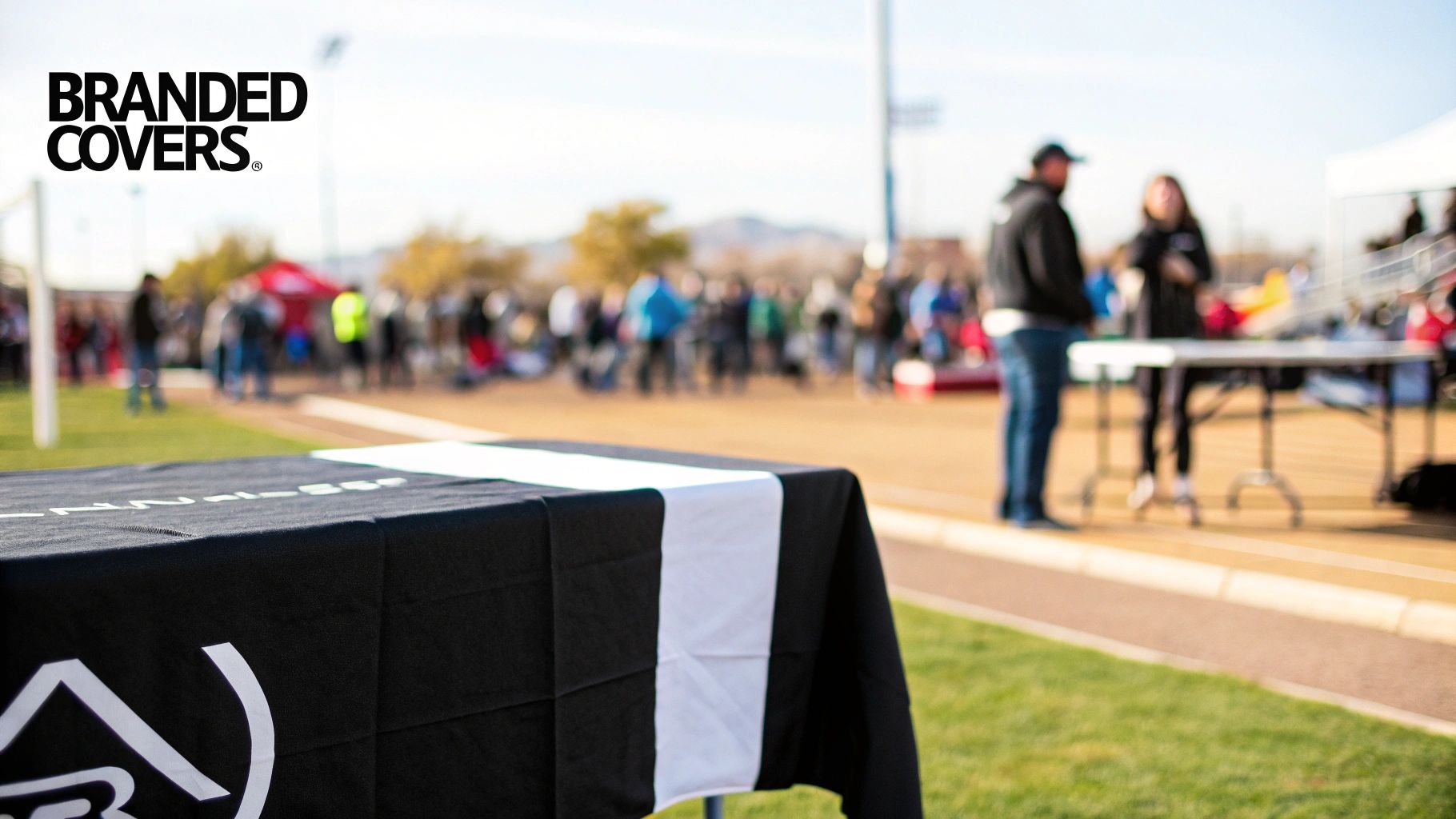
A weatherproof table cover is a must-have for any outdoor setup, but its job doesn't end at just protecting your table. With a bit of custom branding, that practical cover transforms into one of your most effective, and cost-effective, marketing assets. It becomes a silent salesperson, working 24/7 to get your name out there, whether you're at a trade show, a local market, or on a construction site.
Think of a plain cover as a blank canvas. By adding your logo, brand colours, and key message, you turn it into a professional billboard. This one simple step instantly makes your whole setup look more polished, trustworthy, and memorable to anyone walking past. It’s an easy win for any business looking to make a great first impression.
Choosing Your Printing Method
How your design is put onto the cover makes a huge difference to the final look and how well it lasts. There are two main methods in the industry, and each has its own strengths.
Screen Printing
This is the classic technique where ink is pushed through a mesh screen directly onto the fabric. It’s absolutely fantastic for simple, bold designs with just one or two solid colours – perfect for a company logo or a snappy tagline.
For large orders, screen printing is incredibly cost-effective because the main cost is setting up the first screen. The print itself is vibrant and seriously durable, making it the go-to for covers that are going to get a lot of use.
Digital Printing
If you’ve got a more complex design in mind, digital printing is the way to go. This modern method works a lot like your office printer, applying ink straight onto the material to create full-colour, high-resolution images.
When your branding involves detailed graphics, colour gradients, or even photographs, digital printing will capture every last detail with incredible clarity. It might be a bit more expensive per cover on smaller runs, but its versatility is unmatched for creating eye-catching, bespoke weatherproof table covers that really stand out.
Designing for Maximum Impact
A printed cover is only as good as its design. To really grab people's attention and communicate what your brand is all about, you need to be strategic about what you put on it.
A well-designed branded cover does more than just display a logo; it creates an immediate sense of professionalism and brand consistency, turning any table into a cohesive part of your marketing presentation.
Here are a few practical tips to make sure your branded cover pulls its weight:
- Make Your Logo the Star: Your logo should be front and centre. Place it right in the middle of the front-facing panel where it’s impossible to miss.
- Go for High-Contrast Colours: Pick colours that make your logo and text pop. If your logo is dark, stick it on a light background, and vice versa.
- Less is More with Text: Don’t clutter the cover with too much information. Your company name, website, or a short, punchy tagline is all you need.
- Think About Viewing Distance: Make sure your branding is big enough and clear enough to be read easily from a distance.
These principles are key to creating any effective visual marketing. For a deeper dive, you might find our expert tips on how to design a banner useful, as a lot of the same rules apply.
Ultimately, customising your weatherproof table covers is a smart move. It turns a simple piece of protective gear into a hard-working marketing asset that builds your brand identity, makes you look more professional, and helps you leave a lasting impression, come rain or shine.
Choosing the Right Cover for Your Industry
Let's be honest, there's no such thing as a "one-size-fits-all" weatherproof table cover. The cover that’s perfect for a bustling pub garden would be completely wrong for a muddy construction site or a chic outdoor wedding. The real key is matching the cover’s features to what you actually do.
Getting this right means you get the best performance and a solid return on your investment. To help you figure it out, let's walk through a few real-world scenarios and see how different UK businesses make their choice.
Case Study 1: The Pub Garden
Imagine a busy pub garden in Manchester. The tables are out almost year-round, facing everything from sudden downpours to the occasional summer heatwave. The staff need to cover and uncover them quickly every single day.
The top priorities here are sheer toughness and ease of use. Of course, they also need to look smart to keep the pub’s atmosphere welcoming.
- Material Choice: Heavy-duty, UV-resistant coated polyester is the only real contender. It’s tough enough to take a daily beating, waterproof enough for those infamous Manchester showers, and won’t fade to a sad, pale version of its former self after one summer.
- Construction: Look for double-stitched seams and reinforced corners. These are non-negotiable. Without them, the covers will tear from being pulled on and off all the time. A snug fit is also vital to stop the wind from turning them into kites.
- Fastening System: You need elasticated hems paired with secure buckle straps that clip around the table legs. This is essential for making sure the covers are still there in the morning, not halfway down the street.
This is a classic case of cost versus durability. Spending a bit more upfront on a robust cover saves you the headache and expense of replacing cheap, flimsy ones every few months.
Case Study 2: The Event Planner
Now, think about an event planning company. They’re constantly on the move, setting up for everything from corporate functions to weddings. Their covers need to be lightweight for easy transport and super-fast to put on. But just as importantly, they need to be a branding tool.
The goal is a solution that’s both practical and visually impressive, protecting tables from a rogue shower while boosting the event's professional look.
For event planners and venues, robust solutions are vital. When brainstorming unique outdoor wedding reception ideas, ensuring everything from the catering stations to guest tables stays pristine is part of the package. The right cover makes that happen.
Here’s what their ideal setup looks like:
- Material Choice: A lightweight coated polyester or a modern PVC-free alternative is perfect. These are easy to fold, pack, and carry, which is a lifesaver for the setup crew. They provide more than enough water resistance for a short-term event.
- Customisation: Full-colour digital printing is a must. This turns a simple table cover into a high-impact promotional tool with crisp logos and vibrant branding.
- Fit: They'll opt for a fitted or draped style that looks clean and professional. It’s less about industrial function and more about complementing the event’s decor with a sharp, tailored appearance.
Here, the priorities are portability and branding. The covers aren't just for protection; they’re a multi-purpose asset that safeguards equipment and reinforces the client's image.
Case Study 3: The Construction Site
Finally, a UK construction firm. They need to protect site plans, tools, and materials on temporary trestle tables. These covers will be exposed to the absolute worst conditions: dust, debris, constant rain, and scrapes from building materials.
Looks are completely irrelevant. This is all about raw, uncompromising protection.
- Material Choice: Heavy-duty PVC. No question. It's inherently waterproof and incredibly resistant to the rips and punctures that are inevitable on a building site.
- Construction: The focus is 100% on strength. That means heat-welded or heavily reinforced seams and a simple, boxy shape that can be thrown over a table in seconds.
- Fastening: Heavy-duty eyelets along the hem are essential. This lets the team use their own bungee cords or rope to lash the cover down tight, making sure it won't budge even in high winds on an exposed site.
In this scenario, the decision is driven by one thing: maximum protection. The table cover isn't just a cover; it's a critical piece of equipment that protects valuable assets and prevents costly delays caused by weather damage.
Keep Your Covers Looking Great: A Little Care Goes a Long Way
You’ve invested in a top-notch weatherproof cover, and that’s a smart move. But what you do next is just as important. A bit of simple care will make all the difference, stretching your investment further and ensuring your covers are always ready to go when you are.
Think of it like this: leaving mud on your boots will eventually ruin the leather. It's the same with your covers. A little cleaning and smart storage stops common problems like mould, mildew, and fabric decay before they even start. Follow these straightforward tips, and you’ll keep them looking professional season after season, avoiding the headache and cost of replacing them.
Cleaning and Drying: The Golden Rules
Before you pack a cover away, it absolutely must be clean and bone-dry. Shoving a damp, dirty cover into storage is asking for trouble. It's the fastest way to get mould and mildew, which not only looks awful but actually eats away at the fabric over time.
For everyday muck like dirt, leaves, or the inevitable bird droppings, keep it simple.
- Brush it off: Grab a soft brush and get rid of any loose debris first.
- Give it a gentle wash: Use a sponge or soft cloth with some mild soap and lukewarm water. Don't be tempted to use harsh detergents or abrasive cleaners – they can strip the waterproof coating right off.
- Rinse it well: A quick spray with a hose on a low setting or a few buckets of clean water will do the job. Make sure all the soap is gone.
- Let it air dry completely: This is the most crucial part. Hang the cover over a washing line, a fence, or a couple of chairs. Let it dry out fully on both sides. Whatever you do, never put a weatherproof cover in a tumble dryer. The heat will melt the coating and ruin the material.
Storing a cover that’s even slightly damp is a recipe for disaster. That trapped moisture is the perfect breeding ground for mildew, which can leave permanent stains and weaken even the toughest weatherproof table covers.
Smart Storage That Prevents Damage
Once your cover is spotless and completely dry, where you put it matters. Just cramming it into a box or leaving it folded on a concrete floor can cause all sorts of unnecessary wear.
The aim is to store it somewhere it won’t get sharp creases, and where it’s safe from extreme temperatures and pests. A cool, dry spot in a garage, shed, or storage unit is perfect.
Here’s a pro tip: instead of folding it into a tight square, loosely roll the cover up. This simple trick helps prevent permanent creases, which can become weak points in the fabric over time. A few minutes of care makes sure your cover stays in top condition, ready for action whenever you need it.
Your Weatherproof Cover Questions Answered
Choosing the right cover can feel like a minefield of jargon. To cut through the noise, we've answered some of the most common questions we get from UK businesses, giving you clear, practical advice.
Waterproof vs. Water-Resistant – What’s the Real Difference?
It’s a classic question, and the answer is simpler than you might think. Think of water-resistant as a light shower jacket – it’ll fend off a drizzle but will eventually let water seep through in a proper downpour.
A genuinely waterproof cover, on the other hand, is your full-on storm gear. It’s made from materials like PVC that simply don't let water pass through, and will often have welded seams to seal any potential weak points. It's a complete, impenetrable barrier against the rain.
How Do I Stop the Wind from Blowing My Cover Away?
There’s nothing worse than finding your cover halfway across the car park after a windy night. The secret to preventing this is a combination of a snug fit and a solid fastening system. A baggy cover acts like a sail, catching every gust.
To keep it locked down, look for these features:
- Strong Elastic Hems: These grip the base of the table, providing a good first line of defence.
- Drawstrings: Let you pull the cover in tight for a closer, more secure fit.
- Buckle Straps: These are the gold standard for windproofing. Straps that click securely around the table legs will anchor your cover, ensuring it stays exactly where you left it, even when the gales hit.
How Long Should a Good Quality Weatherproof Table Cover Last?
A well-made, high-quality cover should give you several years of solid service. Its lifespan really boils down to three things: the material it's made from (heavy-duty PVC and coated polyesters are built to last), the quality of the stitching, and how much brutal weather it has to endure.
Don't forget about the sun! A cover with good UV resistance is crucial, as it stops the material from going brittle and cracking over time. A bit of regular cleaning and proper storage when not in use will go a long way to extending its life, too.
Can I Just Use a Standard Tablecloth Instead?
In a word: no. A standard fabric tablecloth offers zero protection against the elements. The moment it rains, it’ll be soaked through, trapping moisture against your table – which is often worse than no cover at all. Plus, it has none of the fastenings needed to survive even a light breeze. Weatherproof covers are engineered specifically for the job with tough, water-repellent materials.
Ready to protect your outdoor assets and keep your brand looking sharp, whatever the weather? At Banner Printing Ltd, we create high-quality, custom-printed weatherproof table covers built to handle the unpredictable UK climate. Explore our options and get a professional, long-lasting solution delivered fast. Learn more at https://bannerprintingltd.co.uk.


