A banner has one job: get your message seen from the right distance, in the right setting, for long enough to make an impact. That could mean announcing a sale across a shopfront, directing visitors around an event, promoting a trade stand or displaying a safety message on a building site. So, what is banner printing? It is the process of producing large, custom graphics on durable display materials designed for indoor or outdoor use.
For businesses and organisers, the real value is not simply putting a logo on a large sheet of material. Effective banner printing combines the right material, size, finishing and artwork to make sure your message stays clear, looks professional and holds up where it is displayed.
What Is Banner Printing?
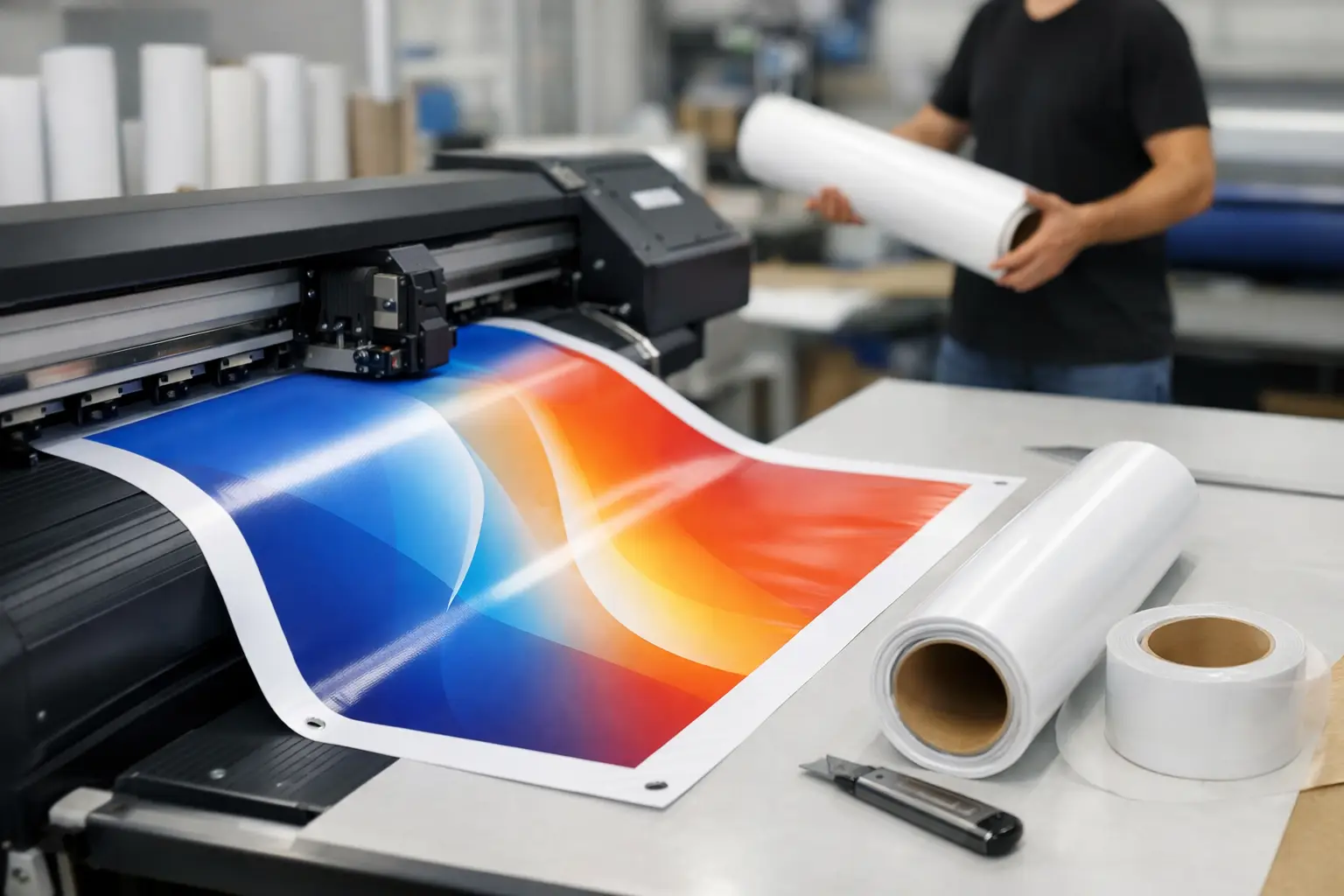
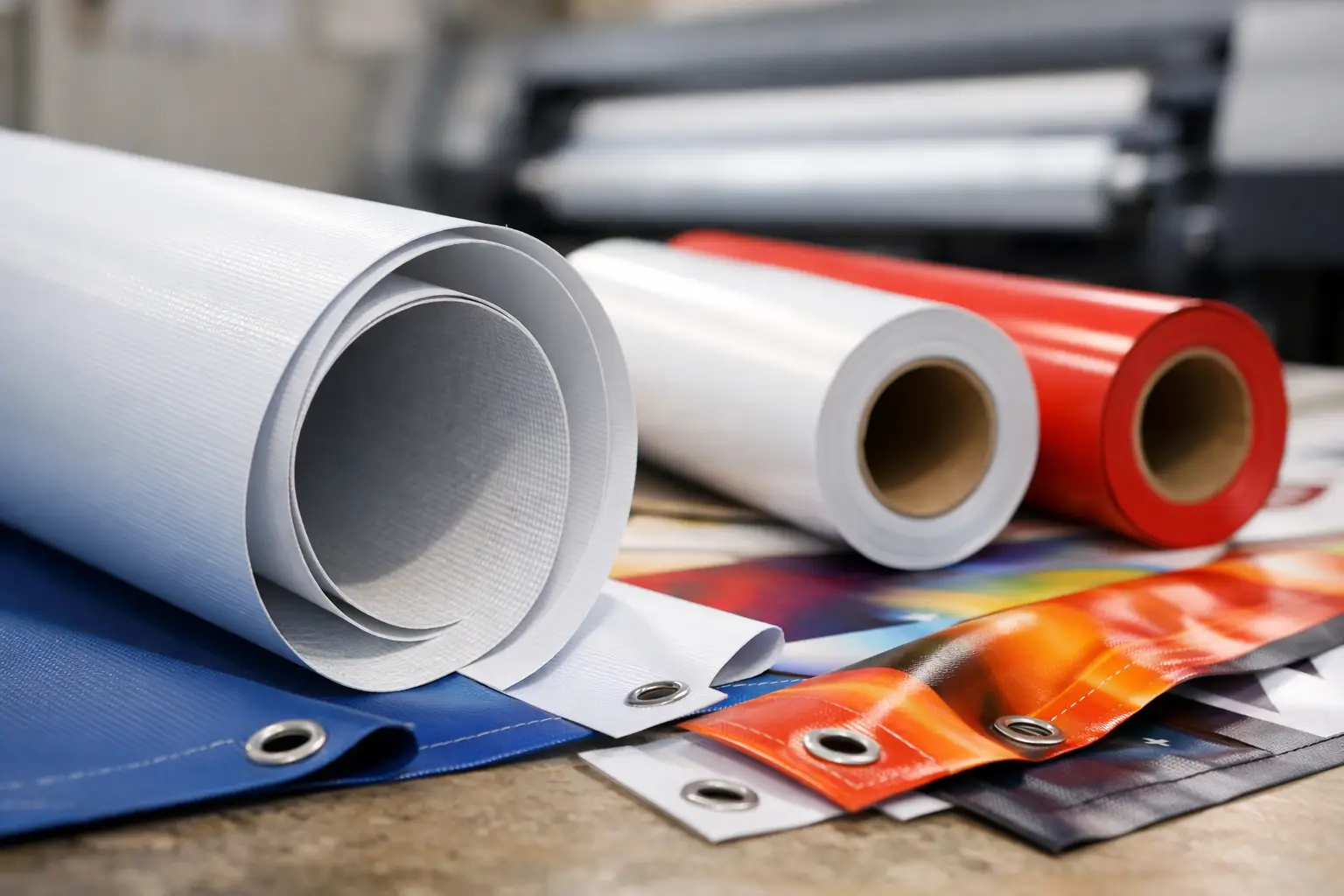
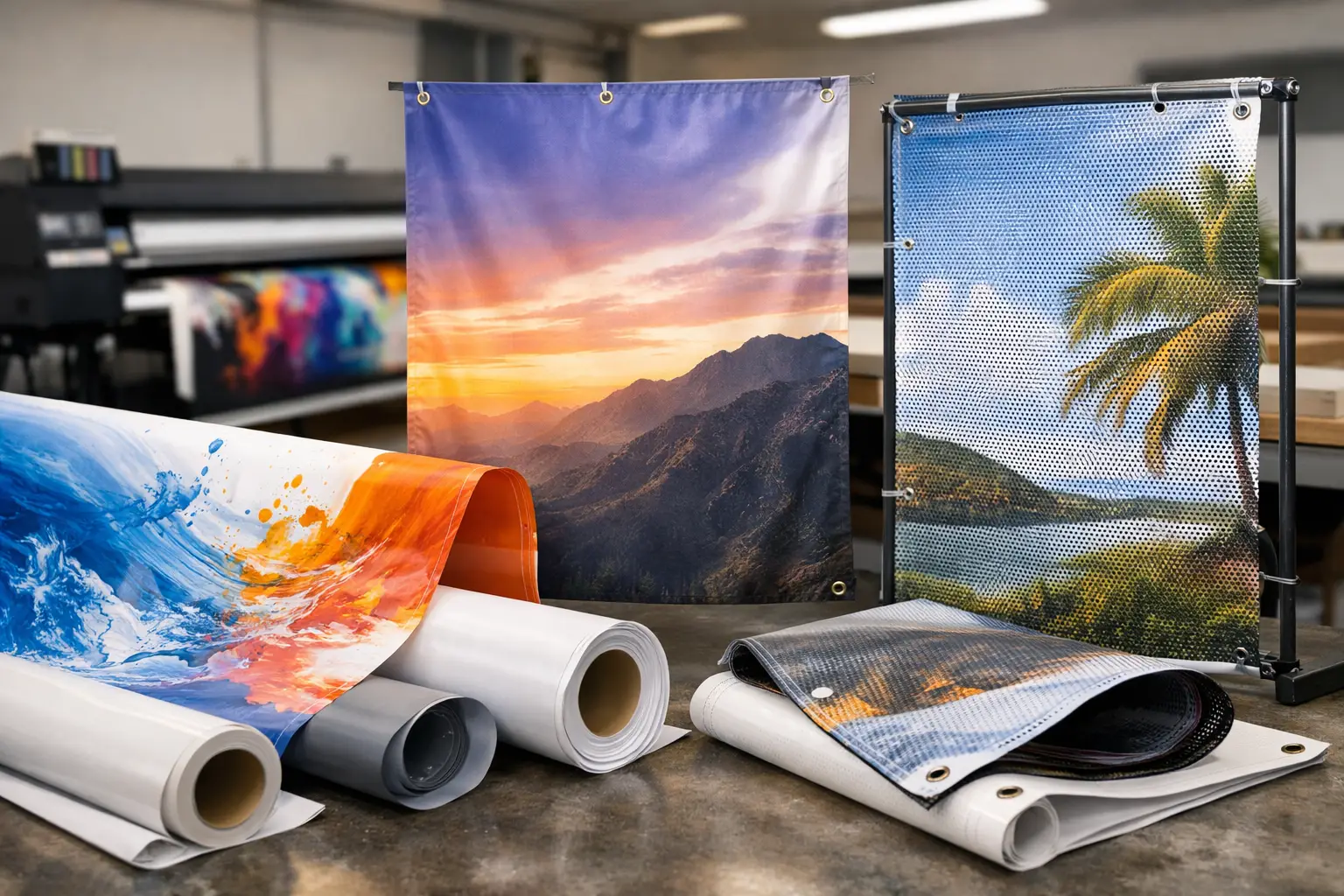
Banner printing uses large-format printers to apply full-colour artwork, text and images to materials such as PVC vinyl, mesh or fabric. The finished banner is then cut to size and prepared for installation, usually with eyelets, hemmed edges, pole pockets or a display stand.
Unlike a standard poster, a banner is made to work at a larger scale and often in more demanding conditions. Outdoor vinyl banners need to cope with rain, sunlight and regular handling. Exhibition banners need to be portable, quick to assemble and smart enough to represent your business in a busy room. The print method and material are chosen around those practical demands.
Most custom banners are printed from digital artwork. This allows you to order one banner for a one-off event or multiple matching banners for a campaign, branch rollout or repeat promotion. It also means colours, logos, QR codes, photographs and campaign messages can be printed together in one design.
How Banner Printing Works
The ordering process is straightforward, but the preparation matters. You select the banner type and dimensions, upload your artwork or provide the details for a design, then the file is checked before printing. Once approved, the banner is printed, finished and dispatched.
Large-format printing is designed to produce strong, vibrant graphics at viewing distance. A passer-by may only have a few seconds to read your banner, so clarity matters more than cramming in every detail. A bold headline, recognisable branding, a clear offer and one action to take will usually outperform a crowded layout.
After printing, the banner receives the finishing needed for its job. Eyelets are metal rings used to attach a banner to fencing, walls or railings. Hemmed edges add strength, especially on larger outdoor banners. Pole pockets allow a banner to slide onto a frame or rail. Roller banners are fitted into a cassette mechanism, so the graphic pulls up for display and retracts for transport.
The Main Types of Printed Banner
The best banner is the one that suits its location. Material choice affects appearance, durability, weight and how the banner behaves in wind.
Vinyl banners for outdoor promotions
PVC vinyl is the familiar choice for shopfront offers, event advertising, market stalls, building sites and fence signage. It has a smooth surface that produces sharp colours and detailed graphics, and it is weatherproof and UV-resistant when printed for outdoor display.
Vinyl is a dependable all-round option for short-term promotions and longer campaigns. It is particularly effective when the banner will be fixed to a solid wall, railings or a sheltered area. For exposed locations, the size, fixing method and expected wind load should be considered before ordering.
Mesh banners for windy sites
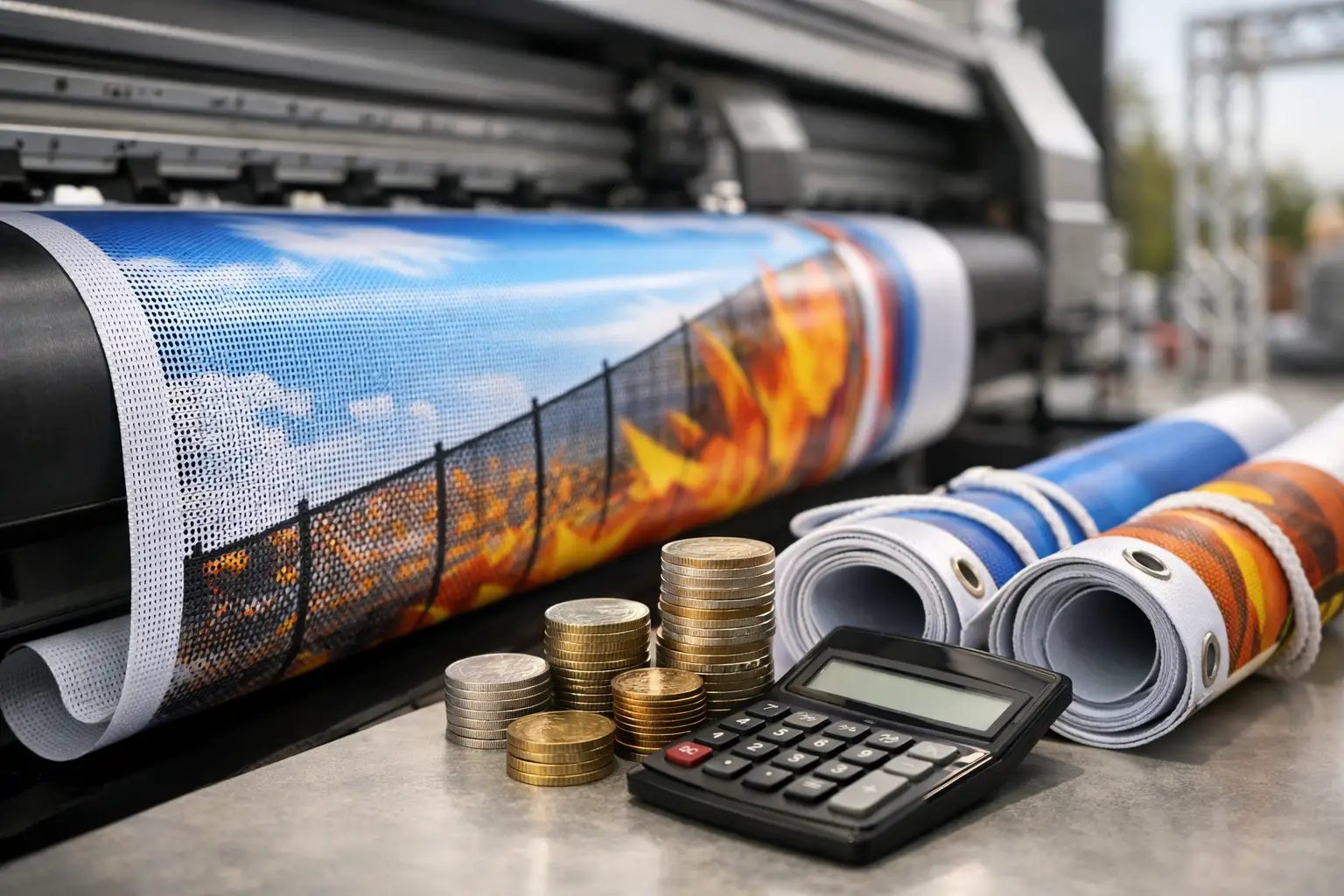
Mesh banners are printed on perforated material. Small holes allow air to pass through, reducing the pressure caused by wind. This makes mesh a practical choice for scaffolding, construction fencing, sports grounds, outdoor events and large perimeter displays.
The trade-off is that mesh does not have quite the same solid finish as standard vinyl when viewed close up. From the normal viewing distance for a large outdoor sign, the image remains clear. Where wind resistance is the priority, it is often the better choice.
Roller banners for exhibitions and interiors
Roller banners are portable, freestanding displays used at exhibitions, reception areas, conferences, retail spaces and presentations. The printed graphic is built into a base cassette and can be set up in minutes with a support pole.
They work best when you need a professional display without drilling, tying or mounting anything to a wall. A roller banner is also easy to carry between venues, making it useful for sales teams, recruitment events and pop-up promotions. It is not intended for exposed outdoor use, where wind can damage the unit or make it unstable.
Backdrops and step-and-repeat displays
Printed backdrops give a larger branded surface for launches, award evenings, photo opportunities, interviews and exhibition stands. They can feature a single campaign graphic or a repeated logo pattern for photographs. The key is to make sure logos are large enough and spaced well, so they remain visible when people stand in front of the display.
Choosing the Right Banner Size
Size should be based on viewing distance and available space, not just the biggest area you can fill. A banner seen from across a car park needs larger text than one placed behind a reception desk. Likewise, a narrow wall may be better served by a tall portrait banner than a wide landscape design.
Start by measuring the fixing area. Allow room around the edges for eyelets, ties and safe installation. If the banner is going on railings or fencing, check where the attachment points will sit. On a construction site or roadside location, make sure the message can be read quickly without relying on small print.
For exhibitions, consider the stand footprint and the flow of visitors. A roller banner should be visible above tables and products, while a backdrop needs to sit comfortably behind the people using the space. If you are running several displays, use consistent colours, fonts and key messages so the campaign looks organised rather than pieced together.
Artwork That Prints Clearly at Large Scale
A banner can only look as good as the artwork supplied. Logos should be high resolution, ideally in a vector format, and photos need enough quality to stay sharp at their printed size. Enlarging a small image from a website can leave it blurred or pixelated on a large banner.
Keep important wording away from the edges. Eyelets, hems and folds can reduce the usable area slightly, while a safe margin helps avoid anything critical being obscured by a fixing. Use high contrast between text and background, particularly for outdoor displays where daylight can reduce the impact of pale colours.
If your banner includes a phone number, web address or QR code, test that it can be read or scanned at the expected distance. QR codes need clear space around them and should not be made too small. For fast-moving audiences, such as drivers or shoppers walking past, one simple call to action is usually enough.
Durability, Weather and Installation
A well-printed banner still needs the right installation. Use suitable ties or fixings through every eyelet, and secure the banner evenly rather than pulling one corner tight. A loose banner can flap, wear at the edges and become harder to read. An over-tight banner can put unnecessary strain on the material and fixings.
Outdoor banners should be checked during long campaigns, especially after strong winds. Mesh material can reduce wind pressure, but it does not remove the need for safe, secure fitting. If a banner is being displayed at height, near a road or on a public-facing site, follow the venue’s rules and any relevant safety requirements.
For temporary indoor use, roller banners and backdrops offer a cleaner option. They are designed for repeated setup, but should be stored dry and packed away carefully after each event. This protects the printed face and keeps the display ready for the next booking.
When Fast Banner Printing Makes a Difference
Deadlines are common in print. A promotion changes, an event date approaches, a site needs new signage or a stand is missing its main display. Fast turnaround is useful only when it still delivers dependable print quality, correct finishing and a realistic delivery schedule.
Ordering early gives more time for artwork checks and amendments, particularly for large or multi-item campaigns. But for urgent requirements, UK-based production can make a meaningful difference. Banner Printing UK supports fast turnaround for customers who need professional, practical display print without unnecessary delays.
Before placing an order, confirm the banner’s purpose, final size, display location and required delivery date. Those four details make it far easier to choose the right material and finish first time. A banner that arrives quickly is valuable, but a banner that fits, reads clearly and performs on site is the one that keeps working for your business.