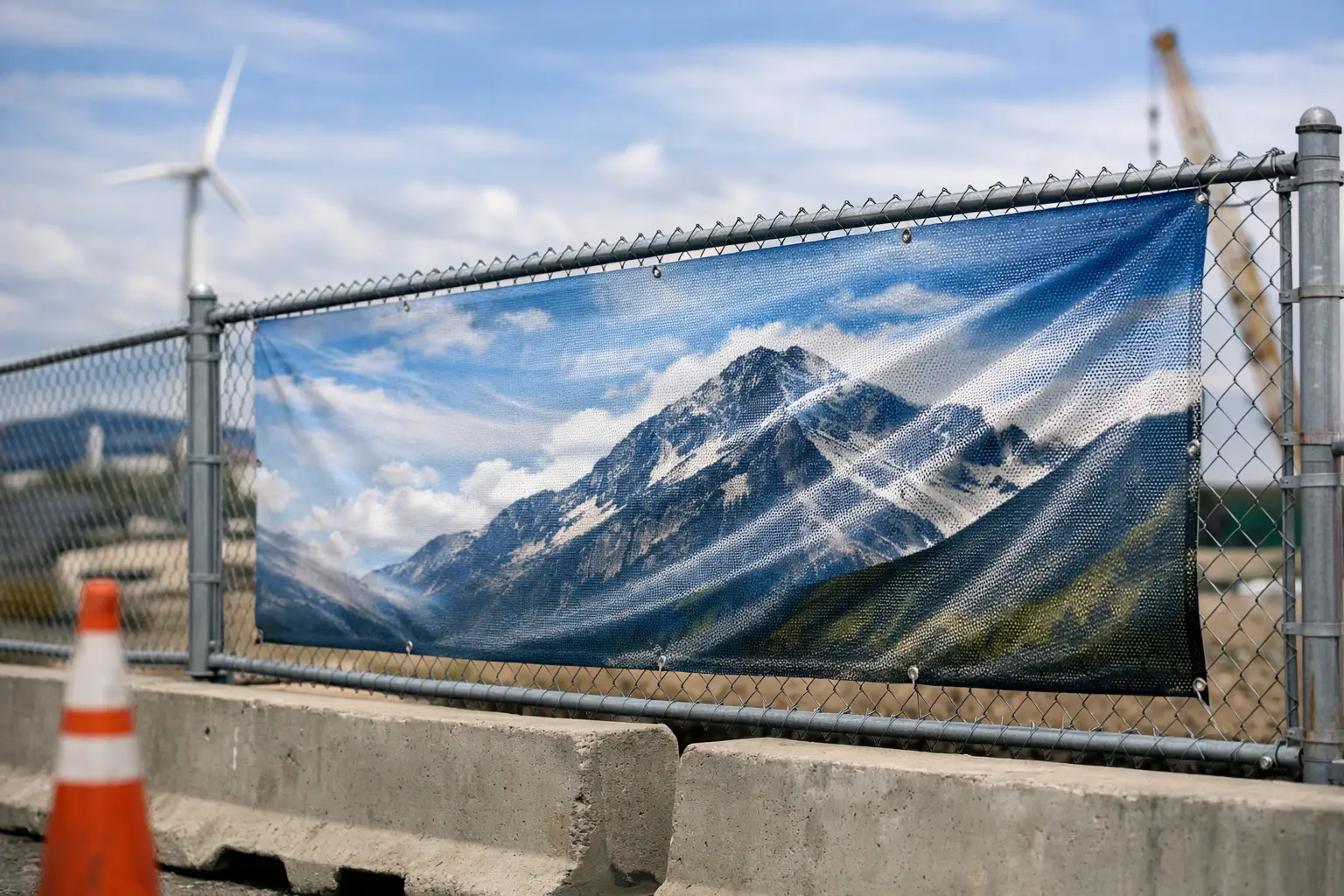
A banner that tears loose halfway through a busy event, or balloons against scaffolding in a strong gust, does not just look poor. It can create a safety issue, delay work and leave your branding unreadable. Mesh sign printing is built for the outdoor locations where solid banner material is likely to catch the wind – giving businesses a practical way to stay visible without creating a sail.
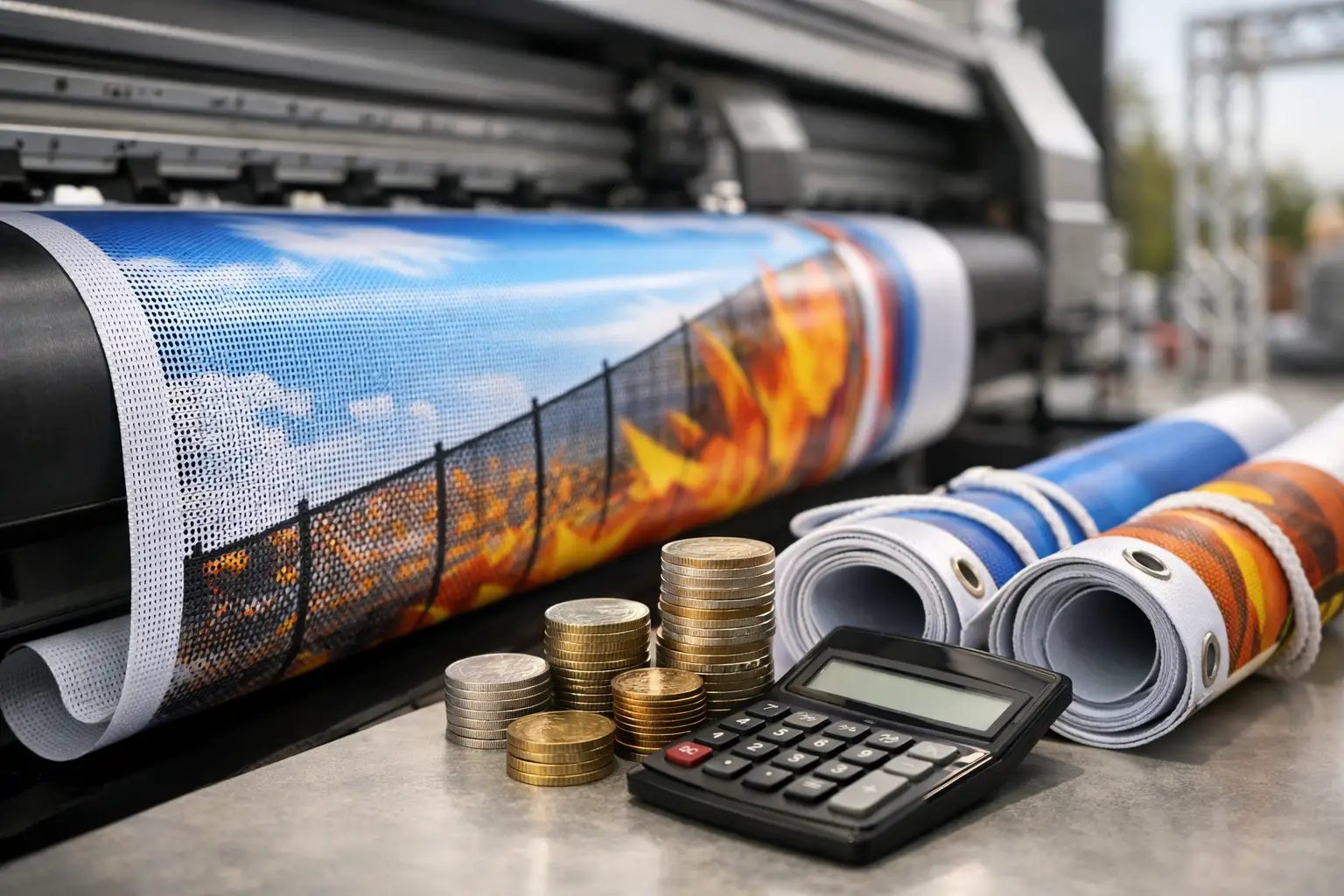
Mesh banners use a perforated PVC material with thousands of small holes across the surface. From a normal viewing distance, your printed message still looks clear and full-colour. Up close, the tiny perforations allow air to pass through, reducing wind load on fencing, railings, scaffold and temporary structures.
For UK businesses working to tight deadlines, the choice is rarely about making signage look elaborate. It is about choosing a format that arrives on time, fits the site and keeps performing in changeable weather.
Why choose mesh sign printing?
The main advantage is wind resistance. A standard solid vinyl banner has a continuous surface, so gusts push directly against it. Mesh material relieves some of that pressure by letting air through. This makes it a strong choice for exposed outdoor positions, particularly long runs of fencing, large-format branding and elevated installations.
That does not mean mesh is automatically the right answer for every outdoor display. It depends on the location. A smaller banner fixed securely to a sheltered brick wall may be better suited to standard PVC vinyl, which provides a more solid, high-impact finish at close range. Mesh comes into its own where wind is a regular factor or where a large banner could otherwise put too much strain on its fixings.
The material is weatherproof and UV-resistant, so it is designed to cope with rain, daylight and the day-to-day reality of a working site. Printed graphics retain their purpose: making a company name, safety message, promotion or event sponsor visible when it matters.
Where mesh banners work best
Mesh signage is a practical fit for many commercial and public-facing settings. The key is to think about exposure, viewing distance and how long the sign needs to stay in place.
Construction sites and scaffold wraps
Construction firms often need site hoarding, perimeter fencing and scaffolding to do more than mark a boundary. Printed mesh banners can display contractor details, development branding, health and safety messages, recruitment information or contact details for available units.
On a scaffold, a solid banner can be heavily affected by wind. Mesh reduces this issue while turning otherwise plain structures into professional branded space. For larger elevations, split artwork across several panels may be easier to handle, install and replace if site access changes.
Heras fencing and temporary perimeters
Heras fencing is common on building projects, festivals, roadworks and outdoor events. It is also highly visible to passing traffic and pedestrians. A run of branded mesh panels makes a temporary boundary look organised while promoting the business behind the work.
For contractors, this can mean consistent site presentation across multiple projects. For event organisers, it can separate operational areas from visitor spaces without losing valuable sponsor or directional messaging. Make sure the finished banner size matches the fence section or planned fixing points rather than relying on an approximate measurement.
Sports grounds, events and outdoor promotions
From local tournaments to open-air markets, mesh banners provide durable branding around pitches, barriers and entry routes. They are especially useful for sponsorship displays that must remain legible throughout a full event, even when the weather changes.
Keep the message simple. A logo, strong headline, web address or clear directional instruction will usually work better than dense copy. People viewing a perimeter banner are often walking, driving or standing at a distance, so the design needs to communicate quickly.
Getting the right specification for the site
A good mesh banner is not only about the printed surface. Size, finishing and installation all affect how well it performs. Ordering the cheapest-looking option without checking these details can lead to a banner that is difficult to fit or unsuitable for the location.
Start with the exact installation area. Measure the usable width and height, then allow for hems, eyelets and the space needed to attach the banner securely. If the banner sits within a fence panel, leave enough clearance so it is not stretched tightly against sharp edges or obstructed by uneven ground.
For a long fence line, consider whether one large banner or several smaller sections makes more sense. One continuous print can create a bold, uninterrupted visual. Smaller banners are easier to transport, fit and swap out as projects develop. On exposed sites, they can also make practical handling simpler during installation.
Hems and eyelets matter
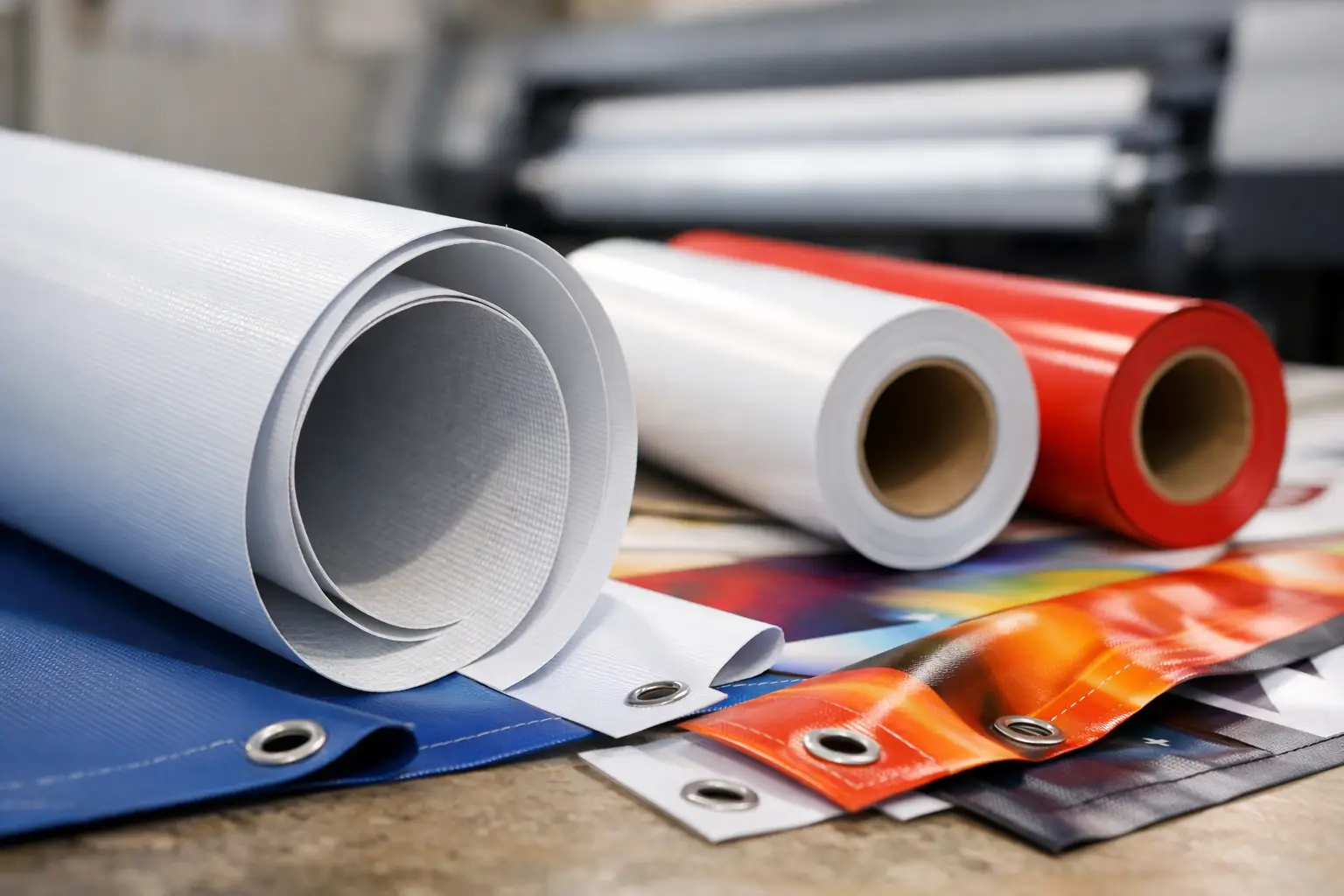
Eyelets are the metal-reinforced holes used to attach a banner with cable ties, bungee cords or rope. Their position should suit the fixing method and the structure behind the banner. Reinforced hems help strengthen the perimeter, particularly on larger signs that will be under regular tension.
Do not pull a mesh banner drum-tight. It should be evenly secured, with enough support around the edges to prevent flapping, but excessive tension can strain the material and eyelets. Use appropriate fixings at regular intervals, and inspect them after severe weather.
Cable ties are quick and economical for short-term applications. Bungee cords allow more movement and can be useful where wind is expected, although they should still be fitted carefully. The best choice depends on the fence, the banner size and how long it will remain in position.
Designing artwork that prints clearly on mesh
Perforations are useful for airflow, but they affect very fine design detail. The result can still look sharp, especially from normal viewing distance, but artwork should be created with the material in mind.
Use high-resolution files and work at the final print proportions wherever possible. A small web image enlarged to banner scale may appear soft or pixelated, regardless of how good the printing process is. Vector logos, supplied as print-ready artwork, are ideal because they retain clean edges at larger sizes.
Bold type, strong contrast and generous spacing produce the clearest result. Fine lines, tiny text and intricate patterns can be less effective on mesh, particularly when viewed from a distance. If a phone number or postcode is essential, make it large enough to be read from the likely viewing point rather than only on screen at close range.
Dark text on a light background, or light text on a dark background, generally provides better impact than similar tones placed together. Brand colours should be used confidently, but legibility comes first. A banner that matches a style guide perfectly but cannot be read from across a car park has missed its job.
Before submitting artwork, check spelling, dates, contact details and any required safety wording. Artwork amendments are far easier before production than after a banner is printed and installed. If your file needs refinement, dealing with it early helps protect a fast turnaround.
Planning for speed without compromising quality
Urgent signage is common. A retail launch date moves forward, a site needs its contractor details before work starts, or an event sponsor confirms late. The best way to protect your deadline is to have measurements and artwork ready before placing the order.
Provide the final banner size, quantity, finishing requirements and a print-ready file from the outset. If the job needs delivery to a site, give a full address, postcode and a contact who can receive it. Construction locations in particular can be difficult for couriers to access when directions are incomplete.
Banner Printing UK produces custom large-format signage in the UK, supporting fast dispatch for businesses that need professional print without unnecessary delays. Where time is tight, choosing a straightforward design and confirming every detail at the order stage keeps production moving.
Keep outdoor signage looking professional
Once installed, mesh banners need very little attention, but a quick check is worthwhile. Look for loose fixings, corners rubbing against metalwork and sections that are repeatedly folding in the wind. Replace damaged cable ties before they fail, and keep the banner clear of sharp edges where possible.
When the campaign or project ends, remove the banner carefully rather than pulling against the eyelets. If it is clean and undamaged, store it dry, rolled rather than tightly folded, ready for future use. For repeat site branding, this can help make the most of your print investment.
The right banner should make an outdoor site look prepared, credible and easy to recognise. Choose mesh where wind exposure demands it, keep the artwork bold, and give the installation the same care as the print itself. That is how a temporary sign continues to deliver a professional impression long after the first day it goes up.