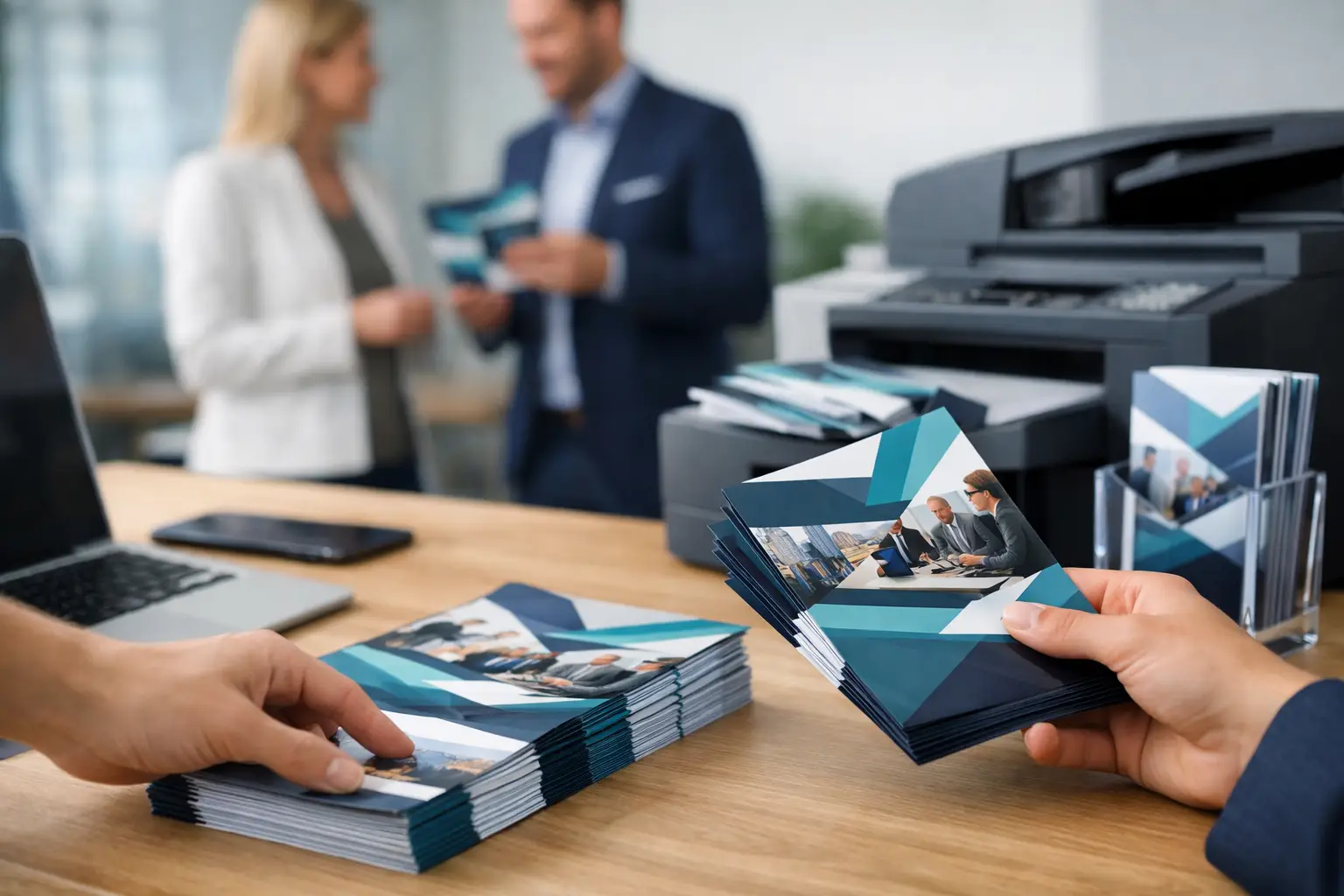
A flyer has seconds to earn attention. It may be picked up at a counter, handed out on a busy high street, included with an order or posted through local doors. That is why business flyer printing UK is not simply about putting a logo on paper. It is about creating a clear, professional piece of marketing that gives people a reason to act.
For local offers, new openings, events and service promotions, flyers remain one of the most direct ways to put your message in front of the right people. The best results come from matching the format, stock, artwork and quantity to the job at hand – then making sure the finished print arrives when you need it.
Why flyers still work for UK businesses
Digital advertising has its place, but a well-planned flyer delivers something a screen cannot: a physical reminder that stays in view. A café customer can take an offer home. A landlord can keep a tradesperson’s details on the fridge. An exhibition visitor can put your flyer in a bag and review it after a busy day.
This matters most when your audience is local or already close to a buying decision. Estate agents promoting a valuation service, gyms launching a membership offer, restaurants advertising delivery, salons filling quiet weekday appointments and tradespeople building recognition in a new postcode can all use flyers to create immediate visibility.
A printed flyer also gives you control over the encounter. There is no competing pop-up, changing algorithm or tiny mobile screen. The headline, image, offer and contact details are all there in one place. However, print only performs when the message is focused. Trying to explain every service you offer in a single design usually weakens the result.
Start with one job for every flyer
Before choosing paper or placing an order, decide exactly what the flyer must achieve. It could be to drive bookings, announce an opening, promote a seasonal offer, collect event registrations or make your company easier to remember. One primary action produces a stronger layout and makes it easier to measure results.
For example, a roofer may use a flyer to promote free roof surveys after stormy weather. The strongest version would lead with that service, show a relevant image, state the area covered and make calling or requesting a quote simple. It does not need a full company history or a long list of unrelated work.
Give the reader a practical next step. This might be a phone number, website address, QR code, discount code or a clear instruction to visit your premises. Make that action prominent, not hidden in a block of small text at the bottom.
Keep the message readable at a glance
Most flyers are scanned before they are read. Your main headline should say what is being offered in plain language. “20% Off Midweek Lunches”, “Free Site Survey” or “Open Day This Saturday” is more useful than a vague slogan.
Use short supporting copy to answer the questions that matter: what is included, where it applies, when the offer ends and how to respond. Strong images can add impact, but only when they support the message. A sharp product photo, finished project or recognisable local setting often works better than generic imagery.
Leave enough clear space around key information. Crowded artwork can look cheaper than it is, particularly when every corner contains a logo, icon or sentence. Professional print starts with professional artwork, and restraint is often what makes the important details stand out.
Choosing the right flyer size and finish
The right flyer is the one people can easily receive, keep and understand. A5 is a popular all-round choice because it gives enough room for an offer, image and contact details without feeling cumbersome. It suits door drops, handouts, menus, promotions and event marketing.
A6 is compact and cost-effective for vouchers, appointment reminders and concise campaigns. It is easy to add to a shopping bag or place on a counter, but the smaller space demands a simpler design. If your message needs a map, timetable, detailed menu or several service packages, A4 may be more practical.
Paper weight affects how your business is perceived. Lighter stock can be suitable for high-volume leaflet drops where budget and distribution are the priority. A thicker stock gives a more substantial feel and is often the better choice for premium services, hospitality, property marketing or event materials.
A gloss finish brings colour and photography to life, making it useful for food, retail products and bright promotional designs. Silk is a versatile middle ground with a smooth, professional look and less glare. Uncoated stock can feel more natural and is useful when customers need to write on the flyer, such as booking forms or service checklists.
There is no single best option. A short-lived price-led campaign may benefit from economical stock and a larger quantity. A high-value appointment or luxury event may justify heavier paper and a more refined finish. The goal is to make a sensible commercial choice, not simply select the most expensive option.
Business flyer printing UK: preparing artwork properly
Avoiding artwork problems is one of the quickest ways to protect your deadline. Supply files at the final print size, ideally as a high-resolution PDF, with images that are sharp enough for print. Artwork built from low-quality web images may look acceptable on screen but appear soft or pixelated once printed.
Use CMYK colour settings where possible. Screen colours are produced with light, while print uses ink, so very bright RGB shades can change when transferred to paper. If a precise brand colour is essential, allow time for checks rather than ordering at the last minute.
Include bleed where required. Bleed is the extra image or background area that extends beyond the trim edge, allowing the flyer to be cut cleanly without unwanted white borders. Keep text, logos and essential details safely inside the trim area too. This prevents important information from sitting too close to the edge.
Always proofread the final artwork carefully. Check telephone numbers, postcodes, dates, offer terms and social handles before approval. A small typo is more costly on 5,000 flyers than it is on a digital advert. Ask someone who has not worked on the design to review it as well – fresh eyes spot errors quickly.
Plan quantity around distribution, not guesswork
Ordering too few flyers can cut a campaign short just as it gains momentum. Ordering far too many can leave you with outdated offers or boxes taking up valuable space. Start with your distribution plan.
If you are targeting a defined area, estimate the number of homes or businesses and add a sensible allowance. For handouts, think about footfall, staffing and campaign duration. A one-day exhibition might need a different quantity from a month-long promotion across several locations.
Track where flyers go. Use separate voucher codes, QR codes or landing page wording for different areas, events or teams. This gives you useful evidence for the next order. You may find that counter cards and bag inserts generate more enquiries than a broad door drop, or that one postcode responds better to a particular offer.
Reorder planning matters too. If your promotion is ongoing, keep the artwork adaptable so dates, pricing and seasonal messages can be refreshed without rebuilding everything. UK-based production is particularly valuable when stock is running low or an event has been confirmed at short notice.
Make flyers part of a wider print campaign
Flyers work harder when people see the same message in more than one place. A shop launch can combine flyers with window posters, stickers and a branded banner outside the entrance. A trade stand can use a roller banner to attract attention, flyers to explain the offer and business cards for contacts who want a direct follow-up.
The design does not need to be identical across every item, but the key elements should match: logo, colours, campaign message and call to action. That consistency makes a small business look established and helps customers recognise you when they see the next piece of marketing.
For urgent promotions, reliable turnaround is often as important as the print itself. Banner Printing UK supports businesses that need clear, high-quality promotional materials produced quickly, whether the requirement is a focused flyer run or a coordinated set of display print for an event.
A flyer does not need to say everything about your business. It needs to make the right person stop, understand the value and take the next step. Keep the offer clear, the artwork sharp and the production schedule realistic, and a simple printed sheet can become one of your most dependable ways to generate local attention.