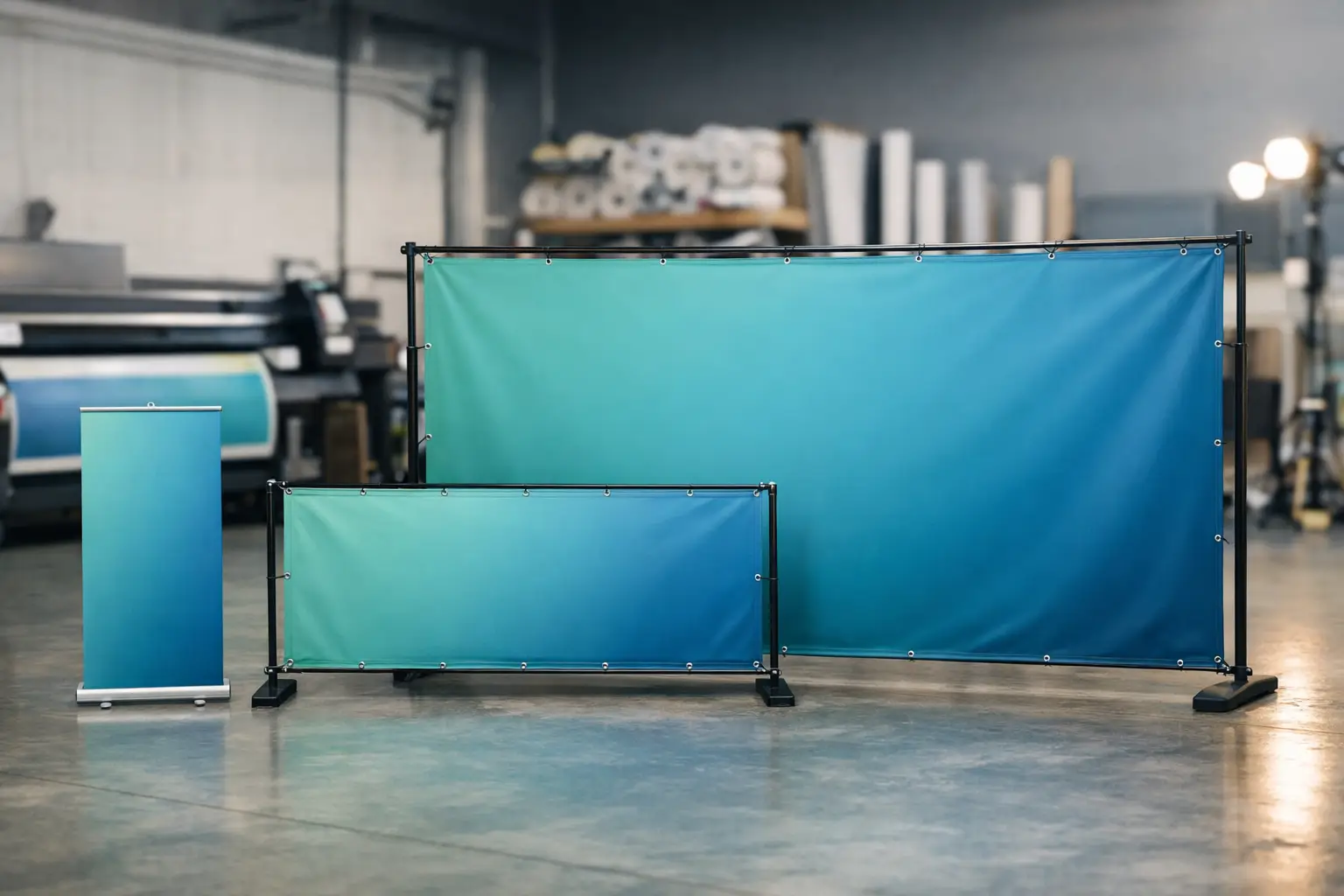
A banner that is too small gets ignored. A banner that is too large can be difficult to fit, transport or read at close range. This banner printing size guide helps you choose dimensions that suit the space, the viewing distance and the job the banner needs to do, whether that is promoting a weekend offer, directing visitors or making a brand visible across a busy site.
The right choice is rarely about picking the biggest possible size. It is about giving your message enough presence to be noticed quickly, while keeping text, logos and calls to action easy to read. Start with where the banner will be displayed, then work back to the size, material and artwork layout.
Start with viewing distance and available space
Before choosing a banner size, measure the usable display area. For a shopfront, that may be the width between windows or above an entrance. For construction fencing, it is the uninterrupted stretch of fence rather than the full perimeter. At an exhibition, check the stand specification and leave clearance for furniture, screens and footfall.
Viewing distance matters just as much. A banner seen from several metres away needs a larger format and fewer words than one positioned beside a counter. As a practical rule, the further away the audience stands, the larger your headline and logo should be. If people need to read a phone number, web address or offer, keep the copy short and give it room to breathe.
Think about the direction people approach from too. A long horizontal banner works well along railings, walls and shopfronts where customers move past the display. A tall portrait banner is often better beside doorways, at event entrances or in narrow spaces where floor-to-ceiling visibility matters.
Banner printing size guide: common dimensions
There is no single best size for every campaign, but a few formats consistently work well for UK businesses and event teams.
Small banners: 1m x 0.5m to 2m x 1m
Small banners are useful where customers are already close by. They suit market stalls, café counters, reception areas, small retail promotions and directional signs. A 2m x 1m banner gives enough room for a logo, short message and simple contact detail without overwhelming a compact space.
Use this range when the banner supports a conversation or purchase decision at close quarters. It is not the right option for advertising across a car park, large forecourt or road-facing fence.
Medium banners: 3m x 1m to 4m x 1m
For many shopfronts, local events and tradespeople, medium-format vinyl banners offer the strongest balance of visibility and practicality. A 3m x 1m banner is a popular choice for promoting services, opening offers, seasonal sales and event information. At 4m wide, it has more impact from across a pavement or venue without becoming difficult to install.
These sizes work best with one clear message. For example: your business name, a service statement, a telephone number and one direct action. Trying to fit a full product list into a 3m banner usually weakens the result.
Large banners: 5m x 1m to 8m x 2m
Large banners are built for distance, scale and high-traffic locations. They are effective on fencing, building frontages, sports grounds, outdoor events and warehouse walls. A 6m x 1m banner can create a strong run along a fence, while a 6m x 2m format has the height needed for bolder branding and larger type.
At this size, installation becomes more important. Make sure there are secure fixing points across the full edge, not only at the corners. A large banner should be tensioned evenly to reduce flapping, creasing and unnecessary strain in windy conditions.
Exhibition and portable display sizes
For indoor events, a roller banner is often a smarter choice than a traditional banner. Common portable formats include 800mm, 850mm and 1000mm wide roller banners, usually around 2m high. They are designed for fast set-up, easy transport and clear messaging in busy exhibition halls, receptions and sales environments.
A wider backdrop is better for photo areas, product launches, presentations and branded stands. Choose the width around the people or products that need to sit in front of it. A backdrop that is only marginally wider than your display can leave awkward gaps in photographs.
Match the material to the location
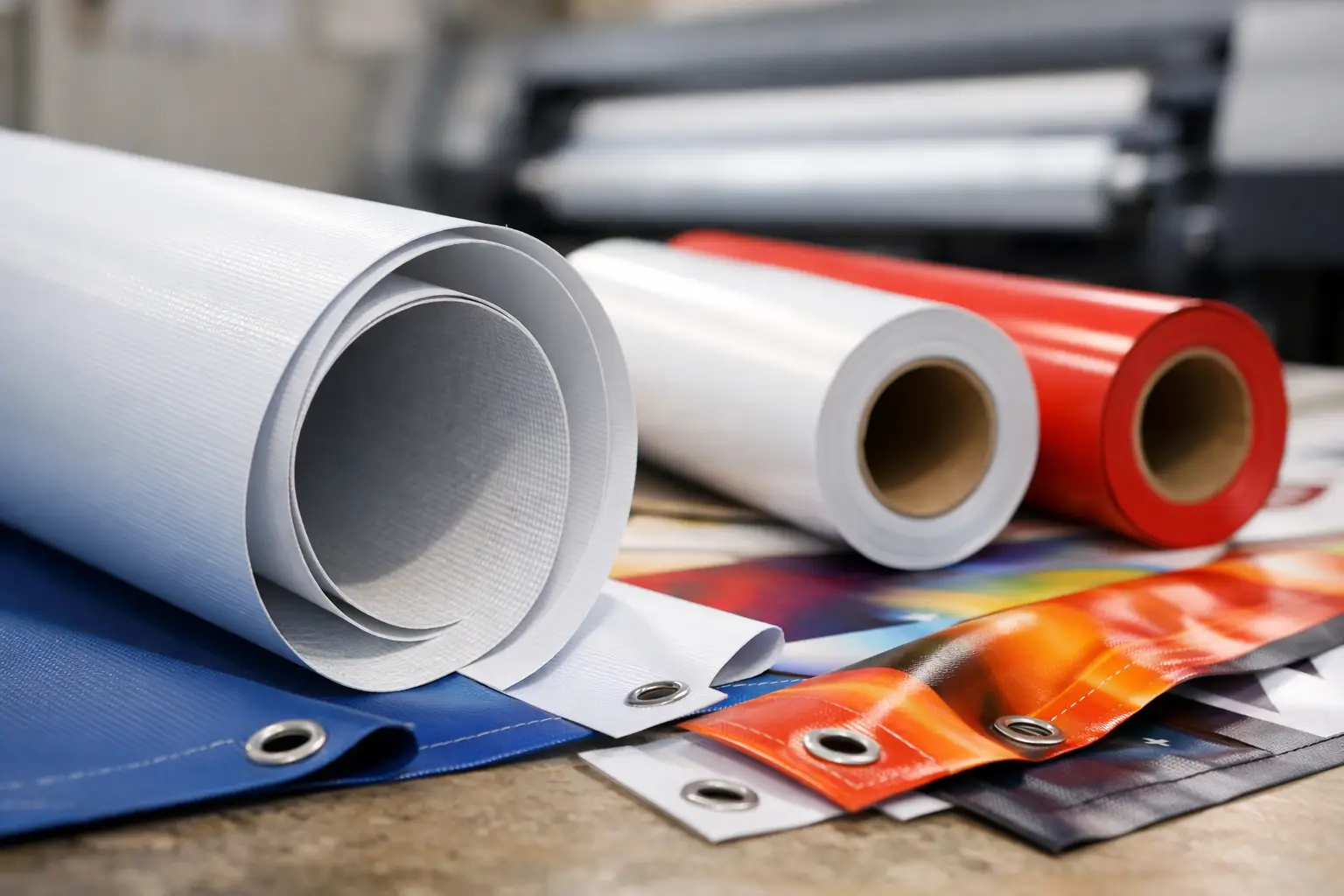
Banner size and material should be chosen together. Standard PVC vinyl is a dependable all-round option for shopfronts, promotions, events and temporary outdoor signage. It provides strong colour reproduction, a solid printed surface and weather-resistant performance.
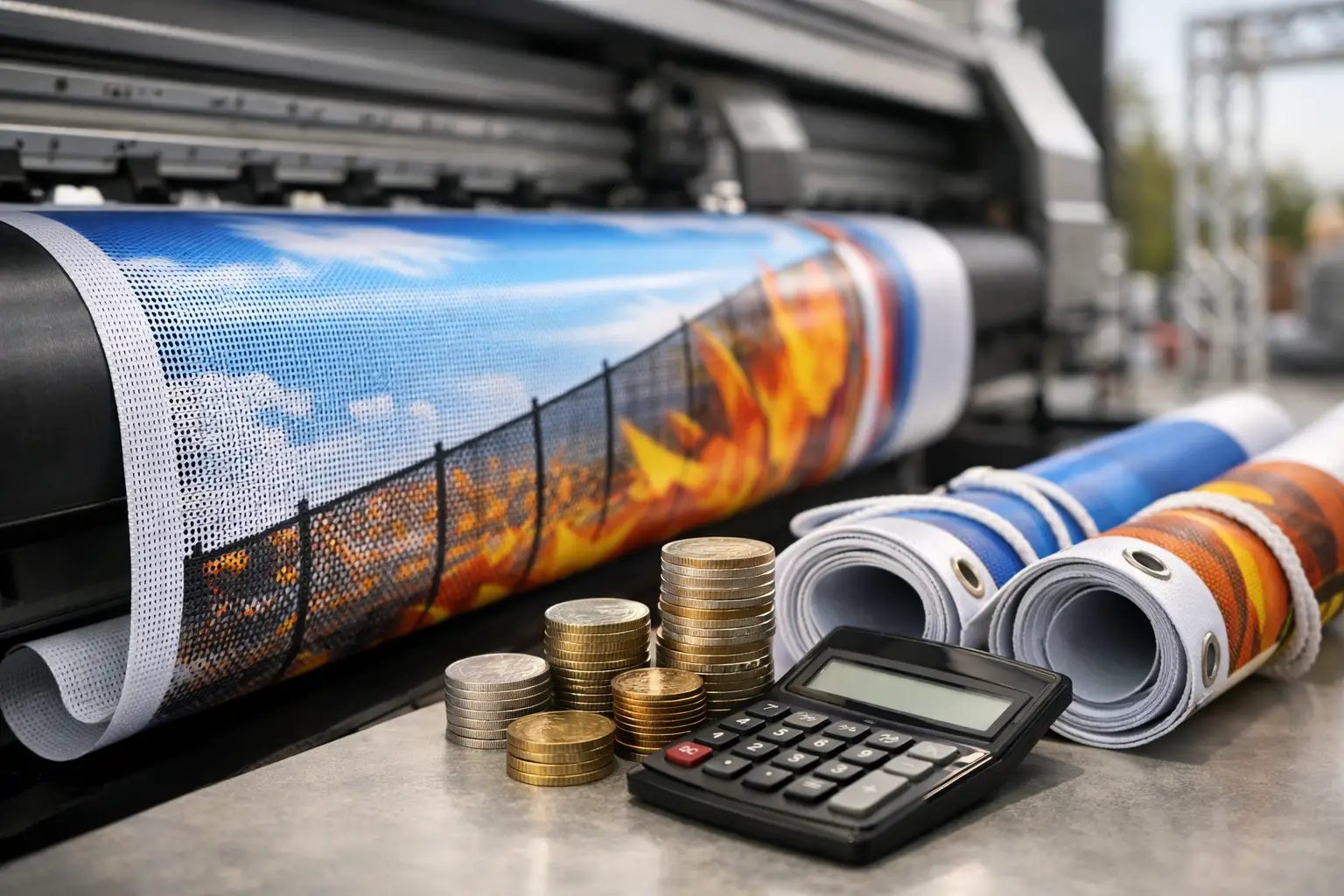
For exposed fencing, scaffold structures and windy sites, mesh banner material is often the more practical choice. Its perforated surface lets air pass through, reducing wind pressure while keeping the printed message visible. The design may appear slightly less solid at very close range, but from normal viewing distance it remains clear and professional.
For indoor displays or repeat-use promotional graphics, the finish, weight and installation method may matter more than weather resistance. A roller banner or fabric-style backdrop can be easier to handle where presentation and portability are the priority.
Keep the artwork proportionate to the banner
A correctly sized banner can still fail if the artwork is designed like a leaflet. Large-format print is read quickly, often while people are walking or driving past. Your layout should make the main message obvious within seconds.
Use one dominant headline, a recognisable logo and a clear action such as “Call Today”, “Book Now” or “Visit Us”. Secondary details should only stay if they help someone take that next step. On a large outdoor banner, a short URL or phone number is usually more effective than several social media handles, a paragraph of copy and multiple small logos.
Avoid placing important text too close to the edges. Banners need a safe area to allow for hems, eyelets and fixing points. Keep logos, small print and phone numbers comfortably inside the edge, particularly when the banner will be tied to railings or fixed under tension.
Image quality matters too. A photograph that looks sharp on a phone screen may not be suitable for a wide banner. Supply artwork at the required scale and resolution wherever possible. If you are unsure, getting the artwork checked before print can prevent blurred images, pixelated logos and last-minute delays.
Choose orientation for the message, not just the wall
Landscape is the familiar choice for most banners because it follows the natural shape of shopfronts, fences and walls. It is ideal for a company name, offer or service message that needs to be read left to right.
Portrait banners are valuable when the display area is narrow or when people approach head-on. They work particularly well for entrance signage, wayfinding, street-side promotions and roller banner displays. A portrait format gives you space to stack a logo, headline, image and contact detail in a clean vertical flow.
Square formats can work for social-media-style campaign graphics, photo opportunities and compact retail displays, but they need careful planning. A square banner gives less room for long text, so it is best used for bold, visual messages rather than detailed information.
Plan for fitting, transport and reuse
The most useful banner is one you can install confidently when the deadline is tight. Measure between fixing points before ordering, especially for railings, gates and temporary fencing. Add a little allowance where needed, but do not order a banner wider than the space if it will need to bend around posts or obstacles.
Eyelets are the standard choice for many vinyl and mesh banners, allowing them to be secured with cable ties, bungee cords or rope. For long outdoor runs, use enough fixings to keep the banner taut along every edge. Leaving large unsupported gaps can cause damage in poor weather.
Also consider how the banner will travel and where it will be stored after the campaign. A very large banner delivers excellent impact, but a smaller repeat-use format may be the more economical option for teams attending several local events. If the banner will return year after year, choose a versatile message rather than a date-specific design.
Make the size work harder for your campaign
A banner is not simply a larger poster. It is a working display tool that needs to earn attention in a specific location. Measure the space, be realistic about viewing distance, select a material that suits the conditions and keep the artwork focused on one clear outcome.
When speed matters, having the size and artwork decided before ordering keeps production moving and helps ensure the finished banner arrives ready to perform. A well-sized, properly fitted banner gives your message the visibility it deserves from the first day it goes up.