

Long before you click the shutter, the background is already telling half the story. The right backdrops and stands for photography aren’t just extra kit; they’re fundamental tools that put you in complete control of your visual narrative. Getting your background right is the first, most crucial step towards creating professional, polished, and powerful images.
Your Foundation for Flawless Photography
It helps to think of your backdrop as the canvas and the stand as your easel. Together, they create a controlled studio environment where your subject can take centre stage. Without them, you’re stuck battling distracting backgrounds, unpredictable lighting, and results that just don't look professional.
This guide will break down the world of backdrops and stands, showing you how to turn them from simple gear into an essential part of your creative process. Understanding what defines a quality photo studio is key, because these elements are at its very heart. A proper system lets you build a scene from scratch, making sure every detail aligns perfectly with your vision.
Building Your Visual World
Whether you're a seasoned pro or just getting started, the power to control your setting is a complete game-changer. A reliable backdrop and stand system gives you the freedom to:
- Eliminate Distractions: Instantly remove a cluttered room or irrelevant background, forcing all the attention onto your subject.
- Maintain Consistency: Achieve a uniform look across a whole photoshoot, which is non-negotiable for product catalogues, corporate headshots, and brand imagery.
- Control Lighting: Create mood and drama by choosing backgrounds that absorb or reflect light exactly how you want them to.
- Boost Professionalism: A clean, intentional background immediately tells clients and viewers that you're serious about quality.
The real magic of a backdrop system is its power to transport your subject anywhere in an instant. You’re no longer just taking a picture in a room; you’re crafting a world, one shot at a time. This control is what separates a quick snapshot from a professional photograph.
In this guide, we'll walk you through everything you need to know. We’ll cover choosing the right material for a food shoot, picking a portable system for a wedding, and everything in between. By the end, you’ll see that mastering your background is the key to unlocking your full creative potential.
Understanding Backdrop Materials and Types
Picking the right backdrop material can seem a bit daunting at first, but it really just boils down to matching the material to the job at hand. It’s a bit like choosing the right knife in the kitchen; you wouldn’t use a bread knife to peel a potato. In the same way, your backdrop material has a massive impact on the texture, mood, and practicality of your final shot.
This decision is more crucial than ever for photographers here in the UK. The demand for professional-grade gear is on the rise, and the market for essentials like backdrops and stands for photography is predicted to grow by about 4.82% each year between 2025 and 2033. It’s clear that getting the basics right is a top priority for creators. You can dig into more of these photography market trends over at reedintelligence.com.
Common Backdrop Materials
Let's cut through the noise and look at the most popular choices. Each has its own personality, making it a better fit for certain types of work.
- Vinyl: Think of vinyl as the workhorse for product and food photography. It's tough, you can wipe it clean in seconds, and its matte finish helps kill annoying glare. It’s an absolute lifesaver for messy shoots with food, drinks, or cosmetics.
- Seamless Paper: This is the undisputed classic for studio portraits. Paper gives you a perfectly smooth, clean, and consistent background, and it comes in every colour imaginable. The main drawback is its delicate nature—it creases and tears easily, so you’ll often find yourself tearing off the dirty end after a shoot.
- Fabric (Muslin and Canvas): When you want to add a bit of character and depth, fabric is your go-to. Muslin is a lightweight cotton that drapes beautifully and often comes in mottled, interesting patterns. Canvas is the heavier, more traditional option, giving portraits a classic, almost painterly feel.
- Tension Fabric: The modern solution for anyone needing a flawless display for events, trade shows, or even a portable studio. This polyester-blend material stretches over a frame like a drum skin, creating a surface that’s completely free of wrinkles. It’s lightweight and brilliant for vibrant, printed graphics.
Choosing a material isn't just a technical decision—it's a creative one. A slick vinyl backdrop gives off a clean, modern vibe, while a textured canvas feels timeless and artistic. Your material sets the stage before you even switch on a single light.
A Quick Look at Backdrop Materials
Choosing the right material comes down to what you're shooting and where. This quick guide breaks down the pros and cons of the most common options to help you decide.
Backdrop Material Comparison Guide
| Material | Key Advantages | Potential Drawbacks | Best For |
|---|---|---|---|
| Vinyl | Extremely durable, wipe-clean, water-resistant, glare-free matte finish. | Can be heavy, may reflect light if not fully matte. | Product photography, food shoots, messy or high-traffic situations. |
| Seamless Paper | Perfectly smooth surface, wide range of colours, non-reflective. | Creases and tears easily, not reusable once soiled. | Studio portraits, headshots, fashion, e-commerce product shots. |
| Fabric | Adds texture and depth, drapes well, reusable, washable. | Prone to wrinkles (needs steaming), can absorb light unevenly. | Artistic portraits, classic headshots, creating a moody atmosphere. |
| Tension Fabric | Completely crease-free, lightweight, portable, great for printing. | Requires a specific frame, can be more expensive initially. | Events, trade shows, photo booths, portable media walls. |
Ultimately, many photographers end up with a collection of different materials. Having a few options on hand means you're always ready for whatever the client or your creative vision demands.
Durability and Maintenance Considerations
Looks are one thing, but how long will your backdrop last? Vinyl is the champion of resilience. Its toughness and moisture resistance are major selling points, sharing some of the same hard-wearing qualities as PVC banner materials. If you’re curious about how different banner materials hold up, our guide on comparing mesh vs PVC banners is a great read.
On the other end of the spectrum, seamless paper is designed to be disposable. It’s built for situations where you need a flawless surface for a single session.
Fabric backdrops like muslin sit comfortably in the middle. They’re reusable and you can pop them in the washing machine, but they will need a good steam or iron to get rid of wrinkles before you shoot. Tension fabric systems are a fantastic long-term investment; the frames are built to last, and the fabric prints can be cleaned, making them ideal for photographers who are always on the move.
Finding the Right Backdrop Stand System
Your beautiful backdrop is only as good as the stand holding it up. Seriously. Think of the stand as the foundation of your entire scene – if it's wobbly, too small, or a pain to set up, your whole creative vision is at risk. A good stand gives you the stability and flexibility you need to just work, without fighting your gear. No one wants a sagging backdrop ruining the perfect shot.
Getting this right is more important than ever. The UK’s photography equipment sector is booming, with the Optical & Photographic Equipment Manufacturing industry valued at a massive £23.3 billion for 2025. This growth signals a clear demand from pros and amateurs alike for reliable kit that helps create controlled, professional-looking scenes.
This simple flowchart can point you in the right direction, matching your photoshoot type to the best backdrop solution.
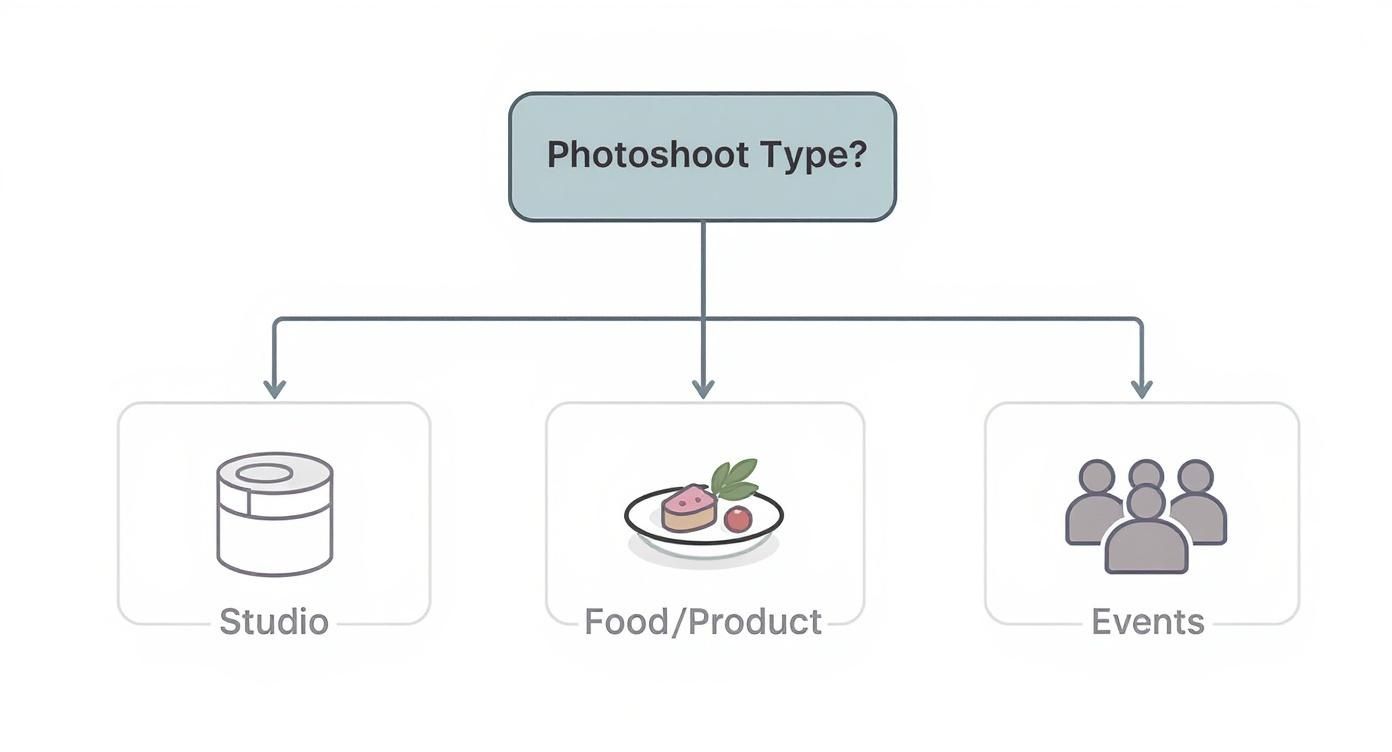
It’s a clear path from what you’re shooting to what you need, taking the guesswork out of your decision.
Comparing Stand Systems
Different shoots and spaces call for different kinds of support. Let's break down the most common options to see what makes sense for you.
-
T-Stands: The ultimate grab-and-go solution. It’s just a single upright pole with a short crossbar, forming a 'T'. They are perfect for small, lightweight materials like pop-ups or smaller fabric backdrops. If you're a mobile photographer doing headshots in tight office spaces, this is your best friend.
-
Background Support Systems: This is the workhorse you see in most studios. It consists of two tripod stands connected by a telescoping crossbar. Its versatility is its superpower—it can hold everything from wide paper rolls to heavy vinyl backdrops. The adjustable height and width make it ideal for anything from a single portrait to small group photos.
-
Wall-Mounted Systems: If you have a dedicated studio, this is the dream setup. These systems bolt directly to your wall and often use a chain-pulley system to quickly raise and lower multiple backdrops. It saves a ton of floor space and lets you switch between backgrounds in seconds.
A stand system isn’t just a piece of metal holding fabric up; it’s an efficiency tool. The right one melts into the background of your workflow, letting you focus on being creative. The wrong one is a constant, frustrating distraction.
When you're making your choice, always double-check the maximum weight and width your stand can handle. You can check out the different backdrop banner stands available to see how modern systems strike a great balance between portability and strength. This ensures you’re not just buying for today, but investing in a system that can grow with you as your projects get bigger and more ambitious.
Matching Your Setup to the Photoshoot
Knowing your materials and stands is one thing, but the real artistry is in pairing them perfectly for the job at hand. The ideal combination of backdrops and stands for photography changes dramatically depending on where you are and what you're shooting. This practical, use-case approach helps you build a versatile kit that’s always ready for action.
The demand for high-quality visuals has never been higher. In fact, the UK's professional photography market was valued at a staggering £1.9 billion in 2025, with commercial photography taking the largest slice at £650 million. This just goes to show how vital the right equipment is for creating compelling content that grabs attention in marketing and e-commerce.
For the Permanent Studio
If you’re lucky enough to have a dedicated studio space, your setup should scream efficiency and variety, not portability. This is where a wall-mounted system truly comes into its own. It frees up precious floor space and lets you switch between multiple wide paper or vinyl rolls in seconds with a simple chain drive.
- Backdrop Choice: Go big. Wide (2.7m or wider) seamless paper or heavy-duty vinyl are your best friends here. They provide a clean, flawless surface for everything from full-body portraits to polished product shots.
- Stand System: A permanent wall-mounted system is the smartest investment you can make for a busy studio. It's all about convenience.
For the Mobile Event Photographer
When you’re constantly on the move, portability is king. Your gear needs to be lightweight, lightning-fast to assemble, and compact enough to squeeze into a car. Fiddling with a complex setup or a sagging backdrop just won’t fly at a busy wedding or a slick corporate function.
A tension fabric wall is a brilliant solution for the road. It packs down incredibly small but stretches over a frame to create a perfectly smooth, professional surface that’s ideal for photo booths or media walls. Pair this with a lightweight yet sturdy background support system, and you’re golden. For more inspiration, check out our detailed guide on event backdrop banners.
Specialised Setups for Other Scenarios
Different environments throw unique challenges your way, and you need the right tools to tackle them.
-
Trade Show Booths: Here, your backdrop isn’t just a background—it’s a core part of your brand’s first impression. A tension fabric wall or a pop-up display with crisp, high-quality graphics is non-negotiable. These systems are designed for rapid setup and create that polished, professional look that draws visitors in.
-
Outdoor Portraits: Out in the wild, wind is your number one enemy. A heavy stand weighted down with sandbags is an absolute must for stability. Instead of a massive, sail-like backdrop that will catch every gust, consider using a smaller, collapsible pop-up background that one person can easily manage.
Your kit should be a direct reflection of the work you do most often. A studio photographer's setup would be a nightmare for an event shooter, and vice versa. Optimise for your primary environment, and you’ll work faster and more effectively.
And for those one-off large productions, it's worth exploring local event backdrops to hire. This can give you access to specialised sizes and styles without the long-term investment.
Setup and Care to Make Your Gear Last
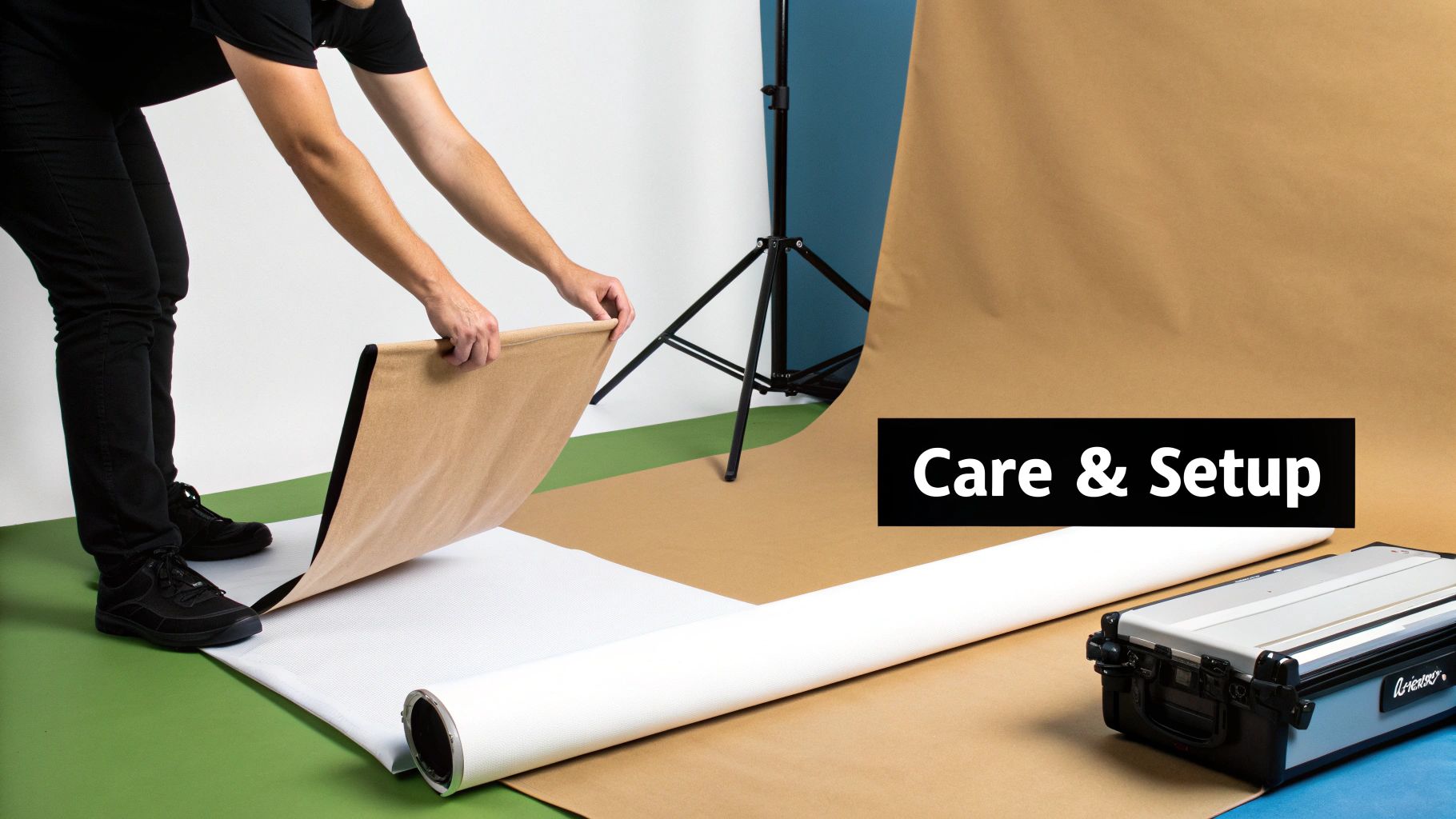
Buying quality backdrops and stands for photography is a great start, but how you treat your kit day-to-day is what really determines its lifespan. A bit of proper setup and careful maintenance protects your investment, ensuring your gear stays reliable and professional-looking for years.
Think of it like owning a car. You wouldn't skip an oil change, would you? A little attention now prevents much bigger headaches later on, like a wobbly stand mid-shoot or a backdrop with permanent creases.
A Smooth and Safe Setup
Getting your stand and backdrop up correctly isn't just about looking professional; it's about preventing accidents and damage. Always build a stable base before you start adding any weight.
- Position the Stands: Open the tripod legs nice and wide to create a low centre of gravity. Place them at the right width for your backdrop, and don't be shy about using sandbags on the legs for extra stability—especially with heavy backdrops or in busy areas.
- Attach the Crossbar: Assemble your crossbar and securely place it onto the spigots at the top of the stands. Double-check that it's locked firmly in place.
- Mount the Backdrop: Carefully slide your backdrop onto the crossbar. For those heavy rolls of seamless paper or vinyl, this is definitely a two-person job. The last thing you want is to drop and dent the material before you've even taken a shot.
Wrinkles are the enemy of a clean, professional shot. For fabric backdrops, a handheld steamer is your best friend. A quick steam before a shoot will give you that perfectly smooth surface. If you've got stubborn creases in your paper, try gently rolling it in the opposite direction to flatten them out.
Long-Term Care and Storage
How you pack away your equipment is just as crucial as how you use it. Improper storage is the fastest route to ruining expensive backdrops and weakening your stands.
A few good habits can make all the difference.
- Cleaning Your Backdrops: Always check the manufacturer’s instructions first. Vinyl can usually be wiped clean with a damp cloth and some mild soap. Most fabric backdrops are machine washable on a gentle cycle, but always confirm before you throw them in.
- Storing Your Backdrops: Seamless paper and vinyl should always be stored upright in their original tubes. This prevents flat spots, sagging, and warping. Loosely fold fabric backdrops to minimise those deep-set wrinkles that are a pain to get out.
- Checking Your Stands: Give your stands a quick inspection now and then. Look for loose knobs, worn-out parts, or any signs of stress. A quick tighten here and there keeps the whole system secure and ready for your next photoshoot.
Common Questions About Backdrops and Stands
Even the most seasoned photographers run into little snags. Here are a few of the most common questions we get about backdrops and stands for photography, with practical answers to help you master your setup.
How Do I Light My Backdrop Properly to Avoid Shadows?
The secret to a shadow-free backdrop is giving it its own light source, completely separate from the light on your subject. It sounds simple, but it makes all the difference.
Position one or two lights aimed exclusively at the backdrop. This creates an even wash that completely erases any shadows your subject might be casting. For that classic, pure white background look, a great trick is to make your backdrop lights one to two stops brighter than your main subject light. Using flags or grids will help stop that light from spilling back onto your subject, keeping everything crisp and professional.
What Is the Best Way to Transport a Large Backdrop?
Getting your gear from A to B is half the battle, especially with large backdrops. The best method really comes down to the material you’re working with.
- Fabric: The good news is you can fold it. The catch? You’ll absolutely want to pack a portable steamer to get those inevitable creases out once you're on site.
- Paper Rolls: These are notoriously easy to damage. Always transport them in their original cardboard tube or, even better, a hardshell case. One dent can ruin the whole roll.
- Collapsible Pop-ups: For ultimate grab-and-go convenience, you can't beat these. They fold down into a surprisingly small bag, making them a breeze to carry.
A professional backdrop is a fantastic way to improve your video presence for calls or streaming. A non-reflective, matte-finish backdrop works best to avoid glare. A width of around 1.5m is usually sufficient for a single person at a desk.
How Do I Choose the Right Size Backdrop?
The right size is all about what you're shooting. For tight headshots or small product photography, a backdrop around 1.5m x 2m is usually plenty.
Once you move to full-body portraits, you'll need to go bigger. A 2.7m wide roll is a studio staple, giving you enough room to create that seamless 'floor sweep' where the backdrop curves from the wall onto the floor. If you're shooting groups of people or large items like furniture, think even bigger—at least 3m wide to give yourself enough breathing room on the sides.
Ready to create a flawless, professional setting for your next project? Banner Printing Ltd offers a wide range of high-quality, customisable backdrops and sturdy stand systems perfect for any shoot. Explore our collection and find your ideal solution today.


