

Banners for display are one of the most powerful and cost-effective ways to get your message seen. Think of them as your silent salesperson, working around the clock at events, on high streets, or inside your shop.
Choosing the right one—from rugged, weatherproof vinyl banners to sleek, portable roller banners—is the absolute key to making sure your brand makes an impact and that your investment pays off.
Choosing the Right Banner for Your Message
A banner isn't just a piece of printed material; it's a strategic tool. It’s your brand’s big announcement at a festival, a critical safety notice on a construction site, or the professional backdrop that makes your trade show stand look the part. With so many options out there, it can feel a bit daunting, but it all boils down to understanding a few core differences.
The very first question to ask is: where will it live? Will your banner be indoors, shielded from the elements, or will it be outside, battling rain and wind? Answering this one question immediately narrows down your choices. A lightweight fabric banner might look stunning in a reception area but would be completely shredded after a week outdoors.
Matching the Banner to the Job
To make things even simpler, let's match the banner type to its intended job. A portable roller banner is the perfect companion for a business that's always on the move at exhibitions, as it can be set up in seconds. On the other hand, a huge mesh banner is specifically engineered for windy spots like construction site fences. Its tiny perforations let the wind pass straight through, stopping it from turning into a giant, flapping sail.
This decision-tree flowchart is a great way to visualise which banner is best based on where and how you’ll use it.
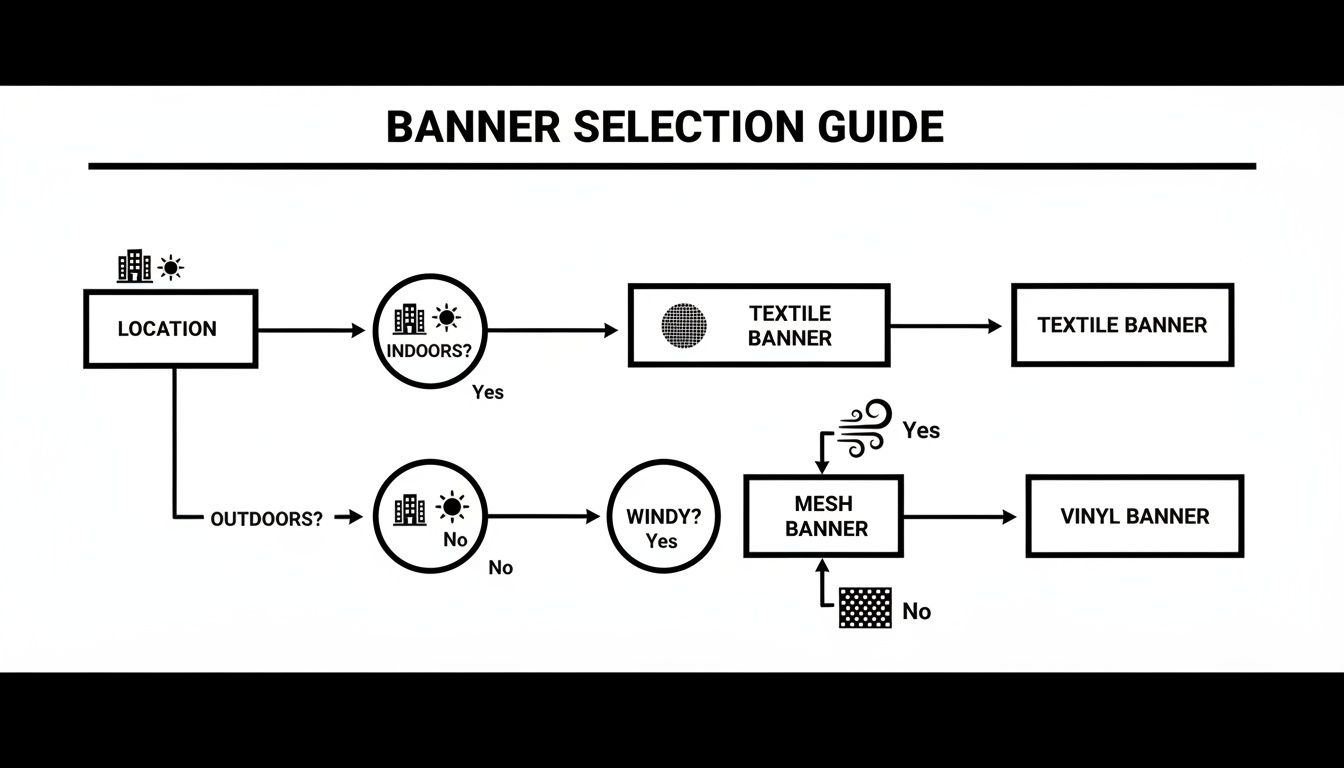
As the flowchart shows, your location and the local wind conditions are the biggest factors guiding you toward the right material.
The core principle is simple: the right banner in the right place delivers results. A mismatched banner not only looks unprofessional but can also fail prematurely, wasting your budget and missing your audience. Getting this initial choice correct is the most important step.
The growing demand for specialised banners for display reflects a booming market. In fact, the UK custom printing sector generated a massive £1.56 billion in 2023 and is on track to hit over £3.3 billion by 2030. This growth is all down to the need for versatile, high-impact visuals for events, retail, and industry.
Once you’ve locked in the right type of banner, the next hurdle is getting the artwork spot-on. To sidestep the common design mistakes we see all the time, check out our practical guide on how to design a banner for flawless results.
Quick Guide to Banner Types and Their Best Uses
To help you get started, we've put together a quick comparison of the most common banner types. This table breaks down what each one is best for, so you can find your perfect match in seconds.
| Banner Type | Primary Use Case | Key Benefit | Material |
|---|---|---|---|
| Vinyl Banners | Outdoor advertising, events, promotions | Weatherproof, durable, cost-effective | Heavy-duty PVC |
| Mesh Banners | Fences, scaffolding, windy locations | Wind-permeable, tear-resistant | Perforated PVC |
| Roller Banners | Exhibitions, trade shows, indoor displays | Portable, quick setup, reusable | Scuff-resistant vinyl/fabric |
| Pop-Up Banners | Media walls, photo backdrops, events | Large impact, easy assembly | Stretch fabric, aluminium frame |
| Backdrop Banners | Stage backgrounds, press conferences | Professional, non-reflective finish | Polyester fabric, vinyl |
Think of this table as your starting point. Each banner has a job it was born to do, and matching it correctly ensures your message is seen loud and clear, every single time.
A Practical Look at Different Banner Types
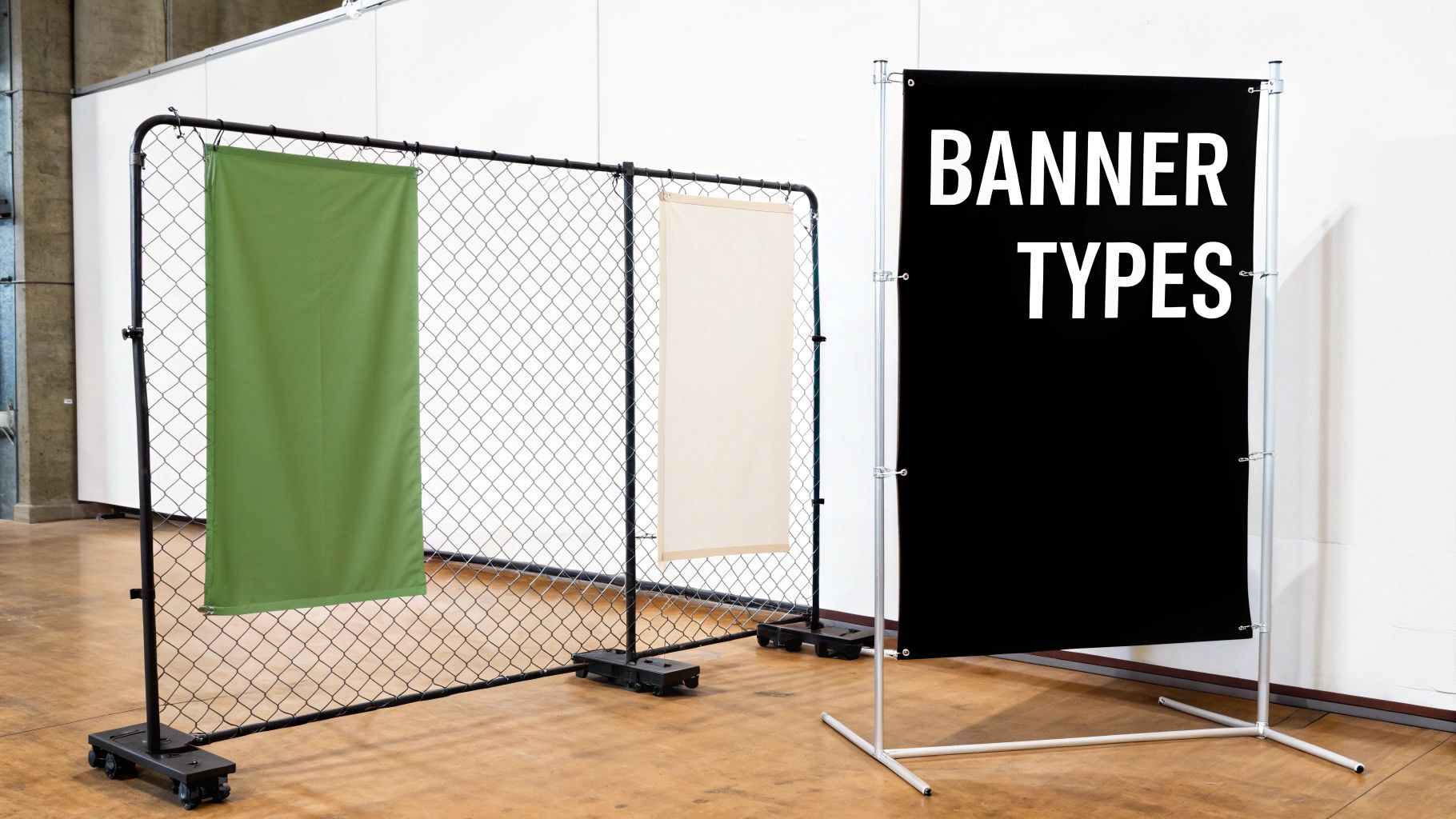
Choosing the right type of banners for display isn't just about picking a name from a list; it's about understanding the job it needs to do. You wouldn't use a screwdriver to hammer in a nail, and the same logic applies here. Each banner is engineered for a specific environment and a particular goal.
Let's start with the one you see everywhere, from high street scaffolding to local festival fences: the classic vinyl banner. This is your all-weather workhorse, built from tough PVC to handle whatever the British weather throws at it. It's the go-to for long-term promotions where durability is key.
But what happens when you put that solid sheet of vinyl in a really exposed spot, like a windy promenade or a high fence? It can turn into a giant sail, putting huge strain on its fixings. That's precisely where its clever cousin, the mesh banner, steps in.
The Wind Taming Champion: Mesh Banners
Mesh banners are the undisputed champions of windy locations. The material is full of thousands of tiny holes, which lets the wind pass straight through instead of fighting against it. This simple feature drastically reduces the load on the banner and whatever it's attached to.
This makes them the only sensible choice for exposed fences, bridges, and large building wraps where safety is non-negotiable. While the perforations mean the print is a touch less dense up close, from a distance, the visual pop is nearly identical to solid vinyl. Our guide on outdoor banner options explained dives deeper into this choice if you're weighing up the options.
The Portable Professional: Roller Banners
When you move indoors, the game changes entirely. For trade shows, networking events, or even just your office reception, the roller banner is the ultimate portable professional. Tucked away inside a spring-loaded base, it can be pulled up and ready to go in under a minute, creating an instant, polished display.
Its tall, narrow format is perfect for grabbing attention and sharing key info in crowded spaces. Once the event is done, it zips back into its case, protected and ready for the next gig.
A roller banner is basically a self-contained marketing kit. Its real value is in its reusability and lightning-fast setup, making it an absolute must-have for any business on the event circuit.
The Instant Event Maker: Pop-Up Displays
Need to make a much bigger splash? The pop-up display is your instant event-maker. These are large, collapsible frames that a single, seamless fabric graphic stretches over. They’re fantastic for creating an immersive backdrop for photo walls, press events, or for marking out your territory at an exhibition.
While they're a bit bigger to carry than a roller banner, the sheer scale creates an impact that nothing else can. It’s the difference between having a sign and creating a fully branded environment. And when thinking about maximum visibility, it's always interesting to look at the enduring impact of old-school ad formats like billboards for inspiration.
Selecting the Best Materials and Finishes
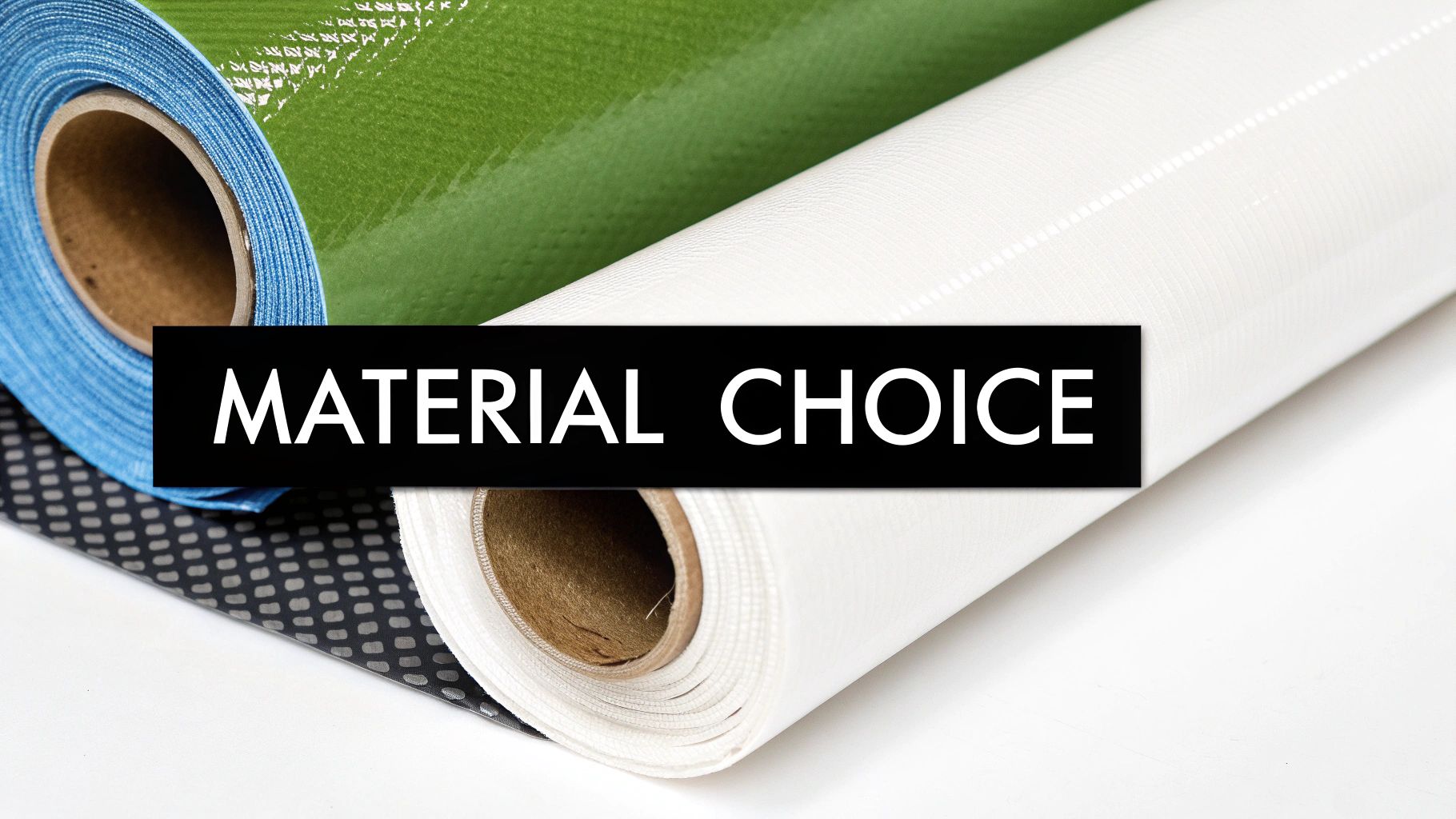
The material your banner is made from is what separates a one-day wonder from a long-term marketing asset. Picking the right foundation ensures your message not only looks sharp but also holds up against its environment, whether that’s a packed indoor exhibition or a rainy British high street.
Think of it like choosing the right coat for the weather. For a harsh winter storm, you need a heavy-duty, waterproof jacket. For a blustery day, a lightweight windbreaker does the job better. Banners are exactly the same—different materials and finishes are engineered for specific tasks.
Standard PVC vs Eco-Friendly Alternatives
For years, the go-to workhorse of the banner world has been PVC (polyvinyl chloride). It’s tough, completely waterproof, and takes ink beautifully, which explains its popularity. But as businesses rightly become more environmentally conscious, modern PVC-free options are quickly gaining ground.
These eco-friendly materials are designed to give you brilliant print quality and solid durability without the environmental baggage of traditional PVC. They are often lighter, easier to recycle, and making the switch can be a great way to reinforce your brand’s green credentials. Our guide to vinyl banner printing in the UK dives deeper into why this classic material is still so reliable for many projects.
The demand for high-quality banners for display is a huge driver of the large-format printing sector. In the UK, the digital printing segment alone is valued at a massive £1.4 billion, fuelled by the need for quick, custom jobs for everything from trade shows to construction sites, as highlighted in this large format printing industry analysis.
Understanding Material Weight and Finishes
When you’re browsing banner options, you’ll often see the material weight listed in gsm (grams per square metre). It’s simply a measure of the material's density and thickness.
- Lighter weight (e.g., 300-400gsm): Great for indoor banners or very short-term outdoor use where it won't face much strain.
- Standard weight (e.g., 510gsm): This is the industry standard for durable outdoor vinyl banners, hitting the sweet spot between strength and flexibility.
- Heavier weight (e.g., 600+ gsm): This is the heavy-duty stuff, reserved for applications where you need maximum tear resistance against serious stress.
But heavier isn't automatically better. A super-heavy banner can be a real pain to hang and might put too much strain on its fixings. The finish is just as important. A matte finish is brilliant for reducing glare under bright lights, making it perfect for photo backdrops and indoor displays. On the other hand, a gloss finish can make your colours pop with vibrancy, which is fantastic for grabbing attention outdoors.
For any banner facing the famously unpredictable UK weather, two features are an absolute must: reinforced hems and rust-proof eyelets. A reinforced hem is like a double-stitched seam on a pair of jeans—it stops the edges from fraying and tearing under wind pressure. Rust-proof eyelets are just as crucial, ensuring that a downpour won’t leave ugly rust stains streaking down your design.
Getting Sizing and Mounting Right the First Time
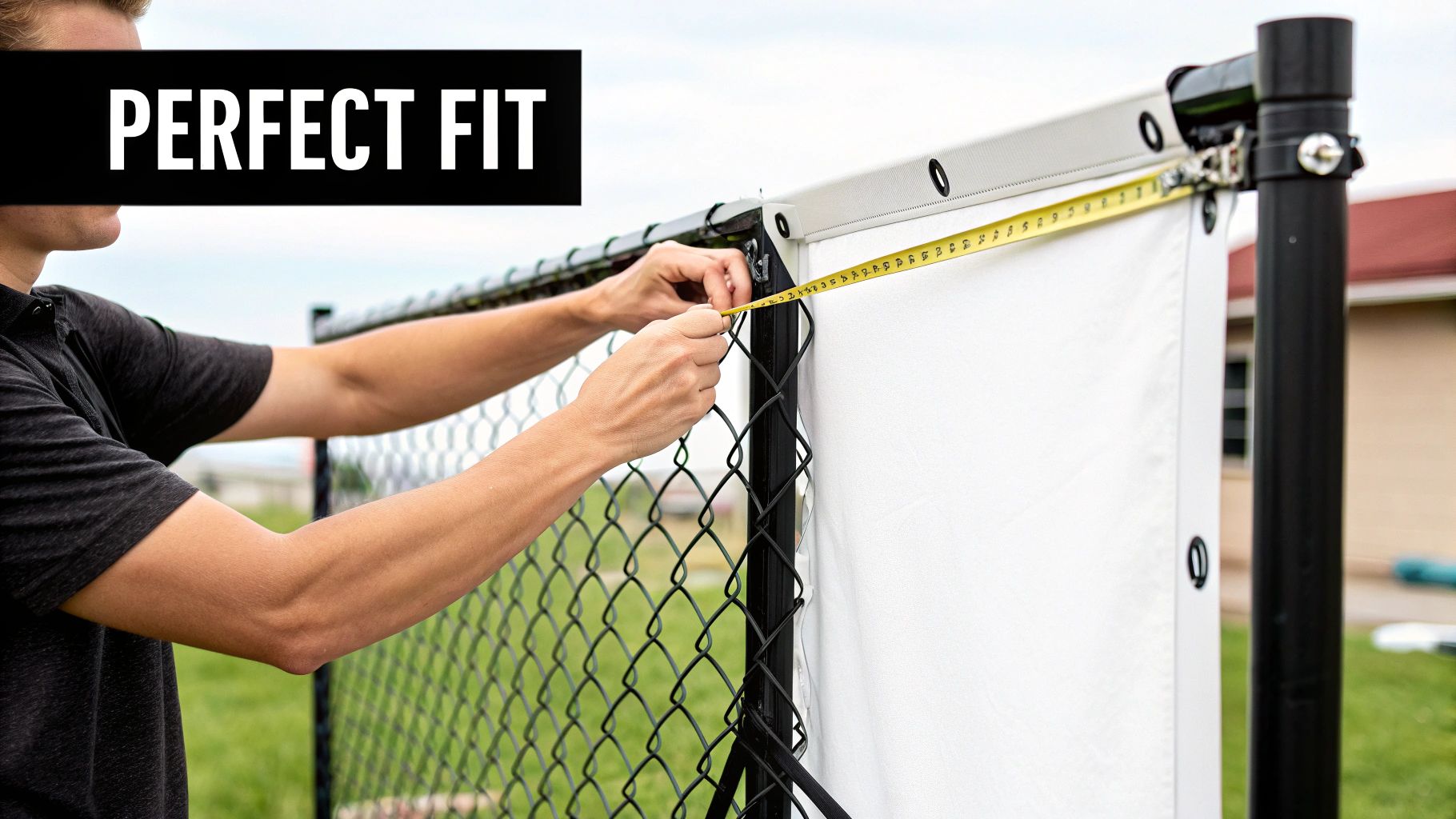
A brilliantly designed banner can fall completely flat if it’s the wrong size or poorly mounted. Honestly, the practical side of things—sizing and installation—is every bit as crucial as the design. Get it wrong, and your investment looks like an awkward afterthought.
Think of it like buying a new sofa. You wouldn’t just guess and hope it fits; you’d measure the wall first. The exact same logic applies to banners for display. A banner that’s too small will get lost in the noise, but one that’s too big looks clumsy and unprofessional.
Measuring Your Space for a Perfect Fit
Before you do anything else, grab a tape measure. You need the exact height and width of the space you’re filling, whether that’s a section of fence, an exhibition stand wall, or the area above your shopfront.
Once you have the total dimensions, knock a little bit off each side. For a banner going on a fence, leaving about 15-30cm of clearance around the edges gives you room for fixings like cable ties or bungee cords. It also stops the banner from looking crammed in and makes installation much, much easier.
For indoor stands, you can often get away with a tighter fit, but always check the venue’s guidelines. Some exhibition centres are notoriously strict about display dimensions.
Always measure twice and order once. It’s a simple rule, but it saves you the costly headache of receiving a beautiful banner that just doesn't fit.
Choosing the Right Mounting Method
How you hang your banner really comes down to where it’s going and what type it is. The most common methods are dead simple but work a treat when you match them to the right job.
- Eyelets and Cable Ties: This is the classic go-to for fixing vinyl and mesh banners to fences, railings, or scaffolding. The eyelets (those metal rings punched into the hem) give you strong, reliable anchor points.
- Pole Pockets: Some banners come with a channel stitched along the top or bottom. This lets you slide a scaffold pole or a weighted bar through, pulling the banner taut for a clean, professional hang. It’s perfect for things like lamp post banners or backdrops.
- Dedicated Stand Systems: Roller banners and pop-up displays are the easy option—they come with their own built-in hardware. They're designed to be assembled in minutes for a flawless finish every time, making them a no-brainer for indoor events and trade shows.
Nailing these practical details ensures your banner isn’t just seen, but displayed securely and professionally, making the most of its impact from the second it goes up.
Preparing Your Artwork for Flawless Printing
Even the most advanced printing press in the world can’t rescue a poor-quality design file. Getting your artwork ready for print is single-handedly the most important step in making sure the vibrant, crisp banner you see on screen is the one that arrives at your door.
Think of your design file as the architectural blueprint for your banner. If that blueprint has flawed measurements, blurry lines, or specifies the wrong materials, the final building is going to have problems. It’s exactly the same with your print file.
The good news is, avoiding the most common (and costly) mistakes is actually pretty straightforward once you get a handle on a few key concepts. Nailing this from the start saves you time, money, and guarantees your banners for display look genuinely professional.
Getting Colour and Clarity Spot On
First up, let's talk colour. Your computer screen creates images using the RGB (Red, Green, Blue) colour model, which is based on light. Professional printers, on the other hand, use the CMYK (Cyan, Magenta, Yellow, Black) model, which is all about ink. If you design in RGB, you'll almost certainly see a colour shift when it's printed in CMYK—bright, punchy colours often look a bit duller. The fix is simple: always set your design software to CMYK right from the beginning.
Next is resolution, measured in DPI (dots per inch). For a banner that people will see up close, like a roller banner, aim for 150 DPI at its final print size. That’s the sweet spot. For absolutely massive banners meant to be seen from a distance, you can often get away with as low as 75 DPI. The number one cause of blurry, pixelated results? Grabbing low-resolution images from the web. Beyond the physical dimensions, getting the print resolution right is crucial; a comprehensive guide to understanding pixel dimensions and DPI settings for various print and web applications can ensure your banner artwork scales perfectly.
Think of bleed as a small buffer zone around your design. By extending your background colour or image 3-5mm beyond the final trim edge, you eliminate any risk of thin white lines appearing if the cutting blade is off by a fraction of a millimetre.
The Final Checks Before You Send
Just as vital is the 'safe zone'—an area just inside the trim line where all your critical text and logos must live. This keeps anything important from being accidentally sliced off or punched through by an eyelet. When it comes to file formats, a print-ready PDF is the undisputed gold standard. It locks everything in place by embedding all your fonts and images, so what you see is what we print.
The demand for high-quality, physical marketing materials is still incredibly strong. Even with a general downturn in the UK printing industry, digital printing—the method that produces vibrant banners—is growing at a 2.8% compound annual rate and is set to reach £1.4 billion by 2025. It just goes to show that well-designed print media is here to stay.
Your Guide to Banner Costs and Timelines
Alright, let's get down to the two questions everyone asks first: 'How much will it cost?' and 'When can I have it?' The price of your display banner isn't just a number plucked from thin air. It’s a direct reflection of the materials you choose, the size you need, and the finishing touches that make it last.
Think of it this way: a massive, heavy-duty PVC banner built for the outdoors is naturally going to cost more than a small indoor one. It simply uses more raw materials. Likewise, adding premium finishes like reinforced hems or pole pockets adds to the price, but it’s an investment in the banner's lifespan and durability.
What Goes Into the Final Price?
Your final quote is built from a few key ingredients. Knowing what they are helps you tweak your order to fit your budget, without ever having to compromise on the quality your project demands.
- Size: This is the big one. More banner means more material and more ink, which directly impacts the cost.
- Material Choice: Heavy-duty vinyl and our specialist eco-friendly options sit at a higher price point than standard, indoor-grade materials.
- Quantity: Need a bunch? Ordering in bulk usually brings the cost-per-banner down, as it makes our print run much more efficient.
- Finishing Options: Those little extras like reinforced hems, rust-proof eyelets, or custom pole pockets involve more labour and materials, so they add to the final cost.
Setting Realistic Timelines
Everyone promises a 'fast turnaround', but what does that actually mean for you? If you supply us with print-ready artwork, most standard banner orders are printed, finished, and packed by our team within 24–48 hours.
Don’t forget to add delivery time on top of production! While we get orders out the door quickly, standard UK delivery typically adds another business day. To be safe, always plan for a total of 3-4 working days from the moment you place your order to it arriving at your door.
This clear timeline means you can plan your events, promotions, and marketing campaigns with complete confidence. You’ll know exactly when your new banner will land, ready to make an impact.
Your Banner Questions, Answered
We get asked a lot of questions about banners. To help you make the right choice with confidence, here are some straight-talking answers to the most common ones.
What’s the Toughest Banner for Long-Term Outdoor Use?
When your banner needs to stand up to the British weather for months on end, you can’t beat a heavyweight PVC vinyl banner (510gsm or heavier). Make sure it’s finished with reinforced hems and rust-proof eyelets, and it’ll be ready for anything.
If you’re hanging it somewhere really exposed—think scaffolding or a chain-link fence—go for a PVC mesh banner instead. The tiny holes across its surface let the wind pass straight through, stopping it from acting like a giant sail and ripping itself from its fixings.
Can I Design a Banner Without Professional Software?
Absolutely. While the pros use tools like Adobe Illustrator, you don't have to be a graphic designer to create a great-looking banner. Many online platforms do a fantastic job.
The two golden rules are to use high-resolution images (no one wants a blurry banner!) and always export the final file as a print-ready PDF. A good printer will usually offer an artwork check to spot any obvious problems before it goes to print, giving you peace of mind.
How Do I Choose Between a Roller Banner and a Pop-Up Display?
It all comes down to portability versus impact. A roller banner is your best friend for speed, convenience, and smaller spaces. It’s a self-contained unit you can carry under your arm and set up in seconds, perfect for reception areas or tight exhibition spots.
A pop-up display, on the other hand, is what you need when you want to create a big, seamless graphic wall. It’s the ideal backdrop for a trade show stand or a stage, creating a much larger visual statement. Just remember it's a bit bulkier to transport.
Are Eco-Friendly Banners as Good as Traditional PVC?
They’re getting seriously close. Modern PVC-free materials are now engineered to deliver brilliant print quality and solid durability, making them a fantastic, sustainable alternative for most situations.
While a heavyweight PVC banner might just have the edge in the absolute harshest, long-term outdoor conditions, eco-friendly options are more than tough enough for most events, retail promotions, and indoor displays. Plus, they’re lighter and much easier to recycle, which is a huge win for your green credentials.
Ready to create a banner that really turns heads? At Banner Printing Ltd, we match top-quality materials with fast, reliable printing to bring your vision to life. Get your instant quote today and enjoy free UK delivery on your order.


