
Winning customers in the UK comes down to a smart mix of digital savvy and a solid, real-world presence. The secret isn't just one or the other; it’s about figuring out who your ideal customer is, and then showing up where they spend their time. That might be through laser-focused local SEO, or it could be with high-impact printed materials like banners and flyers that literally stop them in their tracks.
The Reality of Winning UK Customers Today
Let’s be honest: getting new customers in the UK is tougher and more expensive than it’s ever been. If you’re a small business or an event organiser, you're fighting on two fronts—trying to get noticed in a crowded digital space while also dealing with rising costs and people being more careful with their money. There’s no single magic fix for this. It’s all about building a robust, intelligent strategy.
This guide cuts through the fluff and gets straight to practical steps that actually work right now. We'll walk through the essentials for sustainable growth, starting with the absolute cornerstone: defining who you're trying to reach. From there, we’ll explore how to blend powerful online tactics with memorable offline marketing to create a seamless experience.
Understanding the Modern Challenge
The cost of simply getting a new customer through the door is a massive hurdle. In the UK ecommerce market, for instance, the average customer acquisition cost (CAC) has shot up to £22, a staggering 222% increase since 2013. This surge is fuelled by fierce online competition and wider economic pressures, which means every pound you spend on marketing has to work harder than ever.
The game has changed. It's no longer just about getting more customers. It’s about attracting the right ones—the people who will stick around, buy again, and tell their friends about you.
Building a Joined-Up Approach
A successful strategy connects all the dots, creating a smooth journey for your potential customers. This means your online ads and your physical marketing materials need to be telling the same story. For example, a brilliantly designed shop front sign can grab the attention of local foot traffic, while your social media keeps your brand fresh in their minds long after they've walked past.
Check out these shop front signage ideas to see how you can make a powerful first impression.
To get this right, you need a plan that covers all the bases. The table below gives a quick overview of the key pillars we'll be diving into.
Your Customer Attraction Strategy at a Glance
| Strategy Pillar | Primary Goal | Example Tactic |
|---|---|---|
| Audience Definition | Attract high-value customers | Create detailed customer personas based on real data. |
| Local SEO | Capture "near me" searches | Optimise your Google Business Profile with keywords and photos. |
| Social Media | Build a community & drive traffic | Run a targeted Facebook ad campaign for a local event. |
| High-Impact Print | Increase brand visibility offline | Use weatherproof vinyl banners for a seasonal promotion. |
| Content Marketing | Establish expertise & trust | Write a blog post solving a common customer problem. |
This multi-channel approach transforms your marketing from a collection of random activities into a powerful, cohesive engine for growth. By integrating your efforts, you create a brand presence that's impossible to ignore.
Pinpointing Your Ideal Customer
Before you spend a single pound on marketing, you have to know exactly who you’re talking to. Just throwing messages out there and hoping something sticks is one of the fastest ways to burn through your budget. Real success comes when you stop trying to sell to everyone and start having a direct conversation with a very specific someone.
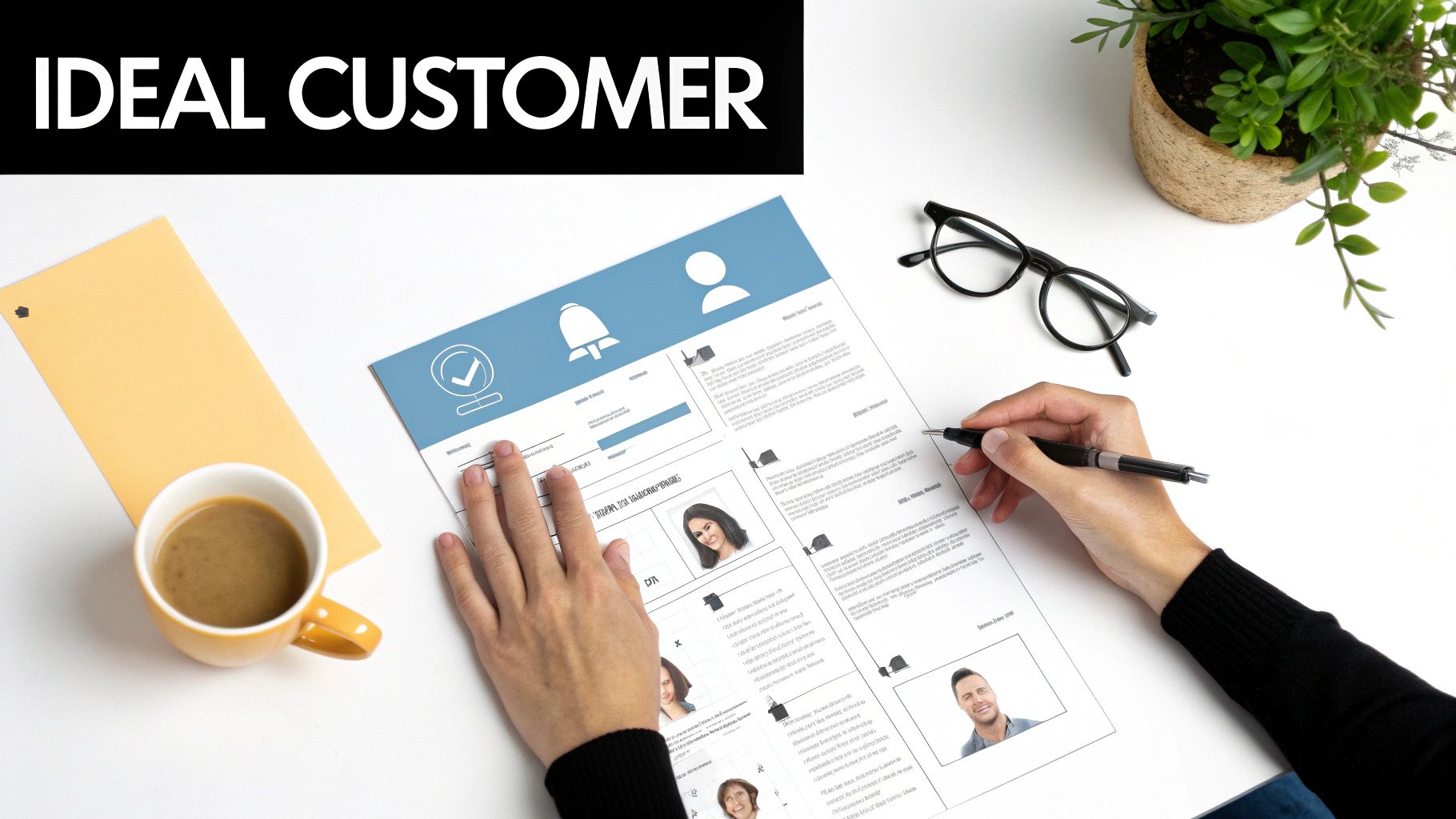
This means getting more granular than vague descriptions like “mums in their 30s” or “local businesses.” You need to build a detailed picture of your ideal customer—what we call a customer persona. This isn't just a document you create and file away; it's a living, breathing guide that should shape every single decision, from the design of your next roller banner to the tone of your social media posts.
Mastering how to identify your target audience is the absolute cornerstone of effective marketing. It turns your efforts from expensive guesswork into a focused, strategic conversation with people who are already looking for what you offer.
Digging into Demographics and Psychographics
To really flesh out your ideal customer, we need to look at two types of information: demographics and psychographics. Think of it this way: demographics tell you who your customers are on paper, while psychographics tell you why they do the things they do.
Demographics are the straightforward, factual details:
- Age: Are they just starting their careers or heading towards retirement?
- Location: Pinpoint the specific towns, cities, or regions in the UK you’re targeting.
- Gender: Does your product or service naturally appeal more to one gender over another?
- Occupation: What’s their day job? A B2B service for construction firms will have a wildly different persona than an event planner targeting engaged couples.
- Income Level: Are you talking to bargain hunters or people looking for a premium, high-end solution?
Psychographics, on the other hand, go much deeper into their mindset:
- Interests and Hobbies: What do they love doing in their spare time?
- Values and Beliefs: What’s truly important to them? Do they prioritise sustainability over convenience, for instance?
- Challenges and Pain Points: What problems are keeping them up at night that you can solve?
- Goals and Aspirations: What are they ultimately trying to achieve in their life or business?
When you combine these two, you stop thinking about a faceless group and start visualising a real person. And it’s much easier to sell to a person than a statistic.
Practical Ways to Gather These Insights
Good news: you don't need a massive research budget for this. The best insights are often hiding in plain sight. You just need to know where to look.
Analyse Your Best Current Customers
Think about your favourite clients. Who are the people who ‘get’ what you do, pay on time, and tell their friends about you? Look for the common threads. What are their job titles? What specific problem did they hire you to solve? The similarities you find are pure gold for building your ideal persona.
Simple Surveys and Feedback Forms
Tools like Google Forms or SurveyMonkey are perfect for this. Send a quick survey to your email list or pop a link in your order confirmation emails. Keep it short and ask pointed questions like:
- What was your biggest challenge before you found us?
- Where do you usually look for information about [your industry]?
- What other brands do you really admire?
Remember, the goal isn't just to collect data points. It's to find the human story behind them. What truly motivates someone to buy? Uncovering that is the secret to creating marketing that connects on a much deeper level.
Social Media Listening
Your potential customers are already talking online. Find out where they spend their time—whether it’s in specific Facebook groups, LinkedIn communities, or niche subreddits. Don’t just jump in and start promoting. Hang back and listen. Pay attention to the exact language they use, the questions they ask, and the frustrations they share. This is raw, unfiltered insight into their world.
By putting in this groundwork, you’ll build a customer persona that acts as your strategic North Star, making sure every marketing pound is spent with purpose.
Mastering Digital Channels to Find New Audiences
Once you’ve nailed down exactly who you’re trying to reach, the next job is to show up where they spend their time. For most UK businesses and event organisers, that means getting your digital strategy right.
It’s not about being on every single platform out there. That’s a fast track to burnout. The real secret is mastering the handful of channels that will actually connect you with the right people. Think of your digital presence as a 24/7 salesperson, building trust and answering questions long after you’ve clocked off.
Let’s break down the channels that really work.
Capture Local Customers with SEO
When someone in your town needs a product or service, what’s the first thing they do? They Google it. They’re not just browsing; they’re actively looking to buy, and this is where local Search Engine Optimisation (SEO) becomes your most powerful tool.
The goal is simple: be at the very top of the search results when people nearby are looking for what you offer. You have to think like them. A customer isn’t just searching for “bakery.” They’re typing in “vegan birthday cakes in Bristol” or “best sourdough near me.”
To grab this high-intent traffic, you need to focus on:
- Keyword Research: Get inside your customer’s head. What phrases are they actually using? Use free tools to find local search terms, then map them to your services.
- On-Page Optimisation: Make sure your website’s pages clearly state your location and the areas you serve. This gives search engines the clues they need to show you to the right people.
- Google Business Profile: This is completely non-negotiable for any local business. A well-managed profile with current hours, services, great photos, and positive reviews can land you right at the top of the map results. It’s free advertising.
Build Trust Through Content Marketing
Content marketing is the art of giving away value before you ever ask for a sale. Instead of just shouting about how great your products are, you create genuinely helpful content that solves your audience's problems and positions you as an expert they can trust.
This approach builds a real relationship. Someone who reads your brilliant blog post on "how to plan a zero-waste community festival" is far more likely to hire your event management company down the line. Why? Because you've already proven you know your stuff.
Your content should be less of a sales pitch and more of a conversation. By consistently offering genuine advice and insights, you create a loyal following that sees you as the go-to authority in your field.
Start by brainstorming the biggest questions your ideal customers have. What are their main challenges? What are they desperately searching for online? Turn those answers into blog posts, simple guides, or short videos. This not only attracts organic traffic but also builds a library of assets you can share everywhere.
Choose the Right Social Media Playground
Social media is a brilliant tool, but only if you’re playing in the right park. Trying to be everywhere at once is a mistake. Instead, focus your energy where your ideal customers actually hang out and are most engaged.
A few pointers to guide your choice:
- Instagram & Pinterest: Perfect for highly visual businesses. Think event planners showing off stunning wedding setups, cafes with mouth-watering food photos, or retailers with beautiful product shots.
- Facebook: Its real strength is in building local communities. It’s ideal for businesses with a strong geographical focus, like a local gym, a high-street shop, or organisers of a town fair.
- LinkedIn: The go-to platform for B2B (business-to-business) services. If your customers are other professionals—from marketing agencies to construction firms—this is where you need to be sharing your expertise.
Once you’ve picked your platform, the key is to create content that sparks a conversation, not just broadcasts announcements. Ask questions, run polls, and share behind-the-scenes content to make your brand feel human and approachable.
Use Paid Ads to Recapture Hesitant Visitors
Hardly anyone buys on their first visit to a website. We’re seeing a growing "browse now, buy later" trend in UK retail, where people are doing more research before committing. In fact, one recent analysis showed that while click-through rates on Google and Meta ads are up, conversion rates have dropped. This signals that while people are interested, they’re taking longer to make a decision. You can read more in this insightful UK retail report.
This is where paid advertising, especially retargeting, is a game-changer.
Retargeting lets you show specific ads to people who have already visited your website but left without buying or getting in touch. It’s a gentle, strategic nudge that keeps your brand top-of-mind.
Imagine someone browses your roller banners, adds one to their basket, but then gets distracted. A retargeting ad on their Facebook feed a day later can remind them of their interest—maybe even with a small discount—and bring them back to finish the purchase. It's incredibly effective because you’re marketing to a warm audience that has already shown they’re interested.
Using High-Impact Print to Create Tangible Connections
While your online strategy is busy chasing clicks, don't forget the massive opportunity waiting in the real world. In a digital feed overflowing with ads, something you can actually hold stands out. It creates a physical connection that a screen just can’t replicate, building brand recall and driving local customers right to your door or event.
This isn't about choosing print over digital; it's about making them work together. Think of print as the real-world handshake that seals the deal after a digital introduction. A brilliantly placed banner or a sharp-looking flyer can be the final nudge that turns a maybe into a definite sale.
The Power of Being Seen
For small businesses and event organisers, visibility is everything. You have seconds to grab someone's attention and tell them what you're about. This is where large-format print becomes your secret weapon in the battle for eyeballs.
Picture a busy local fair or a packed trade show. A professionally designed roller banner is your silent salesperson. It instantly flags down your spot and pulls people in. Its vertical design is perfect for getting a core message across—a special offer, your brand’s personality—in a space where you’re competing with dozens of others.
And if you’re in construction or running a big outdoor event, fence mesh is a game-changer. It transforms boring temporary barriers into massive branding opportunities. Instead of a plain old fence, you’ve got a giant billboard advertising your project, your brand, or your event sponsors to every single person who walks or drives past. It’s the perfect example of turning a basic necessity into a powerful marketing tool.
Making Every Print Piece Count
Great print marketing isn't just about sticking your logo on something. Every single piece needs a clear job to do and a design that makes people stop and look. Whether it's a poster, a flyer, or a display stand, your design has to be sharp, focused, and compelling.
To make sure your printed materials are working as hard as you are, nail these key points:
- One Clear Message: Don't try to cram everything in. What’s the single most important thing you want people to know? A 50% off sale? A new product launch? Your event's headline act? Stick to that.
- High-Quality Visuals: Use professional, high-resolution photos or bold graphics. They need to be crystal clear, even from a distance. A blurry image or a messy design will do more harm than good.
- A Strong Call to Action (CTA): Tell people exactly what to do next. "Visit Our Stand," "Scan for 20% Off," or "Book Tickets Today" are clear instructions that get results.
- Easy-to-Read Fonts: Pick typography that’s legible from several feet away. This is non-negotiable for banners and posters that need to be seen by people on the move.
The most effective print materials feel less like an ad and more like a helpful signpost. They guide potential customers, answer their immediate questions, and make it incredibly easy for them to take the next step.
Here's a quick guide to help you pick the right tool for the job.
Choosing the Right Print for Your Marketing Goal
| Printed Material | Best Use Case | Key Benefit |
|---|---|---|
| Roller Banners | Trade shows, indoor events, shop entrances. | High impact in small spaces. Quick to set up and very portable. |
| Fence Mesh | Construction sites, outdoor festivals, sporting events. | Turns barriers into billboards. Massive visibility for branding and sponsors. |
| Vinyl Banners | Storefront promotions, grand openings, community events. | Durable and weatherproof. Perfect for long-term outdoor advertising. |
| Display Stands | Exhibitions, retail spaces, reception areas. | Professional and informative. Great for showcasing products or services. |
For businesses with a physical shop, don't overlook high-quality point-of-sale materials. They can seriously influence buying decisions right at the till, reinforcing your brand message at the most critical moment.
Ultimately, the real strength of print is its staying power. An online ad is gone in a flash, but a well-designed flyer might sit on a desk for days. A striking banner will catch someone's eye every time they pass your location. This physical presence builds familiarity and trust in a way that purely digital marketing often can't. By mixing these powerful offline tools with your online strategy, you create a complete brand experience that attracts customers from every direction.
Building a System for Sustainable Customer Growth
Constantly chasing new customers is exhausting. It's a never-ending cycle of campaigns that often fizzles out. The real secret to long-term success isn't just winning new business; it's building a sustainable growth engine that practically runs itself.
This is where you shift gears from pure acquisition to creating a 'flywheel' effect. Your happy, existing customers become your most powerful marketing tool, bringing in new business through sheer loyalty.
At the heart of this system is customer retention. It’s the often-overlooked key to profitable growth. By turning one-time buyers into loyal advocates, you create a powerful feedback loop of glowing reviews and word-of-mouth referrals—the most trusted and cost-effective advertising you can get.
From Acquisition to Advocacy
Your job doesn't end when the sale is made. In fact, that's exactly where the opportunity for sustainable growth really begins. Every positive interaction reinforces a customer's decision to choose you, making them far more likely to come back and recommend your services to others.
This is a game-changer in competitive markets. Take UK banking, for instance. Nationwide led the pack in customer acquisition in Q3 2024 by gaining 2.3 new customers for every one they lost. It's a stark reminder that retention-focused strategies always win; keeping a happy customer is miles cheaper than constantly fighting for a new one.
So, how do you build this army of advocates? Focus on simple but powerful tactics:
- Exceptional Service: Don't just meet expectations, blow them away. A friendly follow-up call or a super-fast response to a query can make all the difference.
- Loyalty Programmes: Reward people for coming back. This could be a simple "buy 10, get one free" card for a local café or a points system for an online store.
- Asking for Feedback: Show customers you care about their opinion by actually asking for it. Not only does this give you priceless insights, but it makes them feel valued.
Fostering Word-of-Mouth Marketing
Happy customers talk. It's as simple as that. They tell their friends, family, and colleagues about great experiences, and that organic promotion is invaluable because it comes from a genuine, trusted source.
You can give this process a gentle nudge without being pushy. Think about starting a referral programme where both the loyal customer and their referred friend get a discount or a small bonus. It’s a simple thank-you that gives people a real incentive to spread the word.
Having a comprehensive content marketing strategy is also a huge help here. When you create genuinely useful blog posts, guides, or videos that solve problems, your customers are more likely to share them, which builds your authority and extends your reach even further.
The ultimate goal is to create an experience so positive that customers can't help but talk about it. This turns your customer base into a volunteer marketing team that money can't buy.
This process chart shows how different printed materials can work together to build brand recognition and get people to act.
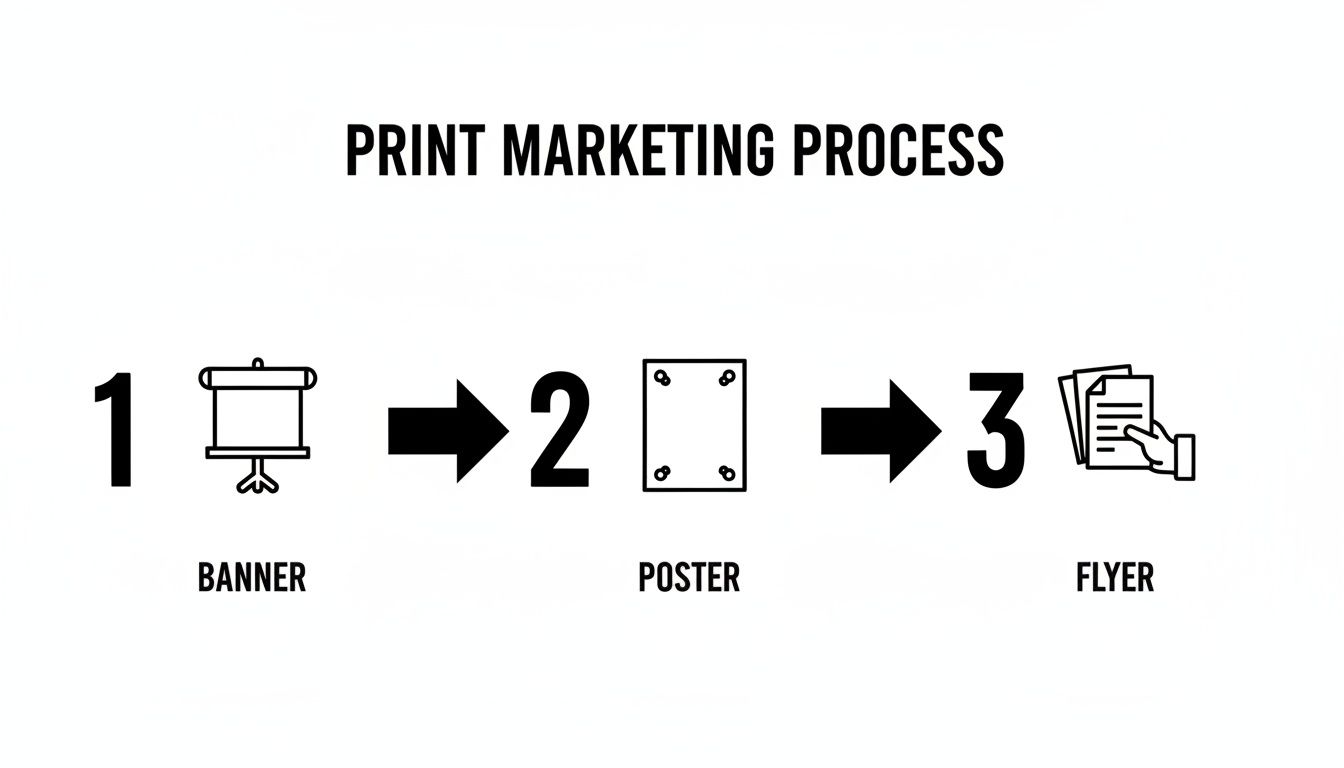
From large-format banners that grab attention from a distance to flyers that give all the crucial details, each piece has a part to play in guiding a potential customer.
Integrating Your Channels for a Seamless Experience
For this growth engine to really purr, all your marketing efforts—both online and offline—need to be perfectly in sync. Your social media, your website, and your printed materials should all tell the same story. This consistency builds trust and reinforces your brand identity at every turn.
Imagine someone sees your eye-catching roller banner at a trade show. They pop over to your website, which has the same look, feel, and message. A few days later, an email lands in their inbox with a relevant offer. Every step feels connected and professional, guiding them smoothly from initial interest to loyal customer. You can learn more about choosing a UK banner printing service that aligns with your overall goals.
Ultimately, attracting customers isn't a one-off task. It's a continuous cycle of attract, delight, and engage. By focusing on creating a fantastic customer experience from start to finish, you build a self-sustaining system where every satisfied client helps you find the next one. This is the key to lasting, profitable growth.
Got Questions About Attracting Customers? We've Got Answers
Getting your head around customer acquisition can feel like a mammoth task, especially when you're already spinning a dozen other plates running your business. Let's cut through the noise and tackle some of the most common questions we hear from UK business owners and event organisers, with quick, practical answers to get you moving.
What's the Most Cost-Effective Way to Get My First 100 Customers?
Forget big budgets for a moment. Your first 100 customers will come from hustle and smarts, not a blank cheque.
The very first thing you need to do is treat your Google Business Profile like your digital shopfront. Nail it. Fill it out completely with great photos, detailed descriptions, and hound your first few customers for reviews. It is, without a doubt, the most powerful free tool for getting found in local searches.
Next, get social, but not in a salesy way. Find the local Facebook groups, industry forums, or LinkedIn communities where your ideal customers hang out. Don't just drop links to your website. Instead, answer questions, offer genuine advice, and become the helpful expert. People buy from people they trust.
Don't overlook the power of your personal network for those initial clients, and never be afraid to ask for referrals. Finally, a well-designed flyer strategically placed in local cafés, libraries, or community notice boards can still work wonders, especially for local service businesses and events. It's a surprisingly high-impact tactic for a very low cost.
How Much Should a Small Business Actually Budget for Marketing?
There isn't a one-size-fits-all answer, but a solid rule of thumb is to set aside 5-10% of your revenue for marketing. If you're in a real growth spurt or fighting it out in a crowded market, you might need to push that closer to 12-20% just to get seen.
The most important thing? Start small, track everything, and then pour your money into what's actually working.
It’s a huge mistake to feel you need to be everywhere at once. You'll get far better results by mastering one or two channels—say, local SEO and Instagram—and backing them up with a solid offline presence, like attending local markets with a standout roller banner.
Your marketing budget shouldn't be a guessing game. The secret is to track your Customer Acquisition Cost (CAC) for every single channel. This gives you the hard data to see where your money is working hardest, so you can stop wasting cash and start making smarter decisions.
Should I Focus on Online or Offline Marketing?
It's not a case of either/or. The real magic happens when you get them working together. Think of it as a pincer movement—online marketing is fantastic for casting a wide net and building awareness, while offline methods create that tangible, real-world trust and capture a super-relevant local audience.
Picture the journey: a potential customer might see your sponsored ad on Facebook (online), then walk past your branded fence mesh at a local fair a week later (offline). When they finally need your service, they Google your name and land on your website to make a booking (online). Every touchpoint reinforces the last, building familiarity and confidence.
Of course, the perfect mix depends on your business. An online-only shop will naturally lean more into digital, whereas a local plumber might get more joy from offline tactics. But for almost everyone, a strategy that blends both will deliver stronger, more lasting results than putting all your eggs in one basket.
How Do I Know If My Marketing Is Actually Working?
If you're not measuring, you're just guessing. Simple as that.
For your digital stuff, tools like Google Analytics are your best friend. They'll show you who's visiting your site, how they got there, and what they do when they arrive. For social media, dive into the platform's built-in analytics to check things like reach, engagement, and click-through rates. And if you're running any paid ads, the only number that really matters is your Return On Ad Spend (ROAS).
Tracking offline marketing just needs a bit of old-school creativity:
- Offer Codes: Pop a unique discount code on your flyers (e.g., 'FLYER10') and track how many times it gets used.
- Unique URLs: Print a simple, easy-to-type web address on your banners (like yourwebsite.co.uk/event) that goes to a specific landing page. You can then track visits to that page.
- Just Ask: This is the easiest one of all. Get into the habit of asking every new customer, "How did you hear about us?" and keep a simple tally.
Keeping a close eye on these numbers is the only way to know what's driving genuine growth and what's just a drain on your bank account. This data is your roadmap.
Ready to make a real-world impact and get noticed by more local customers? Banner Printing Ltd provides durable, high-impact printed materials that grab attention and drive action. From portable roller banners for your next event to weatherproof vinyl banners for your storefront, we deliver quality you can trust with fast, free UK delivery. Bring your brand to life and start attracting the right customers today at https://bannerprintingltd.co.uk.


