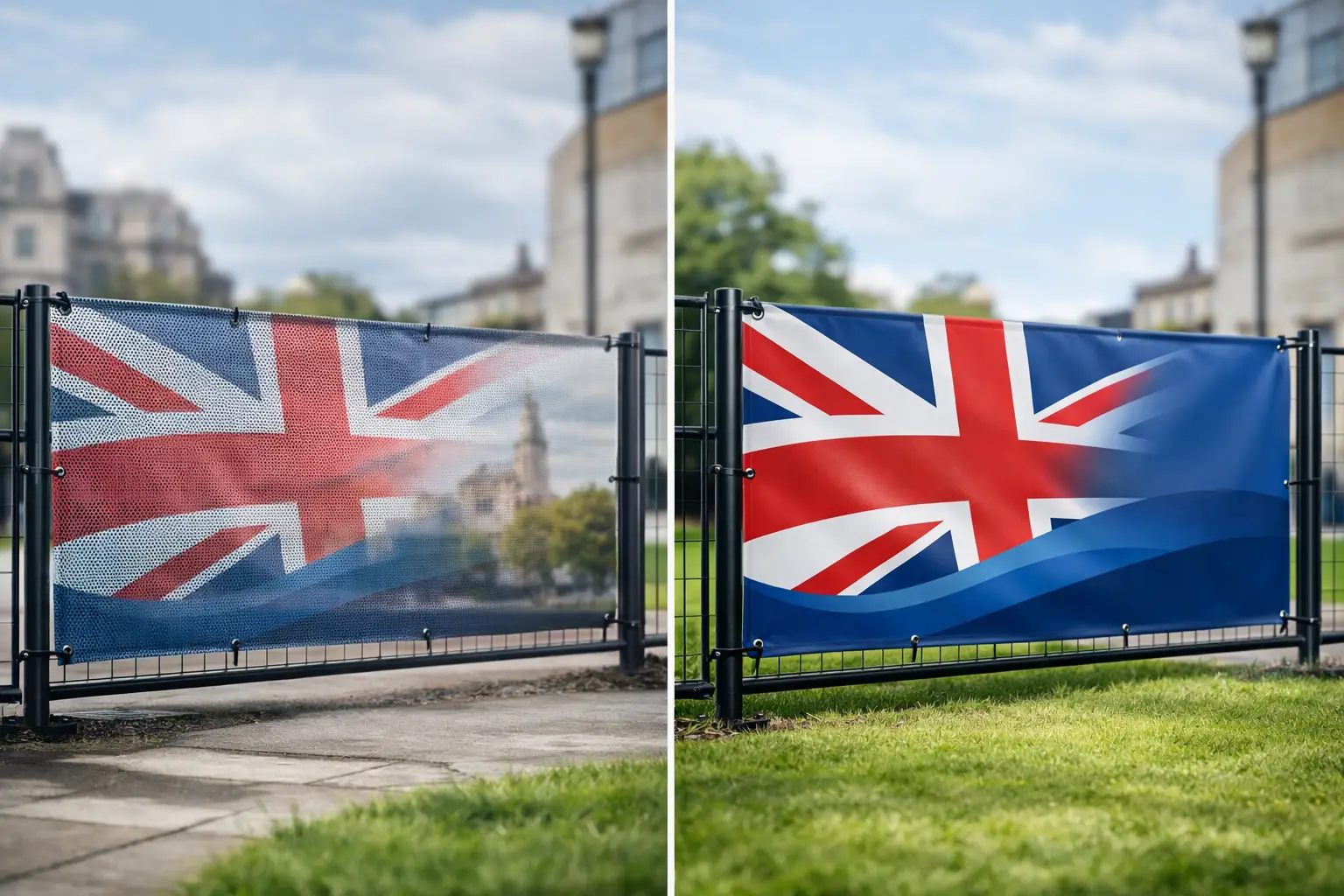
A banner can look perfect on screen and still underperform once it is fixed to a fence, scaffold or shopfront. When comparing mesh banners vs vinyl, the deciding factor is usually not design alone. It is where the banner will be used, how much wind it will face and how close people need to stand to read it.
For a busy building site, a windy sports ground or perimeter fencing, mesh is often the practical choice. For a retail promotion, event entrance or short-term message where colour impact matters most, vinyl can deliver a sharper, more solid result. Both materials are weatherproof and suitable for professional outdoor display, but they perform differently in real conditions.
Mesh banners vs vinyl: the key difference
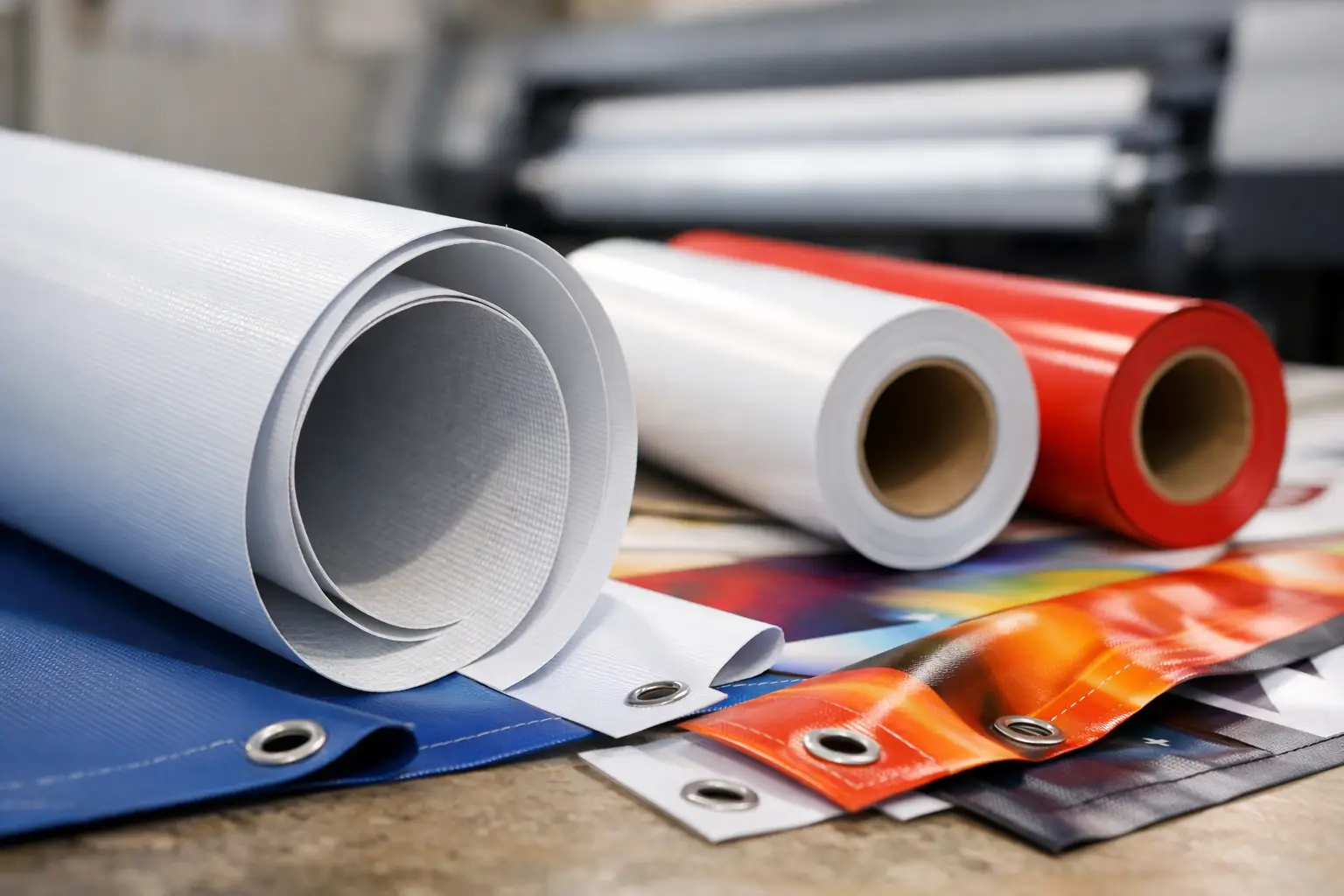
Vinyl banners are printed onto a solid PVC material. They create a continuous printable surface, so colours appear rich, photographs look cleaner and smaller text remains easier to read. This makes vinyl a strong all-round option for promotions, shopfront signage, events, markets and temporary advertising where the banner is positioned against a wall or in a relatively sheltered area.
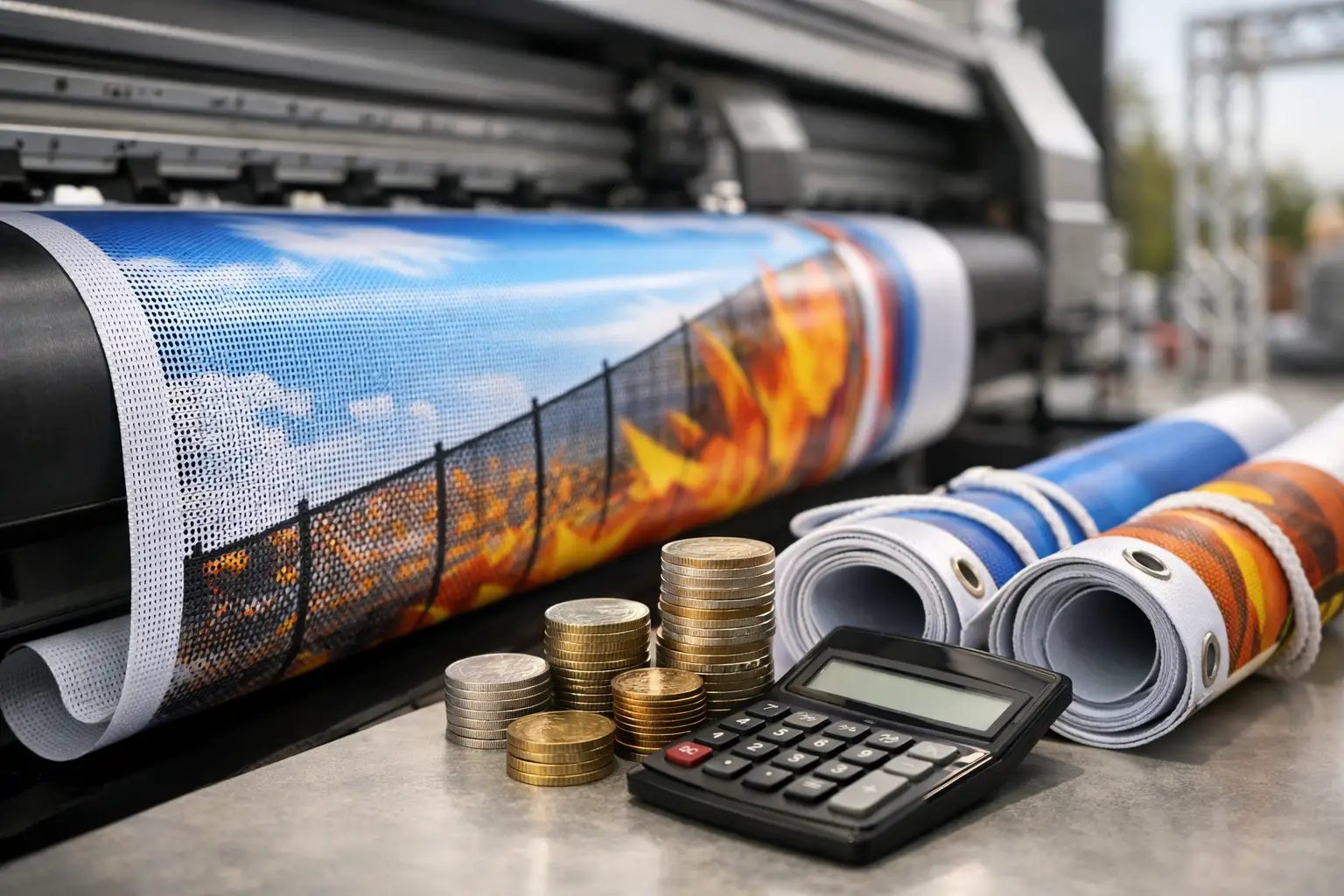
Mesh banners use a perforated PVC material. Tiny holes run across the surface, allowing air to pass through rather than pushing directly against the banner. From a normal viewing distance, the print still reads clearly, but the material is less solid than vinyl and can appear slightly less vivid up close.
That airflow is the reason mesh banners are regularly chosen for exposed locations. Reducing wind resistance can help limit flapping, strain on eyelets and pressure on fences or scaffold. It does not make a banner indestructible, but it gives outdoor signage a much better chance of staying secure when the weather turns.
Choose mesh for wind-exposed sites
Mesh is built for locations where wind is part of the job. Construction hoarding, Heras fencing, scaffold wraps, outdoor venues and roadside perimeters are common examples. A large solid vinyl banner can behave like a sail in these conditions, especially if it is loosely fitted or attached to lightweight fencing.
The perforations in mesh let wind move through the banner. This helps reduce stress on the printed material and its fixings, while still providing a large branded surface for site messaging, safety notices, development marketing or sponsor visibility.
Mesh is particularly useful when a banner needs to cover a long run of fencing. It is lighter to handle than a comparable solid PVC banner, which can make installation simpler for site teams. It is also a sensible choice when visibility from a distance matters more than fine detail at arm’s length.
There are trade-offs. Because of the perforated surface, very small text, intricate logos and fine photographic details may not reproduce as crisply as they do on vinyl. If your design contains a lot of small copy, consider increasing the font size and keeping key messages bold. A large logo, contact number, web address and short call to action generally work far better than a paragraph of information.
Choose vinyl when print impact comes first
Vinyl is the better option when your banner needs a strong, solid look. It offers excellent colour density and a smooth finish, making it well suited to product launches, special offers, sale banners, event branding, school fairs, community events and exhibition displays.
For a shopfront, vinyl gives passing customers an immediate message: opening soon, grand sale, new menu, seasonal offer or event date. The solid background helps colours stand out, particularly when the banner is viewed close up. It also gives designers more freedom with detailed graphics, gradients, photography and smaller text.
Vinyl works well outdoors, but the fixing method matters. Use enough eyelets and secure the banner tightly with suitable cable ties, bungee cords or banner clips. Do not leave excess material loose at the edges, and inspect the fixings after severe weather. On an exposed fence line, switching to mesh is usually the more dependable decision.
For temporary indoor use, vinyl is often the obvious choice. There is no wind load to manage, and the print finish makes a stronger visual impression in retail spaces, halls, reception areas and event venues.
Print quality, viewing distance and design
The right material should be chosen alongside the way people will see the banner. A message designed for drivers passing a site at speed should be different from one read by shoppers standing two metres away.
For mesh, keep the artwork direct. Use high-contrast colours, a clear typeface and a limited amount of copy. Make the main headline large enough to read from the intended distance. Dark text on a pale background, or pale text on a dark background, usually provides the clearest result. Avoid placing critical details close to the edge, where eyelets and hems may affect the layout.
Vinyl supports more visual detail, but clarity still wins. A banner is not a leaflet. If a customer cannot understand the offer in a few seconds, the display is doing too much. Focus on one key message, the relevant date or price, and a simple next step such as visiting the premises, calling a number or scanning a code where appropriate.
If you are supplying artwork, use the final banner dimensions from the outset. Low-resolution images can look acceptable on a laptop but become soft when printed at large format. High-quality logos, correctly sized artwork and sensible safe margins help avoid delays when you need a fast turnaround.
Durability and weather performance
Both mesh and vinyl are designed for practical display use and can handle rain, daylight and regular outdoor exposure. UV-resistant printing helps colours remain presentable, while hemmed edges and reinforced eyelets improve strength at the points where the banner is fixed.
The lifespan of either material depends on more than the print. Wind exposure, fitting quality, repeated removal, vandalism risk and the condition of the supporting structure all play a part. A banner attached to a sheltered brick wall will face very different pressures from one installed across open fencing on a coastal site.
For longer campaigns, check your banner periodically. Look for loose cable ties, stretched eyelets, torn corners and rubbing against sharp fence edges. Promptly replacing a damaged fixing can prevent a small issue becoming a torn banner and an avoidable reprint.
Cost and practical ordering considerations
Mesh and vinyl are both cost-effective ways to create high-impact signage, especially compared with permanent boards or repeated poster runs. The best value comes from selecting the material that prevents problems at the point of use.
A vinyl banner may be the better investment for a short, high-impact promotion because of its stronger print finish. A mesh banner can offer better value for large outdoor installations because it is more appropriate for wind-prone conditions and may reduce the risk of damage or early replacement.
Before ordering, confirm the finished size, installation location and how the banner will be fixed. If it is going on railings, fencing or scaffold, measure the usable area rather than estimating. Allow room for eyelets and fixings, and make sure the main message is not blocked by posts, gates or parked vehicles.
For urgent campaigns, finalise the artwork before placing the order where possible. Clear files and accurate dimensions help keep production moving quickly, particularly when you need printed banners dispatched within a tight 24 to 48-hour window.
Which banner should you order?
Choose mesh if your banner will be displayed on exposed fencing, scaffold or a location with regular wind. It is the practical choice for large site branding, building projects and outdoor perimeters where airflow matters.
Choose vinyl if the banner is for a shopfront, event, sale, indoor display or a more sheltered outdoor setting. It provides the cleanest finish for detailed artwork, strong colours and close-up viewing.
If the location sits somewhere in between, think about the risk rather than just the forecast. A sheltered town-centre wall may suit vinyl perfectly, while an apparently calm open site can become difficult once a gust catches a large solid banner. Choosing the right material before print means your message stays visible, your fixings stay under less pressure and your banner is ready to work from the moment it goes up.