
In a world where we’re never far from our screens, no mobile phone signs are playing a vital role for UK businesses and events. They aren’t just about laying down rules; they’re powerful tools for ensuring safety, creating a better customer experience, and keeping everyone focused.
Why No Mobile Phone Signs Matter More Than Ever
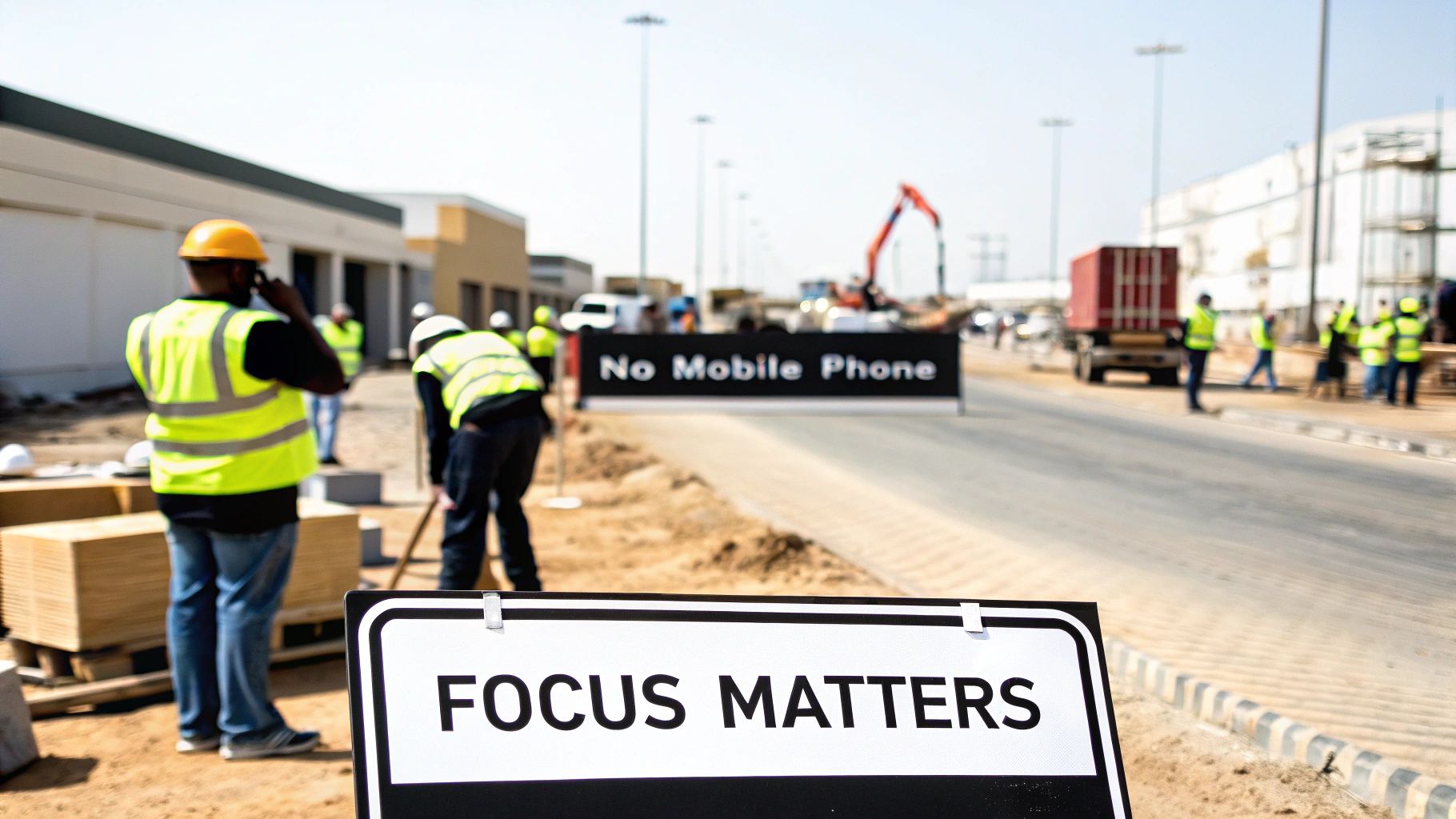
Picture a busy construction site. A single glance at a phone notification could be the difference between a safe shift and a serious accident. Here, total concentration isn’t just a preference—it’s a legal necessity. Under the Health and Safety at Work Act, employers have a duty of care, and managing distractions is a huge part of that. A clear sign is your first and best defence.
Now think about a live gig or a theatre show. The performers and crew pour everything into creating an unforgettable, immersive experience. The last thing anyone wants is a sea of glowing screens breaking the spell for everyone else. A simple 'no phone' policy, clearly displayed with signage, helps protect the magic of the moment.
Beyond Safety and Atmosphere
The need for these signs stretches far beyond building sites and venues. For many UK businesses, creating the right environment is everything. These signs help you do just that in several ways:
- Improving Customer Experience: In a cosy café or a fine dining restaurant, a phone-free zone encourages people to talk to each other and enjoy a more relaxed atmosphere.
- Protecting Sensitive Information: In solicitors' offices, healthcare clinics, or secure corporate buildings, restricting phone use is a simple way to protect confidential data and client privacy.
- Boosting Productivity and Engagement: During training days, workshops, or critical board meetings, a sign gently reminds attendees to stay present and get the most out of the session.
A well-placed sign does more than just state a rule; it communicates the values of your space. It tells people that you prioritise safety, focus, and genuine human connection.
Ultimately, using no mobile phone signs is about taking control of your environment. It’s a proactive way to manage expectations, direct attention where it’s needed most, and ensure your space works exactly the way you intend it to—whether for safety, service, or a shared experience.
When to Create a Phone-Free Zone

Putting up no mobile phone signs isn’t just about putting a stop to something; it’s about starting something new. You’re making a conscious decision about your environment—shaping an experience, boosting safety, or deepening focus. The reasons are as diverse as UK businesses themselves.
Picture a cosy café aiming for a quiet, conversational buzz. A sign here works like a gentle nudge, similar to a 'Quiet Zone' reminder in a library. It encourages people to connect with each other, not just their screens. It’s a simple tool that helps craft the exact ambience you want your business to be known for.
Beyond the atmosphere, signs are a brilliant way to manage expectations. Despite there being a staggering 87.66 million cellular connections in the UK, signal blackspots are a real frustration. In fact, the UK has been ranked lowest among G7 nations for mobile signal reliability. A sign can pre-empt complaints by discouraging phone use where you know the service is patchy. You can dig deeper into the UK's digital landscape on DataReportal.
For Safety and Security
In some places, controlling phone use is simply non-negotiable. On a busy construction site, in a warehouse, or anywhere near heavy machinery, a split-second distraction can lead to disaster. A clear, visible sign becomes a crucial part of your health and safety protocol, reminding everyone to keep their full attention on the job.
Security is another major driver, especially where sensitive information is handled. Just think about these settings:
- Healthcare Clinics: Protecting patient confidentiality and stopping unauthorised photos.
- Legal Offices: Safeguarding private client data during crucial meetings.
- Research Labs: Preventing intellectual property theft and keeping the environment sterile and focused.
In these cases, a sign acts as a firm boundary, reinforcing policies that protect both people and information.
For Performance and Presence
Live events are another prime example. Whether it's a theatre show, a stand-up comedy gig, or a big corporate presentation, the aim is to hold the audience's attention. Nothing shatters that focus faster than a sea of glowing phone screens. It’s distracting for others and disrespectful to the performers.
A 'no mobile phone' policy, communicated clearly with professional signage, gives event organisers the power to protect the live experience. It's a simple request for the audience to be fully present, which makes the event more memorable and powerful for everyone.
Ultimately, deciding to use a sign is about defining the purpose of your space. Whether it’s for safety, service, security, or a shared experience, it puts you in control, ensuring your environment works exactly how you need it to.
Designing Signs That People Actually Read
An effective sign gets its message across in a heartbeat. It’s not just about laying down the law; it’s about professional, clear communication that people actually notice and respect. To get this right, we need to think beyond the standard red circle and focus on what makes a no mobile phone sign truly effective.
Think of your sign as a quick, silent conversation. You have just a few seconds to make your point, so clarity is king. This starts with clean, easy-to-read typography. Choose fonts that are legible from a distance—classic sans-serif styles like Helvetica or Arial are brilliant choices for their no-nonsense look.
Next, let's talk icons. While the classic "phone crossed out" symbol gets the job done, a custom or stylised icon can add a touch of personality. A simple, modern graphic that fits with your brand’s look and feel can be far more engaging and less confrontational.
Choosing the Right Words
The wording on your sign is everything. The tone you strike can completely change how your policy is perceived. Instead of a blunt command, try phrasing that explains why the rule exists. It’s a small change, but it shifts the message from restrictive to reasonable.
For example, a high-risk industrial area needs direct, unambiguous language. A sign saying, 'For Your Safety This is a Phone-Free Zone' leaves zero room for confusion. It instantly connects the rule to personal well-being, which is a powerful motivator.
On the other hand, a café or event space can take a friendlier approach. Phrases like 'Unplug and Connect With Us' or 'Be Present In The Moment' reframe the policy as an invitation to enjoy the experience. This feels less like a restriction and more like a shared goal.
To help you find the right balance, here are a few examples of wording and symbols tailored for different UK settings.
Effective Wording and Symbols for Different Environments
This table offers practical examples of clear wording and matching symbols for no mobile phone signs across various UK business and event settings.
| Environment | Suggested Wording | Recommended Symbol | Primary Goal |
|---|---|---|---|
| Industrial / High-Risk | For Your Safety This is a Phone-Free Zone | Standard 'No Phone' symbol with a safety helmet icon | Emphasise Safety & Compliance |
| Corporate / Secure Area | Strictly No Mobile Phone Use Beyond This Point | A simple, sleek phone icon with a cross | Professionalism & Security |
| Healthcare / Clinic | Please Switch Off Mobiles To Avoid Interference | A phone on silent mode or a crossed-out phone icon | Patient Safety & Privacy |
| Retail / Service Counter | To Serve You Faster Please Finish Your Call | A friendly smiley face or a simple 'pause' symbol | Customer Experience & Efficiency |
| Restaurant / Café | Unplug and Connect. Enjoy Your Meal. | A stylised fork and knife next to a phone icon | Encourage Social Connection |
| Event / Performance Venue | Switch Off & Tune In. No Recording. | A crossed-out camera and phone icon | Protect Performer & Audience Experience |
Getting the wording right ensures your message is not only understood but also respected, making compliance much more likely.
A well-designed sign transforms a simple rule into a powerful piece of branded communication. It should feel like a natural extension of your business identity, not an afterthought.
Integrating Your Brand Identity
Your signage should never look like a generic add-on; it’s a valuable piece of your marketing real estate. Weaving your company's branding into the design is key to making the sign feel like it belongs. This means using your established colour palette and including your logo.
When your no mobile phone signs reflect your brand’s visual language, they reinforce your professionalism and authority. They show that the policy is a core part of how you operate, not just a rule you tacked on the wall.
Here’s how you can tailor your message for different settings:
- Corporate/Secure Areas: Use formal language like "Strictly No Mobile Phone Use Beyond This Point" paired with your company logo for a polished, authoritative look.
- Retail/Service Environments: Go for polite, customer-focused wording such as "To Serve You Faster Please Finish Your Call" to highlight the benefit to them.
- Creative/Social Venues: Employ catchy phrases like "Switch Off & Tune In" to match the creative vibe of the event or space.
By carefully considering your typography, icons, wording, and branding, you create signs that don't just get seen—they get understood.
Choosing the Right Materials and Finishes
The material your no mobile phone sign is made from is just as crucial as its message. It’s like picking the right coat for the weather – a paper sign won’t last five minutes in a downpour on a construction site, and a heavy-duty metal one would look completely out of place in a spa. Your choice directly affects how long the sign lasts, how it looks, and ultimately, how well it does its job.
For outdoor use, durability is everything. Weatherproof PVC vinyl is a brilliant, cost-effective choice for temporary needs like festivals or building sites. It’s waterproof, UV-resistant, and can be fixed easily to fences with eyelets. For more exposed spots that get battered by high winds, a mesh banner is the way to go. Its clever perforated design lets air flow right through, stopping it from turning into a sail and tearing.
Matching Materials to Indoor Environments
When you bring your sign indoors, the game changes. You’re less worried about the weather and more focused on aesthetics and a professional finish. This is where rigid materials really shine.
- Foamex: A lightweight but solid PVC sheet, Foamex is perfect for permanent signs mounted on walls in shops, clinics, or offices. It looks clean and professional.
- Correx: You’ve probably seen this used for estate agent boards. It’s a fluted plastic that offers a great budget-friendly option for short-term indoor events or promotions.
- Acrylic: For that premium, modern feel, acrylic signs give you a sleek, glass-like effect. It’s the perfect touch for high-end environments like hotel lobbies or boutique salons.
Getting to know the different plastics for signs is the key to making a smart investment that looks the part and lasts.
The finish you choose can make or break your sign’s readability. A matte laminate is a lifesaver in brightly lit indoor areas because it cuts down on glare. On the other hand, a gloss finish makes colours pop, which is exactly what you want for a vibrant trade show display.
Good design is a process, flowing from the initial idea right through to the final, clear message, as the flowchart below shows.
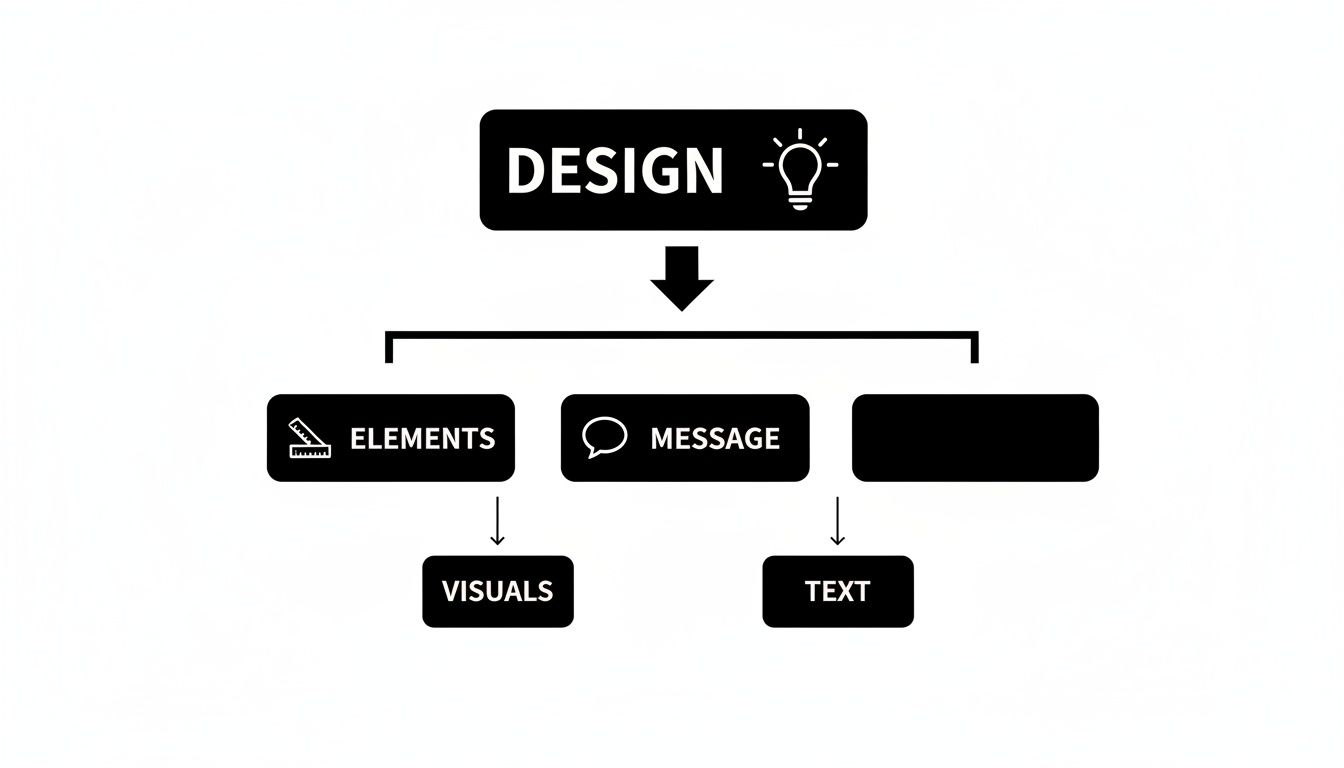
It’s all about making sure every part, from the icon to the text, works together to get the point across instantly. In the UK, with over 88 million active mobile subscriptions, clear communication has never been more vital. But with a significant 17% of users reporting signal problems, signs that manage expectations in poor-connectivity zones are becoming a necessity. You can read the full report on UK mobile statistics to dive deeper into the numbers.
Where to Place Your Signs for Maximum Impact

Even the most brilliantly designed no mobile phone signs are completely useless if no one sees them. A great sign in the wrong spot is just decoration, so smart placement is what makes your policy understood and respected. It’s all about getting the right message in the right place at the right time.
The first rule of thumb is to place signs at eye level. It sounds obvious, but you’d be surprised how often it’s missed. Aim for a height of around 1.5 to 1.7 metres (about 5 to 5.5 feet) from the ground. That’s the sweet spot where it’ll naturally catch someone’s line of sight as they walk by.
Just as importantly, you need a sign at every single entrance. Never assume that people will see one sign and remember the rule everywhere else on your premises. If you have several doors or entry points leading into a phone-free zone, each one needs its own clear signage.
Tailoring Placement to Your Environment
Where you put your sign really depends on what you need it to do. The context shapes the strategy, whether it’s a small nudge or a site-wide policy announcement.
- For Restricted Areas: The sign must go directly on the door or entryway to that specific zone. For safety or high-security areas, this is non-negotiable.
- For General Event Policies: Go big and bold. Use highly visible A-frame signs at the main gates and portable roller banners near high-traffic areas like the stage or information desk.
- For Service Counters: Small, discreet signs placed near the till can gently prompt customers to end their calls. This simple step can speed up service and make things smoother for everyone.
Think of your signs as a conversation with your visitors. The first sign at the entrance is the introduction to the rule, and subsequent signs within the area are helpful reminders that reinforce the policy without being intrusive.
Mounting and Securing Your Signs
How you mount your sign is just as important as where you place it – it needs to stay put and look professional. For lightweight Foamex signs on smooth indoor walls, simple adhesives often do the trick.
But for larger, outdoor vinyl banners, you’ll need sturdy metal grommets and cable ties to secure them tightly to fences or scaffolding. A key part of ensuring your signs look good and last long is selecting appropriate materials for signage from the very beginning.
When done right, good placement turns your sign from a piece of plastic into an active communication tool. For smaller, targeted reminders like those at a till, you can find great ideas from the world of point of sale materials, which are designed to grab attention exactly where you need it most.
Navigating Legal and Safety Requirements
When you put up a no mobile phone sign, you’re doing more than just making a polite request. You're setting a clear condition of entry to your property. Here in the UK, businesses have every right to establish rules for their premises, as long as they’re communicated clearly and applied fairly to everyone. Think of it like a "no smoking" policy—the sign is your first, most crucial step in making that rule stick.
But the real muscle behind these signs often comes from legal and safety duties. For many UK businesses, managing mobile phone use is a fundamental part of their responsibility under the Health and Safety at Work etc. Act 1974. This act isn't just about hard hats and high-vis jackets; it requires employers to protect the health, safety, and welfare of their staff and anyone else on site.
Upholding Health and Safety Standards
In high-risk environments, a distracted moment is all it takes for things to go badly wrong. A mobile phone can easily become a serious hazard, making no mobile phone signs an essential safety control.
Just imagine these scenarios:
- Construction Sites: When you're operating heavy machinery or working at height, 100% focus is non-negotiable. A quick text or call can lead to an accident that was entirely preventable.
- Warehouses and Factories: With forklifts buzzing around and production lines in constant motion, situational awareness is everything. A distracted worker puts themselves and their colleagues in immediate danger.
- Areas with Flammable Materials: At petrol stations or chemical storage facilities, any electronic device is a potential ignition source. A sign here isn't a suggestion; it’s a critical safety instruction, much like the ones we detail in our guide to fire hydrant signs for emergency readiness.
By clearly banning phones in these zones, you’re not just managing a nuisance. You are actively fulfilling your legal duty to maintain a safe working environment for every single person on site.
Protecting Data and Privacy
The need for rules goes beyond physical safety and into data protection. In places where sensitive information is handled—think legal offices, healthcare clinics, or R&D labs—restricting phone use helps you stay compliant with GDPR. It’s a simple but effective way to prevent unauthorised photos or recordings of confidential documents and private conversations, protecting both client and patient privacy.
Our reliance on mobile data only magnifies this risk. UK mobile data traffic has exploded, rocketing from just 9 million GB a month in 2011 to over 900 million GB in 2023. This incredible surge makes managing device-related risks more critical than ever for businesses. Discover more insights about UK mobile communications on Statista.
Getting to grips with these regulations means you can create a policy that confidently protects your people, your customers, and your business.
Common Questions About No Mobile Phone Signs
Whenever you introduce a new policy, questions are bound to follow. For UK businesses weighing up no mobile phone signs, it pays to clear up the most common queries up front. That way, staff and visitors alike know exactly what’s expected.
Are No Mobile Phone Signs Legally Enforceable In The UK
Yes—you can treat these notices as a firm house rule on your own premises. As a business owner or operator, you’re entitled to set conditions of entry. Display a clear sign at the entrance, and you’ve given fair warning of your policy.
If someone refuses to comply, you have the right to ask them to leave. For employees, simply embed the no-phone rule into your health and safety or electronics-use policy. That final step turns a notice into a formal, contract-backed requirement.
What Is The Best Sign For A Temporary Event Like A Festival
Think of festival signage like pop-up flags—easy to move but hard to miss. Weatherproof vinyl banners with reinforced eyelets work brilliantly on fences, stage trusses or market stalls. They shrug off wind and rain, so you won’t be reprinting after the first shower.
For high-traffic spots such as entrances or info points, portable roller banners are perfect. You can:
- Roll them out in seconds, no tools required
- Custom-print them with your event’s logo and colours
- Pack them down flat for transport between venues
How Do I Introduce A No-Phone Policy Without Upsetting Customers
It all hinges on wording. Replace blunt orders like “No Phones Allowed” with a friendly invite—people respond better to positive framing. Try phrases such as:
- “Please Join Us in This Phone-Free Moment”
- “Unplug and Enjoy the Show”
A brief explanation—whether it’s for a calmer atmosphere, quicker service or boosted safety—goes a long way. Position these polite reminders at entrances and seating areas so visitors see them the moment they arrive.
Can I Get Help Designing The Artwork For My Sign
You don’t need a full-time designer. Most reputable printers, including Banner Printing Ltd, offer in-house artwork support. Simply share your logo, text and brand colours.
Their experts will:
- Refine your layout for maximum impact
- Check resolution for crisp, clear printing
- Deliver a professional finish that catches the eye
That collaborative touch ensures your signage stands out rather than blending into the background.
Ready to create a safer, more focused environment? Banner Printing Ltd offers a wide range of customisable signs, from durable vinyl banners for outdoor sites to professional roller banners for indoor events. Design your perfect no mobile phone signs today!


