
In the competitive UK high street, your shop window is more than just glass and framing. It's your most powerful marketing tool, a silent salesperson working 24/7 to capture attention. A compelling display can halt passers-by in their tracks, ignite curiosity, and convert street traffic into footfall and, ultimately, loyal customers. Moving beyond a standard mannequin setup, however, requires creativity, strategy, and a clear plan of action to make a genuine impact.
This guide is designed to be your definitive resource, providing a comprehensive roundup of actionable shop window display ideas that are both innovative and achievable. We will move past generic advice and dive into specific, practical concepts tailored for businesses looking to make a statement. From the understated elegance of minimalism and negative space to the dynamic allure of interactive technology, each idea is broken down with practical execution steps, budget considerations, and expert tips to ensure a successful outcome.
Throughout this listicle, we'll explore everything from narrative storytelling and sustainable designs to the clever use of colour-blocking and layered dimensions. Furthermore, we will highlight how professionally produced, custom large-format print products, like vibrant backdrops, crisp hanging signage, and versatile vinyl graphics from specialists like Banner Printing Ltd, can elevate your vision. These elements provide a polished, high-quality finish that transforms a good idea into an unforgettable storefront experience. Prepare to turn your window into a local landmark that commands attention, tells your brand's story, and drives sales.
1. Minimalist Display with Negative Space
Drawing inspiration from contemporary art galleries and luxury retail, the minimalist approach champions the philosophy of "less is more". This shop window display idea involves using negative space, the empty area around a subject, to direct the viewer's focus onto a very select number of high-value products. Rather than overwhelming passers-by with options, this method creates an atmosphere of exclusivity and sophistication, allowing the craftsmanship and quality of each featured item to take centre stage.
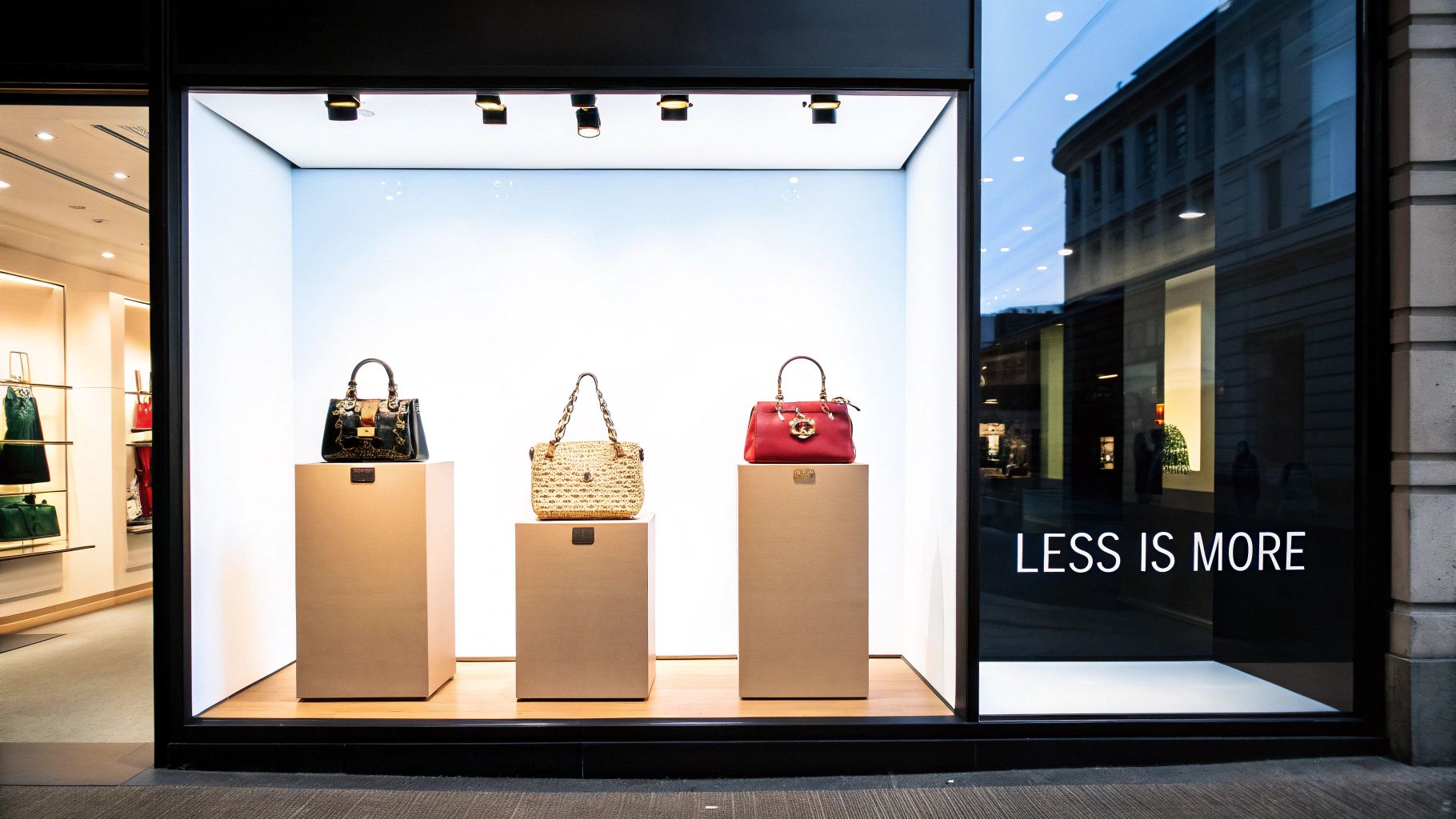
The goal is to make a powerful statement with simplicity. By removing clutter, you elevate the perceived value of your products and create a memorable, high-end impression. This technique is particularly effective for businesses selling luxury goods, artisanal crafts, designer fashion, or bespoke technology where individual product stories are key.
How to Implement a Minimalist Display
Executing this concept requires precision and a focus on quality over quantity. The background, lighting, and product placement must all work in harmony.
- Select a Hero Product: Choose just one to three premium items to feature. These should be your most aspirational, visually striking, or newest products.
- Invest in a Quality Backdrop: A clean, uncluttered background is non-negotiable. A seamless fabric backdrop or a perfectly smooth, neutrally coloured wall creates a professional canvas. Avoid busy patterns or textures that might distract from the product.
- Master Your Lighting: Use spotlights to precisely illuminate your featured items, creating dramatic highlights and shadows. The contrast between the lit product and the surrounding space enhances the sense of focus and importance.
- Prioritise Perfect Placement: Position items at the average adult's eye level, using clean, high-quality plinths or stands. Ensure there is significant empty space around each object to allow it to "breathe".
Key Insight: The success of a minimalist window display lies in its flawless execution. Every element, from the pristine condition of the product to the dust-free surfaces and perfectly aimed lighting, contributes to an overall impression of premium quality and care. This approach tells customers that you value details.
2. Seasonal and Holiday Themed Displays
Capitalising on the calendar is one of the most effective and time-honoured shop window display ideas. Seasonal and holiday themed displays create an immediate sense of relevance and urgency, tapping into the collective mood and shopping occasions of passers-by. From the enchanting magic of Christmas to the vibrant renewal of spring, these displays forge an emotional connection by reflecting the celebrations that are already on customers' minds, driving footfall and boosting seasonal sales.
The goal is to align your brand with the festive spirit, making your shop a must-visit destination during key retail periods. This strategy is universally effective, embraced by global department stores like Selfridges and local independent boutiques alike. Whether it’s a spooky Halloween setup, a romantic Valentine’s Day arrangement, or a cheerful Easter theme, a well-executed seasonal display shows that your brand is current, engaged, and in tune with its community.
How to Implement a Seasonal Display
Successful seasonal displays require foresight and creativity to stand out during competitive periods. The key is to plan well in advance and think beyond the obvious clichés.
- Plan Ahead: Begin designing and sourcing materials 2-3 months before the event. This allows time for ordering custom elements like themed printed backdrops or vinyl decals and avoids last-minute stress.
- Invest in Versatility: Purchase high-quality, reusable props that can be adapted for different holidays. For example, a set of white birch branches can be used for a winter wonderland theme and later repurposed with blossoms for spring.
- Tell a Story: Instead of just placing seasonal objects, create a narrative. A Valentine's display could tell the story of a perfect date night, featuring an outfit, accessories, and a gift, all arranged in a cohesive scene.
- Think Locally: Incorporate elements from local cultural events or celebrations to build a stronger connection with your immediate community. This shows authenticity and can set you apart from larger chain stores.
Key Insight: The most impactful seasonal displays offer a unique interpretation of a familiar theme. Don't just put up a Christmas tree; create a scene that evokes a feeling or tells a story unique to your brand. Documenting your display on social media extends its reach and provides valuable content for future marketing.
3. Interactive and Experiential Window Displays
Moving beyond passive viewing, this approach transforms the shop window into a dynamic, two-way conversation. An interactive display invites passers-by to engage directly with the brand, blurring the lines between the street and the store. By using technology like touchscreens, augmented reality (AR), or motion sensors, you can create a memorable experience that captures attention and fosters a deeper connection with potential customers.
The objective is to create a 'wow' factor that generates buzz and encourages social sharing. Instead of just showing a product, you’re offering an experience, which is far more powerful in a crowded marketplace. This method is ideal for tech-forward brands, businesses targeting younger demographics, or any retailer looking to make a bold, modern statement and drive footfall through curiosity.
How to Implement an Interactive Display
Execution requires a blend of creative vision and technical reliability. The experience must be intuitive and rewarding for the user.
- Choose Your Technology: Decide on the interaction type. This could be a QR code that launches an AR "try-on" experience on a phone, a motion sensor that triggers animations as people walk past, or a through-glass touchscreen allowing users to browse a collection.
- Keep It Simple and Intuitive: The interaction should be immediately understandable. Use clear on-glass vinyl instructions or simple on-screen prompts. If it takes more than a few seconds to figure out, potential customers will walk away.
- Integrate with Social Media: Encourage participation by adding a social element. For example, create a branded photo filter as part of the experience and prompt users to share their pictures with a specific hashtag for a chance to win a prize.
- Ensure Reliability: Technology can fail, so test every component rigorously and have a backup plan. A non-functioning interactive display looks worse than a simple static one. Perform daily checks to ensure everything is running smoothly.
Key Insight: The most effective interactive shop window display ideas provide instant gratification. The interaction should be brief, fun, and deliver an immediate payoff, whether it’s a stunning visual, a useful piece of information, or a fun social media moment. This approach transforms your window from a simple advert into a destination.
4. Narrative Storytelling and Thematic Displays
This advanced shop window display idea transforms your window from a simple product showcase into a miniature stage set. Narrative storytelling uses props, backdrops, and carefully placed products to tell a cohesive story, creating an emotional connection with passers-by. Instead of just showing what you sell, you show the lifestyle, dream, or adventure that your products enable, making your brand far more memorable and engaging.
The goal is to create an immersive world that captures the imagination and communicates your brand's personality. This method is incredibly effective for seasonal campaigns, product launches, or communicating a brand's heritage or values. Retailers like Anthropologie and Saks Fifth Avenue are masters of this technique, creating displays that people actively seek out and share online.
How to Implement a Narrative Display
Building a story requires more than just arranging products; it involves creating a scene with a beginning, middle, and implied end.
- Develop a Clear Storyline: Before you begin, outline your narrative. Is it a "cosy winter reading nook," a "spring garden party," or an "adventurer's homecoming"? Every element should serve this central story.
- Use Props to Set the Scene: Props are essential for establishing context, time, and place. Vintage suitcases, antique furniture, artificial snow, or scattered autumn leaves can instantly transport the viewer into your story.
- Integrate Products Naturally: Place your products within the scene as if they are actively being used. A jacket might be draped over a chair, a set of teacups arranged on a table for guests, or a book left open on a bench.
- Consider a Thematic Backdrop: A large-format printed backdrop can instantly establish your environment, whether it's a bustling cityscape, a serene forest, or an abstract, colourful pattern. This provides a professional and immersive foundation for your narrative.
Key Insight: A successful narrative display invites the viewer to fill in the blanks. By creating a compelling scene, you spark curiosity and encourage people to imagine themselves as part of the story. This emotional engagement is a powerful tool that turns a passive glance into active interest in your brand and products.
5. Colour-Blocking and Gradient Displays
Harnessing the psychological power of colour, this shop window display idea uses strategic colour arrangements to capture attention and create a powerful visual impact. Colour-blocking involves pairing bold, contrasting colours to generate excitement and energy, while gradient displays use a smooth transition between hues to create a sense of harmony and order. This modern approach makes displays memorable and aesthetically striking, guiding the customer's eye and evoking specific emotional responses.
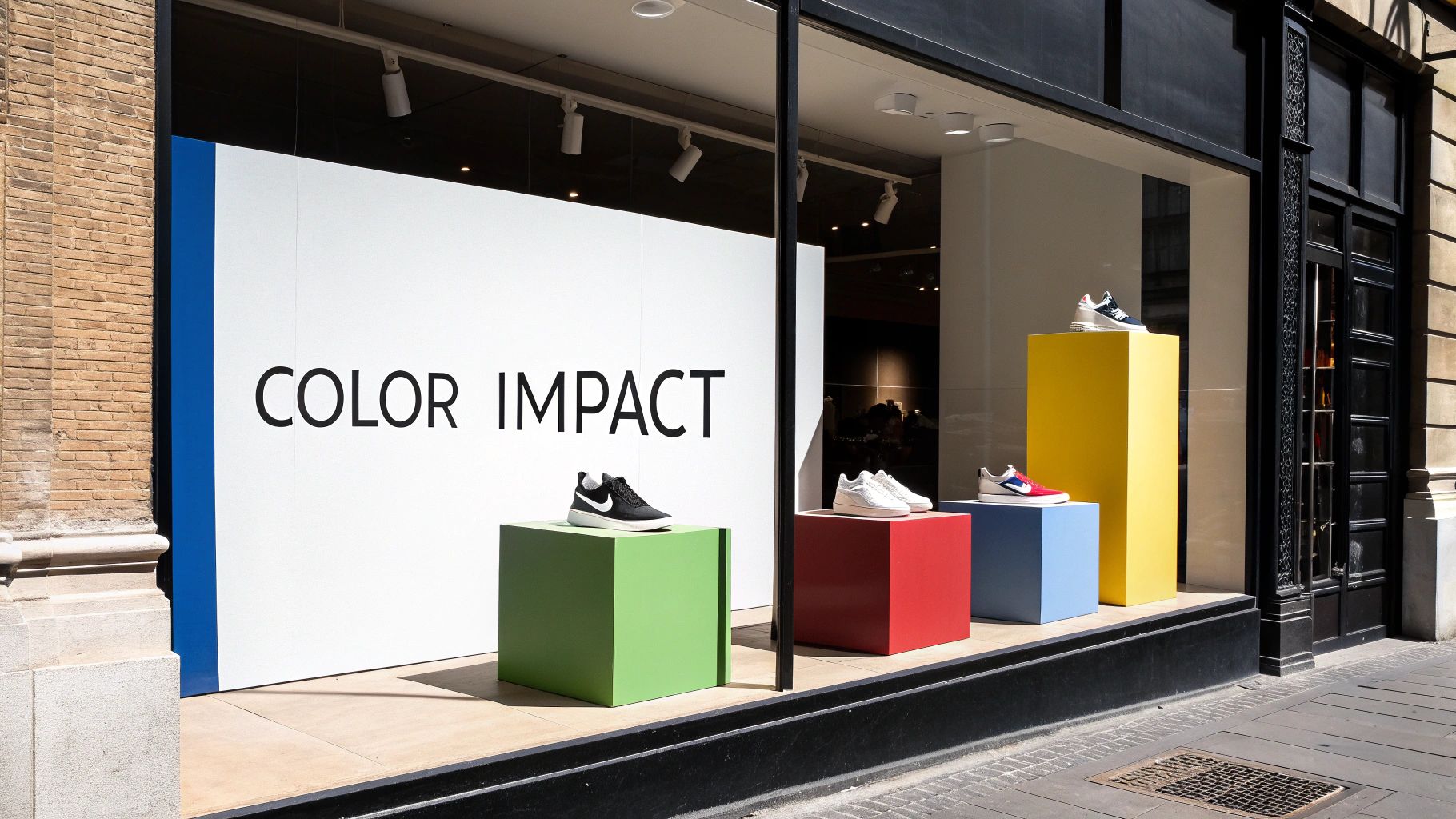
The goal is to stop passers-by in their tracks with a deliberate and confident use of colour. Whether you're arranging fashion by chromatic order or using a vibrant backdrop to make a single product pop, this technique tells a story through its palette. It’s highly effective for fashion retailers, cosmetics brands like Sephora that organise products by shade, and any business wanting to project a bold, contemporary, and organised brand image.
How to Implement a Colour-Focused Display
Successful execution depends on a clear colour strategy and an understanding of how hues interact. The key is to be intentional with your choices, ensuring they align with your brand and products.
- Define Your Palette: Choose a limited colour scheme. For bold colour-blocking, select two or three high-contrast colours. For a gradient effect, pick a single colour and showcase products in its various shades, from light to dark.
- Create a Visual Foundation: Use large-format prints to establish your colour story. A custom-printed backdrop or vinyl flooring in a solid, vibrant colour creates an immersive and professional setting. Understanding the principles of how to design a banner for maximum impact can be incredibly useful here.
- Organise Products by Colour: Arrange your merchandise to create the visual effect. Group clothing, accessories, or homewares strictly by their colour to create distinct blocks or a seamless gradient flow that is satisfying to the eye.
- Use Lighting to Enhance Hues: The right lighting can make colours appear more saturated and vibrant. Use clean, white light to ensure your chosen palette is accurately represented and doesn't appear washed out or yellowed.
Key Insight: Colour is a powerful, non-verbal communication tool. A well-executed colour-blocked or gradient window does more than just look good; it can influence mood, create a sense of order, and make your products feel more curated and desirable before a customer even steps inside.
6. Sustainability and Eco-Conscious Displays
As consumers increasingly demand corporate environmental responsibility, an eco-conscious shop window display does more than just showcase products; it communicates core brand values. This approach involves using recycled, upcycled, or natural materials to create a visually appealing display that highlights your commitment to sustainability. By doing so, you connect with environmentally aware customers on a deeper level, building trust and brand loyalty.
The goal is to authentically reflect your brand's green credentials. This method tells a story of responsibility and care, transforming your window from a simple sales tool into a statement of purpose. It is particularly effective for businesses with sustainable product lines, ethical sourcing practices, or a strong community focus, such as organic food shops, ethical fashion boutiques, and zero-waste stores.
How to Implement an Eco-Conscious Display
Executing this concept authentically requires creativity and a commitment to sourcing sustainable materials. The design should feel both intentional and genuine, avoiding any hint of "greenwashing".
- Utilise Natural and Reclaimed Materials: Build your display using elements like reclaimed wood, cork, bamboo, or even cardboard. Living elements such as potted plants, moss, or dried flowers can add life and colour while reinforcing the natural theme.
- Communicate Your Message Clearly: Use signage to educate passers-by. A simple sign printed on recycled card can explain the sustainable materials used in the display or highlight the eco-friendly features of the products on show.
- Upcycle and Repurpose: Get creative with existing materials. Old pallets can become shelving, glass jars can be used as product stands, and fabric offcuts can be turned into a textured backdrop. This demonstrates resourcefulness and a genuine commitment to reducing waste.
- Focus on Energy-Efficient Lighting: Complete your display with LED lighting. LEDs consume significantly less energy than traditional bulbs and have a longer lifespan, further reducing your environmental footprint and running costs.
Key Insight: Authenticity is paramount. An eco-conscious display must be a true reflection of your business practices. Customers are savvy and can spot disingenuous efforts, so ensure your message is backed up by real, sustainable actions throughout your business. This approach builds a powerful, trust-based connection with your audience.
7. Layered Depth and Dimensional Displays
Moving beyond a flat, one-dimensional presentation, this technique uses multiple layers and varying depths to build a visually complex and engaging scene. A dimensional display creates a sense of depth perception that draws the eye into the window, encouraging passers-by to stop and explore the different elements. This method transforms a simple product showcase into a sophisticated, almost theatrical installation, making it one of the more artistic shop window display ideas.
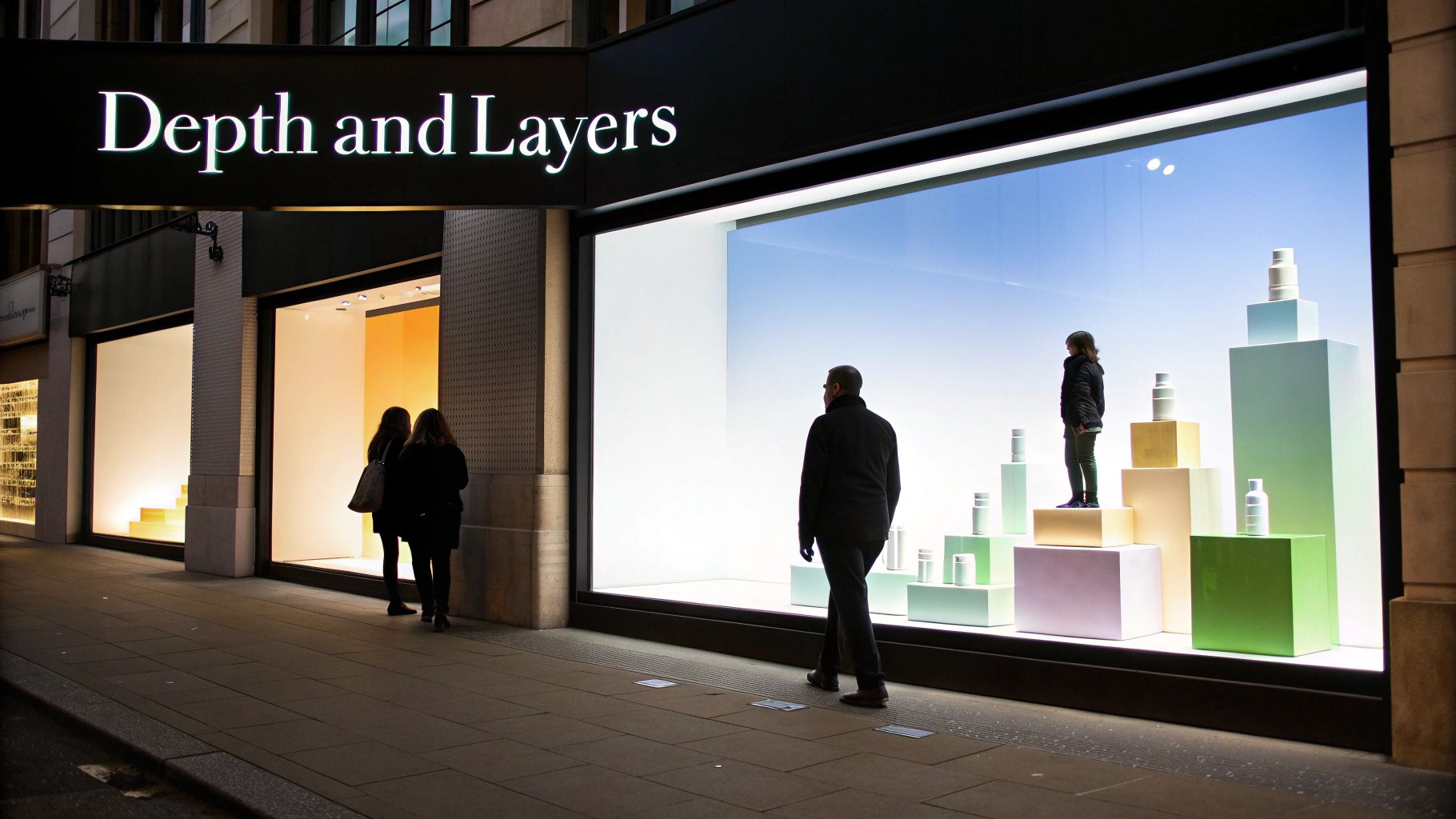
The objective is to create a dynamic visual journey. By placing items and props in the foreground, mid-ground, and background, you guide the viewer's gaze through the display, revealing new details from different angles. This approach is highly effective for designer boutiques, contemporary art-inspired retailers, and high-end department stores wanting to create a memorable, museum-quality narrative.
How to Implement a Dimensional Display
Building a layered display requires careful planning of space, height, and perspective. The composition should feel balanced yet intriguing from every vantage point.
- Vary Heights and Depths: Use platforms, acrylic risers, pedestals, and even suspended elements to place products and props at different heights and distances from the glass. This immediately breaks up a flat plane and creates visual interest.
- Establish a Clear Foreground and Background: Use a large-format printed backdrop to set the scene. This could be a cityscape, an abstract pattern, or a scenic landscape. Place hero products closer to the front to create a clear focal point.
- Use Lighting to Enhance Depth: Position spotlights to cast shadows that accentuate the space between objects. Lighting elements in the background and foreground separately can create a powerful illusion of depth.
- Incorporate Graphic Elements: Use strategically placed posters or hanging signs as mid-ground layers. Understanding the right poster printing size is crucial to ensure they complement the scale of your display without overwhelming it.
Key Insight: A successful dimensional display tells a story through its composition. Think of your window as a stage: the backdrop sets the scene, the props add context, and the products are the main characters. Each layer should add to the narrative, not detract from the main focal point.
8. Artist Collaboration and Limited Edition Displays
Partnering with an artist, designer, or local creative transforms your window into a one-of-a-kind art installation. This approach goes beyond standard merchandising, turning your display into a cultural event that generates buzz, attracts media attention, and forges a deep connection with the community. These limited-edition displays position your brand as a patron of the arts, lending it credibility and creative flair.
The goal is to create an unmissable, temporary spectacle that tells a unique story. The collaboration can range from a local muralist creating a bespoke backdrop to a renowned sculptor designing custom product stands. This is one of the most powerful shop window display ideas for launching exclusive products or building a brand identity that values creativity and originality, as seen in iconic collaborations like Louis Vuitton x Takashi Murakami.
How to Implement an Artist Collaboration
A successful partnership requires clear communication, mutual respect, and a shared vision. The project should benefit both your brand and the artist.
- Find the Right Partner: Seek out artists whose style and values align with your brand identity. Look at local art schools, galleries, or Instagram for talent.
- Give Creative Freedom: The most impactful collaborations happen when the artist can bring their unique vision to life. Provide a clear brief about your brand and product, but avoid overly restrictive creative direction.
- Promote the Partnership: Leverage the collaboration for marketing. Announce it on social media, tag the artist, write a blog post about the creative process, and invite local press to an unveiling event.
- Create Supporting Print: Use the artist's work across other marketing materials. A custom printed backdrop featuring a mural detail or a hanging banner with information about the artist can unify the in-store and window experience.
Key Insight: An artist collaboration is not just a display; it's a story. Document the entire process from concept to creation with photos and videos. Sharing this behind-the-scenes content creates an engaging narrative that draws customers in and gives them a reason to feel connected to your brand long after the display is gone.
9. Mirror and Reflection Displays
This dynamic shop window display idea uses mirrors and other reflective surfaces to manipulate space and perception, creating an immersive and visually intriguing experience. By strategically placing mirrors, you can make a small window appear deeper, multiply the visibility of your products, and create compelling optical illusions that capture the attention of passers-by. It’s a technique that adds a layer of sophistication and magic, encouraging viewers to look closer.
The goal is to create a sense of wonder and amplify your display without adding more physical stock. This approach works exceptionally well for businesses selling jewellery, cosmetics, designer accessories, or any intricate product where showcasing multiple angles is beneficial. The reflections can make a modest arrangement of items feel like a lavish, abundant collection, maximising visual impact in a limited space.
How to Implement a Mirror and Reflection Display
Successful execution hinges on careful placement and an understanding of angles and light. The key is to enhance, not distract.
- Create a Mirrored Backdrop: Use a large, seamless mirror as a full or partial backdrop. This instantly doubles the perceived depth of your window and reflects your products, offering viewers a 360-degree perspective without them needing to move.
- Use Angled and Fragmented Mirrors: Place smaller, angled mirrors strategically around your products. This creates a kaleidoscopic or fragmented effect that is artistic and modern, drawing the eye to specific details.
- Combine Reflections with Decals: Apply elegant custom window stickers directly onto the mirrors. This allows you to overlay branding, patterns, or promotional text onto the reflected scene, adding another layer of visual information.
- Amplify Your Lighting: Position your lights to bounce off the reflective surfaces. This can be used to illuminate products from unconventional angles, eliminate shadows, and create a brighter, more dazzling overall presentation.
Key Insight: Cleanliness is paramount. A display built on reflections will fail if the mirrors are smudged, dusty, or streaked. Regular and meticulous cleaning is non-negotiable, as even the smallest imperfection will be magnified and can detract from the intended high-end, magical effect.
10. Movement and Animation Displays
In a bustling high street, stillness can become invisible. This is where movement and animation come in, creating dynamic shop window display ideas that harness the power of motion to draw the human eye. Incorporating kinetic elements, from simple rotating platforms to complex projected animations, transforms a static scene into a captivating performance that stops passers-by in their tracks. This technique is designed to create a memorable and engaging experience that cuts through visual noise.
The goal is to create intrigue and a sense of life, making your window feel active and exciting. Movement suggests narrative and energy, making it highly effective for brands wanting to convey innovation, fun, or storytelling. From the whimsical rotating carousels of toy shops to the sleek, projected light shows of technology brands, animated displays make a powerful and lasting impression.
How to Implement a Movement and Animation Display
Successful execution depends on reliable technology and thoughtful choreography that enhances, rather than distracts from, your products.
- Start with Simple Mechanics: You don't need a Hollywood budget. Begin with a simple, motorised turntable to give a hero product a 360-degree view, or use hanging mobiles that gently turn with air currents.
- Explore Digital Projections: A cost-effective way to add complex motion is through projection mapping. Use a projector to cast animated patterns, falling snow, or even short video clips onto a backdrop or directly onto the window pane after hours.
- Use Kinetic Art: Commission a local artist or engineer to create a bespoke mechanical installation. This could be a series of moving gears for a watchmaker or a gently waving fabric structure for a fashion boutique, turning your window into a piece of public art.
- Plan for Maintenance: Moving parts require upkeep. Ensure any mechanical elements are safe, reliable, and quiet. Schedule regular checks to prevent breakdowns that could spoil the effect and reflect poorly on your brand.
Key Insight: The true power of movement is its ability to tell a story over time. An animation that loops or a mechanical part that moves in a sequence encourages viewers to stop and watch, increasing the time they spend engaged with your brand before they even step inside. This is a chance to create a moment of genuine wonder.
Shop Window Display Ideas: 10-Point Comparison
| Display Style | Complexity 🔄 | Resources & Cost ⚡ | Expected Outcomes 📊⭐ | Ideal Use Cases 💡 | Key Advantages ⭐ |
|---|---|---|---|---|---|
| Minimalist Display with Negative Space | Medium 🔄 — precise curation & lighting | Low–Medium ⚡ — few high‑quality props, pro lighting | High 📊⭐⭐⭐⭐ — upscale perception, higher AOV | Luxury brands, flagship windows | Emphasizes product detail; low visual clutter |
| Seasonal and Holiday Themed Displays | Medium–High 🔄 — frequent redesigns & logistics | Medium–High ⚡ — props, storage, extra labor | High 📊⭐⭐⭐ — increased foot traffic & urgency | Department stores, peak seasonal promotions | Timely relevance; drives seasonal sales and social sharing |
| Interactive and Experiential Window Displays | High 🔄 — tech integration, UX testing | High ⚡ — hardware, software, maintenance | Very High 📊⭐⭐⭐⭐ — engagement, data capture, viral potential | Flagships, tech‑forward brands, launches | Memorable experiences; strong social amplification |
| Narrative Storytelling and Thematic Displays | High 🔄 — concepting + layered execution | Medium–High ⚡ — props, design talent, fabrication | High 📊⭐⭐⭐ — emotional connection, longer dwell time | Lifestyle brands, boutiques, campaign storytelling | Deep brand storytelling; differentiates products |
| Color‑Blocking and Gradient Displays | Low–Medium 🔄 — color planning & composition | Low–Medium ⚡ — backdrops, coordinated inventory | Medium–High 📊⭐⭐⭐ — immediate visual impact, photo‑friendly | Fast fashion, footwear, social campaigns | Bold, instant impact; easy to photograph |
| Sustainability and Eco‑Conscious Displays | Medium 🔄 — sourcing & authentic messaging | Low–Medium ⚡ — recycled/natural materials, plants | Medium–High 📊⭐⭐⭐ — PR value, attracts conscious buyers | Brands with sustainability commitments | Authentic CSR storytelling; often cost‑effective materials |
| Layered Depth and Dimensional Displays | High 🔄 — structural design & safety planning | Medium–High ⚡ — platforms, lighting, engineering | High 📊⭐⭐⭐⭐ — visual intrigue, perceived richness | High‑end boutiques, museum‑style installations | Creates depth and richness; maximizes window use |
| Artist Collaboration and Limited Edition Displays | High 🔄 — coordination with artists & timelines | High ⚡ — artist fees, exclusive production | Very High 📊⭐⭐⭐⭐ — cultural buzz, new audiences | Product launches, prestige branding, limited drops | Cultural credibility; strong media and social buzz |
| Mirror and Reflection Displays | Medium 🔄 — careful placement & glare control | Low–Medium ⚡ — mirrors, reflective materials | Medium 📊⭐⭐ — expanded space illusion, interactive visuals | Jewelry, cosmetics, small windows | Amplifies product presence; relatively inexpensive |
| Movement and Animation Displays | High 🔄 — mechanical design & safety | High ⚡ — motors, power, ongoing maintenance | Very High 📊⭐⭐⭐⭐ — attention‑grabbing, video content | Large storefronts, event windows, experiential stunts | Dynamic, highly memorable; strong stop‑and‑watch effect |
Bringing Your Vision to Life: Your Next Steps
We have journeyed through ten distinct and powerful shop window display ideas, moving from the refined simplicity of minimalism to the dynamic energy of animated scenes. Each concept offers a unique avenue to capture attention, communicate your brand's personality, and ultimately, invite customers through your doors. The common thread weaving them all together is the power of strategic visual communication.
A successful window display is far more than just a random assortment of products. It is a carefully orchestrated piece of theatre, a silent storyteller that speaks volumes about what lies within your shop. It is your first, and often most critical, handshake with a potential customer, setting the tone for their entire experience. Mastering this visual language is not just a creative exercise; it is a fundamental business strategy that directly impacts footfall, brand perception, and sales.
From Inspiration to Implementation: Your Action Plan
Transforming these concepts from ideas on a page into a tangible, traffic-stopping reality requires a clear plan. Your next steps should be deliberate and organised.
-
Review and Select: Revisit the ten ideas presented in this article. Which one genuinely resonates with your brand's core identity? A luxury boutique might excel with a minimalist or artist-collaboration display, whereas a toy shop would thrive with an interactive or narrative-driven scene. Choose a concept that feels authentic to you.
-
Audit Your Resources: Take a practical look at your budget, available space, and manpower. An elaborate animated display might be your ultimate goal, but a stunningly effective colour-blocked or layered display can be achieved with more modest resources. Start with what is manageable and build from there.
-
Plan Your Calendar: Great window displays are timely. Map out a display calendar for the next six to twelve months. Align your chosen ideas with key retail seasons, local events, and specific product launches. This proactive planning prevents last-minute scrambles and ensures your storefront always feels fresh and relevant.
-
Measure and Sketch: Before ordering a single prop or print, measure your window space meticulously. Create a rough sketch or a digital mock-up of your design. This crucial step helps you visualise the composition, check the scale of elements, and identify potential issues before they become costly mistakes.
The Finishing Touches: The Power of Professional Print
The most ingenious shop window display ideas can be let down by poor execution. The difference between an amateur attempt and a professional installation often lies in the quality of the supporting materials. Crisp, vibrant, and well-produced printed elements elevate your entire composition, ensuring your message is delivered with clarity and impact.
Imagine your narrative display. The story is not just told by the props but also by the stunning, high-resolution backdrop that sets the scene. Consider a minimalist design; its power is amplified by a single, perfectly printed hanging sign with razor-sharp text. These are not minor details; they are the essential components that bring your creative vision to life with polish and authority. Partnering with a print specialist ensures your investment in creativity pays off, transforming a good idea into a great one that stops passers-by in their tracks and converts them into loyal customers.
Ready to bring your next window display to life with flawless, high-quality printed materials? From vibrant PVC banners to elegant roller banners and custom backdrops, Banner Printing Ltd provides the professional tools you need to execute your vision. Explore our full range of large-format printing solutions and get fast, free UK delivery on your order today at Banner Printing Ltd.


There are 2 comments
[…] more inspiration, explore our guide to powerful shop window display ideas. We offer a range of vinyl and poster printing options to bring your vision to […]
[…] Of course, a powerful digital presence works best when it complements a solid physical one. To really maximise your local impact, think about how you can grab attention on the high street with captivating shop window display ideas. […]