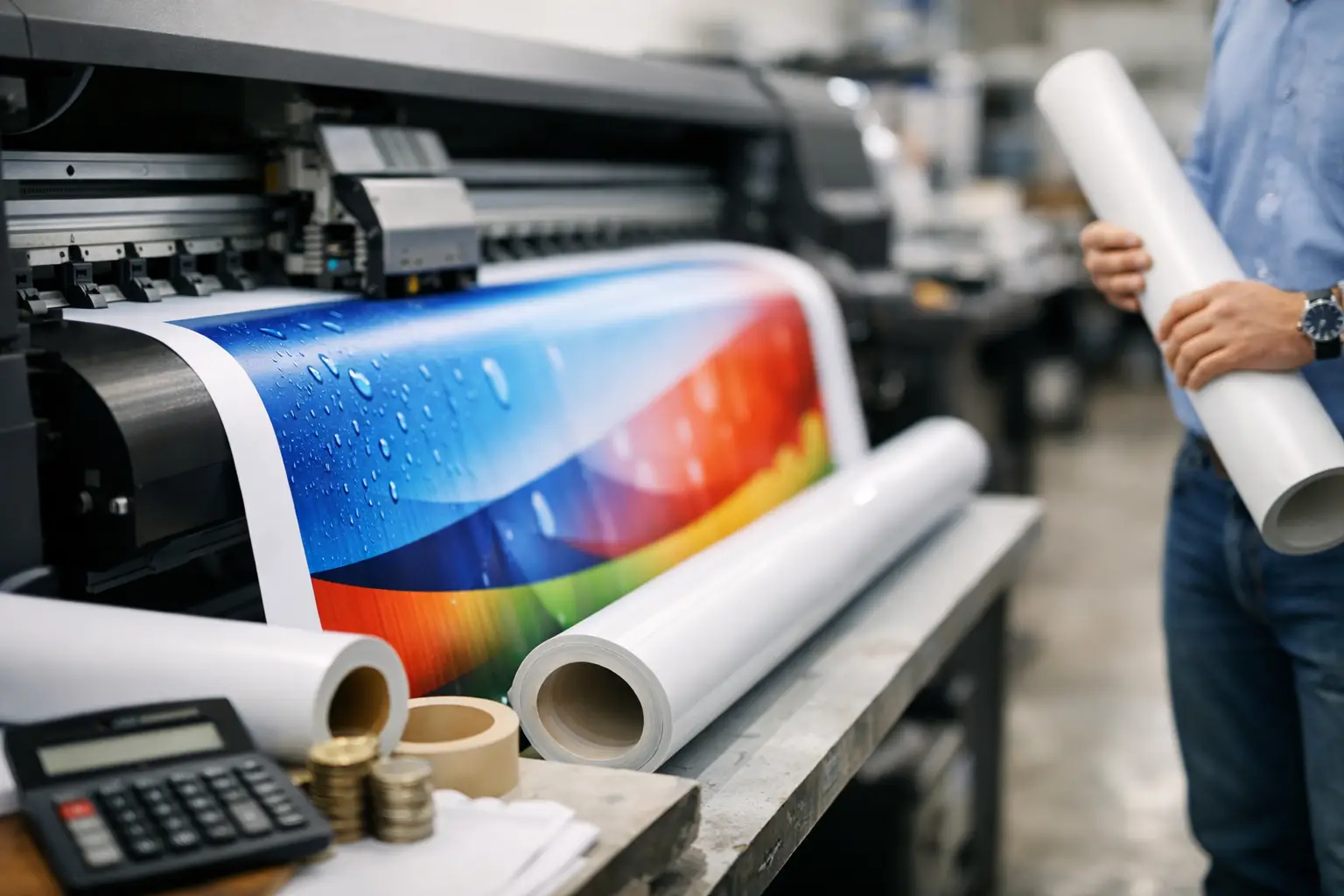
A £20 banner and an £80 banner can both carry the same logo, but they are not necessarily built for the same job. The real banner printing cost depends on where it will be used, how long it needs to last and whether it has to make an impact from across a busy street, exhibition hall or building site.
For a short indoor promotion, a straightforward vinyl banner may be all you need. For a wind-exposed fence, a long-running retail campaign or an event with a fixed deadline, the right material, finish and delivery option matter far more than the lowest starting price. Buying the correct banner first time avoids rushed replacements, poor visibility and unnecessary spend.
What goes into banner printing cost?
Banner prices are usually based on a combination of size, material, print specification, finishing and turnaround. Every order is different, so there is no single figure that suits every requirement. A small promotional banner for a market stall will naturally cost less than a large mesh banner made for construction hoarding.
The key is to compare like for like. A cheaper quote may exclude hems, eyelets, VAT, artwork checks or delivery. It may also be based on a thinner material that is less suitable for repeated outdoor use. A clear specification gives you a more useful price and a banner that performs properly when it arrives.
Banner size and quantity
Size is one of the biggest price factors because it determines how much material and ink are needed. A compact 600 mm x 1,200 mm banner is economical for a counter, gate or local event. Larger formats, such as 2 m x 1 m or 3 m x 1 m, offer much stronger visibility for shopfronts, fencing and roadside promotions, but use more print area.
Quantity changes the equation too. Producing several banners with the same artwork often reduces the cost per unit because set-up time is shared across the run. This can make sense for estate agents, trade teams, multi-site retailers and event organisers who need consistent branding in more than one location.
Before ordering, measure the display space rather than estimating it. Allow room for fixings, posts or railings, and consider the distance people will view the banner from. A banner that is too small may be inexpensive, but it will not deliver the attention you are paying for.
Material: vinyl or mesh?
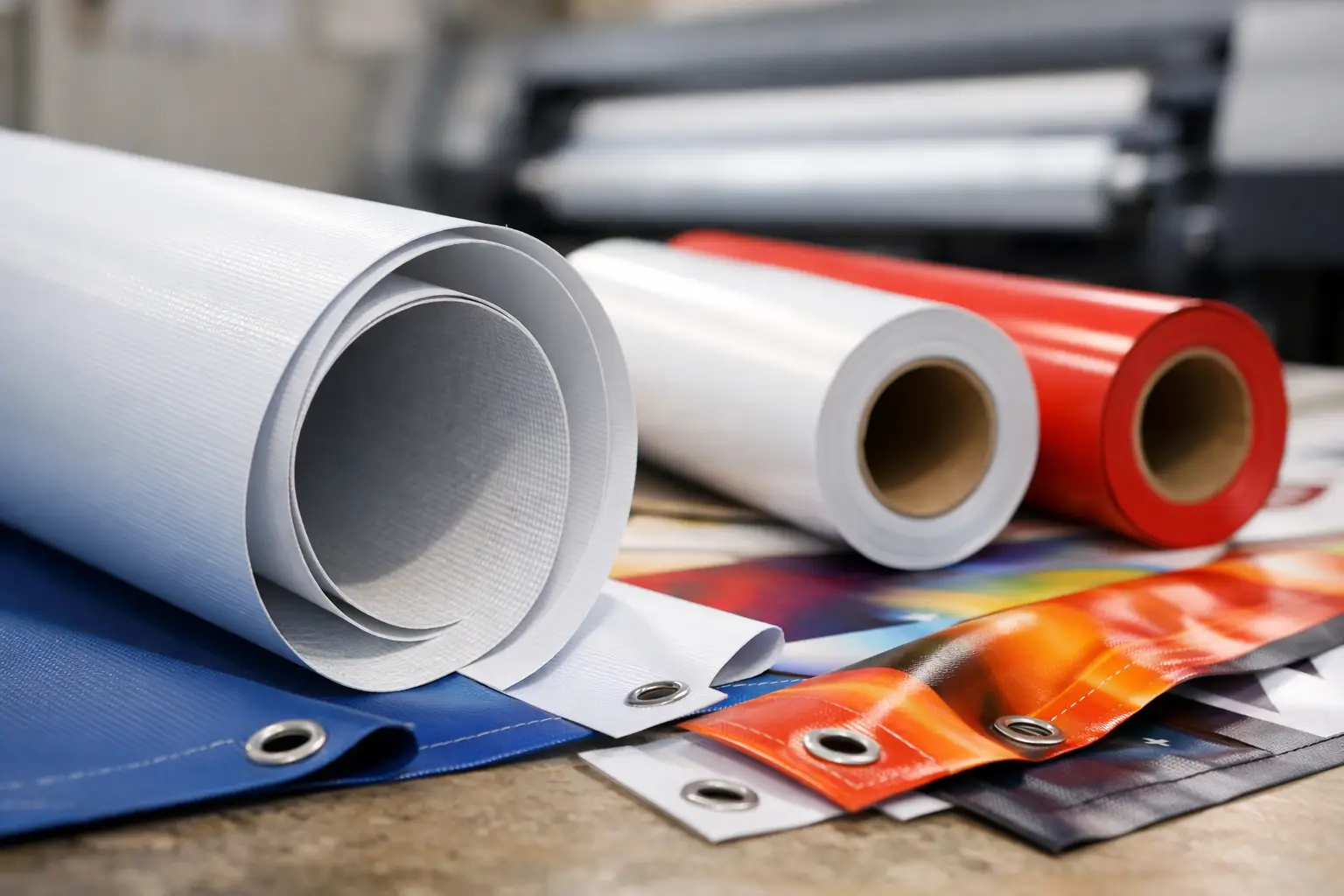
Standard PVC vinyl is a practical choice for many banners. It produces strong, full-colour graphics and is suitable for indoor and outdoor promotions, subject to correct fixing. It works well for shop offers, event signage, sports clubs, cafés, school events and temporary business advertising.
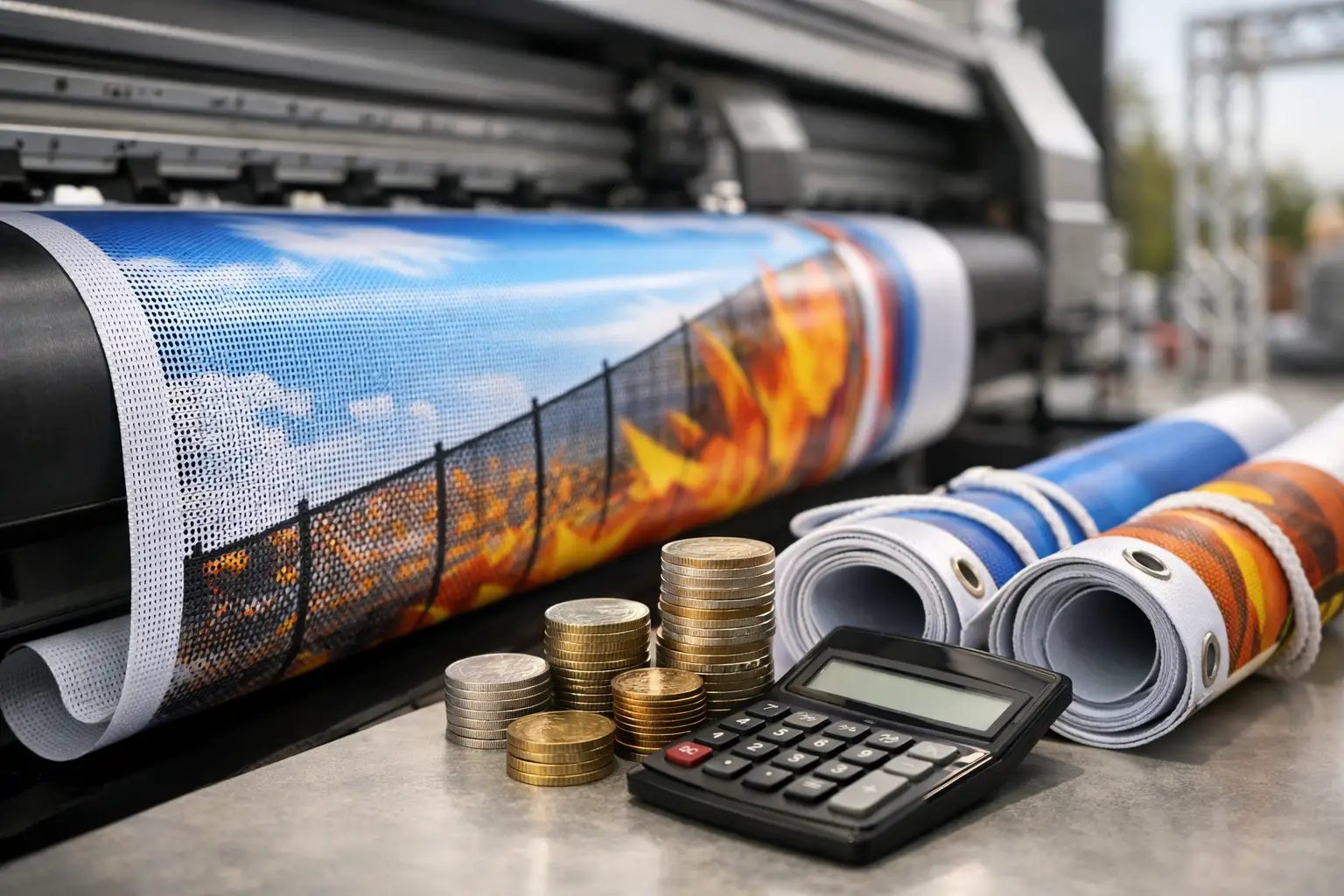
Mesh banner material is designed for exposed outdoor settings. Its small perforations allow air to pass through, reducing wind pressure compared with solid vinyl. That makes it a sensible option for scaffolding, perimeter fencing, building sites and large outdoor installations. Mesh can cost more than basic vinyl, but it may prevent tearing, sagging and early replacement where wind is a concern.
The best option depends on the location. For a calm indoor exhibition, mesh is unnecessary. For a banner stretched across a windy fence line, choosing solid vinyl simply because it is cheaper can be a false economy.
Finishing affects durability and installation
A banner is only as useful as its edges and fixings. Hems reinforce the material around the perimeter, while eyelets provide secure points for cable ties, bungee cords or rope. These finishing details add to the production cost, but they are essential for most outdoor displays and any banner that will be installed more than once.
Eyelet placement should match your fixing plan. Standard spacing works for many applications, but a large banner or exposed location may need closer fixing points to keep it taut. A loose banner looks unprofessional, makes text harder to read and is more likely to suffer damage in poor weather.
Pole pockets, where required, are another consideration. They allow a banner to slide over a rail or frame and create a cleaner presentation for certain events or display systems. They are not necessary for every order, so only add them when the installation calls for them.
Artwork can change the final price
If your artwork is print-ready, ordering is faster and usually more cost-effective. Print-ready files should be supplied at the correct dimensions, with high-resolution images and adequate bleed where needed. Text should be large enough to read at the intended viewing distance, particularly on outdoor banners.
Artwork that needs adjustment may require additional design support. This is worthwhile when a logo is low resolution, colours need correcting or a layout needs rebuilding for a larger format. Stretching a small social media graphic to banner size can result in blurred images and soft text, regardless of how good the printer is.
Keep the message focused. A banner is often seen while people are walking, driving or moving through a venue. One strong headline, clear contact details and a simple call to action will usually perform better than a crowded design. Better artwork does not always mean more graphics – it means clearer communication.
Turnaround and delivery: where urgency has a cost
Fast production is a major benefit when an event, opening or promotion is close. However, the fastest turnaround can affect the overall banner printing cost, particularly if you need priority production or expedited delivery. A last-minute order also leaves less time to check measurements and artwork.
Where possible, order early enough to allow for production, dispatch and delivery. This gives you time to review a proof, make changes if needed and avoid paying for urgency. That said, deadlines do happen. UK-based production with 24-48 hour turnaround can be the difference between having the right signage on site and arriving empty-handed.
Delivery should be considered as part of the full order value, not an afterthought at checkout. A low banner price can become less competitive once shipping is added, especially for oversized items or multiple display products. If you need banners, posters, roller banners or stickers for the same campaign, ordering together may simplify delivery and help keep the project on schedule.
How to get better value from your banner order
Better value is not always about choosing the cheapest material. It is about matching the product to the job, then making sure it can be used effectively. Start with the location, display period and installation method. From there, size, material and finishing become easier decisions.
For repeat promotions, keep a master artwork file with your correct logo, brand colours and contact details. This speeds up reorders and helps maintain consistency across branches, events and marketing campaigns. If prices, dates or offers change regularly, create a layout with a clear editable area rather than redesigning the entire banner every time.
It also pays to think beyond one campaign. A durable banner with a timeless message such as your company name, services and telephone number can be reused at trade events, local sponsorships and site visits. A dated seasonal offer may be perfect for a short push, but it has a shorter working life.
Questions to ask before placing an order
Ask where the banner will be displayed, how it will be fixed and how long it needs to remain in place. Confirm whether the quoted price includes hems, eyelets, VAT and delivery, and check the expected dispatch date rather than assuming it will arrive the next day.
If the banner is for outdoors, ask whether vinyl or mesh is the better choice for the site. If it is for an exhibition or reception area, consider whether a roller banner or printed backdrop would create a cleaner, more portable display. The right format can make a bigger difference than minor savings on material.
A well-specified banner does more than fill space. It tells customers where to look, what you offer and why they should act. Choose the size, finish and turnaround that suit the job, and your print budget will work harder from the moment it goes on display.