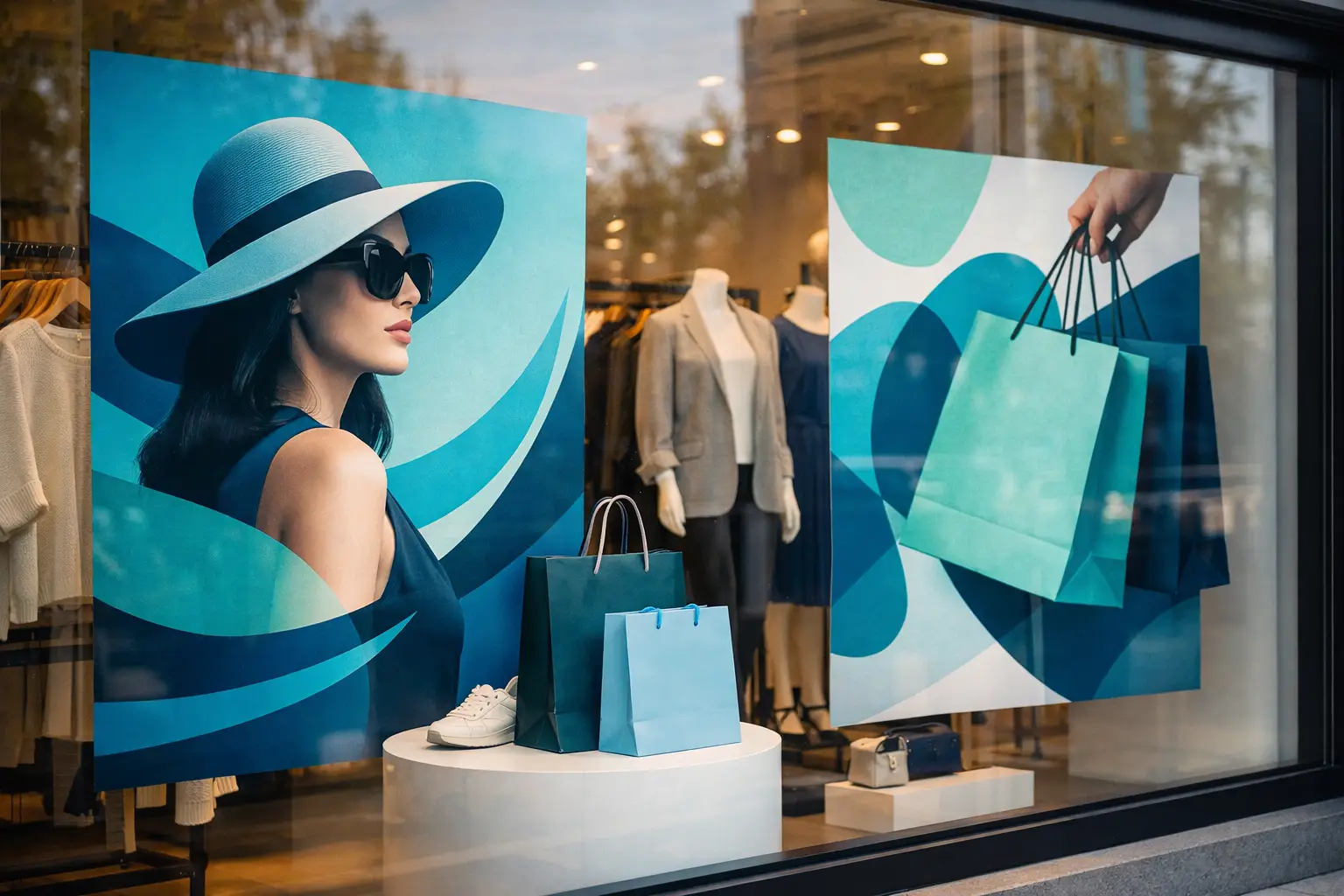
A passing shopper gives your frontage only a few seconds. That is why shop window display printing needs to do more than look attractive up close. It must communicate an offer, a product range or a reason to step inside before people have walked past the door.
For independent shops, salons, cafés, estate agents and national retail teams alike, the best window graphics combine clear messaging with dependable print quality. Get the size, material and artwork right, and your window becomes valuable selling space from opening time until close.
What shop window display printing needs to achieve
A shop window has a different job from a poster on an interior wall. It competes with reflections, traffic, weather, pavement signs and everything else on a busy high street. The design needs a strong focal point that can be understood from a distance, while the printed material needs to stay sharp and presentable through the campaign.
Start with one commercial objective. You may be promoting a seasonal sale, announcing a new service, highlighting an event or making your location easier to spot. Trying to communicate all of these at once usually weakens the display. A clear offer, a short deadline and an obvious next step will often outperform a window full of small text.
Think about viewing distance before approving artwork. Someone walking directly past the glass can read supporting details. Someone on the opposite pavement may only see a headline, a price point and your logo. Large type, high-contrast colours and a clean layout give the message the best chance of being noticed.
Choose the message before the material
Material matters, but the campaign comes first. A one-week promotion needs a different approach from permanent opening hours or privacy graphics for a treatment room. Temporary displays can be more promotional and time-sensitive, while longer-term graphics should be less likely to date quickly.
A useful test is to view the proposed wording at arm’s length on screen, then reduce it further. If the main message disappears or becomes hard to scan, it will not work well from the pavement. Keep phone numbers, web addresses and detailed terms secondary unless customers genuinely need them before entering.
Selecting materials for shop window displays
The right print solution depends on where the graphic sits, how long it needs to last and how much natural light you want to retain. There is no single material that suits every window.
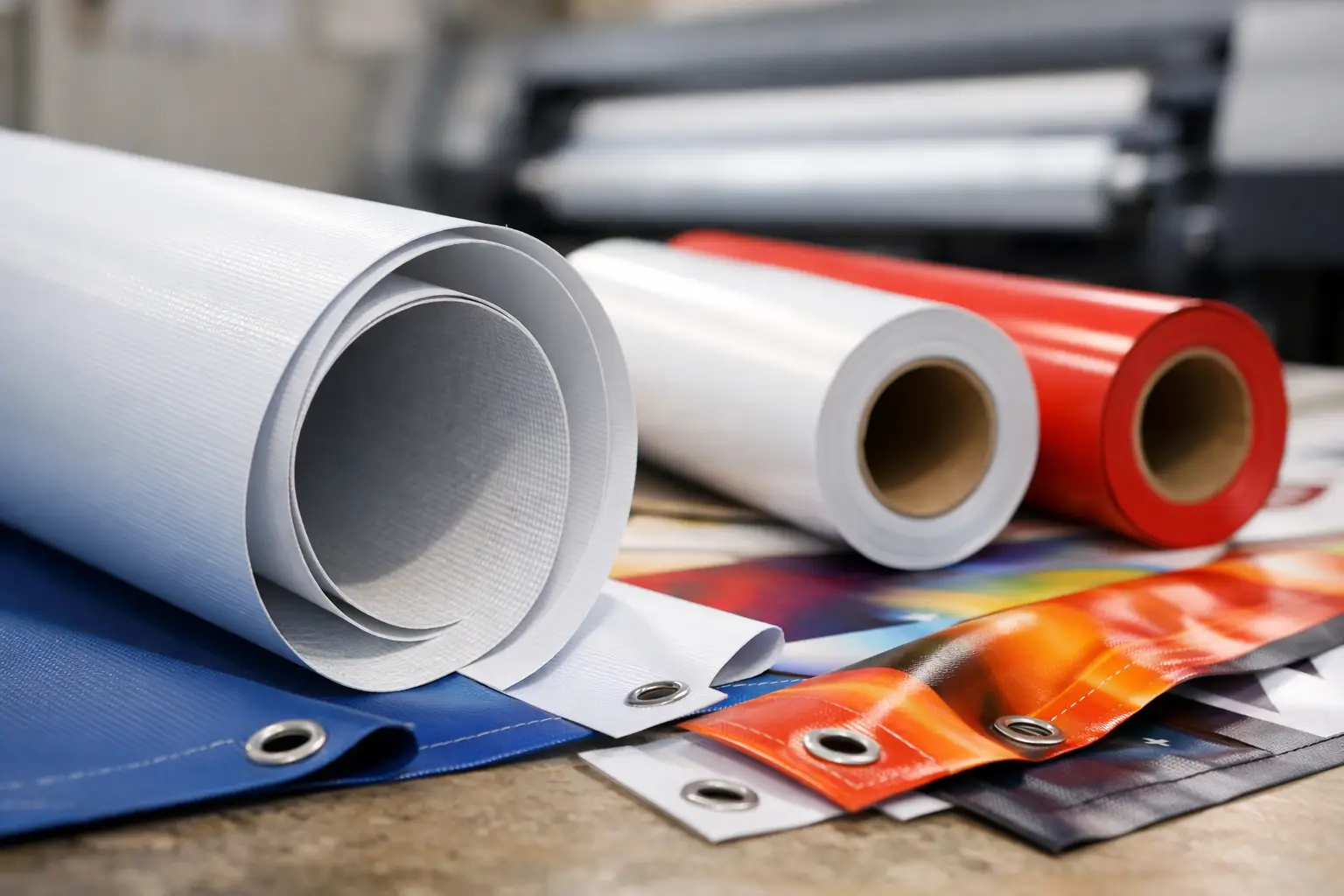
Self-adhesive window vinyl is a practical choice for logos, opening times, promotional messages and full-colour graphics. It creates a professional, built-in appearance and can be cut to suit particular areas of glass. For campaigns that need frequent changes, removable options can make future updates easier, provided the surface is prepared and the application is carried out carefully.
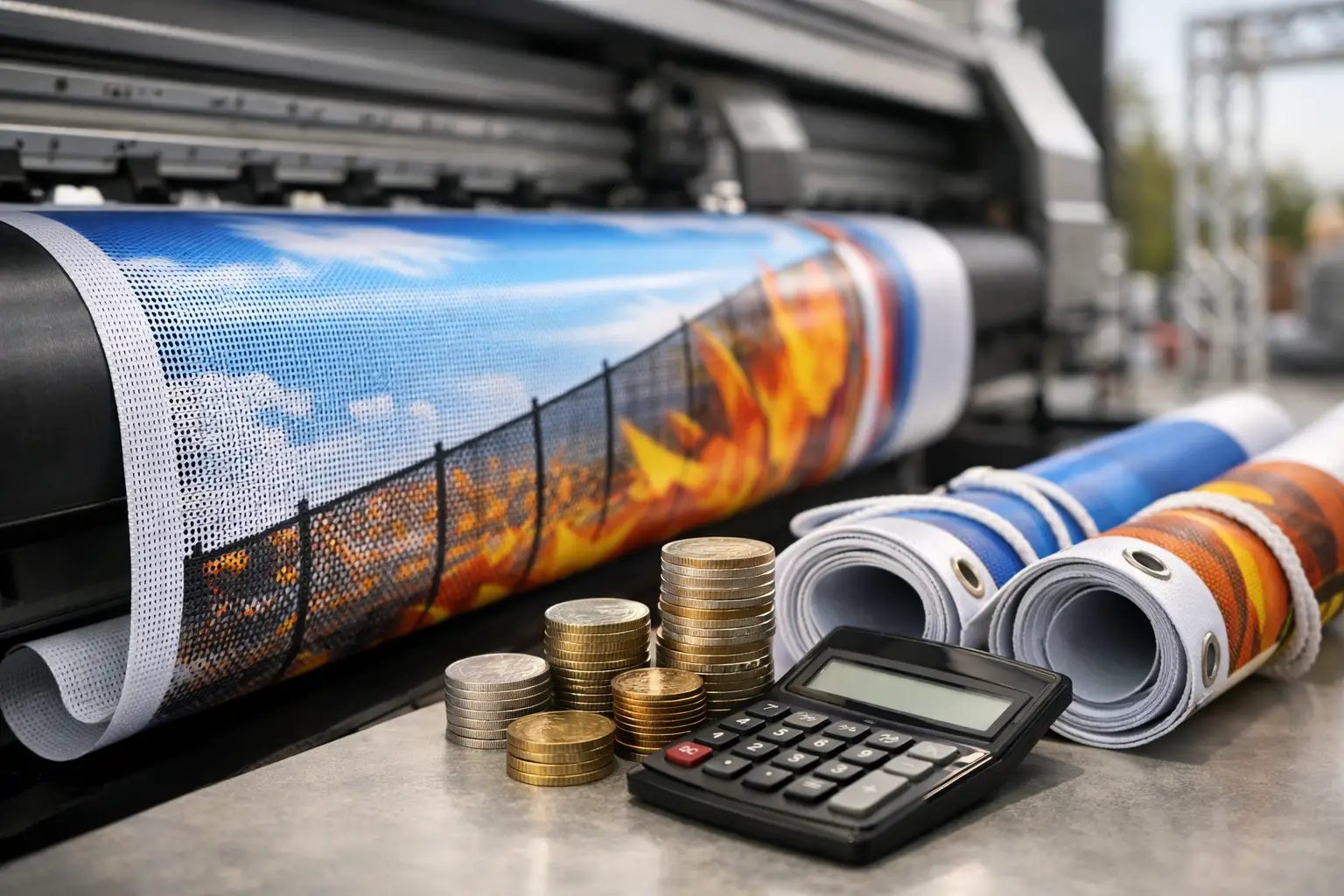
Perforated window film is worth considering where you want strong outward-facing graphics without completely blocking the view from inside. Its small perforations allow light through and can preserve some visibility for staff and customers. However, it is not the answer for every design. Fine detail, small type and subtle tonal changes may not reproduce as clearly through perforations as they do on solid vinyl.
Printed posters are often the quickest and most flexible option for short retail promotions. Positioned inside the glass, they are protected from the weather and are easy to replace when the offer changes. They work particularly well for sale messages, new menu items, recruitment notices and event announcements. The trade-off is that reflections can affect readability, especially in bright daylight, so bold design is essential.
For larger displays, printed panels, banners or bespoke graphics can cover more space and create real impact. These are useful for vacant units, refits, launches and high-footfall campaigns. Measure accurately, including any frames, handles, mullions and areas that must remain clear.
Design for the pavement, not just the screen
Good artwork is not about adding every available brand element. It is about making the right information impossible to miss. A window display should have a visual hierarchy: first the main offer or headline, then the supporting benefit, followed by the brand and action.
Use photographs only where they sell the product or create an immediate feeling. A restaurant may benefit from a well-lit image of a signature dish; a hair salon may need an aspirational finished look; a tradesperson’s office may be better served by a direct service message and a recognisable logo. Poor-quality images will show up quickly at large format, so supply high-resolution files wherever possible.
Colour needs practical thought too. Your brand palette may look excellent online but lose contrast against a busy street scene. Dark lettering on a pale background, or pale lettering on a genuinely dark area, tends to read best. Avoid placing important words over detailed imagery. A solid colour block behind the message is often the simplest fix.
When preparing print-ready artwork, use the final physical size rather than relying on a small social media graphic. Allow for bleed where required and keep essential text away from trim edges. If you are unsure whether a file is suitable, arranging an artwork check before production can prevent delays and costly reprints.
Internal or external fitting: get the details right
Window graphics can be fitted on the outside of the glass or viewed through the glass from the inside. This changes how artwork must be produced. A design installed internally but intended to face outward usually needs reverse printing, often with an appropriate white backing so colours remain vivid and text reads correctly.
External fitting can provide maximum clarity and colour impact, but the material must cope with rain, temperature changes and regular cleaning. Internal fitting gives added protection from weather and tampering, though glass reflections may be more noticeable. The best option depends on the location, the type of glass and the campaign duration.
Before fitting any display, clean the glass thoroughly. Dust, grease and cleaning-product residue can affect adhesion and leave visible marks beneath clear areas. Measure twice, mark alignment lightly and work steadily from one edge to the other to reduce bubbles and creases. Large graphics are easier to handle with two people, particularly when accurate positioning matters.
Keep campaigns fresh without creating extra work
A window that never changes can become invisible to regular passers-by, even when the print remains in good condition. Retailers do not need to replace every graphic each month, but key promotional areas should move with seasons, stock and local events.
Build your display around a permanent layer and a campaign layer. Your logo, core service statement and essential opening information can stay in place. Then use posters, removable vinyl or smaller panels for sale periods, bank holiday offers, Christmas trading, new launches and community activity. This gives the frontage consistency without making it feel static.
Plan the changeover before the campaign starts. Confirm the end date, order replacement graphics early and decide who will remove or fit the display. This is especially useful when you have several branches or a short promotion that cannot afford to overrun. Fast UK production and delivery can make a real difference when a campaign changes at short notice, but a little planning still protects your deadline.
A practical pre-print check
Before sending artwork to print, check these five points:
- The headline is readable from the opposite side of the street.
- Prices, dates and offer terms are correct and still relevant.
- The final dimensions match the usable glass area, not just the full window frame.
- The material suits internal or external fitting and the intended campaign length.
- Logos, images and text are supplied at a quality suitable for large-format printing.
Make the window part of the customer journey
The strongest displays carry through into the shop itself. If your window promotes a 20% offer, customers should be able to find the relevant products quickly once they enter. If it advertises a new menu, the same item should be easy to spot at the counter. A mismatch between the window promise and the in-store experience loses momentum at exactly the wrong moment.
You can also coordinate window graphics with posters, stickers, roller banners and counter displays for a more consistent campaign. This is particularly effective for pop-up shops, product launches, exhibitions and businesses trading from temporary premises. The goal is not to print more for the sake of it, but to make every customer-facing surface reinforce the same message.
For urgent promotions and planned retail refreshes, Banner Printing UK can help turn approved artwork into professional large-format print with fast turnaround. Choose a display that suits the glass, keep the message direct and give it enough visual space to work. Your best shop window does not need to say everything – it simply needs to give the right person a reason to stop.