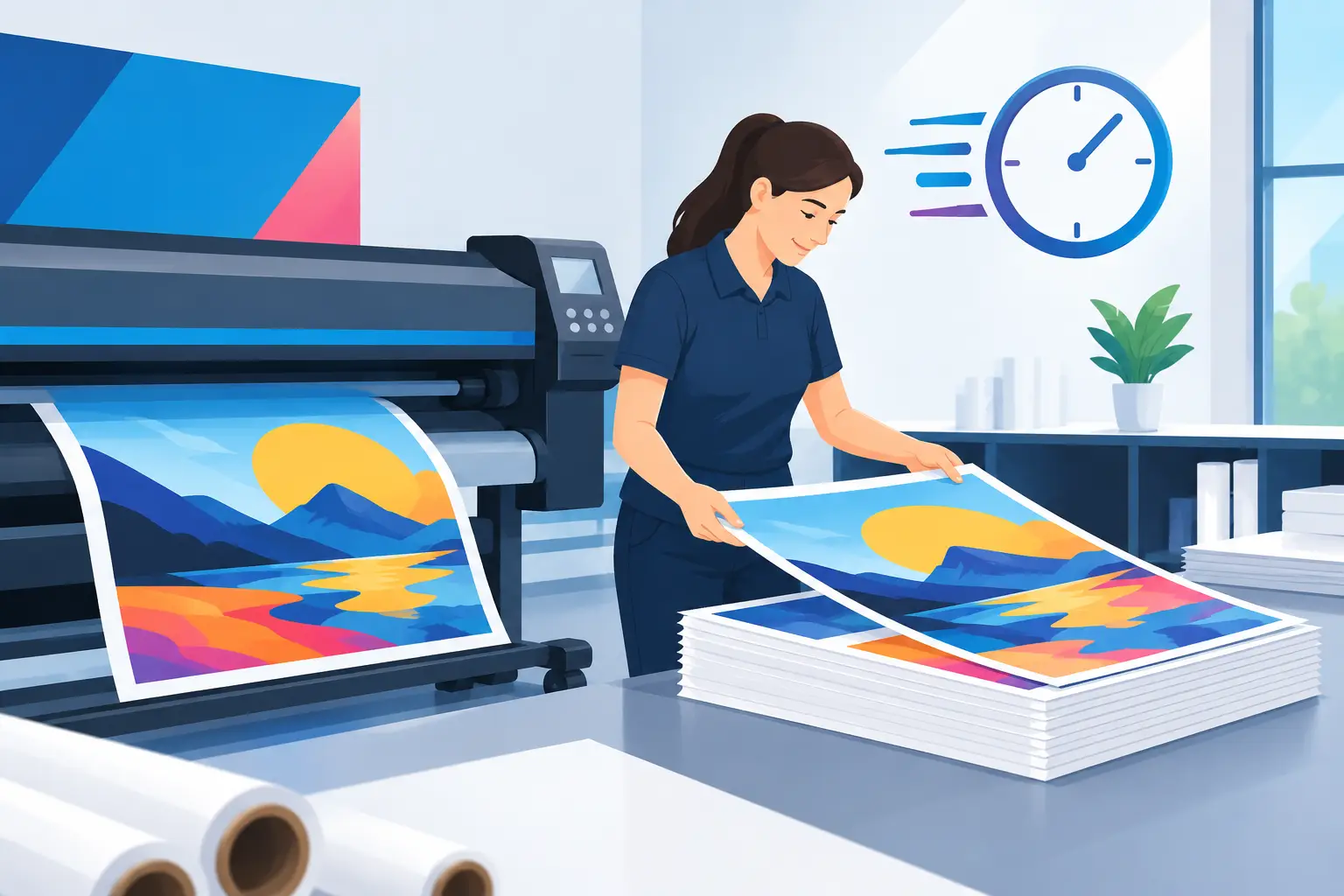
A poster can be the one thing that turns a quiet shop window, empty event space or last-minute promotion into something people actually notice. Fast turnaround poster printing is built for those moments: the sale starting on Friday, the exhibition opening tomorrow, the new menu launching this week or the site notice that cannot wait.
Speed only works when the finished poster still looks the part. Sharp text, accurate colour, clean trimming and the right material all matter just as much as dispatch time. The aim is not simply to print quickly. It is to give your message the visibility it needs, when you need it.
When Fast Turnaround Poster Printing Makes Sense
Urgent print is often associated with poor planning, but that is rarely the full story. Campaign dates change, stock arrives unexpectedly, venues confirm late, weather affects outdoor plans and a strong promotional opportunity can appear with little notice. For businesses that need to respond quickly, posters remain one of the most cost-effective ways to put a clear message in front of customers.
Retailers use them for weekend offers, seasonal ranges, opening hours and in-store launches. Event teams need posters for registration points, directions, sponsor displays and programme information. Hospitality venues rely on them for specials, events and temporary notices, while tradespeople and construction firms may need clear safety, sales or project signage at short notice.
The best use case is one where a poster has a defined job. It might need to stop passers-by, guide visitors to the right place, explain an offer in seconds or reinforce your brand at a point of purchase. If the message is vague, printing it faster will not fix the result.
Start With the Viewing Distance
Before choosing a size, think about where people will stand when they read it. This one decision shapes the type size, amount of copy and level of detail your design can carry.
A4 posters work well for counters, noticeboards, reception areas and close-up information. A3 is a practical choice for shop displays, café windows and event notices where people will be a few steps away. A2 and A1 give your promotion more presence in larger windows, busy retail areas, venues and exhibition spaces. For a large wall, high-traffic public space or distant viewing, A0 may be the better fit.
Bigger is not automatically better. An A0 poster packed with small paragraphs can still be difficult to understand. Equally, a simple message on A3 can perform extremely well at eye level. Match the format to the space, then design around the distance rather than trying to squeeze every detail onto the page.
Choose Paper Stock for the Job
The right finish affects how a poster looks under lighting and how it stands up to handling. Gloss paper brings out strong colours and can make product photography, bold promotions and high-impact graphics feel more vibrant. It is a popular option for retail campaigns, entertainment posters and visual displays.
Silk or satin stock offers a more understated finish with reduced glare. It is often the better choice for text-heavy posters, professional services, menus, internal communications and displays placed under bright lights. Matt finishes can also suit premium branding where a softer, less reflective appearance is needed.
For short-term indoor promotions, standard poster stock is usually all that is required. If posters will be displayed outside, in damp conditions or in locations where they may be handled frequently, ask whether a more durable solution is appropriate. Paper posters are excellent for many applications, but they are not the same as weatherproof signage. For outdoor campaigns, a waterproof banner, correx board or another purpose-made display material may offer better value over time.
Keep the Message Easy to Read
A fast print deadline can tempt people to use every available inch of space. Usually, the opposite approach gets better results. Give the poster one clear priority, whether that is a price, date, product, opening announcement or call to action.
Your headline should be readable from the intended viewing distance and should tell people why they need to pay attention. Supporting text can add essential details, but it should not compete with the main message. A promotional poster does not need to explain everything. Its job is often to earn the next action: visit the shop, scan a code, attend the event, call the number or ask a member of staff.
Use high contrast between text and background. Dark text on a pale background, or pale text on a dark background, is generally easier to read than colours with similar tones. Be careful with text placed over busy photography. A solid colour panel, subtle overlay or clear space around the wording can make a major difference.
Artwork Checks That Prevent Delays
Most production delays begin with artwork that cannot be printed correctly. A quick check before upload can protect your deadline and avoid a poster that looks different from what you expected.
Use a print-ready PDF where possible, sized to the final poster dimensions. Images should be high resolution, ideally 300 dpi at the printed size. A photo pulled from a website or social media post may look fine on a phone but become soft or pixelated when enlarged.
Allow for bleed if your design runs to the edge of the page. This gives the printer room to trim cleanly without leaving unwanted white lines. Keep logos, text, QR codes and important imagery safely away from the trim edge too. A small margin can prevent vital content being cut too close.
Check spelling, dates, prices, web addresses and telephone numbers before approval. On a tight turnaround, production can move quickly, so the final artwork should be exactly what you want printed. If you are uncertain about the file, getting it checked before ordering is often faster than correcting a problem after delivery.
Plan Around the Real Deadline
Fast delivery is valuable, but it is worth separating production time from the time needed for artwork approval and delivery. A 24 to 48-hour turnaround can be ideal for urgent campaigns, provided the artwork is ready and the order is placed within the relevant production window.
If your event begins first thing in the morning, do not treat the advertised turnaround as the only timing factor. Build in time for delivery, unpacking, putting posters up and dealing with any unexpected changes. For a campaign with a fixed launch date, ordering one working day earlier than the absolute minimum gives you useful breathing room.
Quantity can also affect the schedule. A small run of standard-sized posters is usually straightforward, while a larger order, specialist finish or mixed set of display products may need more production time. If you need posters alongside roller banners, flyers, stickers or business cards, placing everything together can help you coordinate your launch, but check that all items fit the required deadline.
Make Posters Work Harder at the Display Point
A well-printed poster still needs the right placement. Put it where customers naturally pause: beside entrances, at tills, in windows, by lifts, near event registration desks or alongside the product it promotes. Avoid placing it where it is hidden by furniture, competing signs or poor lighting.
For shop windows, consider the direction people approach from and whether the poster must be readable through glass. Strong contrast and large type matter even more here. At exhibitions, posters can support a larger display by explaining offers, schedules or product benefits that staff cannot repeat to every visitor.
Consistency helps when you are running a wider campaign. Use the same headline, key colours and offer across posters, banners and handouts so customers recognise the message immediately. You do not need identical designs in every format, but the campaign should feel connected.
Fast Print Should Still Feel Professional
Urgent does not have to look rushed. The strongest fast-turnaround poster orders are those with a clear purpose, suitable size, print-ready artwork and realistic delivery plan. These basics allow production to move quickly without compromising the finish your business is putting in front of the public.
For a limited-time offer or an event date that is moving closer by the hour, focus on the message people need to see first. Give it room, choose a format that suits the location and send artwork that is ready to print. Banner Printing UK can then help turn a tight deadline into a display that looks prepared, professional and ready for attention.