A building site is not a polished shopfront. It is exposed to wind, rain, dust, vehicle movements and changing access routes. That is why the best banners for building sites are chosen for how they perform on the fence or hoarding, not simply how they look on screen. The right material, size and fixing method keep your message visible from day one through to handover.
For contractors, developers and trades, site banners have several jobs to do. They can promote the company on the job, show contact details for local enquiries, reinforce approved safety messaging and give temporary fencing a more professional finish. The practical choice depends on where the banner will sit and what it needs to withstand.
Best banners for building sites: start with the location
Before choosing artwork or dimensions, look at the surface and exposure. A banner on solid timber hoarding behaves very differently from one fixed to Heras fencing on an open, windy plot. A short-term renovation in a sheltered town centre may suit a standard vinyl banner, while a long-running development beside an exposed road needs a material that lets wind pass through.
Think about viewing distance too. Pedestrians may be only a few metres away, but passing traffic needs to read the main message in seconds. If your logo, telephone number and service are fighting for space, the banner is trying to do too much. One clear message usually delivers more value than a crowded design.
Mesh banners for exposed fencing
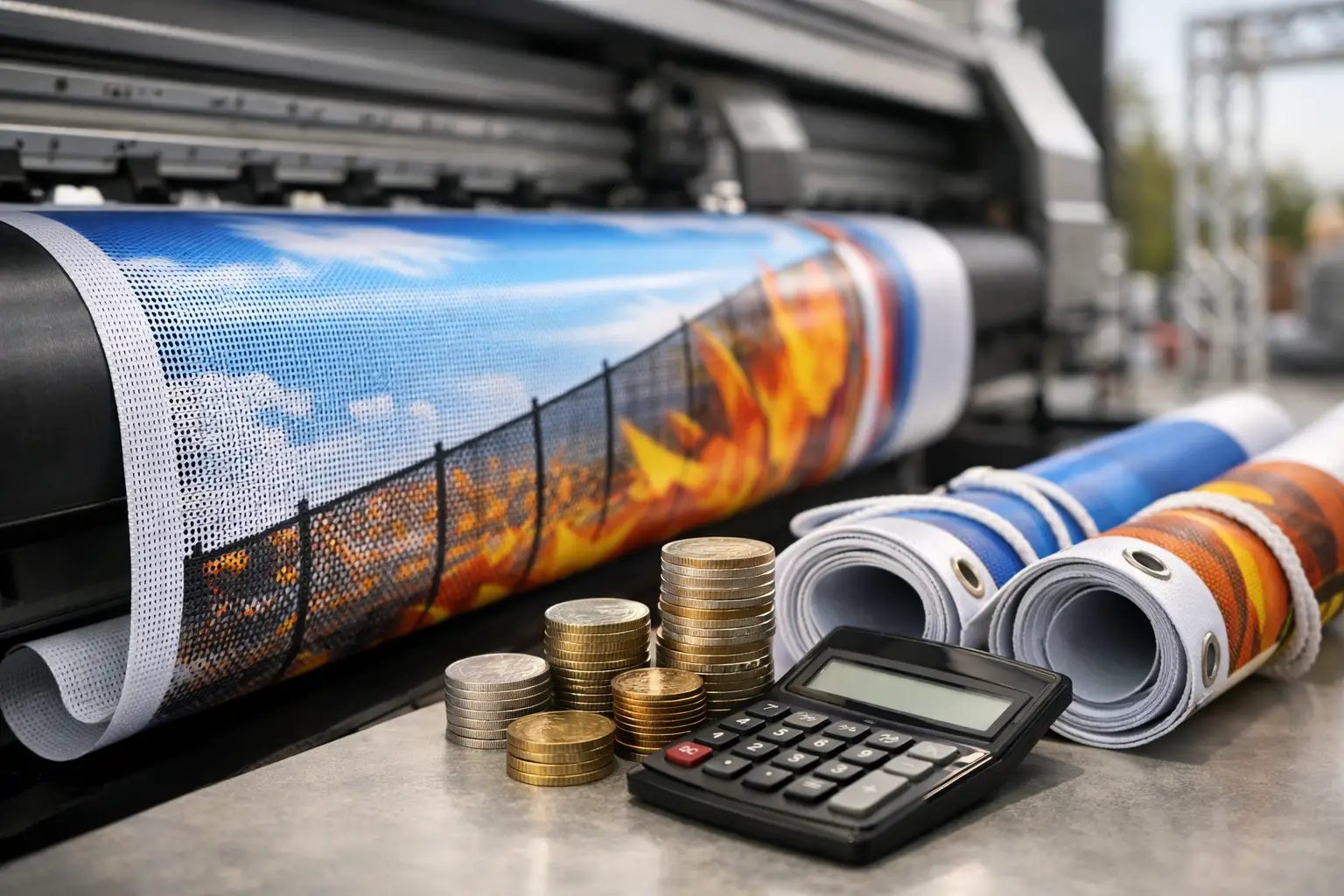
Mesh banners are often the strongest choice for perimeter fencing, scaffold wraps and exposed sites. The tiny perforations allow air to pass through, reducing the sail effect that can pull at eyelets, cable ties and temporary fencing. They still produce a bold printed finish from normal viewing distances, particularly for large logos, high-contrast text and simple graphics.
This is the sensible option where wind loading is a concern. It is not completely windproof, and it still needs secure fixing, but it places less strain on the banner and fence than a solid material. On close inspection, mesh has a more open appearance than vinyl, so it is less suited to designs packed with small text or detailed images.
Vinyl banners for hoardings and sheltered areas
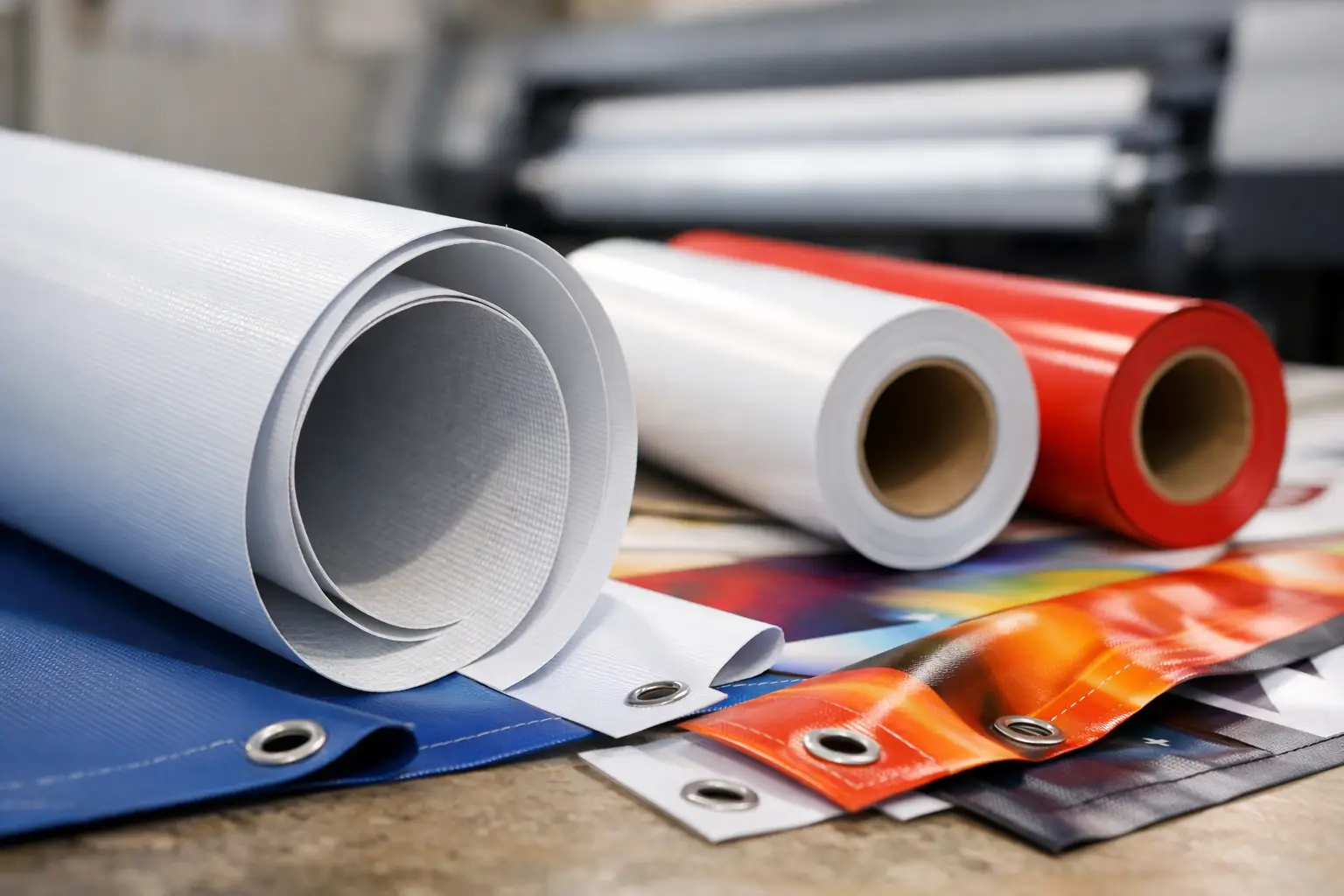
PVC vinyl banners give you a solid, vivid print surface. They are ideal for timber hoardings, site entrances, gates, internal work zones and locations with less wind exposure. If the banner needs to carry a detailed development visual, sponsor logos, a project timeline or a QR code, vinyl generally provides sharper results at close range.
Weatherproof and UV-resistant vinyl is made for outdoor use, but fixing still matters. Leave a banner loose at the corners and repeated movement will shorten its working life. Use every eyelet supplied, pull the banner taut without overstretching it, and check the fixings as part of routine site inspections.
Do not treat safety signage as an afterthought
Branded banners can support site management, but they should not replace legally required health and safety signs. Where a message concerns mandatory PPE, restricted access, danger or emergency procedures, make sure the wording, symbols and placement meet your site requirements and current guidance.
A promotional banner is best used alongside clear, purpose-made safety signage. Keep the hierarchy obvious: safety information first at access points, then company branding, project details or recruitment messaging where there is room. This avoids a cluttered entrance and helps visitors understand the site rules quickly.
Choose a size that can actually be read
Bigger is not always better, especially on temporary fencing. A banner that is too large for its frame can sag, flap or obscure access. A banner that is too small can disappear against a busy worksite. Measure the usable fixing area rather than estimating from a photograph or fence panel count.
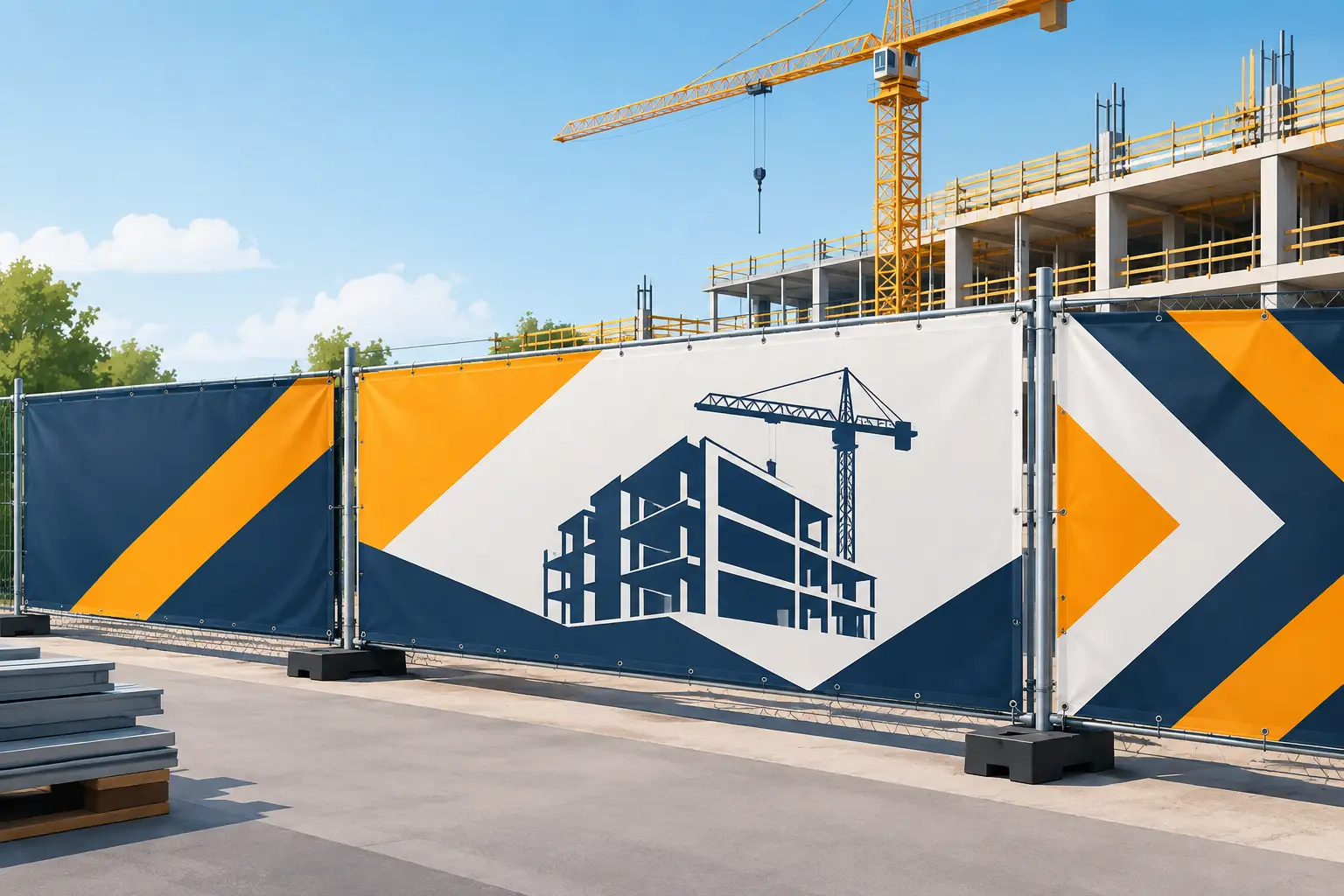
For a standard fence run, repeated landscape banners can create a tidy, consistent perimeter. For a main entrance, a larger banner can carry your company name, principal contractor details and contact number with enough breathing room. On tall hoardings, portrait banners can work well for simple brand messages, while wide formats suit development names and directional information.
As a practical rule, make the company name or core message the largest element. Keep telephone numbers large enough to read from the road and avoid thin typefaces. Dark text on a pale ground, or pale text on a dark ground, is usually easier to read than colours with similar tones. Your corporate palette matters, but legibility matters more on a working site.
Build the message around the job in hand
The most effective building site banner is specific. A general logo banner gives useful visibility, but a message tailored to the project can work harder. A local builder might promote extensions, refurbishments or new builds. A developer may need to present the scheme name and sales contact. A subcontractor can use the space to show specialist services and credentials.
Keep the wording direct. “Site entrance”, “New homes coming soon”, “Commercial refurbishment in progress” or “For enquiries call” are clearer than broad marketing statements. Include a website address only if it can be read comfortably from the likely viewing distance. If a QR code is part of the design, make it large, high contrast and placed where people can safely stop to scan it.
For multi-contractor sites, agree a consistent approach before printing. Matching banner sizes, colours and placement create a more organised perimeter, even when several firms need recognition. It also makes replacements easier if fencing moves or a panel is damaged.
Finishing and fixing make the difference outdoors
A well-printed banner can still fail early if the finishing is wrong. Hemmed edges add strength, while metal eyelets provide reliable points for cable ties, bungee cords or other suitable fixings. For long runs, place fixings at regular intervals rather than relying on the four corners alone.
Cable ties are quick and cost-effective for short-term use, but inspect them regularly, especially after strong winds. Bungee cords can provide a little flex and may be useful where movement is unavoidable. Whatever method you use, avoid sharp edges, loose tails and trip hazards around entrances or pedestrian routes.
There are four checks worth making before installation:
- Measure the fence, hoarding or scaffold section accurately, including any gates or obstructions.
- Confirm whether the area is sheltered or exposed and select mesh or solid vinyl accordingly.
- Check that eyelet positions and fixing points match the available structure.
- Inspect banners after poor weather, fence moves and changes to the site layout.
These small checks prevent a rushed replacement order later and help the site stay presentable throughout the project.
Prepare artwork for fast, clean printing
Building site orders are often time-sensitive. Supplying print-ready artwork helps keep turnaround moving, particularly when banners are needed before a site opens, a visit takes place or new fencing arrives. Use high-resolution images, keep key text away from the edges and check all telephone numbers, project names and dates before approval.
If your artwork includes logos from multiple parties, ask for the correct brand files rather than copying low-quality images from an email signature or website. Vector artwork is ideal for logos and text because it stays sharp at large sizes. If you only have a basic design, keep it simple rather than stretching a small image beyond its limits.
Banner Printing UK can help turn approved artwork into durable, full-colour site banners with fast UK production and delivery. For urgent work, confirm the final size, material and artwork early so production can focus on getting the banner printed and dispatched without avoidable delays.
Plan for replacement, not just installation
Construction sites change. Fences are repositioned, phases open and close, and a banner that was perfect at the start may no longer match the site layout six months later. Ordering a small number of spare banners can be worthwhile for busy or long-running projects, particularly where your perimeter branding needs to stay consistent.
Treat site banners as working equipment: specify them properly, install them securely and review them whenever the site changes. A clean, readable banner at the entrance tells clients, neighbours and passers-by that the same care is being applied behind the gate.