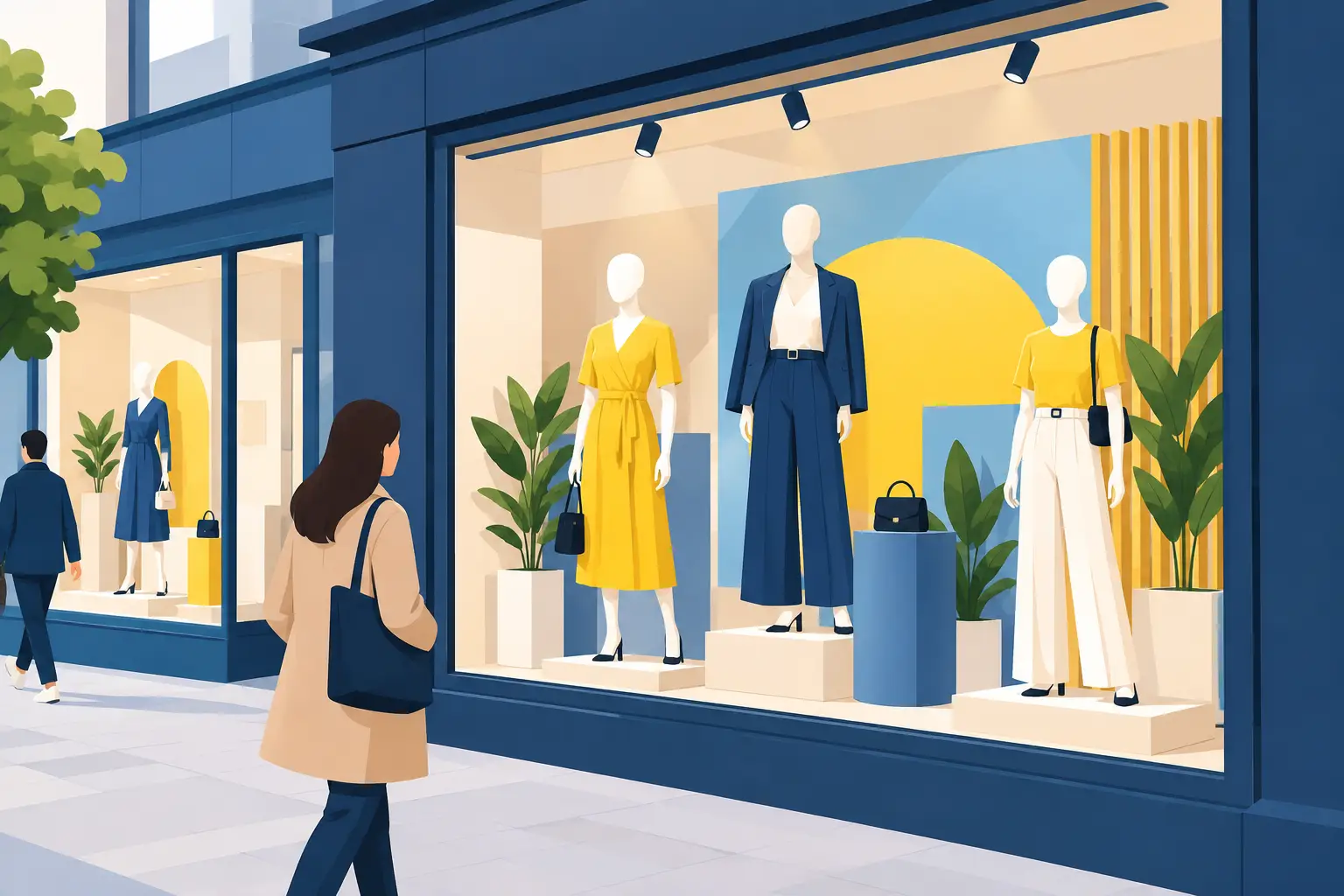
A shop window has seconds to earn a second look. The strongest retail window display examples do not try to say everything at once. They lead with one clear message, make it visible from the pavement and give people a reason to come through the door now.
For independent retailers, salons, cafés, showrooms and pop-up spaces, the window is often the most cost-effective advertising space available. It is already in the right location, reaches local customers every day and can be refreshed quickly around stock, seasons or events. The key is choosing a display format that suits the message, the glass and the viewing distance.
Retail window display examples that drive action
1. A large seasonal sale poster
A bold sale poster remains one of the most dependable window displays because it answers the shopper’s first question immediately: what is on offer? Use a short headline such as “Up to 50% Off”, “End of Season Sale” or “Selected Lines Reduced”, then support it with dates if the promotion has a firm end point.
Large-format posters work best when the lettering can be read from across the street. Keep the offer dominant, use high contrast and avoid crowding the design with product descriptions, terms or competing logos. If customers need more detail, put it inside the shop or on a smaller poster nearer the entrance.
2. New product launch graphics
A product launch display should create curiosity before it explains every feature. A clean hero image, product name and launch date can be more effective than a busy collage. This approach is ideal for fashion drops, beauty ranges, food specials, homeware collections and technology accessories.
For a launch that needs to feel premium, use a coordinated set of window posters and an in-store backdrop. The window catches attention, while the interior display gives staff a polished space to demonstrate the range or take photographs for social media. Consistent colours and typography make the launch look planned rather than improvised.
3. Window vinyl for permanent branding
Some businesses need their window to work every day, not only during promotions. Printed window vinyl can carry your logo, opening hours, services and key contact details without taking over the entire frontage. It is a practical choice for barbers, estate agents, clinics, cafés, gyms and service-led businesses where passers-by need quick reassurance about what happens inside.
The trade-off is permanence. A vinyl design should allow enough open glass for natural light and sightlines, especially in smaller premises. Think of it as a branded base layer. Leave room to add posters or seasonal messaging over the top when required.
4. Privacy film with a branded finish
Street-facing treatment rooms, salons and offices often need privacy, but plain frosted film can look anonymous. Branded privacy film gives the glass a more considered finish while helping to screen selected areas. It can include a logo pattern, simple lettering or a subtle graphic that fits the business identity.
Placement matters here. Cover the lower or middle section where privacy is needed, while keeping the upper glass clear for daylight and visibility. Before printing, check how the design will look from both sides of the window and whether the premises have any landlord or centre-management restrictions.
5. Event countdown displays
A countdown gives a local campaign momentum. “3 Days to Go”, “This Saturday Only” or “Late Opening Until 8pm” creates a sense of timing that a generic poster cannot match. It is particularly useful for store launches, signing events, tasting sessions, Black Friday promotions, charity days and late-night shopping.
Use a modular approach if dates or messages will change. A main printed poster can carry the event branding, with smaller replaceable graphics showing the current countdown or offer. This reduces waste and makes last-minute updates less stressful when plans move.
6. A local partnership window takeover
Retailers do not always need to promote alone. A florist can partner with a wedding venue, a coffee shop can support a nearby theatre, and a sports shop can back a local club. A shared window display builds community recognition and puts your business in front of an audience that already has a reason to care.
Keep the partnership easy to understand. Feature one message, both logos and a direct call to action, such as an event date, a voucher code or a collection point. Too many partners can weaken the design, so reserve a full window takeover for collaborations with a clear commercial or local benefit.
7. QR-led displays for limited stock or bookings
A QR code can turn a window into a sales point outside opening hours. It works well for appointment bookings, event tickets, restaurant menus, property details, special-order products and click-and-collect offers. The code should support the message, not replace it.
Give people a reason to scan: “Book your free consultation”, “View the full collection” or “See today’s menu”. Print the code large enough to scan from a comfortable distance and test it in real lighting before installation. A code placed behind reflective glass, too low to the ground or surrounded by visual clutter will underperform.
8. Before-and-after service displays
For businesses selling a result rather than an off-the-shelf product, before-and-after visuals do the selling quickly. Hair salons, kitchens and bathrooms showrooms, repair specialists, opticians and vehicle detailers can all use this format. The contrast makes the value of the service obvious without relying on long copy.
Choose genuine, high-quality images and keep the labels simple. The “before” image should not look deliberately poor, and the “after” image should reflect what customers can realistically expect. Trust is more valuable than exaggerated claims, particularly for a high-ticket service.
9. A display built around one best seller
A crowded window full of products can make it hard for customers to know where to look. If one product is seasonal, newly available or particularly profitable, make it the centrepiece. Use a large image, a clear price or offer, and one supporting line that explains why it is worth noticing.
This format suits bakeries promoting celebration cakes, gift shops pushing a Christmas range, cycling stores featuring a new model or beauty retailers launching a hero product. It can also help clear slow-moving stock, provided the offer is clear and the display still feels on-brand.
10. Recruitment and community notices
A window can support operations as well as sales. “Now Hiring” posters are effective in high-footfall locations, especially for hospitality, retail and customer-service roles. Community notices can also position a business as active in its area, whether you are collecting donations, sponsoring a school event or promoting a local workshop.
Keep recruitment displays professional. State the role, basic hours or experience level, and the simplest way to apply. A poorly printed sheet taped to the glass can damage the impression of a business that otherwise takes its presentation seriously.
How to choose the right format for your window
Start with the job the display needs to do. A sale needs urgency and large type. A permanent service message needs clarity and durability. A premium launch needs strong imagery and space around the product. Trying to combine all three in one window usually results in a message that is visible but not memorable.
Then consider the practical conditions. Measure the usable glass area rather than guessing from the pavement. Check where sunlight hits, whether reflections obscure the design and how close people can stand to the window. A display viewed by drivers needs fewer words and larger lettering than one aimed at pedestrians outside a town-centre shop.
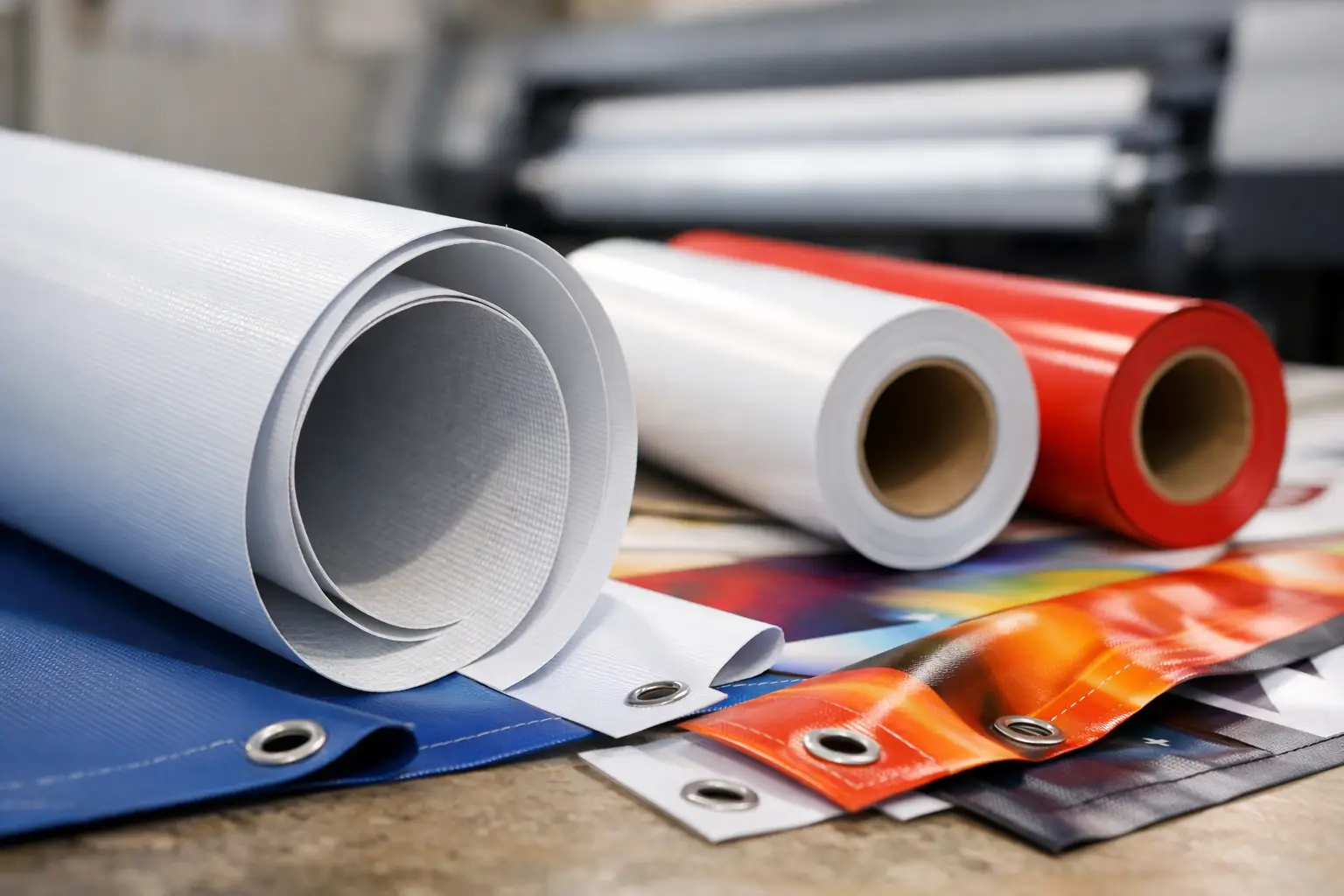
Material choice also affects performance. Posters are fast to update and well suited to regular campaigns. Printed vinyl is more durable for longer-term branding and can handle everyday exposure when specified for the job. For larger temporary installations, a printed backdrop inside the window can create impact without covering the glass permanently. If the display faces a busy road or outdoor walkway, choose print materials designed to remain clear and presentable in changing weather and UV light.
Make the design work from the pavement
The best window designs follow a simple reading order: offer or headline first, product or image second, action third. A customer should understand the core message while walking past, not after stopping to read a paragraph. Use a single dominant colour palette, high-resolution artwork and enough empty space for the message to breathe.
Avoid common problems such as tiny price points, low-contrast text and artwork stretched beyond its original quality. If you are using photographs, supply the highest-resolution files available. If you are unsure whether your artwork is print-ready, getting it checked before production is far easier than discovering a pixelated image once it is in the window.
Refresh the display when the message has expired, stock has changed or the window starts to look tired. A small, well-timed update can bring regular passers-by back through the door. Banner Printing UK can help businesses move from artwork to high-quality printed display materials quickly, particularly when a promotion or event deadline is close.
Your window does not need a complicated concept to earn attention. Give it one job, print it clearly and make sure the next person walking past knows exactly why they should step inside.