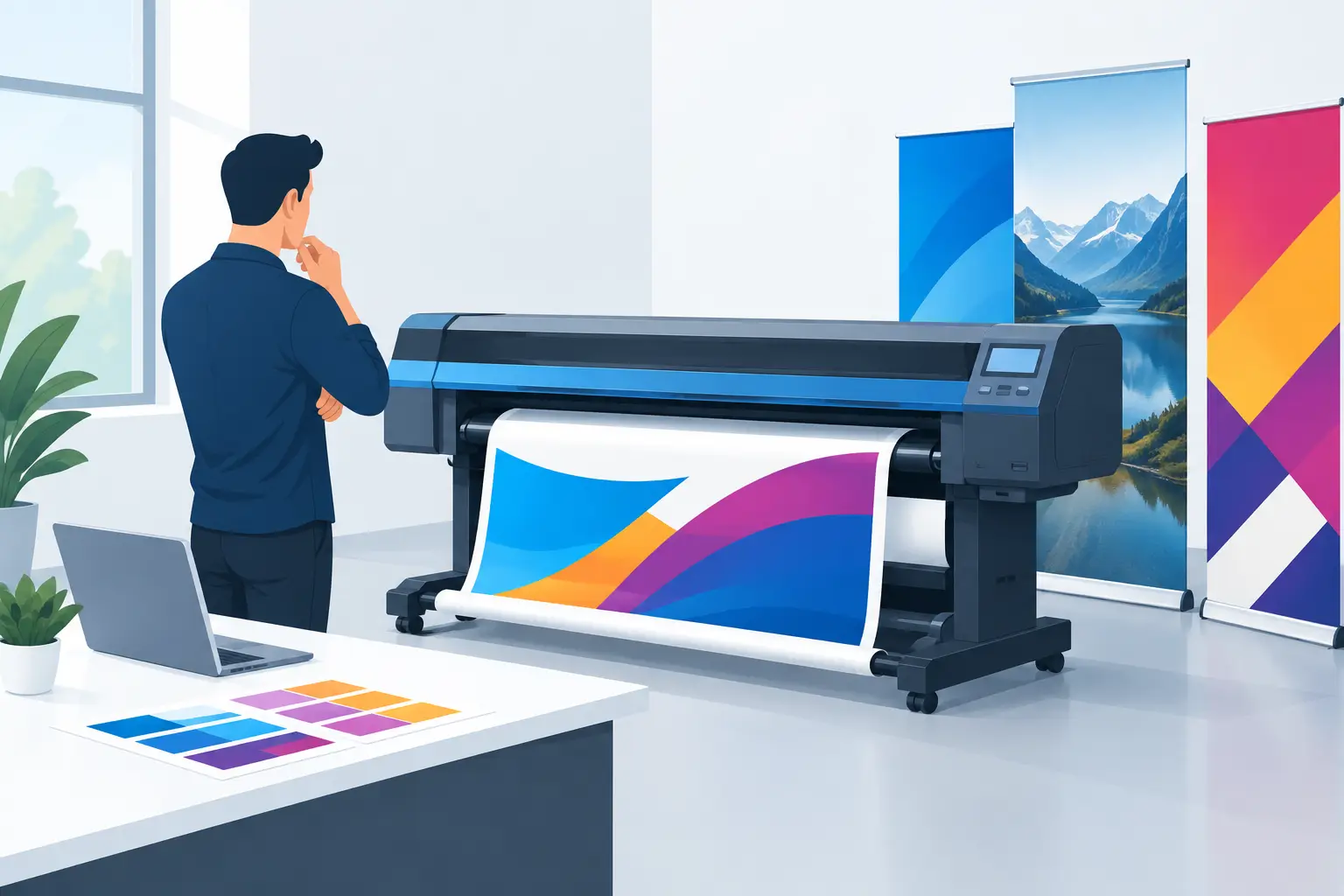
A banner that arrives late, curls at the edges or becomes unreadable after a week outdoors is not a bargain. For a shop promotion, construction site, exhibition stand or community event, the right banner printers make the difference between a display that gets noticed and one that creates another problem to solve.
The best choice is rarely just about the lowest price. You need print that suits the location, artwork that reads at the right distance, finishing that fits how the banner will be installed and a turnaround you can rely on. Here is what to check before you place an order.
What Good Banner Printers Should Deliver
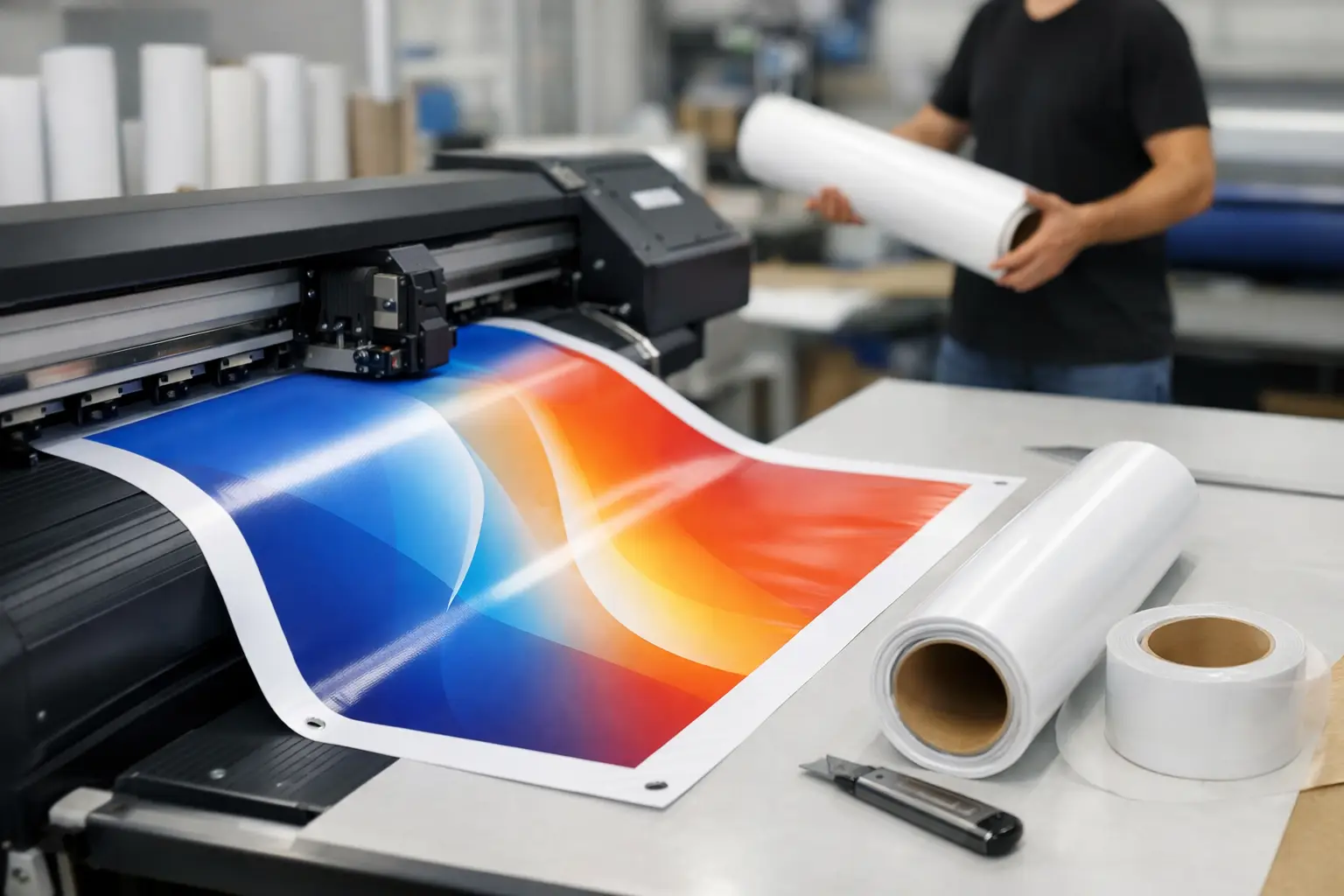
A professional banner printer should make ordering straightforward while giving you confidence in the finished product. That means clear size options, suitable material choices, sharp full-colour printing and practical finishing such as eyelets, hems or pole pockets.
Speed matters too. If your sale starts on Friday, your event opens tomorrow or site signage has to be in place before contractors arrive, production and dispatch times are part of the product. UK-based production can be a real advantage when deadlines are tight, particularly when you need a quick artwork check or a replacement at short notice.
Quality is about more than how bright the design looks on screen. A good print partner will consider the banner’s actual job: whether it will hang on a windy fence, sit behind a reception desk, travel to several events or be viewed by passing traffic. The material, ink and finish should all support that use.
Start With Where the Banner Will Be Used
The simplest way to narrow down your options is to start with the environment. Indoor banners usually need a clean, high-impact finish and easy handling. Outdoor banners need to cope with rain, sunlight and movement in the wind.
For shopfronts, promotions and events
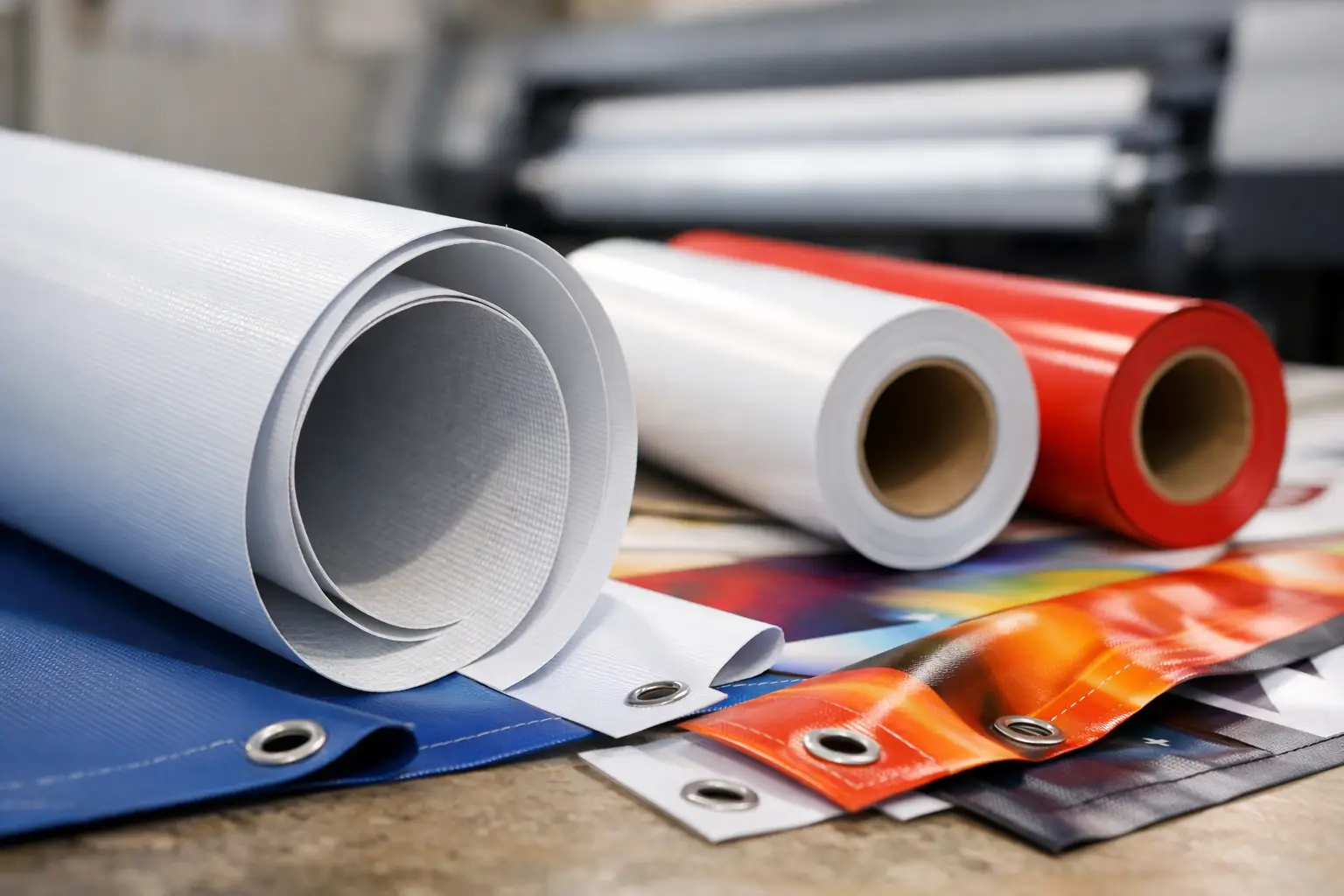
Standard PVC vinyl is a dependable choice for most promotional banners. It produces strong colour, handles regular use well and works for shopfronts, market stalls, sports clubs, events and roadside messaging. With weatherproof, UV-resistant printing, it is a practical option for campaigns that need to stay visible outside.
If the banner will be displayed indoors, you may have more freedom to prioritise appearance and portability. Roller banners, fabric-style backdrops and display stands can give a more polished look at exhibitions, presentations and retail launches. They are also easier to transport and set up than a large banner fixed to a wall.
For fences, scaffolding and windy sites
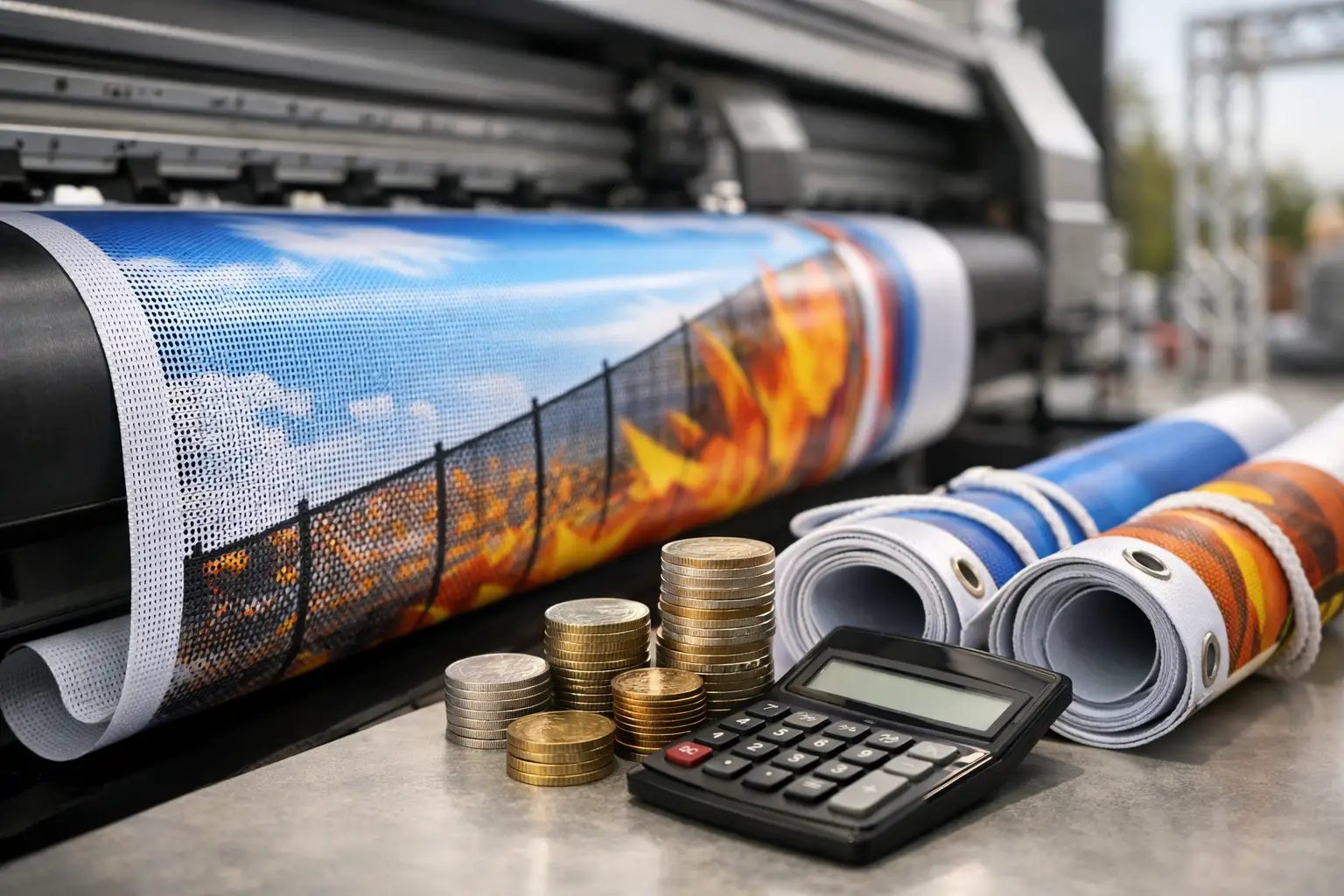
Mesh banner is designed for exposed areas. Its tiny perforations allow air to pass through, reducing wind pressure compared with solid vinyl. This makes it particularly useful for construction hoardings, temporary fencing, sporting venues and open-air sites.
There is a trade-off: the perforated surface can make colours appear slightly less solid at very close range. From the distance at which a fence banner is normally viewed, the message remains clear. For a location with regular gusts, the additional wind resistance is often the more important consideration.
For short campaigns versus repeat use
A one-day event does not always need the same specification as a banner that will be used month after month. If you are ordering for a single promotion, focus on clear messaging, suitable dimensions and a finish that makes installation quick. For repeat use, stronger hems, reinforced eyelets and durable materials are worth prioritising.
Think about storage as well. A banner that is folded while damp, thrown in the back of a van or repeatedly stretched onto awkward fixings will not look its best for long. Roll it where possible, keep it dry and store it away from sharp edges.
Print Quality Begins With the Artwork
Even the best equipment cannot turn a blurry logo into crisp large-format print. Banner artwork needs to be built for the size it will be printed, with enough resolution for images and clean vector files for logos, text and icons.
For photographs and detailed graphics, use high-resolution source files rather than images copied from a website or social media post. For logos, PDF, AI, EPS or SVG files usually provide the sharpest result because they can scale without losing definition. If you only have a JPEG or PNG, make sure it is large enough for the banner dimensions.
Keep the message simple. A banner is often read in seconds, from several metres away. Your business name, key offer, event date, contact details or directional instruction should not compete for attention. Large type, good contrast and sensible spacing will usually outperform a crowded design packed with small copy.
Before approving artwork, check the essentials: spelling, telephone numbers, web addresses, dates, opening times and social handles. A final proof is your chance to catch an error before it becomes several metres wide.
Size, Viewing Distance and Readability
Choosing a bigger banner is not automatically the right answer. The size should match the available space and the distance from which people will read it. A banner above a busy road needs bolder text than one positioned beside a queue or at the entrance to a trade stand.
As a practical rule, the further away your audience is, the fewer words you should use and the larger the lettering needs to be. If people are walking past your premises, a headline and short call to action may be enough. If they are standing close by, you can add details such as services, prices or a QR code.
Measure the fitting area before ordering. Include space for eyelets, cable ties and any frame or rail that may affect the visible area. A banner that technically fits but has to be pulled too tightly, folded around a post or obscured by a gate will lose impact.
Finishing Is Not an Afterthought
Finishing determines how easily your banner can be installed and how well it holds up in use. Eyelets are the standard option for many banners, allowing you to attach them with cable ties, bungee cords or rope. Hemmed edges add strength and help prevent tearing around the fixing points.
For railings, fences and temporary barriers, spaced eyelets and cable ties are often ideal. Do not over-tighten a solid vinyl banner outdoors. A little movement can reduce strain in windy conditions. On exposed sites, use enough fixing points to spread the load rather than relying on only the corners.
Pole pockets are useful where a banner needs to slide over a rail or be mounted between posts. If you need this option, check the diameter of the pole first. It is a small detail that can prevent a frustrating installation delay.
Turnaround, Delivery and Proofing
Fast turnaround only helps if the artwork is ready to print and the delivery deadline is realistic. Upload your files early, state the required date clearly and allow time for any changes following a proof check. If your deadline is genuinely urgent, choose a supplier that produces in the UK and can explain the production schedule in plain terms.
Ask what is included in the turnaround. Some companies count printing time only, while others include artwork checks, finishing and dispatch. Delivery day is also different from dispatch day. Knowing the distinction helps avoid a last-minute scramble before an exhibition, launch or opening.
At Banner Printing UK, the focus is on practical print products that can be ordered without unnecessary back-and-forth, with fast production for customers who need professional displays on a working deadline.
When Price Should Not Be the Only Deciding Factor
Cheaper banner printing can be suitable for a simple, short-term indoor sign. But for an outdoor campaign or a banner representing your business in front of customers, poor material or weak finishing can cost more in replacements, missed visibility and wasted time.
Compare like for like. Check the banner material, print method, weather resistance, included finishing, artwork support and delivery promise before comparing the final figure. A quote that looks lower may exclude the details needed to make the banner usable.
For repeat orders, consistency matters just as much. The ability to match colours, reuse approved artwork and order the same specification again makes life easier for multi-site businesses, event teams and organisations running regular campaigns.
A banner should work hard from the moment it is installed. Choose the material for the setting, design it for the viewing distance and give yourself enough time for print and delivery. When those basics are right, your message stays visible where it matters – and your next promotion starts with one less thing to worry about.