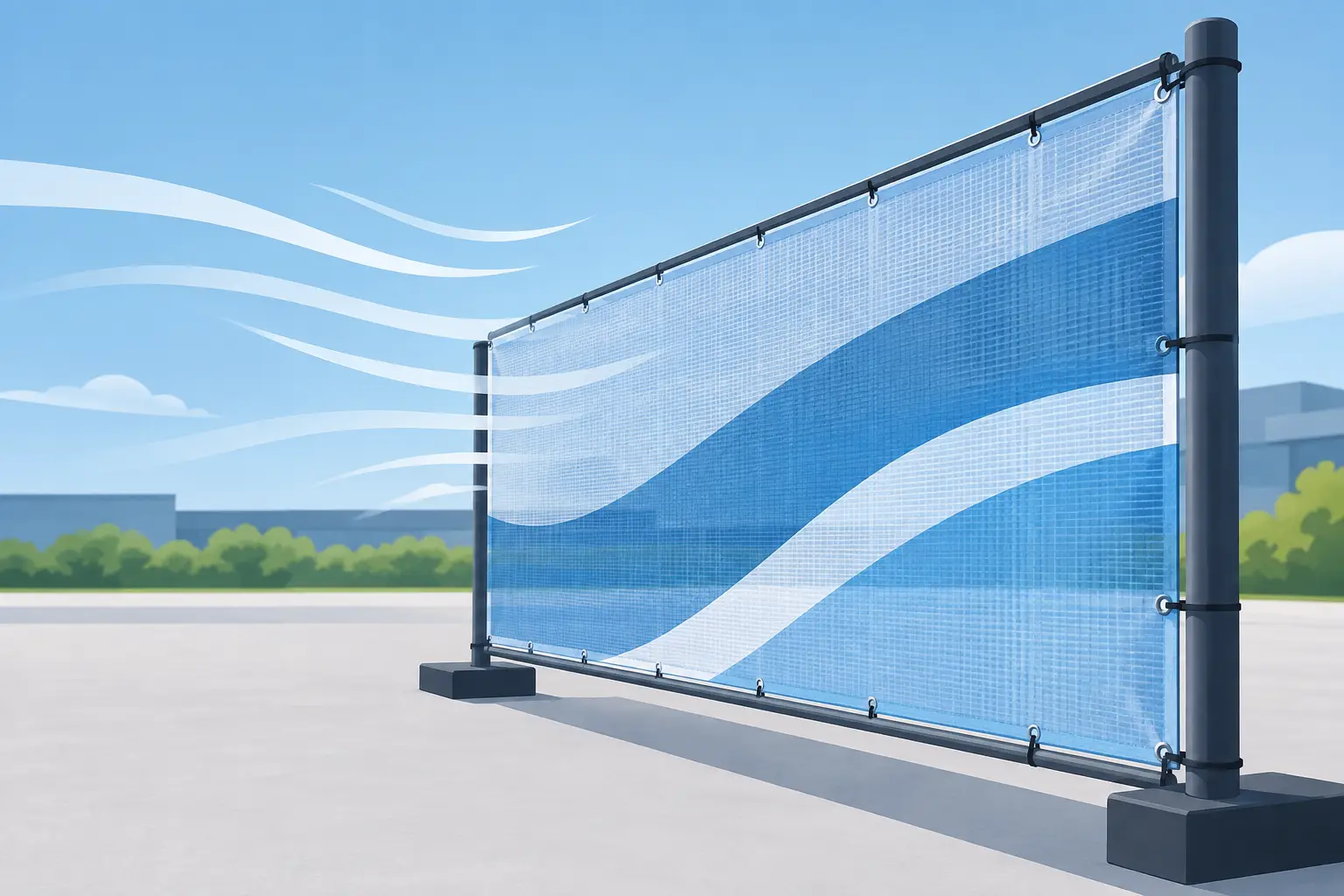
A banner stretched across temporary fencing can look perfectly secure at breakfast and face a very different test by lunchtime. Are mesh banners wind resistant? Yes, they are designed to cope better with wind than solid PVC banners, but they are not immune to poor fixing, exposed locations or severe weather.
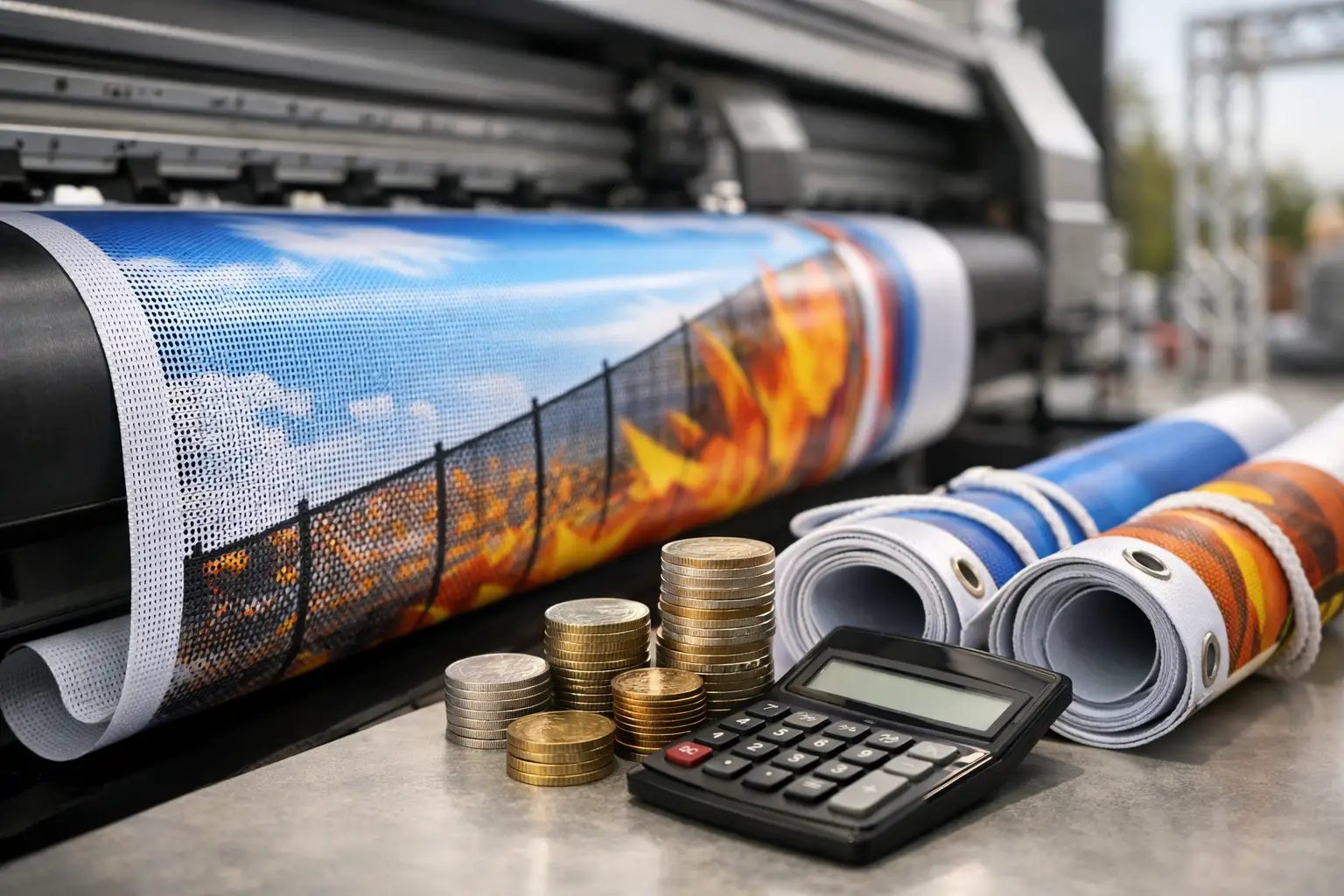
The key advantage is simple: mesh material has thousands of tiny perforations that allow air to pass through. Less trapped air means less pressure pulling against the banner, its eyelets and the structure holding it in place. For construction hoarding, event fencing, sports grounds and exposed retail sites, that makes mesh a practical outdoor choice.
Are mesh banners wind resistant in real conditions?
Mesh banners are wind resistant because their open-weave construction reduces the sail effect created by a solid banner. Instead of catching the full force of a gust, the material lets a proportion of air through. This helps lower strain on fence panels, scaffold rails and other supporting structures.
That does not mean any mesh banner can be fitted anywhere without planning. Wind resistance depends on the whole installation, not just the printed material. A large banner on an exposed hilltop, for example, experiences far more force than a smaller banner on a sheltered town-centre fence. A loose corner can also start flapping, increasing stress with every gust.
Think of mesh as the sensible material choice for windy settings, rather than a guarantee against all weather. It gives your display a much better chance of staying taut, readable and presentable outdoors when it is sized and installed correctly.
Why mesh performs better than solid PVC
A standard vinyl banner has a solid surface. This is useful when maximum print impact and colour coverage matter, particularly for indoor promotions or sheltered outdoor walls. In a windy position, however, that continuous surface catches air like a sail.
Mesh has small holes across the printable face, commonly allowing around 20 to 30% airflow depending on the material. The exact figure matters less than the result: reduced wind loading. The banner places less demand on its eyelets and fixings, and it is less likely to pull temporary fencing out of line.
There is a trade-off. Because the material is perforated, mesh printing can appear slightly less dense at close range than solid vinyl. From normal viewing distances, logos, key messages and high-contrast graphics remain clear. For roadside fencing, site perimeters and outdoor events, that is usually the right balance between visibility and durability.
The fixing method matters as much as the banner
Even high-quality mesh can fail early if it is secured with too few cable ties or attached to a weak frame. Wind finds the weakest point first. A banner fixed only at its corners has long unsupported edges that can whip and strain the material.
For fencing and rails, use the eyelets around the full perimeter and secure the banner at regular intervals. Cable ties are a quick, reliable choice for many installations, provided they are suitable for outdoor use and pulled tight without damaging the eyelet area. Bungee ties can be useful where a little controlled give is needed, but they should not create a loose, sagging finish.
Keep the banner evenly tensioned as you work around the edges. Start from the top corners, check that the graphic sits level, then add fixings progressively along each side. Do not stretch the material aggressively. The aim is firm and flat, not over-tightened.
On temporary fencing, fixing to more than one horizontal rail helps spread the load. On scaffold or building elevations, the support system needs particular care. The banner should be attached only to a stable structure that is appropriate for the job, with site safety requirements followed at all times.
Size, position and exposure change the answer
A 2 metre banner and a 20 metre run of mesh do not behave in the same way. Larger banners create a greater total area for wind to act upon, even when the fabric allows airflow. Long fence runs also need more frequent fixing points to prevent movement along the edge.
Before ordering, consider where the banner will sit. Open car parks, coastal locations, high-rise sites, fields and roadside positions can be far more exposed than enclosed courtyards or shopfronts. Nearby buildings, trees and walls may offer shelter, but they can also create turbulent gusts that hit a banner unpredictably.
The direction of the prevailing wind is worth considering too. A banner installed parallel to a fence in a relatively sheltered position will often face less stress than one mounted across an open gap. If your site is regularly hit by strong winds, it may be better to divide one very large display into smaller sections. This can make fitting, replacement and wind management easier.
Choose artwork that works on mesh
Mesh banners are built for distance viewing. Large type, simple layouts and strong contrast will do more for performance than intricate details that only work up close. Put your main message, telephone number or call to action where it can be read in seconds.
Avoid very fine text, delicate lines and pale colours on pale backgrounds. The perforations can soften tiny details, particularly when the banner is viewed against bright sky or open space. A bold logo, dark lettering and generous spacing will retain impact.
If the banner is being fitted to security fencing or Heras panels, repeat key information across a long design rather than relying on one central message. People may only see part of the run as they pass. This approach is particularly useful for construction sites, property developments and event perimeters.
At Banner Printing UK, artwork can be prepared for the final banner size so your message is positioned for the space available, rather than simply enlarged from a small file.
What mesh banners can and cannot handle
Mesh is a dependable option for normal outdoor use, including changeable British weather, rain and regular wind. Quality outdoor print materials are made to withstand moisture and UV exposure, helping colours stay clear through a campaign or event period.
However, no banner should be left unchecked during severe weather warnings. Extreme winds can damage fencing, frames, buildings and signs of every type. If high winds are forecast, inspect the display promptly. Tighten or replace damaged ties, check for lifted corners and remove the banner if the supporting structure is no longer stable.
It is also sensible to inspect long-term installations routinely. Look for frayed edges, cracked cable ties, enlarged eyelet holes and areas where the banner rubs against sharp metal. Small issues are quick to put right before they become a torn banner or a site safety concern.
When should you choose mesh over vinyl?
Choose mesh when the banner will be displayed outdoors on fencing, scaffold, rails or another exposed structure. It is especially well suited to building sites, festival perimeters, sports venues, car parks and promotional displays where wind is part of the daily environment.
Choose solid vinyl when the location is sheltered and you need the strongest possible colour density or close-up image quality. It can be ideal for interior spaces, flat wall mounting, shop displays and short-term outdoor campaigns protected from direct gusts.
For many businesses, the decision comes down to risk and location. A solid banner may look marginally sharper at arm’s length, but mesh is usually the safer, more practical choice when wind could turn a promotional display into a maintenance problem.
A practical pre-installation check
Before fitting your mesh banner, confirm that the support structure is stable, the banner size suits the available area and you have enough outdoor-rated fixings for every eyelet. Check that no sharp edges will wear through the material, and make sure the graphic will be visible from the intended direction.
If the site is exposed, do not wait for the first gust to find out whether the banner has been fitted properly. A few extra minutes spent using all fixing points and checking the tension can protect your display, your budget and the people nearby.
Mesh banners offer a strong combination of outdoor visibility and reduced wind pressure. Match the material to the setting, fit it carefully and inspect it when conditions change, and your message can keep working when the weather does not.