

Building site warning signs aren't just a box-ticking exercise; they're your first and most vital line of defence in a high-risk environment. They act as the clear, silent communicators that translate complex safety laws into simple, visual instructions that prevent accidents before they ever have a chance to happen.
Why Building Site Warning Signs Are Your First Line of Defence
Picture a busy motorway with no speed limits, no lane markings, and no traffic lights. That’s exactly what a construction site is without clear, effective warning signs—a chaotic and unpredictable space where the risk of an incident is sky-high. Good signage brings order to that chaos.
Think of these signs as your on-site supervisors that work 24/7. They constantly remind everyone—from seasoned contractors to visiting delivery drivers—of the potential dangers and the precautions they must take. They speak a universal language that cuts through the noise and distractions of a busy site, turning a potential oversight into a non-event.
The Real-World Impact of Clear Signage
The statistics don't lie. Construction remains one of the UK’s most hazardous industries. In 2022/23, 45 out of 135 total worker fatalities occurred in the construction sector. That’s a shocking 33% of all work-related deaths, with most caused by falls from height or being struck by moving objects—precisely the kind of dangers that well-placed signs are designed to prevent.
Investing in clear, compliant signage isn't just about following rules. It’s about building a powerful safety culture that protects your team, the public, and your business from devastating legal and financial fallout.
More Than Just Warnings
Of course, warning signs are just one piece of the safety puzzle. They work best as part of a wider security strategy. For a deeper look at protecting your entire project, it's worth reading a guide on comprehensive security for a construction site. This will help you see how signage fits into the bigger picture.
Ultimately, high-quality, strategically placed signs deliver on several fronts:
- Prevents Accidents: They give immediate, clear warnings about specific hazards like deep excavations, overhead work, or moving vehicles, giving people the information they need to stay safe.
- Ensures Legal Compliance: Meeting the standards set by the Health and Safety Executive (HSE) is a legal must. Getting it wrong can lead to hefty fines and serious legal trouble.
- Reduces Liability: In the event of an accident, proper signage is clear proof that you've taken your duty of care seriously, protecting your business during an investigation.
- Boosts Professionalism: A site with clear, professional signage screams competence. It shows clients, contractors, and the public that you’re a company that takes safety seriously.
Navigating UK Construction Signage Regulations
Getting to grips with the law on building site warning signs might seem like a chore, but it all boils down to one simple goal: stopping accidents before they happen. The main piece of legislation you need to know is the Health and Safety (Safety Signs and Signals) Regulations 1996. Don’t let the formal name put you off; it’s a straightforward system designed to make risk obvious to everyone.
Think of these rules as the universal language of site safety. They ensure that a warning sign in Scotland means the exact same thing as one in Cornwall. This consistency is absolutely vital on a busy, noisy construction site where a split-second understanding of a sign can be the difference between a close call and a serious injury.
The Four Pillars of UK Safety Signage
The Health and Safety Executive (HSE) keeps things simple by breaking signs down into four main types, each with its own non-negotiable colour and shape. The whole point is instant recognition, cutting out any guesswork when time is critical. Knowing these four categories is the foundation for a compliant and safe site.
The four core types are:
- Prohibition Signs: Tell you what you must not do. (Think "No Entry").
- Mandatory Signs: Tell you what you must do. (Think "Hard Hats Must Be Worn").
- Warning Signs: Alert you to a potential hazard or danger. (Think "Danger: High Voltage").
- Safe Condition Signs: Point you towards safety equipment or exits. (Think "First Aid").
Each one uses a specific combination of colour and shape to get its message across without you even needing to read the words. It’s a clever visual shortcut that ensures everyone gets the basic instruction, even from a distance.
Why Colour and Shape Matter
The design of a building site warning sign isn’t down to creative flair—it’s a carefully regulated system where every detail has a purpose. These rules are set in stone so that signs are understood instantly, just like traffic lights.
The logic is simple: a circular blue sign always means you must do something, like put on safety goggles. A yellow triangle always warns you about a nearby hazard, like a slippery surface. This colour-coding system kills confusion and helps people react faster.
Take the classic red circle with a white background. You see it, and you immediately know it means "STOP" or "DO NOT," whether it’s for smoking or unauthorised access. That’s the law working as intended, creating a site where safety instructions are clear, sharp, and almost impossible to misunderstand.
This clarity is especially important on sites with a diverse workforce where English might not be everyone’s first language. And remember, while these signs cover general site safety, some activities have their own specific rules. For example, if you’re fixing large banners to scaffolding, there are extra safety protocols to follow. You can find more details on installing mesh banners on scaffolding safely.
By mastering this foundational system—prohibition, mandatory, warning, and safe condition—you’re doing more than just ticking a compliance box. You are actively using a proven method to communicate danger and keep every single person on your site safe.
Decoding the Language of Safety Signs
On a busy building site, safety signs aren't just notices – they're a visual language designed to be understood in an instant. Amidst the noise and constant activity of construction, this universal system cuts through all distractions to communicate critical information at a glance. Just like road signs, every colour, shape, and symbol has a precise meaning that everyone on site needs to recognise instantly.
Think about it: a red circle with a line through it always means 'do not', whether you're working in London or Liverpool. A yellow triangle is the universal signal for caution, warning you about a nearby hazard. Learning this visual vocabulary is non-negotiable for anyone setting foot on a UK building site, ensuring safety instructions are understood in seconds, not minutes.
For those handling chemicals or other hazardous substances, a deeper understanding is needed. Familiarity with frameworks like GHS and SDS compliance is essential for correctly interpreting specific hazard information, adding another crucial layer of protection.
The Four Core Sign Categories
The HSE’s system is built on four distinct categories, each with its own visual DNA. This consistency is what makes it so effective—it removes any guesswork and speeds up reaction times when it counts.
This diagram breaks down the four main types of signs you'll see, all regulated by the HSE.
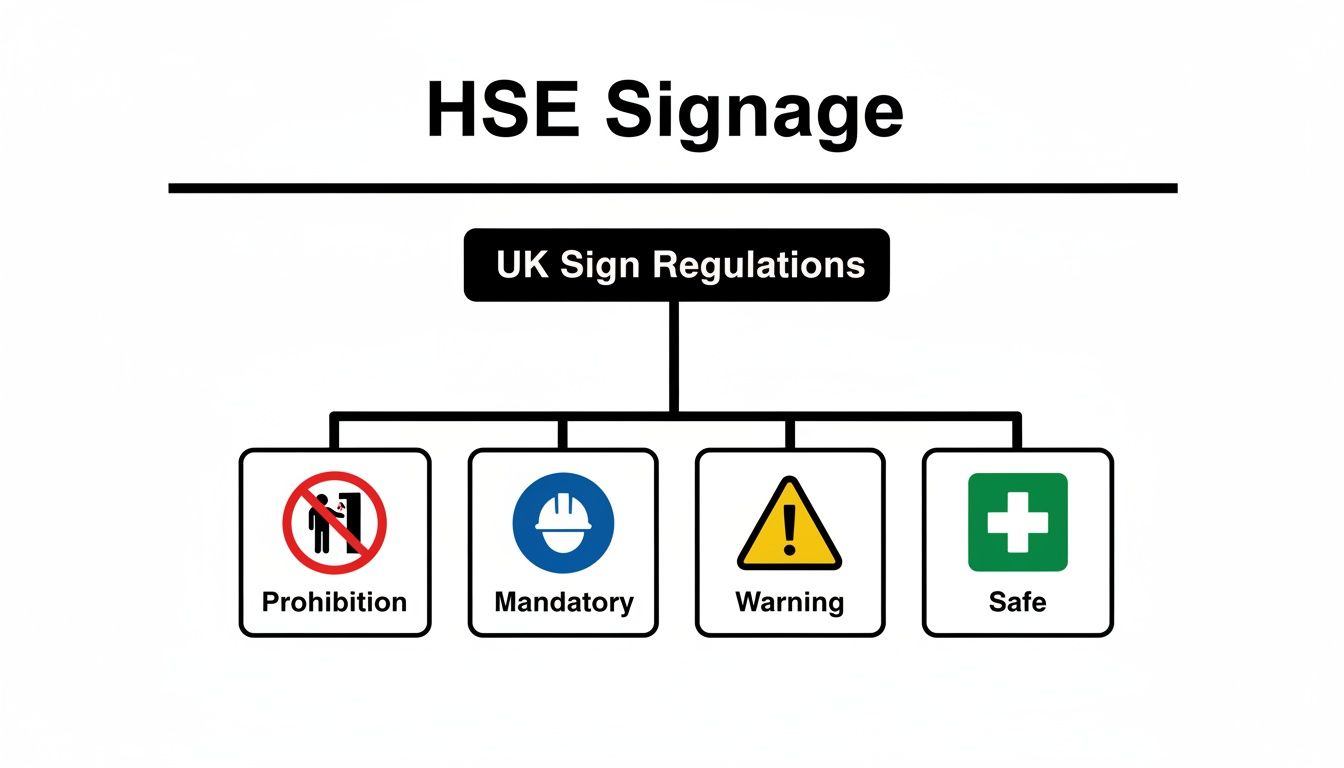
As the graphic shows, each sign type—Prohibition, Mandatory, Warning, and Safe Condition—is given a unique shape and colour scheme for immediate recognition.
Quick Guide to UK Safety Sign Meanings
To get you and your team up to speed, this table gives a simple breakdown of what each sign category means on a building site. Think of it as your cheat sheet for on-site safety.
| Sign Category | Meaning | Colour | Shape |
|---|---|---|---|
| Prohibition | A behaviour that is strictly forbidden. These signs tell you what you must not do to prevent immediate danger. | Red circle and crossbar on a white background with a black pictogram. | Circular |
| Mandatory | A specific action that must be taken. This often involves wearing the correct personal protective equipment (PPE). | White pictogram on a solid blue circular background. | Circular |
| Warning | Alerts you to a potential hazard or danger. It signals the need for caution in a particular area. | Black pictogram and text on a yellow triangular background. | Triangular |
| Safe Condition | Shows the location of safety equipment, first aid points, or emergency exits. It guides you to safety. | White pictogram and text on a solid green rectangular or square background. | Rectangular or Square |
Knowing the theory is one thing, but seeing it in action makes it stick.
Putting the Language into Practice
Let's look at a few real-world examples to see how this system works on a live construction site.
-
Example 1: Prohibition Sign
You see a red circular sign at a site entrance showing a lit cigarette with a bold red line through it. That’s a Prohibition sign. The message is immediate: "No Smoking". It’s not a polite request; it’s a strict rule to prevent a serious fire hazard. -
Example 2: Mandatory Sign
As you walk towards an area where a crane is operating, you see a solid blue circular sign with a white hard hat symbol. This is a Mandatory sign. It means you must put on your hard hat before going any further to protect yourself from falling debris. -
Example 3: Warning Sign
Near a deep trench, you spot a yellow triangular sign with a black symbol of a person falling. That’s a Warning sign, alerting you to "Danger: Deep Excavation". It’s telling you to be extra cautious and keep a safe distance from the edge.
The core principle is simple: the sign’s shape and colour deliver the main instruction—stop, do, beware, or go—before you even read the text. This system is designed to cut through language barriers and the constant noise of a building site, making it an incredibly effective safety tool.
When you embed this visual language into your team’s daily routine, you create a much safer and more proactive environment. Every sign becomes a clear command, constantly reinforcing the right behaviours and keeping everyone on site protected. This instant understanding is vital for preventing accidents and staying compliant with UK safety laws.
Choosing Sign Materials That Withstand the Elements
A safety sign is only as good as it is visible. If it fades, tears, or gets blown away in the first gust of wind, its critical message is lost. On a UK building site, where signs face everything from driving rain to relentless sun, choosing the right material isn't just a detail—it's fundamental to keeping your site safe and compliant.
Think of your sign material as the armour protecting your safety instructions. A paper notice taped to a fence will last hours, not months. Investing in durable, weather-resistant materials ensures your warnings stay clear and effective for the entire project.
Matching the Material to the Mission
Not all signs have the same job, so they don’t all need to be made from the same stuff. A short-term notice for a temporary hazard has different needs than a permanent entrance board that has to last for years. Understanding the main options helps you make a smart, cost-effective choice for each sign.
The most common and effective materials include:
- Correx: A lightweight, fluted polypropylene sheet. It's the go-to for temporary building site signs because it's cheap and weatherproof. Perfect for short-term notices like "Caution Wet Paint" or directing delivery drivers.
- Foamex (Foam PVC): A rigid and durable plastic sheet. It offers a smoother, more professional finish than Correx, making it ideal for semi-permanent signs like fire assembly points or first aid station markers that need to look sharp and hold up.
- Aluminium Composite Material (ACM): Often known by brand names like Dibond, this is a polyethylene core sandwiched between two thin aluminium sheets. It's incredibly strong, rigid, and long-lasting, making it the perfect choice for main site entrance boards displaying company branding and mandatory safety rules.
- PVC Mesh: A perforated vinyl material designed for huge banners on scaffolding or perimeter fencing. The tiny holes let the wind pass straight through, stopping the banner from turning into a giant sail and putting stress on the structure—a critical safety feature in exposed locations.
Durability in Detail: What to Look For
Beyond the base material, a few other things make a huge difference to a sign's lifespan. A cheap, unlaminated sign might seem like a saving at first, but it will quickly degrade, costing you more in replacements and, more importantly, compromising site safety.
When ordering your signs, look for these vital features:
- UV-Resistant Inks: Direct sunlight can bleach colours and text in a matter of weeks. Using signs printed with UV-resistant inks ensures that a red prohibition sign stays red and a yellow warning sign remains vibrant and attention-grabbing.
- Lamination: Adding a clear protective laminate over the print provides an extra layer of defence against scratches, moisture, and fading. For any sign you expect to last more than a few months, lamination is a very wise investment.
- Material Thickness: Materials like Correx and Foamex come in various thicknesses (e.g., 3mm, 5mm, 10mm). A thicker board is more rigid and less likely to bend or snap in high winds, making it much better for larger signs or more exposed spots. You can explore more about the different types by checking out this guide on which plastic is best for signs.
A sign that has faded from yellow to a pale cream or has been bent in half by the wind no longer fulfils its legal or practical purpose. Durability isn't a luxury; it's a core component of effective site safety.
Ultimately, picking the right material is a balance between your budget, what the sign is for, and how long you need it to last. For a three-day job, Correx is perfectly fine. For a three-year project, investing in laminated ACM for your key signage is the only sensible option. By matching the material to the mission, you ensure your building site warning signs do their job from day one to the very last.
Strategic Sign Placement for Maximum Impact
Even the most durable, brilliantly designed building site warning sign is totally useless if nobody sees it. Strategic placement isn’t just a final tick-box exercise; it's what brings your entire safety signage system to life, turning passive notices into an active defence against accidents.
The aim is simple: get the right information to the right person at the exact moment they need it to make a safe choice. It’s all about anticipating how people will move around the site and placing critical warnings directly in their path before they encounter a hazard.
The Core Principles of Effective Placement
Before you start fixing signs to fences, take a moment to think about how people will actually interact with them. It’s easy to go overboard and create 'sign blindness'—a situation where workers are so bombarded with visual noise that they subconsciously start ignoring all of it.
Successful placement really boils down to a few common-sense principles:
- Maintain Clear Sightlines: A sign has to be visible from a distance that gives someone enough time to react. It should never be hidden behind a stack of materials, a parked van, or overgrown bushes.
- Mount at Eye Level: The sweet spot is generally between 1.5 to 2 metres from the ground. This puts the sign squarely in a person’s natural field of vision, making it hard to miss.
- Avoid Clutter: Lumping too many signs together just dilutes their power. Prioritise the single most important message for that specific spot to make sure it gets the attention it deserves.
A sign placed effectively is like having a safety officer standing at a hazard point, giving clear, constant instructions. A poorly placed one is like a muffled shout in a noisy room—easily ignored and ultimately ineffective.
The financial cost of poor safety on UK building sites is absolutely staggering. HSE data shows that injuries across all industries cost the economy over £21 billion a year, with construction taking a massive hit. With 604,000 worker injuries and 61,663 RIDDOR-reported cases in 2023/24, the deadliest incidents—falls from height, being struck by objects, and vehicle collisions—are precisely what well-placed signs are designed to prevent. You can dig deeper into the numbers by exploring the latest HSE statistics on Construction Safe UK.
An Actionable Checklist for Key Locations
To put this theory into practice, walk your site and identify the key decision points and hazard zones. These are the non-negotiable spots where your signs will do the most good.
Here’s a practical checklist to get you started:
- Site Entrances and Exits: This is your first and best chance to set the safety tone. A large, clear site board here is essential for detailing mandatory PPE (hard hats, high-vis, safety boots) and outlining sign-in procedures for visitors.
- At the Point of Hazard: Warning signs need to be as close to the danger as is safely possible. If there's an excavation, the sign goes right at the perimeter. For an overhead crane zone, put signs at every single entry point to that area.
- Vehicle and Pedestrian Routes: Use clear signage to separate vehicle traffic from pedestrian walkways. Post signs like "Caution: Vehicles Reversing" at crossing points, junctions, and blind corners.
- Scaffolding and Work at Height Areas: Mandatory signs requiring harnesses and warning signs for "Falling Objects" must be displayed at the base of all scaffolding structures and their access points.
- Low-Light and Night Work Areas: Any part of the site where work continues after dark needs illuminated signs. This could mean using retroreflective materials or ensuring dedicated lighting is aimed directly at crucial signs like "Emergency Exit" and "First Aid Station."
Finally, make sure every sign is securely fixed in place. Use robust fittings like heavy-duty cable ties, screws, or proper clamps that can stand up to wind and rain. A sign that’s fallen on the floor isn't just a compliance failure—it's a trip hazard in itself.
Creating Custom Signs for Your Construction Site
While standard-issue warning signs get the compliance job done, they don't do much for your brand. Custom signage is your chance to go beyond just ticking the legal boxes. It’s about building a professional, cohesive image that shows your company takes safety seriously, right from the kerb.
Think about your main site entrance board. It’s the very first thing clients, inspectors, and the public see. A sharp, professionally designed board integrates your company logo and contact details with all the mandatory safety info, like PPE rules. It immediately says that safety is embedded in your brand’s DNA, not just a last-minute addition.
Designing for Clarity and Compliance
When you’re creating custom signs, safety is still king. Your branding should never get in the way of the critical warnings. The official pictograms, colours, and shapes set out by the HSE must remain front and centre, completely clear and compliant.
This is where a good printer becomes a real partner. We can help you strike that perfect balance between promoting your brand and meeting every legal requirement. A large entrance sign, for instance, might feature your company’s colour scheme in a header and footer, but the main body will be dedicated to the non-negotiable, universally recognised symbols for hard hats, high-vis jackets, and safety boots.
Customisation is also brilliant for tackling those unique, site-specific hazards that an off-the-shelf sign just can’t cover. Got a tricky chemical storage area or a one-of-a-kind piece of machinery? A bespoke sign delivers a clear, specific warning that leaves no room for confusion.
Preparing Your Artwork for a Professional Finish
To get that crisp, professional look, the quality of your artwork file is everything. A fuzzy logo or pixelated text instantly undermines the credible image you’re trying to build and reflects poorly on your company. High-resolution files are an absolute must.
Follow these simple steps for the best results:
- Use Vector Graphics: Always supply logos and key symbols in a vector format (
.ai,.eps, or.svg). Unlike pixel-based files like.jpgor.png, vectors can be scaled to any size—from a small sticker to a massive site board—without losing a shred of quality. - Specify Correct Colours: Make sure your artwork is set up with CMYK colour codes. This ensures the colours you see on your screen are the colours that actually get printed, preventing your specific brand of blue from turning into a sad shade of purple.
- Outline Your Fonts: Before sending the file, convert all your text to outlines or curves. This locks the font information into the design, so there’s zero risk of it being swapped for a default font during the printing process.
For a more detailed walkthrough, check out our guide on how to upload artwork for custom banners—the core principles are exactly the same. By investing in quality custom signage, you’re not just keeping your site safe; you’re building a stronger, more professional brand.
Your Building Site Sign Questions Answered
Even when you know the rules, real-world questions always come up on site. Getting your building site warning signs right means being ready for the day-to-day practicalities. Here, we tackle some of the most frequent queries that land in our inbox.
Think of this as your quick-fire troubleshooting guide. It builds on everything we've covered, helping you put the theory into practice and keep your site safe, compliant, and running smoothly.
The reality is stark. According to the Labour Force Survey, the UK construction industry sees an estimated 47,000 workplace injuries annually. These incidents led to over 400,000 lost workdays in 2023/24 alone – a staggering figure that proper signage helps to bring down. You can dig into the numbers in this full report on construction industry workplace injuries from PBC Today.
How Often Should I Check My Signs?
Regular checks are non-negotiable. A sign that’s damaged, dirty, or hidden is just as useless as no sign at all.
- Weekly Walkthrough: Make sign inspection a standard part of your weekly site safety audit.
- What to Look For: Keep an eye out for fading, grime, physical damage, or anything blocking the view, like stacked materials or parked equipment.
- After Bad Weather: Always do an extra check after high winds or heavy rain. It’s the perfect time for signs to get blown over, twisted, or caked in mud.
- Act Fast: If a sign isn't perfectly clear and legible, it needs cleaning or replacing immediately. No excuses.
Do I Need Signs for Temporary Hazards?
Yes, absolutely. HSE rules don't distinguish between a permanent risk and a temporary one. A hazard is a hazard.
If you’ve just dug a trench, had a spill that’s made a surface slippery, or have a team working overhead for a few hours, you need temporary signs. Portable A-frames and lightweight Correx signs are ideal for this job. Just as crucial is removing them the moment the hazard is gone. This prevents ‘sign fatigue’ – that dangerous point where workers are so used to seeing warnings that they start ignoring them.
Blending your company branding with safety signs is a smart move, especially for large site entrance boards. It looks professional and reinforces your presence. The golden rule? Your branding must never overshadow the official safety symbols. They have to remain fully compliant with HSE standards for size, colour, and clarity.
And what about sites running after dark or in poorly lit areas? All safety signs must be clearly visible 24/7. You can achieve this with spotlights aimed at the signs or by opting for signs made from retroreflective materials that light up under torchlight or headlights.
At Banner Printing Ltd, we create durable, high-quality custom signs that are fully compliant with UK regulations. From branded site boards to specific warning signs, we deliver professional results, fast. Get your custom building site signs at https://bannerprintingltd.co.uk.


