A banner that looks sharp in a proof can become hard to read, loose or damaged once it meets wind, rain and a busy public setting. Choosing outdoor displays means matching the print product to the exact location, viewing distance and length of use – not simply selecting the largest size available. For a shop promotion, construction perimeter, school fête or race-day event, the right display gets your message seen and stays presentable until the job is done.
Start with the place, not the product
The first question is where the display will be fixed. A banner tied to metal railings faces different pressure from one stretched across a fence, attached to scaffolding or hung on a building frontage. Wind is usually the deciding factor. It catches behind solid material, puts strain on eyelets and can make a poorly secured banner flap until the edges tear.
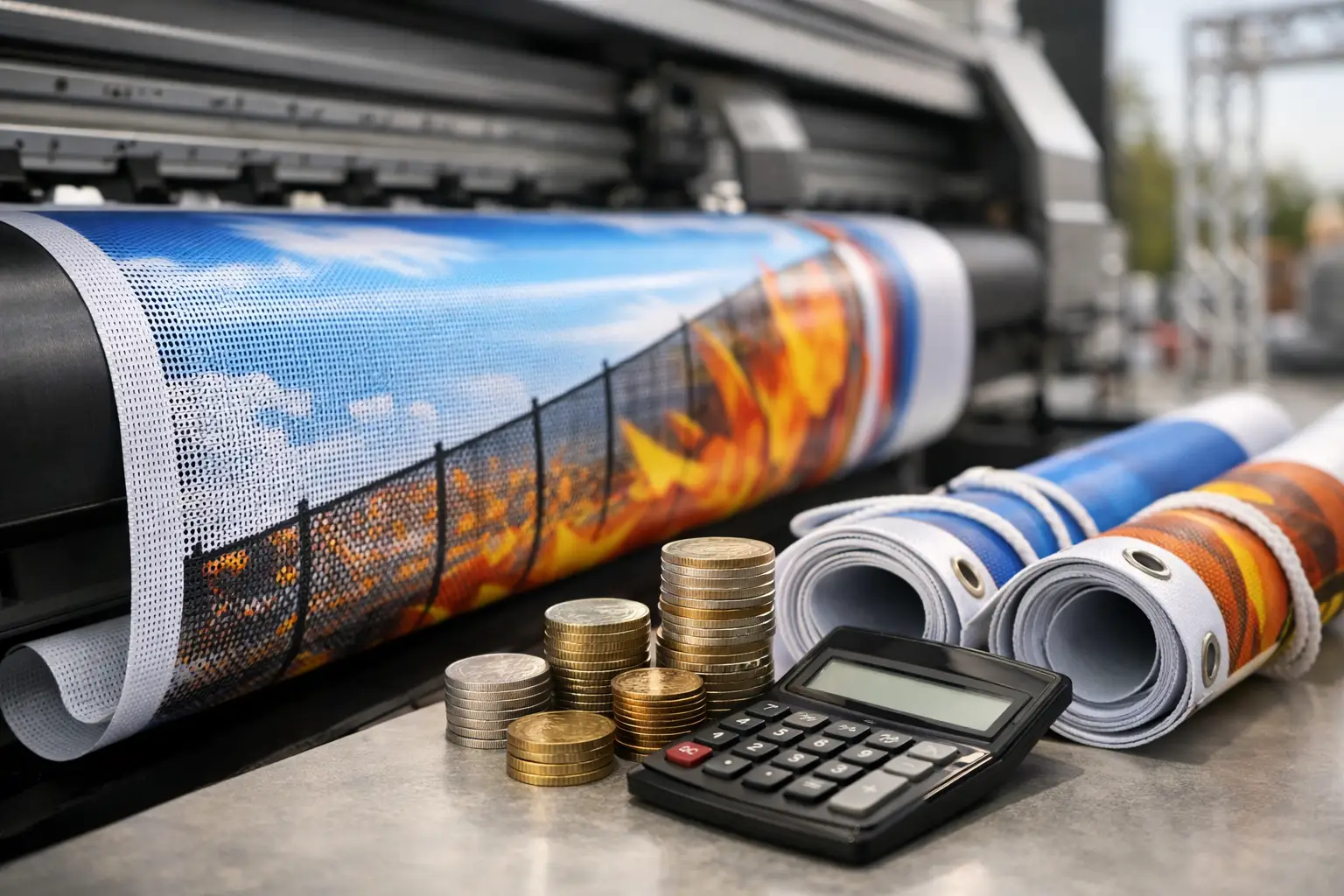
For exposed sites, mesh banners are often the practical choice. Their perforated finish lets air pass through while retaining strong printed colour and readable graphics from a distance. They are well suited to fencing around building work, sports grounds, outdoor events and large open areas where gusts are expected.
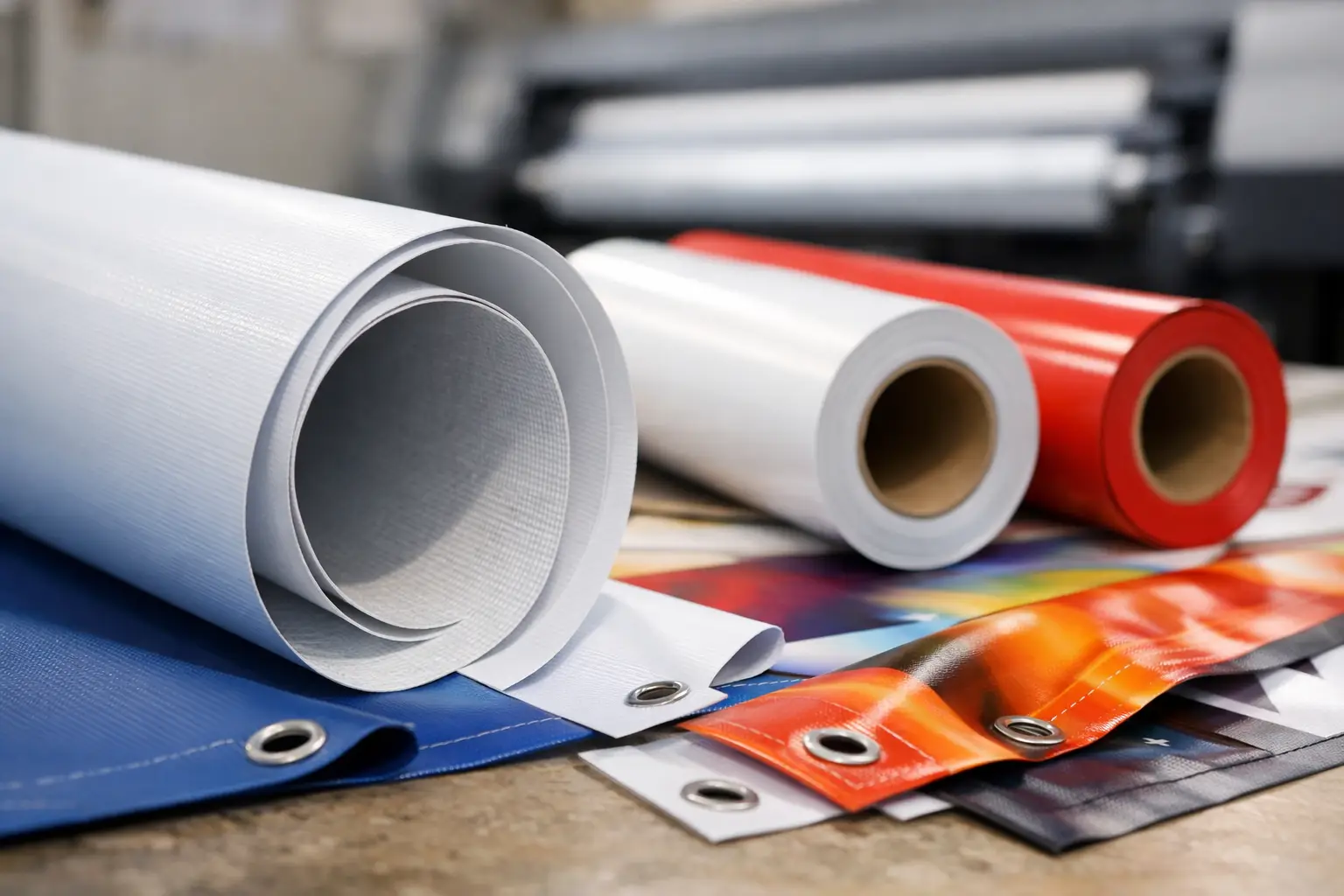
Standard vinyl banners provide a smoother, more solid finish. They work well on shopfronts, walls, railings and sheltered outdoor spaces where you want colours and photographic artwork to look particularly bold. They can also be a good fit for temporary promotions, community events and directional messaging, provided they are secured properly and not left to take the full force of the wind.
Think about how long the display needs to remain in place too. A weekend event may need a portable solution that can be installed quickly and removed just as easily. A longer campaign needs material, finishing and fixing points that can cope with repeated weather changes. Weatherproof, UV-resistant print helps preserve the colour, but it does not replace good installation.
Choosing outdoor displays by viewing distance
Outdoor signage is often read in seconds. Someone driving past a forecourt, walking along a high street or entering an event will not stop to decode a crowded layout. Your display should communicate one clear action or message before anything else.
For close viewing, such as a café terrace, pavement promotion or queue barrier, smaller text and extra detail can work. Include a short offer, a web address, opening hours or a QR code if people will be close enough to scan it safely. Keep the important information high enough that it is not blocked by parked cars, bins or passing pedestrians.
For medium and long distances, simplify. A large company name, event title, key service or directional arrow will perform better than a full list of benefits. If the banner is visible from a road, use high-contrast colours and broad lettering. Pale text on a bright background may look attractive on screen but can lose impact in daylight.
There is a useful rule for urgent promotions: decide what a person should understand in three seconds. If the answer is unclear, reduce the copy. A banner is a visibility tool, not a leaflet. Supporting details can sit on flyers, posters or business cards once you have captured attention.
Make the message work at full size
Artwork should be created at the correct proportions for the chosen product. Stretching a square logo across a long banner or enlarging a low-resolution image can leave the finished print looking soft or distorted. Supply high-resolution artwork wherever possible, with logos in a clean vector format if available.
Allow for eyelets and safe margins around the edge. Important words, phone numbers and logo details should not sit too close to the hem or fixing points. If your banner will be tied around railings, leave enough clear space that cable ties do not cut across a key message. A small artwork check before print can avoid costly last-minute changes on site.
Choose a size that earns its space
Bigger is not always better, but a banner that is too small for its setting wastes the opportunity. Measure the usable area before ordering, including posts, gaps in fencing and any obstructions. On a fence line, several consistently sized banners can create a cleaner, more professional run than one oversized graphic forced into an awkward gap.
For shopfronts, consider the angle from which customers approach. A banner above a doorway may be seen only when people are close, while one fixed along a side elevation can be visible from much further down the street. At events, place key messages near entrances, registration points, food areas and routes between activity zones rather than relying on a single display at the main gate.
Also consider local restrictions and venue rules. Landowner permission, event conditions and planning requirements can affect where and how outdoor signage is used. Checking these before production protects your budget and prevents a display being removed before it has done its job.
Fixing and finishing are part of the display
A quality printed banner still needs the right fixing method. Eyelets make it easier to attach banners to railings, fencing and frames using cable ties, bungee cords or rope. Space the fixings evenly and pull the banner taut without over-tightening it. A twisted or sagging banner looks less professional and makes the copy harder to read.
Cable ties are quick and economical for short-term installations, especially on railings and fencing. Bungee cords allow more give and can help reduce stress in breezy conditions. Rope may suit larger installations, but it needs secure anchor points and careful tension. The best option depends on the site, the banner material and whether the display needs to be removed and reused.
Do not treat outdoor roller banners as a substitute for fixed exterior signage. Roller banners are excellent portable displays for exhibitions, reception areas, sheltered entrances and indoor promotional spaces. Outdoors, they can be affected by wind and uneven ground, so they are best used only where conditions are controlled. For open-air visibility, a properly fixed banner is normally the more dependable choice.
Plan for weather, daylight and real-world wear
UK weather can move from bright sun to heavy rain in the same afternoon. Outdoor print needs colour that remains clear in daylight, material that can handle moisture and a fixing method suitable for changing conditions. UV-resistant inks help preserve the design during longer displays, while weatherproof banner materials prevent a short shower from ending the campaign.
That said, no display is maintenance-free. For campaigns running over weeks or months, check the banner periodically. Look for loose ties, worn eyelets, pooling water, torn corners or branches rubbing against the print. A five-minute check can prevent a banner becoming damaged or unsafe.
Positioning matters as much as durability. Avoid placing a banner where it can block sight lines at road junctions, cover emergency information or create a hazard in a pedestrian route. If the site is particularly windy, use mesh material and discuss the fixing plan with the property owner or site manager before installation.
Use colour and branding with purpose
Your outdoor display should look like part of your business, even when it is seen from a distance. Use your established logo, brand colours and typefaces, but do not let brand consistency reduce legibility. A familiar pale brand colour may need a darker background or bold outline to work outside.
High contrast is what makes a message visible first. Dark lettering on a light background, or light lettering on a dark background, usually works better than similar shades placed together. Avoid putting essential text over a busy photograph. If you want to use an image, reserve a solid colour panel for the headline, contact details or offer.
For recurring activity, keep the core layout consistent. A tradesperson might use the same banner structure across site work, vehicle-facing fencing and event sponsorship, updating only the service line or phone number. A retailer can keep the same logo placement for seasonal offers. This saves artwork time and makes the brand easier to recognise.
Order early, even when the deadline is close
Outdoor promotions often come with fixed dates: an opening day, local event, match, sale or site launch. Measure early, approve the artwork carefully and allow time for delivery and installation. If the deadline is tight, choose a supplier with UK-based production, clear artwork requirements and a realistic turnaround rather than risking a display that arrives too late or is unsuitable for the conditions.
At Banner Printing UK, fast production and practical banner options make it easier to order for planned campaigns and urgent jobs alike. The strongest result still comes from making the basic decisions before you upload your artwork: where it will go, who needs to see it and what they need to understand immediately.
A well-chosen outdoor display does more than fill empty fence space. It gives your promotion a clear, durable presence where customers, visitors and passers-by are already looking.