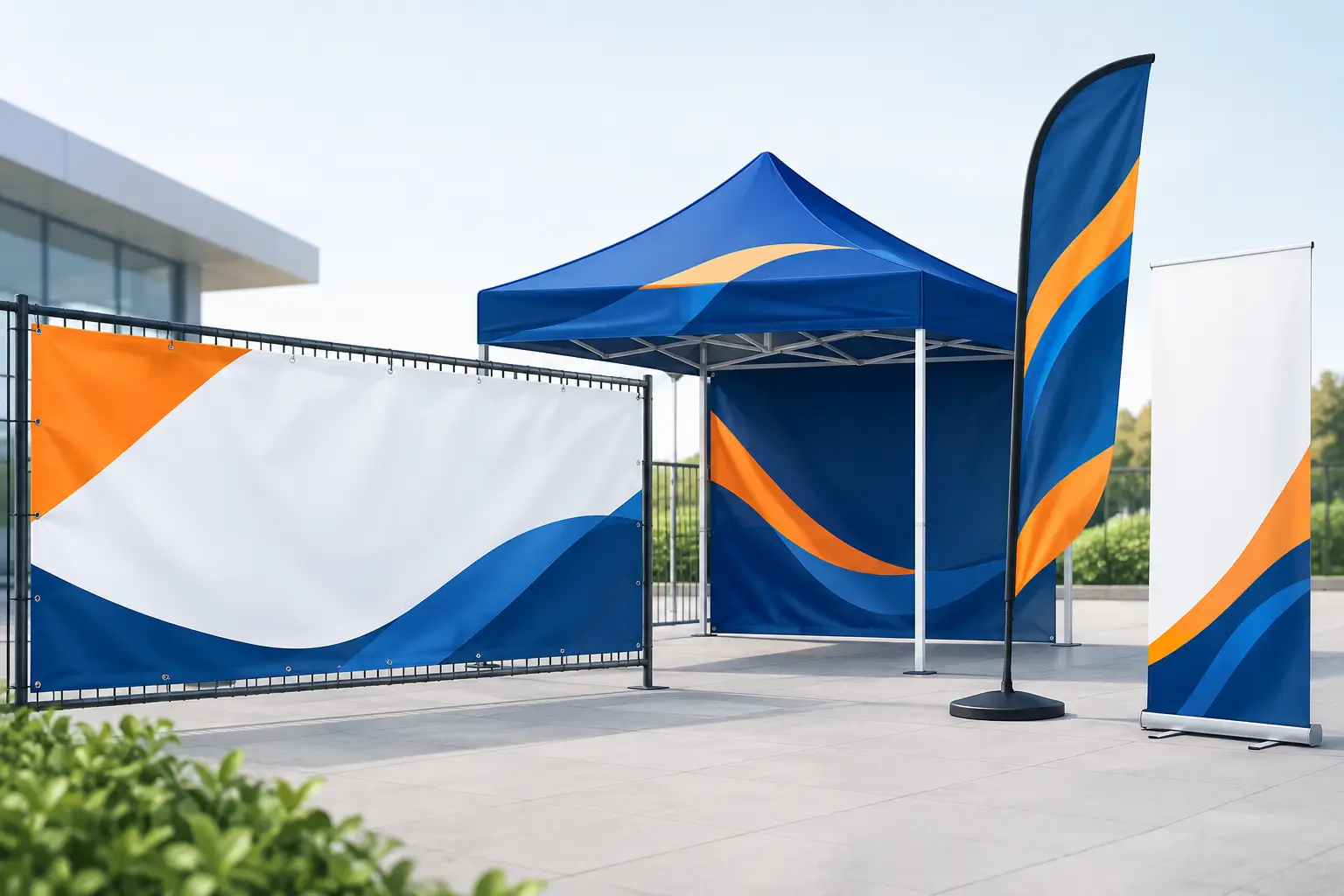
A banner has only a few seconds to do its job. Outside a busy shop, across a building site or behind an exhibition stand, it needs to be easy to read, professionally printed and suited to the conditions around it. Vinyl fabric banners give businesses two useful routes: tough, weather-ready signage for outdoor visibility and refined fabric displays for indoor presentation.
The right choice depends less on the artwork and more on where the banner will be used, how long it needs to last and how it will be fitted. Get those details right before print, and your display is far more likely to arrive ready to work.
Choosing Vinyl Fabric Banners for the Job
Vinyl and fabric banners are often grouped together because both provide large-format branding at a practical price. In use, however, they solve different problems.
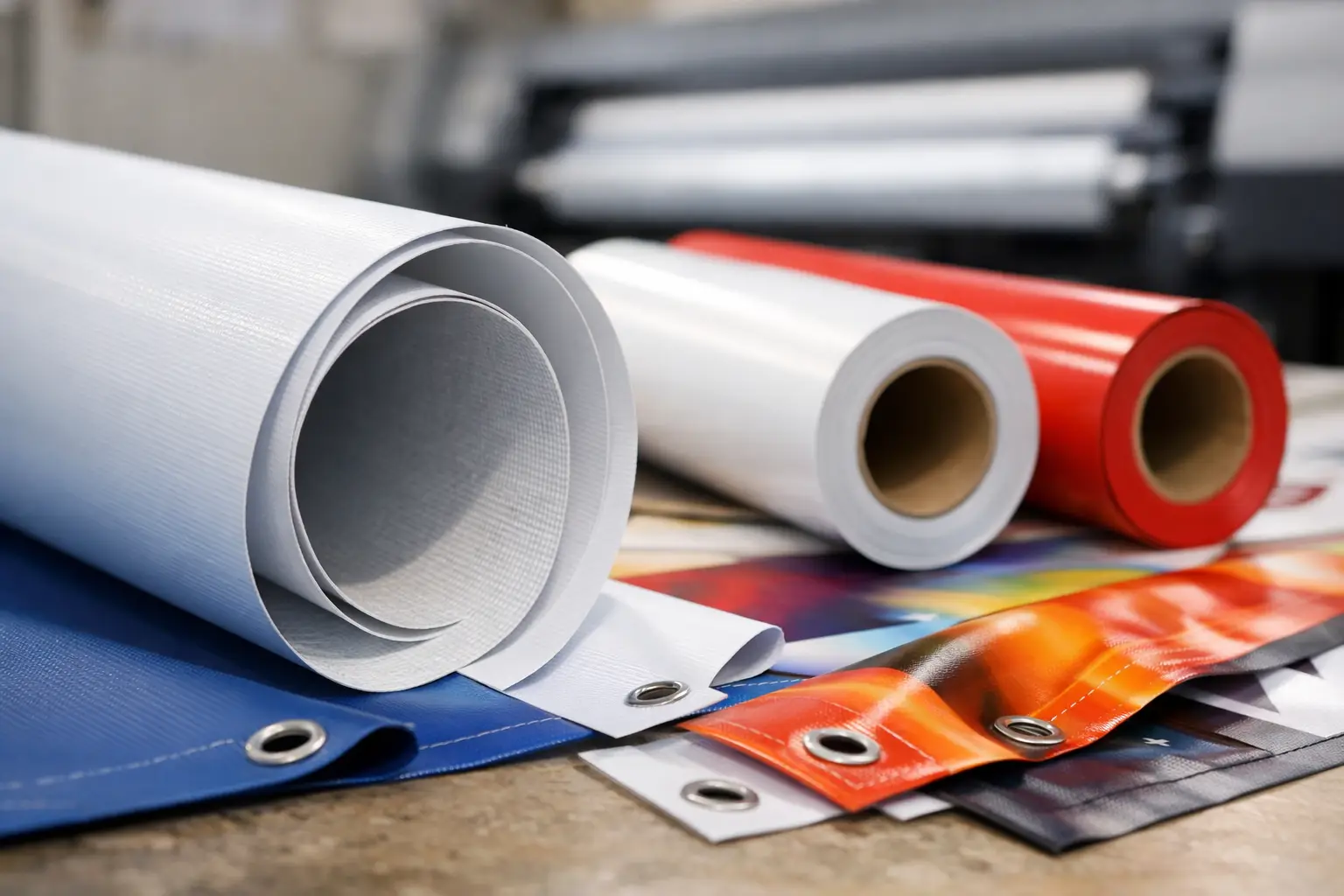
Vinyl is the dependable choice for outdoor promotions, construction signage, events, railings and shopfront messages. It is hard-wearing, waterproof and well suited to vibrant full-colour print. A properly finished vinyl banner can be fixed with eyelets, tied to fencing or mounted against a flat surface without fuss.
Fabric works particularly well where appearance and portability matter. It has a softer, more premium finish than PVC, does not reflect light in the same way and is easy to fold for transport between events. It is a strong option for indoor exhibitions, retail backdrops, conferences, stage displays and photo opportunities.
There is no single best material. A weekend outdoor promotion may need vinyl, while a branded backdrop that travels from venue to venue may be better in fabric. The practical setting should lead the decision.
When Vinyl Banners Are the Better Buy
Vinyl banners are built for visibility in real-world conditions. They are a popular choice for tradespeople, estate agents, schools, sports clubs, local campaigns and retailers running time-sensitive offers. Their smooth printable surface produces bold colours, sharp logos and large text that can be read from a distance.
For short- to medium-term outdoor advertising, standard PVC vinyl is usually the straightforward answer. It handles rain well, wipes clean and offers a firm, substantial feel once installed. UV-resistant printing helps colours stay clearer when the banner is exposed to sunlight, although every outdoor print will eventually show wear if left in place for long periods.
For business promotions that require the solid printed surface of PVC, our custom vinyl banner collection includes options for outdoor advertising, shop-front displays, indoor promotions and suspended signage. Compare the available formats before deciding whether vinyl or a fabric display best suits your location and campaign.
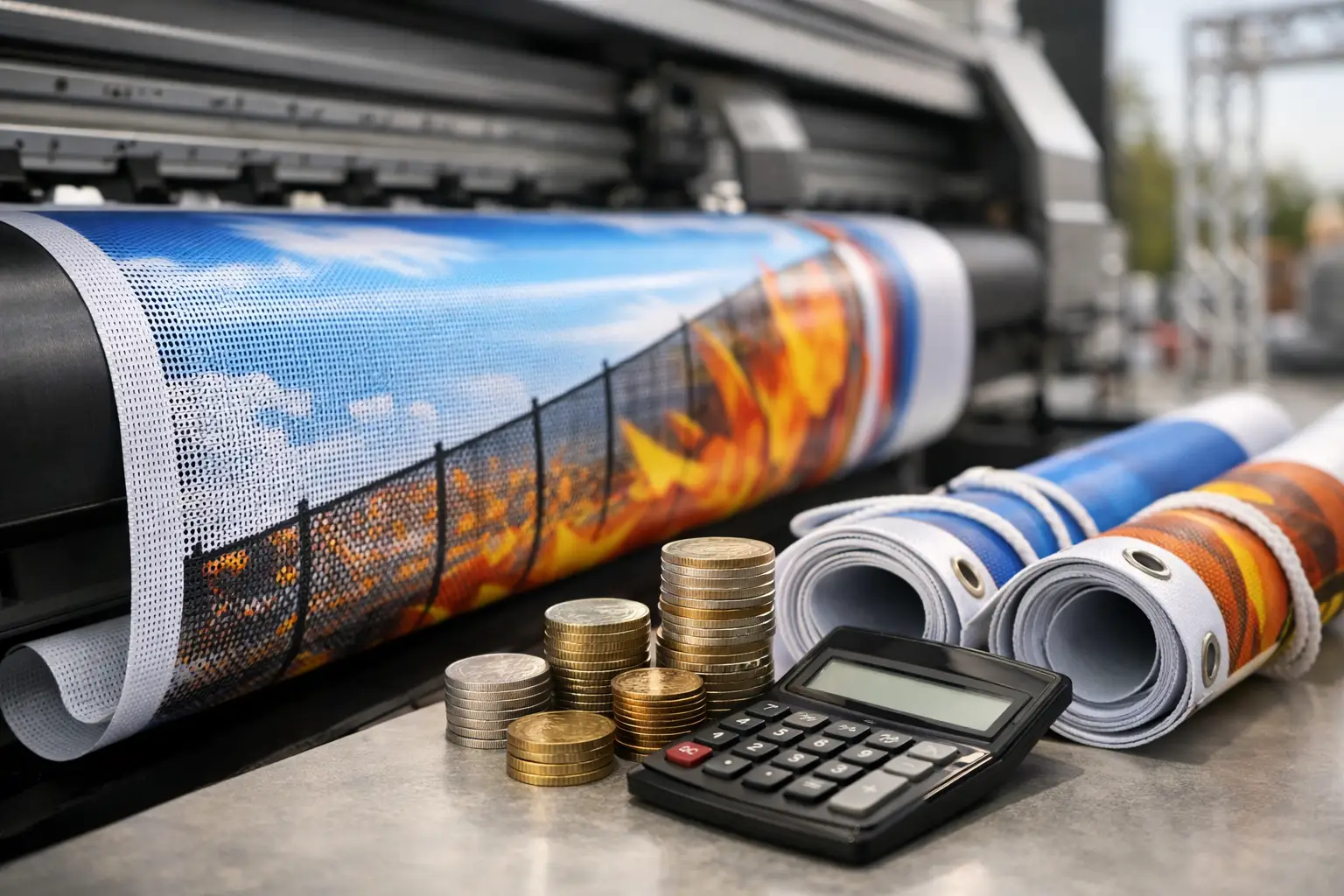
Wind is the key consideration. A solid vinyl banner can catch the wind like a sail when fitted to open fencing or scaffolding. In exposed locations, mesh banner material is often the safer option. Its perforated surface allows air to pass through while still carrying a clear printed message. The image is slightly less solid at close range, but from normal viewing distance it remains highly effective.
Choose the finish to match the fixing point
Eyelets are the usual finishing option for vinyl banners and make fitting quick with cable ties, bungee cords or rope. For a banner on railings or temporary fencing, use enough fixing points to keep tension even across the edges. A loose banner flaps, looks less professional and is more likely to tear around the eyelets.
If the banner will sit within a frame, be stretched across a wall or fitted in a particular display system, confirm the finished size and edge requirements before artwork is sent to print. A few millimetres can matter when a banner is designed for a tight space.
Where Fabric Banners Make a Stronger Impression
Fabric banners are designed for settings where the display is seen up close. They bring a cleaner, less industrial look to exhibition stands, receptions, product launches, retail interiors and presentation spaces. The material is lighter to carry than PVC and can often be folded rather than rolled, which is useful for teams travelling by car, train or courier.
The reduced glare is a major advantage under exhibition lighting, camera flashes and bright indoor spotlights. Fabric also photographs well, making it a sensible choice for press walls, branded backdrops and social media event spaces.
That said, fabric is not automatically the best choice for every display. It generally needs a suitable frame, pole pocket, tensioning system or carefully planned fitting method to look its best. It is also less appropriate than outdoor vinyl where prolonged rain, dirt or repeated public contact are expected. For an indoor display that needs to look polished, though, fabric can justify the extra consideration.
Make the Message Work at Banner Size
Large-format print amplifies good artwork and exposes weak artwork. A logo that looks fine in an email signature can become soft, pixelated or difficult to read when enlarged across a three-metre banner.
Start with the viewing distance. If people will pass the banner from the pavement or see it across a car park, keep the message short and use large lettering. Your business name, a clear offer, a phone number or web address and one direct call to action are usually enough. Trying to include every service, social handle and product category weakens the main message.
For exhibition or retail banners viewed at close range, there is more room for detail, but hierarchy still matters. A customer should see the brand first, the key benefit second and supporting information last. High-contrast colour combinations are easier to read, especially outdoors. Pale text over a busy photo may look stylish on screen but often loses impact at a distance.
Prepare artwork for reliable print
Use high-resolution images and provide logos in the best available format. Vector artwork is ideal for logos and text because it stays sharp at any size. If your design includes photos, use original, high-quality files rather than images copied from social media or screenshots.
Remember the edges. Important wording, logos and contact details should sit safely inside the design area, away from hems, eyelets and any trim. If you are uncertain about file setup, a professional artwork check or design refinement is worth arranging before production begins. It is far quicker than discovering a key detail has been cut off after delivery.
Size, Placement and Timing Matter
A banner should fit its location, not simply fill the largest available print area. Measure the available width and height, then consider what sits around it. A banner above a shop entrance needs enough clearance from doors, windows and existing signage. On site fencing, check whether posts, gates or uneven panels will interrupt the message.
For temporary events, plan the complete display rather than ordering in isolation. A main outdoor vinyl banner can direct visitors towards an entrance, while roller banners, posters or a fabric backdrop can carry the branding indoors. Repeating the same colours, headline and offer across each item makes the event feel organised and gives customers a clearer route from first glance to action.
Timing is equally practical. Urgent orders happen, especially before an opening, promotion or trade show. But allowing time for an artwork check, proof approval and correct measurement reduces risk. UK-based production and fast turnaround are valuable when deadlines are tight, yet the best result still starts with a clear brief and print-ready files.
Fit, Store and Reuse Your Banner Properly
Before fitting any outdoor banner, inspect the location and use fixings suited to the surface. Do not pull the material so tightly that eyelets are under constant strain, but remove obvious slack. On fencing, secure every eyelet where possible and inspect the banner after heavy wind.
When the campaign ends, take the banner down cleanly rather than dragging it across the ground. Wipe vinyl with a soft damp cloth if needed, allow it to dry and roll it with the printed side facing out. Fabric should be kept dry and folded or stored as recommended for its display system. Avoid leaving either material in damp storage, where creases, marks and mildew can spoil the next use.
A well-planned banner is not just printed advertising. It is a working display piece that has to survive delivery, installation, weather and close inspection. Choose the material for the setting, keep the message decisive and give the artwork the care it deserves. That is how a banner earns attention when it matters most.