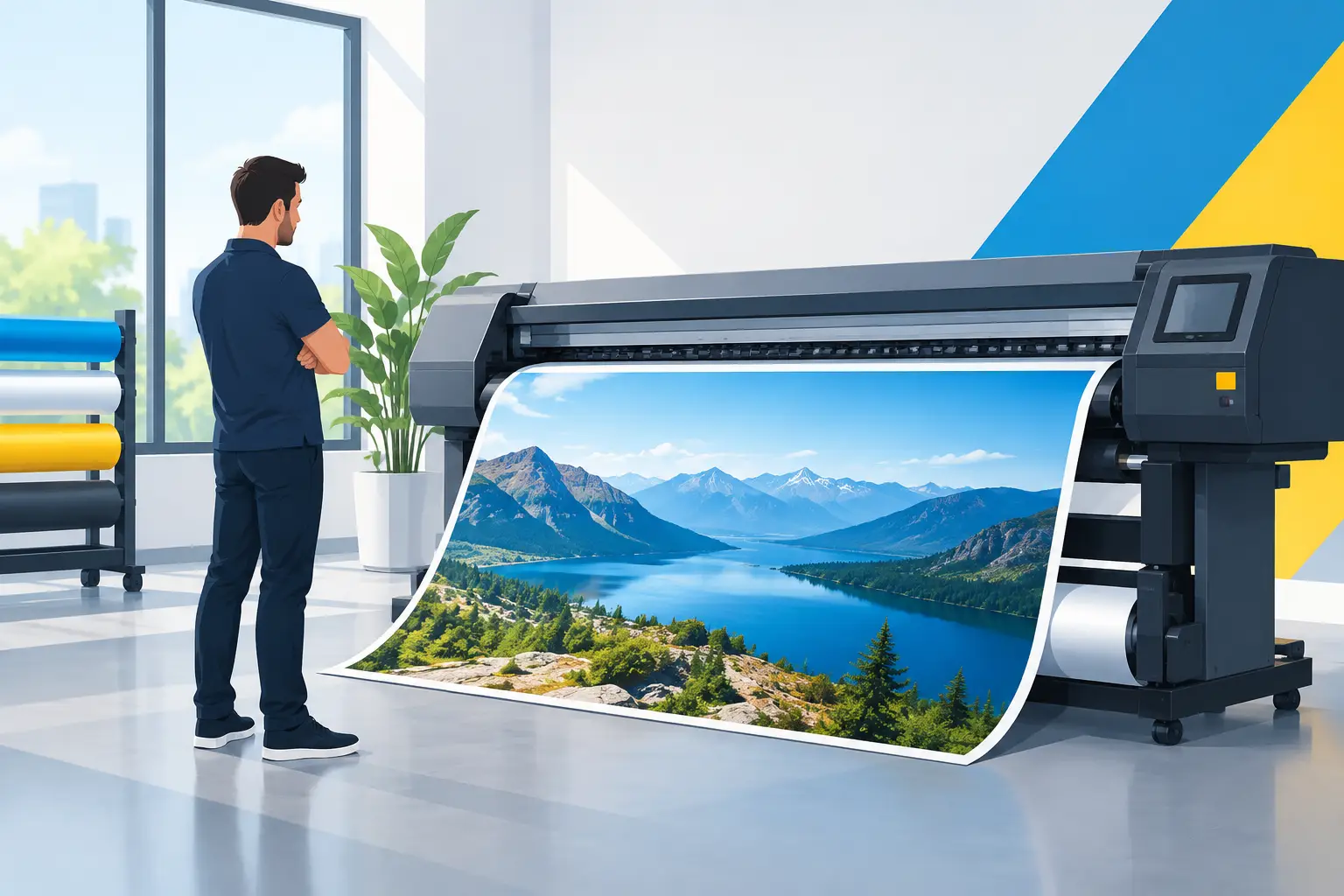
A banner that curls at the corners, a poster with fuzzy logos, or signage that fades after a few weeks outdoors can cost more than the print itself. Large format printing is where your message has to work at distance, under real lighting, in busy spaces and often against a tight deadline. The right product makes your business easier to spot. The wrong one becomes background noise.
For shopfront promotions, exhibition stands, building sites, local events and retail campaigns, the aim is simple: clear branding, a professional finish and print that arrives ready to use. Getting there depends on choosing the right material, size and artwork setup for the job.
What Is Large Format Printing?
Large format printing produces oversized graphics designed for visibility. It covers products such as vinyl banners, mesh banners, roller banners, fabric backdrops, posters, window graphics and display boards. Rather than being read at arm’s length like a leaflet, these prints are made to catch attention across a pavement, exhibition hall, reception area or event venue.
Size matters, but it is not the whole story. A well-produced 800 mm roller banner can be more effective than a much larger sign if it is positioned correctly and carries one clear message. Equally, a large outdoor banner needs enough scale and contrast to remain readable from the road or across a car park.
The practical benefit is reach. One professionally printed display can promote an offer, direct visitors, reinforce a brand or make a temporary location look established within minutes.
Choose the Material for Where It Will Be Used
The most common ordering mistake is selecting a product based on size alone. Conditions matter. Indoor displays need a clean, premium finish and simple portability. Outdoor displays need materials that can handle wind, rain and UV exposure.
Vinyl banners for flexible outdoor promotion
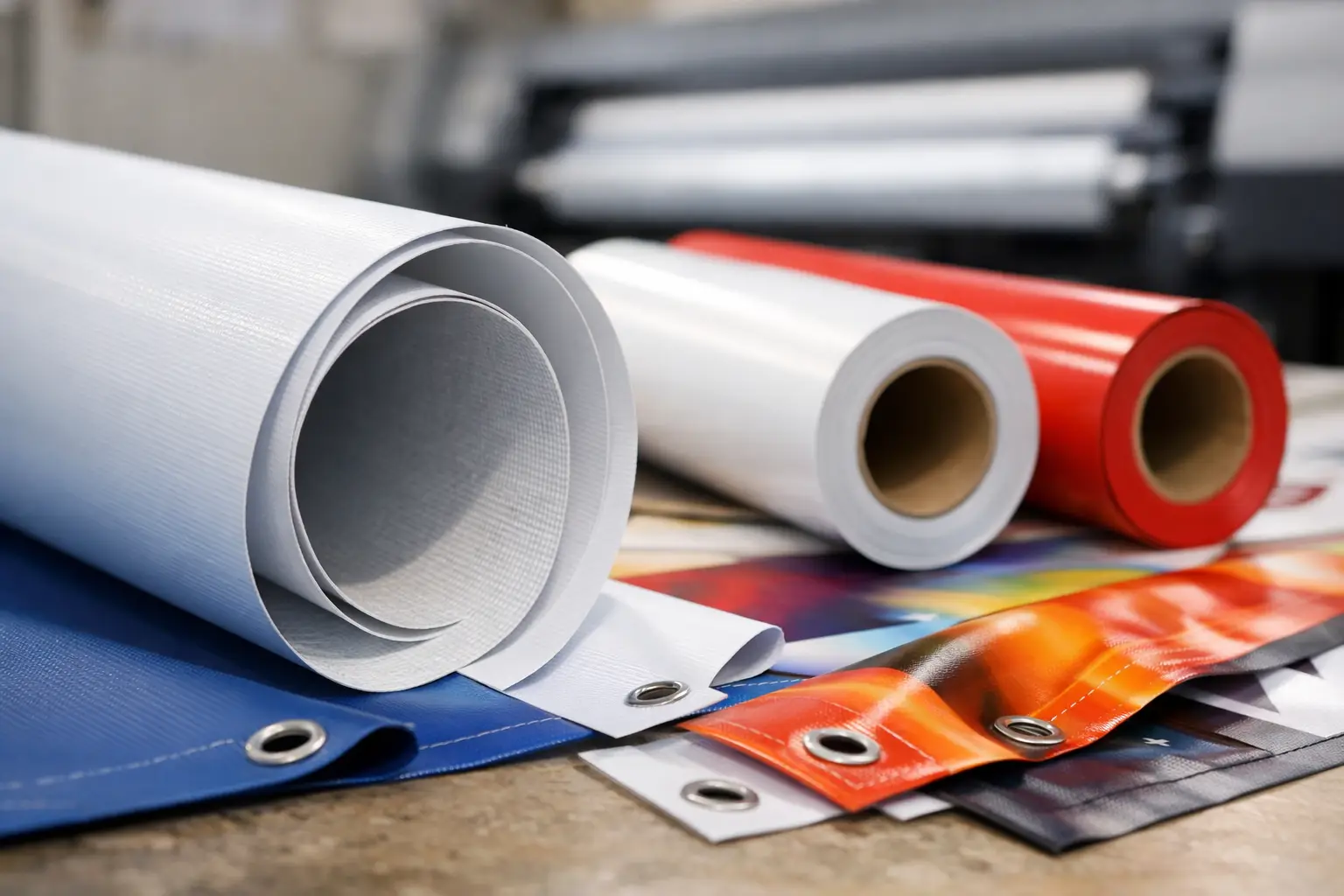
Vinyl is the dependable choice for many outdoor promotions. It is weatherproof, easy to install and suited to everything from sale banners and school events to construction signage and sports club sponsorship. With reinforced edges and eyelets, a vinyl banner can be secured to railings, fencing, walls or frames.
It works particularly well when you need a strong, direct message: a phone number, opening date, special offer or company name. For a banner viewed from a distance, fewer words usually perform better. Large type, a high-contrast colour combination and a clear call to action will do more than a paragraph of detail.
Mesh banners for windy sites
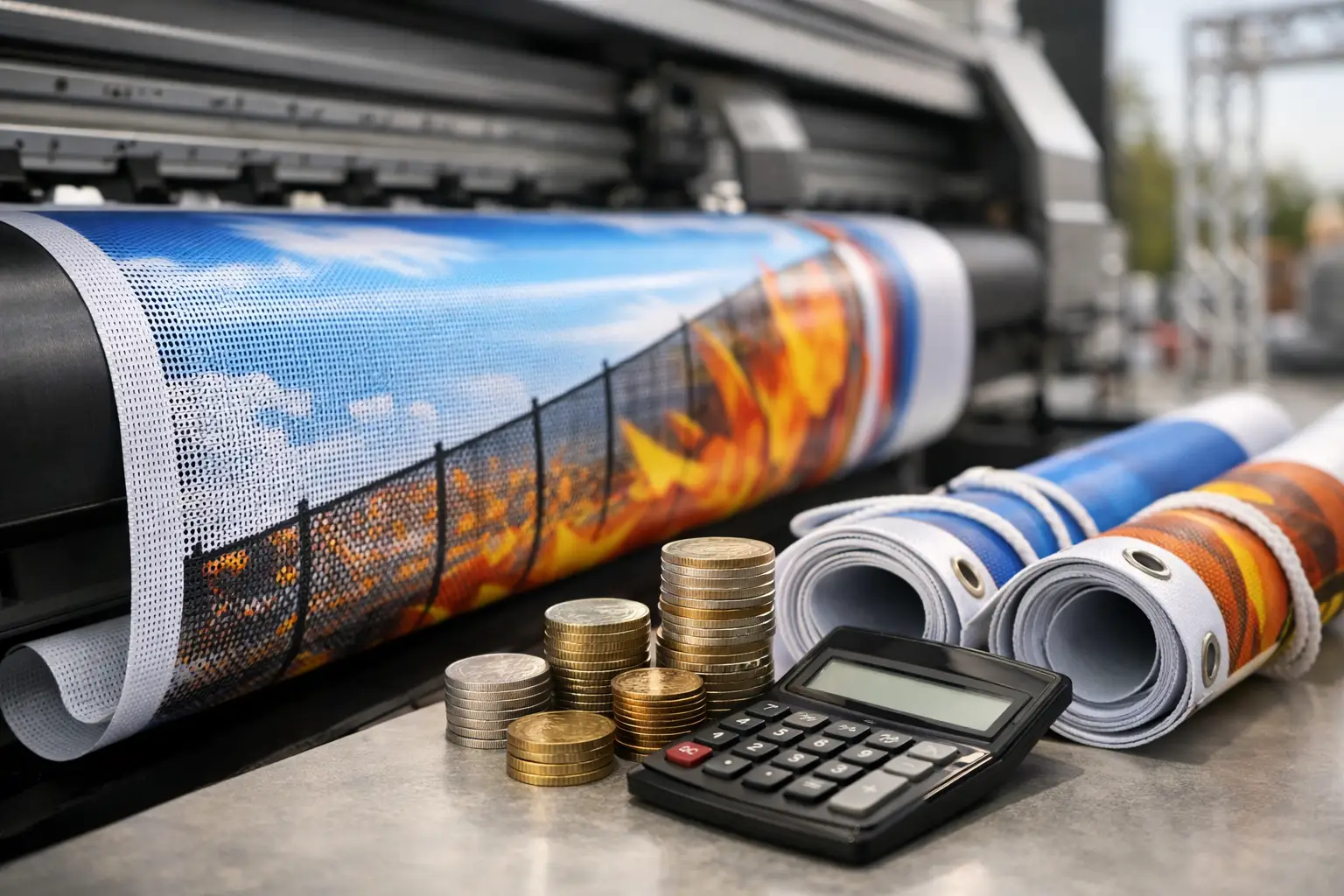
For fencing, scaffolding and exposed locations, mesh banners are often the better option. Their perforated surface lets air pass through, reducing wind resistance while still displaying your graphics clearly from the front. This makes them a sensible choice for building sites, festivals, outdoor venues and perimeter advertising.
Mesh does not produce quite the same solid appearance as vinyl at close range, so it is not always the best fit for a premium product launch or indoor photo backdrop. At normal viewing distance, however, the image and message remain highly effective. It is a trade-off between maximum print density and practical performance in wind.
Roller banners and backdrops for events
Exhibition teams and sales staff need display products that travel well, set up quickly and look consistent every time. Roller banners are ideal for entrances, product demonstrations, conference stands and reception areas because they pull up in seconds and pack away into a carry case.
Backdrops create more presence. They give brands a clean visual base for presentations, photographs, launches and press events. A branded backdrop is especially useful where several people will be photographed, as it keeps your logo in the frame without cluttering the space with separate signs.
Posters for short-run, high-impact campaigns
Posters remain one of the most cost-effective forms of large format print. They are right for window promotions, hospitality venues, noticeboards, point-of-sale displays and directional messaging. A poster can be changed quickly when offers, events or seasonal campaigns move on.
Think about the installation surface before ordering. A poster displayed behind glass has different requirements from one fixed to a wall or mounted in a frame. If it will be handled regularly, laminated or heavier stock may be worth considering.
Get the Artwork Right Before It Goes to Print
Good printing can only reproduce what is supplied. Artwork preparation is where sharp, confident displays are won or lost.
For large format printing, use high-resolution images at the final print size wherever possible. A photograph that looks fine on a phone may appear pixelated when enlarged for a two-metre banner. Logos should ideally be supplied as vector files, such as PDF, AI or EPS, because they can be scaled without losing definition.
Keep key information away from the edges. Eyelets, hems, trim areas and display cassette mechanisms can affect the outer margins of a design. Your logo, contact details and offer should sit comfortably within the safe area, not right on the boundary.
Colour also deserves attention. Screens display colour using light, while print uses inks on a physical surface, so there can be small variations between what you see online and the finished product. Strong brand colours can still reproduce brilliantly, but use suitable print-ready artwork and avoid relying on very subtle tonal changes for vital information.
If you are unsure whether a file is suitable, asking for an artwork check before production can prevent a costly reprint. At Banner Printing UK, artwork can be uploaded with an order, making it easier to move from approved design to production without delay.
Design for a Real Viewing Distance
A large print is not a larger business card. People rarely stand still and study it. They pass by, arrive at an event, queue at a counter or scan a site from the pavement. Your design must communicate quickly.
Start with the single action you want the viewer to take. That might be visiting a website, calling for a quote, entering a venue, finding a stand or noticing an opening offer. Make that action obvious, then support it with the minimum information needed to act.
Use a clear hierarchy. Your headline or key benefit should be the largest element. Your logo and supporting details should be visible but secondary. Avoid placing several equally large messages on one banner, as the eye does not know where to land.
Type size should reflect distance, not just aesthetics. Text that appears oversized on a laptop can be too small from ten metres away. If a sign needs to be read from across a road, focus on a short message in large lettering. Detailed product information belongs on a leaflet, flyer or QR code rather than the main display.
Plan Around Installation and Turnaround
The best product is one that arrives before the event and can be installed without drama. Before ordering, confirm the finished size, fixing points, location and deadline. A banner for temporary fencing may need eyelets at regular intervals. A roller banner needs a stable floor area. A backdrop may require room for its frame and for people to stand in front of it.
Allow time for artwork approval and delivery, particularly when several branded items need to match. For urgent work, UK-based production is a major advantage. Fast turnaround of 24 to 48 hours can make the difference when a campaign is confirmed late, a venue changes or a sales opportunity appears unexpectedly.
It also pays to order with reuse in mind. A generic banner for recurring events may offer better value than one tied to a single date. On the other hand, a time-sensitive offer can create urgency and justify a short-run print. The right choice depends on how often the message will change and how long it needs to stay relevant.
Make Every Display Work Harder
Large format print performs best when it is part of a wider, practical set of marketing materials. A roller banner can attract visitors to a stand, while flyers give them something to take away. A shop window poster can promote an offer, while stickers or business cards make the next step easy. Matching colours, fonts and messages across these items makes a small business look organised and established.
Placement is just as important as production quality. Put banners where people naturally approach, not where they have already passed. Keep window posters clear of competing signs. At exhibitions, position your strongest message at eye level and make sure staff are not standing in front of it.
A display does not need to say everything. It needs to make the right people notice, understand and respond. Choose a product built for its environment, provide artwork that prints cleanly and leave enough time for proper finishing. Then your next banner, backdrop or poster can do the job it was printed to do: put your business firmly in view.