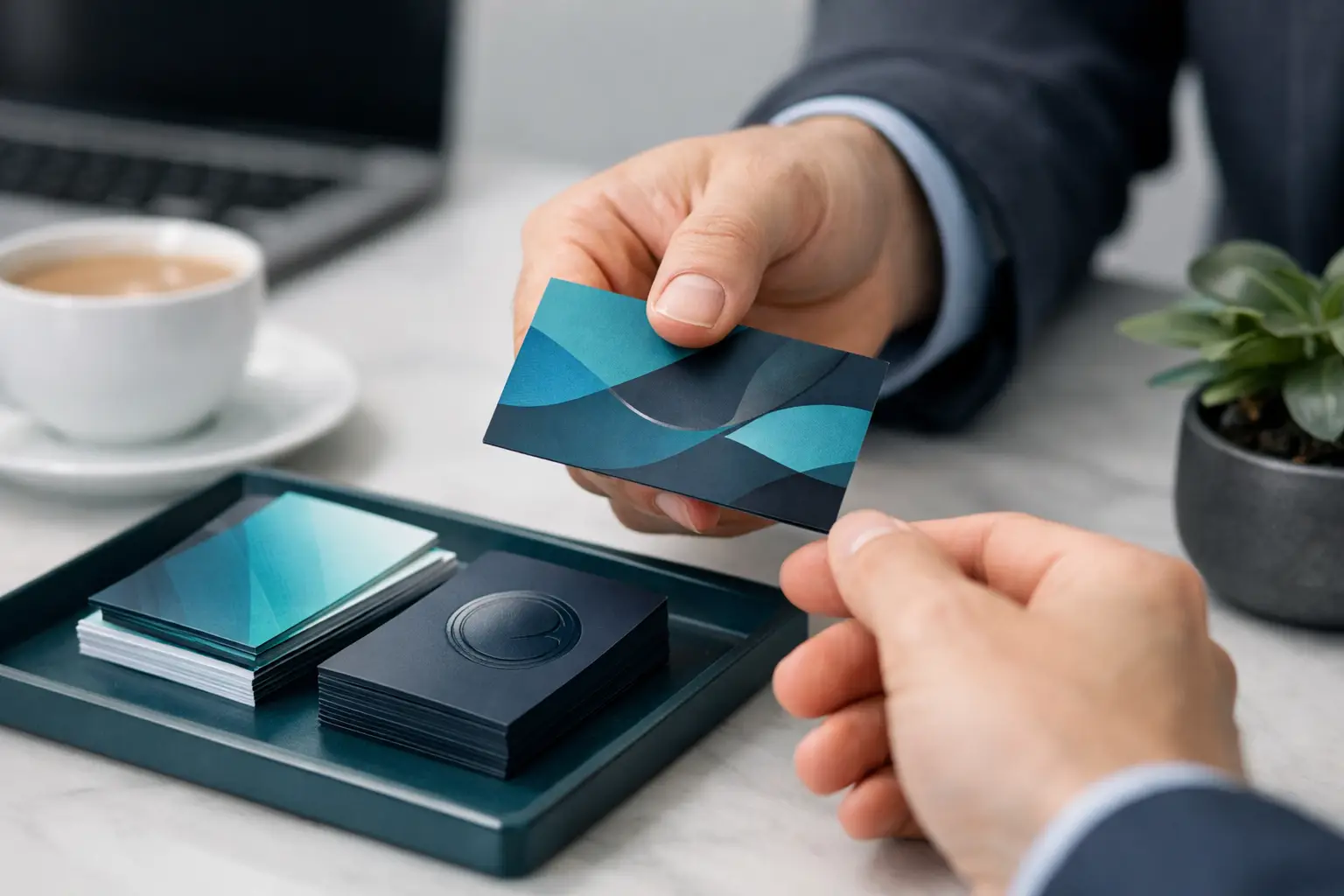
A business card is often exchanged in a busy moment: at a trade stand, across a counter, after a site visit or during a quick introduction. Custom printed business cards need to work just as hard as that conversation does. They should make your name, service and contact details easy to find, while giving people a clear reason to remember your business.
For UK businesses working to real deadlines, the best cards are not necessarily the busiest or most expensive. They are the ones that look professional, feel considered and arrive in time for the next event, client meeting or sales push.
Start with the job your card needs to do
Before choosing a finish or uploading artwork, decide where and how the card will be used. A restaurant owner leaving cards at local venues needs something different from an electrician handing them to homeowners, or an exhibition team speaking to hundreds of visitors in a day.
A simple card with a bold logo, direct contact details and a clear service line is often the right fit for trades, local services and retail businesses. It is quick to read and easy to pass on. For consultants, estate agents, designers and premium hospitality brands, a more refined layout and tactile finish can support a higher-value first impression.
Think beyond the handover too. Will the card be kept in a wallet, pinned to a noticeboard, left by a till or picked up with a flyer? That answer should guide the design. A card that depends on tiny text or subtle colours may look good on screen but fail in a busy real-world setting.
What makes custom printed business cards effective?
The strongest cards make the next step obvious. That may be calling a number, visiting your premises, booking a quote or scanning a QR code. Every element should support that action rather than compete for attention.
Keep the essential information easy to scan
Your company name, contact name if relevant, phone number, email address and website or social handle should be legible at a glance. If you cover a defined area, such as Manchester, Kent or the wider UK, include it where it helps customers decide quickly whether you are the right fit.
Use one main message. “Emergency plumbing, seven days a week”, “Handmade cakes for local events” or “Exhibition display printing with fast turnaround” says more than a crowded block of general marketing copy. A business card has limited space, and clarity wins.
Use both sides with purpose
Double-sided printing gives you room, but it is not an instruction to fill every corner. Keep the front focused on your brand and key contact route. The reverse can carry a short list of services, an appointment reminder, a promotional code or a QR code leading to an enquiry page.
For appointment-led businesses, the reverse can be particularly useful. Hair and beauty salons, garages, clinics and tradespeople can use it for booking details or a simple next-visit prompt. The card becomes more likely to stay in a customer’s pocket rather than being discarded after the first exchange.
Make contrast do the hard work
High contrast between text and background is one of the most reliable choices in print. Dark text on a light background, or light text on a properly solid dark background, is easier to read in poor lighting and at small sizes.
Be cautious with pale text, busy photographic backgrounds and colours that sit too close together. These can look striking in a mock-up but become difficult to read once printed. Your logo can carry personality; your phone number should never make someone squint.
Choose the right stock and finish for your brand
Paper weight and finish change how a card is perceived before anyone reads a word. A flimsy card can undermine a business that wants to look established, while a heavier stock gives the card more presence and helps it withstand life in a wallet, work bag or display rack.
Silk-finished cards are a dependable all-round option. They offer a smooth, professional surface, reproduce colour well and suit most sectors, from retail and events to local services. Matt finishes give a softer, more understated look and work especially well for brands with minimal layouts or dark colour palettes.
Gloss finishes can make imagery and bright colours stand out, but they can reflect light and show fingerprints more readily. They work best where visual impact matters most, such as entertainment, food, beauty or promotional campaigns. If customers need to write on the card, a less glossy surface is usually more practical.
There is a trade-off between premium features and speed. Foils, specialist textures and unusual cut shapes can create a memorable piece, but they may not be necessary for a short-notice event or a large local drop. For many businesses, sharp artwork on quality stock with a reliable turnaround produces the best return.
Get your artwork ready before you order
Fast print only helps when the artwork is ready to produce. Supplying a print-ready file reduces delays and gives you more control over the finished result.
Set artwork to the correct finished card size, with bleed around the edges where required. Bleed is the extra image or background area that is trimmed away after printing. Without it, slight movement during trimming can leave unwanted white edges around a full-colour design.
Keep important text, logos and phone numbers safely inside the trim area. Do not place critical details right on the edge. A small amount of breathing room looks better and protects the information that matters.
Use high-resolution images and check that logos are sharp at actual print size. A file that appears clear on a large computer monitor can still be too low resolution for print. Where possible, use vector logo files or high-quality PDF artwork. Review every phone number, email address and postcode before placing the order. A beautiful card with one wrong digit is an expensive missed opportunity.
Design for the places you actually sell
A business card should reflect the environment in which your customers meet you. Exhibition cards need a bolder message because conversations move quickly and attendees collect many contacts. Retail cards can include a return-visit offer or social details. Builders, landscapers and other trades may benefit from a short service list, qualifications or emergency contact information.
If you operate at events, keep your business card design consistent with your banners, roller banners, flyers and stickers. Repeated colours, typefaces and messaging make the stand or sales area feel organised. When someone takes a card away, they should immediately connect it with the display they saw.
This does not mean every item must look identical. A banner has to be read from several metres away, while a card is read in the hand. The branding should match, but the information hierarchy needs to suit each format.
Ordering custom printed business cards on a deadline
When a launch, exhibition or local promotion is approaching, turnaround time is part of the product. Check the production schedule early and allow time for delivery, especially if the cards are needed for a fixed event date. Ordering a few days ahead gives you more flexibility if artwork needs refining.
For repeat orders, save the approved design and keep a note of the stock and finish used. Consistency is valuable when several team members order print or when your business has multiple locations. It also makes reordering faster when supplies run low.
Banner Printing UK supports business buyers who need professional promotional print without a complicated process. Uploading clear artwork, choosing a practical finish and confirming your delivery deadline before checkout helps keep urgent orders moving.
Small details that make people keep the card
The best business cards earn a place in a wallet because they are useful as well as attractive. A QR code can be useful, but only if it leads somewhere worthwhile, such as a booking page, current menu, quote form or portfolio. Test it on more than one phone before printing.
A clear offer can also improve retention. It may be a first-order discount, a referral reward or a seasonal service reminder. Avoid offers with too much small print. If someone cannot understand it in a few seconds, it is unlikely to influence what they do next.
Finally, order enough cards for the way you work. A sole trader attending occasional meetings may need a modest quantity, while a shop, sales team or event organiser should plan for regular distribution. Cards are most effective when they are always to hand at the moment a customer asks, “Do you have a card?”
Put your best contact route, your clearest service message and a finish that suits your business into every card. Then make sure a stack is ready before the next opportunity walks through the door.