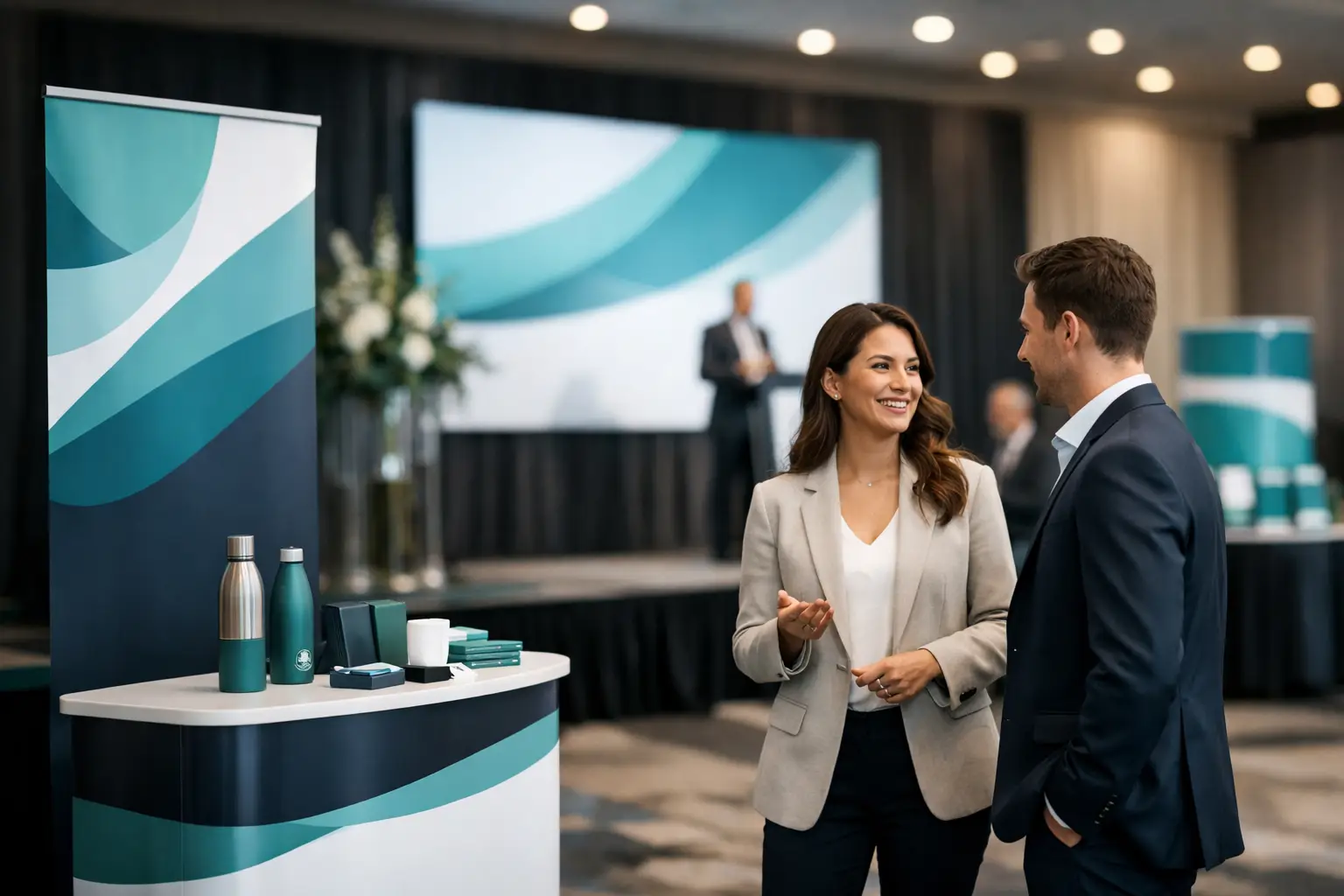
A busy event gives people seconds to decide where to look, who to speak to and which business they will remember. Effective event branding makes that decision easier. It puts your name, message and visual identity in the right places, at the right scale, without relying on a sales pitch to do all the work.
For a trade stand, local festival, product launch, charity day or corporate conference, the aim is not simply to print a logo on everything. It is to create a consistent, practical display that is visible from a distance, looks professional up close and survives the demands of setup, footfall and travel.
What event branding needs to achieve
Good event branding has a job to do before anyone reaches your stand. It should show visitors who you are, what you offer and why they should stop. A clear strapline, recognisable colours and one strong visual message usually work harder than a display packed with small text.
This matters particularly at exhibitions and busy public events, where competitors are often positioned only metres away. If your roller banner is hard to read, your backdrop is poorly lit or your leaflets do not match your main display, people may pass by without understanding what makes your business relevant.
The strongest setups balance three things: visibility, consistency and usefulness. Visibility gets attention. Consistency builds confidence. Useful printed materials give people something to take away, scan, photograph or act on after the event.
Start with the venue, not the artwork
Before choosing products or finalising a design, consider where the event is taking place. Indoor exhibition halls, outdoor markets, hotel function rooms and construction open days each create different demands for size, material and fixing.
An indoor stand may need a clean branded backdrop and one or two portable roller banners. These are quick to position, easy to transport and ideal when floor space is limited. For a presentation stage or photo opportunity, a larger printed backdrop can create a polished focal point while keeping your branding in every image shared afterwards.
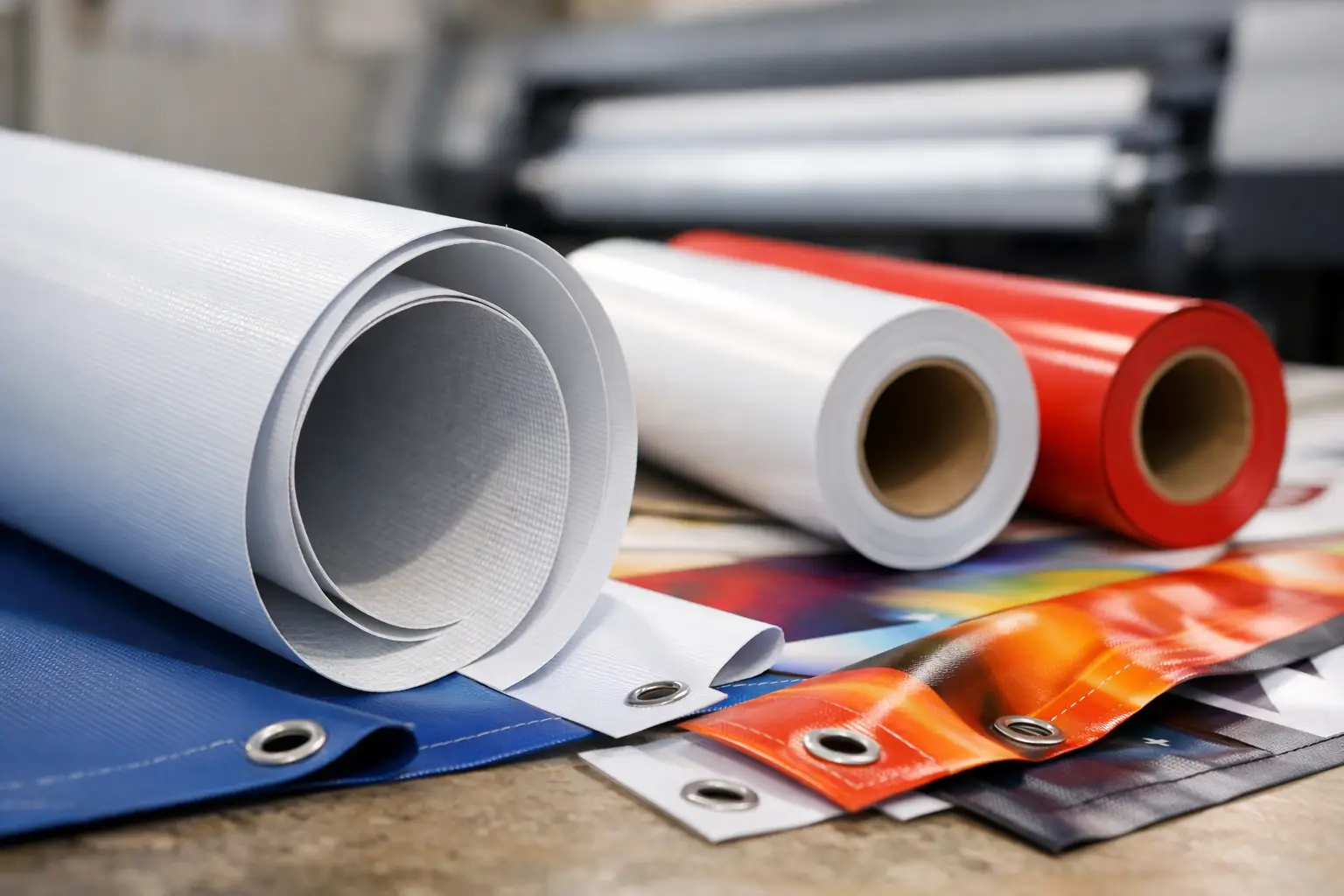
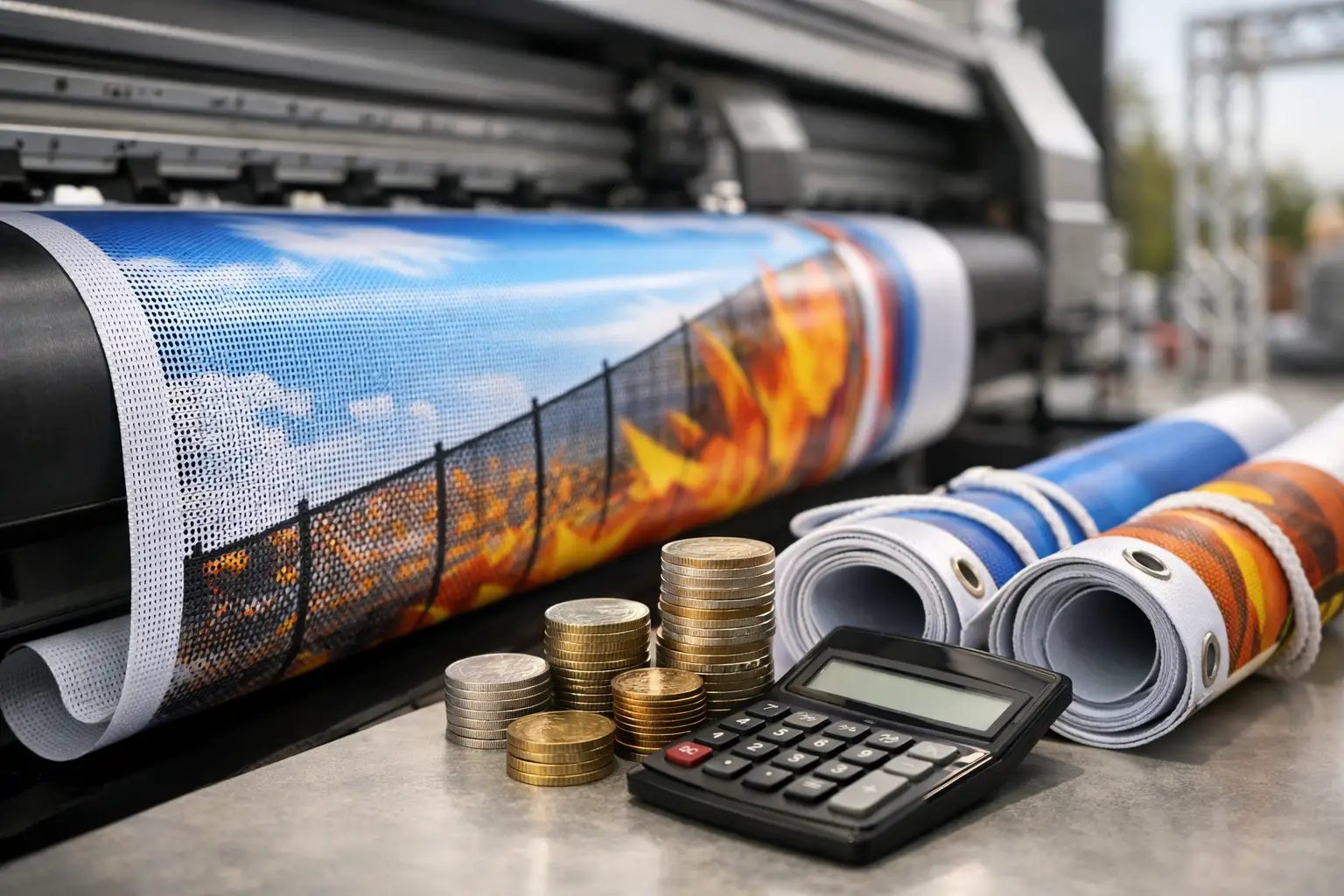
Outdoor events need more consideration. Standard vinyl banners are a reliable choice for railings, fences, building fronts and temporary promotions. Where wind can pass through the display, mesh banners are often the better option. Their perforated material reduces wind resistance while keeping your artwork visible, making them well suited to fencing, sports grounds and exposed sites.
Do not overlook the practical details. Check whether the venue permits hanging signage, whether you need cable ties or bungee cords, and how much time is available for setup. A great design is of little use if the display is too large for the allocated space or cannot be installed safely.
Build event branding around one clear message
A common mistake is trying to promote every product, service and offer at once. Event visitors are moving quickly, often carrying bags, speaking to colleagues or heading towards a scheduled talk. Your central message should be understood at a glance.
Choose one priority. It might be a new product range, a seasonal offer, a service area or a simple reason to book a conversation. Put that message at the top of the design, supported by your logo and a direct call to action. Details such as phone numbers, web addresses and social handles can sit lower down, where interested visitors can find them.
For example, a trades business attending a local home improvement show may lead with the service it wants more enquiries for, rather than a long list of every job it can complete. A retailer launching a new range may use a large product image and a short offer. The principle is the same: make the first message easy to absorb.
Keep colours, type and imagery consistent
Every item does not need identical artwork, but it should clearly belong to the same campaign. Use the same logo treatment, colour palette, typefaces and visual style across banners, posters, flyers, stickers and business cards.
Consistency also helps when visitors encounter your brand at different points during the event. They may first see a banner across the room, then pick up a flyer, then receive a product sample with a branded sticker. Matching print builds recognition and makes a smaller business look established and organised.
Be disciplined with colour. Bright, high-contrast combinations can be highly visible, but they must still fit your brand and remain readable. Pale text on a busy image, or too many competing colours, can reduce impact. When in doubt, use a plain background behind essential information.
Choose printed products that work together
A well-planned event display is usually made up of a few complementary items rather than one oversized banner trying to do everything. The right mix depends on the venue, audience and budget, but these products cover most event requirements:
- Roller banners provide portable, freestanding branding for entrances, stands and reception areas.
- Vinyl banners deliver large-scale visibility for walls, railings, barriers and temporary outdoor promotion.
- Mesh banners are designed for windy locations where air needs to pass through the material.
- Backdrops create a professional setting for stands, talks, press photographs and branded social content.
- Posters, flyers and business cards give visitors a practical way to take your offer away with them.
- Stickers can add branding to packaging, samples, giveaway bags and event materials at low cost.
The most effective combination is not always the biggest one. A small indoor table at a networking event may only need a roller banner, branded literature and a tidy display of products. A larger exhibition stand may benefit from a full backdrop, directional posters and multiple banners placed to catch traffic from different approaches.
Design for distance and real-world conditions
Artwork viewed on a laptop can look very different when printed at banner size. Text that appears prominent on screen may be too small to read from three or four metres away. Keep essential wording large, use strong contrast and avoid placing key details close to edges, hems or eyelets.
Images should be high resolution and supplied at the correct size wherever possible. Enlarging a small image can leave it looking soft or pixelated in print. If you are unsure about your artwork, getting it checked or refined before production is a sensible safeguard, especially when the event date cannot move.
Think about viewing angles too. A banner behind a table may have its lower section hidden by stock, chairs or people standing nearby. Put your logo and main message in the upper half. On outdoor banners, allow for glare, weather and movement. Bold wording and simple layouts tend to perform better than fine detail.
Order early, but choose a printer built for deadlines
Events have a habit of creating last-minute changes. A stand size may be confirmed late, a campaign message may change or an extra sponsor logo may need adding days before doors open. Ordering early gives you more flexibility, but dependable turnaround is just as important when timings are tight.
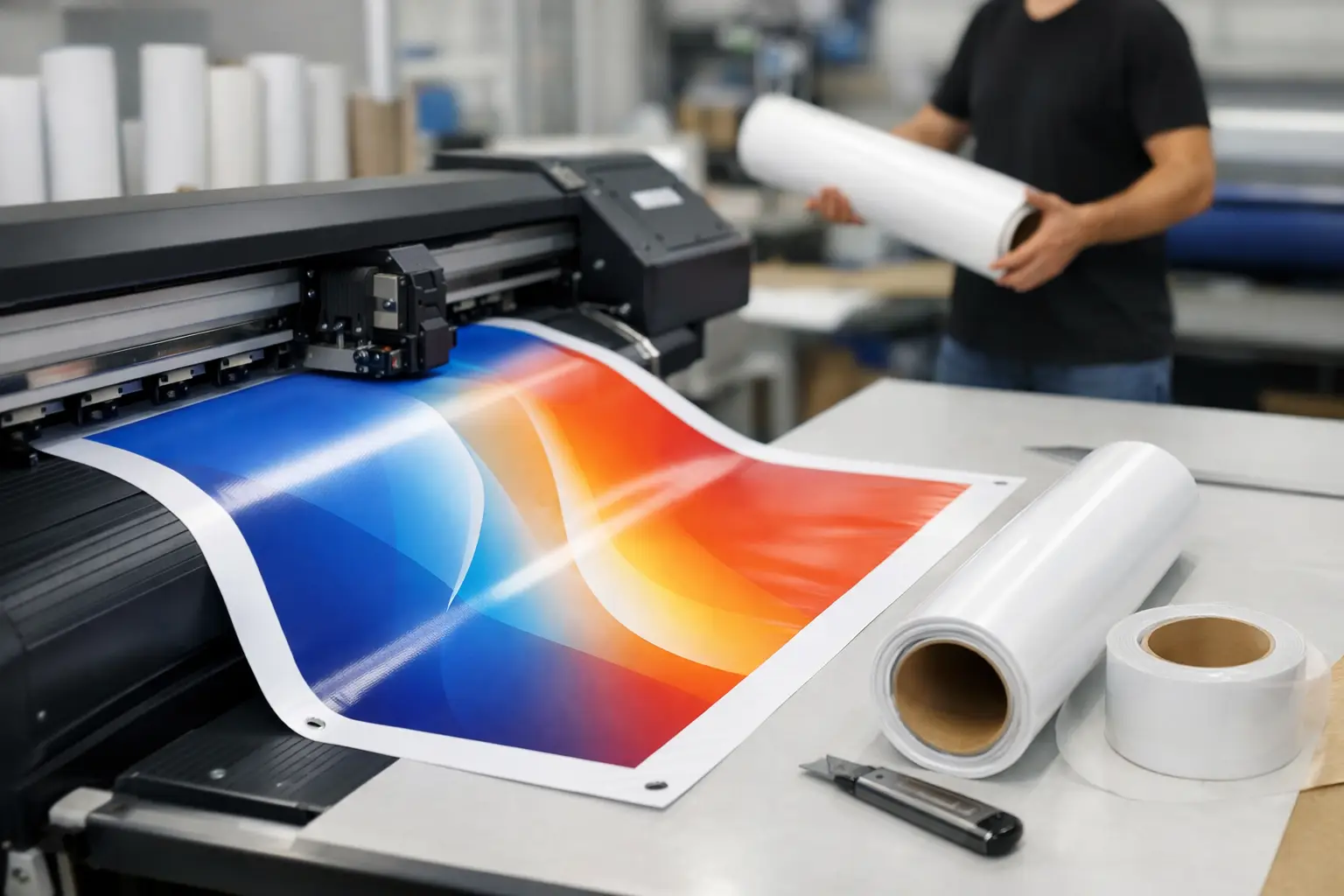
Look for UK-based production, clear artwork requirements and materials suited to the job. Weatherproof, UV-resistant banners are a practical investment for outdoor use, while portable display products should be easy to carry, store and set up without specialist equipment.
At Banner Printing UK, fast 24 to 48-hour turnaround supports businesses and organisers who need professional printed displays without unnecessary delays. The key is to send final artwork promptly, check dimensions carefully and allow enough time for delivery and setup before the event begins.
Make the event work after it ends
Printed event materials should not be treated as disposable if they can continue earning their place. A well-designed roller banner can move to your reception area, showroom or future events. Vinyl banners can support repeat campaigns if the message is not date-specific. Leftover flyers and business cards can be used in shop counters, delivery packs or local promotions.
For campaign-specific items, take photographs before the event gets busy. Capture the full stand, close-ups of your display and people interacting with it. These images are useful for future event planning, internal reporting and social posts, while also showing whether your signage was visible enough in the space.
The best event branding is the kind that makes your business easy to spot, easy to understand and easy to remember. Plan it around the venue, keep the message focused and choose print built to look the part from setup to close.