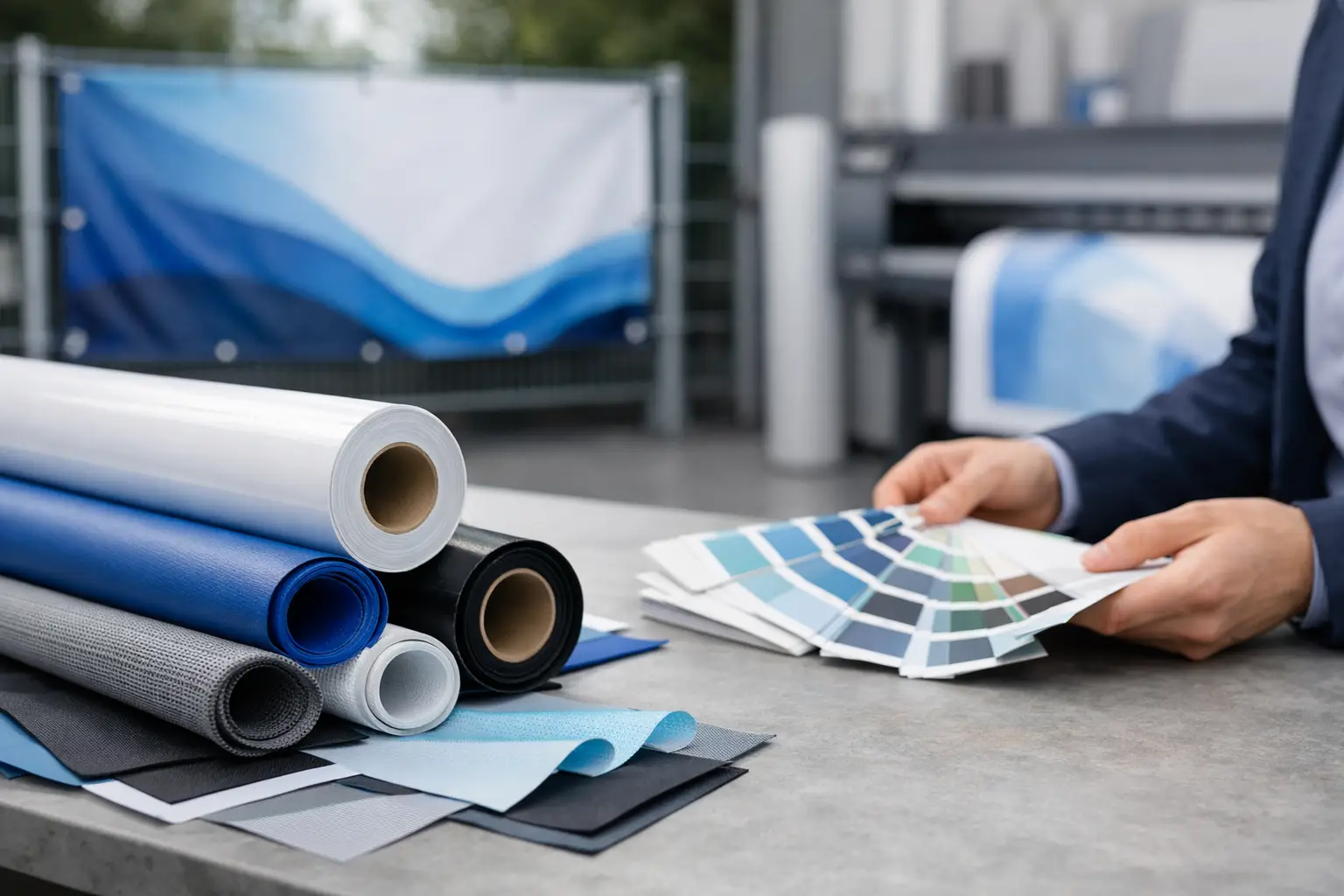
A banner that tears in the wind, curls at the edges or becomes hard to read after a few wet days is a false economy. This best banner materials guide is built for UK businesses that need print to look professional, arrive quickly and stand up to where it will actually be used – whether that is outside a shop, on a building site, at a trade show or behind a busy event stage.
The right choice is rarely about picking the most expensive option. It is about matching the material to the location, viewing distance, weather exposure and length of your campaign. Get that right and your banner works harder from the moment it is installed.
Start with where the banner will be used
Before choosing a finish or deciding on dimensions, consider the practical conditions. An indoor promotional banner does not need the same construction as a sign fixed to temporary fencing. Likewise, a banner hung across a windy car park needs a different material from one displayed against a solid shop wall.
Think about exposure to wind and rain, how long the banner will stay in place, whether people will see it close up or from across a road, and how it will be fitted. These details determine whether standard PVC vinyl, mesh or fabric is the sensible option.
Best banner materials guide: the main choices
PVC vinyl banners for versatile outdoor promotion
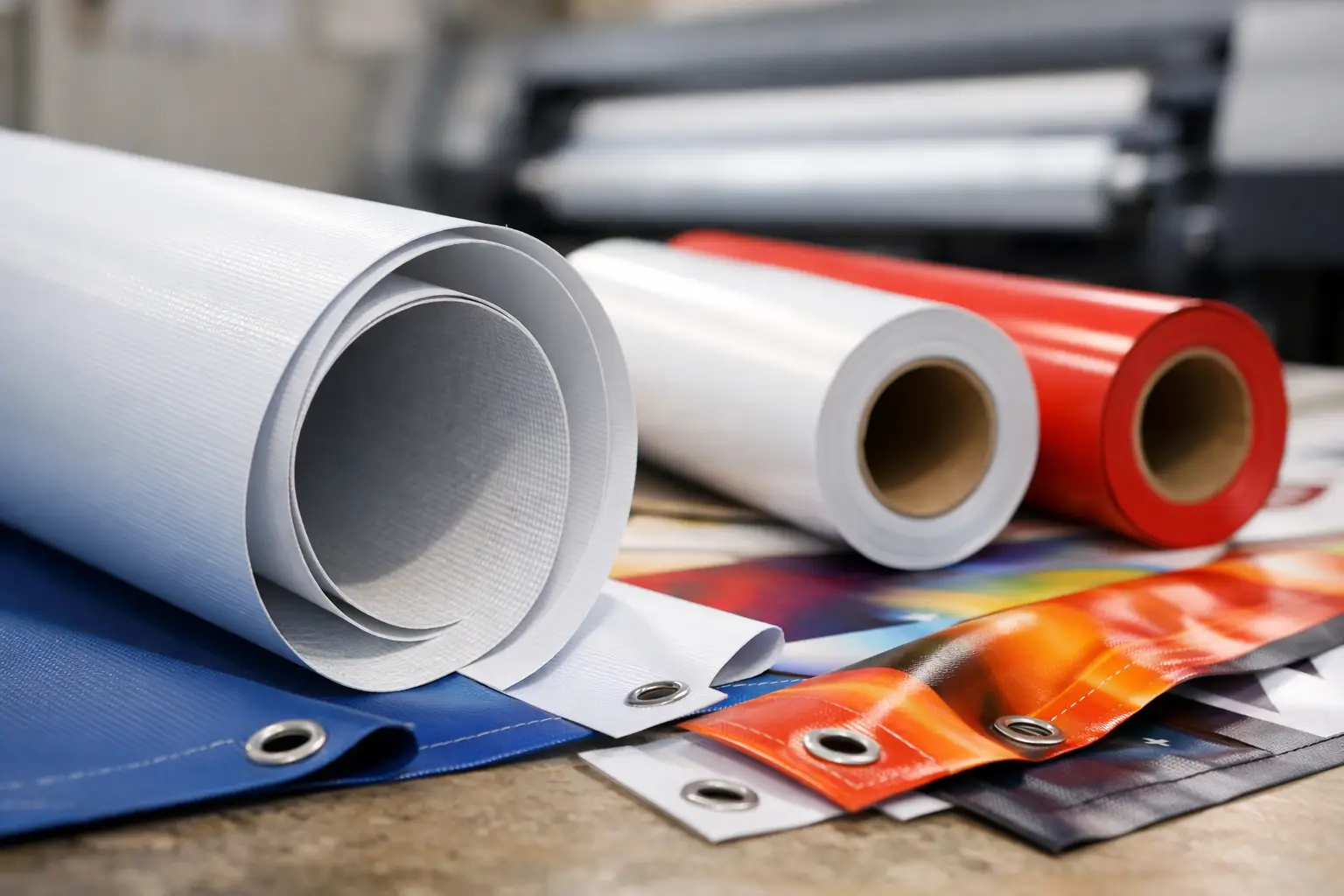
PVC vinyl is the dependable all-round choice for most outdoor banners. It has a smooth, solid surface that produces strong colour, sharp logos and clear text. That makes it particularly effective for shopfront offers, event promotion, property signage, trade services, school fairs and short-to-medium-term campaigns.
Because the material is solid, it gives your artwork maximum impact. Bright blocks of colour, photographs and fine lettering reproduce well, provided the artwork is supplied at the right size and resolution. PVC vinyl is also weatherproof and UV-resistant, so it is designed to cope with typical British rain and daylight without your message quickly fading or becoming unreadable.
It works best when the banner is fixed against a wall, railings or another relatively sheltered surface. In exposed locations, however, a solid banner can catch the wind like a sail. Strong eyelets and secure fixings help, but material choice still matters. If wind is a regular factor, mesh is usually the safer call.
Mesh banners for windy sites and fencing
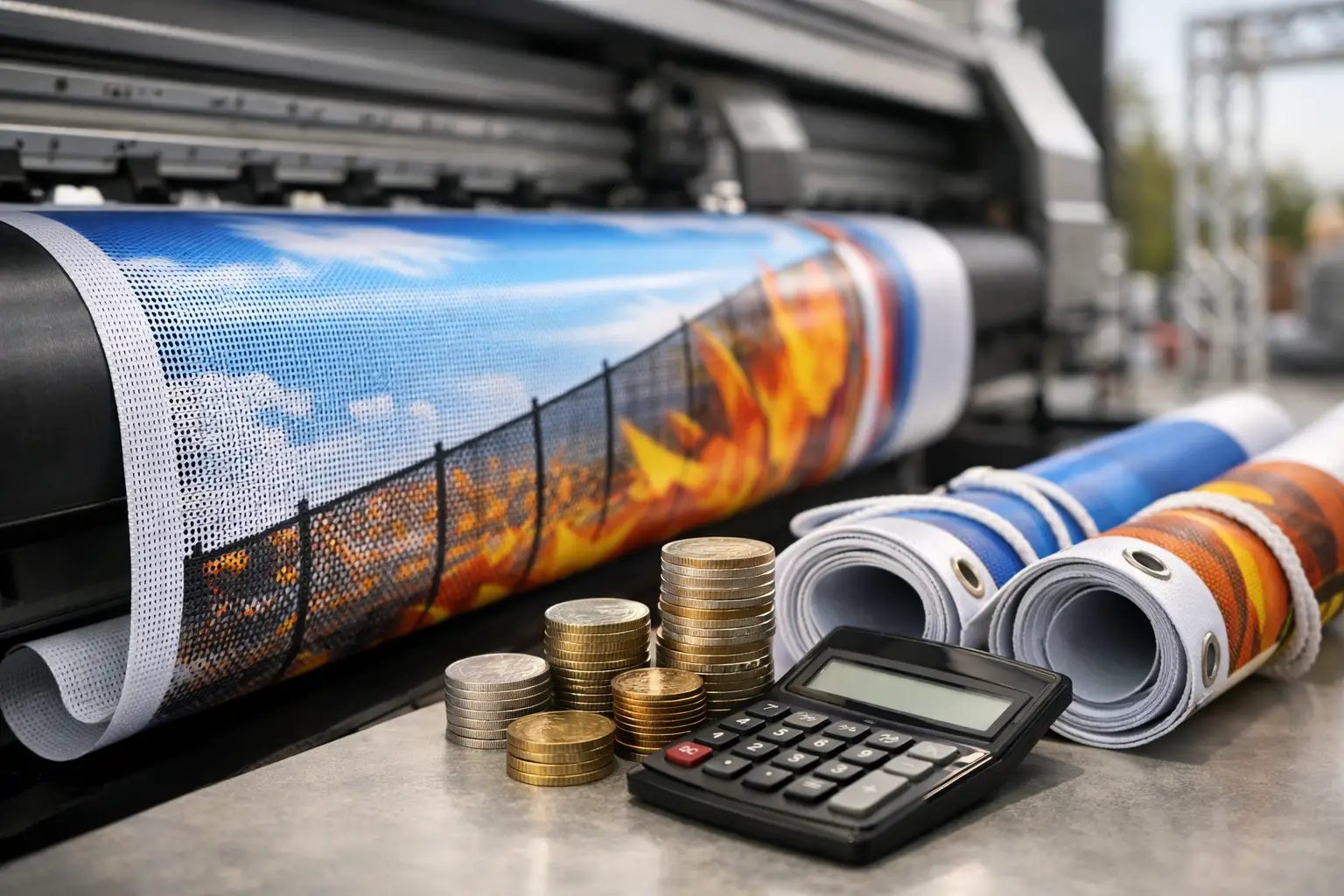
Mesh banners are made with tiny perforations that allow air to pass through. From a normal viewing distance, your printed design remains clear, but the reduced wind resistance puts less strain on the banner and its fixings.
This makes mesh a practical choice for construction hoardings, scaffolding, sports grounds, outdoor festivals, roadside fencing and open car parks. It is also useful where a banner covers a large area. The bigger the surface, the more wind pressure it can face, so using mesh can protect both the print and the structure it is attached to.
There is a trade-off. The perforated finish means mesh does not deliver quite the same dense, solid appearance as PVC when viewed very closely. For bold logos, large type and high-impact campaign graphics, it performs extremely well. For intricate artwork intended to be inspected from arm’s length, standard PVC may give a cleaner result.
Fabric banners for polished indoor displays
Fabric banners bring a softer, more premium finish to indoor environments. They are popular for exhibitions, conferences, retail displays, presentation backdrops and branded spaces where the print will be seen at close range.
The material is lightweight, easy to transport and less prone to glare under exhibition lighting than a glossy surface. It also suits designs with photography, gradients and detailed branding. If you are creating a backdrop for a stand, a launch event or a press area, fabric can make the display feel more considered.
Fabric is not normally the first choice for a long outdoor installation. While different fabric systems have different performance characteristics, PVC and mesh are generally the more practical options for prolonged exposure to rain, dirt and changing weather. Choose fabric when presentation, portability and an indoor setting are the priority.
Blockout material for double-sided visibility
Where people will approach from both directions, a blockout banner is worth considering. It includes an opaque layer that stops light and artwork showing through from the reverse side. This helps each printed side remain clear and legible.
It is useful for suspended displays, retail window applications, street-facing promotions and event signage where both sides need to work equally hard. A standard single-sided material can look weak or confused when backlit, so blockout is a practical upgrade when double-sided viewing is part of the brief.
Match the material to the job, not just the budget
For a weekend sale outside a high street shop, PVC vinyl is likely to offer the best balance of print impact, durability and cost. For a six-week building project with exposed perimeter fencing, mesh is often the wiser investment because it manages wind load more effectively. For a conference stand that needs to travel neatly between venues, fabric provides a refined finish without unnecessary bulk.
Duration matters too. A banner used for a one-day event can be selected for visual effect and ease of installation. A banner expected to remain outdoors for months needs stronger attention to weather, wind, fixing points and location. Saving a small amount on material can cost more if the banner must be replaced early.
Do not overlook the surroundings. A black banner with dark grey text might match a brand palette, but it will not perform beside a busy road or on a dull winter day. Material supports print quality, but contrast does the work of being seen. Use a clear hierarchy, strong colour separation and enough empty space around your key message.
Size, finishing and fixings affect performance
Even the best material needs the right finishing. Eyelets allow a banner to be secured using cable ties, bungee cords or rope, while reinforced hems add strength around the edges. For most outdoor banners, these are practical features rather than optional extras.
Avoid pulling a banner tightly with no give at all, particularly in an exposed position. Bungee cords can provide useful flexibility, helping the banner move slightly rather than placing all the pressure on the eyelets. Check fixings after heavy weather and make sure sharp metal edges cannot rub through the material.
Size should be driven by viewing distance. A banner seen from a pavement can carry smaller text than one viewed from passing traffic. As a working rule, keep the main message short and make the most important words the largest elements. Contact details, dates and supporting information can be smaller, but they should never be so small that the banner becomes a missed opportunity.
Prepare artwork that the material can show off
A well-chosen banner material cannot rescue rushed artwork. Supply files at the correct proportions, use high-resolution images and keep logos in vector format where possible. This helps retain crisp edges at large sizes, especially for branding that needs to look consistent across banners, flyers, stickers and other display products.
Keep vital text and logos away from the outer edge. Eyelets, hems and the natural tension of installation can affect the border area, so build in a safe margin. If your banner is likely to be viewed from a distance, simplify rather than add more. One offer, one call to action and one clear way to respond will usually outperform a crowded design.
If timing is tight, confirm the intended size, material and use case before artwork is finalised. That avoids last-minute resizing, unsuitable finishes and avoidable production delays. Banner Printing UK can help turn a clear brief into a print choice that is ready for the real conditions, not just the screen preview.
Make the decision with confidence
Choose PVC vinyl when you need bold, weatherproof outdoor promotion in a sheltered or moderately exposed location. Choose mesh when wind and fencing are central to the job. Choose fabric when the setting is indoors and presentation matters most. Choose blockout when both sides of the banner need to be read clearly.
The most effective banner is not simply the one with the brightest print. It is the one that stays secure, stays readable and still represents your business well when customers actually see it.