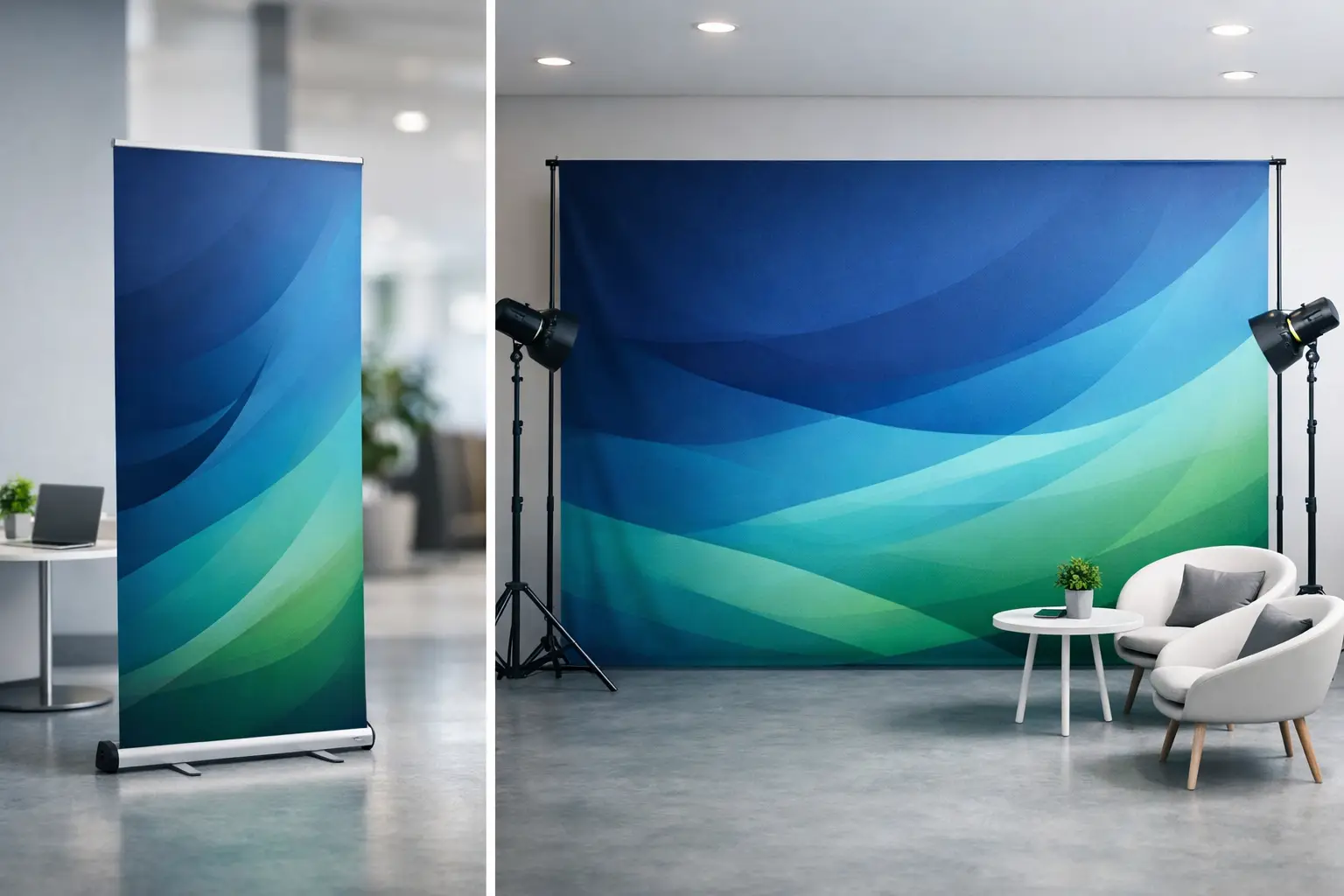
A display can be printed perfectly and still underperform if it is the wrong format for the space. When weighing up roller banners vs backdrops, the practical question is not which product looks better on screen. It is which one gives your message the visibility, portability and professional finish your event, premises or campaign actually needs.
Roller banners are built for quick, individual messaging. Backdrops create a larger branded setting. Both have a place in exhibitions, retail, hospitality, corporate events and local promotions, but they solve different display problems.
Roller banners vs backdrops at a glance
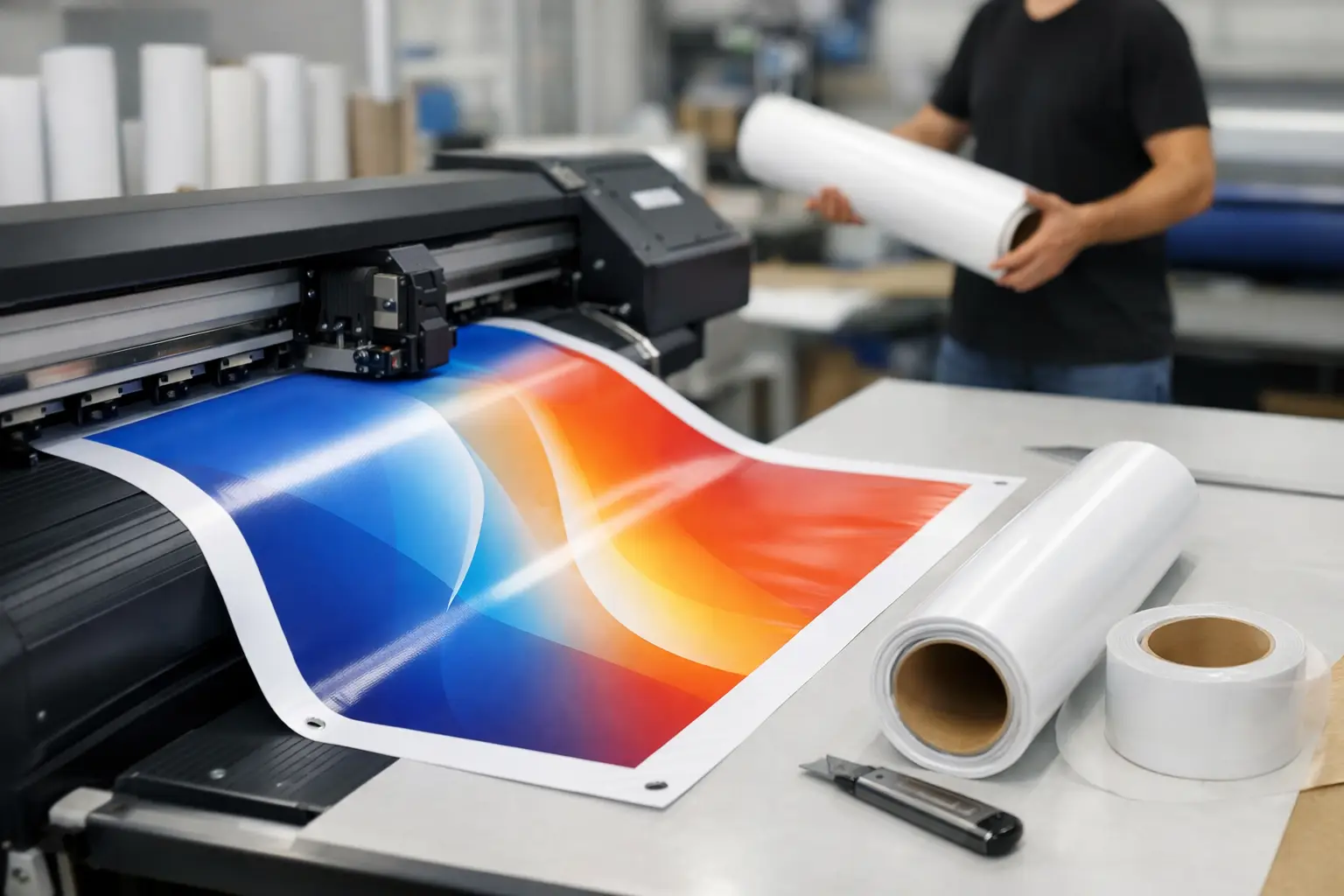
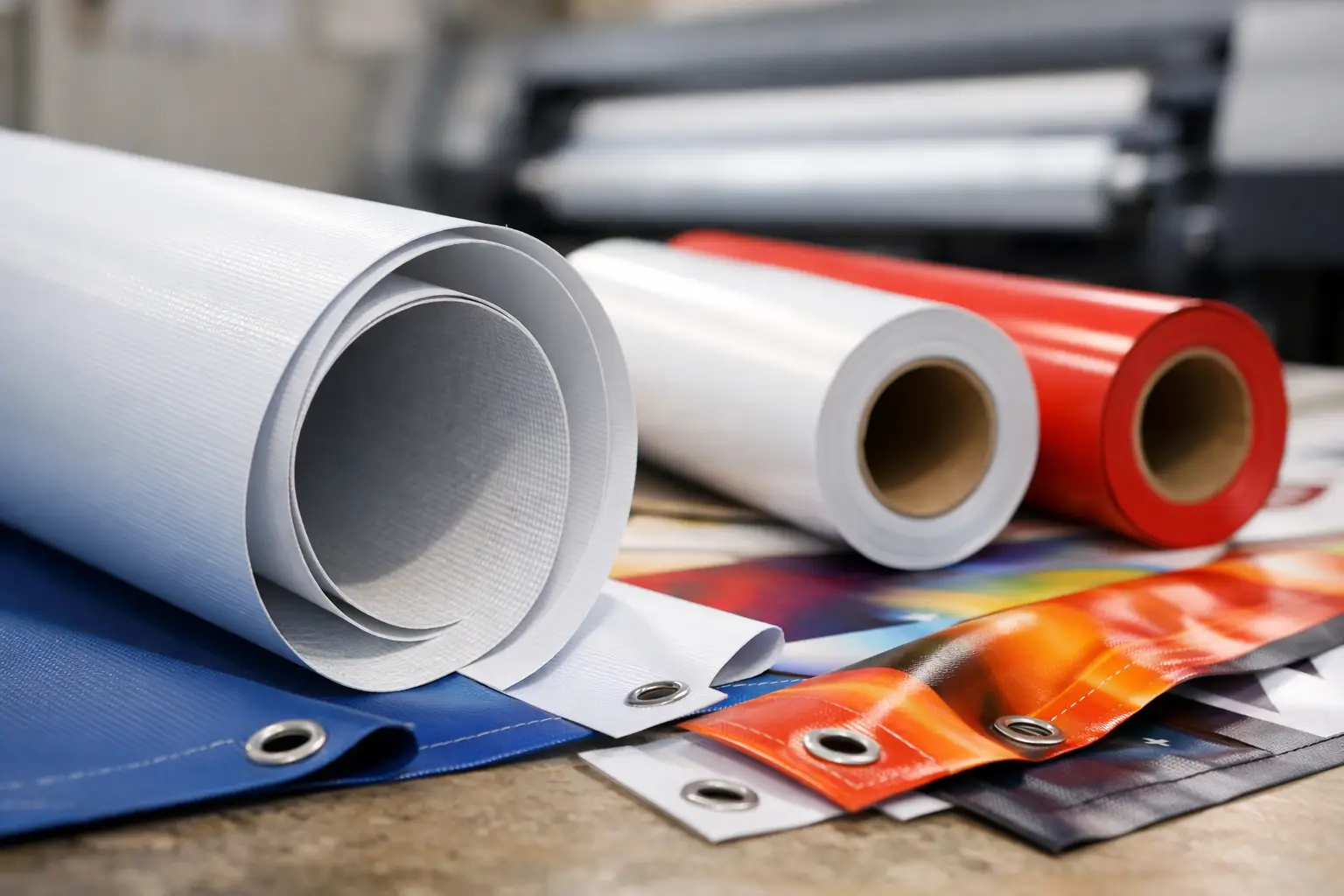
A roller banner is a vertical printed graphic housed inside a compact base. The banner pulls up, attaches to a support pole and packs back into its carry case once the job is done. It is designed for one person to transport, set up and take down without tools.
A backdrop is a larger display surface, usually printed with a repeated logo, campaign artwork, product imagery or a full branded scene. It may be supplied as a tension-fabric display, a pop-up system or a printed panel arrangement, depending on the required size and finish. Its purpose is to make a stronger visual statement across a wider area.
If you need a clear promotion near a doorway, reception desk, sales stand or aisle, a roller banner is often the efficient choice. If people will be photographed in front of your display, or you need to transform a bare exhibition shell into a branded stand, a backdrop is usually the better fit.
When roller banners are the right choice
Roller banners are made for speed. They are particularly useful when your team is travelling between venues, setting up in limited time or working with a small display footprint. A café promoting a new menu, a tradesperson attending a local business fair or a charity running a community event can all use one to communicate a message without bringing a full stand build.
Their narrow, upright format helps people absorb information quickly. A strong headline, one key image, a short benefit statement and clear contact details are usually enough. Trying to fit a full brochure onto a roller banner weakens the impact, especially when visitors are walking past rather than standing still to read.
They are also a sensible option for businesses that need several messages in different locations. A retailer may use one at the entrance to promote a seasonal offer and another near a product display. A training provider might take separate banners to open days, conferences and partner sites. Because each unit is self-contained, they are easy to move, store and reuse.
The practical strengths of roller banners
The main advantage is convenience. A roller banner can be deployed in minutes, and the graphic is protected when retracted into the base. That matters when displays are repeatedly loaded into cars, carried through venues or stored between campaigns.
They also work well on tighter budgets. Instead of filling a wall, you can focus spend on a single high-quality message and place it where it will be seen. For a short-notice promotion or a first exhibition appearance, this can give you a professional presence without overcomplicating the job.
There are limits. A single roller banner will not create much impact in a large hall, and it is not an ideal background for group photographs. Its slim format also means it must be positioned carefully. Put it behind furniture, beside a busy doorway or too close to competing signage, and it can disappear.
When a backdrop earns its space
Backdrops are designed for presence. They give visitors an immediate sense of who you are, what you offer and where they should look. At exhibitions, they can define your pitch from several metres away. In a showroom or retail environment, they can turn an ordinary wall into a campaign feature.
They are especially effective where photos and video are part of the plan. Product launches, award nights, press events, school celebrations and hospitality activations all benefit from a branded background. Repeated logos make sure your business remains visible when images are shared online, posted by attendees or used in future marketing.
A backdrop also gives larger artwork room to work. You can use bold product photography, wider brand graphics and a more immersive colour palette without squeezing everything into a narrow vertical panel. This is useful where the display needs to support a conversation rather than deliver one quick message.
What to plan before ordering a backdrop
Size and venue access matter more with a backdrop. Measure the available width and height, then consider ceiling features, plug sockets, doors, furniture and sightlines. A large graphic that does not fit the allocated stand or blocks access will cause problems on the day.
You should also think about assembly. Many backdrop systems are straightforward, but they still take more time than pulling up a roller banner. If you are exhibiting with a small team or arriving just before doors open, build time needs to be part of the decision.
For permanent or semi-permanent retail use, a backdrop can be excellent value because it creates a polished branded zone every day. For a one-hour networking breakfast in a small venue, it may be more display than you need.
Choose by location, purpose and audience
The best choice often becomes clear once you look at where the display will stand. Roller banners suit entrances, walkways, receptions, counters, presentation rooms and smaller exhibition spaces. They are also useful as supporting displays alongside a table or product demonstration.
Backdrops suit feature walls, larger stands, stage areas, photo opportunities and locations where several people need to stand in front of the branding. They are the stronger option when the goal is to create an environment rather than simply advertise an offer.
Consider how long people have to notice you. Passing footfall needs a short, bold message, which favours roller banners. Visitors spending time at your stand can take in a larger branded backdrop, product visuals and supporting information.
It is also worth considering whether your display will be used indoors or outdoors. Standard roller banners and many backdrop systems are primarily for indoor use. If you are promoting at an outdoor event, on a building site or beside fencing, a weatherproof banner solution may be more suitable. Wind, rain and uneven ground all change what is practical.
Artwork: different formats, different priorities
Roller banner artwork needs a clear reading order from top to bottom. Put your logo and strongest message high on the graphic, where it is least likely to be obscured. Keep essential text away from the bottom section that retracts into the base, and avoid small copy that cannot be read from a few steps away.
Backdrop artwork should be designed around the full viewing distance. A repeated logo pattern needs enough spacing to remain visible in photographs, while a campaign-led backdrop needs a focal point that is not hidden by people standing in front of it. Avoid placing key product details or contact information at waist height.
Use high-resolution artwork and check brand colours before production. A sharp print cannot rescue a low-quality logo file or an overcrowded layout. If your deadline is tight, send artwork early enough to allow for a proper check and any necessary refinement.
A combined display can work harder
The choice does not always have to be one or the other. A backdrop can provide the main visual anchor, while roller banners highlight individual services, prices, product ranges or calls to action at the edges of the stand. This works particularly well at trade shows where visitors need both a clear brand impression and a reason to stop.
For example, a kitchen supplier could use a backdrop with a full room-set image and brand message, then position roller banners for finance options, installation details and a current offer. A local organisation could use a logo backdrop for photographs and a roller banner for event timings or donation information.
The key is consistency. Use the same logo treatment, colours, fonts and tone of voice so the displays look planned rather than collected over time.
Make the decision with your deadline in mind
If you need a dependable display quickly, choose the format that your team can use confidently on arrival. A well-positioned roller banner is better than an oversized backdrop that is difficult to transport or assemble. Equally, if your event depends on strong photography and a premium visual setting, choosing a larger backdrop can be the difference between simply attending and being remembered.
Banner Printing UK helps businesses prepare professional printed displays for real deadlines, with practical format choices, HQ printing and fast UK turnaround. Before ordering, measure the space, decide what one message matters most and picture the display in use. The right format will make your brand easier to notice, trust and act on.