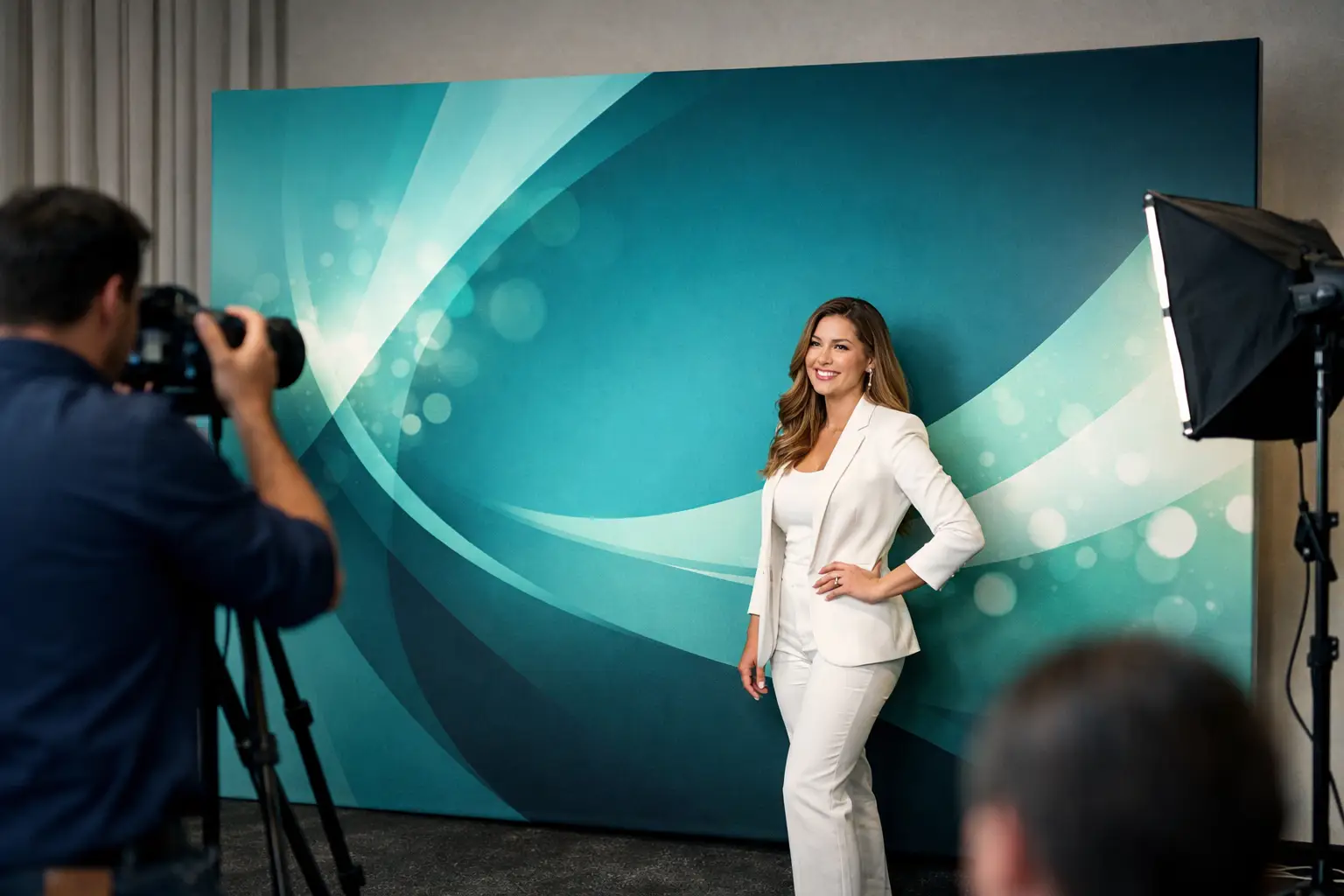
A backdrop is often the largest branded surface in the room, and it will appear in every photograph, video clip and guest selfie. Custom event backdrop printing gives your business, campaign or celebration a clear focal point – but only when the size, material and artwork suit the venue and the way people will use it.
For a trade stand, a media wall or a product launch, the job is not simply to fill an empty wall. Your backdrop needs to look sharp from the other side of the room, remain readable in photographs and arrive ready to install when the schedule is already tight. Getting those details right avoids the familiar last-minute problems: a logo cropped at the edge, a dark print under venue lighting or a lightweight banner that moves every time somebody walks past.
Start with the job the backdrop needs to do
The best format depends on where it will stand and what you expect it to achieve. A step-and-repeat backdrop is designed for photographs, so repeated logos and partner marks need consistent spacing across the full print. An exhibition backdrop usually carries one strong message, a large logo and product imagery that can be understood at a distance. A party or awards backdrop can be more decorative, but it still needs enough contrast for guests to stand in front of it without disappearing into the design.
Think about the viewing distance before choosing a layout. Someone reading a message from six metres away cannot take in the same level of detail as a person standing beside the display. Keep the main headline short, make the logo large enough to work in a wide shot and save smaller information for nearby flyers, business cards or a screen.
It also pays to consider the camera angle. If people will pose directly in front of the backdrop, key wording should sit above shoulder height or at the sides. Avoid placing a vital logo at waist level, where it will be hidden in most photographs.
Choose the right size for the space
There is no single standard size that works for every event. The right dimensions depend on the wall, stand footprint, photo area and number of people likely to be pictured together. A compact display can work well behind a registration desk or for individual headshots. For a team photo, red-carpet entrance or busy exhibition space, a wider backdrop creates a more professional frame and prevents the venue wall from distracting from your branding.
Measure the available space, including skirting boards, doors, plug sockets and furniture that cannot be moved. Then allow room for installation. A backdrop that fits wall-to-wall on paper can become difficult to tension or hang neatly on site.
Height matters as much as width. A low backdrop can leave an unbranded strip above people’s heads in photos, while an oversized print may be awkward in a venue with low ceilings. If the event location is unfamiliar, ask for photographs and confirmed measurements before finalising artwork.
Give the design room at the edges
Keep logos, text and faces away from eyelets, hems and the outer edge of the finished print. This safe area protects important details if the backdrop is trimmed, stretched or installed slightly off-centre. A background pattern can run to the edge; your message should not.
Select a material that matches the setting
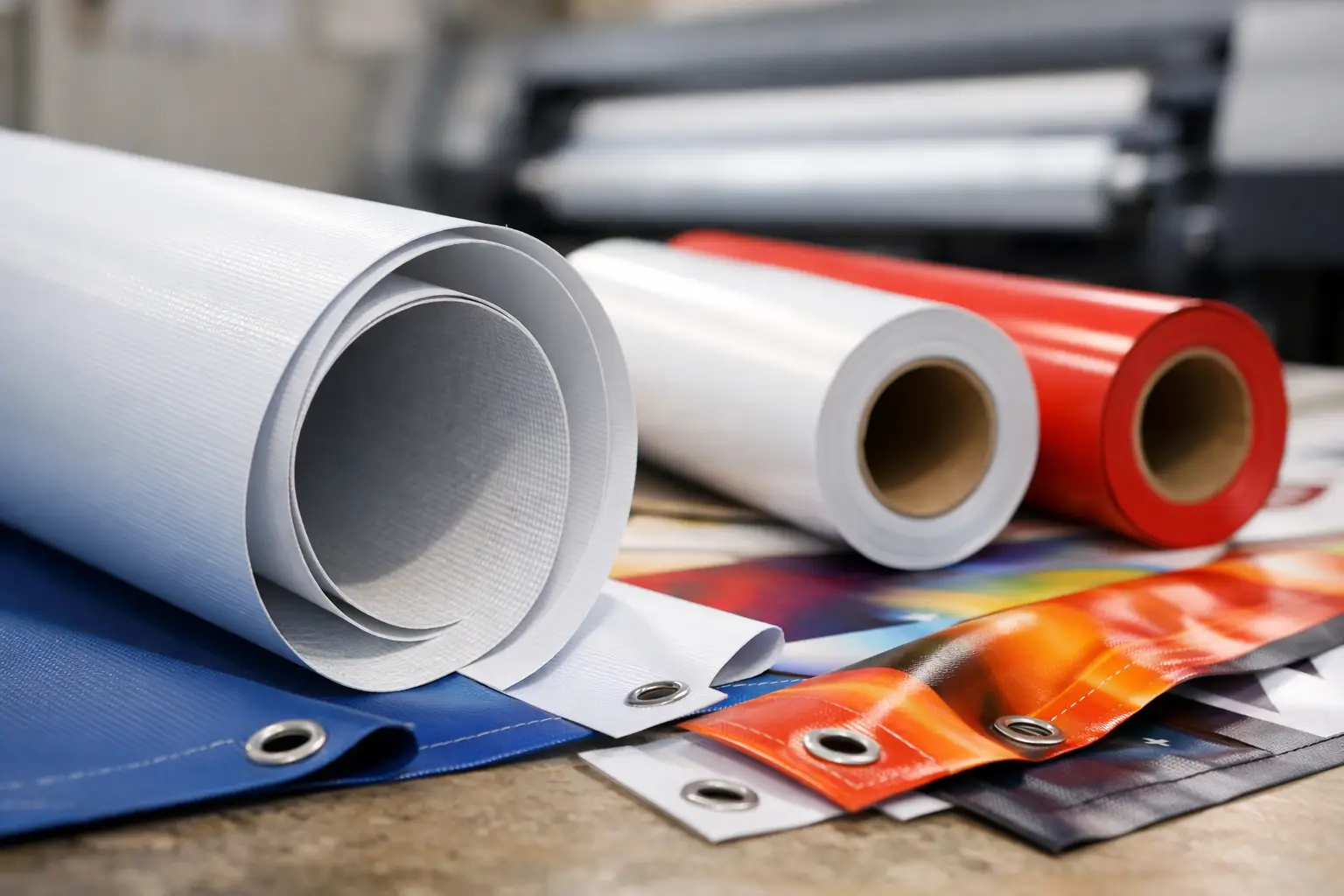
Material affects colour, finish, portability and how the backdrop behaves once installed. For many indoor events, smooth PVC vinyl provides a bold, practical printed surface that is easy to wipe clean and well suited to a wall, frame or exhibition structure. It is a dependable choice when you need strong colour and clear graphics.
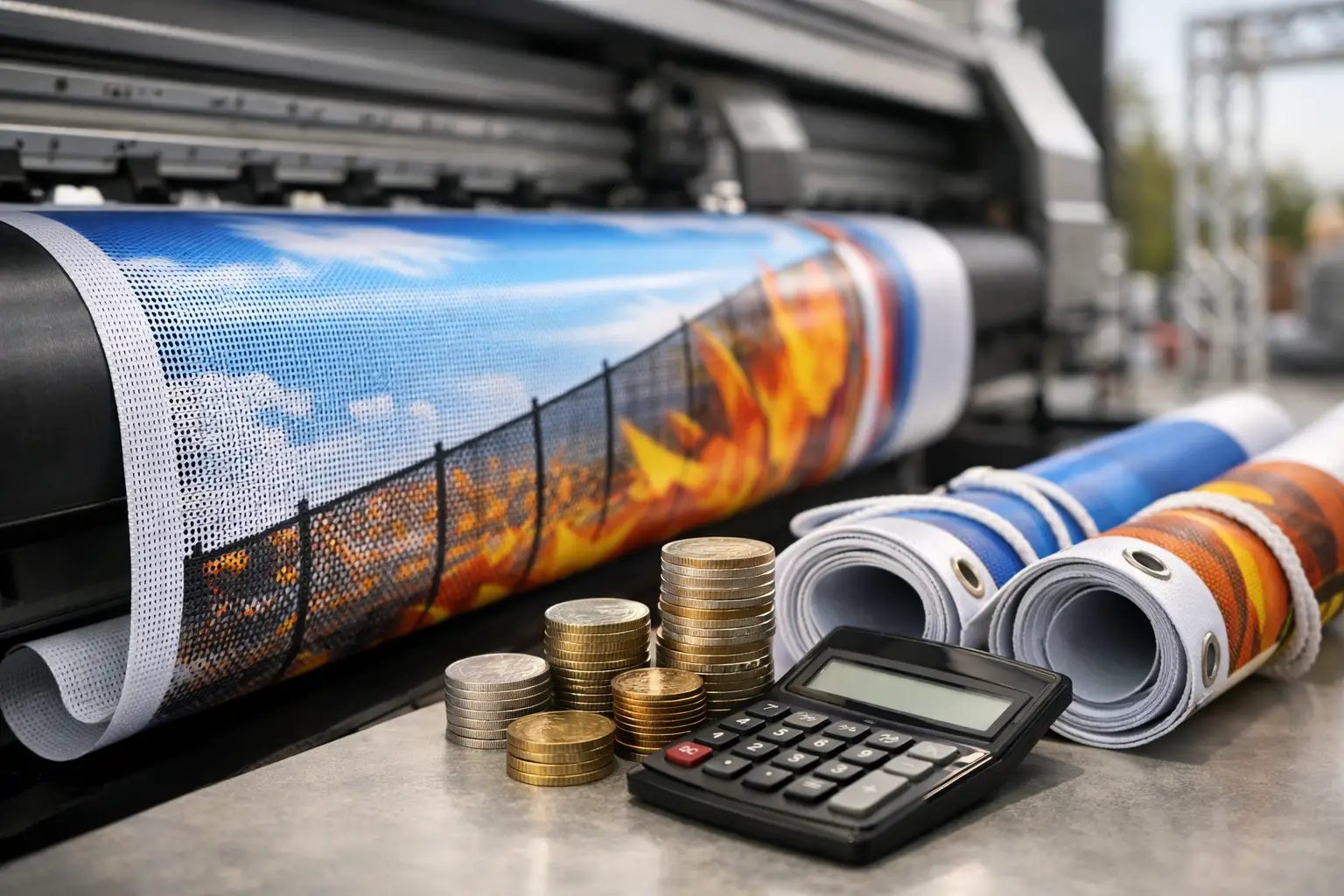
For outdoor events, a weatherproof and UV-resistant material is essential. Standard solid vinyl can work where the display is fixed securely, but it catches the wind. Mesh banner material allows air to pass through, making it useful for fencing, open-sided sites and exposed locations. The trade-off is that mesh is less suitable for fine photographic detail or a fully opaque look.
Fabric-style displays can offer a softer finish for premium indoor settings and can be easier to transport where a crease-free appearance is important. However, the best option still depends on the hardware and the expected handling. A temporary pop-up event has different demands from a backdrop that will be used repeatedly across a regional exhibition calendar.
Finishing is part of the product, not an afterthought
Eyelets, reinforced hems, pole pockets and fitting channels all determine how quickly and securely a backdrop goes up. Eyelets are useful for fixing to a wall, fence or frame. Pole pockets suit displays that slide onto a rail or support bar. Reinforced edges add strength where a larger banner needs tensioning.
Do not order the print until you know how it will be mounted. The wrong finishing can create unnecessary work on event day, even if the artwork itself looks excellent.
Build artwork for print, not just for a screen
A design that looks good on a laptop can disappoint at backdrop size. Screens are bright and viewed close up; printed graphics are affected by scale, lighting and the material beneath the ink. Supply the best-quality artwork available, ideally a print-ready PDF with logos and images at an appropriate resolution for the final size.
Use high-resolution original images rather than screenshots, social media downloads or pictures lifted from a small email attachment. Enlarging a low-resolution file does not create detail. It simply makes the softness more visible across a large printed area.
Colour should also be handled with care. Brand colours can appear different between a monitor and a finished print, particularly vivid blues, greens and fluorescent shades. CMYK artwork is generally the safest starting point for commercial print. If a precise corporate colour is critical, flag it before production so the print specification can be checked.
For a step-and-repeat layout, repeat each logo at a deliberate, even scale. Resist the temptation to add every sponsor at maximum size. A balanced grid is easier to photograph, looks more premium and gives each brand a fair chance of appearing in the shot.
Plan for installation before the delivery arrives
A high-quality printed backdrop still needs a practical installation plan. Confirm who is putting it up, what tools are permitted by the venue and how much access time you have. Some sites do not allow drilling, adhesive products or fixing to existing walls. Others require flame-retardant documentation or approval for suspended displays.
If you are using a freestanding frame, check the footprint and make sure it will not block an aisle, fire exit or customer route. For outdoor installations, use suitable fixings and tension the banner evenly. Do not over-tighten it: excessive strain around individual eyelets can damage the material, especially in gusty conditions.
Pack a few essentials with the event kit, including spare cable ties, scissors, a tape measure and the relevant fixings. Photograph the installed backdrop before doors open. It gives your team a reference for future events and confirms that the brand presentation is exactly where it should be.
Work backwards from the event date
Event print deadlines are rarely as generous as they first appear. Artwork approvals, venue queries, delivery windows and installation time all reduce the available production window. UK-based production and fast dispatch are valuable when dates move, but leaving the order to the final hour limits your choices on proofing, finishing and delivery.
Aim to approve artwork as early as possible, especially for large quantities, bespoke sizes or multiple branded items. If the event is only days away, keep the order simple: use a proven size, provide final files and confirm the delivery address, contact number and any site restrictions straight away.
Banner Printing UK supports businesses and organisers that need professional large-format print without a complicated process. Clear artwork, the correct finished size and a realistic delivery plan make fast turnaround far more effective.
Make one backdrop work harder
A good backdrop should not disappear after a single event. Store it dry, clean it gently where needed and roll rather than fold it if the material allows. Used again at networking mornings, shop launches, recruitment days and local sponsorship events, it becomes a consistent part of your brand kit rather than a one-day expense.
The strongest choice is usually the one that fits the site, photographs well and can be installed without drama. Confirm those three points before you send artwork to print, and your backdrop will be ready to do its job the moment the doors open.