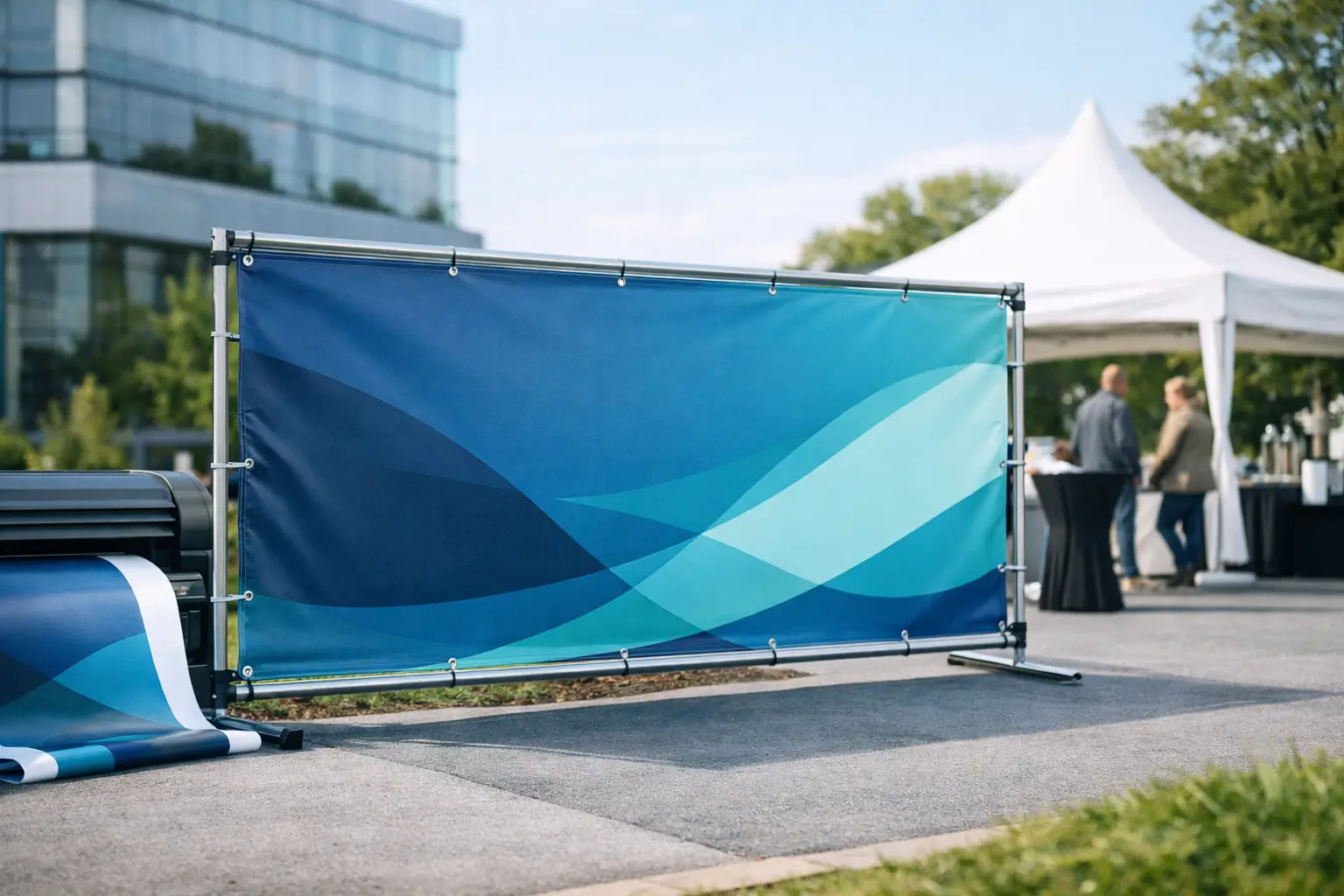
A banner fixed to a fence outside a busy site has seconds to do its job. Drivers need to read it at speed, pedestrians need to understand the offer at a glance, and the material needs to stay presentable through rain, wind and strong daylight. That is what makes effective outdoor promotional banner printing more than simply putting a logo on vinyl.
For shopfront promotions, construction hoardings, events, sports grounds and trade counters, the best banner is one designed around its location. Get the material, size, message and fixing right from the start and it becomes a hard-working piece of marketing that keeps delivering long after launch day.
Start with where the banner will be used
An outdoor banner has to suit the setting, not just the artwork. A banner across a small market stall has different requirements from one stretched along 20 metres of perimeter fencing. Before ordering, consider viewing distance, wind exposure, available fixing points and how long the banner will remain in place.
If people will pass within a few metres, a compact banner can carry a little more information, such as opening times, a QR code or a short list of services. For roadside use or large sites, keep the message much simpler. Your business name, one clear benefit and a phone number or web address may be all that is needed.
Location also affects orientation. Landscape banners work well across railings, fences and shopfronts, while portrait formats can be more effective beside entrances, on lamp posts where permitted, or where wall space is narrow. Measure the visible area rather than guessing. A banner that is too small disappears; one that is too large can be difficult to tension correctly.
Choosing materials for outdoor promotional banner printing
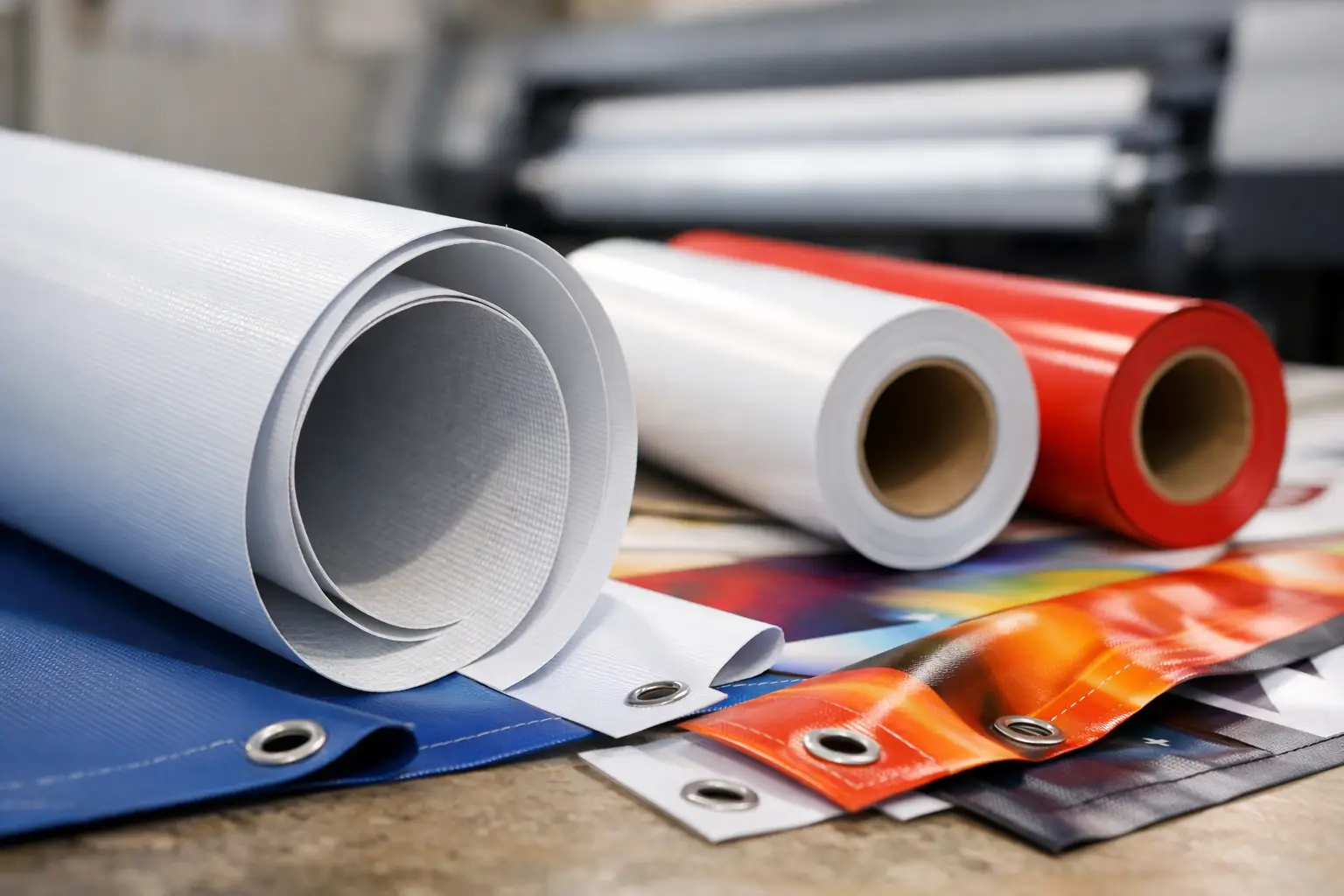
Material selection is where durability and practicality meet. Most outdoor applications call for either standard PVC vinyl or mesh banner material. Both are printed for strong colour and outdoor performance, but they solve different problems.
PVC vinyl for bold, solid coverage
Standard vinyl banners are a dependable choice for sheltered and moderately exposed locations. The solid surface gives colours, photography and large blocks of branding real impact. It is ideal for shopfront offers, event signage, school fairs, hospitality promotions and short-to-medium-term site messaging.
Use vinyl when maximum visual punch matters and the banner is not likely to face persistent high winds. It is weatherproof and UV-resistant, but like any solid panel, it catches the wind. Good finishing and secure fixing are essential.
Mesh banners for windy fencing and large areas
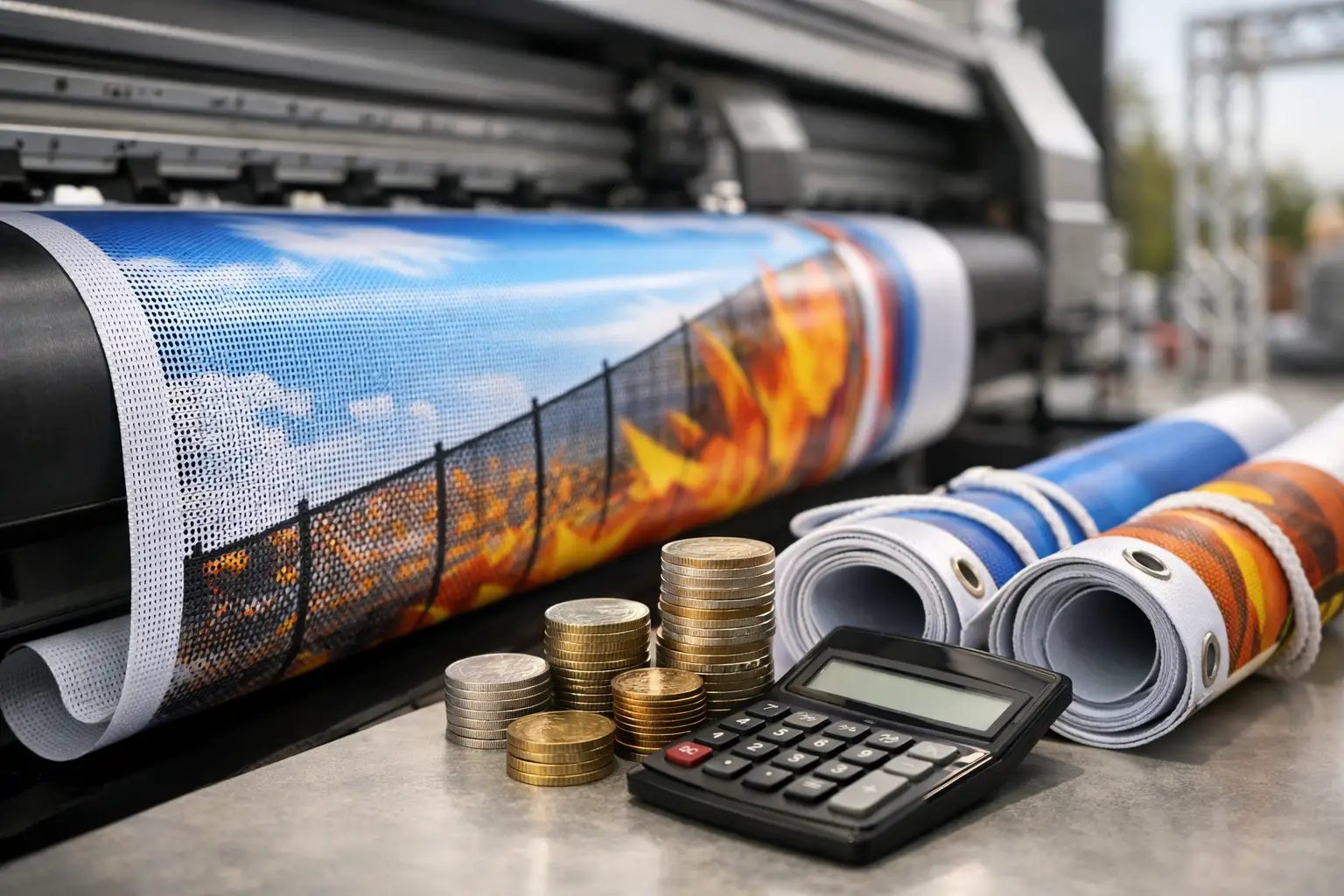
Mesh banner material has tiny perforations that allow air to pass through. From normal viewing distance, the printed design remains clear, while the reduced wind load makes it a smarter option for exposed fencing, scaffolding, sports venues and building sites.
There is a trade-off. Colours can appear slightly less solid than they do on standard vinyl because of the perforated surface. For large-format branding where safety, stability and wind resistance are priorities, that is usually a worthwhile compromise. Avoid overly detailed artwork and use strong contrast so the design stays readable.
For very short campaigns, material choice may be driven by budget. For long-term site signage or a location with unpredictable weather, choose for conditions first. Reprinting a damaged banner is rarely the best value option.
Make the message readable before making it clever
Outdoor advertising is often viewed while someone is walking, driving or trying to find a particular entrance. A clever line that takes ten seconds to understand will not perform as well as a direct message that can be read in two.
Lead with the point people care about: “New Menu”, “Now Open”, “Free Quotations”, “Trade Entrance”, “Sale Ends Sunday” or “Event Registration”. Your logo should be clear, but it does not always need to be the largest element. If the banner exists to generate an action, the action needs visual priority.
Use high-contrast colour combinations. Dark lettering on a light background, or light lettering on a dark background, is generally easier to read from a distance than similar tones placed together. Be careful with thin fonts, pale text over photography and busy backgrounds. They may look polished on a laptop screen but lose definition outside.
A useful test is to reduce the artwork on screen until it is about the size of a business card. If the core message is still obvious, the design is heading in the right direction. If you have to lean closer, simplify it.
Keep contact details useful
A phone number needs enough space around it to be read quickly. A web address should be short and easy to type. QR codes can work well for posters and banners viewed at close range, such as outside a café, showroom or event check-in point, but they are not a replacement for clear contact information on a roadside banner.
If you use a QR code, allow a clean white border around it and avoid placing it near eyelets, hems or the edge of the banner. Test it from the expected scanning distance before sending artwork to print.
Finishing and fixing decide how well a banner lasts
Even premium print needs the right finishing. Reinforced hems add strength around the edges, while metal eyelets provide practical points for attaching the banner to a fence, wall or frame. They are not decorative details – they help distribute tension and reduce the risk of tearing.
For most installations, fit the banner using cable ties, bungee cords or purpose-made banner fixings. Cable ties are quick and effective for temporary use on railings, but bungees are often better in exposed areas because they allow a little give when the wind picks up. Do not pull the banner drum-tight. A firm, even tension is the aim.
Use every available eyelet where possible, especially on larger banners. Leaving long unsupported edges allows flapping, which can strain both the banner and the fixings. Check the installation after the first period of bad weather, then inspect it routinely if it will stay up for weeks or months.
Also consider the surface behind the banner. A banner fitted to open railings will behave differently from one mounted against a solid wall. On fencing, mesh may be the safer and more durable choice. On a wall, standard vinyl can give a cleaner, more solid display.
Prepare artwork that prints cleanly at scale
Large-format print is forgiving in some ways and unforgiving in others. A low-resolution image might look acceptable on a phone, then appear soft when enlarged across a three-metre banner. Supply artwork at the requested size and resolution where possible, using high-quality logos and original image files rather than screenshots or images copied from social media.
Vector logo files are particularly useful because they can scale without losing sharpness. For photographs, use the highest-resolution version available. Keep important text, logos and contact details away from the outer edges so hems and eyelets do not interfere with the design.
If you are working to a tight deadline, do not leave artwork checks until the final hour. A quick review can catch a missing phone digit, an old logo, a spelling error or a file that is too low resolution. These are small issues before print and costly ones afterwards.
Banner Printing UK supports straightforward artwork upload and design refinement, which is particularly useful when you need a professional result without adding unnecessary delays to the order process.
Plan around the campaign, not just the delivery date
Fast turnaround matters when an event, promotion or site opening is close. However, the most reliable approach is to work backwards from the installation date. Allow time for checking artwork, printing, dispatch and fitting the banner properly. A banner arriving the morning of an event may be fast, but it still needs someone on site with the correct fixings and access.
For repeat promotions, keep a master version of approved artwork. You can then update only the date, offer or location rather than rebuilding the design each time. This is especially useful for estate agents, tradespeople, retailers, schools and event organisers running seasonal campaigns.
Outdoor banners are not passive background signage. When the format matches the site and the message is made for real viewing conditions, they give your business a visible, dependable presence exactly where customers are already passing. Choose the material for the weather, keep the wording direct and make sure the finishing is ready for the job – then let the banner get to work.