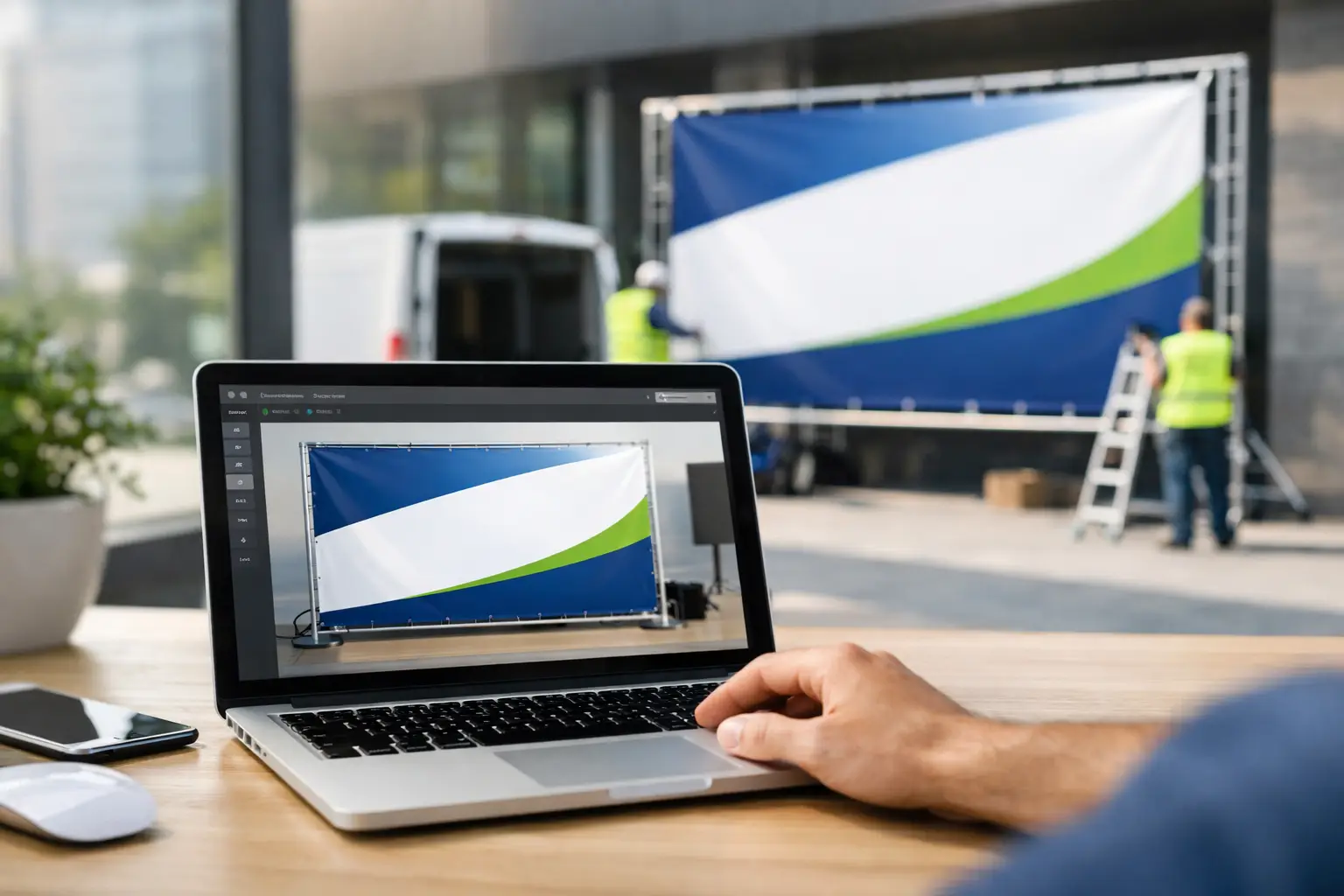
A banner that arrives a day late, curls at the corners or cannot be read from the pavement is not a saving. For shop promotions, site signage, exhibitions and local events, the practical question is how to order banners online with enough confidence that it performs properly when it is installed.
The good news is that ordering custom print does not need to be complicated. The key is to decide where the banner will be used before choosing a size, material or design. A banner for a windy fence has different requirements from a roller banner beside a reception desk. Get those basics right, then the ordering process becomes quick, clear and far less risky.
Start with the job your banner needs to do
Before opening a design file, identify the banner’s location, viewing distance and expected lifespan. These three details shape almost every purchasing decision.
A short-term offer in a shop window may need a compact vinyl banner with a strong headline and large price point. A building site banner needs durable, weatherproof material, reinforced edges and secure fixing points. For a trade show, portability matters just as much as print quality, making a roller banner or fabric backdrop a more practical choice than a banner that needs tying up.
Think about the person reading it, too. Drivers, pedestrians and exhibition visitors all see signs differently. If people will only have a few seconds to notice your message, use one clear statement, your logo and a direct call to action. Trying to fit a full product list, several phone numbers and paragraphs of copy onto one banner usually reduces its impact.
How to order banners online in the right size
Banner dimensions should be based on viewing distance and available fixing space, not just the cheapest option on the product page. Measure the wall, railings, fence panel, stand or display area first. Allow room around the banner so eyelets, poles or cable ties can be fitted without covering essential text.
For close-up indoor use, such as behind a counter or at a market stall, a smaller banner can work well. For shopfronts, roadside settings and large event spaces, bigger lettering and a larger format are normally needed. As a working rule, the further away the audience stands, the larger your main message needs to be.
It also pays to consider proportions. A wide landscape banner is often best for fencing, shopfronts and sports grounds. Portrait formats suit narrow spaces and many pull-up displays. Square banners can look striking for photo backdrops or social media-focused events, but only if the space supports them.
Do not stretch an existing design to fit a new size without checking it. Logos can become distorted, images may lose quality and text can end up too close to the edge. Choose your intended banner size early, then build or adapt the artwork to match.
Choose a material that suits the location
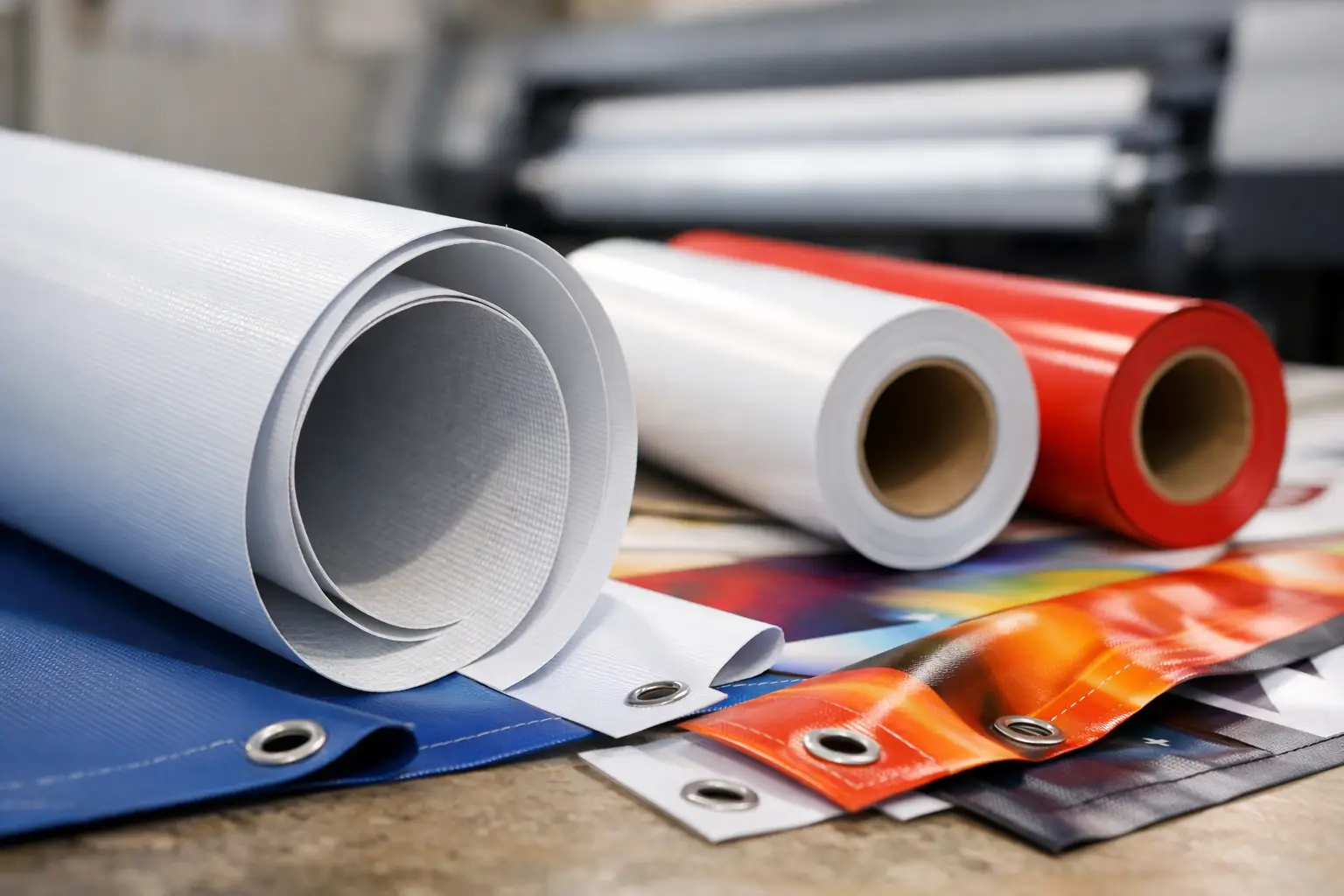
Material choice is where a banner becomes either dependable or disappointing. Vinyl is the popular all-round option for promotional banners because it gives strong colour, a smooth finish and reliable weather resistance. It is well suited to shopfront promotions, event signage, market stalls and general outdoor advertising.
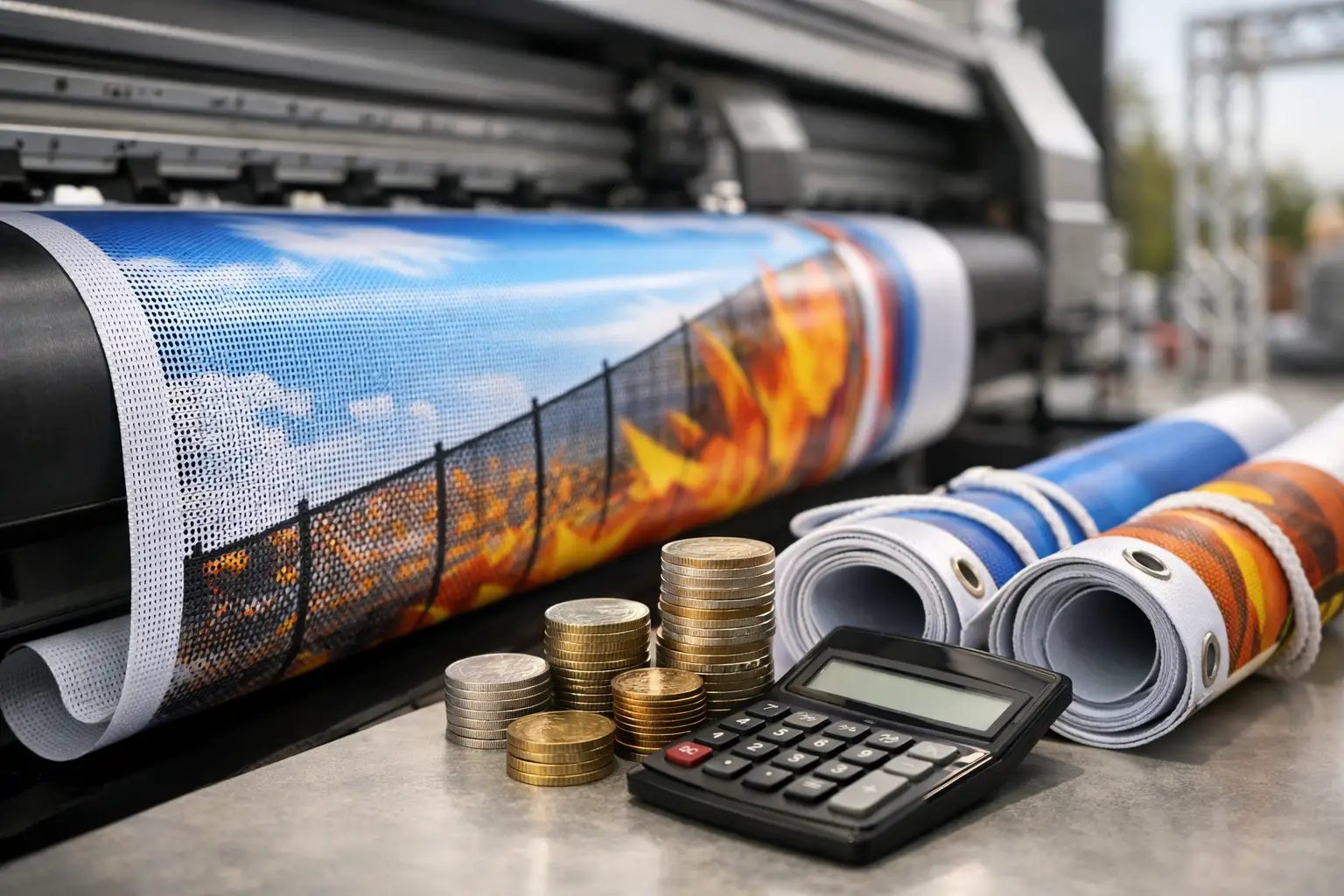
Mesh banner material is designed for exposed locations. Its small perforations allow wind to pass through, reducing pressure on fences and scaffolding. The print will appear slightly less solid at very close range than vinyl, but it is often the smarter and safer option for construction sites, railings and windy outdoor spaces.
Indoor displays call for a different approach. A roller banner gives you a self-contained, portable sign that can be put up quickly and packed away after the event. Branded backdrops are useful for exhibition stands, product launches, school events and photo opportunities where you need a professional branded setting rather than a banner tied to a wall.
Ask how long the banner will be displayed. Short campaigns can prioritise speed and cost. Longer-term outdoor signage should prioritise UV-resistant inks, suitable material and stronger finishing. A banner exposed to rain, sunlight and wind needs to be specified for real conditions, not just designed to look good on screen.
Prepare artwork that prints clearly
Good print starts with a good file. A sharp image on a phone or laptop is not always high enough resolution for a large-format banner. This is especially true when a small web image is enlarged across several metres of print.
Where possible, supply logos as vector files such as PDF, AI or EPS. These can scale without becoming pixelated. For photographs and raster images, use the highest-resolution original available. Avoid screenshots, images copied from social media and small files downloaded from websites unless they are only being used at a very small size.
Set important logos, text and contact details safely inside the edge of the design. The outer area may be needed for hems, eyelets or trimming. A sensible safe margin prevents a phone number being interrupted by a fixing point or a logo sitting uncomfortably close to the finished edge.
Keep the design focused. High-contrast colours, readable fonts and a clear hierarchy work better than busy backgrounds and tiny text. If your brand colours are critical, use the correct logo files and provide clear colour references where available. Printed colour can vary slightly from what you see on an uncalibrated screen, so do not rely on screen appearance alone for a precise match.
If you are not confident about the artwork, seek a professional file check or design refinement before print. Correcting a low-resolution logo or confusing layout before production is faster and cheaper than replacing a finished banner.
Select the finishing and fixing method
The way a banner is finished affects how easy it is to fit and how well it holds up. Hemmed edges add strength, particularly for larger banners and outdoor use. Eyelets give you ready-made points for cable ties, bungee cords or rope, while pole pockets can be useful when the banner will hang from rails or a frame.
For outdoor banners, do not pull the material drum-tight with rigid fixings. A little controlled movement can reduce strain in changing weather. Bungee cords are often a good option because they provide some flexibility. On fencing or scaffolding, spread the load across multiple fixing points rather than relying on just the corners.
Check the product specification before you buy. Eyelet spacing, hem options and available finishing choices vary by format. Ordering the correct finish at the start avoids awkward alterations when the banner arrives.
Check your order before it goes to print
Online ordering is quick, but the final review is the point where you protect your deadline. Confirm the size, quantity, orientation, material and finishing are exactly right. It sounds basic, yet portrait versus landscape mistakes and incorrect dimensions are among the easiest errors to make when ordering in a hurry.
Read every word in the artwork, including web addresses, dates, prices and telephone numbers. Ask someone who has not seen the design before to review it. Fresh eyes will often spot a missing digit or unclear message that the person who created the artwork has read past several times.
Also check the delivery date against the event date, not just the date you would ideally like the banner. Build in time to inspect it, fit it and solve any unexpected installation issue. UK-based production can make a major difference for urgent campaigns, particularly when you need fast turnaround rather than an uncertain overseas lead time.
At Banner Printing UK, the online process is built around straightforward personalisation, artwork upload and practical print options, helping customers move from approved design to dispatch without unnecessary delays.
Order early when you can, but be realistic when you cannot
Fast printing is valuable when a promotion changes, an event is confirmed late or a site needs urgent signage. Still, the best fast order is one with approved artwork, clear specifications and a delivery plan already in place. Rushed decisions usually cause more delay than production itself.
If the deadline is tight, simplify rather than compromise. Choose a standard size, use a proven logo file, keep the message short and select a material suited to the job. Confirm the turnaround before placing the order and make sure someone will be available to receive the delivery.
A well-ordered banner does more than fill empty space. It gives people a clear reason to visit, call, buy or find their way. Choose for the setting, proof the artwork carefully and allow the banner to do the hard work of making your message visible.