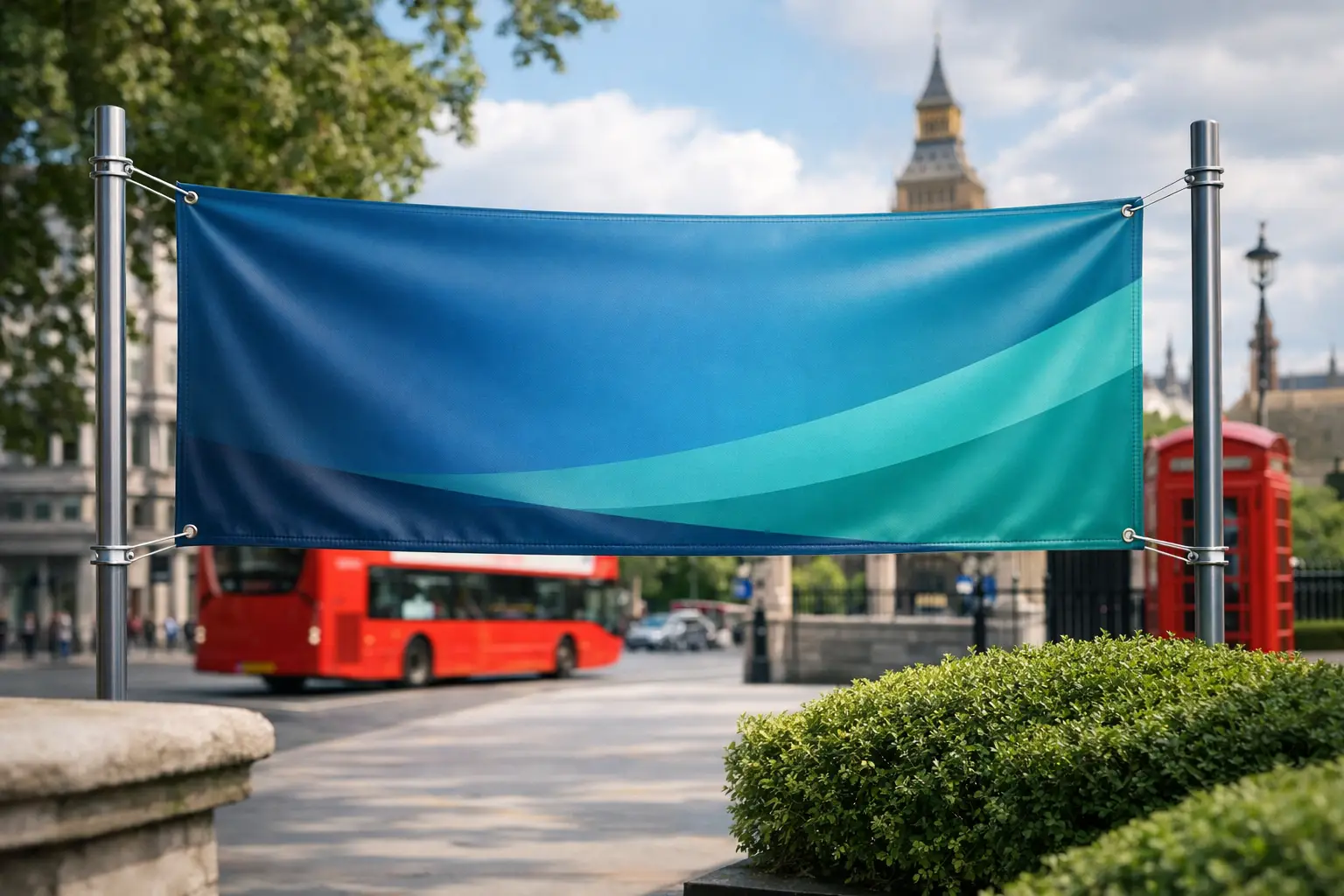
A banner tied to a windy building site fence faces a very different working life from one displayed inside a busy retail centre. If you are asking how long do vinyl banners last, the practical answer is usually between one and five years – but the material, print method, location and fitting all make a real difference.
For most UK businesses, a professionally printed PVC vinyl banner used outdoors should remain clear, readable and presentable for around two to three years. With good-quality UV-resistant printing, suitable finishing and sensible placement, many banners perform well beyond that. Indoor banners can often last five years or more because they avoid the conditions that cause the fastest wear.
How Long Do Vinyl Banners Last Outdoors?
A standard outdoor vinyl banner can typically be expected to last two to three years in normal UK conditions. This is a useful benchmark for shopfront promotions, fencing signage, trade work, sports clubs and event advertising.
That figure is not a guarantee that every banner will look identical at the end of its lifespan. A banner on a sheltered wall in a quiet area may still look sharp after several years. One fixed high up on exposed scaffolding, facing persistent wind, rain and direct sunlight, may need replacing sooner.
The print does not usually fail first. Modern banner printing uses weatherproof materials and UV-resistant inks designed to hold colour outdoors. More often, the pressure points are the eyelets, hems and corners, particularly when a banner has been pulled tight or repeatedly catches the wind.
For a short-term campaign, this is reassuring news. A sale banner, seasonal promotion or construction notice will usually outlast the campaign by a wide margin. For permanent branding, it makes sense to plan periodic replacements so the message continues to reflect the standard of your business.
What Affects a Vinyl Banner’s Lifespan?
Exposure to weather and sunlight
British weather is hard on any outdoor sign. Rain alone is rarely the main issue, as vinyl is waterproof. The bigger challenges are sustained UV exposure, changing temperatures and wind loading. Sunlight gradually fades ink over time, while repeated expansion and contraction can place stress on a banner’s edges and fixings.
South-facing locations receive more direct sun, so colours may fade sooner than on a shaded elevation. Dark, rich colours can show fading more clearly than lighter designs, although a high-quality print gives you a far better starting point than a low-cost, lightly printed alternative.
Wind is often the deciding factor. A large solid vinyl banner acts like a sail. If it is mounted across open fencing, on an exposed elevation or beside a road with regular lorry traffic, each gust pulls at the material and eyelets. A banner can be perfectly waterproof yet still wear out early if it is installed where wind cannot pass through it.
Banner material and thickness
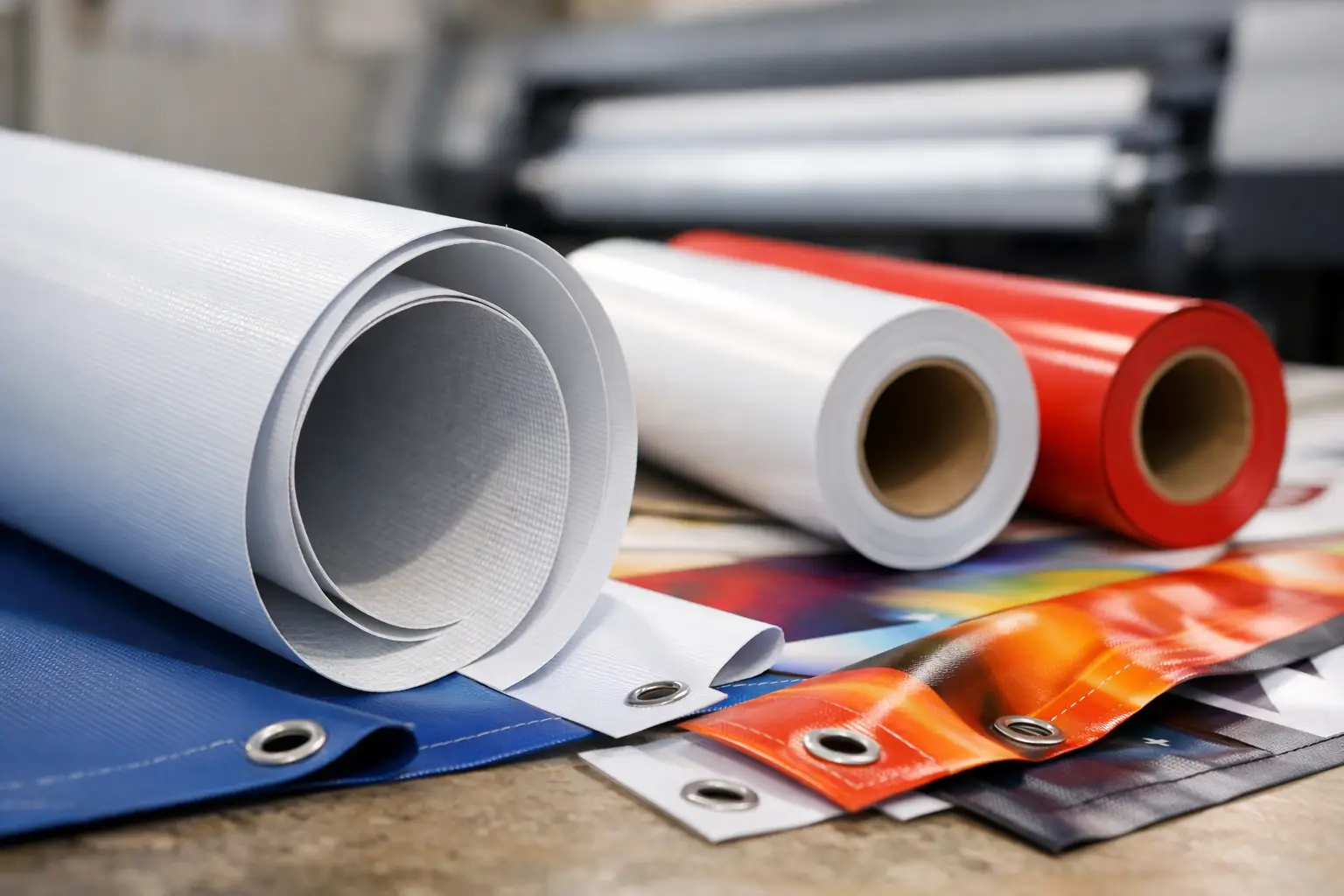
Not every vinyl banner is intended for the same job. Standard PVC banner material is a strong all-round choice for general outdoor promotions and signage. It provides a solid print surface, bold colour and excellent readability at distance.
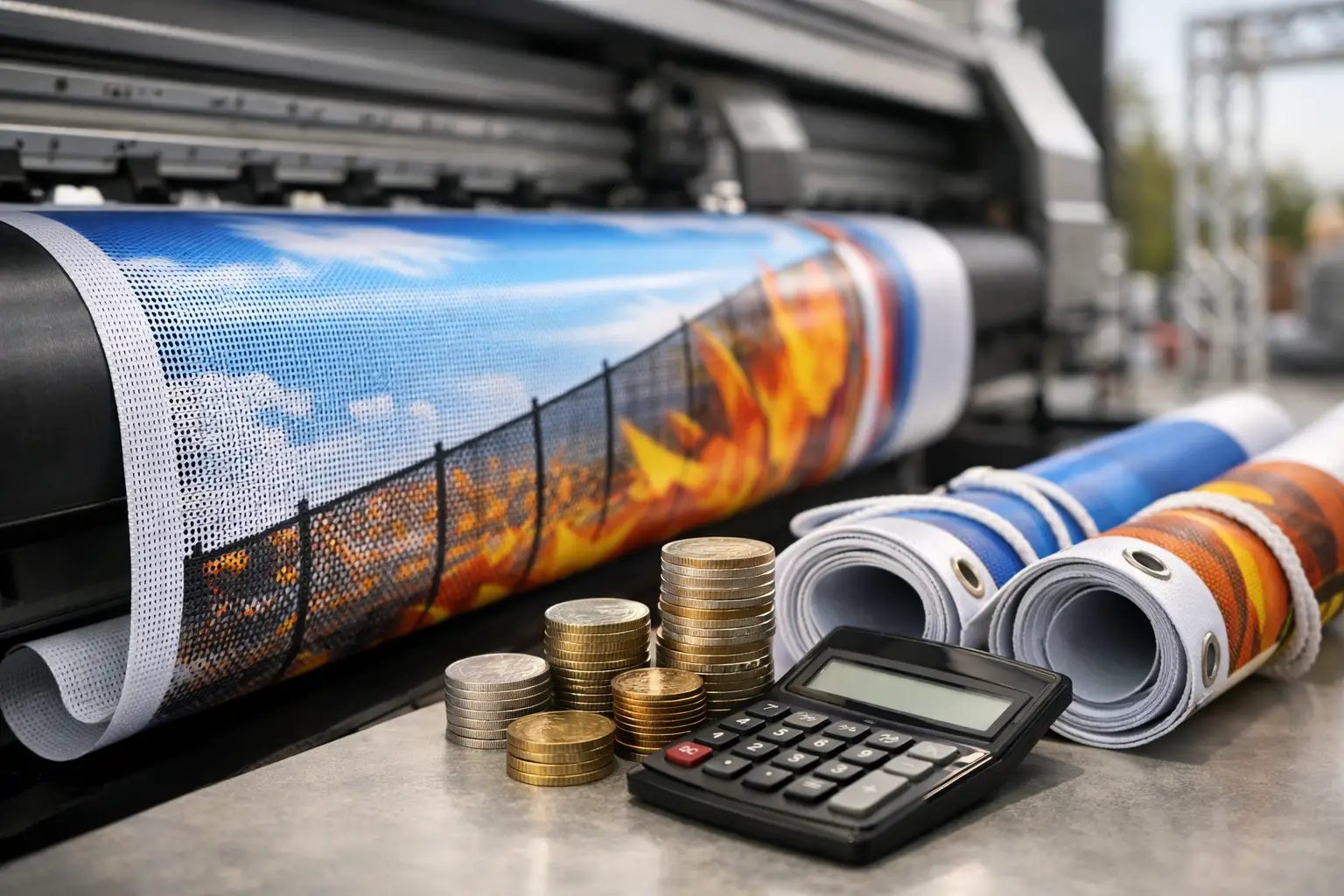
Mesh banner material is often the smarter option for windy sites. Its tiny perforations allow air to pass through, reducing strain on the banner and its fixings. The print remains highly visible from a normal viewing distance, but the material is not as visually solid at close range. That is a worthwhile trade-off for construction fencing, railings, scaffolding and other exposed locations.
Heavier-duty material and reinforced hems can increase durability where the banner will be up for months or years. They may cost more initially, but are often better value than replacing a damaged banner halfway through a long-term project.
Print quality and artwork choices
UV-resistant inks are central to outdoor longevity. They help colours remain more stable in sunlight and prevent a banner from quickly looking washed out. Print quality also affects legibility. Fine text, pale colours and low-contrast artwork can become difficult to read before the material itself has reached the end of its life.
For outdoor use, keep the design clear and commercially focused. Use strong contrast, sufficiently large text and a simple message that can be read quickly. A banner with a bold logo, telephone number and service message will stay useful for longer than a crowded design that relies on small details.
Installation Has a Major Impact
Even the best banner needs the right fitting. A loose banner flaps constantly, which can stretch the eyelets, tear corners and weaken the hem. An over-tightened banner cannot flex with changing temperatures or wind pressure, creating a different kind of strain.
The aim is secure, evenly distributed tension. Use every available eyelet rather than fixing only the corners, and choose suitable cable ties, bungee cords or other fixings for the surface. Bungee cords can be particularly useful in windy conditions because they provide a little give rather than forcing the banner to take every gust at full force.
Allow a small amount of movement, but do not allow the banner to repeatedly whip against fencing or a wall. Check that sharp metal edges, protruding screws and rough timber are not rubbing against the vinyl. A small abrasion can develop into a tear once wind gets behind it.
For large-format banners, consider the site before selecting the size. A very large banner is excellent for visibility, but its surface area increases wind load. Splitting a message across two banners or choosing mesh can be the more dependable option in exposed places.
How to Make Vinyl Banners Last Longer
A little routine care can add useful life, especially for banners that need to remain in place for a full season or through a longer project.
Inspect outdoor banners after severe weather. Look closely at the corners, eyelets and any points where the material is rubbing. If a cable tie has loosened or snapped, replace it before the banner begins flapping. Small adjustments made early are far easier than dealing with a torn banner later.
Clean surface dirt with lukewarm water, a soft cloth and mild soap where needed. Avoid harsh chemicals, abrasive pads and pressure washing at close range, which can damage the printed surface or force water into vulnerable edges. Let the banner dry fully before rolling it for storage.
When a campaign finishes, remove the banner rather than leaving it up unnecessarily. Roll it with the printed side facing out and store it somewhere dry, clean and away from direct heat. Folding can create creases that are difficult to remove when you need the banner again.
If the banner is only needed for occasional events, indoor storage can make a substantial difference. A banner used for a few weekend promotions each year may stay in excellent condition for many years.
When Should You Replace an Outdoor Banner?
Replace a vinyl banner when it no longer supports the professional image you want customers to see. Fading, curled edges, stretched eyelets and visible tears are obvious signs, but an outdated message can be just as damaging.
A construction firm may need to update site signage when accreditations, contact details or project information changes. Retailers should remove expired offers promptly. Event organisers should check dates, sponsor logos and branding well before the next booking. A durable banner is only valuable while its information is current.
For long-term displays, build banner replacement into your marketing or site-signage budget every two to three years. That keeps your branding fresh and means you can refresh offers, services or artwork without waiting for the existing banner to fail.
Choosing the Right Banner for the Job
Start with where the banner will be displayed and how long it needs to work. Standard vinyl suits many outdoor and indoor applications where bold print and a solid finish matter most. Mesh is the practical choice for windy fencing and scaffolding. For exhibitions, reception areas and indoor promotions, a vinyl banner can last considerably longer because weather exposure is removed from the equation.
At Banner Printing UK, the most reliable result comes from matching the material and finish to the real conditions on site, not simply choosing the lowest-cost option. A banner ordered for a two-week event has different requirements from one that will represent your company outside a busy premises all year.
Think of your banner as working signage, not a disposable extra. Choose a clear design, fit it properly and check it after rough weather, and it will keep putting your message in front of customers long after the first busy week of your campaign.