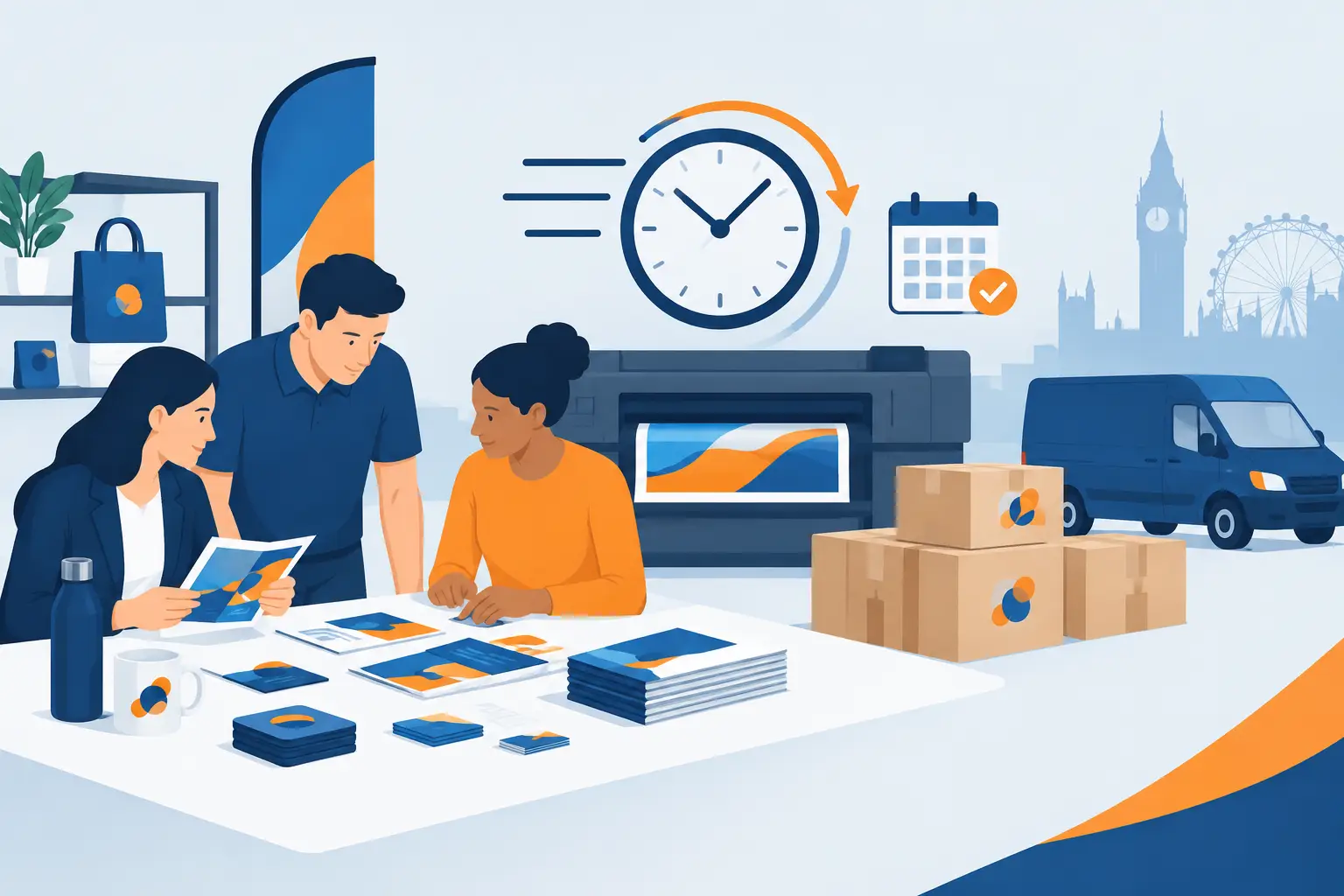
A missed print deadline is rarely caused by the printer alone. More often, the artwork arrives late, the specification changes after approval, or the product selected is not suited to the location. This promotional print turnaround guide helps UK businesses plan banners, displays, posters and promotional materials around real deadlines, rather than hoping everything comes together at the last minute.
Fast turnaround is valuable when it is paired with a clear brief, print-ready files and a delivery plan that allows for the unexpected. Whether you are preparing for an exhibition, opening a shop, promoting a sale or marking out a site, the aim is the same: professional print that arrives on time and looks right when it goes up.
Start with the date the print must be in use
Work backwards from the moment the product needs to be installed, displayed or handed out. That may be the morning of a trade show, the first day of a retail promotion or the point a construction site opens. Delivery day is not always the real deadline. You may need time to unpack roller banners, fit a banner to fencing, distribute flyers across several branches or check that every item has arrived.
Build in a sensible buffer, particularly for events with fixed opening times. A next-day production option can be a practical solution for urgent work, but it should not be used as a substitute for checking artwork, delivery details and venue requirements. If a courier delay would create a serious problem, arrange delivery a day earlier where possible.
For campaigns involving several products, set one internal approval deadline before the production deadline. This stops a business card change holding up a backdrop, or a late logo update creating confusion across the whole order.
What affects promotional print turnaround?
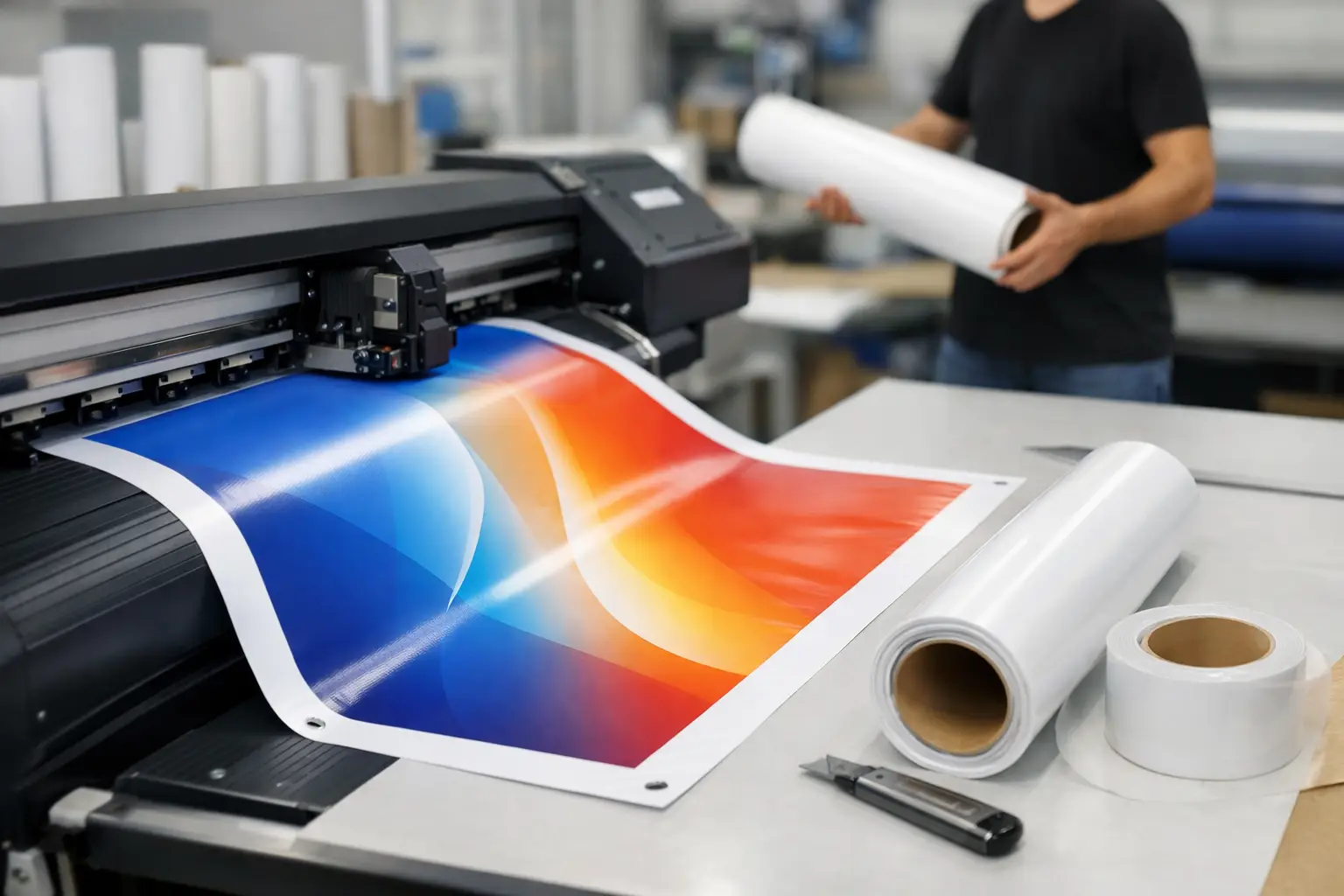
Turnaround is not simply the time spent printing. It includes checking the supplied file, preparing it for production, printing, finishing, packing and dispatching. The exact timing depends on the product, quantity, finish and whether the artwork is ready to run.
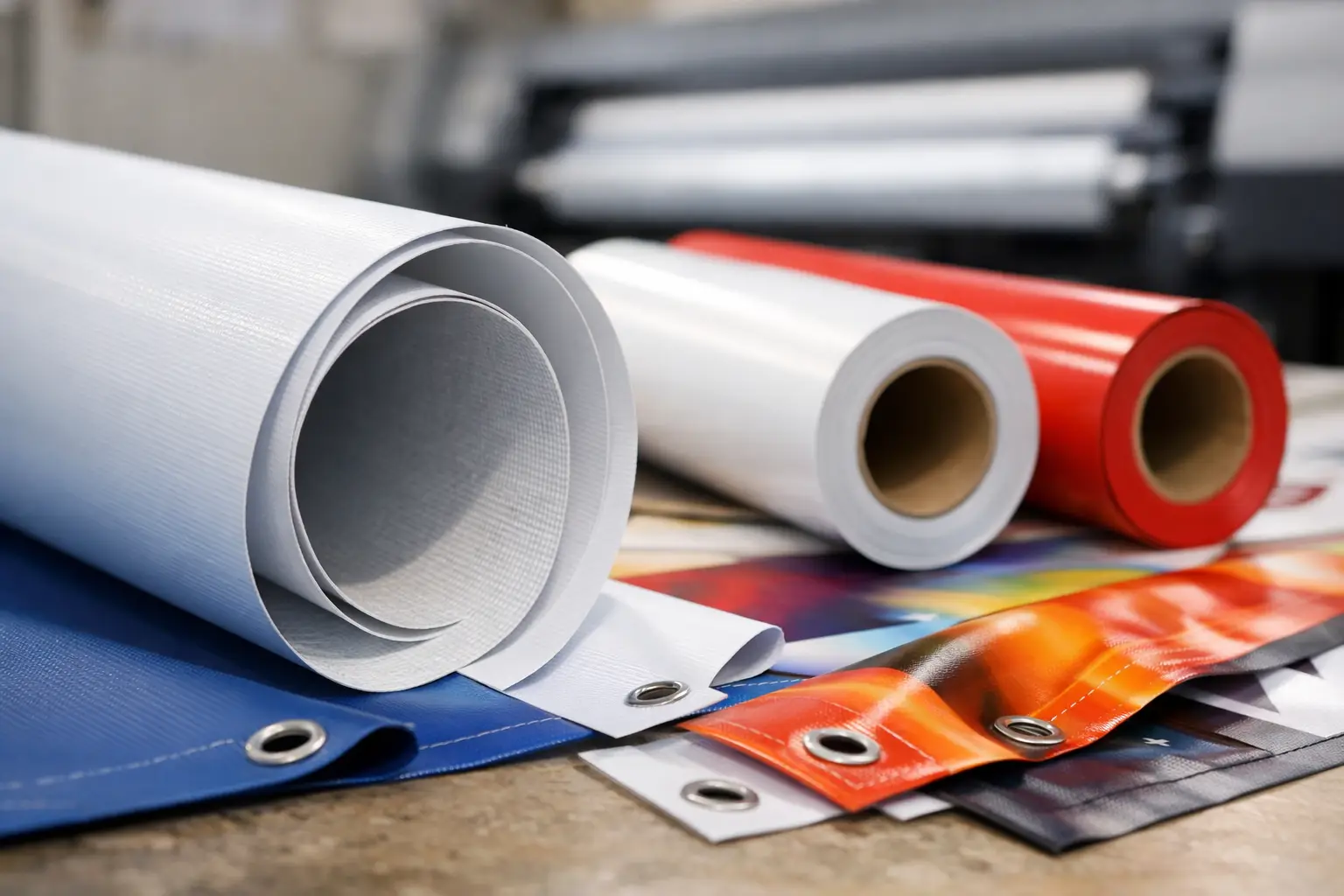
Large-format items such as vinyl banners, mesh banners, posters and exhibition backdrops need the right material and finishing method. Eyelets, hems, pole pockets and trimmed edges all serve different purposes, and some require additional production time. Roller banners and other portable display systems also involve fitting the printed graphic into the hardware and packing it securely for transit.
Smaller promotional products can be quick to produce, but quantity matters. A short run of flyers may move through production differently from a larger campaign requiring folding, multiple versions or delivery to several addresses. Stickers also vary according to shape, size, cut method and material.
The most common causes of delay are avoidable: artwork supplied at the wrong size, low-resolution images, missing bleed, unclear instructions and approval changes after production has started. A clear order placed early in the day will usually offer more flexibility than one submitted close to a production cut-off.
Production time and delivery time are separate
A product described as fast turnaround still needs to travel from the print room to your address. Treat dispatch and delivery as two separate stages when planning. Check the stated production period, place the order before the relevant cut-off, then allow for the selected delivery service.
If your deadline is tight, use a delivery address where someone can receive the parcel. Exhibition venues, shared offices and building sites can have restricted receiving hours, loading-bay rules or sign-in procedures. A correct postcode is essential, but so are a contact name and telephone number for the person who can accept the order.
Choose the product before finalising the artwork
The quickest route is not always the cheapest-looking product. Choose the print format according to where it will be used, how long it needs to last and how people will see it.
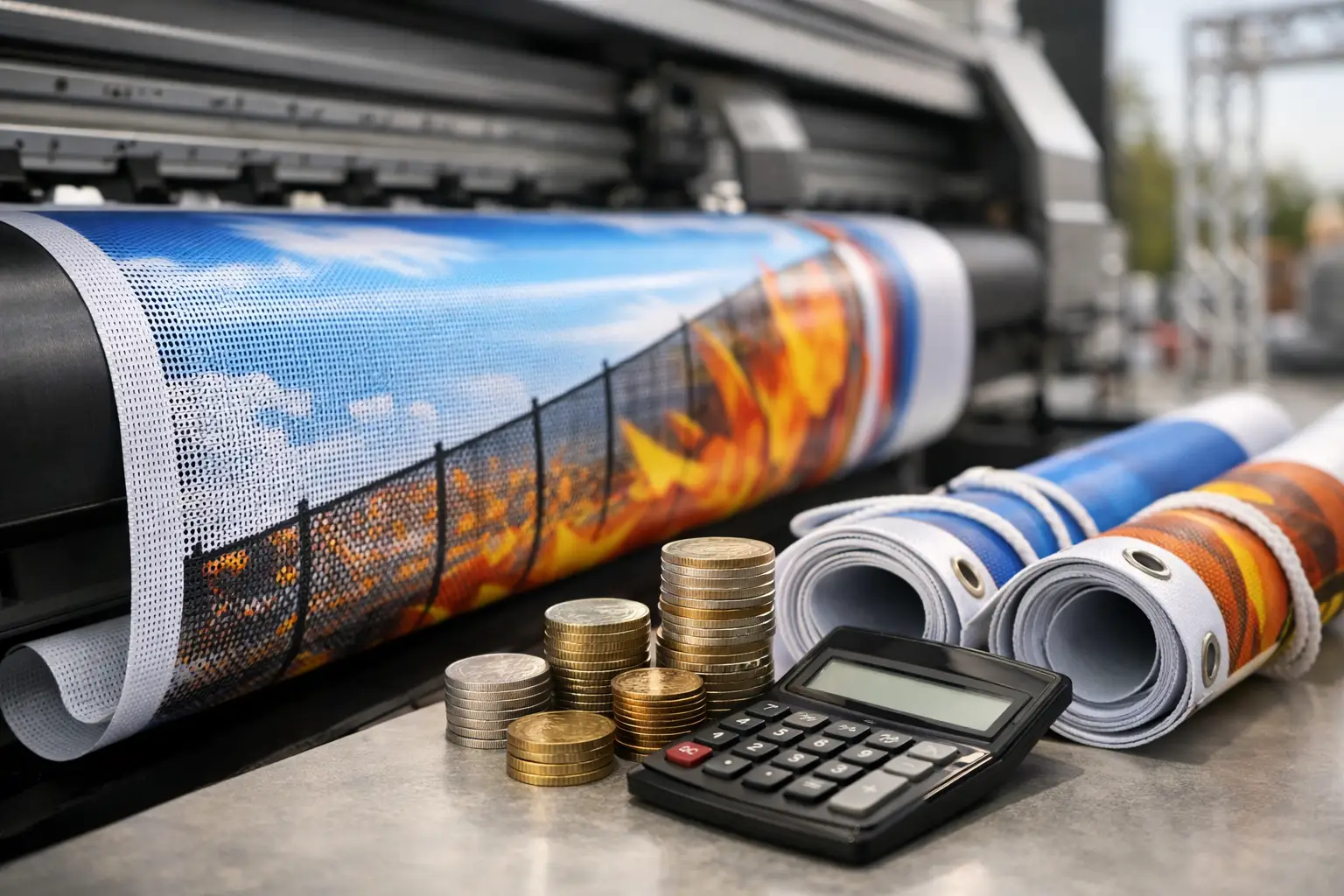
For outdoor advertising, a weatherproof vinyl banner is a dependable choice for shopfronts, railings, events and temporary promotions. Mesh banner material is often better for windy fencing and scaffolding because its small perforations allow air to pass through. Both can be produced with UV-resistant inks designed to keep colours looking strong outdoors, but the fixing points and placement still matter. A banner stretched too tightly, or fixed with unsuitable ties, may not perform as intended.
For exhibitions, presentations and indoor promotions, roller banners offer a portable, professional display that is quick to set up. A branded backdrop creates a stronger visual focal point for photographs, launches and stand spaces, although it needs enough room to be seen properly. Posters, flyers and business cards work well when visitors need something practical to take away after they have seen the main display.
Think about viewing distance before designing. A banner viewed from across a car park needs a different message from a flyer read at arm’s length. One strong offer, a recognisable logo and clear contact details usually perform better than a crowded layout trying to say everything at once.
Prepare artwork that can move straight into print
Print-ready artwork protects your deadline and your finished result. Create the file at the ordered dimensions, include the required bleed where relevant, and keep critical text and logos away from trim edges, eyelets and hems. Use high-resolution images at their final placed size. Enlarging a small web image may look acceptable on screen but appear soft or pixelated in print.
For large banners, vector logos and text are especially useful because they remain sharp when scaled. If you are using photographs, choose files with enough detail for the final size. A close-up product image may need considerably more resolution on a two-metre banner than on an A5 flyer.
Convert or supply colours in the format requested for print and remember that screen brightness is not a reliable guide to a finished printed colour. Different materials absorb and reflect ink differently. If an exact brand shade is critical, allow time to discuss the requirement before ordering a major run.
Before uploading, check these points:
- The artwork matches the ordered size, orientation and product.
- Contact details, dates, prices and promotional codes are correct.
- Text is readable at the expected viewing distance.
- Important content sits clear of trim, folds, eyelets and banner edges.
- Images, logos and QR codes are sharp enough for print and scanning.
A final proofread by someone who did not create the artwork is often the quickest quality check you can make. They are more likely to notice a missing digit in a telephone number or an outdated event date.
Use a realistic schedule for urgent orders
When time is limited, reduce decisions rather than rushing every decision. Confirm the message, product size, quantity, material and delivery address before artwork is designed. Avoid producing three competing layouts if one clear campaign message will do the job.
A practical urgent-print schedule might begin with agreeing the specification in the morning, supplying artwork for checking the same day and approving any requested amendments promptly. Production can then begin without a chain of unanswered emails or last-minute revisions. This is where UK-based production can make a meaningful difference: communication, printing and dispatch are managed closer to the customer and the deadline.
At Banner Printing UK, fast production is built around straightforward online ordering and direct artwork upload, helping customers move from approved design to printed display without unnecessary administration. That said, the best fast order is still a well-prepared order. If your file needs substantial redesign, allow time for it rather than assuming every amendment can be completed immediately.
Match the finish to the job
Finishing is not a minor detail. It determines how easily a product can be fitted, handled and reused. Eyelets are practical for tying banners to fences and railings. Hemmed edges add strength for longer-term display. Pole pockets suit hanging banners where a rail or frame is used. For a short indoor promotion, a simpler finish may be all that is required.
Consider handling as well as installation. A roller banner needs a carry case that can travel safely between venues. Flyers for a busy hospitality counter should be a manageable size for staff to replenish. Outdoor site signage needs a material and fixing approach that can cope with weather, movement and visibility requirements.
If the print will be reused, store it dry, clean and protected from sharp folds. Roll banners rather than folding them, keep display hardware in its case and avoid leaving printed materials in damp conditions. A little care extends the life of a promotional asset and makes repeat events easier to organise.
Plan for the moment after delivery
When the order arrives, inspect it straight away. Check quantities, artwork versions and hardware before the day of the event or launch. Put up one banner, test one roller banner and scan any printed QR code using an ordinary phone. These small checks are far easier to resolve before staff, customers or visitors are waiting.
For multi-location campaigns, label parcels by branch or venue and include a simple installation note for colleagues. This keeps a promotion consistent even when different people are responsible for putting it up. A clear photograph of the intended finished display can also prevent a banner being installed upside down or a roller banner being placed behind furniture.
The strongest print campaigns are planned with enough time to make good decisions, then produced quickly when it counts. Set the real deadline, prepare the right file, choose materials that suit the job and leave room for delivery. Your banner or display will then do what it was bought to do: get the message seen when the opportunity is there.