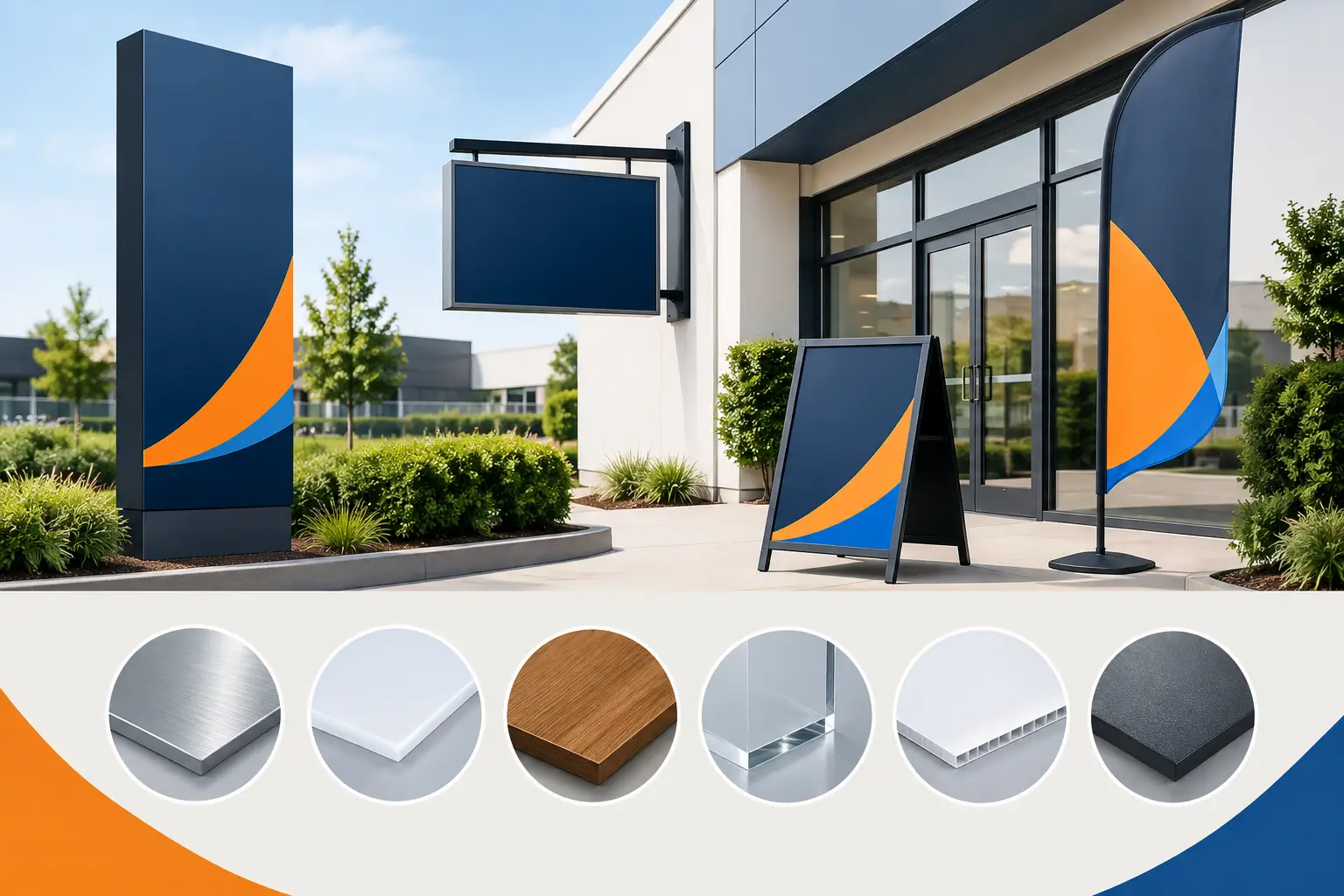
A sign that curls at the corners, fades after one sunny spell or tears in the first strong gust costs more than its purchase price. It can make a shopfront, building site or event look unprepared. This outdoor signage materials guide helps you choose print materials that suit the location, campaign length and conditions your sign will face.
For most UK businesses, the right choice comes down to four practical questions: Is the sign exposed to wind? Does it need to move between locations? How long must it remain in place? And does it need to look temporary, premium or permanent? Get those answers clear before you upload artwork and you will avoid paying for more material than you need, or choosing a lightweight option that cannot do the job.
Outdoor signage materials guide: start with the location
Outdoor signs rarely fail because of the printed design. They fail because the material does not match the environment. A banner stretched across railings faces very different pressure from a board fixed to a wall, while a pavement sign outside a café has different needs again.
Look at the site before ordering. Measure the available space, check where fixings can go and note whether the area is sheltered or exposed. Wind channels between buildings, open car parks and roadside locations can put serious strain on large graphics. Rain matters too, especially where water can collect around hems, eyelets or the bottom edge of a display.
Sunlight is another factor. Quality outdoor print should be UV-resistant, but extended direct exposure will eventually affect every printed surface. For a short promotion, this is rarely a concern. For signs expected to stay up for months or years, choose a material designed for longer-term rigid display rather than treating a temporary banner as permanent signage.
PVC vinyl banners for flexible, high-visibility display
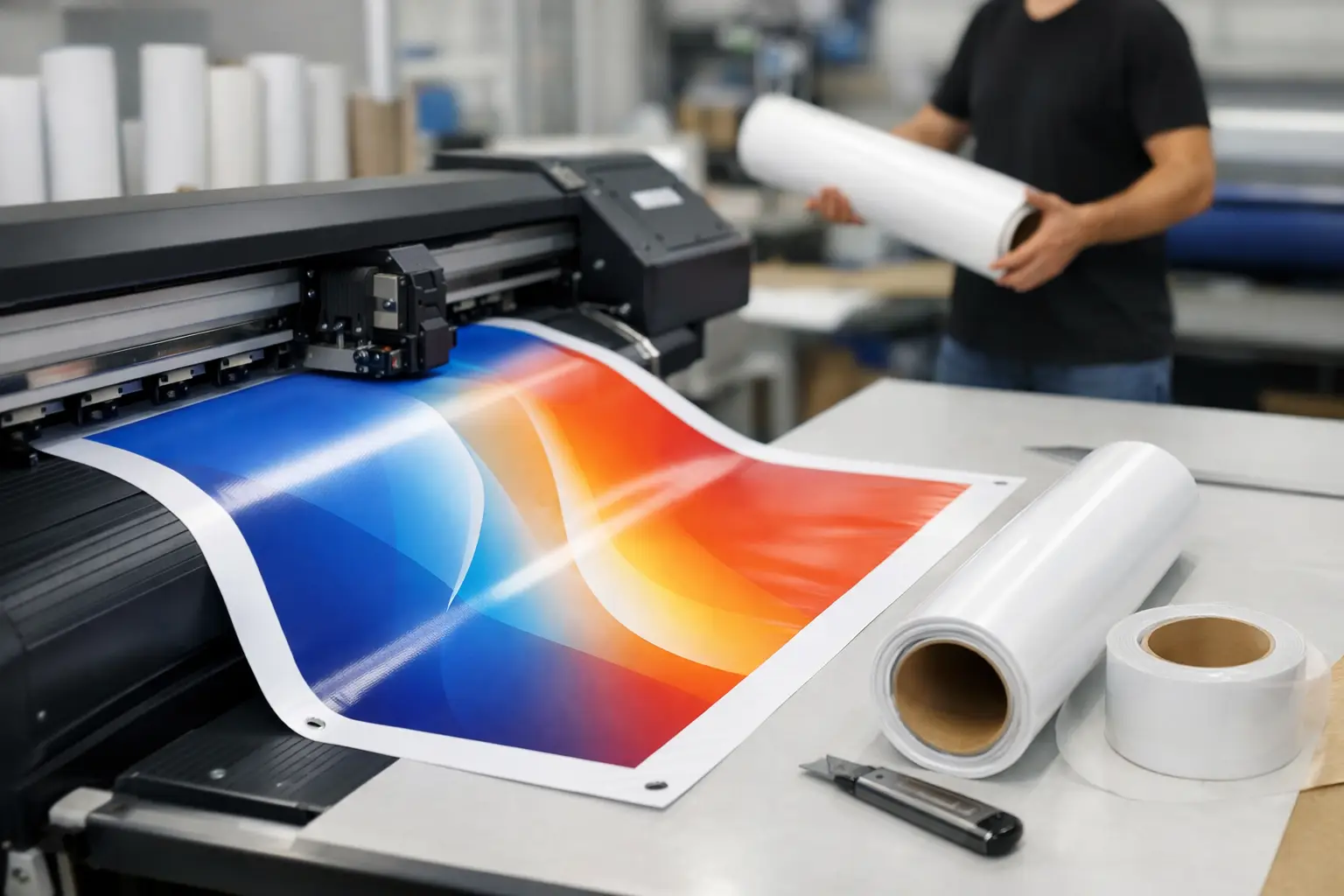
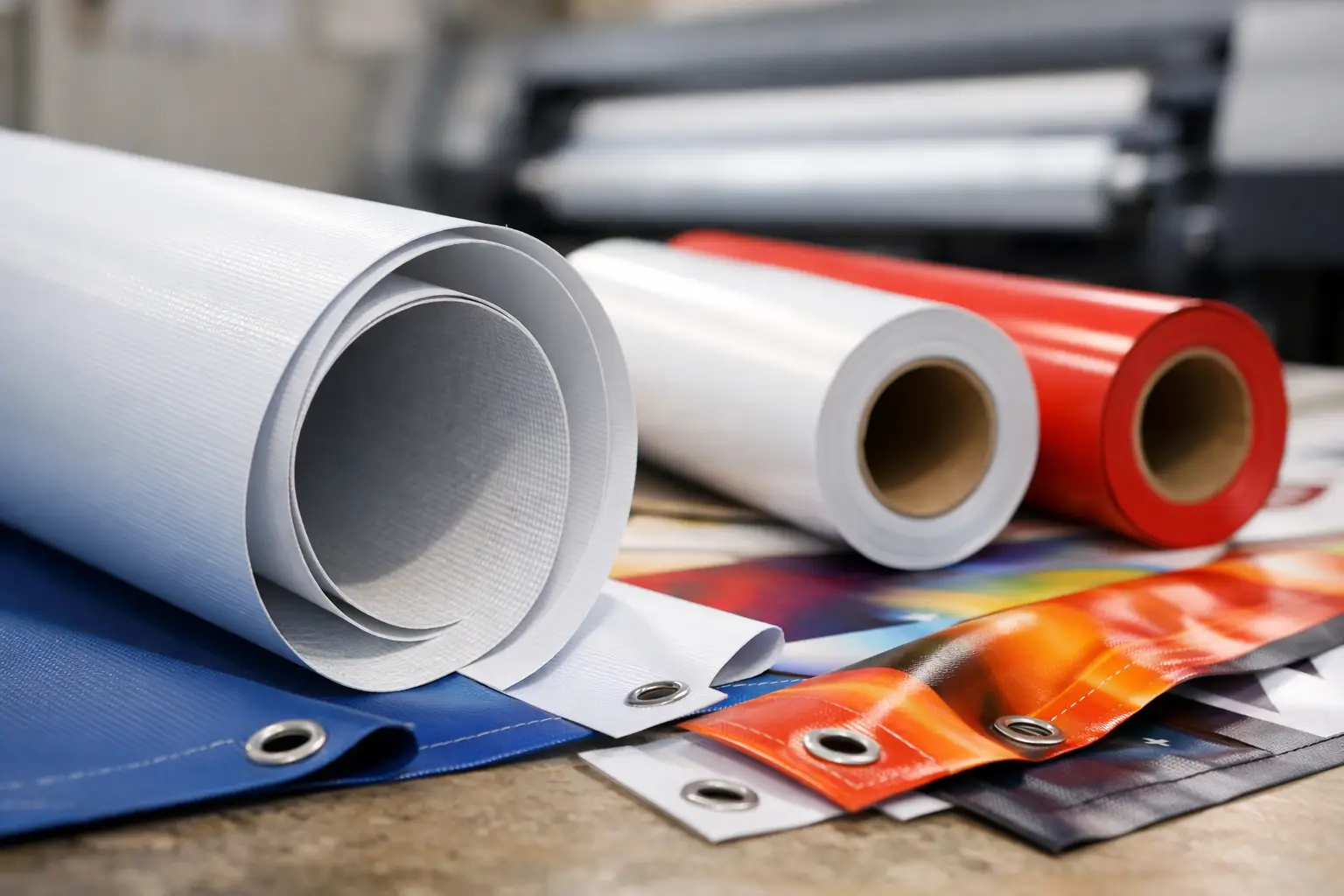
PVC vinyl is the dependable all-round choice for outdoor banners. It is waterproof, strong, easy to roll for storage and delivers bright, sharp print for promotional messages, opening offers, event branding and site information. With reinforced hems and metal eyelets, a vinyl banner can be secured to fencing, railings, walls or frames with bungee cords, cable ties or rope.
Vinyl works particularly well when visibility is the priority. A large banner gives you ample room for a logo, a bold headline, contact details and a clear call to action without the cost of a permanent sign installation. It is a practical option for retailers, gyms, schools, tradespeople, local events and businesses announcing a launch or sale.
The trade-off is wind. Solid vinyl presents a full surface to gusts, so it needs sensible fixing and enough tension to prevent excessive movement. Do not pull it drum-tight, as this can strain the eyelets and fixings, but avoid leaving it loose enough to flap continuously. For large sizes in exposed areas, mesh is often the better call.
Choose the right banner finishing
Finishing is part of the material decision. Hemmed edges add strength where the banner will be tensioned, while eyelets make installation straightforward. Ask where and how often the banner will be fitted before selecting eyelet placement. Corner eyelets can be enough for a small sign in a sheltered spot, but larger banners generally need eyelets around the edges for more even support.
If the banner will be used repeatedly at markets, sporting events or on different job sites, roll it with the printed side facing out, keep it dry and store it away from sharp tools or hard edges. It will arrive ready to make an impact, but a little care extends its usable life.
Mesh banners for windy fencing and open sites
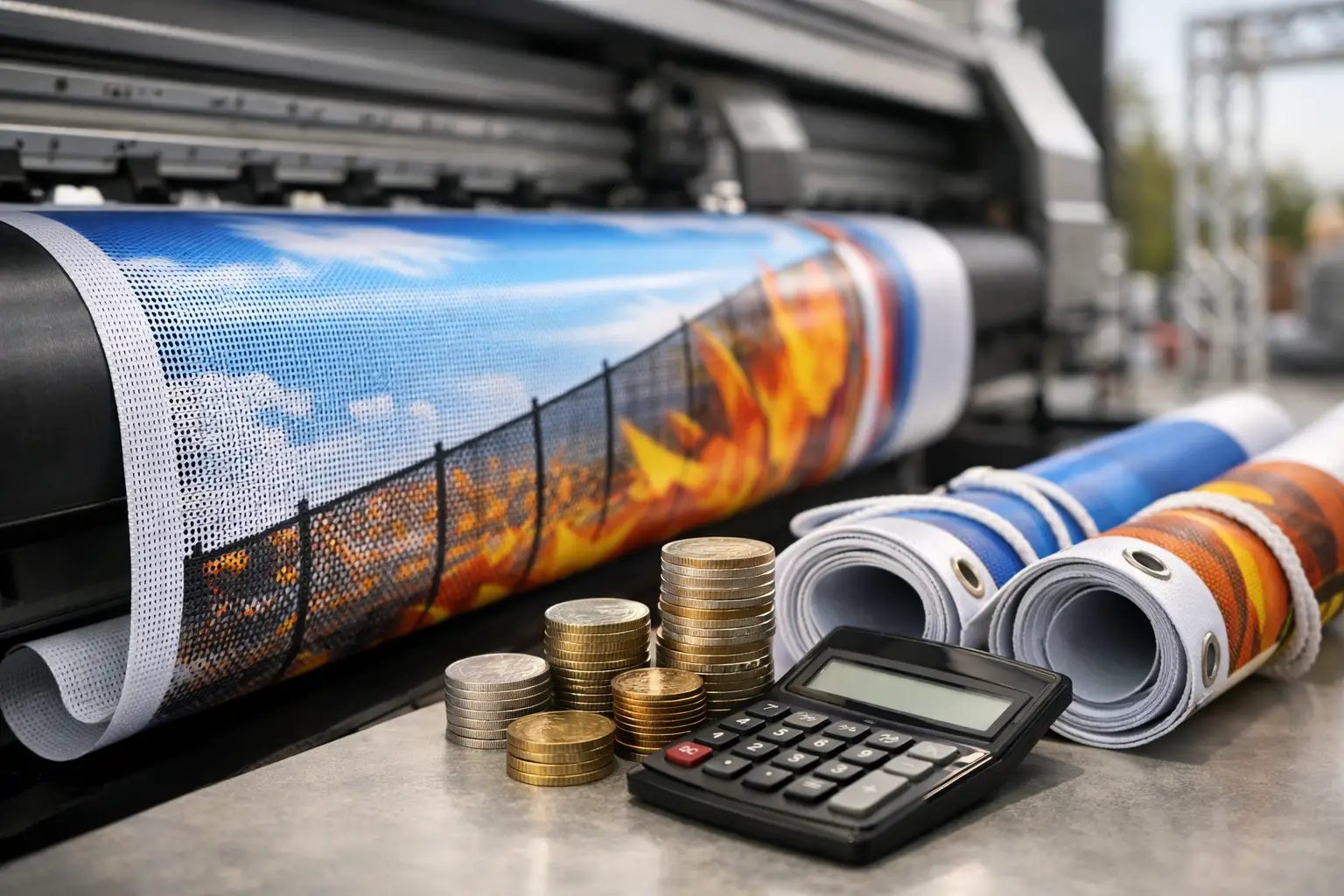
Mesh banner material has tiny perforations that allow air to pass through it. That reduces wind loading and makes it the smarter choice for scaffolding, construction hoarding, perimeter fencing, sports grounds and open-air events. From a distance, the print still reads clearly. Up close, the material has a visibly perforated finish, so it is not usually the first choice for highly detailed graphics viewed at arm’s length.
This is a classic case of choosing performance over surface finish. A solid vinyl banner may produce a slightly richer-looking image at close range, but a mesh banner is less likely to act like a sail on an exposed fence. For construction firms and event organisers, that can mean fewer replacement signs and less risk of damaged fixings.
Mesh banners also provide a useful level of visibility through the material, which can be helpful where a site needs branding without completely blocking light or sightlines. As with vinyl, proper hems, eyelets and secure fixings matter. Mesh reduces wind resistance; it does not remove the need for safe installation.
Correx boards for short-term outdoor messaging
Correx is a fluted polypropylene board that is lightweight, waterproof and economical. It is a familiar sight outside estate agents, at roadworks, on building plots and around local campaigns because it is simple to carry, quick to mount and effective for short-term information.
Use correx for directional arrows, safety messages, property signs, temporary price boards and event wayfinding. Its low weight makes it easy to attach to posts, fencing or existing structures, and it is a sensible option when you need several signs across one site without stretching the budget.
Its limitation is rigidity. Correx can flex in strong wind, and the fluted structure is not intended for long-term, premium display. A small sign on a sheltered wall can perform well, while a large board on an exposed roadside may bow, crease or become untidy. Keep sizes realistic, use enough fixing points and move up to a more substantial board when appearance must remain consistent over time.
Foamex and aluminium composite for rigid signs
When a sign needs a smooth, solid finish, rigid boards are the answer. Foamex, also called PVC foam board, provides a clean and professional surface for shop signage, menus, directional boards, branded information panels and covered outdoor areas. It is lightweight for a rigid material and prints well, making it suitable where the sign will be mounted flat against a wall or display surface.
For longer-term external signage, aluminium composite material is the stronger choice. Often known as dibond, it consists of an aluminium outer layer around a solid core. It is durable, stable and well suited to shopfronts, car parks, business parks, permanent directional signs and property developments.
The cost is higher than correx or a banner, but so is the expected lifespan and perceived quality. If customers will see the sign every day at your premises, aluminium composite can be the better commercial investment. It stays flatter, handles weather well and gives branding a more established finish.
Match board thickness to the job
Board thickness affects stiffness and handling. Thinner boards can be ideal for small, wall-mounted notices, while thicker options are better for larger panels or signs that need to hold their shape. The right specification depends on the board size, fixing method and exposure, not simply the biggest thickness available.
A board is only as reliable as its installation. Use fixings appropriate to the wall or post material, spread them evenly and avoid overtightening, which can distort the board. If you are mounting signs to a surface you do not own, check permissions before fitting anything permanent.
Make the design work with the material
The best material cannot rescue an overcrowded design. Outdoor signage is usually read quickly, from a distance or while someone is moving. Use a clear headline, high colour contrast and one main action, such as a phone number, web address, opening date or directional instruction.
Small text and fine details are especially risky on mesh, as the perforations can interrupt delicate lines. On correx, avoid placing critical text too close to edges or fixing points. For banners, leave a safe margin around the perimeter so hems and eyelets do not interfere with your logo or offer.
Photographs can work well on vinyl and rigid boards, but they need to be high resolution. A small image copied from social media may look acceptable on screen yet appear soft or pixelated at banner size. Supply artwork at the correct dimensions where possible, or ask for a design check before production if you are unsure.
Order for the campaign, not just the day
A weekend promotion and a year-round premises sign should not be bought the same way. Think about what happens after installation. Will the sign be moved, rolled up, cleaned, replaced with a new offer or left outside through winter? That answer usually points you towards the right material quickly.
For urgent campaigns, printed vinyl banners and correx signs offer fast, practical visibility without a complicated buying process. For exposed fencing, mesh provides the sensible balance of branding and wind management. For a permanent business presence, rigid aluminium composite boards are built for the longer view.
At Banner Printing UK, fast UK production helps businesses turn approved artwork into professional display materials without losing valuable campaign time. Choose the material for the real conditions, allow enough time for safe fitting, and your outdoor sign can keep working long after launch day has passed.